Losing The Midas Touch: Why Japan No Longer Dominates The Video Game Industry

1985. What a year. The Nintendo Entertainment System debuted in the U.S. to near immediate success. What American video game makers had abandoned as a dead market, Japanese video game companies picked up and revitalized. And they began to dominate. Throughout the 1990s, if an award-winning, mind-blowing, landmark game came out, you could bet it was Japanese. Japan’s gilded, diamond-encrusted horn of video game plenty was pouring choice oils of gaming goodness upon us all. And it seemed the flow would never dry up.

2013. Yasufumi Ono made comments about the state of Japanese gaming at the Infinity Ventures Summit in Kyoto. Currently, Japan controls a mere 30% of the market share in North America and only 13% worldwide. The horn of plenty has become a trombone of self-doubt. Why isn’t the world buying Japanese games anymore? Has Japan lost its touch?

There are several factors at play here. When Japan swooped in to grasp the field mouse that was U.S. gaming, that mouse was dead. Thankfully Japan brought the mouse back to life and became the sole devourer of its innards. Today there is more than one falcon-country eyeing those rodent intestines, namely the U.S., South Korea, and Finland.

Also, Japan doesn’t make the games that western countries presently want to play, games in the “Call of Battlefield: Ghost Ops II” category. Japan makes games more along the lines of Dungeon Monster DX: The Fire! Time was, you could take your Dungeon Monster games and package them so your average Todds and Brandons would buy them. That’s been a challenge Japan has yet to surmount in this modern era. But why is this such a challenge if it wasn’t before?

Instant Connection

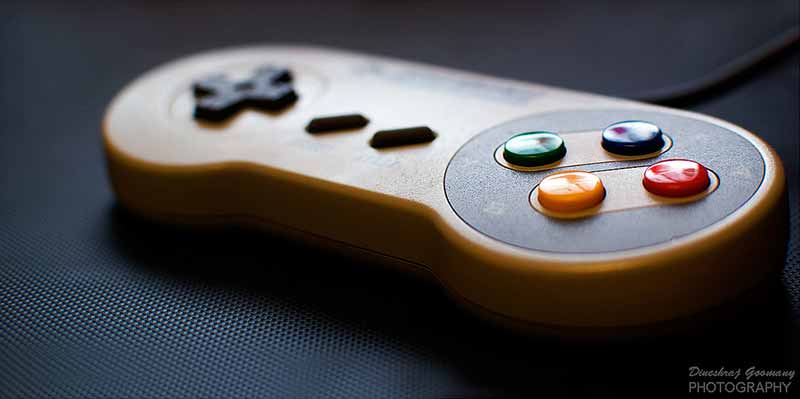
supernintendo-controller

When we hear a story, our mind does its best to connect us to the story’s main character. We want to get to know that character so we can become the hero and experience the tale explicitly. In traditional storytelling, this is no easy task. It takes a witch’s brew of situation, exposition, and time to make a character connection with an audience. And few writers ever know what’s going to work in a given story.

Video games don’t have this problem. It’s a unique storytelling medium. The connection a game character has to the player is almost immediate. My go-to storytelling guru, Scott McCloud, best explains why, by summarizing philosophy first put forth by Marshall McLuhan:

When driving, for example, we experience much more than our five senses report. The whole car—not just the parts we can see, feel and hear—is very much on our minds at all times. The vehicle becomes an extension of our body. It absorbs our sense of identity. We become the car. If one car hits another, the driver of the vehicle being struck is much more likely to say: “Hey! He hit me!!” than “he hit my car!” or “his car hit my car,” for that matter.

So, in touching and controlling the car, your mind makes the car an extension of yourself. The same happens when playing a game. That touch of the controller and your control over the avatar gives your mind the same connection. The hero is a virtual extension of you. You become the hero as soon as you start the game.

This explains why games with subpar stories can still be great games. Your connection to the experience is immediate and doesn’t require a fantastic story to draw you in. If the game is enjoyable, you keep playing because you like your role as the hero. But what happens when you don’t like the hero you become?

Different Heroes For Different Hemispheres
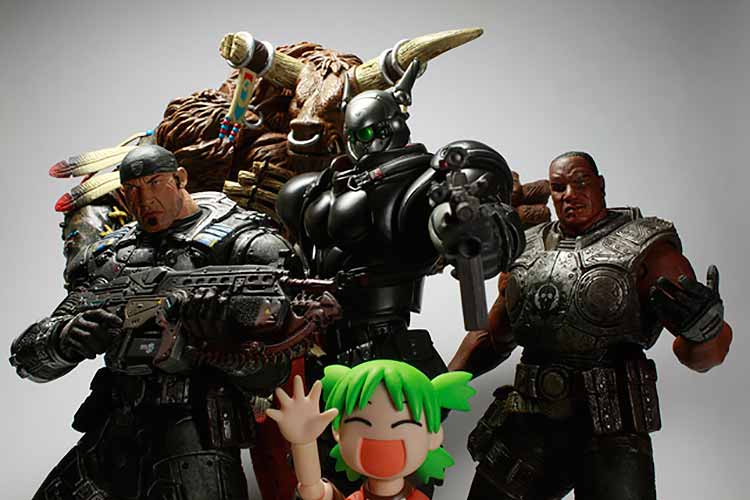
videogamecharacters

Photo by Borgs Dalisay

Back to the Inifinity Ventures Summit (we were talking about that, right?). Some interesting statements were made by Sega/Sammy president, Hajime Satomi. Read below his hypothesis on why Japanese games fail to make an impact in the U.S. And Europe:

Europeans and North Americans like strong people, so the main character has to be a fully-grown, middle-aged man. On the other hand, in Asia, people like stories about middle or high school students growing up or becoming stronger. As you make games for more dedicated players, I think you have to be aware of those differences.

This makes sense when you consider characters from best-selling games in the U.S. from the past ten years: Kratos, Nathan Drake, Master Chief, Niko Bellic, Marcus Fenix, and that hooded guy from Assassin’s Creed. All severely grizzled, middle-aged combat types.

Compare that with some of Japan’s top character picks, plucked from a Famitsu poll of readers’ favorite characters: Link, Sora, Yuri Lowell, Sakura Shinguji, and Cloud Strife. All very ungrizzled and full of youthful optimism for the adventures of life (until they enter the job market).

There is some crossover, of course. Both east and west love Chris Redfield, Solid Snake, Link and Cloud. But there is something to Satomi’s ideas. There is clearly a difference in hero preference between hemispheres.

So if Japan once ruled the western gaming market, they must have created games with middle-aged heroes. Not necessarily.

Let’s Compare Some Box Art!

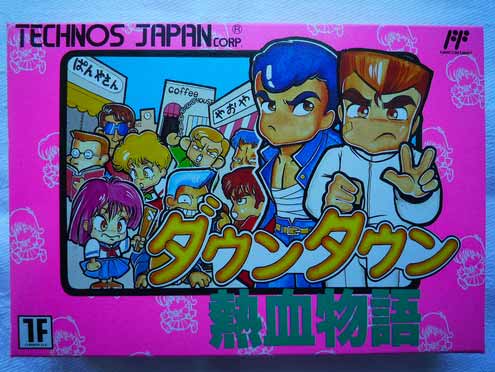
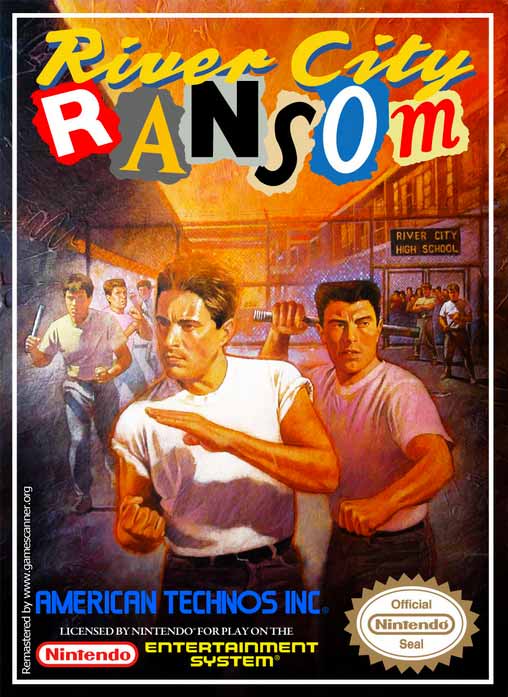
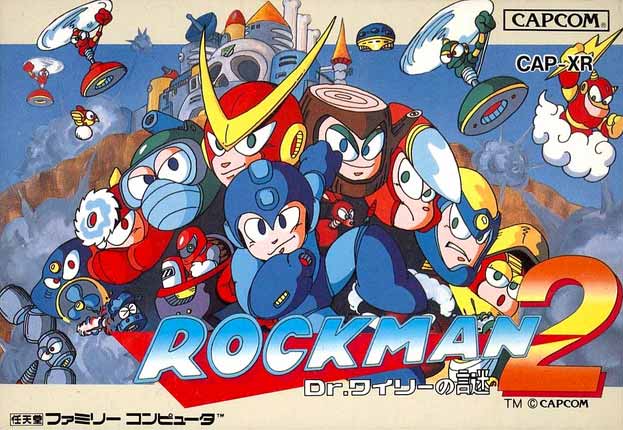
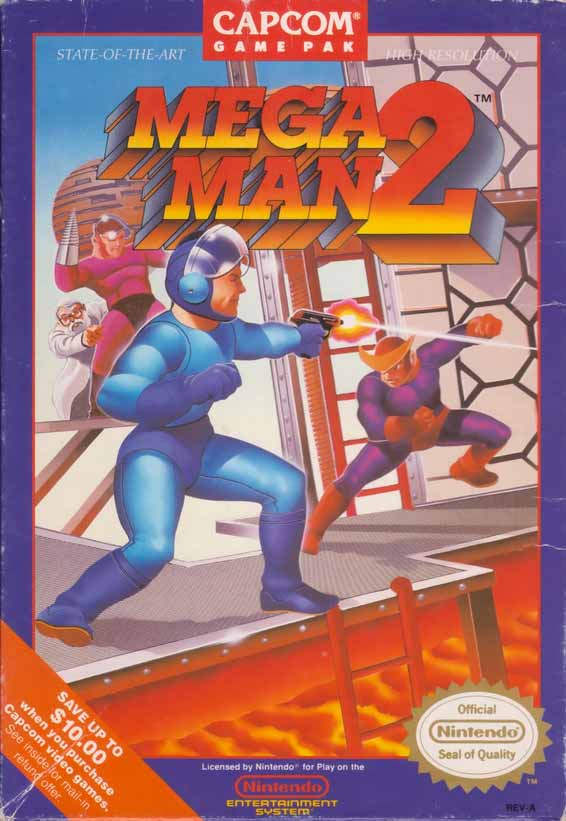
This is a simple exercise. I will present three games released both in Japan and the U.S. We will observe the in-game pixelated sprites that represent the main character(s) and the art on the boxes for the Japanese and U.S. releases of the game. Let’s begin.

DOWNTOWN NEKKETSU MONOGATARI vs. RIVER CITY RANSOM
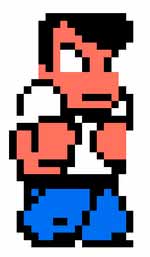
downtown-nekketsu

The in-game character looks pretty cartoony. Could be any age.

Japanese Box Art:
downtownnekkutsu-japanboxart

The Japanese release of the game suggests the characters are young high school students.

US Box Art:
river-city-ransom

But the U.S. release suggests they are weird 36-year-old dudes! Despite that “River City High School” sign behind them, these two are clearly just there to pick up their kids from baseball practice.

ROCKMAN 2 vs. MEGA MAN 2

megaman-sprite

The age-neutral Mega Man sprite we know and love.

Japanese Box Art:
rockman2

Japan gets some great art that actually looks a good deal like our robot friend on the screen.

U.S. Box Art:
megaman2

America gets a welder with a broken foot and ray gun. He’s a weirdo, but he’s a grown-up combat weirdo!

DRAGON QUEST II vs. DRAGON WARRIOR II

Here’s the in-Game Characters – Japan & U.S.

dragon-quest

These in-game characters could be impetuous teens or seasoned adventurers.

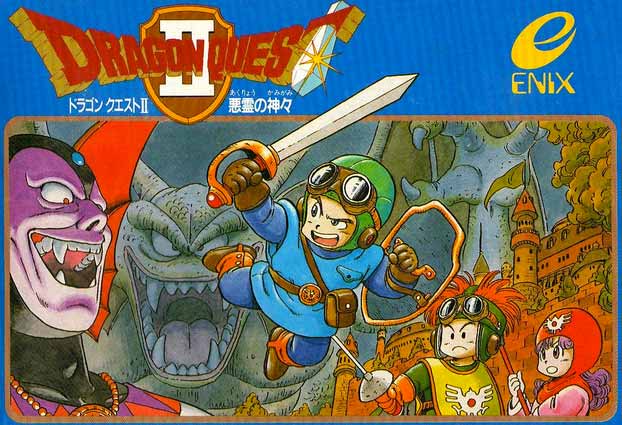
Japanese Box Art:
dragonquest2

The art for Dragon Quest II features Akira Toriyama’s youthful depictions of the heroes, which have become a staple of the series.

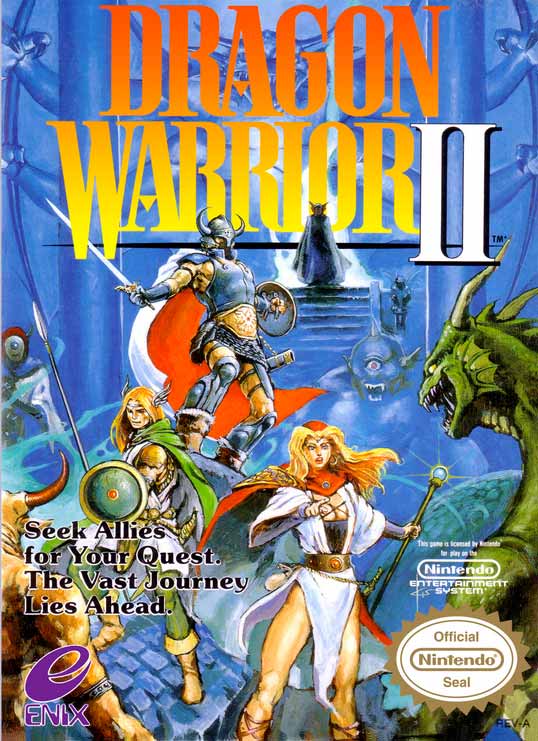
U.S. Box Art:
dragonwarrior2

The American release of Dragon Warrior II is, again, a band of fully-grown adults. These heroes promised each other in college that when they turned 40, they would reunite for a quest to Las Vegas.

Finding Ourselves

iwanttobelieve

So what does this box art comparison mean, exactly? I’ll get to that in a second.

The heroes on our TV screens during the 8-bit and 16-bit eras were less defined and more iconic, and thus more easily interpreted. I touched on this in my article about Hello Kitty, so for a more detailed and Tom Hanks-oriented explanation of icons.

But there was another force at play, helping us interpret our pixel friends. That force is confirmation bias.

Confirmation bias is the psychological effect of your mind to favor information that coincides with your preconceptions. Traditionally, confirmation bias is used to describe how we gather information to make rational (or irrational) decisions. Recently, however, a young philosophy blogger named Sam McNerney introduced this idea:

If we are defining confirmation bias as a tendency to favor information that confirms our previously held beliefs, it strikes me as ironic to think that it is almost exclusively discussed as a hindrance to knowledge and better decision-making…With such a broad definition, I think it also explains our aesthetic judgments… Put differently, confirmation bias influences our aesthetic judgments just as it does any other judgment.

Since the pixelated hero images transmit so little information as to what they are, players needed the box art to confirm their bias of what they wanted to see, in this case, their bias of what they think, aesthetically, a hero should look like. Japanese gamers’ biases said, “this pixelated image is a youngling,” and the box art confirmed their bias. Western gamers’ biases said, “this pixelated image is muscular manbeast,” and their different box art confirmed their different bias.

Since video games, as we said earlier, offer an instant connection for the player, it is imperative that the player like that connection. Giving players the chance to connect to the heroes they wanted to be helped to ensure they would not put down the controller and, furthermore, keep buying games.

The Beginning Of The End

red-ring-of-death

So that’s it. Everyone was happy, and all it took was paying two artists to do the same job. It’s easier to sell people what they expect than to challenge their perceptions. Unfortunately, this box art trick got harder to pull off as console gaming entered the world of polygons in 1995. Keeping the hero’s in-game appearance ambiguous got a little trickier.

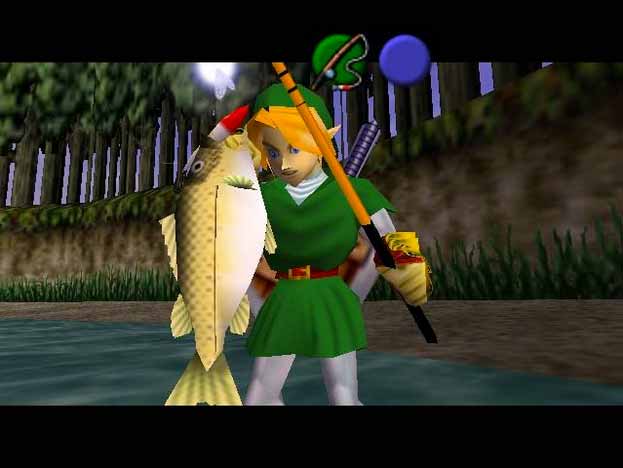
Such was the case with The Legend of Zelda‘s transition from 2D to 3D. For the most part, early polygonal models could still be interpreted by both cultures as the heroes they wanted to be. And so it was with 1998’s The Legend of Zelda: Ocarina of Time on Nintendo 64. EVERYONE loved this game. The main character, Link, started out as a kid but later grew into an adult. But what kind of adult? A grizzled one, probably.
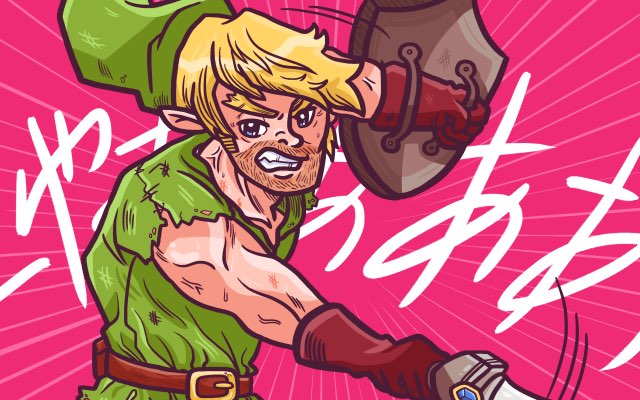
link

How old is this adult Link? Fifteen or thirty-five?

When the first Zelda game for the 128-bit Gamecube was announced, Americans eagerly anticipated their powerful adult Link to appear in new, beautifully rendered 12 million polygons per second! It was at this point Nintendo thought it would be a good idea to have Link represented as a very cartoony boy child in The Legend of Zelda: The Wind Waker. Americans went nuts. Angry nuts! Link had always been an elfin lad since the very beginning, according to the series’ story, but in pixel world and the American mind, he was nice and grizzled. For the first time, gamers were faced with a Link they could not interpret to their liking. Despite The Wind Waker being a gaming triumph, it sold a mere 3.07 million copies worldwide, compared to Ocarina of Time’s 7.6 million.

It was around this time, Japan’s control over the gaming industry began to wane. Of course, it was not solely due to the unambiguous heroes. The Xbox launched with incredible success in 2001, eating away at a large part of the North American market share previously held by Nintendo, Sega, and Sony. American video game companies, having learned from two decades of great Japanese games, started making games just as good or better. The spike in popularity that Japanese pop culture saw in 1999 was diminishing by the mid 2000’s, banishing anime from general acceptance back to the cavern of the nerds, which also meant the unmistakably Japanese video game heroes were banished as well (unless they were grizzled).

In our modern era, we have our two camps making games for themselves. American game companies churning out gritty power lunks and Japanese companies churning out sleek action teens. And we like it that way, apparently. Only a small fraction from each side is interested in games from the other.

The Sun Also Rises

sun-rises

Photo by Sean MacEntee

2014. In a few months, the next Infinity Ventures Summit will be held in Sapporo and the Japanese gaming industry will gather once again to discuss the future, the past being a non-issue. The truth is, Japan will likely never again rule the video game world as it once did. The special circumstances of an evacuated market and technology that was easily localized is gone forever. Global competition and the advent of mobile/social gaming has changed the industry so nobody knows what to expect anymore. (BIRDS being angry at PIGS?! Nobody saw that one coming.)

But that’s okay. Industries change. When Georges Méliès and the Edison Trust dominated the film industry, it was only a matter of time before other artists from around the world said, “I want to do that, too!” Film expanded until people loved it so much that certain individuals began making films simply as artistic expression.

The Infinity Ventures Summit is a gathering of companies, so their primary concern should be how to sucker people out of money (using video games, hopefully). But games are made by artists, so I hope when these artists gather in May, they will talk, at least individually, about how to move video games forward as medium, how to push boundaries and make something people have never seen before. There will always be success in giving people what they expect. But there is a truer reward in creating something that changes peoples’ minds.

Bonus Wallpapers!

macholink-1280
[1280x800] ∙ [2560x1600]

Sources:

  • Brad Garrett

    I really enjoyed the article, especially the comparisons between the American and Japanese Nintendo artwork!

  • TouRyuu

    Check the box art for Kirby too. It’s nearly identical for both countries, but the art for the US always portrays Kirby add being angry, when in Japan he’s always just adorable.

    Great article though!

  • Kai Kazuhiro

    Well, in the end it’s cultural differences that matter, but I rather have something wacky and unique from Japan rather than another grey and brown killing simulator with waist high walls.

  • Mipu829

    Whoa! That is so true!! We’ll see how “Kirby Triple Deluxe” is going to be in the US when it comes out! :D

  • Kai Kazuhiro

    Got to tvtropes and search for American Kirby is Angry for more about the differences in NA/EU Covers with JP covers.

  • http://www.tofugu.com koichi

    This American bomberman is adult because he’s wearing a giant condom body suit…

  • Kai Kazuhiro

    COUGH*Bomberman: Act Zero*COUGH

  • https://twitter.com/RochelleBreen Rochelle

    I didn’t think about these things before. Maybe another reason the American video game market is doing so well is because there are a lot of indie developers challenging the AAA big-adult-gritty-man-is-hero kind of games (e.g. Double Fine Adventure) and raising the stakes all around. I don’t know what indie developers there are in Japan, but I’d love to know.

  • Kylan

    But that’s not the only western school of gaming! There’s also the “Like God of War but-” camp. :D

  • Kylan

    As an American, I fear that I am in the tiny minority when i say that I don’t really like FPS games, And while I also am not a fan of overly cutesy games (like Kirby), teenage game protagonists appeal to me much more than middle-aged gorillas, in any setting.

  • DAVIDPD

    Evolve or Die!

  • 古戸ヱリカ

    I believe that subtitle is short for “Act like the number of games where they tried to make Bomberman super realistic is Zero”.

  • http://www.tofugu.com koichi

    If they made bomberman realistic it’d be a 2minute long game where the police arrest you for being a bomber man.

  • 古戸ヱリカ

    The River City Ransom cast is still in high school, it’s just that they’re Hollywood high schoolers, so they’re played by 36-year-old dudes.

  • Michael Richey

    Another interesting footnote with Kirby, he was gradually made pink in the U.S. box art. He was straight-up white on the box art for his debut game, Kirby’s Dreamland. His second, Kirby’s Adventure, he was white with pinkish shading. And Finally, he was portrayed as pink in Kirby’s Dreamland 2. Maybe they thought a pink character wouldn’t sell?

    Also, check out this ad for Kirby’s Adventure. The commercial goes out of its way to make Kirby look tough.

    https://www.youtube.com/watch?v=ozPkEBhFzuw

  • Michael Richey

    Good point. I think there’s something for everyone in the U.S. gaming market, in that the mainstream is covered as well as those who want something a little different. I’d LOVE to discover what Japan’s indie gaming world looks like. Just as in movies, there will always be blockbusters made to rake in the cash, but I think we’re entering an exciting era where a greater number creative minds can offer us their visions more easily!

  • Michael Richey

    Thanks, buddy!

  • Duncan

    Great writing Michael. Thoroughly entertaining piece, especially poking fun at the contrasts between the box art designs.

  • rapchee

    i believe the thing is that in japan pc gaming is a lot less popular than in the rest of the world
    here are some rps articles about recent japanese indies http://www.rockpapershotgun.com/?s=japanese+indie&x=0&y=0

    it’s possible you could find more on kotaku but we don’t go to kotaku anymore

  • rapchee

    this article is highly grizzly

  • John Craft

    Make money by playing video games http://www.99moneymaking.com/gaming-money/

  • Michael Richey

    Thanks for the link to info on Japanese indies! I can’t wait to check it out. I think there was some kind of PC gaming culture in Japan before the mid-90s but it died out sometime after then.

  • _

    Dig Dug is the father of Bomberman. Come on people!

  • julie

    Only the first misleading paragraphs, it quickly runs out of intestines.

  • chibiusa

    The real charm of the article is the “oil” reference.

  • たくみ

    With yesterday’s release of Project Diva: F2nd, I really wish I had a Vita…

    It’s funny though, my favorite games seem to be Japanese…like the Hatsune Miku games, or Initial D, or Taiko No Tatsujin.

  • Sean

    Never really thought about how a county’s culture impacts how we relate to a character, think the way the controls or graphics have similar affects?

  • Adrian Hernandez

    I’m a gamer and perhaps the reason is Americans love shooting games with no reason. So many people play cod for instance..now I find those games BOORIING and yet other people do. Darn I lost my train of thought right now cuz I saw a chubby woman gulping down a burger on TV..for me games suck more everyday cuz its nothing but fps. Cod and the new titanfall, studios don’t want to create new things. They take a concept that works and squeeze what they can and create sequels which add very little to the experience. I loved Japanese games because of the stories they told and the feeling I got from the experience but i haven’t played a good Japanese game in a long time. To sum it up, games suck nowadays yet companies duke it out to see who has the best technology but maybe this obsession with technology has stripped the essence of what made video games great at one time. But now I will do what I love doing, which is productive for me and that is.. Study Japanese!!!!

  • Arasou

    Hope Japan never starts making their game characters like those macho shaits in so many games -.- Link (without muscles) ftw!

  • Jared Harding

    I can’t even begin to tell you how you’ve completely enlightened my view on the video game industry!

    I was born in 1995, so I was only old enough to start playing video games at that weird “how old is Adult Link exactly” period you were talking about. (For the record, I do prefer the style of games that Japan puts out compared with the Western style, not that I hate Western style, I’ll play a fps occasionally. And I think you’ll find that most of the people commenting are bias towards Japan, Tofugu is a blog about all things Japan after all). I do remember playing Zelda: OoT and MM, but I used to have to play those with my grandma because I would be all like running Link into walls and lava and stuff, lol. The first Zelda I could play by myself was WW, and that is still one of my favorites.

    I’m currently going to college to become a game designer. Your article has really made me think about the future of the industry I want to enter into someday. The big question is… should I stick to making the style of games I like, or make games that suit other peoples taste more? And a small question… is there even a right answer to the previous question? I’m still not sure…

  • EspadaKiller

    Interesting article. I agree with you that the Japanese game companies aren’t as good as before but I think it will get better in this generation. Long comment incoming.

    IMO, the time that Japanese game companies started to fall was during the PS3/360/Wii generation. That was the time where game development became really complex to develop for the new consoles thus big budgets needed to develop a game. Small companies don’t have the resources to do it and even big companies struggled.

    Some companies manged to churn out quality and interesting games though, like Konami (mainly thanks to Kojima) and Capcom. Even Square-Enix struggled with the development of FFXIII and Versus (infamously delayed a whole generation and re-branding it to FFXV and releasing it for the PS4 and Xbone).

    And while the Japanese struggled the Westerners are releasing heavy hitter titles, mainly shooter games like Call of Duty, Battlefield, Gears of War, Halo, Crysis, etc. COD 4 really started the FPS frenzy in gaming communities though. And these games will go ahead and sell million of copies worldwide. Even Japanese players that don’t play FPS games started to buy and play them. It’s a real change in the console/PC gaming scene. And there’s more and more talented Western developers growing, like Naughty Dogs (Gods), Bungie, Sucker Punch, Santa Monica Studios and more.

    So some Japanese game companies figured out to release games on handhelds instead, namely for the PSP, 3DS, DS and Vita. As the budget for these games are low, and increasingly more Japanese are buying handheld consoles instead these are the best way to earn their profit fast. And then smartphones came in, and developing games for smartphones are even better in terms of budget and profit. Thus the PS3 and 360 aren’t getting any much Japanese developers support and you can tell by the number of Japanese games releasing on both platforms. So little JRPGs and most of them are crap.

    BUT, hope is not all lost though….the indie scenes are exploding now and it doesn’t cost much to develop on the PS4. Not to mention it’s easier to develop games on the PS4 as before on the PS3. So I’m hoping that I can see more JRPGs and action games released for this generation of console gaming as before. And Japanese companies are starting to release their games on the PC as well. Now that’s something refreshing. Exciting times for a gamer!

  • A Gamer

    This is on the money, but only in one aspect.

    I was at a dinner about a year ago with game developers and journalists from America, Canada, South Korea, and even China. Naturally, games came up, and I brought up Nintendo in particular. Everyone mentioned their favorite Nintendo game, but when I asked about modern design, there were a few issues, particularly with Nintendo, but Japan as a whole.

    The first is online play. It’s really not that big here. PC Gaming in general isn’t big, and if you go to the PC section of many stores, it’s usually “adult” games, with tons of “pink” (and skin tones). Popular games tend to use local play. Look at the Wii U in general, but also Monster Hunter 3G (maybe it was “Ultimate” in the states) and the latest Pokemon. They’re designed for local play because Japan is a densely populated country. My city of 42k is considered a rural village in the “inaka” area I live in (Japanese “countryside” is generally based on population and distance from major cities, whereas for me, in the states, it has much more to do with availability of technology and the amount of wildlife/farms).

    Creativity’s another. Look at Minecraft, Terraria, and other building games. Those games do well in Japan but… for some reason, Japanese developers just don’t get it. They’re recycling their own games again and again rather than experimenting with new genres or tactics. Comparing Mighty No. 9′s alpha to the latest Mega Man games shows that even the tried and true formulas can get a solid enough spin, but I feel like, outside of the RPG, Japanese are slow to try anything new.

    And that’s the final issue. Japan actually doesn’t allow a lot of foreign games in. Steam is rather locked up if you’re in Japan. There are a lot of games that you can’t buy/play because the creater/publisher might translate/regionalize the game later. Other times, barriers are simply put up to prevent the games from coming in. Blizzard has tried to get into Japan several times, but it just doesn’t happen. I know non-gamers from China and Korea who know what StarCraft is, but if you talk about “Blizzard” games in Japan, people think you left your Playstation out in the snow. There were some stories that I can’t repeat (off the record comments), but even when presented demos, some Japanese devs simply play for about 15 minutes, say how the game isn’t traditional, and mention that it will never do well in Japan.

  • Jon Brewster

    Absolutely fantastic article, Michael. There is solid observational and insightful research, here, and I agree with your points 100%. More has to be done with targeted market research and understanding demographics, along with the understanding that the video game market is fluid and EXPANDABLE. I think too many video game companies are focused on taking up market share compared to the ones who realize that video games have ample opportunity for making “blue ocean” markets. Sometimes, the consumers don’t know what they want until you SHOW them!

    Again, as always, great work. Much respect from my humble iPad in Japan.

    -Jon Brewster

  • invisiblehand85

    Really insightful article. Cultural differences which have created a divide as graphics have come to resemble reality more closely.