
What To Do When You’re Placed In A Bad School

It’s finally happening. You pushed through the rigorous application process, sweated through the interviews, and finally have your acceptance letter. Your dream of teaching English in Japan has become a reality!

What you expect: Classrooms filled with studious children, enthusiasm for English, tag team efforts with Japanese teachers, effective curriculum from your amazing brain, and a job well done each day.

What you find upon arrival: Classrooms filled with the screams of not learning, little interest in English, Japanese teachers with their own agenda, and gangs of yankis (bad kids) roaming the halls, telling you to shine (die) every chance they get.

Congratulations! You got placed in a troubled school.

And so did I. Unlike my peers who had great stories about their students’ enthusiasm for life and learning, I had stories about broken windows and broken dreams. When I told people in my town where I worked, they usually said zannen (too bad). In my school, there were 900 students, 24 homerooms, and only five of those homerooms were dependably well-behaved.

There are three ways to go when you experience culture shock this severe.

  1. You can become bitter and hate Japan.
  2. You can pretend nothing is happening and Japan is still perfect.
  3. You can deal with your experiences and grow.

Sadly, I saw option 1 and 2 happen a lot, and they usually happened when the person did nothing. Option 3 is the hardest and is only achieved when you start viewing your bad situation as an opportunity for personal growth.

Easier said than done, right? Incredibly right. Below I will elaborate on 5 practical tips you can use in your tough situation. I admit I am not an expert in Japanese relations or classroom teachonomics, so please compare what I say here with the advice of other people in these situations

But to my credit, I was placed in the biggest school in my town, which also happened to be the most horrible (what luck!). And to speak of the psychological effects, I spoke no Japanese in the beginning and had just come from my first experience in Japan as a teaching intern at Kasukabe Kyoei, which is a high level school filled with well-behaved geniuses.

All that to say, I returned to the U.S. feeling comfortable with my infamous school and loving Japan less as a magic lollipop kingdom and more like an old friend. I hope the tips I used will help you accomplish the same.

1. Re-Define Your Goals
goals01

As a brand new ALT (Assistant Language Teacher) I had a few simple objectives: to have meaningful interactions with my students, make them all English experts, and teach them about the wide, wide world (specifically America). Realistically, this is impossible even at a good school. The advantage of a troubled school is that it will crush these dreams for you early on, like so much egg salad sandwich under foot. This is a good thing. You get the opportunity to realistically redefine your goals.

After fruitlessly pursuing my goal of “real teaching” for several months, I learned an important lesson. You can’t teach if it’s not a learning environment. And my school was not that. It’s hard to keep children’s attention when a student is riding his bike on the roof (even I wanted to see that).

The change came when I asked each individual teacher what they needed me to do. I was trying to be a one size fits all ALT for each class and that didn’t work with 24 wildly different homerooms. The Japanese teachers who were my partners knew these classes better than I did, so I became what they needed for each class. This didn’t solve everything. Some teachers wanted me to do virtually nothing, which was not what I wanted. But other teachers wanted me to do puppet shows and make PowerPoint presentations featuring Mega Man. I focused my efforts on them.

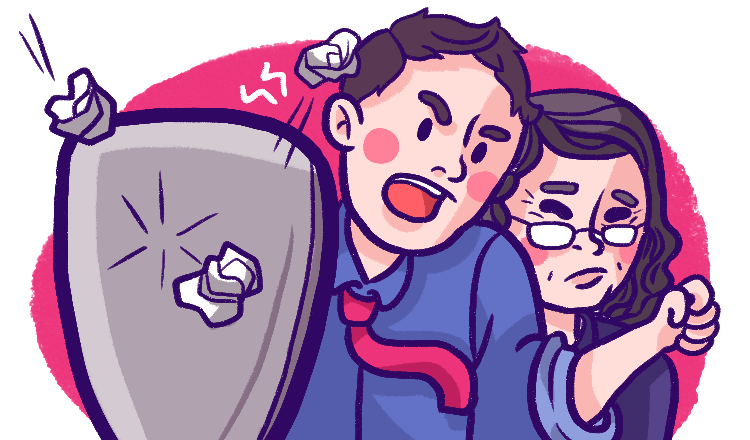
This may not seem like a big deal, but I felt better when I was useful. For one teacher, I was literally a bodyguard, batting down papers thrown at her and escorting students back to their seats. It was exhausting, but felt good protecting a sweet old lady from maniacs.

The point is, give yourself a role regarding each teacher and name it, like a job title (For Matsuda-sensei, I am pronunciation manager; for Katayama-sensei, I am a bouncer, etc.). Even if you don’t like the particular role, it will feel better knowing you are being a useful part of the team and give you attainable, satisfying goals.

2. Draw Out Your Good Students

goodstudents02

I had two first impressions of my school:

  1. My school was insane.
  2. All my students were bad.

The first impression remained largely true, but the second was not. In my first week I met four exceptional students, one who is currently attending Waseda University! They were my saving grace, but if I was going to survive, I needed to find more of them.

If I had to guess, I would say my school consisted of 100 yankis, 600 neutral students, and 200 good students (and about three sociopaths). But even with only 100 bad influences, it was enough to keep the insanity percolator at full boil.

But the fact remained, there were 200 good students in there somewhere. Drawing them out was the challenge. Calling on good students or talking to them outside of class worked only sometimes. I eventually noticed they could write English very well, but rarely spoke it and loved passing notes to each other.

Enter: Michael’s Mailbox System. I constructed a large cardboard mailbox and explained the system to each homeroom. The response was overwhelming. I began corresponding with at least 30-40 of the suspected 200 good students and that was enough for me. It gave me at least a few kids in each homeroom I could focus my attention on. This may be seen as playing favorites, but I saw it more as putting my efforts to good use.

Other ideas might be to join a club (good kids open up when not in a classroom environment) or start an English club (you’ll attract the kids who care enough to learn English in their free time).

3. Build Your Personal Confidence
confidence03

I was pretty nervous about teaching from the get-go. To make matters worse, after my self-introduction speech to the students (during which I mumbled Japanese words I had yet to learn the meaning of) I fell off the stage.

I slipped off the top step and slid down the stairs to the gym floor in front of 1,000 people. That was my school’s first impression of me.

Thankfully, a few days before that, I was sitting at an izakaya with a fellow ALT teacher who was giving me advice. The main thing I remembered her telling me was “freak out the squares.” Basically, fight loud and crazy with loud and crazy.

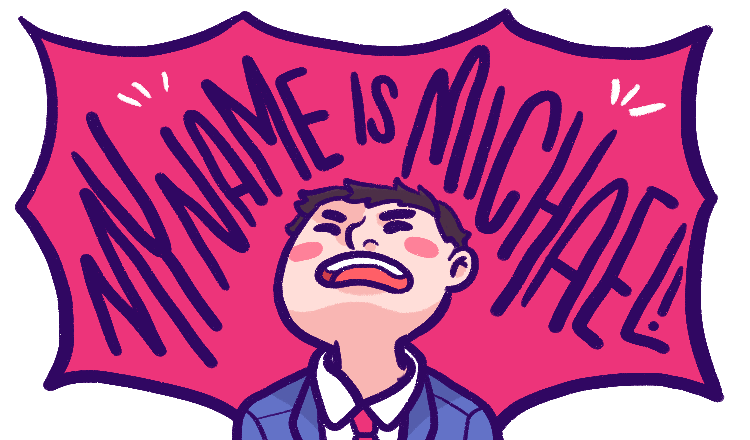
My glorious hiney slide in front of the 1,000 people was immediately followed by my first lesson ever. Talk about nerve racking. I was only three words into it when a student yelled an obscenity at me and the class fell into uproarious laughter. This was it, I had to freak out the squares. And freak out I did. “My name is…MICHAEL!” I yelled, clicking to my first slide, thankfully a wacky picture of me. The class reacted to my energy. I had them. I was all big noises and big movements. I felt small, but I acted big. When a kid yelled out of turn, I made him my ally in craziness. All in all, it was a fantastic first class.

Granted, this technique did not always work, but it worked surprisingly well most of the time. Recently I found out the reason why.

In a 2012 TED talk, Amy Cuddy exposes a simple truth: our stress and confidence hormones inform how we act, but acting confident reverses the process and informs our chemicals. I didn’t feel powerful, but I acted it and eventually became it (boosting my testosterone and lowering my cortisol). Doing this over long periods actually changes your behavior and your success rate. It’s not “fake it till you make it”, but rather “fake it till you become it”. Amy Cuddy explains it much better than I can.

I now consider being trapped in that crazy school to be one of the greatest blessings of my life. Because I took that first shaky step of power that day, I spent two years becoming a better presenter, which still serves me today.

4. Find Compassion For The Yankis
yanki04

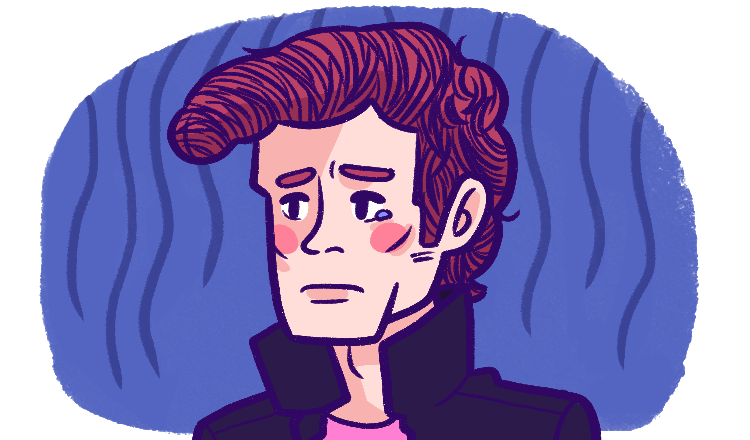
Yankis were the bane of my existence for a good long while. I mentioned them earlier, but allow me to elaborate here: they are the punks of Japan. Tall orange hair, baggy clothes, and an attitude. They always struck me as silly and never physically dangerous, but they were emotionally degrading and obnoxious. They interrupted my classes, yelled obscenities at me, and wouldn’t leave! They didn’t attend class, yet stayed in the school. That still boggles my mind. If you’re going to skip class, go to the mall! In a nutshell, they were the bad kids.

I hate to admit this, but for a time, I hated the yankis. They targeted me for ridicule, which I deflected but ultimately internalized. My turning point came when I began reflecting on problem students I went to school with and what (probably) made them act out. I didn’t know a lot of details about the yankis, but over time it became apparent that these renegade miscreants didn’t have much to look forward to. Their loud shows of bravado were mostly covers for what they did or didn’t have going for them outside of school.

This made them seem a lot less threatening and a lot more pathetic. And I mean that to say, it gave me sympathy for them.

Sadly, I never found a solution to the yanki’s behavior problems. If 65 teachers couldn’t keep a lid on the situation, it’s unlikely I could have. However, my perspective shift gave me more compassion for them. If they were harassing a student or teacher, I would do my best to stop it. But when they weren’t behaving badly, I didn’t treat them any differently than the other students and I even tried talking to them. It worked a few times. While most remained hostile and insane fools, I found a few good-natured yankis that, for whatever reason, just had no drive to succeed. I still think of them from time to time and hope they have found good things.

5. Understand And Make Peace With The Japanese Way Of Doing School
makepeace05

This goal was the hardest for me to achieve. After my first year, I had formed my conclusion about the Japanese school system: it was wrong and bad and awful! And it didn’t work. And also I hated it. Furthermore, I had the answers to fix all of their problems. But for all my “genius” fixes, I was powerless to change the system.

My anger at the school system had a threefold balm:

  1. Many of my creative heroes are products of the Japanese school system, as well as some very wonderful Japanese people who have become my friends. So something was working somehow.
  2. The system needed change before I got there, but it wasn’t going to change just because I showed up with my ideas. Even if the schools decide to change based on ideas from Western schools, Japan has to come to that realization and change in its own way.
  3. I didn’t attend a bad school in the U.S. but maybe some things that worked for me in my good school were not working for other kids in bad schools. Maybe some changes need to be enacted in my own country’s school system.

Frankly, these epiphanies came to me and took hold very slowly. You will have to wrestle with your grievances against Japanese school yourself and take time to make peace with them. No matter the conclusion you come to, however, you will become a more well-rounded person for spending the emotional energy to deal with these objections.

Here are few exercises you can do to help you wrestle:

  • Write down the things you don’t like about the Japanese way of doing school. Acknowledge that these objections are not frivolous. They are your convictions and they matter! Put them away somewhere (a book, a drawer) as an act of setting these grievances aside. You are not destroying or dismissing these feelings you have. That’s why you are keeping them. But you are putting them away in favor of accepting the system for what it is, so your grievances won’t get in the way of your greater mission as an ambassador.
  • Read some articles about problems in your own country’s school system. How many were in your blind spot? How many of the problems in Japanese schools may be blindspots to Japanese people?
  • Read Koichi’s article on the school system! It outlines what the Japanese way of school is trying to achieve. It helps to know how the system is supposed to work, even if it’s not working in your school.

In The End…

Let me add as I close, that even though my school was crazy and disturbing, I did not feel I was in any physical danger. The tips I outlined are not meant to help you accept or ignore a dangerous situation. If you feel you might be in danger of any physical harm, and this goes for any time in your life, get help or get out of there!

This batch of advice is just to get you started. Read other articles and forum posts by people in these situations. Even if you implement my suggestions, it will take a lot of patience, practice, and soul searching before you figure out what works best for you and your circumstances. You will still have bad days (those never went away for me) but you will deal with them and learn from them much more effectively.

In the end, if you can avoid denial and bitterness, you will find yourself to be a stronger and more holistic person than when you started. It sounds weird to say, but I’m glad I was placed in my insane school. It forced me into situations that built my self-confidence and life skills, as well as brought me face to face with a not-so-easy side of Japan. I was made to wrestle with things that made Japan seem less magical and more like a country filled with human beings. And that is what you will want at the end of your time teaching English, to know that you lived and experienced real Japan.

  • William Russell

    Awesome post, some great advice. From experience I can tell you that this sounds just like schools in my own England!

  • Lava Yuki

    Sounds like a regular public school anywhere. I went to a public school for junior and middle school in Ireland, and they were like what you describe.. Full of bullies and bad kids who just tormented the teachers. I was one of those quiet and studious kids, but I just felt sorry for the teachers.
    Defacing school toilets, smoking (at 12yrs), flinging paper balls at the teacher, just general chaos… looked like teaching hell to me. Thank god my parents moved me to a private school for high school though, which was probably like a teachers dream!

  • Luciano Tsiros

    … or just watch GTO and get tips from there

  • https://twitter.com/RochelleBreen Rochelle

    I was thinking of the Cuddy talk as soon as you started talking about loud and energetic regardless of inner confidence level, and then you mentioned it! I enjoyed reading this. The mailbox system sounds like a great way to give attention to the students that actually want it.

  • http://www.vietamins.com Viet

    Best. Advice. Ever.

  • Hybridsalmon

    What you’re describing isn’t a regular public school anywhere…Not in Belgium atleast.
    If I have to make a guess based on not much I would say it’s because private schools exist, that it gets so bad in public schools. If you have private schools AND public schools you just make a giant divide of quality. Private schools will have more money, meaning more tools to work with. For teachers it’s great, it boosts their motivation.
    Because you’ll have to pay (more) for a private school you’re automatically filtering which students can join your school( no poor students ). So the rest go to the public schools. For the children it’s bad, and same goes for the teachers.

  • Nikholasu

    Nice article! More from this guy please!

  • Alvin Brinson

    Take it from a real teacher – You can’t win with every kid every time, despite what anime & movies will have you believe.

    A lot of tips here apply to troubled schools regardless of country. You have to choose your battles, deal with those battles you can’t win, and focus on the students who are just trying to dodge the bullets.

  • Lava Yuki

    No, Im just describing a regular city public school in Ireland, I dont know about other countries. Not that all public schools are bad, but most of them do have a lot of rebellious kids. They are like this is because education is free in Ireland and compulsory until high school, so there r many who hate school and don’t care.

    Private schools you pay of course, but everyone is studious and hard working, and teachers pay individual attention.

  • shiro

    Important to consider: are public schools bad because private schools exist, or do private schools exist because public schools are bad? It’s important to research the cause and effect of a problem before you begin building theories on how to fix it.

    My thought on the subject is that as long as you have compulsory, standardized, generalized education, you will have students who just don’t give a f***.

  • Kwami

    Could you give more details about Michael’s Mailbox? Was it just a way for students to pass notes to you, or was there more to it? I could see it being a great outlet for the “good students” to ask questions or advice anonymously without getting flak from the yankis.

  • a hairy piece of 2% mochi

    As for physical harm, Japan is much more a psychological harm kinda place. Get that straight and you’ll be doing better than the other 98%.

  • orangedude

    Awesome article! I hope to apply to the JET Program when I graduate, and it’s awesome to get some honest insight on what I’ll be experiencing. Many thanks!

  • K

    I’m currently an ALT in a small rural town and all of the Japanese teachers I work with just like to use me as a tape recorder. My best advice if you’re in this frustrating situation is to ‘become a Buddha’. If you focus all your energy on what you can’t change, you’ll go crazy. Accept and make the small impressions that are available to you. Ask a student about their new glasses, ‘bop’ a kid on the head as you pass, make your kids have a staring contest with you at lunch time. Ultimately, it’s these moments that they’re going to remember.

  • Luana Nishikava

    That’s interesting, you described a public school in Brazil hahaha
    I hate to think that education is still a problem to be resolved by many countries.D:

  • Michael Richey

    Great advice! I remember well the tape recorder classes. And you are right, once you stop focusing on what you can’t change, it gets a lot easier. Tape recorder was one of the roles I accepted with three of my teachers, but I found I was still able to be happy in their classes by adding my own special Michael spice to the “read and repeat” recipe.

  • DAVIDPD

    PERSPECTIVE. That is all.

  • Michael Richey

    Yeah, that TED Talk is life-altering. The power poses are great to practice every day, not just when you get in those stressful situations. I’ve found that reducing my stress daily has changed how quickly I can respond when a stressful situation comes up out of the blue.

  • Michael Richey

    A really important thing to remember while on JET or teaching in any country that’s not your own is that difficult schools are not unique to that country. The way and shape of the school troubles may be different, and that can trick you into thinking “this kind of stuff would never happen in my country.” But when your brain rises above it, you’ll notice it’s a human problem just taking a form you’re not used to. And realizing that makes it all a lot easier to deal with.

  • Michael Richey

    Thank you, I’m glad you liked the article! Please do apply for JET. It will change your life, but not in the way you think. It will be better. If you do any research on what JET is like before you go, you will have an advantage I didn’t. I just jumped in with both feet! But let that be encouragement to you. I was at a disadvantage when I started (no knowledge of the schools and no Japanese) and still came out the other side alive and loving Japan.

  • Moogiechan

    Even good schools have students like these, so this article is useful for all ALTs.

  • Stephanie

    This is a wonderful article, thanks for sharing your experience. Incredible advice.

  • WOTDsctoo

    This was a really well-written article! (^.^)b

  • Rick

    I’ll still never understand why hordes of non-Japanese speakers rush to Japan every year to take part in this ridicule. I grew up speaking Japanese, and still would never fucking do it. You and your opinions will not be respected, and it’s not like you can properly communicate said opinions anyway. But, alas, there’s a sucker born every day, and JET loves to exploit that.

    What I’m trying to say is that people should really hone their Japanese skills before they go in order to properly make sense of it all and not be completely helpless.

  • mobiuschic42

    Thank you so much for this wonderful article! I’m pretty lucky in that I only go to my “bad” school once a week, but it’s a really tough one. We’d probably call it an “Alternative School” in the US. It’s a half day high school (with morning classes, evening classes, and a correspondence program) that’s basically only for kids who didn’t work out at other schools. So it’s more than 50% yankees, and then most of the other kids have some kind of mental illness or home life problems. My base school is a “chuto” that kids test into for combined JHS-SHS, so it’s quite a contrast.

    That said, I’ve come to really love my tough school. I’ve used many of the techniques you mentioned, and it’s wonderful to have some external backup that my way of dealing with things is not unique.

    As for the yankees: many of these are kids who are just not fitting into Japanese society. Other teachers have admitted being genuinely scared of them and are surprised that I’m not (I went to a very large public HS with all kinds of kids, so I’m not intimidated in the least by these boys). I think, in a way, that I’m a breath of fresh air for them. I’m mostly ignorant of the Japanese “rules” that they’re struggling with or rejecting (or struggling with them myself!), and I’m happy to talk with them without fear. I can see that they appreciate a different viewpoint from what they usually get from Japanese teachers.

  • Michael Richey

    Of course! It was a simple system. The mailbox was a big cardboard container that looks EXACTLY like the awesome picture Aya drew for the article (Thanks Aya!). I put it inside and old trophy case in the main hall, mostly to keep it from Yanki vandalism. I put a message in English and Japanese talking about my hobbies and asked the students to tell me their hobbies. Then I announced it to each homeroom and waited to receive letters with the kid’s name and homeroom on the envelope. I would write a reply and hand deliver it to them in between classes or at lunch. I never delivered letters during class or drew attention to them, because I knew these were shy kids I was dealing with. I ended up corresponding with about 20 to 30 students off and on, some more regular than others. Most of them were kids I never would have known existed in the sea of 900. It was rewarding for me to have more personal connection with the students, which I had been lacking. Some kids who didn’t know any English would draw me pictures and I would draw pictures back to them, which was also great fun. Even though they weren’t learning English, I was at least teaching them the foreigners can be friendly. One thing I would do differently if I had to do it again would be to have my supervisor read through the letters with me. At the time, no teacher thought it was weird for me to have a direct line to the students and, for some reason, I didn’t either. I know some (or all?) homeroom teachers have journals they write to their students, so I was under the impression everyone thought it was normal. But just for the sake of professionalism, I would take the extra time to have someone else in the loop.

  • Kwami

    Thanks for that. Sounds like a lot of fun. :)

  • http://zoomingjapan.com/ zoomingjapan

    Great advice for ALT teachers, Michael.
    I’ve been teaching English für 6+ years in Japan now, but I’ve never been an ALT.
    Although there are problems, too, I can recommend teaching at an Eikaiwa instead for people who struggle with being an ALT.

  • Michael Richey

    Great comment! I’m glad the article gave you some backup and confirmation. Sometimes knowing you’re not alone is exactly what you need. But it sounds like you’re doing an awesome job on your own! Kudos!

    As for the yankis, you made a great point. They’re rebelling against something, probably even something as large as society, as you mentioned. The Japanese teachers are maybe either scared or don’t understand the yankis. So if you have the patience and wherewithal to make connections with them, you’re totally going above and beyond!

  • ekneko

    This is seriously a great read. I would like to recommend a sister article to this one which addresses being placed in a bad Eikaiwa. Unfortunately I had a bad experience (first time to Japan and joined an Eikaiwa with very stressful and degrading work experiences). I would like to hear how others have dealt with this that didn’t leave Japan, but instead stuck it out. I didn’t leave Japan after that experience, but I did end my contract and looked for new work.

  • Genki!

    That was a good read! I too was at a bad school in Japan during my first year. I came to the same conclusions that you did and just accepted it and worked WITH it instead of against it. I actually found that a lot of students who I initially thought were ‘bad’ turned out to be awesome and full of personality. Thanks for writing this!

  • thasupremekai

    Not true. It is just incredibly difficult. I have seen some genius teachers, and they can do it but they cant do it in that environment. They took 30 troubled kids and have the flexibility to take them out of that school environment into a different learning environment.

    He taught them that there were many different kinds of intelligent and taught them which were theirs through tests. They all realise they could be brilliant at something.

    We arent all as capable as him or teachers like him. He was literally a master of education and psychology.

  • http://www.vasdrakken.com/ Vasdrakken

    As far as the punkers go, in Japanese culture it is easy to get them to work with you. The key is totally humiliate them by exposing their limited knowledge in something they value. I would never do this in other cultures but in Japanese culture it works. Kids often memorize a lot of stuff but their comprehension is often low. So you have to find out what they idolize what they actually know about it, then learn what they don’t know about it. It helps if their friends know the pieces that you want to use. What it boils down to is knowledge is power but you have to be willing to learn their culture to get through to them.

  • Guest

    I sometimes bring my iPad because they ask me to draw them some anime characters. Then I give their class an A4 size print when I’m done. They love it!

  • CJ Takeda

    I sometimes bring my iPad because they ask me to draw them some anime characters. Then I give their class an A4 size print when I’m done. They love it! Cheers to us!

  • onamae

    It sounds like you still hate the yankis after however long it’s been. I have many in my schools as well, and quite honestly had I grown up in Japan I am certain I would have been one of them. Finding compassion for them is good advice however, please practice it and don’t just use those words and then speak passive aggressively about them in your next breath. I am certain they know when the teacher is being fake. Well, I knew it anyways when I was in high school and I am no more perceptive than anyone else in this world.
    I don’t have any kids who are physically aggressive with me, so I really cannot comment on how to deal with them. Generally speaking, it is not our job as ALTs to deal with physically aggressive students. Nor is it our job to dole out punishment.
    I can comment on what has worked for me with the non-physically aggressive “yanki” students. Quite simply it is eye contact and talking to them like they’re human beings worthy of respect, just like everyone else. Also, get over yourself. You’re no better than any of them. Stop yourself from thinking things like, “oh they will never get out of this inaka town”, “they have no future,” “why are they even here if they don’t go to class? They should just drop out already,” “I knew guys like them in high school and they’ve amounted to nothing,” “they’re pathetic,” and so on. Those are things ALTs think to make *themselves* feel better and it does nothing to address the issue.

  • Jane

    Love this article. I always wondered what it’d be like to be a JET teacher! On another note…who is the artist for all of these articles? As an artist myself, I feel saddened that I can’t easily find the credits to the illustrator who created all this awesome artwork. I really love the art and it helps bring the stories to life.

  • Michael Richey

    Drawing can be a total life saver, for sure.

  • Kwami

    I would imagine that some folks just want an easy way to get to Japan long-term and teaching ESL is one such way. Some people actually like teaching, too. You don’t have to be an ALT forever.

  • CJ Takeda

    Here’s one..

  • CJ Takeda

    I would like to try this for my 2nd graders next school year. 😃

  • Eric

    Such an on-point article, perfect! My experience was in Chile (crossing fingers for JET now) and I can tell you my first view of the public school I went to there put visions of Shawshank Redemption in my head. Immediately I had to break with a lot of the more “ideal” methods learned during certification, and while I’d never prefer to be placed in such a school, yeah, I can second what you’re saying: if you make the decision to go ahead, stick it out, and do your best, the benefits of personal growth are astounding.

  • Wabisabi

    If you have seen or done work with Interac, you will know that it’s practically marketed as a holiday.

    Then bootcamp comes to scare the crap out of all the idiots they hired…

  • Wabisabi

    After working in Tokyo’s Minato ward and several other areas, the level of discipline seems to be pretty much solely dependent on Japanese teachers. In that respect, ALTs are essentially just classroom scarecrows since they technically (in dispatch jobs, anyway) have no authority.

    At one school I was at in Tokyo (which will not named or even located) the Japanese teachers were both extremely kind and extremely strict. One would physically force (but not harm) students to comply with reasonable demands in English class (e.g. holding a first year students’s arms from behind to make them participate in karuta), one would scream in English at children misbehaving and pull them out of seats to literally drag them out of the class backwards with their legs trailing on the ground to tell them off, amongst other things…

    However, they would always verge on the side of leniency in order to keep things fair and reasonable on their behalf – they would always avoid risking being perceived as mean because then they would lose the moral high ground. At the end of the year, the originally bad kids were no longer bad kids. It was was incredible! They weren’t being mean so much as strict and never physically punished the children, always carefully explaining why what they did was bad, and so on.

    Unfortunately, doing that entailed leaving the classroom with only me present (illegal under the gyomu itaku dispatch law in schools apparently). Some kids didn’t see me as a proper teacher even though I was essentially 100% solo so one class in particular would just riot and I couldn’t do anything to control them (especially with one frequently jumping from his desk to wrap his arms around my legs or something to prevent me from carrying on). The teacher of that class knew and respected me for not saying anything, she deliberately told my colleague in the school to pass on the message I think. I could have told my company, but it would have looked bad on the school, the teacher, me, and my colleague so I didn’t.

    Moral of the story: ALTs, even dispatched solo teachers, you’re just not important to the grand scheme of things. If you are being reasonable in a Japanese sense, then don’t take it personally. You just have to roll with it and try your best. I would definitely recommend not thinking of yourself as important for creating any kind of sense of discipline or punishing students, rather just co-opt the atmosphere and do what you can. It’s better to win the respect of students rather than trying to establish authority over them because you can’t force it in that kind of situation…

  • Michael Richey

    The artist is Aya Francisco. She does all the awesome art on the site.

  • http://www.hokkaidokuma.com/ HokkaidoKuma

    I understand where you’re coming from and I agree 100% with you. The more a person knows the better off they will be. In this case, a person who has a strong hold of the Japanese language and thorough understanding of the customs is much more useful than someone who doesn’t possess such qualities.

    And I’ll even sadly admit that the majority of ALTs who come to Japan, end up partying and drinking their time away. They never really take their job seriously nor step outside of their comfort levels. It’s an unfortunate side-effect of the JET program and any other ALT company.

    But for others who really try to embrace the whole cultural exchange and take in the experience, I don’t think should be written off so easily.

    When you say, “I grew up speaking Japanese, and still would never fucking do it… But, alas, there’s a sucker born every day, and JET loves to exploit that.” I’m not sure what point your trying to make. Perhaps you could explain a bit further?

  • http://www.hokkaidokuma.com/ HokkaidoKuma

    As a 4 year JET I’m really glad to have come across an article like this. For all the JET program’s influence and positive it has contributed over the last 30 years, preparing ALTs for how to deal with problem students is where the program has taken a step back. From my observations at least.

    Typically, among a lot of 1st and 2nd year ALTs you’ll hear the common complaint that they’re not being used enough in the classroom, but once an ALT grows beyond that, the focus begins to shift toward, how can I be useful to the JTEs that I work with and what the hell am I suppose to do when a student cusses me out in the middle of class?!

    It’s a really great topic and one that deserves to be taken more seriously. I really appreciate the time taken to write this article and I’m going to have to try the mail box idea as I enter the final months of being in Japan.

  • Spike Hades

    It seems like you just gave up on the idea of teaching a became a fun and jolly entertainment complex. Its nice to know that the city was paying upwards of 3.5 million yen a year for jolly school mascot.

  • Cory

    ” I returned to the U.S. feeling comfortable with my infamous school and loving Japan less as a magic lollipop kingdom and more like an old friend.” Best line in the article. Great read thanks for writing this.

  • Fiona Rainbow

    Me too! English schools can get crazy! there were kids in my classes that would throw themselves at walls/doors just for a laugh, and disrupt classes for the attention it gave them. My better teachers found reward systems like sweets for hard work/ being quiet in class to work quite well as a deterrent to bad behaviour