<?xml version="1.0" encoding="UTF-8"?><rss version="2.0"
	xmlns:content="http://purl.org/rss/1.0/modules/content/"
	xmlns:dc="http://purl.org/dc/elements/1.1/"
	xmlns:atom="http://www.w3.org/2005/Atom"
	xmlns:sy="http://purl.org/rss/1.0/modules/syndication/"
	
	>
<channel>
	<title>Comments on: Why The Japanese Education System Does Not Excel As Much As You Might Think</title>
	<atom:link href="http://www.tofugu.com/2014/03/13/why-the-japanese-education-system-does-not-excel-as-much-as-you-might-think/feed/" rel="self" type="application/rss+xml" />
	<link>http://www.tofugu.com/2014/03/13/why-the-japanese-education-system-does-not-excel-as-much-as-you-might-think/</link>
	<description>A Japanese Language &#38; Culture Blog</description>
	<lastBuildDate>Sun, 13 Apr 2014 08:29:00 +0000</lastBuildDate>
		<sy:updatePeriod>hourly</sy:updatePeriod>
		<sy:updateFrequency>1</sy:updateFrequency>
	<generator>http://wordpress.org/?v=3.8.2</generator>
	<item>
		<title>By: Beth H.</title>
		<link>http://www.tofugu.com/2014/03/13/why-the-japanese-education-system-does-not-excel-as-much-as-you-might-think/comment-page-1/#comment-301206</link>
		<dc:creator><![CDATA[Beth H.]]></dc:creator>
		<pubDate>Wed, 19 Mar 2014 19:21:00 +0000</pubDate>
		<guid isPermaLink="false">http://www.tofugu.com/?p=38296#comment-301206</guid>
		<description><![CDATA[A friend (a teacher here in the US) and I were discussing last week the differences between the school systems in the U.S. and Japan. One of the questions that came up was how does Japan (or other Asian countries) handle issues with children that have a learning disability or need some kind of IEP (Individualized Education Plan). I&#039;d guess (based on the comments) that everyone is treated the exact same at a very low baseline.


Would anyone be able to provide any information on this? Are there additional educational classes for these types of students? Specific cram schools? Weekend classes?]]></description>
		<content:encoded><![CDATA[<p>A friend (a teacher here in the US) and I were discussing last week the differences between the school systems in the U.S. and Japan. One of the questions that came up was how does Japan (or other Asian countries) handle issues with children that have a learning disability or need some kind of IEP (Individualized Education Plan). I&#8217;d guess (based on the comments) that everyone is treated the exact same at a very low baseline.</p>
<p>Would anyone be able to provide any information on this? Are there additional educational classes for these types of students? Specific cram schools? Weekend classes?</p>
]]></content:encoded>
	</item>
	<item>
		<title>By: Wabisabi</title>
		<link>http://www.tofugu.com/2014/03/13/why-the-japanese-education-system-does-not-excel-as-much-as-you-might-think/comment-page-1/#comment-301155</link>
		<dc:creator><![CDATA[Wabisabi]]></dc:creator>
		<pubDate>Wed, 19 Mar 2014 08:27:00 +0000</pubDate>
		<guid isPermaLink="false">http://www.tofugu.com/?p=38296#comment-301155</guid>
		<description><![CDATA[As for an alternative example of education in Japan, a girl I know in an escalator school is pretty much the most relaxed and creative kid I&#039;ve met, yet is in no way an under-performer. In fact, all the students I know at private schools are ridiculously ahead of other state-educated students, but there&#039;s more than just the public-private factor in play considering the privately educated ones are most likely far wealthier, amongst other things.

I also don&#039;t want to sound mean, but private schools seem to have a sensible and usable English education program. I haven&#039;t met many people who can speak decent English after graduating from a public high school to be honest (apart from Tokyo&#039;s Minato ward&#039;s JHSs and HSs). It&#039;s also not particularly the fault of the Japanese teachers because they just do what they think is best and can actually do themselves, the BOEs and MEXT should really be picking up the slack and investing in teacher training instead of throwing money down the drain hiring dispatch companies to bring in random foreigners year on year.

As for outcomes in the economy, there isn&#039;t a huge correlation between education and having a strong economy. It helps, but there&#039;s more factors than that. It&#039;s particularly telling that America took over a lot of what Japanese industry captains took for granted, like smart phones and mp3 players. Most Japanese companies also don&#039;t look abroad for sales because they are content with the domestic market. The way to succeed as a business changes and obviously many Japanese companies haven&#039;t caught up. However, I&#039;m actually fairly confident that they will catch the winds of change eventually, especially with the digital industry in places such as Shibuya&#039;s Bit Valley as well as other manufacturing start-ups. I actually think the government will also implement measures to encourage new companies to be created since most new jobs are created by new companies rather than older, more established ones. A bit of risk-taking would also help...]]></description>
		<content:encoded><![CDATA[<p>As for an alternative example of education in Japan, a girl I know in an escalator school is pretty much the most relaxed and creative kid I&#8217;ve met, yet is in no way an under-performer. In fact, all the students I know at private schools are ridiculously ahead of other state-educated students, but there&#8217;s more than just the public-private factor in play considering the privately educated ones are most likely far wealthier, amongst other things.</p>
<p>I also don&#8217;t want to sound mean, but private schools seem to have a sensible and usable English education program. I haven&#8217;t met many people who can speak decent English after graduating from a public high school to be honest (apart from Tokyo&#8217;s Minato ward&#8217;s JHSs and HSs). It&#8217;s also not particularly the fault of the Japanese teachers because they just do what they think is best and can actually do themselves, the BOEs and MEXT should really be picking up the slack and investing in teacher training instead of throwing money down the drain hiring dispatch companies to bring in random foreigners year on year.</p>
<p>As for outcomes in the economy, there isn&#8217;t a huge correlation between education and having a strong economy. It helps, but there&#8217;s more factors than that. It&#8217;s particularly telling that America took over a lot of what Japanese industry captains took for granted, like smart phones and mp3 players. Most Japanese companies also don&#8217;t look abroad for sales because they are content with the domestic market. The way to succeed as a business changes and obviously many Japanese companies haven&#8217;t caught up. However, I&#8217;m actually fairly confident that they will catch the winds of change eventually, especially with the digital industry in places such as Shibuya&#8217;s Bit Valley as well as other manufacturing start-ups. I actually think the government will also implement measures to encourage new companies to be created since most new jobs are created by new companies rather than older, more established ones. A bit of risk-taking would also help&#8230;</p>
]]></content:encoded>
	</item>
	<item>
		<title>By: Anti-bully</title>
		<link>http://www.tofugu.com/2014/03/13/why-the-japanese-education-system-does-not-excel-as-much-as-you-might-think/comment-page-1/#comment-301114</link>
		<dc:creator><![CDATA[Anti-bully]]></dc:creator>
		<pubDate>Wed, 19 Mar 2014 00:25:00 +0000</pubDate>
		<guid isPermaLink="false">http://www.tofugu.com/?p=38296#comment-301114</guid>
		<description><![CDATA[You&#039;re actually hitting on a MAJOR flaw of Japanese schools - the &quot;kumi&quot; system, where EVERY SINGLE STUDENT in the school is grouped with 30-50 (yes, at private Japanese schools, class sizes are STANDARD at 50 - bear in mind, that in America, over 30 children in a class is considered squalid education conditions) - grouped with 30-50 other students, and ALL STUDENTS in the group have to conform to the EXACT SAME STANDARDS, for TWELVE YEARS. 


From first grade to senior year, you have NO CHOICE in your classes. You get to pick one club, but many schools make that a one-off thing - the second you choose a club, you are STUCK in it for years. (Not all schools do that.) 

But, think about that. You&#039;re in a room with 30-50 other people, and you have to be JUST LIKE THEM. You have to take the same classes, you have to learn at the same speed, you have to study the same things. Everything you do is the same. 

So, on the one hand, this is the obvious reason why cram schools are so important in Japan - there is NO CHANCE whatsoever in a Japanese school for an individual child to learn anything that is appropriate to his age, personality, learning style, &amp;c. LEAVING school and PAYING a private tutor to teach you is the ONLY way in Japan to learn at a healthy pace for yourself. It also means there are no honors classes, no AP classes, no chance for extraordinary children to explore and exploit their skills (I mean, you can study, study, study and pay outrageous sums of money to go to an &quot;elite&quot; school, but that is also a one-off thing: if you don&#039;t make it into the school on the first try, when you are 10, then you miss it forever.)


So, that&#039;s obviously one reason why the grading system is such a joke - if you actually graded children on their abilities, you would utterly destroy the kumi system. Which would be good! The kumi system is one of the single stupidest things I&#039;ve ever seen anywhere in the world. But the Japanese won&#039;t get rid of it, because &quot;it&#039;s their culture,&quot; so the kids get to coast by on 20% passing grades. 


The WHOLE THING is a really f-ed up mess. It LOOKS good and SOUNDS good if you live in another country and you&#039;re looking at it from the outside. But, trust me: come to Japan. Live with a Japanese child. Work with Japanese children. You&#039;ll see just how soul-crushing the kumi system is for them. I mean, take a high school aged child and tell him that he has a choice in his education, that he could choose what to study, and it just blows his mind. The ENTIRE CONCEPT of choice and preference, the idea of learning being fun or worthwhile in itself, or even the concept of his own potential to expand and grow beyond his peers is just...gone from him. Ask him what his hope and dream is, and all he has is &quot;Go to a good university.&quot; Ask him his plan for the weekend, and it is, &quot;Study.&quot;

The kumi system is a really, really, really, unspeakably, horribly, just...awful thing. 

It just also happens to be one of the biggest causes of the bullying that goes on constantly in Japanese school, for obvious reasons. You jam 50 kids in a room and FORCE them to conform to the exact same standards, and guess what: the kids who can&#039;t will be bullied mercilessly.

SO MANY problems in Japanese school could be fixed if they abolished the kumi system, but, well, Japan doesn&#039;t specialize in simple, effective solutions. 

But, hey. There are pros and cons to everything. The pros to the kumi system...um...it...allows...teachers...to teach with less effort? So they can...um...be lazy? 

Oh, no! The ONE PRO of the kumi system that I can think of is that it allows for school trips: when you have a group of fifty kids that works together all the time, it&#039;s a lot easier to say, &quot;Ok, everyone, we&#039;re going to OKINAWA!&quot; Of course, the poor students, well, can&#039;t. And they can&#039;t speak up and say, &quot;I&#039;m poor. Can we go to, say, Osaka instead?&quot; Because, well, that would open them up to merciless bullying. So, the government actually foots the bill, and poor students can get money from the government to go on school trips. 

So...wait. That&#039;s not a pro, that&#039;s a con, because that is a MASSIVE tax burden JUST so kids can go to Okinawa? Because their school gives them no choice? And they&#039;ll be bullied mercilessly if they can&#039;t afford the trip? 

So...yeah. No pros to the kumi system. Ugh, it&#039;s seriously awful.]]></description>
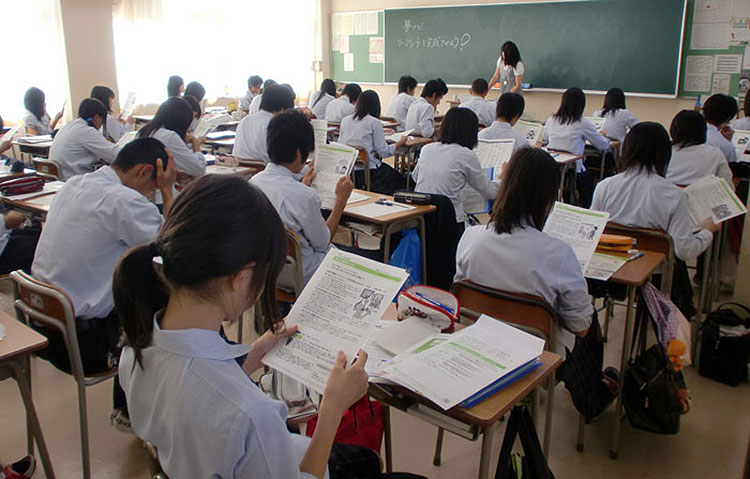
		<content:encoded><![CDATA[<p>You&#8217;re actually hitting on a MAJOR flaw of Japanese schools &#8211; the &#8220;kumi&#8221; system, where EVERY SINGLE STUDENT in the school is grouped with 30-50 (yes, at private Japanese schools, class sizes are STANDARD at 50 &#8211; bear in mind, that in America, over 30 children in a class is considered squalid education conditions) &#8211; grouped with 30-50 other students, and ALL STUDENTS in the group have to conform to the EXACT SAME STANDARDS, for TWELVE YEARS. </p>
<p>From first grade to senior year, you have NO CHOICE in your classes. You get to pick one club, but many schools make that a one-off thing &#8211; the second you choose a club, you are STUCK in it for years. (Not all schools do that.) </p>
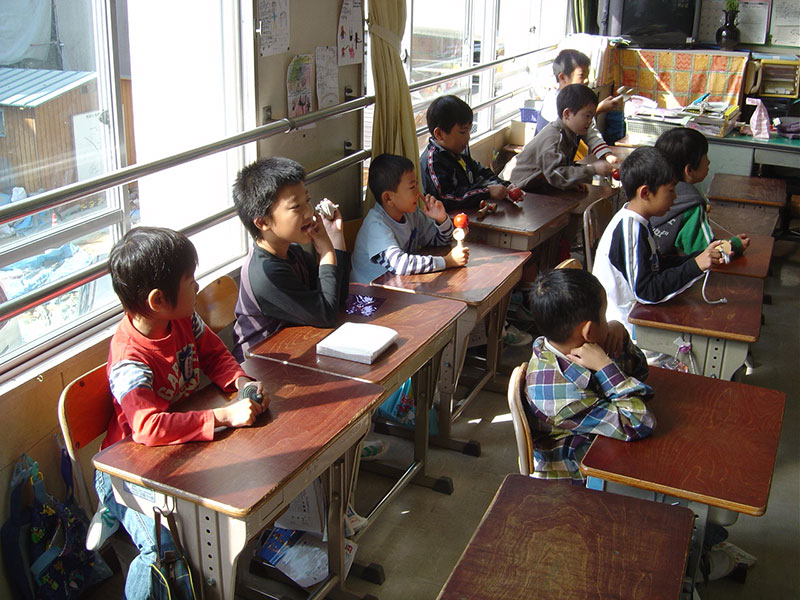
<p>But, think about that. You&#8217;re in a room with 30-50 other people, and you have to be JUST LIKE THEM. You have to take the same classes, you have to learn at the same speed, you have to study the same things. Everything you do is the same. </p>
<p>So, on the one hand, this is the obvious reason why cram schools are so important in Japan &#8211; there is NO CHANCE whatsoever in a Japanese school for an individual child to learn anything that is appropriate to his age, personality, learning style, &amp;c. LEAVING school and PAYING a private tutor to teach you is the ONLY way in Japan to learn at a healthy pace for yourself. It also means there are no honors classes, no AP classes, no chance for extraordinary children to explore and exploit their skills (I mean, you can study, study, study and pay outrageous sums of money to go to an &#8220;elite&#8221; school, but that is also a one-off thing: if you don&#8217;t make it into the school on the first try, when you are 10, then you miss it forever.)</p>
<p>So, that&#8217;s obviously one reason why the grading system is such a joke &#8211; if you actually graded children on their abilities, you would utterly destroy the kumi system. Which would be good! The kumi system is one of the single stupidest things I&#8217;ve ever seen anywhere in the world. But the Japanese won&#8217;t get rid of it, because &#8220;it&#8217;s their culture,&#8221; so the kids get to coast by on 20% passing grades. </p>
<p>The WHOLE THING is a really f-ed up mess. It LOOKS good and SOUNDS good if you live in another country and you&#8217;re looking at it from the outside. But, trust me: come to Japan. Live with a Japanese child. Work with Japanese children. You&#8217;ll see just how soul-crushing the kumi system is for them. I mean, take a high school aged child and tell him that he has a choice in his education, that he could choose what to study, and it just blows his mind. The ENTIRE CONCEPT of choice and preference, the idea of learning being fun or worthwhile in itself, or even the concept of his own potential to expand and grow beyond his peers is just&#8230;gone from him. Ask him what his hope and dream is, and all he has is &#8220;Go to a good university.&#8221; Ask him his plan for the weekend, and it is, &#8220;Study.&#8221;</p>
<p>The kumi system is a really, really, really, unspeakably, horribly, just&#8230;awful thing. </p>
<p>It just also happens to be one of the biggest causes of the bullying that goes on constantly in Japanese school, for obvious reasons. You jam 50 kids in a room and FORCE them to conform to the exact same standards, and guess what: the kids who can&#8217;t will be bullied mercilessly.</p>
<p>SO MANY problems in Japanese school could be fixed if they abolished the kumi system, but, well, Japan doesn&#8217;t specialize in simple, effective solutions. </p>
<p>But, hey. There are pros and cons to everything. The pros to the kumi system&#8230;um&#8230;it&#8230;allows&#8230;teachers&#8230;to teach with less effort? So they can&#8230;um&#8230;be lazy? </p>
<p>Oh, no! The ONE PRO of the kumi system that I can think of is that it allows for school trips: when you have a group of fifty kids that works together all the time, it&#8217;s a lot easier to say, &#8220;Ok, everyone, we&#8217;re going to OKINAWA!&#8221; Of course, the poor students, well, can&#8217;t. And they can&#8217;t speak up and say, &#8220;I&#8217;m poor. Can we go to, say, Osaka instead?&#8221; Because, well, that would open them up to merciless bullying. So, the government actually foots the bill, and poor students can get money from the government to go on school trips. </p>
<p>So&#8230;wait. That&#8217;s not a pro, that&#8217;s a con, because that is a MASSIVE tax burden JUST so kids can go to Okinawa? Because their school gives them no choice? And they&#8217;ll be bullied mercilessly if they can&#8217;t afford the trip? </p>
<p>So&#8230;yeah. No pros to the kumi system. Ugh, it&#8217;s seriously awful.</p>
]]></content:encoded>
	</item>
	<item>
		<title>By: Admiral Awesome</title>
		<link>http://www.tofugu.com/2014/03/13/why-the-japanese-education-system-does-not-excel-as-much-as-you-might-think/comment-page-1/#comment-301053</link>
		<dc:creator><![CDATA[Admiral Awesome]]></dc:creator>
		<pubDate>Tue, 18 Mar 2014 12:10:00 +0000</pubDate>
		<guid isPermaLink="false">http://www.tofugu.com/?p=38296#comment-301053</guid>
		<description><![CDATA[I don&#039;t necessarily agree with the statement on college and university level education. All education is intertwined at least to a small degree, and thus the public grade school system is bringing everything else down with it. Colleges are lowering their standards to accept more of the graduating students. I&#039;m a current undergraduate at Florida International University and the kind of things I see are amazing. Colleges have a math that is lower than &quot;college algebra&quot;! It&#039;s just saddening. There&#039;s just people who waste the governments money and are here only because bachelors degree is becoming the same level of the high school degree 2 decades ago and later. Even in my programming classes, there&#039;s just people that sit there and don&#039;t listen, don&#039;t go home and study, and just complain about the teachers teaching methods and fail/drop out of the class, waiting for a teacher who is super easy and just gives them the A.]]></description>
		<content:encoded><![CDATA[<p>I don&#8217;t necessarily agree with the statement on college and university level education. All education is intertwined at least to a small degree, and thus the public grade school system is bringing everything else down with it. Colleges are lowering their standards to accept more of the graduating students. I&#8217;m a current undergraduate at Florida International University and the kind of things I see are amazing. Colleges have a math that is lower than &#8220;college algebra&#8221;! It&#8217;s just saddening. There&#8217;s just people who waste the governments money and are here only because bachelors degree is becoming the same level of the high school degree 2 decades ago and later. Even in my programming classes, there&#8217;s just people that sit there and don&#8217;t listen, don&#8217;t go home and study, and just complain about the teachers teaching methods and fail/drop out of the class, waiting for a teacher who is super easy and just gives them the A.</p>
]]></content:encoded>
	</item>
	<item>
		<title>By: Matt Erik Katch</title>
		<link>http://www.tofugu.com/2014/03/13/why-the-japanese-education-system-does-not-excel-as-much-as-you-might-think/comment-page-1/#comment-301044</link>
		<dc:creator><![CDATA[Matt Erik Katch]]></dc:creator>
		<pubDate>Tue, 18 Mar 2014 10:08:00 +0000</pubDate>
		<guid isPermaLink="false">http://www.tofugu.com/?p=38296#comment-301044</guid>
		<description><![CDATA[Yeah, I don&#039;t think he was arguing that point as a Japanese person, but it&#039;s a common line of thinking. Though really, a solid, effective education system will bolster any economy, in my opinion.]]></description>
		<content:encoded><![CDATA[<p>Yeah, I don&#8217;t think he was arguing that point as a Japanese person, but it&#8217;s a common line of thinking. Though really, a solid, effective education system will bolster any economy, in my opinion.</p>
]]></content:encoded>
	</item>
	<item>
		<title>By: Matt Erik Katch</title>
		<link>http://www.tofugu.com/2014/03/13/why-the-japanese-education-system-does-not-excel-as-much-as-you-might-think/comment-page-1/#comment-301043</link>
		<dc:creator><![CDATA[Matt Erik Katch]]></dc:creator>
		<pubDate>Tue, 18 Mar 2014 10:06:00 +0000</pubDate>
		<guid isPermaLink="false">http://www.tofugu.com/?p=38296#comment-301043</guid>
		<description><![CDATA[I&#039;d disagree on the uniforms aspect. I&#039;ve worked in a number of Japanese public schools and most students love the uniforms. The grading system I&#039;d agree with though. Many students consistently get 20% on tests, but until high school and often until college, there&#039;s no real consequence. You can&#039;t fail a grade and have to repeat it. And even then at the university level, once you pass that test and get in, even at renowned universities like Waseda, there&#039;s a good bit of coasting.]]></description>
		<content:encoded><![CDATA[<p>I&#8217;d disagree on the uniforms aspect. I&#8217;ve worked in a number of Japanese public schools and most students love the uniforms. The grading system I&#8217;d agree with though. Many students consistently get 20% on tests, but until high school and often until college, there&#8217;s no real consequence. You can&#8217;t fail a grade and have to repeat it. And even then at the university level, once you pass that test and get in, even at renowned universities like Waseda, there&#8217;s a good bit of coasting.</p>
]]></content:encoded>
	</item>
</channel>
</rss>