Why The Japanese Education System Does Not Excel As Much As You Might Think

Koichi recently wrote an article entitled “Why Japanese Education Succeeds: Amae, Stress and Perseverence – this article is meant to be a rejoinder exploring not really the successes of Japanese education (which there are many), but its limitations.

Now before I begin I need to state where I come from. I’m from Singapore (no that’s not in China) with a similarly brutal Asian education system. That means that I will probably have a very different perspective on Japan’s education system compared to the other writers. For example, one striking thing to Americans in Japan is perhaps the relatively low school dropout rates. To me however, that’s taken for granted, as is the exam stress of the Japanese system.

But, anyway. As Koichi stated, there was (and still is) a trend to hail the Asian countries’ education system. It may have shifted away from Japan specifically, but US President Obama’s praising of the Korean education system shows that this trend is still going strong.

However, and to be very frank, whenever this happens, many of us on the other side of the Pacific just simply arch our eyebrows. Partly because we don’t know how “bad” it is over on the other side – my friend talking about gang fights in his Los Angeles school was eye-opening to me. But also partly because on the flip side many Westerners have an overly rosy view of Asia and its education – it seems as if the education systems of Asia are praised more outside of Asia than within it.

Some of the stuff in this article is very generalizable to other Asian countries as well – there really are a lot of similarities. Some of it is specific to Japan – read on to find out.

Non-Cognitive Skills
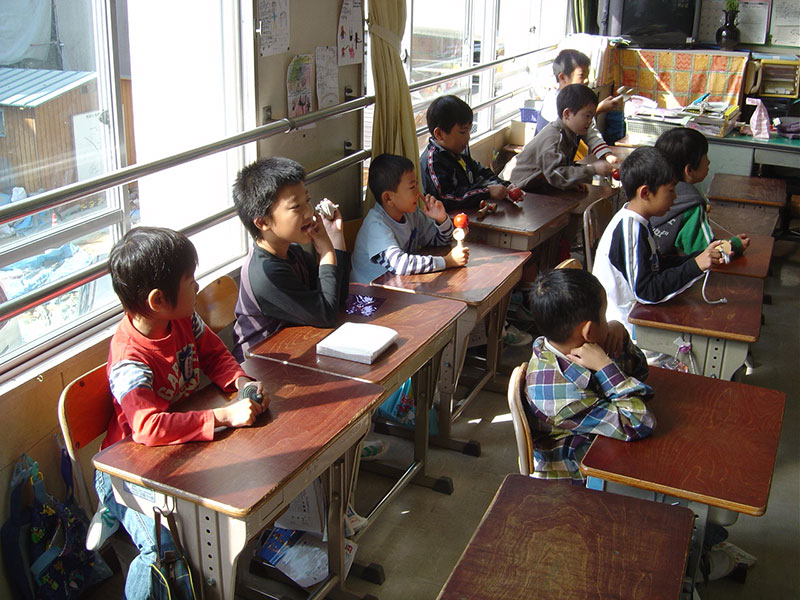
japanese-classroom

Photo by tony cassidy

Koichi in his article (I’m very sure I’m not doing it justice by summarizing here) pointed out that the amae as well the ganbare culture in Japanese society are the core reasons why the the Japanese youth tend to stronger non-cognitive skills, which in turn leads in the long run to higher personal performance. This also translates to their ability to endure the punishing stress of the Japanese education system and life thereafter.

This is true in terms of perseverance, stress tolerance and conscientiousness. However, there are also other non-cognitive skills which cannot be lumped together with the above. Consider the following:

Self Confidence: A survey published in 2011 (Source in Japanese) stated that 37.3% of Japanese high-schoolers “somewhat agreed” or “completely agreed” with the statement “I am a human being with worth” (私は価値のある人間だと思う). This is contrasted with 75.3% in South Korea, 88.0% in China and 90.4% in the US.

Furthermore the same survey also asked whether participants agreed with the statement “私は努力すれば大体のことができる” (I’ll be able to do most things if I put in effort) – 44.4% of Japanese participants agreed as compared to above 80% for the other countries. Therefore it’s questionable whether Japanese students work so hard because they really believe they can achieve or because they’re simply being pressured to do so.

Shyness: described as an “overgeneralized response to fear” in this article, Carducci and Zimbardo continue to say that Japan (along with Taiwan) display the highest shyness among surveyed countries and that:

In Japan, if a child tries and succeeds, the parents get the credit. So do the grandparents, teachers, coaches, even Buddha. If there’s any left over, only then is it given to the child. But if the child tries and fails, the child is fully culpable and cannot blame anyone else. An “I can’t win” belief takes hold, so that children of the culture never take a chance or do anything that will make them stand out. As the Japanese proverb states, “the nail that stands out is pounded down.”

Curiosity: An international survey conducted on adults by the OECD over 2011-2012 asked the question “Do you like learning new things”. Japan had 20% of respondents answering “Not at all” or “Very Little”, the highest number excluding South Korea which had near 29% answering so. 36.8% in Japan answered “to some extent”, however the total for “to a high extent” and “to a very high extent” (42%) was significantly lower than other surveyed countries, except for South Korea.

Whether the education system is the main factor in this is unclear. However, rote memorization based exams may disincentivize students from exploring outside the fixed curriculum – after all, extra knowledge does not beget results.

There’s a lot to be said about the interpretation of data because perhaps the above is just reflecting Japanese humbleness. Nonetheless, the margins between countries suggest that in the field of non-cognitive skills the field is rather mixed when you add the above to perseverance.

Curriculum
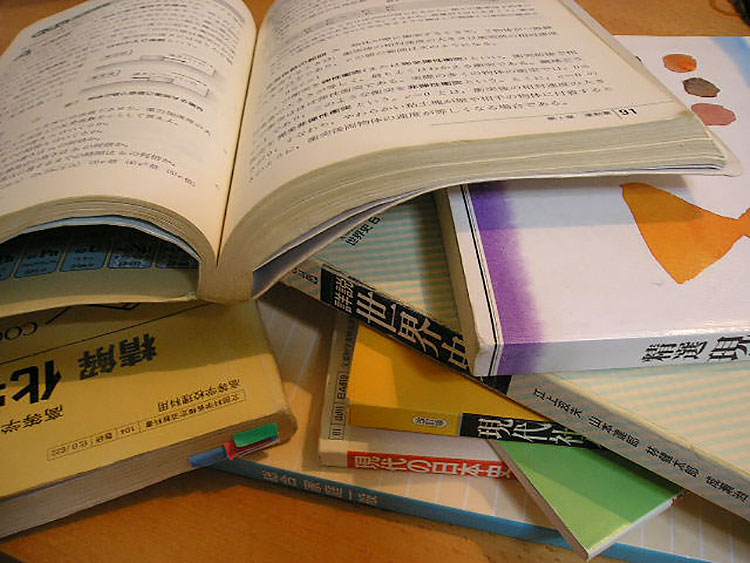
japanese-textbooks

Photo by asahiko

Moving on to the education system proper, it’s also worth looking at what cognitive skills – and skill sets – the education system imparts. While Koichi stresses that non-cognitive skills play the largest part in a person’s success I think it’s also important to also stress that cognitive skills play a significant role as well. For example, a study by Heckman, Stixud and Urzua in the US (accessible here) suggests that both cognitive and non-cognitive skills play heavy roles in a person’s wages.

As Koichi did argue, non-cognitive skills do tend to lead to cognitive skills, which are important for future successes. Non-cognitive may be the “origin” of my success – working harder at math may improve my math skills enough to qualify me to be an accountant in the future – but without those cognitive skills eventually developing I could not have been an accountant.

Therefore, the cognitive skills taught in an education system are important too. Japan has clear successes in literacy and mathematical ability but there are some drawbacks to the Japanese system as well. These include:

Foreign language skills including English: ’Nuff said. This can be an entire article by itself. Despite all of the years spent studying English, the average Japanese person is nearly helpless when put in an English-speaking-related situation.

Presentation Skills: Actually a mix of cognitive and non-cognitive skills (likeability etc). Not very well taught at all. There’s no data on this but a majority of my classmates say that the first time they’ve ever done a PowerPoint presentation was in University. Body-language, reading-from-a-script and extremely wordy PowerPoints are still very common from my experience.

Written expression: Sumitani and Robert-Sanborn have written an interesting essay here (In Japanese) about the role of essay-writing in education and society. Anyways, essay-writing is not emphasized greatly at the pre-university level given that the University Entrance Examination (センター試験; 2013 sample can be found here) have no essay based component and are entirely multiple choice. Individual universities may choose to add essay-components in their additional secondary entrance examinations though.

IT education: Perhaps a surprise? The PIAAC survey published in 2013 noted that while Japan as a whole scores average among surveyed countries in terms of “problem solving in technology rich environments”, the group aged 16 – 24 years old performed below average compared to the youth of other countries. IT education is a subject in school so it’s not as if they have zero technology education. My view is that the lack of personal research projects, computer presentations etc in other subjects inhibit Japanese youth in developing these skills.

So as with the non-cognitive segment, the cognitive skills segment for the Japanese proves to be mixed in terms of its limitations and successes (reading, writing, numeracy). As you can see, the Japanese education system’s effectiveness really gets hit hard when you step outside the bounds of “facts that you can learn.” Creativity, the ability to take those facts and apply them to something else (language speaking, presentations, written expression, etc) are all what I’d consider weak points of the Japanese education system.

How The Japanese View Their Own Education System
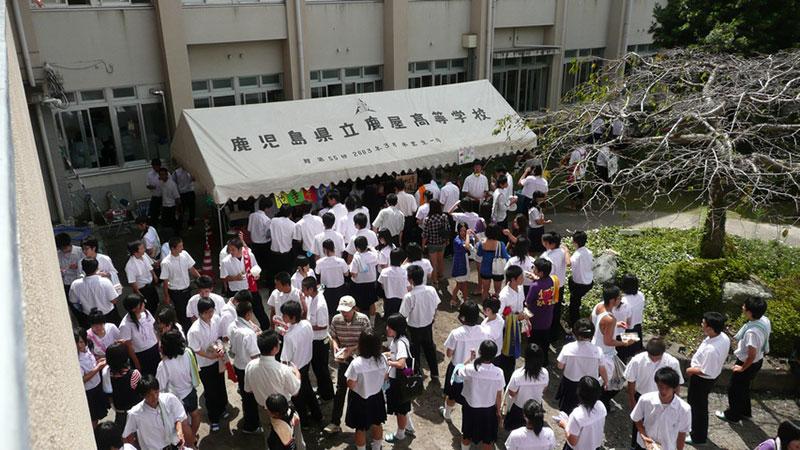
japanese-school

Photo by Sanjo

But perhaps one linked (but important) topic that needs to be touched on is how the Japanese evaluate their own education system.

The first thing that needs to be said is that in Japan now, there’s a lot of pessimism about the future. Part of this pessimism is a tendency to blame and criticize the young. Perhaps the pessimism is justified by genuine issues among Japanese youth but then again the general pessimism may tint the evaluation of the youth by the people living in Japan (including me as a resident).

We don’t know how strong the effect of each direction is but any self-evaluative surveys must be qualified by this possible bias. However, one question which I expect many Japanese to ask is: if our education is so good, why is our economy still doing so badly?

There is in general a perception that Japan’s academic standards have been declining. Nakai has written a very complete article here about the debate and its history. Furthermore, there was a survey published in 2004 showing that employers were by and large very dissatisfied with the skills of high-school and university graduates. Given that the Japanese economy has not experienced any significant improvement so far I doubt if the appraisal today would be significantly different.

Given this, it probably would seem odd to many Japanese to hear their education system described in such a positive light. In fact if it were not for widespread dissatisfaction with or fears about the quality of education in Japan, the government would probably not have announced wide ranging reforms last year.

Given The Above…
japanese-classroom2

I really have to caution people about treating Japan, or any other Asian country, as shining beacons of academic excellence. We all have our problems and unless you know a lot about the other side, it’s very easy to fall into “grass is greener on the other side” pitfalls.

So while we may laugh at articles from the Onion titled Chinese third graders falling behind US high school students in Math, Science, let me just end by saying that there’s actually a lot that Asians (at least those that I know) admire about Western education too. Like the high emphasis on debate, discussion and communicative skills, for example.

But not the math, oh no no no certainly not the math standard. But that’s for another article someday.

Other Links:


  • Mipu829

    “let me just end by saying that there’s actually a lot that Asians (at
    least those that I know) admire about Western education too. Like the
    high emphasis on debate, discussion and communicative skills, for
    example.” This is so true! I’m one of those Asians. Even though I went to an International school back home in Indonesia,but I learned so much more on how those skills are very important during my study abroad year in a high school in the US.

  • Maia

    I study in an American Graduate School and teach in College, trust me, if by Western, you mean American education I have to disagree. The emphasis on debate, as far as I’ve seen pushes students to participate without a through knowledge on subjects and the conclusions after class are pretty poor.
    Many times I’m obliged to push my students to participate and people does not like being pushed around.
    You are one of those Asians, but trust me, many of us westerners do not like our education system.

  • Mipu829

    I’m sure it depends on the schools and the students themselves, however I went to college in the US where “high emphasis on debate, discussion and communicative skills” were really emphasized, and most of my classmates actively participated in debates and discussion which you might not be able to see in standard Asian classrooms (which might be different if we’re talking about private schools).

  • Momo

    Asian education definitely ain’t a bed of roses. A perceived higher level of education comes with their own sets of problems after all. It’s really apparent that in Singapore, theories are overly emphasized and it’s always about trying to get the right questions to all the questions. There is no way of questioning the status quo and this slowly molded our students into deadwood-thinking individuals.

    As much as Asians are widely thought as really clever people, a simple search on the internet gives you a number of reports that it’s some Western country that has few of the best education. Holland immediately springs into mind.

  • Alvin Brinson

    If you’re talking about the college/university level education system in the U.S., it has a lot of good points.

    The public school system, though, has been trashed in the last decade or so. In the all-out war called “No Child Left Behind”, we’ve allocated 95% of all of our effort to keeping the bottom 10% of students in school and “engaged”. It hasn’t worked. What it has done, is turn classrooms into chaos, with curriculum playing pingpong based on the latest test results. Students are out of control, because the emphasis being on “keeping students in school” means that those who REALLY do not want to be there are forced to do so, and of course, these students cause huge disruptions in each and every class. I could go on, but I want.

    Trust me. Yes, the things you list, point by point, have some merit. In the end, though, the free-for-all that is American education is definitely not something you should strive for. There is something to be said in there being pressure to fall in line and do your time.

  • http://www.vietamins.com Viet

    I’m with you in the ridiculousness of No Child Left Behind and how it affect the US compulsory school system.

    But on the other hand, don’t you think parents have some responsibility as well? I have no data backing, but I get the impression that parents just dump their kids in school and expect the administration/teachers to do 100% of the teaching. I think the lack of involvement from the parents don’t help the situation one bit.

    Just from my experience, the problem with the US school system is that it bombards you with a lot of useless information and memorization, but it doesn’t teach you HOW TO learn. There are times where students would ask, “Why are we learning this”, and the response would always be, “Just because. Now memorize it and don’t ask questions.” Most smart kids aren’t geniuses, they just know how to effectively learn material. One criteria I use for myself to check if I understood the material is to see if I could explain it in multiple ways to someone. This also helps develop logical thinking.

    Which leads me to another point. Being a teacher in the US public school system is a thankless job and I have some sympathy for them. But at the same time, many of these teachers are in positions of teaching material they have absolutely no idea of. This doesn’t help the kids any.

  • Lava Yuki

    Well, at least its better than Ireland where i live. The education is so crappy here, its all just rote memorisation and practicing for exam questions over and over, and then forget everything afterwards. The main aim is getting into your desired course at uni, and those aiming for medicine, pharmacy, physiotherapy or veterinary go to grind schools (like cram schools) from 9am-9 or 10pm. I wnt to one of those too to get into med school, but i dnt remember most of what i learnt, and forget 99% of the french i learnt! Kinda reminds me of the way they learn English in Japan tho. Can read a bit, but cnt understand or speak.We all learn a European language in school, but the amount of ppl that actually become able to speak it is probably close to 0%.

    The drop out rates r not high, and have decreased a lot with the recession so the majority of ppl now go to college, otherwise u cnt get a job. It wasnt rly like that say 6 or 7 years ago when the economy was good and there was lots of jobs. But there are plently of ppl who dont care about education, but the huge immigration of people from Asia recently has made it more competitive, esp. for medicine…

  • Kwami

    I’m sure that this all depends on the school and the students. I was also a teacher for the first four years of my graduate schooling and we focused heavily on communication and discussion, even though the school specializes in STEM fields. Unfortunately, the graduate program wasn’t as good at pushing these skills as the undergraduate program. Possibly, that’s because we had so many Chinese graduate students who just wanted to finish their work, take the tests, and move on. Oh, well.

  • Kaylan

    The county where I live in Canada is dreadful for education. The school I was in up until Gr.8 was amazing, but after I left it went downhill.
    Every school in this county is dreadful.
    In one school I went for a badminton tournament, the kids were high out of their minds and the teachers didn’t care. An honour roll student came out of that school, and she couldn’t even spell ”expired” (she worked for my mom).
    In my old school, I’m hearing that the new LA teacher barely teaches anything and never gives homework. Not to mention the younger grades used to have spelling tests every week when I was younger. Now? None. They rely 100% on the computer. Not sure about their other classes right now, though.
    The school I went to last year for Gr.9 – our English teacher would do spelling for words such as ”squirrel” because most of the kids there could barely read a Gr. 6 level and for those of us actually worthy of being in that class grade, we weren’t permitted to do more difficult things. I was bored out of my mind doing things I did in Gr. 6/7. Essays had a lower bar on them, too. She barely marked anything, either.
    Social – we copied notes, did modules. Marked those, that was about it. I enjoyed the stories about the world that was social class, but didn’t have anything to do with our curriculum though.
    Math – no one even understood the teacher but me and one other kid – and that was after we sat there and figured it out ourselves. Most of the kids could barely do basic math.
    Science – Takes notes. Did our tests open book until we had the unit tests. I dare-say it was was easy tests, too. The teacher was also very set in ”this is this and that is that. Don’t even try and have an opinion”. I loved when I had a different opinion then anyone else and I lost marks for it.
    Mind, most of those kids wanted to go run the farm for daddy when they are older.
    Yeah, I went from a 90% student down to a 80% because I was bored and docked unfair marks.

    And now, I’m doing homeschooling. And well, it’s a bit better, except if I’m having trouble with something, my science/social teacher treats me like I’m an idiot. She actually made the science course easier, but I’m continuing doing the harder one anyways.
    But they are taking forever to make my extra credit courses, and I’m learning both Japanese and Irish, and when I tried to get credits for those, she ignored me when I talked about my Irish. Glared at me real quick once, too.

    Basically, they are making things easier for people to get through school, and any of us who want and need the challenge aren’t getting it here.

    School systems everywhere suck right now it seems…

  • kirinlemon

    Your first paragraph sounds just like Japan.

  • http://www.tofugu.com koichi

    I was only bombarded by Myth Busters, shows about psychics, Clue, The Matrix, and other fine film experiences.

  • http://www.m-rated.tumblr.com/ Michelle Chin

    i think there are good and bad points about both education systems. like you, i grew up immersed in the typical asian education system. shortly after high school, i moved to australia. it was a huge shock considering that the education system here placed so much emphasis on not merely churning out words but critical and analytical thinking skills, debating and communicating ideas. however, what i noticed with my local born peers is that they tend to find everything stressful. for me, doing four subjects a semester is far from stressful compared to those days when i had to do sift through two years of material for ten subjects. i also thanked the amount of stress i had in high school. without that, i don’t think i would persist through uni — it was tough for me as i had to unwire myself from that whole rote learning schmizz.

    so i won’t say that asian or western education system is superior than one another. :) both of their finer points that each education system should adopt to improve!

    But on hindsight, the most important thing is to instil passion within a child. nothing can be worse than a teacher not justifying the education material.

  • Alvin Brinson

    Actually, I am a teacher in a large US Public School. When you say that teachers have no idea of what they’re teaching, that’s not exactly accurate. What’s more common is that we are not ALLOWED to teach what our kids need to learn. Instead, we’re dictated to about exactly what we are supposed to teach, often material which the kids have absolutely no interest in.

  • Noid Hunter

    I agree with most of the article except with the phrase “if our education is so good, why is our economy still doing so badly?”
    Education is very important but it’s not a magical solution. Even if it were true that improving education always has a positive effect on the economy, there are many other factors that, together, could have a much stronger negative effect.

  • http://www.vietamins.com Viet

    I think there is a misunderstanding?

    I understand the education is regulated to teach certain views and is already predetermined.

    What I was getting at is if I was in a basic math class and I ask why 2 + 2 = 4 (which is part of the predetermine curriculum set by the government) and that I don’t understand why this is the case, the teacher should be able to offer alternative methods that illustrate this, real world applications, etcetera. Now instead of basic math, let’s say it’s Calculus and I was having trouble with differentials.

    Understanding and being able to explain the material is different from being constrained by a curriculum and rules.

  • Austin

    Indeed and you have a point. I think it’s just something intuitive and instinctual that may pop up in people’s heads though.

  • Austin

    You know right personally my own experience agrees with you to a very large degree. The skills that are trained are really quite different I think but stress tolerance is something that I think Asians have been made (forced?) to develop.

  • http://www.vietamins.com Viet

    Yeah… That’s our geometry class.

  • Austin

    “It’s really apparent that in Singapore, theories are overly emphasized
    and it’s always about trying to get the right answers to all the
    questions.”

    Hmm… I’ll need to respond to this. Yes that’s true but it’s a matter of extent. Frankly speaking I thought the same until I went to Japan. Singaporean A level essay papers do give some room for multiple answers while multiple choice questions do not. This is in relative terms of course, but as you can see from the rest of the comments it’s a complaint that’s happening a lot in the Western countries as well.

  • http://www.psychomelody.com/ Psychomelody

    Do you know what my Japanese students admire about American education? Lack of uniforms. Cafeterias. Computers in the classroom. Driving to school. No High School or Middle School entrance test. Long summer vacation.

    What terrifies them? The grading system (above 70 passing, unless that has changed since I was in school). Zero Tolerance rules. Block scheduling. Violence. Lack of festivals. Leaving the classroom for every class (as one student put it “they have no home??”).

    To be honest, there is something about the Japanese system that works the way it is. It could be much, much, much better. But I don’t think it’s completely broken like the American system is. If the Japanese system would only modernize and grow some balls, so to speak, it would make for a major improvement.

  • Mescale

    The current problem with all Education systems is that they are exam orientated, not learning orientated.

    The problem is how do you gauge if someone knows stuff?

    Well uhh, maybe we ask them to take a test, right.

    Ok and also How do we know if our teachers are doing a good job, how do we ensure they are teaching our kids properly?

    We look at the results of the test right?

    Ahh but now we’ve created a system that is test result orientated.

    Kids aren’t taught to understand things, they’re taught to memorise things, see this type of question. You solve it by applying these memorised steps.

    Alas in the real world problems aren’t stated in exam question style, so yeah all those exam question answering techniques are useless, sorry, hope you managed to learnt something useful despite the efforts of your education.

    For a teacher to prove they are teaching kids ‘proper’, they just need to make sure the kids get a good grade in tests, so they just need to teach the kids to be able to pass a test, true knowledge and understanding, are just casualties in the war for mass produced education.

    Today in the UK it is common for students to get A’s and A*s (Thats right they had to invent a higher grade than A because so many people got A’s), compared to 30 years ago when such grades were thought to be exceptional.

    Does this mean we have now super intelligent children? No just look at the TV they watch and the music they listen to, shit, social networking! If anything they have devolved into sub-sentient beings who just follow a bunch of rules, game of life played out by meat.

    All that has happened is we have altered the system to make it look like we are succeeding. And people still lament the problems of X education system.

    This is to be expected in the post-modern-capitalistic society that devalues humans from independent creative beings to a mass of consumer units to live as slaves to suck the engorged phallus of the rich minority.

    THROW OFF YOUR SHACKLES PATHETIC HUMANS< REFUSE TO BE UTTERLY MEDIOCRE

  • Lava Yuki

    Really? Well thats just how the education is like here. They’ve been trying to change the rote learning system for years now, but it hasn’t changed. We don’t have open discussion about opinions really except in english, not because its not encouraged, but students usually don’t answer (or care) so teachers usually don’t bother.

    The only thing different would be that there are way more people here who don’t care about education or grades and usually fail/ drop out. But for anyone going into health related careers, it’s almost same as Japan esp. since a lot of international students come here to study those. Not for other courses like arts, law, engineering etc. where there’s low pressure and not very difficult to get in.

  • Lava Yuki

    Cool you don’t have uniforms and can drive! We have uniforms for every school in ireland which are usually horrible and there to make everyone the same and decrease bullying, and you cant drive until 17, which is when u graduate from school anyway (and schools don’t have parking cept for teachers). Also no cafeterias, computers, gyms etc… The worst thing is that all schools here are catholic, so there are boys schools and girls schools… mixed schools are numbered, like less than 5 in the whole country!

  • Lava Yuki

    Not all western education is like that. UK and Ireland are centred on rote learning. Students usually don’t care about debate or giving opinions cuz they either don’t have one, don’t care or weren’t paying attention anyway. So usually its silence, and teachers don’t bother with open discussion since it just gives students the chance to mess around. Teachers just teach and give homework.

    The only thing people care about is passing exams, so discussion is seen as pointless and a waste of time. That was how my school was like anyway, people just wanted notes, sample exam qts and answers etc. Since its really hard to get into certain courses.

  • liquirmoral

    I’m not seeing anyone here touch on the a very important point. The roles of parents. I’m a 32 y/o father of a 9 year old boy and a 4 year old girl. We’re Americans living in Ireland. I studied in Puerto Rico, so in comparison I think Ireland is a little bit “soft” on the younger ones. Plus add to this the fact that my 4 y/o is a cancer patient and misses a lot of classes. What do I do? I supplement. I use my time to talk to her and teach her math, biology, geography, art, etc… every single week day. We also debate about hypothetical situations she might encounter. I could be watching netflix or playing xbox to relax from my stress at work, but I don’t, I INVENST it in my children. So now my 4 year old is fluent in Spanish and English… she knows some french, she knows how to read and write in two languages, she can recite the bones on her extremities and actually understand what they do…etc. This, my international friends, is what I think every single country is missing. Parental involvement. Relying on strangers to solely take care of the education of our children is a lazy way of thinking, and it needs to change, now.

    (I drop my imaginary microphone and walk away.)

  • Guest

    Totally agree that people would always think that the grass is always greener on the other side.

    Being a Singaporean, I have many friends who complain that the education system in Singapore sucks, as the school focus a lot on the academics and not as much on extra curricular activities, and that the system is too stressful. There are also tons of parents sending their kids overseas to have a less stressful education.

    But then again, there are also many Caucasians who send their kids here to have a ‘better’ education. So I guess it’s really hard to determine which is better.

  • Huimin Thesupercool Lim

    I guess arts subjects are the only ones that really allow room for multiple answers, but then again, the education system here is focusing too much on the sciences, as compared to the Western countries. As an Arts student in Singapore I can say that people usually look down on us compared to students with a business or engineering degree.

  • Risa

    As usual, there are pros and cons to everything, and results on either end. I think the important thing here is to realize that neither system is perfect and decide what things you value most for your kids if you, like me, are trying to decide where you will live long-term.

  • http://www.vietamins.com Viet

    It’s been touched and I agree with you 100%.

  • satsuma

    I moved into the US educational system in my second year of high school, and I seriously don’t understand what all this discussion about the terrible educational system is about. Maybe it doesn’t apply to high school?

    I attended one of two regular high schools in my medium-sized Texas town. Thanks to my education prior to moving, I was very strong in math, but the US high school system gave me the kind of opportunities I couldn’t have had otherwise. For one thing, government, politics, and economics were taken a lot more seriously in the US. And generally, the breadth of subjects available was also much wider.To top things off, I was able to take university classes in my last two years of high school. I feel like the system allowed me to go as far and fast as I wanted to. It was really great.

    I don’t know anything about elementary and middle school education, but my high school experience was that the system let you (here I mean the student and their family) fail or succeed on your own terms.

  • Alvin Brinson

    What you experienced is the result of the fact that schools are “locally” controlled and funded in Texas (and most of the US). Due to that, and how schools are geographically restricted, there is a large variation in quality of education from one school to the next. One school can be great (it happens) while the next town over has a terrible school.

  • Anti-Bully

    Re: Violence in US schools – just remind your Japanese students that it is much less dehumanizing and dangerous than bullying in Japanese schools. In America, we aren’t bombarded with another news story about a child being bullied to the point of suicide while teachers and students look on.

    Everyone knows who’s getting bullied in a Japanese school, and rarely does anyone do anything. At least in a US school, the violence tends to be two-sided, and stopped quickly – rather than gangs of bullies slowly wearing a child’s will to live down over months or years. I’d rather get punched in the face once or twice than have a group of children torturing me daily.

    Because, hey, there are pros and cons to everything.

    (And to give my own personal experience with this, I have children in Japan, and do you have any idea how hard it is to explain to them that badmouthing another child at the dinner table is wrong? “But they aren’t here.” Yes, but when you’re repeating the cruel words of your classmate, that he told a dozen boys at school, think about that: one cruel word, told to a dozen boys, repeated over a dozen dinner tables – and that’s in any way ok? And, agonizingly, my wife takes the child’s side. Think about that. The thing that’s truly ironic about it is that I’m operating from an American ideal of good manners – one, don’t badmouth people – ever. Two, don’t badmouth people at the dinner table. Three, respect your mother. And yet I’m the odd man out in the so-called “land of manners.”)

  • tonton101

    The U.S.’s bad rep is due in part to the fact that for every good school there are a dozen truly awful schools. This is of course due to the serious gaps in parity between districts. That is, a school in a wealthier neighborhood will be vastly better than one situated in the depressed area of town.

    Moreover, a purely metrics based system (the kind lionized by Asian countries and foolishly implemented by NCLB) is not the way to go. This is obviously anecdotal, but in college several of my foreign peers (hailing from East Asian countries) lacked the most basic critical and analytical skills, with many being completely unable to contribute to class discussions (again, “shyness” could have contributed to this). I do think that Asian countries have a better pre-tertiary system in terms of producing orderliness and meeting metrics, but the devaluing of creativity and critical analysis hurts them in the long run.

  • Matt Erik Katch

    I’d disagree on the uniforms aspect. I’ve worked in a number of Japanese public schools and most students love the uniforms. The grading system I’d agree with though. Many students consistently get 20% on tests, but until high school and often until college, there’s no real consequence. You can’t fail a grade and have to repeat it. And even then at the university level, once you pass that test and get in, even at renowned universities like Waseda, there’s a good bit of coasting.

  • Matt Erik Katch

    Yeah, I don’t think he was arguing that point as a Japanese person, but it’s a common line of thinking. Though really, a solid, effective education system will bolster any economy, in my opinion.

  • Admiral Awesome

    I don’t necessarily agree with the statement on college and university level education. All education is intertwined at least to a small degree, and thus the public grade school system is bringing everything else down with it. Colleges are lowering their standards to accept more of the graduating students. I’m a current undergraduate at Florida International University and the kind of things I see are amazing. Colleges have a math that is lower than “college algebra”! It’s just saddening. There’s just people who waste the governments money and are here only because bachelors degree is becoming the same level of the high school degree 2 decades ago and later. Even in my programming classes, there’s just people that sit there and don’t listen, don’t go home and study, and just complain about the teachers teaching methods and fail/drop out of the class, waiting for a teacher who is super easy and just gives them the A.

  • Anti-bully

    You’re actually hitting on a MAJOR flaw of Japanese schools – the “kumi” system, where EVERY SINGLE STUDENT in the school is grouped with 30-50 (yes, at private Japanese schools, class sizes are STANDARD at 50 – bear in mind, that in America, over 30 children in a class is considered squalid education conditions) – grouped with 30-50 other students, and ALL STUDENTS in the group have to conform to the EXACT SAME STANDARDS, for TWELVE YEARS.

    From first grade to senior year, you have NO CHOICE in your classes. You get to pick one club, but many schools make that a one-off thing – the second you choose a club, you are STUCK in it for years. (Not all schools do that.)

    But, think about that. You’re in a room with 30-50 other people, and you have to be JUST LIKE THEM. You have to take the same classes, you have to learn at the same speed, you have to study the same things. Everything you do is the same.

    So, on the one hand, this is the obvious reason why cram schools are so important in Japan – there is NO CHANCE whatsoever in a Japanese school for an individual child to learn anything that is appropriate to his age, personality, learning style, &c. LEAVING school and PAYING a private tutor to teach you is the ONLY way in Japan to learn at a healthy pace for yourself. It also means there are no honors classes, no AP classes, no chance for extraordinary children to explore and exploit their skills (I mean, you can study, study, study and pay outrageous sums of money to go to an “elite” school, but that is also a one-off thing: if you don’t make it into the school on the first try, when you are 10, then you miss it forever.)

    So, that’s obviously one reason why the grading system is such a joke – if you actually graded children on their abilities, you would utterly destroy the kumi system. Which would be good! The kumi system is one of the single stupidest things I’ve ever seen anywhere in the world. But the Japanese won’t get rid of it, because “it’s their culture,” so the kids get to coast by on 20% passing grades.

    The WHOLE THING is a really f-ed up mess. It LOOKS good and SOUNDS good if you live in another country and you’re looking at it from the outside. But, trust me: come to Japan. Live with a Japanese child. Work with Japanese children. You’ll see just how soul-crushing the kumi system is for them. I mean, take a high school aged child and tell him that he has a choice in his education, that he could choose what to study, and it just blows his mind. The ENTIRE CONCEPT of choice and preference, the idea of learning being fun or worthwhile in itself, or even the concept of his own potential to expand and grow beyond his peers is just…gone from him. Ask him what his hope and dream is, and all he has is “Go to a good university.” Ask him his plan for the weekend, and it is, “Study.”

    The kumi system is a really, really, really, unspeakably, horribly, just…awful thing.

    It just also happens to be one of the biggest causes of the bullying that goes on constantly in Japanese school, for obvious reasons. You jam 50 kids in a room and FORCE them to conform to the exact same standards, and guess what: the kids who can’t will be bullied mercilessly.

    SO MANY problems in Japanese school could be fixed if they abolished the kumi system, but, well, Japan doesn’t specialize in simple, effective solutions.

    But, hey. There are pros and cons to everything. The pros to the kumi system…um…it…allows…teachers…to teach with less effort? So they can…um…be lazy?

    Oh, no! The ONE PRO of the kumi system that I can think of is that it allows for school trips: when you have a group of fifty kids that works together all the time, it’s a lot easier to say, “Ok, everyone, we’re going to OKINAWA!” Of course, the poor students, well, can’t. And they can’t speak up and say, “I’m poor. Can we go to, say, Osaka instead?” Because, well, that would open them up to merciless bullying. So, the government actually foots the bill, and poor students can get money from the government to go on school trips.

    So…wait. That’s not a pro, that’s a con, because that is a MASSIVE tax burden JUST so kids can go to Okinawa? Because their school gives them no choice? And they’ll be bullied mercilessly if they can’t afford the trip?

    So…yeah. No pros to the kumi system. Ugh, it’s seriously awful.

  • Wabisabi

    As for an alternative example of education in Japan, a girl I know in an escalator school is pretty much the most relaxed and creative kid I’ve met, yet is in no way an under-performer. In fact, all the students I know at private schools are ridiculously ahead of other state-educated students, but there’s more than just the public-private factor in play considering the privately educated ones are most likely far wealthier, amongst other things.

    I also don’t want to sound mean, but private schools seem to have a sensible and usable English education program. I haven’t met many people who can speak decent English after graduating from a public high school to be honest (apart from Tokyo’s Minato ward’s JHSs and HSs). It’s also not particularly the fault of the Japanese teachers because they just do what they think is best and can actually do themselves, the BOEs and MEXT should really be picking up the slack and investing in teacher training instead of throwing money down the drain hiring dispatch companies to bring in random foreigners year on year.

    As for outcomes in the economy, there isn’t a huge correlation between education and having a strong economy. It helps, but there’s more factors than that. It’s particularly telling that America took over a lot of what Japanese industry captains took for granted, like smart phones and mp3 players. Most Japanese companies also don’t look abroad for sales because they are content with the domestic market. The way to succeed as a business changes and obviously many Japanese companies haven’t caught up. However, I’m actually fairly confident that they will catch the winds of change eventually, especially with the digital industry in places such as Shibuya’s Bit Valley as well as other manufacturing start-ups. I actually think the government will also implement measures to encourage new companies to be created since most new jobs are created by new companies rather than older, more established ones. A bit of risk-taking would also help…

  • Beth H.

    A friend (a teacher here in the US) and I were discussing last week the differences between the school systems in the U.S. and Japan. One of the questions that came up was how does Japan (or other Asian countries) handle issues with children that have a learning disability or need some kind of IEP (Individualized Education Plan). I’d guess (based on the comments) that everyone is treated the exact same at a very low baseline.

    Would anyone be able to provide any information on this? Are there additional educational classes for these types of students? Specific cram schools? Weekend classes?