
Although this has died off in more recent times, there was a period where it seemed like every other American politician would look to Japan for inspiration in order to try and reform the American School System. "There needs to be more math!" some would yell. "More science!" others would say. Rarely would this conversation make it past a skin deep level. People think that if America has more math and more science we'll suddenly be able to compete again on a worldwide scale. When that didn't work, we turned to the idea of "better math and science teachers," but I'm afraid that's not going to work either. The changes we're trying to make to "be more like Japan" (not to mention many other Asian countries) in education just aren't the things that make Japanese education successful.
Now, I'm not saying that the Japanese education system is perfect (in fact, it has a whole bunch of other problems, though math doesn't seem to be one of them), but I thought it would be interesting to talk about it while we were on the subject. In fact, if you're a parent you might see things that you can utilize with your child as well. As we'll learn, the parent-child relationship is a very important aspect of how Japanese children become good learners.
Japan's Love Affair With Stress

When I think of the Japanese education system, I personally think about the college examination tests that most high schoolers end up taking, probably because I saw what it did to my friends the year or two before they had to take it. At the end of high school this single test decides your future. You get to choose one college you want to go to. That college has a certain score requirement. If you don't reach that score you probably don't go to college, and what college you go to decides your future fate and salary as well, much more than it does in America. So, you want to shoot for the best college possible that you think you can get into… but if you overshoot it and fail the test, you spend a year as a ronin; basically, that's one year where you study and get ready for the test next year, because you didn't get into college. Talk about stress.
But, the stress doesn't only come from the test itself. The preparation for the test is much worse. Often starting from elementary school a child will begin going to juku, or "cram school." This is school after school with the goal of getting you into a better middle school. If you can get into a better middle school, then you go to more juku so that you can get into a better high school. A better high school means a better opportunity to get a higher score on the college entrance examination. Still though, you go to even more juku in high school to prepare yourself for the test. It's no wonder it's lovingly nicknamed the "hell test." And, if you fall behind and don't get into a good school? Well, extra juku for you then, kiddo.
It's no wonder that Japan has one of the highest suicide rates in the world.
Despite this, Japanese students (and Japanese society on a whole) are able to handle extreme amounts of stress. The stress a Japanese person deals with on a day-to-day basis is even infamous throughout the first world. I think that this extreme stress is our first clue, though. It hints at why the Japanese education system is successful, though in a very indirect way. In the end, I believe that it comes down to a concept known as amae.
Amae and Indulgence

One of the most obnoxious things about Japanese children, in my opinion, is how dependent they seem to be on their mothers. You see this over and over again, and this dependence is even encouraged by society! "You're creating a society of spoiled brats!" I used to think. Recently I've changed my mind, though.
The word amae comes from the word amaeru, which, according to Japanese psychoanalyst Takeo Doi (he's the guy who basically made this term a thing), can be defined as "to wish to be loved." On top of this, it has connotations of a need for dependency and a request for indulgence of one's perceived needs. This amae type of relationship is the ideal for all close relationships in Japan. It starts with child and mother, but expands out to student and teacher, student and upperclassmen, salaryman and boss, husband and wife, etc. It's the senpai-kohai relationship in a nutshell. If everyone is able to indulge their needs into everyone else then everything will work out, or so Japanese society has been saying for quite a while now. Turns out they're onto something.
Let's go back to everyone's first amae relationship: mother-child. Most mothers indulge their children to some degree – feeding them, changing them, calming them when they cry… etc. But Japanese moms are supposed to take these indulgences to another degree. It's so prevalent in Japanese society that they have come up with extra ways to describe and talk about this type of relationship. You certainly don't see that in too many other cultures. It's kind of like how Eskimos have a ton more words of snow. The Japanese have more ways to talk about it because it's that much more important in their society.
Here's what I'm trying to get at, though. This dependence… this indulgence… this amae… it's what keeps Japanese society together. It's the root cause of the successes you see in the Japanese education system. It's also why society is so orderly and safe (at least for now), I think, and it all comes back to how much a mother indulges their child. Let's find out why this is so important.
Non-Cognitive Versus Cognitive
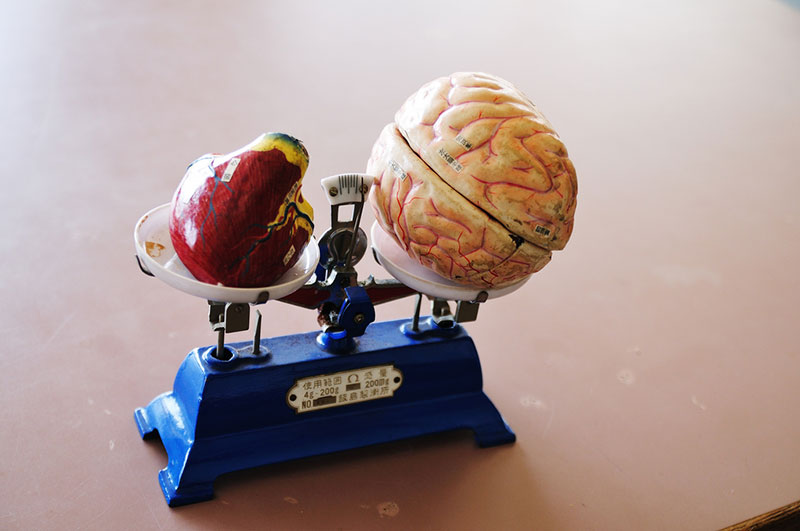
Most people think that IQ, the ability to memorize, etc., are the key metrics for determining the future of a child. These are what economists call "cognitive skills" and it turns out they are not very good predictors of future success. What are good predictors are what's known as "non-cognitive skills." These are things like persistence, self-control, curiosity, conscientiousness, grit, and self-confidence (there are a lot more, too). Think about it this way: The kid who has the persistence to practice math for 10 hours a week will do better than the cognitively smart kid who doesn't bother doing their homework because they're lazy and everyone's told them they're "soooo smart."
The importance of cognitive versus non-cognitive skills is really highlighted in a study done by James Heckman on the GED program. He compared students who graduated from high school with those who passed the GED exam, which is a way for those who didn't graduate from high school to get something that substitutes for a high school diploma. The thing is, though, this tests cognitive skills as a way to see if a person "knows enough stuff" to have passed high school. It's closely linked to an IQ test (another test of cognitive ability) in many regards. That's the problem, though. It's assuming that high school exists to teach students cognitive skills and nothing else. With that in mind, let's look at how these students did later in life. It's not a pretty sight.
When Heckman looked at 22 year olds from both groups, the difference was huge. Only 3 percent of GED recipients were enrolled in a four-year university or had completed some kind of post-secondary degree. Compare that to 46 percent of high-school graduates. On top of this, GED recipients had nearly the exact same future outcome as high school dropouts. Higher unemployment, higher divorce rate, lower annual income, and a higher chance of using illegal drugs to name a few. Even though they are supposedly equal on a cognitive level to their fellow high school graduates (and considerably smarter than those who dropped out of high school but didn't take the GED), their future successes (or lack thereof) was exactly the same.
What I'm trying to say is this: non-cognitive abilities end up being a much better predictor of success than cognitive ones. Your ability to persevere, to have self-control, and so on are the things that decide the future of almost every student, not how "smart" someone is… though non-cognitive strengths do happen to make for a higher cognitive potential later on in life.

To illustrate this, We only need to look as far as the famous "Marshmallow Test". In the late 1960s a professor at Stanford (Mischel) decided to test the willpower of four-year-olds. Researchers brought each child into a small room and offered them a treat (like a marshmallow). They were told that the researcher was going to leave the room and the child could eat the marshmallow when they returned. But, if they wanted to eat the marshmallow right away they could ring a bell, at which point the researcher would return right away and the child could eat it. The twist here is that if the child waited for the researcher to return on their own, no bell, they would get two marshmallows! In this way, they tested the child's self-control, a very important "non-cognitive" skill.
It turns out, the correlation between how long a child could wait and their future success was very tightly woven together. When they checked on the students a little over twenty years later, they found that children who were able to wait 15 minutes for their marshmallow had, on average, a 210 point higher score on the SAT than those who rang the bell after a mere thirty seconds.
Think about it, the kids with stronger non-cognitive skills were able to work harder, had more willpower, self control ("should I study or watch TV tonight?"), and grit, and because of this scored higher on their SAT tests, which just so happens to have a correlation with future income and other success indicators. Over and over again, studies have shown that non-cognitive skills are the things that are worth developing in your children.
Amae and The Development Of Non-Cognitive Skills
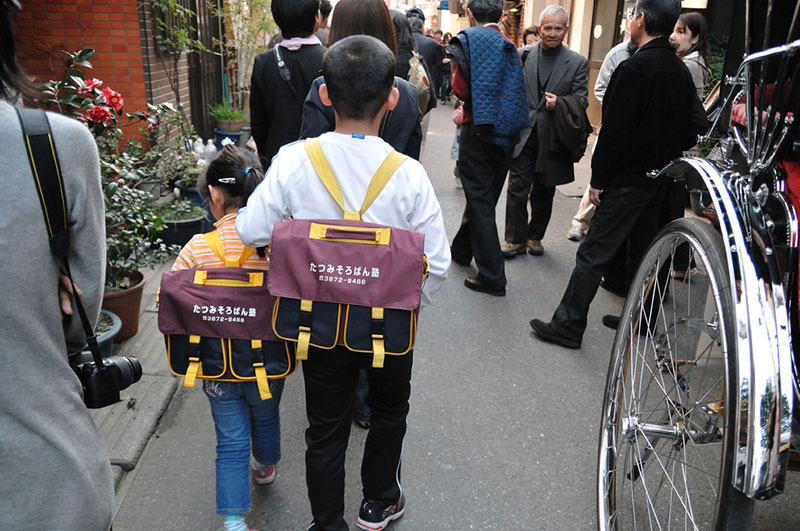
Now we know that non-cognitive skills are an excellent way to predict a child's future, but how does all this relate to amae? It turns out amae and the amount of it that is received by a baby/child directly correlates with how well someone can develop these special skills.
One researcher (Meaney) has been looking at the effect of rat-moms doting on child-rats. When a rat-mom licks and grooms one of her pups, it (amazingly) actually alters their gene expression! Certain chemicals are affixed to certain sequences on a pup's DNA and when a rat-mom licks and comforts her child-rat, this gene sequence gets "turned on". By turning on this particular gene sequence (through enough love and attention), the rat babies grow up to be far more courageous, curious, and less nervous. When a rat-baby lives a healthy, not-stressful life, this may not cause much of a difference. But, when scientists pick up and stress out the baby rats over and over again for an experiment, it makes all the difference.
Scientists found that the rat babies with a strong attachment to their mothers (the mother would give them licks to relieve the stress) grew up with that DNA sequence turned on. The mothers that were less attentive created rat babies that were considerably more neurotic, shy, and less courageous. This "attachment" (which I should note is very often associated with amae) made all the difference in the development of these rat-baby's non-cognitive skills and future lives.
Unsurprisingly, this is the same with humans as well. In the 1960s, Ainsworth, a professor at Johns Hopkins University, ran a test to study just this. He had a young 1-year-old child and its mother sit in a room and play for a while. Then, the mother left the room, sometimes leaving the baby alone or with a stranger. After a while, the mother would come back. Then they categorized the reactions by the baby:
-
Child greets mother happily, running to reconnect with her with joy and/or tears (Securely attached)
-
Children who pretended to ignore the mother when she returned. Children who lashed out at the mother. Children who fell to the floor in a heap. (Anxiously attached)
Although Ainsworth theorized that this lack of attachment (#2) could "create psychological effects that could last a lifetime" (he was right, by the way) it wasn't until 1972 when Everett Waters took this test even further. He found 267 pregnant women who all had incomes below the poverty line. When the babies were age one, they were all given the attachment test that Ainsworth did in the '60s. Then in preschool, he followed up again. Two-thirds of the "securely attached" children were categorized by their teachers as "effective" in terms of behavior. Compare that to only one in eight (12.5%) children who were anxiously attached got the "effective" label. Skip ahead to 10 years old. Forty eight of the students were invited to a summer camp where they were unknowingly studied. Those who were anxiously attached during baby-times spent more time alone, were less confident, and had more trouble socially. Now skip ahead to high school to see the real kicker. Using data from when the children were just four years old, they found that they could have predicted with 77 percent accuracy which children would drop out of high school… and we all know how dropping out of high school tends to turn out, GED or no GED.
The interesting thing about "attachment" is how differently the Japanese and American societies think of it. In Japan, this "attachment" is highly encouraged, even in non mother-child relationships. In America, independence is more encouraged. Though America's stance has softened since the 1950s, you still see this going on to a certain extent.
This is just a guess, but I wonder if this has anything to do with the prevalence of ADHD in our society. The reason I say this is because of the difference between the number of boys and girls that suffer from it. Boys in America have ADHD at a 13.2% rate. Girls are only 5.6%. If you think about the difference in how boys and girls are raised, it's hard to ignore this discrepancy. Girls in America are doted on more, given more attention, and more likely to be taught to be "dependent." Compare that to boys who are supposed to be raised as more independent and tough. Is it possible that the way we raise boys versus girls is what's causing more boys to have trouble paying attention? Self control, willpower, and the ability to pay attention are all non-cognitive skills. If "attachment" and "dependency" are the things that develop a child's non-cognitive skills… could this be why more boys have ADHD than girls? It certainly seems possible, though I'll have to submit to the experts on this one, as it's just a guess.
Back to attachment, indulgence, and how they negate stress, though. What's really interesting about this (which we found out from the rat mothers) is that as long as a mother is attentive and indulges in their child's needs, the harms of stress can be negated. It's been shown over and over again that a stressful life is very harmful to babies and children growing up. During childhood, this stress mainly attacks the prefrontal cortex, a part of your brain that is "critical in self-regulatory activities of all kinds, both emotional and cognitive. As a result, children who grow up in stressful environments generally find it harder to concentrate, harder to sit still, harder to rebound from disappointments, and harder to follow directions" (Tough).
In fact, there are direct correlations between childhood stress and your future life. Using something called the "ACE score" (which is a way to quantify levels of childhood stress), one Burke Harris sent out a questionnaire to 700 patients of her clinic. She then turned the answers into an ACE score and found something startling. Those with 0-3 ACE score (low stress in childhood), only 3 percent had learning or behavioral problems. Compare that to 51% of those with an ACE score of 4+. Stress during childhood has an effect on your ability to pay attention, control your temper, follow directions, so on and so forth… things that are directly related to the non-cognitive skills that happen to predict your future success.
"Wait, Koichi!" you suddenly say. "I thought you said the Japanese childhood was a particularly stressful one!"
"What a focused point!" I'd reply. "I see your rat mother doted on you well as a child!"
That's right, remember the rat mothers and rat babies? Stress can be negated by indulging rat moms. With a strong enough attachment all the stresses of home and life are negated, meaning the child can learn from the stress without all the long term issues that the stress can cause.
One study at NYU shows this perfectly. Clancy Blair followed 1,200 infants from birth, measuring their reactions to stress via cortisol level spikes. Family turmoil and other problems at home really affected a child's cortisol levels, which is to be expected. But, Blair found that if the mother was responsive and attentive to their child, and there was that attachment, this would negate the stress and keep the child's cortisol levels in check. This prevents the prefrontal cortex from getting messed up, which in turn allows a child's non-cognitive skills to blossom (not to mention the cognitive ones, too!). It all comes down to the amae.
This is partly why I think that a Japanese child is able to grow up in such a stressful and difficult school system. Despite the stress it usually ends up okay! The amount of pressure a mother has to indulge her children is what's keeping these kids afloat and (in general) healthy. I'm not saying there's no bad eggs, because there are, but it's hard to ignore how well so many kids cope with stress, which allows them to learn important lessons about failure, dealing with it, and becoming a stronger person. Their mothers (and all the other people they have amae-based relationships with) are there to keep them from falling apart.
Let's Pile On The Stress And Ganbare!
So now we know that amae is allowing kids to deal with stress without the negative effects it tries to bestow. And we also know that amae is creating children with stronger non-cognitive skills, the best predictor of future success. But, this is fairly focused on very early childhood (though there are plenty of older Japanese school kids who are super dependent on okaa-san still). What about elementary, middle, and high school times? What's going on here to develop soldiers of the non-cognitive (and therefore cognitive) type?
To me it comes down to word ganbare 頑張れ, which means "persevere." It's so prevalent in Japanese society, in fact, that people will yell it out for just about any reason. If you're playing tennis, your supporters will yell "ganbare" instead of "you can do it!" If you're going to take a difficult exam, you'll hear "ganbare" as well… as if trying harder will help you to get a better score right before you take the test. The difference is a stark one, though. "You can do it!" is all about hope. "Ganbare" is open to the possibility that you may not do it, but it does ask you to try your best. The possibility of failure isn't ignored.
Actually though, it turns out that just trying harder will get you better test scores, no matter how you prepared for it. This is what psychologists call "conscientiousness," and it is an incredibly important non-cognitive skill. I believe with the prevalence of "ganbare" (persevere!) oozing out of every Japanese orifice, they are simply reminding people to be more conscientious. They are reminding people to sweat the small stuff, concentrate, and try hard even when you don't actually have to.
In one study during the 1960s, Calvin Edlund gave seventy-nine children an IQ test. All of them had similar socio-economic backgrounds. Then, he split the group into two and had them take the test. Seven weeks later they took the test again, except this time one of the groups were told that they'd get an M&M for each correct answer. On the first test the two groups had a fairly even average IQ. On the second test the M&M group went up an average of 12 points. Taking this experiment further at the University of Florida, two researchers split the two groups up further. The interesting part is that the "low-IQ" children, who scored an average of 79 on the IQ test, now scored a 97, which is average. In this case, what is their true IQ? Is it the 79, when they weren't really "trying as hard," or is it the 97 which they got because they tried?
I feel like this happens in all things. This "conscientiousness" will help a child (or adult!) to do better in all categories, not just IQ tests. Paying attention and trying harder even when you don't have to is a sign that you have grit, self-control, and some other non-cognitive skills. Just by "trying harder" you become smarter, in a way, and this push to "try harder" comes packaged up into one word, (I bet you can guess what it is), ganbare. How important it is in Japanese society is hard to ignore, and I think it's one thing that really shows how much focus is placed on character and non-cognitive skills in the Japanese education system (and society).
Learning Disabilities and Stereotyping
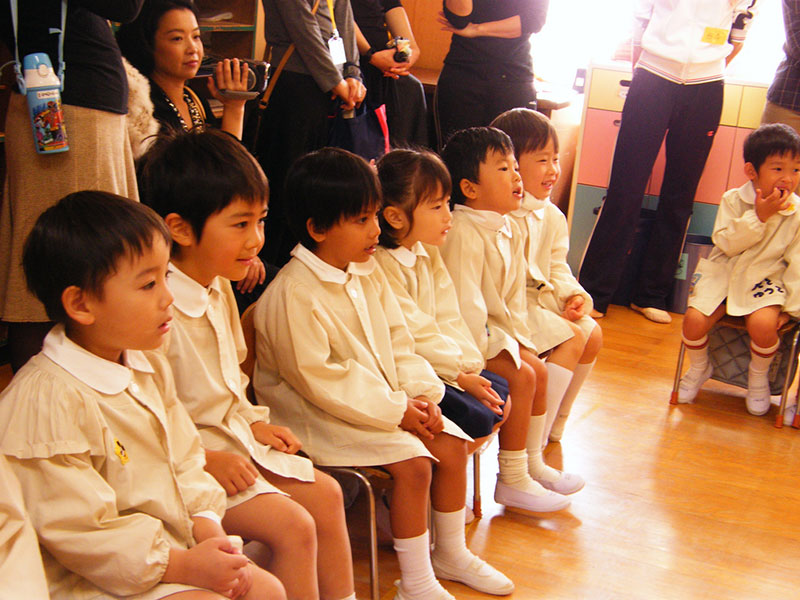
Another big difference I see between Japanese and American kids is how they're segregated. That's right, even after racial segregation has come to an end, we still see cognitive segregation in America. In Japan, if you're falling behind in class, you don't get held back a grade and you don't get put into a "special class" (that being said, a lot of people do get institutionalized, unfortunately). No, you stay with your class and graduate with your class, and that's final.
The thing is, "group identity" is a powerful force. If you identify yourself as being stupid, you're going to do worse in school. If you identify yourself as "different" you are going to act differently.
In one study in the 1990s, students at Princeton were tested on how well they could complete a 10-hole mini golf course. With white students who were told that this was a test of their "natural ability at sports" they scored 4 strokes lower than similar (also white) students who were told that this was a test of their ability to think strategically. Alternatively for black students, when they were told that this was a test of strategic intelligence they were four strokes worse. When told that it was a test of natural athletic ability they did better. As you can see, stereotyping yourself can have an effect on how you perform. In American classrooms those with ADHD are stereotyped as being less able to pay attention in school. In extreme cases they may be put into special classes where that stereotype becomes stronger. In Japanese classrooms you're in your class whether you like it or not and everyone's expected to perform to be the same, for better or worse.
I'd like to think that this expectation to be a part of the group unit of the classroom is part of the reason why students in Japan score better than the US. That's not to say that this focus on the group isn't a bad thing as well. When you are different you are often ostracized or bullied more than in US classrooms, which has the same sort of effect as segregating a classroom (though possibly worse). So, while there's some good things about this there is some bad as well. Japan's education system is far from perfect, after all.
A Careful Balance

So we've seen how a mother's attentiveness gives her child the tools to be able to take on the world. We've also seen how non-cognitive skills, such as perseverance, seeps through every nook and cranny of Japanese society. Then, we took a look at stereotyping and how it's less encouraged, at least in terms of "who's smart and who's not," giving everyone a more even playing field.
Japan is without doubt creating a lot of children with a lot of grit, I would say. After seeing what affect amae can have on a child growing up (anywhere in the world), it makes me wonder if this is a big part of the reason why Japanese children can take on so much stress and hardship during their education (and beyond… that salaryman life!). I also wonder if this is why they put so much stress upon their children. Do they do it because they can? I think they probably do.
While indulging your child and letting them depend on you are important for negating the harmful outcomes of stress at a young age, stress is important as well. Recently a lot of psychologists have been looking at the lives of the wealthy and their kids, and they are surprised to find that these children seem to have more issues than poor inner city ones. When you look at the rich parents of children who go to a fancy school, you start to see two "problem type parents."
The first of these is the parents who become emotionally detached (where's the amae?) while still expecting high levels of achievement (stress). After all, you're going to a fancy private school so you better do well, no buts about it! These kids, who end up having attachment issues with their parents, end up with all kinds of problems later on:
To Luthar's surprise, she found the affluent teenagers used alcohol, cigarettes, marijuana, and harder illegal drugs more than the low-income teens. Thirty-five percent of the suburban girls had tried all four substances, compared with just 15 percent of the inner-city girls. The wealthy girls in Luthar's survey also suffered from elevated rates of depression; 22 percent of them reported clinically significant symptoms. ("How Children Succeed")
The second type of parent is the opposite of the first one. These are the parents who OVER indulge. One study shows how people who make a million or more dollars a year tend to be "less strict than their own parents." Basically, they make life too easy on their children. This makes for a lot of indulgence and very little stress, and as we learned from parent type number one, you shouldn't have one without the other. These parents would call teachers to try and raise their child's grades on papers, or try to get time extensions for things, or even ask if their child can retake a test. Without ever having to deal with their own stresses and failures, these kids grow up helpless and unable to deal with the challenges of real life.
Too much amae is not good. Too much stress is not good. But, an equal amount of both… that works out well. So in a society with so much amae it only makes sense to heap on an equal amount of stress. When these two things are imbalanced you run into problems in education and society.
How Japanese Children Succeed
So here's how I see things happening in Japanese society… at least the stuff they got right. There's a lot that's going wrong as well, but with America's recent obsession with "making our school system more like Japan's" I thought it would be good to go through all of this step-by-step so you can see why it works, rather than looking skin deep and trying to throw more money at math and science.
First, a baby is born. I could possibly go into how Japanese mothers tend to choose natural births over C-sections, and how this creates a stronger attachment between baby and mother, but I don't know much about that, so let's leave that part there. Then, the child and mother grow close. Through all the amae the mother gives, there is a sense of dependency from the child. Attachment is formed, and that grows through childhood. This dependency is really obnoxious to anyone who didn't grow up in Japan.
This extreme amount of amae is what lays the foundation for their future. By the time they reach school age, they are more courageous, curious, have more self control, etc. All those non-cognitive skills are more developed. I think this is why you see three year olds riding the train by themselves, going on errands for the parents., so on and so forth. You'd never see that in America, though I think this is mostly due to all the bad people out there (maybe they didn't get enough amae too?).
When they get into school these non-cognitive skills help them to socialize better and deal with disappointment. Kids are pretty wild and random and often do what they want. Being able to deal with other kids and control your temper is what is going to carry you through the younger school years. Right about here you really start to see a lot of ganbare too, one of the non-cognitive skills that is thought of as very important to teach every person in Japanese society. This gets beaten into you for all aspects of life, and we see a lot of middle schoolers and high schoolers who value perseverance over natural ability. In fact, have you ever seen a Japanese anime that isn't about some kid overcoming difficult odds by just trying harder? Okay, maybe sometimes, but this is a recurring theme for a reason.
All of this personal growth crescendos at the end of high school, when they have to take their college entrance examination test. The only reason all the stress up to this point hasn't destroyed them is thanks to the way relationships are set up: It all comes down to amae. Teachers, other students, siblings… etc. If everyone important to you indulges you, and you do the same for them, it all works out. Replicating this amae relationship beyond mother and child is the only way to balance and negate out the stress, which is stronger than most other places in the world.
What I don't know is what came first. Did the stresses of society cause Japan to evolve in away that let them cope with it? Or, did it just so happen that the amae in their society is what allowed them to deal with the extra stress, so they add more and more on, which allows their students to learn and grow stronger. It's the chicken and the egg problem, basically.
Whatever it is, I think we'll see things change. In fact, I think it's already happening as the Japanese school system becomes less and less "Japanese." Maybe it will be a good thing, and maybe we'll see more creativity come out of it (something that Americans do tend to do better). I have a feeling that there's a happy compromise somewhere, though. I don't think it's in the middle, as I think science has spoken when it comes to a lot of these ideas. But, I do think it's somewhere a little less stressful than where the Japanese have their dial set right now. Still, we can learn a lot from it, and they can learn a lot from us. As long as education keeps getting better with each passing generation we'll see some good things happen, though until we can change our whole society (which is near impossible in a short period of time, I think) it's probably going to be a while.
P.S. A lot of the American-related education stuff came from the book "How Children Succeed" by Paul Tough. If you're interested in education I highly recommend it. As I read through it I couldn't help but see similarities between the success stories and how a lot of Japanese society already works, which is what inspired me to write this article. There's a lot more in Tough's book, though, so please take a look if you find this kind of thing interesting! The more people to read about education the better prepared our future children will be!