As a reader of Tofugu, there’s a decent chance that you eat or are interested in eating sushi. In fact, the chances of you eating sushi are most likely much higher than the chances that you are eating the type of fish you think you’re eating, at least in the US (and possibly other countries as well).
“Hi there, I’d like to order some tuna, wild salmon, and snapper, please.”
“Great, I won’t bring you any of those, right away.”
Here’s the bottom line: If you’re eating sushi in the United States, chances are you’re not eating what you ordered. Oceana’s 2013 report showed that 74% of sushi in the US is mislabeled. Yes, you are getting screwed over by a combination of sushi shop owners, fish sellers, and fishermen. They’re making a lot of money off of it, too.
Fraudulent Fish
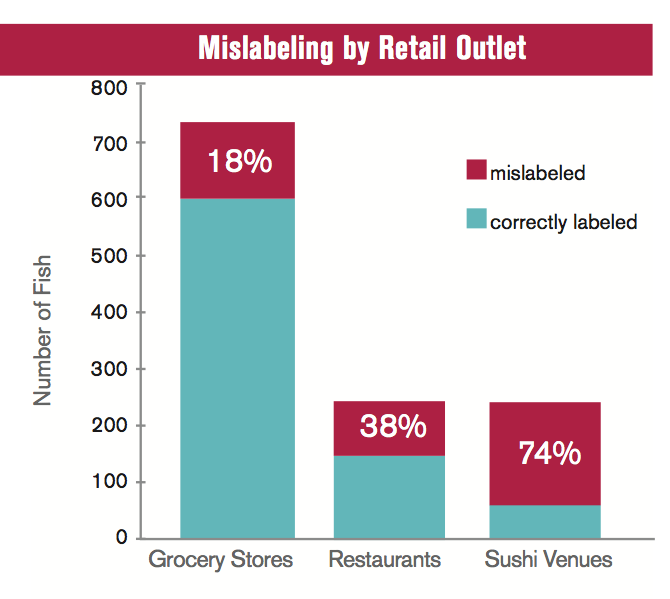
Oceana went around buying fish from grocery stores, restaurants, and sushi venues. By far, the worst offenders were sushi restaurants (we’ll get into some theories on why this is in the next section). Through genetic testing of the fish, they found that 18% of fish in grocery stores, 38% of fish in restaurants, and 74% of fish of sushi venues are mislabeled.
There are, after all, a lot of fish in the sea, and many of them look and taste pretty alike. Sometimes it’s a case of “one fish looks just like another fish.” Other times it’s “wow, this fish is way cheaper but I can sell it at fancier fish prices because they look and taste nearly the same!”
Even though this may be true (that they taste and look like the real thing) it can be dangerous. Putting aside the fact that you’re not getting what you think you’re paying for, certain fishes have much higher mercury levels. For example, if you’re pregnant and you think you’re getting one fish (that’s known to have lower mercury levels, and is therefore safer for your unborn baby), and you get another fish (that is known to have high mercury levels), but you didn’t know about this… well, I can imagine you’d be very upset about this. Not to mention the uncontrollable anal leakage that certain fishes can cause. Don’t worry, we’ll get into the gory details below.
Wild Salmon
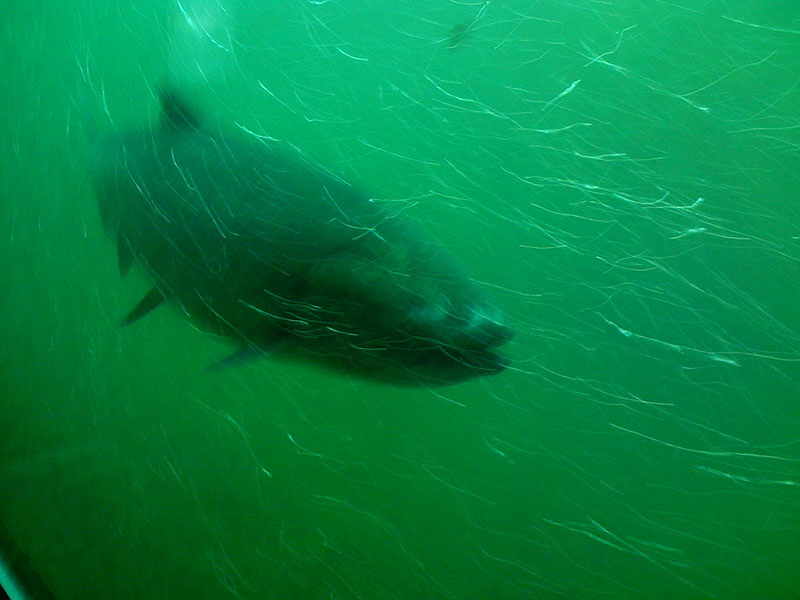
Everyone knows that wild salmon is so much more delicious than farm raised salmon. Also, it has that beautiful orange color, unlike farmed salmon which is a sickly grey. But guess what? If you add canthaxanthin and astaxanthin to their food, it will turn their skin a natural wild color (this is not to say that doing this is bad or dangerous, wild salmon eat shrimp and small fishes that contain the same chemical, which gives them their color).
By putting these additives into a farmed salmon’s food, though, farmers are able to sell their salmon as “wild” salmon, because really, who’s going to know the difference? Plus, you get paid a lot more for the real deal wild salmon than the sad grey one. Chaching! $$$. The problem is, farmed salmon contains seven times the amount of PCBs, have more disease, and are prone to sea lice. They also have way less Omega 3, which I think is a reason why a lot of people eat wild salmon.
27% of wild salmon is mislabeled in this way, so things could be much worse.
Snapper
87% of snapper that got tested came back with the “not snapper” result. Odds aren’t good if you want snapper. However, if you wanted giltheaded seabream, madai, tilapia, Pacific ocean perch, widow rockfish, or yellowtail rockfish then you’re in luck, because those are the things that got substituted in instead. In case you don’t know, those aren’t “great” fish… but they are cheap! Too bad the savings isn’t passed on to you.
Red Snapper
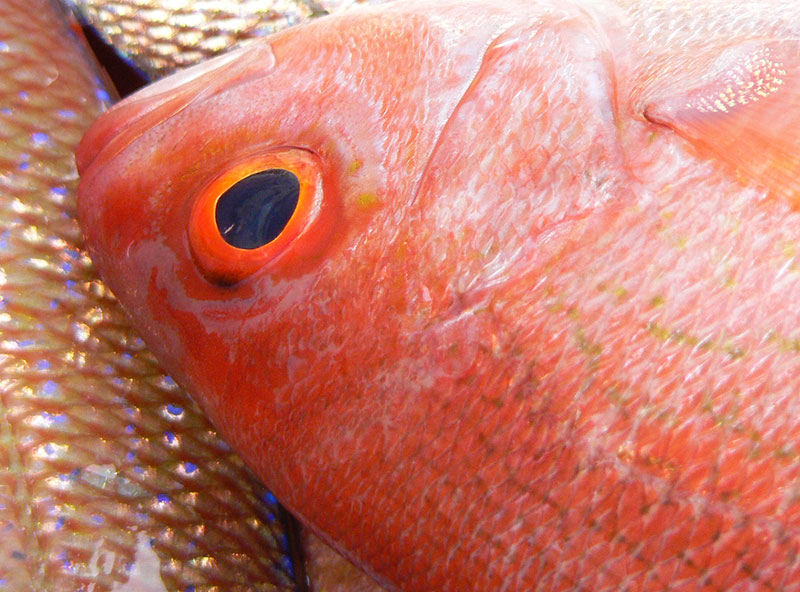
With a “not lying” score of 7/120, red snapper comes in right after regular snapper. What kinds of things are being sold instead of red snapper? Let’s start with tilefish, which happens to be on the FDA’s “Do Not Eat” list due to high mercury. Then, we can move on to tilapia, which happens to be dirt cheap (and are then sold as red snapper, which is not as dirt cheap). Other fish you might be eating instead of red snapper are the Caribbean red snapper, crimson snapper, spotted rose snapper, Pacific ocean perch, yellowtail rockfish, giltheaded seabream, madai, and white bass. There’s a pattern here. A lot of these fish are quite cheap. Red Snapper is not so cheap.
Apparently, though, if you want red snapper you should go to Atlanta, Georgia, as it was one of the few cities that did sell real red snapper.
White Tuna
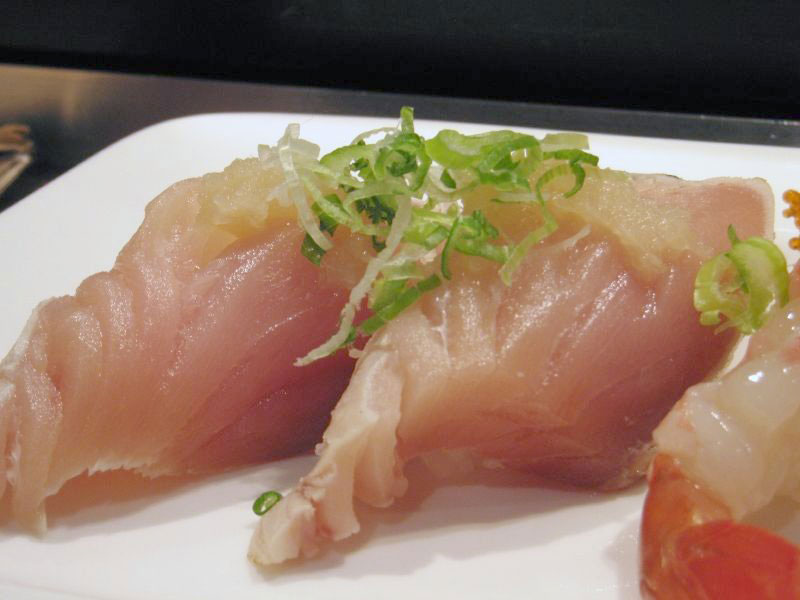
Here’s the deal. Never order white tuna. 84% of white tuna is actually escolar… and wow, let me tell you about escolar. Sure, it’s nice and oily and tasty. Also, it’s pretty low in mercury, not to mention it’s cheap. But, it also a fish that cannot metabolize the wax esters naturally found in its diet. These esters are known as gempylotoxin (that has the word toxin in it, I’ll have you know) which can cause gastrointestinal issues. “What kind of issues?” asks the proverbial reader inside this article. “Well, thank you for asking!” I reply. “Let me tell you: uncontrollable anal leakage as well as buttery, oily diarrhea!” The nickname escolar is the “ex-lax” fish, if that gives you any idea.
There’s a reason why Japan and Italy have banned the importation of this fish. Other governments like Canada, Sweden, and Denmark require warning labels. That being said it is really delicious, so eat with caution. The word on the street is to stay under 6 ounces, though that’s going to vary person to person.
And More…
This isn’t anywhere near the end of the list. Chilean seabass and regular sea bass are replaced with Antarctic toothfish, which is probably too ugly of a name to call a fish you want to eat raw, so it’s sold as seabass. Then there’s Alaskan, Pacific, and Atlantic cod, which gets replaced with Asian catfish, threadfin slickhead, tilapia, and white hake. There’s more than this too, I’d recommend checking out the study yourself, though I think I’ve touched on the more popular sushi-related fish.
As you can see things aren’t what they seem. Have you ever wondered why cheap sushi restaurants are so much cheaper? You’re probably not eating what you think you’re eating.
On a side note before we move on, I’d also like to throw out an honorable mention to wasabi, which is rarely real either. Okay, now back to fish.
Who’s Fault Is This?

In the US, 84% of fish is imported. Out of all that fish, only 2% is inspected. So, who’s going to be the wiser? Companies importing fish can sell cheaper fish as more expensive fish and nobody’s going to know the difference 98% of the time.
From there, we get down to the middlemen selling the fish. Maybe they bought the fish as what they’re supposed to be. Now they can turn around and sell the fish down to the grocery stores and sushi joints as something else… Oh, you want some snapper? Here, I have some delicious and fresh tilap… err… snapper for you that I’ll sell for slightly below regular snapper prices! This deal is too good to be true!
If the fish manages to get down to the sushi chefs without being mislabeled, then it’s their turn to lie to you. 74% of sushi venue fish that was tested is mislabeled, you’ll remember, which makes me think a lot of this corruption is at the sushi-restaurant level. Grocery stores are only at 18%, probably because they’re not out to make a big profit. While this isn’t true across the board, most sushi restaurants aren’t run due to one sushi chef / shop owner’s passion for sushi. They’re there to make a profit, and sushi restaurants in the US are some of the most profitable around. I’ve always thought this, but now I’m certain. If you’re doing sushi to make a profit you’re going to stretch that profit as far as you can. How do you do that? You mislabel fish, and you mislabel a lot of it.
So that’s why sushi fish is mislabeled so much. I find it hard to believe that they don’t know better, unless they’re not buying whole fish (which is possible, I suppose). They see the money they could make by charging inflated snapper prices for tilapia and rock fish and start slicing.
What Can You Do About It?
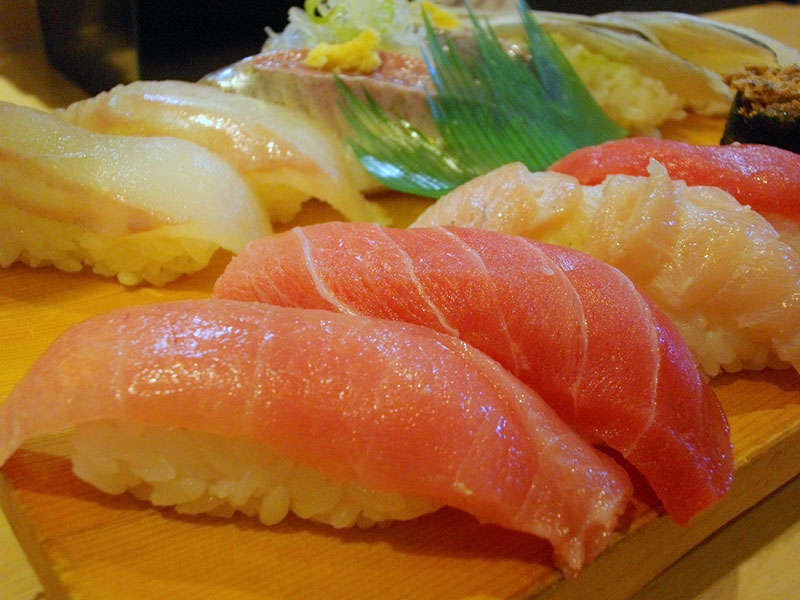
Of course, it’s not like every sushi restaurant is bad like this. There are plenty of really good, really high quality sushi restaurants that I’m sure are giving you the real thing. Of course, if you’ve ever wondered why one sushi place costs so much more and tastes so much better, perhaps this is going to be a reason why.
Oceana has some suggestions for how to prevent yourself from getting swindled, but they’re not all that helpful. They say you should ask questions, think about the cost of the fish (if it’s cheap, it’s probably a cheap fish), or purchase the whole fish. Since we’re talking about sushi, all of those things are much more difficult. You could get to know your sushi chef and hope that you can trust him or her, but there’s only so much you can do before you either insult the chef for suggesting they may be screwing you over or just plain getting lied to.
I’ve always known that the state of sushi in America wasn’t that great, so I was sad to run into this study. I will certainly feel much more paranoid and suspicious, and I’ll never ever order white tuna again.