The Different Ways To Learn Kanji, As I See It

Ask just about anyone who’s learning Japanese what their method for learning kanji is and you’ll almost certainly get a disproportionately passionate / angry answer out of them, myself included. There’s something about asking someone what their kanji learning method is that brings the worst out of them. It’s right up there on the “do-not-talk-about-at-parties list” with religion, politics, and iOS vs Android.

The kanji methods war is broken up into several camps, which I will be naming the following:

  • Repetition
  • Vocabulary & Context
  • Reading Reading Reading
  • Heisig’s
  • Mnemonics With Readings

As I go through each “Way Of The Kanji,” I’d like to look at the positives, negatives, and history of each (if possible). I should also note I have an incredible amount of bias towards the method I like the best, so I hope you enjoy your delicious bias served hot.

The “Repetition Is King” Camp

repetition-kanji

Photo by mxmstryo

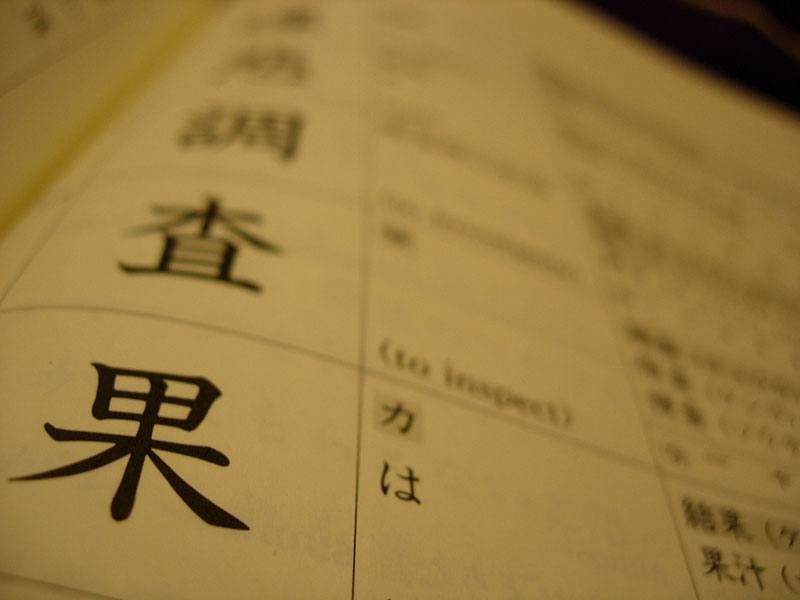
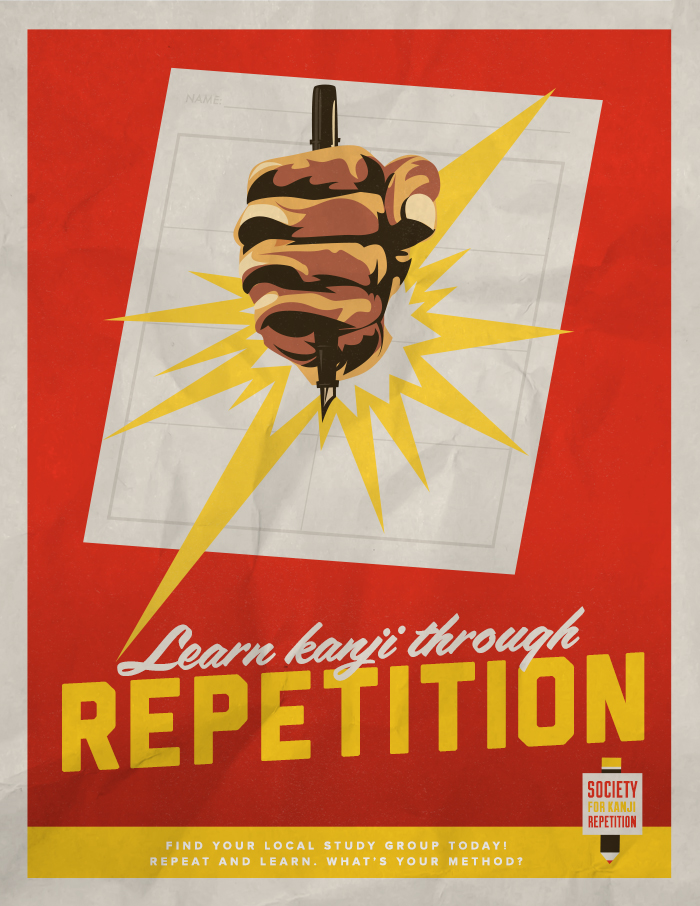
Also known as the “traditional way to learn kanji” this group loves paper with lots of square boxes on it (often with smaller, greyer boxes inside those boxes). Inside said boxes they write the same kanji over and over again until their hands ache like that of a jazz hands beginner. Oftentimes, the kanji they write come from a textbook that orders the kanji in the same order that Japanese schoolkids learn them.

I have several problems with this method, in case you haven’t guessed already.

First, after a certain point (and that point comes very quickly), repetition doesn’t actually help you to learn something. Memory comes from how often you pull something out of your mind. It’s also important to remember that the time distance between each pull out of your memory is important too. Your brain won’t think a kanji is important to store for easy access if it thinks you’re just going to pull it out of your short term memory over and over again, not to mention that most people just look at the previous kanji they wrote (which was based off the example written out by the teacher at the beginning of the first line), which means they aren’t doing any memory pulling at all.

Second, the ordering here is often bad. Japanese schoolkids learn kanji in an order that comes from the assumption that they’re already fluent in Japanese (they are). So, a much more complicated kanji (in terms of strokes) can appear much earlier on the ordering list than one that is quite simple but has a more difficult meaning. This is because they’re kids, and they need to learn things with simpler meanings first. As someone who’s not already fluent in Japanese, you should be learning kanji that have a simpler structure first. Then you can use these simpler structures and combine them into more complicated ones, which happens to be how the Heisig’s and Mnemonics With Readings camps operate.

Pros: Will keep you busy for a long time. Easy to assign to your students.
Cons: Quite inefficient for most people.
Resources: Most teachers who follow the “traditional” methods, which is most of them

The “Kanji Flashcards” Camp

kanji-flashcards

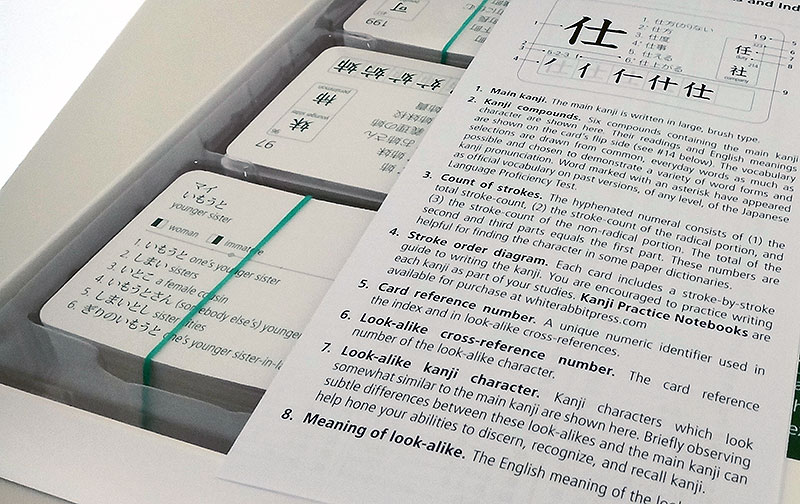
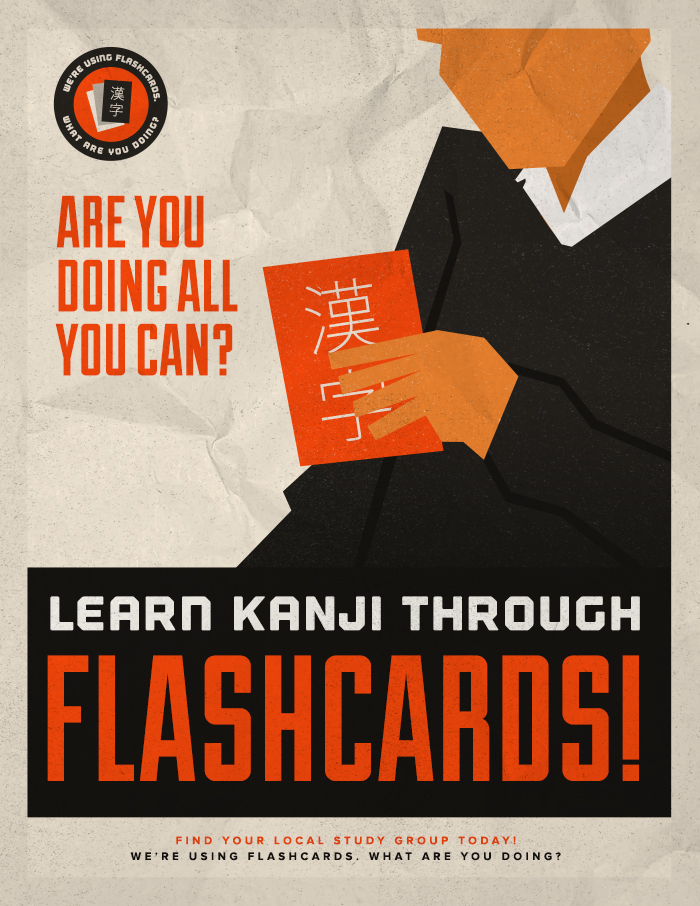
This group of people lives and dies by their flashcards, which I can’t necessarily say is a bad thing! They study their cards and slowly learn a little more each day, whether it’s vocabulary or kanji. This method comes straight from the “repetition” method above, actually. Traditionally, if you wanted to learn kanji you wrote the kanji out a lot of times. Then, you used your flashcards later on to study them some more.

The trouble is, in my opinion, this isn’t so much a method as it is a helper. In addition to just about any other method, flashcards are a big help. Combine that with spaced repetition and you will begin to see your efficiency increase. Even physical flashcard users can do this by taking advantage of the Leitner System.

Even more effective than only using an SRS is learning with mnemonics in combination with flashcards. As I mentioned before, flashcards are just a helper, not a complete “method,” at least not on their own.

Pros: Keeps things organized. You can easily see what you know and don’t know. Combines well with other things.
Cons: Not a “method” on its own.
Resources: Anki, iKnow.co.jp, Memrise

The “Vocabulary & Experience” Camp

kanji-context

I used to share a tent with these guys, but have since moved on. In the “Vocabulary & Experience” camp, they believe that by learning vocabulary (with the kanji, of course) you will learn the kanji naturally. So for example, if you’ve learned the words 食べます (tabemasu) and 食堂 (shokudou), you will know that this kanji could be read as た (ta) or しょく (shoku). Through learning more vocabulary that use the kanji 食, you will begin to learn when to use what reading, and eventually be able to guess readings and understand the meaning via context. The more words you learn the easier this gets, and the more you will be able to read and understand.

I think I liked this method because it feels most like you’re “getting somewhere.” After a while, though, I realized that it eventually becomes less efficient. Let’s think about it this way… What are the things you learn in the order in which you learn them? We’ll continue to use 食べます as the example:

  1. Vocabulary word 食べます (Ah ha! So you can read it as た!)
  2. Vocabulary word 食堂 (Ah ha! So it can be read as しょく!)
  3. Vocabulary word 食器 (Ah ha! しょく again, though it was shortened, be careful!)
  4. Vocabulary word 食う (oh! This is kind of an exception?)
  5. So now I know the readings しょく and た.
  6. It seems like most of the meanings have to do with eating or food, so I’m going to associate that meaning with the kanji itself.

You can see the logic there, and why this actually does end up working. But, I’d like to argue that it’s better to go the other direction.

  1. Learn the meaning of the kanji 食 is “eat” / “food” (now I know that all the words I learn with this kanji probably have something to do with that. Now I have something to hook all vocabulary word memories on in my mind).
  2. Learn the readings of that kanji: しょく (on’yomi), た (kun’yomi), く(kun’yomi)
  3. Now any word I see (so long as I know the basic rules of how readings work) can be read by me.
  4. And, since I know the meanings of the kanji, I can guess the meanings of words I see too. 食べます is a verb that has the “eat” kanji on it, so I can safely guess it means “to eat.” 食堂 has two kanji, with the meaning “eat” and “hall” in it. This is an “eating hall” of some kind, which is a good guess considering the meaning is “dining hall” or “cafeteria” or something along those lines.

You end up with the same knowledge, but I think the opposite direction allows you to make more educated guesses, which is going to get you reading and understanding more quickly.

If you are very serious about this method, though, you can learn to read most kanji, especially the more common ones. This method becomes more weak when it comes to the less common kanji, I think (since vocab will naturally use more common kanji), but that’s not necessarily a bad thing. Combined with flashcards, this method can work quite well for a lot of people.

Pros: Learn a lot of vocabulary, learning in context.
Cons: I think the order you learn things is slightly less efficient than the opposite direction, but it will depend on the person
Resources: Various Anki decks, any vocabulary deck, any vocabulary list

The “Reading Reading Reading” Camp

japanese-vocabulary

Photo by MIXTRIBE

Allies with the previous camp, the “reading reading reading” camp just reads… a lot. Not a lot of people do this until the later part of their kanji learning careers. I’d say without somewhere between 700-1000 kanji under your belt, this is going to be a difficult method to swallow. In terms of solidifying and practicing kanji you already know, I really like this method. In terms of learning knew kanji? Sure, you’re going to learn some things, but I think it’s generally better to learn the kanji and readings separate and then apply that knowledge to all your reading practice.

Pros: Solidifies what you already know
Cons: Isn’t going to teach you a lot of kanji, unless you do this a lot, at which point it may be better to spend that time learning the kanji first, and then do this a lot later as it’s great review and practice.
Resources: Anywhere with a lot of Japanese text to read

Mnemonics Camp #1: Heisig’s

heisigs

Photo by timtak

“Heisig’s Remembering The Kanji” is where the whole mnemonic camp got started. From there, as people discovered more efficient and effective ways to learn kanji using mnemonics, this camp became divided.

For the most part (unless you’re looking beyond the first book in the series… which you shouldn’t, because they’re not worth looking at) you are able to use radicals (basically littler kanji or parts of kanji that can be combined into bigger kanji) to learn the meaning of the Joyo kanji. By being able to identify the radicals in a kanji, you can then recall the story that was made up using those radicals, which will trigger the memory of the kanji’s meaning in your mind. If there’s one thing our brain is good at, it’s storing memories. If there’s one thing it’s not so good at, it’s recalling them. This mnemonic method allows you to recall those hidden memories from your head.

The problem with this method, though, is you end up learning the meanings of around 2,000 kanji really, really quickly… but that’s about it. You don’t know how to read anything. Sure, you can kind of guess what the meaning of a word is by looking at the kanji that made it up, but you still can’t read it.

A lot of people think Heisig’s is a good way to get started, though, and I see their point. You know the meanings of all these kanji, and that allows you to focus on reading (I think a lot of people use the “Vocabulary and Experience” method from here on out). Still, many people forget that the meaning of a kanji is only around 20% of what you eventually need to be able to do. The reading is where things get more difficult and requires more work.

Pros: Learn the meanings of the joyo kanji really, really quickly
Cons: You don’t learn the readings, and the meanings is the easiest part! Oh no, still the hard part to go…
Resources: Heisig’s Remembering The Kanji

Mnemonics Camp #2: “Kanji Meanings And Readings”

kanji-readings

This is a step up from Heisig’s first book. Communities such as Kanji Koohii have stepped up to fill this void allowing Heisig readers to come up with reading mnemonics and share them. They use the meaning of the kanji (or the radicals) to trigger a memory of a story that leads to the reading of the kanji, so that way you now known both the reading and the meaning of the kanji, using mnemonics.

I think this is a really good way to do things. With these two pieces of information, as well as the method itself (using mnemonics really speeds up the learning time for you), you will be able to go out there and read things. But, I feel like learning the meaning and reading of a kanji can be a little shaky on its own. It feels like a Jenga tower with one too many pieces pulled out, who knows when it will fall. Using  vocabulary for context is what helps with this, I think, which brings us to the next Mnemonics camp.

Pros: Reading and meaning are both learned. Mnemonics allow for quick learning.
Cons: Without vocabulary, this things can get kind of shaky. Also, if you don’t know which readings to learn (sometimes there are a few options) you could end up learning very unimportant readings, wasting your time.
Resources: Kanji Koohii

Mnemonics Camp #3: “Kanji Meanings, Readings, And Vocab”

kanji-mnemonics

The final mnemonics camp is a combination of the first two, plus vocabulary. By adding in vocabulary, you are essentially solidifying what you learned in terms of kanji meaning and reading as well as learning vocabulary, which is the main currency of learning a new language. Sure, by learning all three things at the same time you’re spending more time on each kanji… that can’t be denied. But, I think overall you’re getting to the finish line first. You’ll feel behind for a little while (as people talk about how they “know” all the kanji in two months by going through Heisig’s), but after the first year you will have such a solid building of knowledge and be far, far ahead.

Pros: Everything reinforces everything else, meaning your memories are strong.Cons: Slower at first and requires you to spend more time per kanji. Also, if you don’t know what vocabulary to learn, you’re going to learn a lot of unnecessary vocabulary.
Resources: WaniKani, KanjiDamage

The Future Of Kanji Learning Methods

future-city

Photo by Sam Howzit

Surely someday soon, someone else will start another kanji-learning movement and the camps will be split even further still. I think it’s really funny how passionate people get about kanji learning methods, though. It becomes something that is so personal and so important to every Japanese learner that people get in long fights about what is best, myself included.

Hopefully the write-ups of the different methods above helped you to understand the camps (and didn’t just make you angrysauce). Maybe you will be the leader of some future-person kanji method. If you do, be sure to share it with me, I’m always interested!

Bonus Wallpapers!

waysofkanji-1280

[1280x800] ∙ [2560x1600]

…And posters!

posters01

Kanji by Repetition Poster: [700x906] ∙ [Printable 8.5x11 version]
Heisig Poster: [700x906] ∙ [Printable 8.5x11 version]
Learning Through Flashcards Poster: [700x906] ∙ [Printable 8.5x11 version]
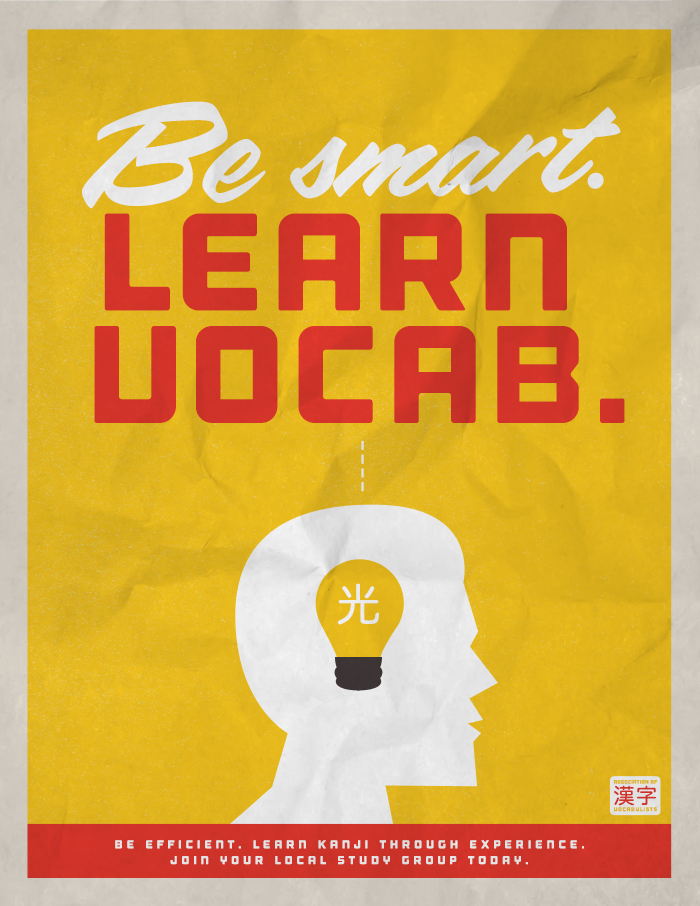
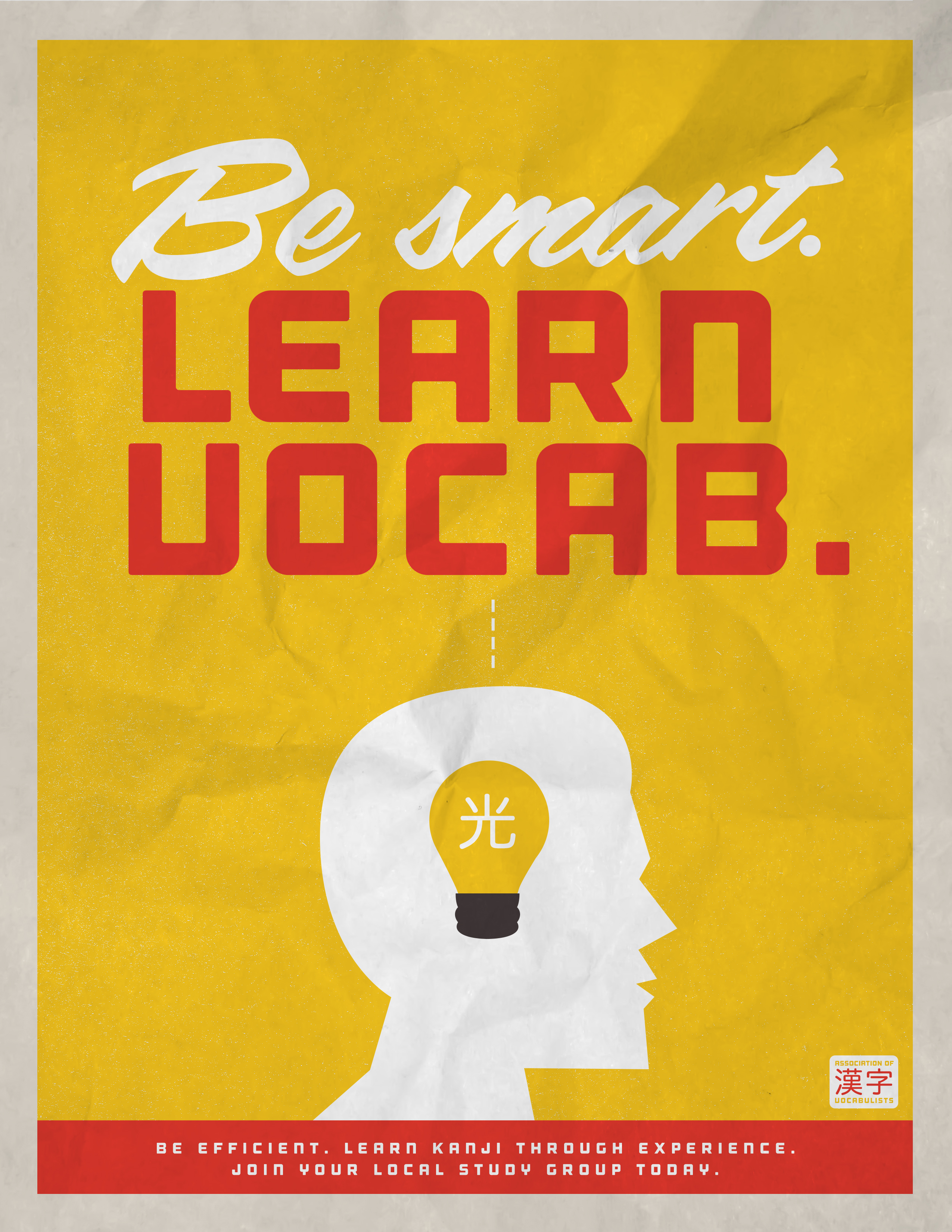
Learn Vocab Poster: [700x906] ∙ [Printable 8.5x11 version]

  • Larry Cooper

    I’m not sure I really fall into a particular camp. I do usually start with learning the meaning of the kanji along with its component parts. I think my method, if you can call it that, is similar to what some people do to remember people’s names. I find something about the kanji to associate it with its meaning. For some reason, the onyumi and kunyomi of some kanji seem easier to memorize than others. Maybe it’s just because they’re used in words that I use more often, like your example of 食. Basically, I think when you see that kanji and immediately think “food” you’re doing something right.

  • Popsicle

    I would simply recommend not sticking to one method, though this may or may not require more effort. I attend college courses (traditional type), I use Wanikani, and I occasionally read things and watch anime. (I mean, watching anime doesn’t necessarily help learning kanji but it helps build vocabulary, which for me, kinda helps me remember kanji because they would be in words that I’m already familiar with.)

    That being said, I have like 200 things to review on Wanikani and an anime queue of like 20 shows, so that’s all I’m gonna say here, haha…

  • https://twitter.com/RochelleBreen Rochelle

    Also known as the “traditional way to learn kanji”. Ha. I use a dry-erase board to go through my Anki deck with Mneumonics Camp 2, upgraded to 3 when I stumble, with visuals sometimes– like that 光 in the vocab poster. (I wish I could buy Aya a drink for those posters. So awesome.)

  • sei23

    Interesting article. I didn’t know it was such a sore subject with people, that seems ridiculous to me. I’ve been through all of these, each one being short lived and disappointing. With Heisig I saw a light at the end of the tunnel but it died quickly realizing I’d have to do it over a second time with the readings, and I’d have to make up my own radical meanings/stories. Since starting WaniKani I’ve huge leaps in learning, finally. I would also recommend listening to Japanese as much as possible to reinforce the vocabulary and work on listening comprehension.

  • missingno15

    I’ve been telling people about the “vocabulary and experience” camp for the longest time and I am a strict believer of this method. For me, it is the most logical way to learn and lessens the barrier to entry for anyone that feels kanji is overwhelming. Also, coupling that with mind-numbing amounts of Japanese text and media definitely helps.

  • linda lombardi

    I think this is an interesting point related to your opinion about the “vocabulary and experience” method: knowing kanji and using it to guess the meanings of words is something native speakers do. A Japanese friend of mine who went to grad school in the US and learned all the technical vocabulary of her field in English told me that when she first went back to Japan, she could understand the journal articles perfectly well because she could match up the meanings of kanji with the terms she knew in English, even though she’d never seen them in Japanese before and couldn’t necessarily pronounce them.

  • Larry Cooper

    It definitely helps when the student lives in Japan or an area like where I live with lots of Japanese stores and restaurants. Seeing signs, labels, and menus in Japanese all the time really reinforces the kanji in context.

  • missingno15

    I agree, though unfortunately I don’t live in an area where Japanese stuff is easily accessible so I have to make do with the internet and books. I guess that means the downside is that my experience is limited to only the media that I consume.

  • lanthas

    Enthusiastic KanjiDamage user here, after having tried the repetition and Heisig methods. Apart from presenting the kanji in a logical order (“sub”kanji coming before the “aggregate” kanji that use them), it also introduces its own radicals next to the 214 official ones so that *every* kanji can be read as a collection of radicals, making learning and remembering a breeze.

    Another very useful feature is the list of pronunciation exceptions, where a kanji gets a unique pronunciation in one specific word (such as 間 in 人間). Textbooks like Genki don’t even acknowledge that this happens…

  • Kaylan

    I do a mix of all these and I never even realised it. I just did what I thought made sense to do xD
    Though with the repetition one I do 10-15 kanji at a time and rotate through and test my self each time so that it’s not constant rewriting. Then I’ll test myself the next day without looking at the kanji or the readings~

  • https://twitter.com/RochelleBreen Rochelle

    Check out Nihongo Navigator’s Kanji Kanban series – daily signs and ads with rikaichan-able transcriptions.

  • Larry Cooper

    While it is undoubtedly a good and necessary thing to know kanji individually as you’d see them on a flash card, if you really want to do something useful with them, I think practicing reading them in sentences and in combination with other kanji is essential. That’s really the best way to reinforce that 来る and 来ない and 帰る and 帰国 involve different pronunciations.

  • Silver Sabrewulf

    I’m definitely in the last camp.

    Rote memorization never really worked for me. It got me through six years of French in high school, but now at age 28 I couldn’t ask which bus to take to X location if my life depended on it.

    The mnemonics + readings + vocab is definitely a slow method at first, but at some point things start to click and make sense, and learning new kanji becomes quite a bit easier. And having watched lots of anime in my teenage years, I regularly come across vocab I already know. I knew ‘mukashi’ meant ‘a long time ago’, for instance. So when I came across that kanji for the first time I already knew one of the readings AND the meaning.

    Yeah, it’s not the quickest method at first, but it’s one that makes it really easy to pace yourself, and retention is beyond ridiculous. It’s been about five months since I started learning Japanese. Three of my friends started with me, each using our own methods. I was definitely the slowest starting out.

    Fast forward five months: They studied hard for a month or so (3-4 hours a day at least), but they’ve given up since. Except one of them, who has since changed methods (but is now behind because he lost motivation for a while).

    Me? I spent, on average, 1 hour a day. Just casually doing my thing. I’ve got 400 kanji under my belt and 1,000 vocab items using those kanji. Never felt like work. And after five months I’m still motivated to learn more.

    If I really, REALLY needed to learn the kanji in a short time (for my career or something), then yeah, maybe another method would have worked better. But I don’t care if it takes me 2, 5 or 10 years to become fluent and literate in Japanese.

  • Christopher Stilson

    I’m still looking for a good way to teach kanji to children who AREN’T already fluent in Japanese… preferably a way that makes it seem like a game rather than a chore.

  • MoiKnee

    Awesome posters and art for this one. I would really appreciate it if we could get some uploaded in 1366×768 for me :D ? Please Ayaさん?

  • Aya

    Glad you like them, Rochelle! Had a blast making the posters. (I would gladly take you on that drink, shall we meet in the future! ;))

  • Aya

    Here you go: http://www.tofugu.com/wp-content/uploads/2014/02/waysofkanji-1366.jpg Have fun with those posters! :)

  • MoiKnee

    Ah, thank you you are the best!! I was really wondering if you were going to do it this time but then you did :) thank you!

  • MoiKnee

    Also, “hm this sounds interesting. Maybe WaniKani would be a good idea, I have been struggling to find a consistent method to learn Kanji. Let me go see what their website looks like, maybe they have a free trail or something. Oh, they’re in a closed beta. Oh well.”

  • MoiKnee

    Pin the radical on the donkey?

  • Corey Taylor

    Some of us aren’t very good at mnemonics. In my experience, mnemonics are just *another* thing I have to learn on top of meanings, stroke order, etc. They’re just as hard, if not harder, for me to learn than all of the other associated learnings with Kanji (and it’s not just Kanji — anywhere I’ve attempted to use mnemonics, sometimes at the requirement of school teachers, it’s failed abysmally).

    Yet, it seems for any teaching methods here in the west made after 1995 or so tyrannically demand the use of mnemonics, and there are few comprehensive, if any, learning methods which don’t just borrow lists from Japan (like the ones used for Japanese school children) or mnemonics.

    There’s a couple books for Chinese characters by William McNaughton which work wonderfully. No mnemonics, just the readings, translations, and the characters. What makes these books great, though, is that the characters are ordered in a way which allows characters to build off of eachother in the way they are written, in their meaning, and in their sounds.

    A systematic ordering for Japanese characters like this, WITHOUT the use of mnemonics, I feel would greatly benefit many many learners who don’t learn well with the current products available. But, of course, we’re a smaller portion of the market. it’s not profitable to create products for us.

  • https://twitter.com/RochelleBreen Rochelle

    Karuta?

  • Corey Taylor

    I have no idea why my icon is of a blonde… person.

  • Jamie Grant

    I learn by combing some of these other methods with the repetition style. Though I don’t rewrite the same kanji again and again I rewrite the same kanji that make a word again. Basically, my brain works best when I’m physically writing the kanji so I’ll look up words or even sentences to practice and I will at times work on a specific kanji on to perfect my writing skill to some degree because I’m neurotic about my penmanship.

  • Kwami

    One advantage to flash cards that I don’t see mentioned here is that some allow you to go the other way. That is, English to Japanese. Using only WaniKani, I find that I’m very good at translating something from Japanese to English, but not so good going the other way.

  • Kwami

    I think it’s Koichi in his blond wig from the “Sh*t Otaku Say” video!

  • kyle coburn

    Talk about divisive. Classroom kanji learning makes me rage; WaniKani, even while I love it, has compelled me to test out re-implimenting it with minor changes I just thought might be interesting to try for myself.

    Awesome posters!

  • kyle coburn

    I don’t think they’re being too stingy with the beta invites as the registration page isn’t protected. If you got in touch, Koichi could probably help you out. And there is a free trial fyi.

  • Matt

    Excellent post. I’m curious about the various methods to learn Japanese grammar as well.

  • Tora.Silver

    I tried cramming a couple of textbooks in my head through my ears, then sealing them up with duct tape to prevent information leakage.
    So I have a splitting headache and I can barely hear a thing, but on the bright side, I read and speak Japanese like a BOSS.

  • MisterM2402

    I started off with Heisig’s RTK 1. That helped build a certain… “familiarity” with kanji, which was an excellent feeling. They became more than just squiggles and dashes; it was like a fog had been lifted. Even though I didn’t automatically know all the readings, it was still useful in a “divide and conquer” style way, like I was getting one aspect of kanji out the way before tackling the others. To be fair though, I wished I’d used it more smartly, focussing on remembering radicals/primitives and only a bunch (as opposed to “all”) of the kanji to go with each. Could have saved a mound of time on that.

    I’m now in both the “Learning and Context” and “Reading and Listening” camps, as they seem the most logical to me. I don’t read and listen as often I probably should do, but I still see the potential benefits. I definitely agree that the “Learning and Context” method is better if you learn the meanings first, but that’s where Heisig method is awesome because you have all that already! :D

    I don’t see the need to learn readings as their own thing though, since they tend to come naturally with vocab (as you described). I remember way back in the day, I *actually* started with the TextFugu kanji section (wasn’t updated anywhere nearly enough, which was what pushed me towards RTK); on the page for 犬, you said something about how learning the reading けん was pointless because it’s uncommon, so you’d only teach us いぬ. That’s fine if you have someone to tell you which readings are actually useful, but the best way to figure this out is to just learn words – the more you see a certain word, the more likely it is it’s a common word, and the more use you’ll get from learning it’s reading. This rather than just learning a list of readings beforehand which you may or may not use any time soon.

  • http://zoomingjapan.com/ zoomingjapan

    I’m not actively studying Japanese anymore as I’m quite content with the level I’ve reached. I can live my life here in Japan comfortably without studying even more.

    However, back when I was still in “study mode”, kanji really gave me a headache.
    It took me a LONG time to figure out which method worked best for me.
    I tried all the things you’ve mentioned in this article. It took me a few years, but then I used Heisig as a start, another mnemonics method to remember the on-yomi and a LOT of reading in context to learn the kun-yomi.

    I don’t think there’s THE best method, but what works best is a combination of most of these methods.

  • lauren

    um you forgot to mention that heisig enables you to write 2000 kanji off the top of your head. yeah you still have to do kakitori to really learn how to write everything but THERE’S SO MUCH DAMN stigma surrounding hcinese characters and how it’s imposible to leran to write i and blahblahblha.
    i’m gonna guess you never tried heisig or at lesat didn’t succeed. i agree it’s not for everyone but come on you’re missing key information

    the problem with the pure repetition method is that it doesn’t guarantee that you’ll remember how to write it off the top of your head since you’re doing mindless repetition..

  • linda lombardi

    That is really cool, thanks for the recommendation!

  • https://twitter.com/RochelleBreen Rochelle

    I think I got it from Tofugu’s old “Top Resources for Learning Japanese” page. ^.^ Thank you Tofugu-lords!

  • Lava Yuki

    Nice! I used to be in the repetition camp when i first started learning since my teacher game me a bunch of kanji workbooks that Japanese kids use. I finished grades 1-6, so im familiar with the 1000 kanji in those, but I found reading books and playing Japanese video games really help. I learned so many new vocab and kanji. Also, a lot of non-joyo kanji crops up RPG and fiction like Harry potter, so I think the last method (meaning, vocab and readings) is good.

    But I’d add in writing, not so much like repetition, but I found writing my favourite songs, a diary and more practical stuff like that helps retain kanji more than just writing it out 100 or so times. You learn vocan and get to apply grammar etc. as well. Lang-8 is great for getting mistakes corrected! I know Japanese kids do the repetitive way, but they’re kids and have all that time.

  • green_knight

    For me, the ‘learning strokes’ method is tremendously helpful (i tend to use iphone apps and simply watch them draw kanji and then draw them in my mind) because I’m a kinesthetic learner – I don’t learn by looking, I learn much better by making movements.

    As for flashcards, I like flashcards apps that combine images, kanji, and hiragana/katakana readings or voice recordings. It’s closer to learning the language like a native speaker and avoids that moment where you scramble and translate in your head.

    As for Wanikani, spent some time on it and liked it; but then I had to take a break from Japanese, and while the kanji I’d learnt with the ‘learn how to draw the pattern’ method largely seem to have stuck, all of the Wanikani vocabulary has left my brain completely, so I’m not sure I’ll pick it up again.

  • Kim

    Is the nickname for the “Repetition Is King” camp, the waste of time camp?

  • Dee

    Right now i’m in the flashcards camp, i tried to learn Hiragana and Katakana for months but i couldn’t do it, bought kana flash cards from White Rabbit and in less than a week i learned most of kana and i can now read it, so i’m doing the same now with kanji.

    Soon i’ll move to reading because that’s the way i learned english, it’s slow i admit, but it works for me ^.^

  • Mescale

    Two tricks to learning Kanji

    1: Learn Kanji from the beginning, You will, when you are learning, use the same phrases over and over again, whether its speaking or writing, if you use the kanji it just goes into your head, because you are using it.

    2: Get over it, OMG kanji is so hard, oh its impossible to learn, blah blah blah. Kanji is a challenge true, but there are far harder things, reversing the arrow of entropy, breaking the speed of light, and something else very dear to me.

    If you approach kanji with fear and dread then it will be a terrible process, if you approach it with open arms, and hugs and kisses, then its fine, hell you might just start to enjoy it.

    If learning kanji is so bad, maybe you shouldn’t be learning Japanese, why would you do something you don’t enjoy? Are you weird? you weirdy weirdo, WEIRDO!

    Kanji; Just learn it. Like a SPACE DINOSAUR

  • Peter

    Is there a free app. for kanji writing study (pref. with S.R.S.) which you’d recommend?

  • Guguoke

    I present a presumably rare perspective as a Japanese language learner. I’m American, but I’ve spent the last two years living and working in China. I speak and read fluent Chinese (with an equivalent of a JLPT 1 for Chinese, the HSK 6). I recently decided to learn Japanese after a trip to Japan. But I’m in a weird position. I “know” what most of the characters mean, I can even guess at their pronunciation. (i.e. if a two or three kanji word, I can guess that it’s likely they’ll use their on-yomi and from the Mandarin pronunciation guess how it *might* be pronounced in Japanese with so far a relatively high success rate). But this still doesn’t make learning all the readings a less daunting task for me. The two languages are as different from one another as they are from English. When it comes to verbs, I’m completely lost. I keep looking for similarities (for instance, both languages use measure words, but in totally different fashions -_-) I’ve tried using Chinese language materials for learning Japanese… but Chinese foreign language educational materials are uniquely awful and confusing. Any advice for a weird learner like me?

  • Lauren

    WHEN IT comes to kanji there’s learning the MEANING, READING, WRITING which you didn’t completely address in each “method”. you really shouldn’t underestimate/ignore any aspect because it is possible.

  • conditionals

    I memorized 500 kanji using Heisig’s method (and the online kanji.koohii.com flashcard service). I knew it was only going to be of limited effect, but I didn’t quite realize how little a Heisig-only approach would actually help my Japanese. The fact that most of his definitions were a bit off, so that I couldn’t even use my kanji recall as a party trick or to make basic communication, really started to get me down. Since then, I’ve forgotten everything, and haven’t tried again.

    All in all, I think it goes to show that Heisig is useless unless you plan on immediately expanding your study with the readings.

  • blah1898

    Something that I tried was always try to write in kanji Try writing
    everything with kanji whenever you can. What I used to do is simply
    write sentences of what I was thinking, things I heard, or random
    phrased, even if I wasn’t sure how to write them (my notebooks are full
    of words and short phrases , I think I have more of those than class
    notes xD ). I had a dictionary on my phone which helped me search for
    words. Then, I would try to learn it, by looking at it’s shape, somehow
    relating it to it’s readings and meaning, and I would continue to write
    it (usually in a word, not the kanji alone, unless the kanji itself
    forms a word). Sometimes I remembered them, sometimes I didn’t. Still,
    this helped me with the hardest part with kanji: getting used to them.
    Now, whenever I see a kanji I don’t know, it’s almost as seeing a word I
    don’t know in my language, not like looking at some weird meaningless
    hieroglyphics that I have no idea what they could be used for.

  • Jade Cahoon

    I like Skritter, but you need to use it in conjunction with something else. It’s purely for learning to write the kanji.

    Edit – sorry, it’s not free, though.

  • Tim

    I’m using a combination of these I guess.

    I’m learning Japanese from a book and I convert all the vocabulary I learn there into kanji.
    This way you actually use the kanji further in the book, or that chapter itself, enhancing the knowledge.
    The learning itself I do with Anki.
    I learn the meaning and the reading of kanji that’s used in that word I learned. So I learn one reading at the time, eventually I’ll know them all, or I can just reset the cards with all meanings.
    I use Heisig’s book for the stories and the main meaning of the word.
    And after this first book I’ll start reading some manga :)

    So that’s about every method said here combined X D

    At a pace of 10/day, I’m progressing nicely, not too fast, but also definitely not slow :).
    I’m at 380 kanji approx now.

  • Murt

    Well then pucker up and give these twins a pinch I’m ynow what I’m saying

  • et

    Well then pucker up and give these twins a pinch if ynow what I’m saying

  • Jacqueline Joseph

    But how do the Japanese – as children – learn it? That would seem to be the logical answer. Works for them, should work for us.