
Since a lot of Tofugu readers fancy the older, traditional stuff in Japan, (and for a lot of other reasons as well) I'm going to be writing a series of introductory lessons on kobun 古文 or bungo 文語, the "literary language" that dominated prose and most poetry in Japan all the way from 794 AD (Heian Period) to 1900 AD (Meiji Period).
Obviously, if you're already familiar with interpreting Kobun / Bungo, you may not find this very useful. However, if you're a reader who doesn't know what a 上二段 verb in the 終止形 is, this article is for you.
What is Kobun?
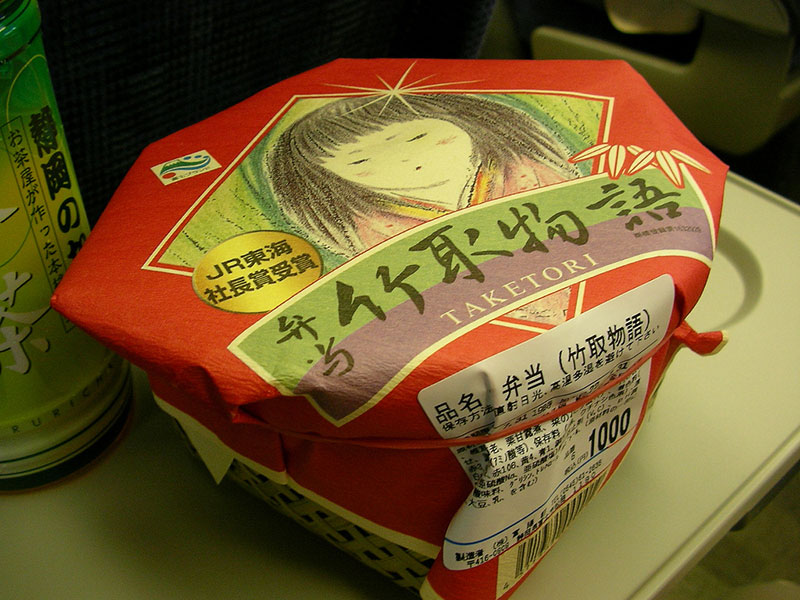
I said earlier that Kobun was a "literary language." This means that while it was modeled on a spoken language (Classical Japanese), the literary form was used long after the spoken form had drastically changed. So basically, people were were writing the way that people spoke long ago, even though they don't speak that way anymore, all the way up until 1900 (though it was still used frequently from the turn of the 20th century to WWII, and then occasionally afterwards).
English-speaking scholars mostly call this Japanese prose language "Bungo". Among Japanese-speakers, however, "Kobun" or even "Koten" (though "Koten" can just refer to "the classics") is used unless one is trying to specifically contrast the spoken with the written language of the time. In Japanese primary education, the textbooks usually say "Koten" or "Kobun", so we'll go with that.
Five Reasons Why It's Worth Studying

Reason #1: Japanese students learn it sometimes as early as middle school, with usually a few lessons on the topic per week until high school graduation. You can check out this Youtube channel for students or search "古文" at this Japanese educators' site. I don't know about you, but I want to be smarter than 6th grader.
Reason #2: It could be on the N1 of the JLPT. A friend of mine who passed the 2013 N1 said he didn't run across any Kobun, or that maybe it was there but he just didn't recognize it. Though, some people say that it shows up because of idioms, which often have archaic elements thrown in.
Reason #3: Talking points. Like a knowledge of pop culture, Kobun knowledge will give you things to talk about. You don't need to have Taketori Monogatari memorized, but having experience reading some of the classics would help you relate to peers. Kobun appears in: modern and older songs (here's one and another, Noh and Kabuki, anime, and generally when people try to sound serious (or when they're being sarcastic about being serious).
Reason #4: Most Japanese college entrance exams include Kobun as testable material. So, if you're trying to test into a Japanese school as a regular student, a dash of Kobun can go a long way.
Reason #5: Nationalism. In case you're not familiar with the political climate right now, here's how one of my Japanese friends put it:
"Right now, nationalism is on the rise, thanks to the Abe administration, and so there's this trend of stressing the importance of tradition and history, etc. And so, even with Kobun, with things like Polite and Humble language, they're part of Japan's unique culture and as such 'must be treasured', a lot of people say." —K.S.
Keigo aside, other traditional things in Japan, such as Ikebana, tend to have jargon heavy on the archaic language. With such a long history, you can imagine the list of other hobbies and areas of study in which you would spot a wild Kobun sentence.
Exhibit A
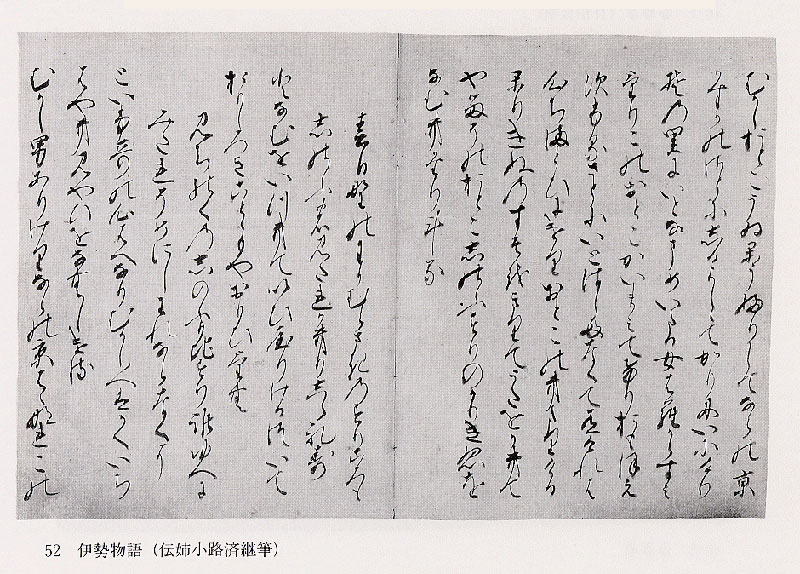
Here's an example to demonstrate just how different Kobun can be when compared to modern Japanese. An example from the Hamamatsu Chuunagon Monogatari, 11th Century AD:
よしのの山となにながれたるよりもなをおくなるみよしのといふところ。
Part of the difficulty there is the plethora of kana that could be written in kanji but clearly weren't. For example, that "いふ" is actually "言ふ". I'm not an expert on how, but there definitely were aesthetic preferences to blame for this strange balance of kanji to kana in written Japanese. This is difficulty number one.
"Mountain" is the only meaning we can get without looking a lot of the other things up in a Kojiten (Classical dictionary). Sure, you might see "ながれた" and "より" and "ところ", but there's a probability that those things don't mean in that sentence what they would mean in a modern sentence. Then, even after you discern their meaning, you still have to analyze all the other kana.
In case you're curious, here's one translation of that primary_sentence: "A place called Miyoshino, more distant than those which are known under the name of the Yoshino mountains" (Vovin 74).
The "ながれた" there combines with "る" and "より" to mean "than those which are known". Many Kobun particles and words exist in Modern Japanese, with sometimes the same and sometimes different meanings. Many died out. My tip: if you hear 'namu' or 'keri', you are 99% likely to be dealing with Kobun, since those don't exist in modern and don't sound like many common modern words (or parts of modern words).
One Approach
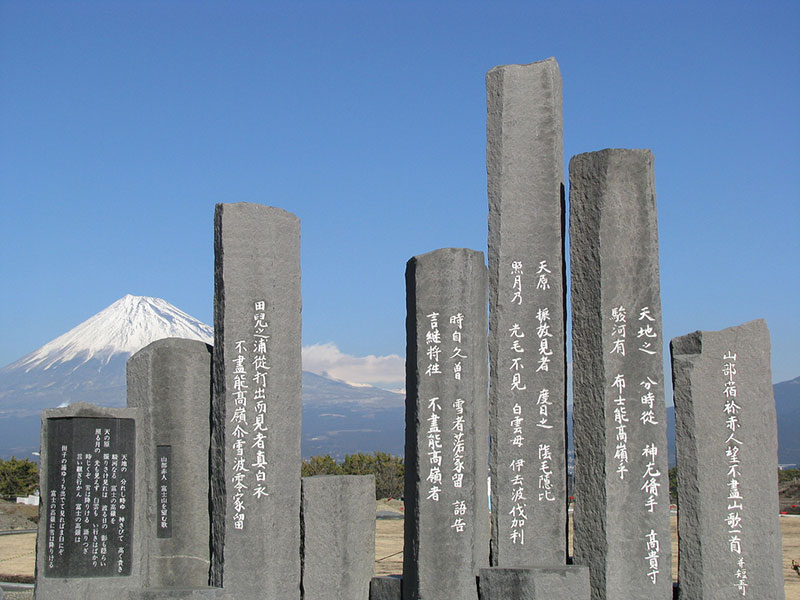
The way you know this isn't Kobun is because of all the helpful Kanji.
What to do when you do see Kobun? Here's my approach for translating Kobun text.
(Some things, like "conclusive form" and "Musubi", below may not make sense now, but I'll elaborate in future articles – this is just the process, and there are resources at the bottom to get you started if you're that curious now)
- Read the sentence through once. Get an impression.
- Look up kanji you dont know.
- What do you think are nouns? What about subject/topic markers? (They were often dropped in Kobun writings). Look them up in a Classical dictionary.
- Go to the end of the sentence. What does that look like? Is the verb in the conclusive form? Attributive? Something strange? If it's strange, look for a Musubi.
- Slide back and forth in the sentence, listing out on a sheet of paper what each kana could mean. You'll ask yourself a lot, "Is that a particle or a verb written in kana there?" This is a trial and error process-of-elimination sort of approach. Obviously, you can look up existing translations, but that should be a final resort since it won't always pan out or benefit you.
- Look at the previous sentence. Look at the current sentence. Contemplate. Then move on to the next. The people composing these texts were trying to write beautifully, so some sentences will be mysterious hook lines for the next bit of content. And like in Modern Japanese, the authors will also carry established subjects across sentences and will probably only tell you what each sentence's subject is if it changes. So you have to keep looking back and forth: within the clause, throughout the sentence, and across the paragraph.
- If you're serious about this stuff, you'll want to look for outside commentary on the thing you're reading. Especially if it's old literature, there will be references and jokes you just won't get unless you look outside the main text.
Your Confusion-Resistant Battle Gear
Kafka Fuura's Bungo page
If you're really ready to get down with this Classical stuff but don't want to shell out the money for your own materials just yet, this is a good place.
Tangorin's Classical Japanese Dictionary
This online dictionary is not comprehensive by any means, but it's in English and has some of the higher frequency items.
Weblio's Kogo-Jiten
If you're Rikaichan-equipped, this is a great online dictionary for Kobun. It's in Japanese.
Classical Japanese: A Grammar by Haruo Shirane
This in particular is a great resources for those of you who are going into Bungo for the long haul. Despite being a textbook (with a companion workbook), all of the examples are from existing texts written in Kobun. Because my interest is always piqued when I see particles that carry over to modern-day usage, I personally like the historical notes Shirane provides; in them, he talks about their evolution, among other things.
A Reference Grammar of Classical Japanese Prose by Alexander Vovin
This is out of print, but it's my favorite resource for a number of reasons. If you have access to college Interlibrary Loans, you can get your hands on a copy. Or you can make an inquiry at Blackwell's publishing site.
This is just one example of a Kobun dictionary, but it's very comprehensive. It's also completely in Japanese. To my knowledge, there are no English Kogo-jitens. The plus side is that this dictionary is exhaustive, so if you feel confident you've looked at a Bungo sentence every possible way and still don't have a good translation, you could look in this book and find the exact obscure meaning that will make the puzzle pieces fit.
Stay Tuned!
I'm a big fan of teacups, small desserts, and manageable chunks of language-learning. If you're the same way, stay tuned to Tofugu. I'll be writing more about Kobun soon. Let me know on Twitter if you've encountered Bungo before; I want to know what your experience was like!