
The New (And Dying) Japanimerican Film Industry

Hollywood traditionally works in the mainstream, trying to make films with big budgets and even bigger audiences. And the Hollywood system constantly comes under fire for insisting on making more sequels, reboots, and films so unoriginal you can name everything that’s going to happen before it comes on screen. So isn’t it odd that in the past year and a half, Hollywood has made a kaiju film, a samurai movie, another movie that heavily features samurai, and a film not just based on a video game, but based on all video games? Big-budget original films are huge gambles in today’s Hollywood, so why were they made? Because the studios are trying to recapture a formerly reliable Japanese box office market, by making movies that exist on the intersection between Japanese and American culture. This Japanamerican strategy has been at work for more than a year now (and there’s a second attempt at a Hollywood Godzilla movie coming out in May). But has it worked?

The Problem
sugar-rush

Japan is the third-largest box office market in the world, behind the shared US/Canada market and China, which only passed Japan as recently as 2012. It’s a huge market, and for years and years Japan has watched the same Hollywood movies that the United States watches. Look at the top earning movies in Japan over the past decade and it won’t look too different to the top movies in the United States: Harry Potter, Pirates of the Caribbean, and so on. Of the top ten opening weekends in Japanese cinema history, only one isn’t American-made: One Piece Film Z. The biggest Hollywood films will gross 80 to 120 million dollars in Japan, such huge jumbo numbers that it’s hard to get your head around.

But in 2012, that changed. While The Avengers was setting box office records around the world and other movies like The Dark Knight Rises and The Hunger Games, Skyfall, and the Spider-Man reboot were making hundreds of millions of dollars, Japan had no interest in any of it. Every single Hollywood movie was beaten that year by Umizaru 4, a Japanese Coast Guard drama based on the manga of the same name; Thermae Romae, another manga-inspired live action film about an ancient Roman bathhouse architect who finds a tunnel to modern Japan; the millionth Bayside Shakedown movie, a spectacularly successful Japanese police comedy-dramas; and the aforementioned One Piece Film Z. The top-earning American-made movie was Les Miserables, which earned a relatively weak $62 million. The blockbuster of the year, The Avengers, only earned $42 million in Japan, and Hollywood realized that they might be about to lose the world’s third-largest box office to the suddenly dominant Toho and Toei studios.

The Plan
wolverine

So Hollywood set out to make movies that they thought would appeal to Japan. Of the Big Eight studios, four released films within the past year and a half that seemed to take on this basic goal of “doing something Japanese to recapture their market”:

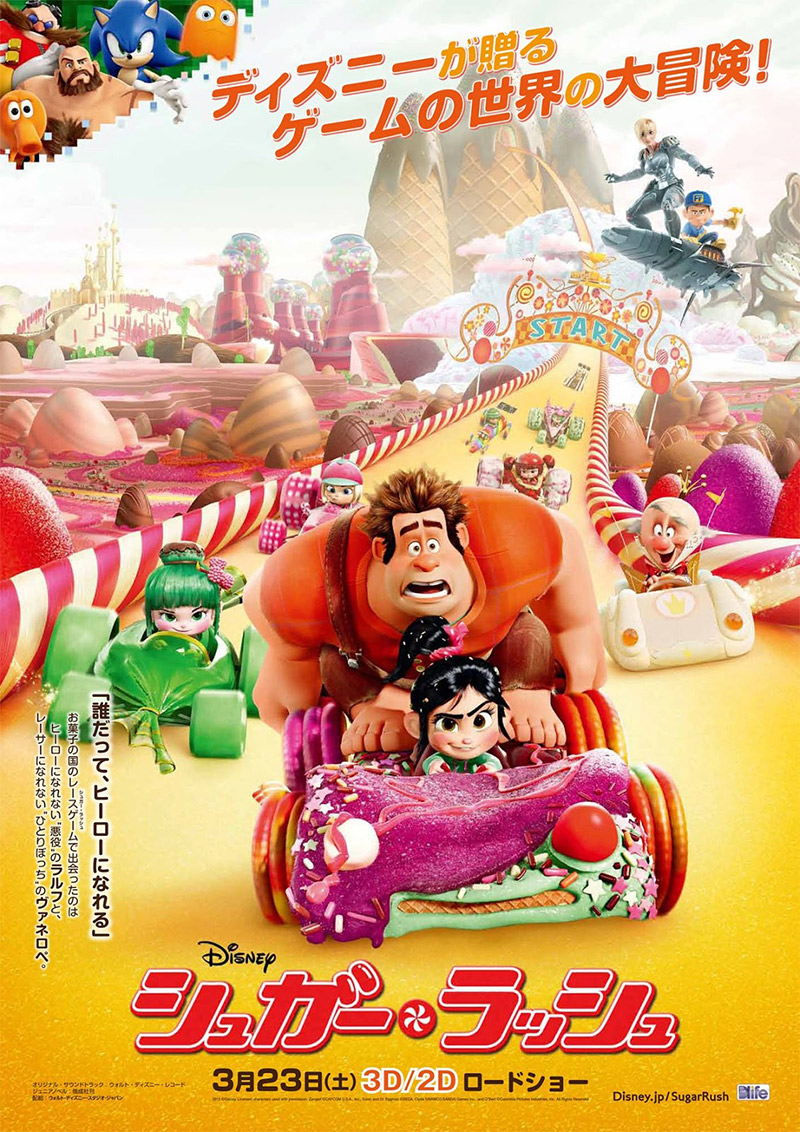
Disney produced an animated film about video games called Wreck-It Ralph in most of the world, but called Sugar Rush in Japan. The basic idea for Wreck-It Ralph had been sitting on a desk at Disney since the late ‘80s, but it got picked up and quickly produced with an unprecedented amount of Japanese cooperation: Licensing deals with Nintendo, Sega, and other Japanese companies, a marketing campaign starring the Japanese geek comedy duo Yoiko, and even an AKB48 song and video with the same name as the movie.

Warner Bros. released Pacific Rim, a Guillermo del Toro tribute to kaiju films. The movie includes characters and segments about the defense of the Japanese, American, Chinese, and Russian Pacific coasts (Hey! Can you name four of the five largest box office markets?), and Pacific Rim also cast Japanese actress Rinko Kikuchi as the female lead.

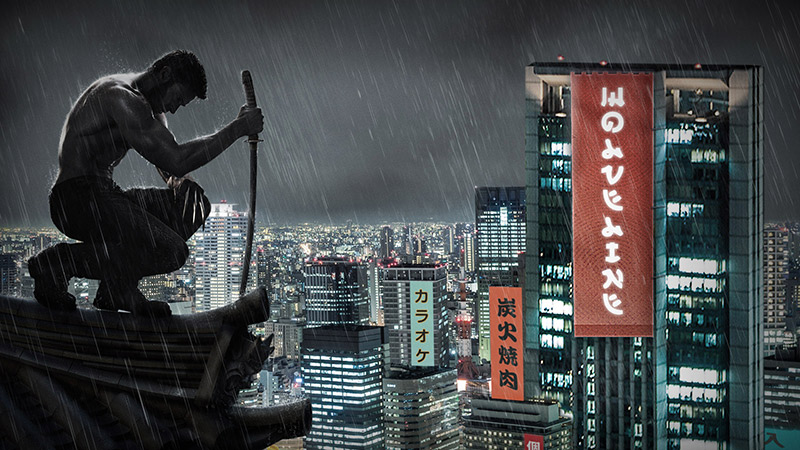
Fox bewildered some people when they announced they were making another Wolverine movie, only this time set in Japan and with a number of Japanese actors, including Hiroyuki Sanada. Yes, even though The Wolverine may have had a fairly weak plot justification for sending Hugh Jackman to Japan, the economic factors may have been a bit stronger.

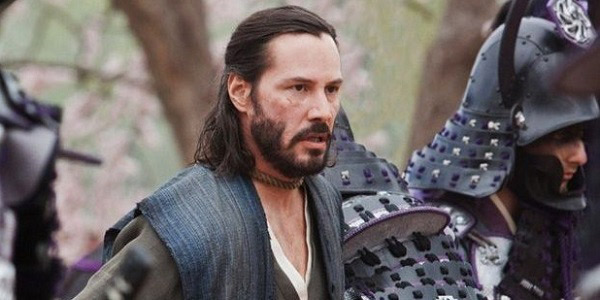
And finally, Universal gave us 47 Ronin, an American version of a classic Japanese tale with virtually all Japanese actors besides Keanu Reeves. Fraught with re-writes and re-edits to determine exactly how Japanese the movie should be, the film was such an overt attempt to earn Japanese box office that it was a marketing disaster when 47 Ronin debuted at #5 in its opening weekend in Japan, ahead of its American release.

The Results
keanu-47ronin

And the beautiful part is that all this effort, all this extra attention toward trying to bring Japan back into the Hollywood fold, resulted in a second straight year of Japanese ambivalence to American movies, with the Japanamerican movie attempts doing even worse than normal. Monsters University was Hollywood’s only clear hit in the Japanese box office, earning $90 million, followed, surprisingly, by a subtitled version of Seth MacFarlane’s wise-cracking stuffed animal bro-comedy Ted at $44 million. The rest of the Japanese box office top 10 are domestic products like Miyazaki’s latest film The Wind Rises and Lupin III vs. Conan.

Wreck-It Ralph earned a disappointing $30 million, worse than Cars 2 or Up or Tangled did in Japan in previous years, and only slightly better than Brave. Yet it was the best success of these four “Japanamerican” movies. Pacific Rim made $14.5 million. The Wolverine earned $8 million. And 47 Ronin: Only $2.8 million.

Besides 47 Ronin, the movies all made a modest profit (going by the standard rule of thumb: movies generally break even when they gross twice their production budget worldwide), but none of them did well in Japan, the place they were supposed to win back for Hollywood. If the studios’ strategy with these curiously Japan-heavy films was in fact to win back the Japanese box office, then they failed miserably. (If their objective was to get Rinko Kikuchi some more work then hey, good job.)

The plan didn’t work, and it’s not terribly hard to see why. Japan has never had a problem with non-Japanese actors and non-Japanese settings before, so giving them that is a very shallow approach to the problem. An anonymous U.S. studio marketing executive told Variety that he thought Hollywood had a tone problem and an audience problem in Japan: “What we’d like to see are more family-oriented films. Too many films coming out of Hollywood are rather dark and depressing — there’s not a lot that families can take their kids to.” And media consultant Geoffrey Bossiere attributed Japanese disinterest to the tone of violence and destruction in even the more light-hearted American blockbusters like The Avengers.

One last diagnosis: America (and many other countries) love comic book adaptations, and Japan loves to go see manga adaptations. Hollywood can’t stop making Marvel and DC superhero movies, which take in boatloads domestically and in other English-speaking countries like the United Kingdom and Australia. But with the slight exception of Spider-Man movies, superhero movies have never made much money in Japan, whether that’s a tone problem (dark, violent, and so on) or just a lack of interest in the characters.

So, although a new Godzilla movie is on the horizon, this is probably the end of this swath of American movies with Japanese actors, themes, and settings, at least if Hollywood does what it usually does, that being going where the money is.

If you’ve seen any of these films, you’ll probably intuitively understand why they didn’t do well in Japan… and in some cases America as well. And, if you haven’t heard the bad news yet… check out John’s Tofugu review of 47 Ronin. Basically, don’t spend your own money on going to see it, especially if those moneys are counted in yen.

[hr]

Bonus Wallpapers!

keanujaeger-animated1
[1280x800]  ∙  [2560x1600]

[hr]

Sources:

  • bigfire

    Pacific Rim took place mainly in Hong Kong.

  • Nathaniel Edwards

    You’re right, edited.

  • http://www.sputniksweetie.com SputnikSweetie

    But the film itself was, as Nathaniel said, a homage to Japanese monster movies.

  • http://www.sputniksweetie.com SputnikSweetie

    Oops, guess I had no idea what you were referring to. Apologies!

  • zachary T

    I love ancient Rome ( still remember most of my Latin from high school) I love japan ( I’m on tofugu aren’t I?) so how have I never heard of this Thermae Romae movie? I am not a huge manga fan but if the movie is good I might find one I would read! excellent article too, I always find it odd when movies have scenes in Japan or China which are their obviously to try and get audiences in those countries, as if they knew the stories were so weak or Hollywood is so ignorant they think non Americans only watch movies if their country is somehow mentioned… still slightly hopeful for the Godzilla reboot…the original Gojira is the best though.

  • Kaylan

    I laugh at Hollywood right now….
    Yeah I’m sort of picky about my movies and hollywoods’ just don’t satisfy me enough most of the time.

    And as much as I hate Rome, that Thermae Romae seems like it could be interesting.

  • Yaviiniia

    What about collaborations, such as the Warner Brothers-sponsored ‘Rurouni Kenshin’ series? That at least did really well, although it didn’t get any kind of American release (yet; I still have hope).
    There are alleged plans for an American-made Bleach and Death Note movie. If they do get off the ground, they might have some effect on this situation.

  • Larry Cooper

    I’ve watched almost all the Japanese hit movies mentioned, except One Piece Z, and none of the American films. I find the American films too focused on action and violence, missing the 人情 which is so central to Japanese films.

  • http://www.tofugu.com koichi

    Please have Steve Buscemi as Bleach guy.

  • Larry Cooper

    Thermae Romae is hilarious, but I’m a sucker for anything starring Hiroshi Abe.

  • mayucchi

    Koichi watches/reads Bleach? Woah… but wait, there is no character called Bleach in Bleach. lol

  • http://www.tofugu.com koichi

    I’m guessing he’s very white in color?

  • Nano
  • http://www.nathanieledwards.com/ Nathaniel Edwards

    Ooh, Ghost in the Shell, I missed that one!

  • collins gustilo
  • Captn_Fantastic

    Disney’s latest film “Frozen” is due to release in Japan soon. It’s a fantastic family film and could be exactly what Japan has been calling for. Will be interesting to see how it preforms at the Japanese Box Office

  • http://www.tofugu.com koichi

    ooh, ghosts are scary!

  • linda lombardi

    Thermae Romae is a hoot. I saw it on the plane coming back from a trip to Japan which included my first visit to an onsen, so the timing was awesome. I liked it so much that I bought the ridiculously expensive DVD and forced my husband to watch it. He liked it even though he had not just been to an onsen and doesn’t care nearly as much as I do about Japan.

  • Joanna

    Frozen will do well here when it’s released in March. All my kids are super excited to see it!

  • Kerensa

    I hold a soft place in my heart for the Rurouni Kenshin movies. They’re actually pretty well made (perhaps because Warner Brother’s is dishing out the money for it… or perhaps because I got to be an extra in the sequel and was able to do 2 days of filming with the cast).

    They are working on an American release of the Rurouni Kenshin movie–at least to DVD/Blu-ray. I doubt we’ll see a theatrical release besides specialty theatres. However, I did hear they had a showing of the first movie in America for the premiere… over a year ago. Heh.

  • Yaviiniia

    You got to be in the same movie as Satou Takeru and Miura Ryosuke? *faints*
    I almost went to the showing of the first movie, but it was too far away (LA) and I was in school.

  • Enzo

    I agree with many of the
    comments. Hollywood is still making a lot of movies based on action, CG, and continually
    stereotyping many cultures. Stereotyping itself already puts a really bad light
    on these American-made films to its native country, for example the 47 ronin, memoir
    of Geisha, dragon ball z, and the Last Samurai. This Hollywood decline has been
    also seen in other Asian countries like China and South Korea. Last year 2013,
    films like Miracle in Cell No.7 was #1 in box office for South Korea, Journey
    to the West for China, and Kaze tachinu for Japan. To set an perspective on
    current Asian film industries, the Chinese film industry is climbing at an fast
    pace just like the country’s insane GDP growth in the early 2000s where the
    Chinese Film Group Corporation is now acquiring talents from Hong Kong, Taiwan,
    South Korea, Japan, and even the U.S. It even started its own
    “Hollywood” in the city Qing Dao (think of the beer.) The current movies
    that are really popular in each of these 3 Asian countries are increasingly
    cultural based films than action-based films from America. Films like Back to
    1942 and Tiny Times for China that reflect personal stories of Chinese peple in
    the past and present are an indicator for shifting of taste among Asian film
    audiences, including Japan. Asian audiences want to see more family oriented and
    culturally oriented film now. Hollywood film are losing grips with its motion
    picture magic of the eye popping helicopter transforming into giant alien in
    Transformer or the insanely realistic opening scenes from Saving Private Ryan. But
    the deep, personal, cultural story telling from individual Asian countries
    (fictional or not) are gaining some real attraction from the audiences. The new
    movie, Like father Like son (そして父になる) is doing really great in Japan now. So I think there is a
    changing trend regarding what Asian film audiences wanted to see now
    with many young Asian directors who are trying to produce high
    quality film like the Hollywoods but also with an Asian taste for a deeper
    connection with the audience.

  • slicerx

    Hollywood relies on CG, ridiculous action, pathetic unreal love stories and slap stick comedy. Isn’t it obvious nobody above 12 cares? I am trying to watch a lot more foreign films lately and I have not been disappointed. To keep it relevant, some of the wonderful Japanese movies I have seen lately and loved are: たそがれ清兵衛 (The Twilight Samurai) possibly my favourite film now. I love the interaction between Seibei and his daughters, おくりびと (English Title: Departures) often has me in tears with its delicate approach to death, and I really enjoyed The Ramen Girl. The western extras were rather pathetic but the mains were brilliant and I loved the mains relationship. A simple film but nice.
    You can’t go wrong watching anything by Yoji Yamada (Twilight Samurai director).

  • zachary T

    thermae romae just came in the mail today. put in the player to make sure it WAS a non region DVD, it was. excited to watch it now ^_^

  • zachary T

    just got it in the mail today. made sure it played. now i am excited to watch it.

  • DAVIDPD

    “Roads? Where we’re going we don’t need roads.”

  • Sebastian

    Very good article! Yes, I was also thinking, why a lot of American movies based on japanese settings these days. But it was clear these movies would fail in Japan. Most American movies with japanes settings are very bad. I am very happy to hear, that japanese movies are more and more success in Japan. I hope a lot, that these trend will go further. I am totally satisfied with american movies. When you have watched one, you have seen all. Here in Europe the american movie industrie is so dominant, 90% of movies distributed here are from the us. It is frustrating, that there are no local movies anymore. I am wishing a lot, that Japanese movies and content is finally reaching the western world and the us lose their monople! I want to see japanese movies getting their worldwide succes, which they should get!