
The Art Of Proposing To A Japanese Girl

When you date a Japanese girl there are a lot of cultural road bumps to overcome. Yet despite them–maybe even because of them–you might decide to make things permanent. Popping the question can already be stressful, but when you propose in Japan there’s also Japanese culture to consider. While you’re sure she won’t drop a “no” on you because you didn’t adhere line 4, section 24, article 9 of the Japanese Culture Handbook, you still want a sure-fire proposal that clicks with Japanese. Is there a “right” way to propose in Japan? And what happens after that?

Traditional Japanese Proposals
miso

Photo by Kim Ahlström

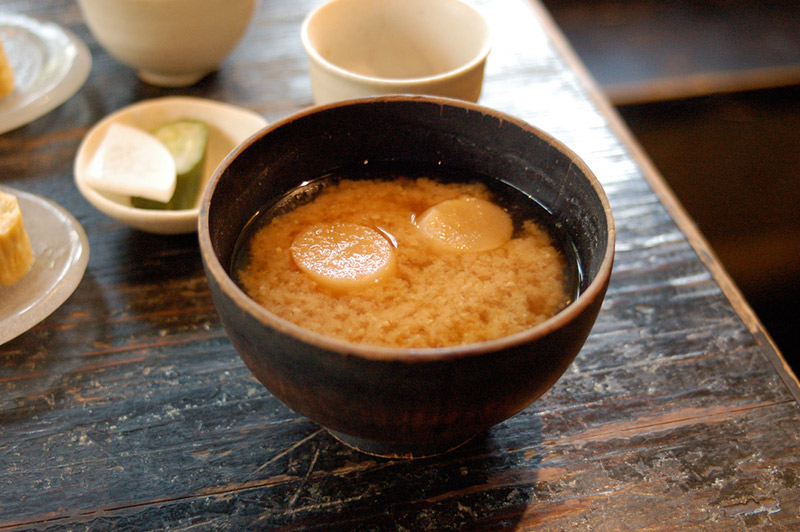
Well actually, since your girlfriend is aware you’re not Japanese, she’s probably not expecting a traditional Japanese proposal. Odds are, she wouldn’t even like one. Old-fashion Japanese proposals were very indirect, and modern Japanese girls will probably just laugh if you asked them a traditional proposal like: “Will you make miso soup for me everyday?”

To a non-Japanese it might sound more like you want a personal chef rather than a marriage, but for older Japanese who valued indirectness in speech, it was a very clever way of popping the question. Another famously vague proposal professed eternal love even in death: “Do you want to lie in the same grave with me?”

The implication was that her ashes will be placed in his family plot of the cemetery, implying marriage. Nowadays though, it would be strange–and grim–to associate death with your marriage proposal. However romantic talk of death and miso soup used to be, in recent years they’ve understandably lost their flavor.

Modern Japanese Proposals
hand-rings

photo by Malakhi Helel

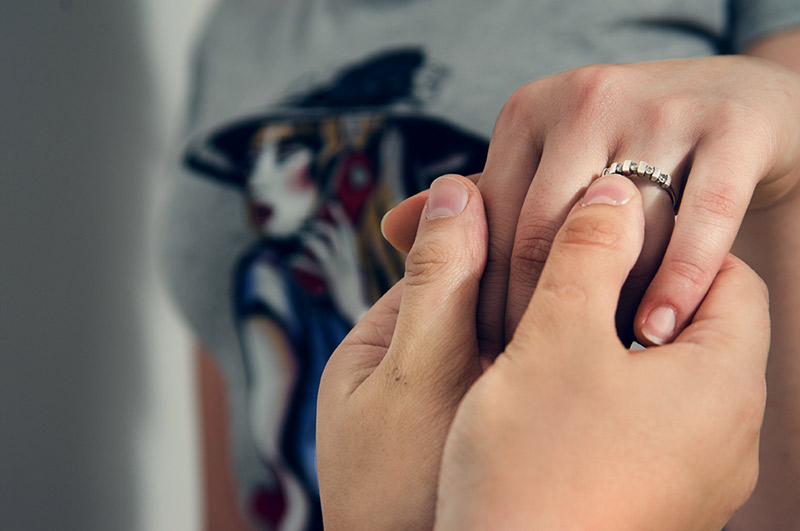
One wife I talked to was asked “do you want to grow old together?” But while some guys can still get away with “soft” proposals like that, modern Japanese girls expect something more direct. Nowadays Japanese men often propose in grand style at fireworks festivals by popping the question during a portion of the show bought and dedicated to their girlfriends.

There are no rules anymore. One non-Japanese I interviewed proposed to his girlfriend after a romantic guitar serenade in the park. His song and proposal were completely in English–and since his girlfriend had a strong command of the language, that was just fine. So when it comes to proposing to a Japanese girl, just do your own thing.

Wait! Should I Ask For The Parents Permission First?

nosnow

photo by nomadic lass

You should get parents permission before marrying their daughter. You don’t absolutely have to, but many Japanese fathers would be insulted if you didn’t. Since you’re never just marrying the girl, but her family too, asking them if you can marry their daughter is the best way to start your marriage off on the right foot.

You should have already met the parents before anyway. One non-Japanese who eventually married his Japanese girlfriend made it a point to meet the parents early on. Just imagine if this had been his first conversation with them:

“Hi. My name is Steve and I’d like to marry your daughter. Also, because I can’t speak Japanese, please just respond with ‘yes’ or ‘no.’”

He didn’t want to be that guy, and you don’t either. Meeting the parents early also tells you if you should invest in the relationship. Like Koichi mentioned, meeting the parents is usually a great experience, but some parents are stuck in the sakoku (鎖国/さこく, “chained country”) era when Japan underwent 200 years of self-imposed isolation. Their little girl is going to marry a Japanese–and that’s the end of it. And honestly, unless your girlfriend is like the family-jewel-kneeing type mentioned in Koichi’s post, that very well could be the end of it.

Family First

family

photo by Glyn Lowe Photoworks

Family is extremely important in Japan. A “no” from both parents will throw an epic monkey wrench into any potential marriage. Just like anywhere, many Japanese girls (guys too!) will have serious reservations without parental approval. It may not even be the parents whose permission you ultimately need, but another relative who decides your fate.

One female non-Japanese I interviewed experienced a particularly interesting case of the strength of Japanese family bonds. Since she was the girl, she didn’t have to ask for her future in-laws’ permission. She did, however, need the blessing of her husband’s aunt. Aunty was the head of the family, and all major decisions went through her. Luckily, the aunt loved her and the marriage went off without a hitch, but if she had gotten a “no,” things would have been off.

Parent’s Real Concern

airplane

The only problem you will likely have with asking for the parents’ permission is the language barrier. You’d better prepare what to say in Japanese. Whatever you say though, the only thing that’s really on their minds is if you are horse-backed marauder come to kidnap their daughter away to foreign lands. They want to know where you intend to live–Japan or abroad? Will they ever get to see their grandchildren? By saying “yes” to you, are they saying “goodbye” to their baby girl? That’s what they really care about.

The best answer is honest, and starts with “she and I talked about it, and…” You should have talked about it with her, and when you deliver the news to her parents, make it clear–and that it is–a mutual decision between you.

The Japanese Engagement Ceremony

handsholding

photo by Paul Nelson

In Japan, someone might say “I’m getting engaged next month on the 14th.” In traditional families, an engagement isn’t finalized until an engagement ceremony, called yuinou. (結納/ゆいのう) Every Japanese I interviewed had an engagement ceremony, though age and social status determined the particulars. The younger, middle-class Japanese only had an informal ceremony amounting to a dinner between families. More wealthy couples held theirs in the traditional style, which costed upwards of tens of thousands of U.S. dollars.

“I’m the president of my company. It was expected of me,” one Japanese businessman told me. “It was so expensive!”

Another older Japanese gentleman had a traditional engagement ceremony typical of his generation.

“We had an engagement ceremony organized by a nakoudo. My family gave my wife’s gifts. Then at the end, we exchanged rings. There are many gifts, all symbolic.”

The nakoudo (仲人/なこうど) is the go-between for the families. They are an important part of Japanese arranged marriages, omiai (お見合い/おみあい.) The go-between is an older, social superior who arranges the potential couple’s first meeting. Should both parties wish to pursue marriage, the go-between then lays the plans–including those for the engagement ceremony, which they also attend. During a traditional engagement ceremony the two families meet over dinner and the man and his family presents the girl’s with a set of symbolic gifts. The gifts depends on the region, but here’s what’s traditional:

Katsuobushi (勝男武士/かつおぶし) is dried bonito. It represents virility.

Naganoshi (長熨斗/ながのし) is a type of dried clam. It represents avoiding ill-fortune.

Surume (寿留女/するめ) is a type of dried squid representing a lasting marriage since it “lasts” for a long time.

Konbu (子生婦/こんぶ) represents fertility and having healthy children. It’s also quite tasty.

Yanagidaru (家内喜多留/やなぎだる) is a lacquered sake barrel. Don’t be fooled by the word “barrel.” It’s handheld. It’s a charm to avoid a wasteful wife.

Suehiro (末広/すえひろ) is a pair of fans representing prosperity. It can differ, but one is usually white and the other gold.

Tomoshiraga (友白髪/ともしらが) or takasago (高砂/たかさご.) Tomoshiraga is a white hemp thread representing the white hair of an old couple. Takasago is pair of dolls also representing growing old together that’s given in the Kansai region.

There’s also kinpoudzutsumi (金包包/きんぽうづつみ) or kosoderyou (小袖料/こそでりょう) Bridal money. The amount depends on the financial situation of the man, but it’s supposed to be about three or four times his monthly pay check. It’s similar to dowery, except it’s paid to the woman’s side. The man’s family also used to get onhakamaryou (御袴料/おんはかまりょう) if the woman’s family had no brothers, meaning no one to carry on the family name. Since in the past families with many daughters and no sons could go broke paying it, today the custom is usually ignored even in traditional ceremonies.

Lastly, there’s the rings. Only once they’ve been presented does a traditional engagement ceremony finish and engagement is official.

Though because they’re so expensive, Japanese engagement ceremonies nowadays usually just introduce the families to each other. Dinner serves well enough for that, with no money or gifts changing hands. Non-Japanese likely won’t even be asked to have one. Since the non-Japanese’s family probably lives outside Japan, arranging a meeting would be almost impossible–not to mention that communication would also pose a serious problem. But, if you want to impress your future in-laws, honoring some of the engagement ceremony’s traditions would show them you appreciate Japanese culture. And that’s always a good thing.

Just The Beginning

marriage

Aside from the engagement ceremony, getting engaged to a Japanese girl isn’t so different from anywhere else. Even the language barrier between the non-Japanese and her parents won’t pose much of a problem. Parents know a nice guy when they see one–just like they can smell a rat. If their baby girl is in love and you seem like an nice guy, that’s usually good enough. What you really need to worry about is what comes next. You are getting married after all. The tough part starts now.

[hr /]

Bonus Wallpapers

japaneseproposals-700
[1280x800] ∙ [2560x1600]

[hr /]

Sources:

  • David Goodger

    I note that this article was entirely from the gaijin male’s perspective (which is my perspective too). But what about gaijin females in Japan? It’s much less common for foreign women to marry Japanese men, but it does happen. You ought to at least mention that case. Or is that the topic of a future article?

    One point of caution: there’s a big cultural difference between Japan and “the West” (Canada, in my case) when it comes to meeting your significant other’s family. In Canada, you’ll be invited for dinner with the family early on. But in Japan, it’s a meeting that typically takes place much later, when you’re serious and your significant other knows what’s coming. From my experience, asking your girlfriend to meet her family is almost equivalent to asking her to marry you. I asked my girlfriend about meeting her family early on in our relationship, and she evaded the question enough that I stopped asking. It didn’t come up again for about a year, when I was getting ready to pop the question (and she sensed it). I think she suggested it at that time.

    We got engaged and married in 1993, and we never had an engagement ceremony. I never knew they existed! My wife’s parents did accompany us to Canada for a few days after we married, where we had a second reception, where they met our Canadian family & friends.

    Thanks for the article and the blog.

  • Mayucchi

    What about the nongaijin side?

  • dennmart

    Tofugu / Nathan, it’s like you are mind readers… This article couldn’t have come at a better time for me, personally, as I am in the midst of preparing for a surprise trip to Japan soon for this very reason ;) Thank you so much for sharing your perspective of this topic!

  • NathanielW

    Hey, thanks for the comment. I briefly touched on non-Japanese females getting married

  • NathanielW

    Awesome! Good luck!

  • NathanielW

    Actually, the non-Japanese female I mentioned received a pretty normal proposal by western (in this case, she was from the U.S.) standards. I think any non-Japanese female should probably expect the same.

  • fa

    BEST WRITERS: 1.KOICHI

    HASHIHASHIHASHIHASHIHASHIHASHIHASHIHASHIHASHIHASHIHASHIHASHIHASHIHASHIHASHIHASHIHASHIHASHIHASHIHASHIHASHIHASHIHASHIHASHIHASHIHASHIHASHIHASHIHASHIHASHIHASHIHASHIHASHIHASHIHASHIHASHIHASHIHASHIHASHIHASHIHASHIHASHIHASHIHASHIHASHIHASHIHASHIHASHIHASHIHASHIHASHIHASHIHASHIHASHIHASHIHASHIHASHIHASHIHASHIHASHIHASHIHASHIHASHIHASHIHASHIHASHIHASHIHASHIHASHIHASHIHASHIHASHIHASHIHASHIHASHIHASHIHASHIHASHIHASHIHASHIHASHIHASHIHASHIHASHIHASHIHASHIHASHIHASHIHASHIHASHIHASHI

  • Wonder Party

    I also wish there were more articles from the gaijin girl’s prospective :(. Still, the types pf proposals was interesting! I imagine my guy would be the firework type of proposal guy.

    I’m surprised about the guy that asked to meet his girlfriend’s family so early on. Good for them it worked out. Been with my Japanese boyfriend for 14 months and still haven’t met any of his family… which is both ok and not ok with me. His mom knows I exist but not as his girlfriend, just a rare gaijin friend (we live kind of inaka).
    To me meeting the family always implied some really serious seriousness, which, I guess you could say we are approaching as we have often talked about marriage… but being a gaijin I am that flight risk so I can imagine it would be kind of embarrassing for him (and me too) with the implications of such an introduction to introduce me if things didn’t work out. Plus, there is that language barrier. I think we both feel it’d be better to wait until I’m slightly more eloquent than a Japanese toddler. Still, it’s hard to feel totally safe accepting a proposal not knowing any of the in-laws.

  • Muggley

    It’s interesting how the first meeting really is considered as almost an engagement ceremony in itself! I just went to Japan for the first time in Japan to visit my girlfriend and meet her family for the first time as well (we’re in a long-distance relationship; she lives in Japan, and I live in the US), and her family was curious as to whether or not I was being introduced as her fiance. We even went to a tea shop in Nagoya, and when the person found out that I was there to visit, he was also curious as to whether or not we had been engaged yet. Hearing these things first-hand really made me happy though, to be honest, and like Dennmart who posted below, I’m also in the middle of preparing something special for the summer as well! :)

  • NathanielW

    Great! Good luck to you too!
    I think your story reflects Japan’s growing age gap–older generations thinking engagement while (it sounds like) your girlfriend just wanted to introduce her boyfriend to her family while she had the chance. But best of luck in summer! I’ve been in a long distance relationship before and know how tough it can be to want to physically see someone but can’t. Might I recommend thinking about proposing somewhere cool? Japanese summers can be swelling hot!

  • Applesauce 21

    I loved the article :D They’re always great at Tofugu ;) But I would agree that it would be interesting to hear more from a woman in Japan’s viewpoint – however, if anyone is interested in hearing that then definitely check out a youtube channel called “Rachel & Jun” it’s very cute, very good, and gives lots of insight into what it’s like as a western women being married into a Japanese family :)

  • Ben

    Great article. Having been through the process, I agree with a lot of the advice given. I only wish I’d had a resource like this when I was going through it!

    Reflecting back, I would say that asking for the family’s permission was probably the most important aspect, at least in my experience. As you mentioned, the issue of where we were going to live was an important question for my wife’s parents, especially since their daughter was thinking of marrying a non-Japanese person. To tackle this, I created a video showing them highlights of my country, my home, my work, and included asking permission in the video. (This was especially helpful since my grasp of spoken Japanese isn’t great.) I found this really helped to set their minds at ease, seeing where their daughter would be living and that she’d be safe.

    I did learned another thing in the process: make sure you focus on the “decision maker” in the family! I mistakenly had a more western outlook in mind, asking the father’s permission. In my wife’s family, the decision maker turns out to be her mother. (I suppose it varies, as you mentioned in the case of the aunt above.) She drilled me with questions to make sure I was sincere. It was a bit nerve wracking, but she did give permission. Now, a few years later, she treats me as if I were one of her own, and absolutely adores her granddaughter. :)

  • tokyo

    Personally I (Australian) don’t and my Japanese Fiancee don’t think meeting the parents is such a big thing… I never thought about it being much of a deal. And she was the same, I was just her boyfriend, Australian guy or whatever she told them. (hahaha) (Since explaining somethings in words to her parents isn’t always easy.. better to explain in actions) But we slept in the same room so it was obvious…

    Just to give some perspective she is 31 and I’m 27. As for when to meet the parents it really just would depend where we you are living.. if busy.. and do we have time…

    I find it just depends on the family, even in Japan and Australia, I don’t think there is much of a difference.. Traditional Japan culture and such there can be a lot, but in the more modern Japan. There are less of a difference, I found when talking to different people. As I said depends on family and depends on the person. Anyway this is just my experience.

    The main difference when it comes to relationships I found is there nearly everyone in Japan does get married, unlike in Australia where it is up to the couple.

  • derio

    My wife is also from a very inaka town in Japan, and her father is very traditional, so as soon as we decided we wanted to get married we brought up the subject with her parents. It wasn’t easy, but eventually things worked out.

  • Anthony Jaymes Annis-Rastaette

    Very interesting as more than likely I might be popping the question to my Japanese girlfriend, I have currently met my girlfriends mother who knows little to no English (to thank me once, instead of saying ‘thanks’, she says ‘congratulations’.) and her mother seems to really like me and according to my girlfriend, she really likes me. I have grown to be comfortable around her, and same with my girlfriends older sister.

    But the only thing is, it has been well over a year now and I have yet to met my girlfriends father and he has yet to know that his youngest daughter is dating, little alone an American. But I’m sure it’ll be a while until he finds out she even has a boyfriend as my girlfriends sister has a boyfriend of five years (but he is Japanese) and their father didn’t find out until after three years. But I don;t think he is a stereotypical “Asian dad” as how it’s portrayed in America.

  • lumiina

    I was proposed to in Japan, as a female American, so I can offer another perspective. At least, on what it’s like to have a frugal proposal. He proposed to me with his mother’s heirloom ring, a giant ring with a huge green stone in a squarish shape and diamonds surrounding it. Despite how romantic the proposal was, finding a boquet of sunflowers under a Christmas tree with a ring attached, I couldn’t get over how much I didn’t like the ring. So we went to a ring store and bought a cute, rose gold diamond ring, but it didn’t cost more than $300 and he used his brother’s money. I honestly don’t mind and could care less about the value of a ring and treasure more the marriage I now have with him. But he is frugal, and so is his family. His family also loves me. They live in the inaka so I don’t know if frugalness often comes with inaka culture. There was no engagement party, and we married in America, his family watching via skype. We do intend to move to Japan after I graduate college.

  • lumiina

    I have a friend who’s Japanese wife’s parents disowned her for marrying a foreigner. It took them several years to get on good terms again. Not getting permission from the parents doesn’t mean the wedding is off, but will lead to hardship. I think it’s up to the potential fiancee as to whether she wants to risk being disowned or not. For some women, they might rather marry and try to mend their relationship with their parents.

  • Jacob S

    I am in a similar position. I am dating a japanese girl and I met her whole family very quickly, but she is very hesitant in introducing me to her Dad. I am told that maybe after new year’s, but I don’t know. To me I feel like I am being disrespectful, but I don’t know.

  • Kiwi

    “Will you make miso soup for me everyday?”
    Modern Japanese women: “GO MAKE IT YOURSELF!”