
Why You Should Come to Japan for College

I get the feeling that lots of the readership here at Tofugu may be thinking about college choices, pondering over exchange programs or even thinking about grad school. So, I decided to do a little series about college in Japan, starting from this article. First up: why you should seriously consider coming over to Japan for college.

The Reasons
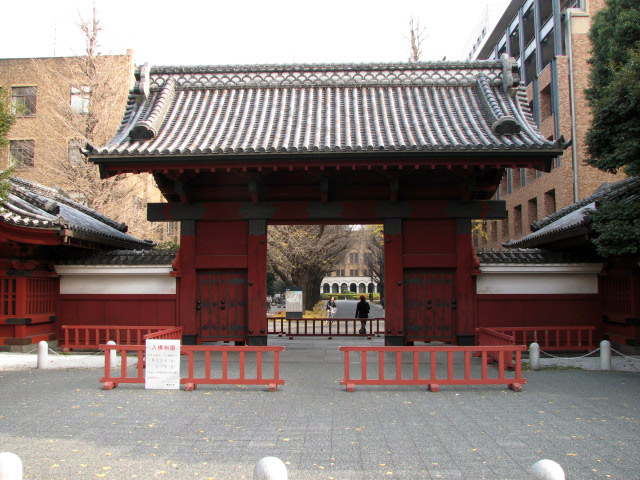
red-gates-tokyo-university

The famous red gates (赤門) of the University of Tokyo

Now, going overseas for college or for an exchange is widely considered to be a good thing – for your resume, for your worldly knowledge, or even for your plain and simple enjoyment.

The question then is: “why Japan?” Obviously if you’re doing a Japanese Studies major or have a very strong interest in Japanese stuff like many of the writers on this blog, the reasons are obvious. But for those who are wavering between Japan or another country, or those still a bit unsure, here are some reasons for your consideration.

1. It really isn’t that expensive

yen

Photo by mshades

Lots of people probably have heard that Japan is ridiculously expensive – pointing out the many “Most Expensive Cities in the World to Live In” in which Tokyo and Osaka often rank near the top.

The first thing to note is that such surveys often measure the cost of a working expat. Thus the cost of renting an apartment and a car is often factored in. Obviously, as a student you probably aren’t aiming to own your own car in Japan and if you’re in a hostel the rent is significantly lowered. Plus, if you’re from North America or Western Europe, you’ll find the typical 500 yen meals fairly cheap. Think about eating out every meal for about 5 US dollars/3 pounds/4 euros. And there’s no tipping too. Nonetheless things (and especially fruits!) may look expensive if you’re not from the above areas though.

If you’re thinking of spending your whole college life in Japan, tuition is also relatively cheap. For example (the information below is from the official websites), the University of Tokyo’s annual tuition fee is ¥585,800 or about 5,400 US dollars. Private universities tend to be a bit more expensive with Waseda’s School of International Liberal Studies’ school fees near ¥1,500,000 or near 15,000 US dollars a year. While this may be expensive for someone who comes from a country with no tuition fees, it certainly does not reach say, US college fees.

In addition (and which will be covered in a later article), scholarships for both exchange students and full time students are quite common in Japan. Many foreign students in Japan under them have a large part (if not all) of their living expenses etc. covered.

2. You will (be forced to) learn a different language

language

Image by kazamatsuri
Yes the two characters are how to write Konnnyaku in Kanji. No they’re not even in the JLPT N1 syllabus.

But can’t you learn the language without going to Japan? Well, yes, somewhat, but there’s a whole new depth to things when you have to live in a different language. For example, very few textbooks are going to teach you what an onion is in Japanese – tamanegi. And certainly none of them are going to tell you what the kanji (玉葱) are. But going to a supermarket in Japan and puzzling over what the things are is in itself a very big opportunity to learn Japanese.

Basically, no one is going to look at you and say “oh this person is at so-and-so level of Japanese and so let’s make the kanji easier for him.” – the level of immersion quite simply is different.

No guarantees though – some people come and don’t put in the effort to learn so it’s no surprise that they go back with a poor grasp of the language, stopping at somewhere between “konnichiwa” and “sayonara.”

3. You (probably) won’t need to study hard

This does depend on the university. But generally, if there’s one thing that Japanese universities are not known for, it is academic vigor. So, if you come to Japan hoping for deep discussions with the Japanese students about Japanese philosophy or some probing into the problems of Japanese society with great academic depth you will most likely be disappointed.

This is because firstly, the Japanese students don’t really take college that seriously. After all – as someone once told me before, in Japan “college is the spring break of life.” (more on this in a later article) In addition, if you’re here on an exchange program or a degree course in English, well, let’s just say that much of the teaching staff doing the courses aren’t really fluent in English.

But on the other hand, generally speaking you’ll have enough time to travel or do whatever you want. So if you’re looking to have a relaxed time or if you subscribe to the mentality that “the real learning happens outside the classroom”, this can be an opportunity in itself.

4. But you will learn nonetheless

brain

Photo by Sean MacEntee

And I don’t mean just the language.

This is because Japan as a society is just really different. Even to other Asians, it is just really different.

It is precisely because it is so different that you may oddly learn more about your home country after coming to Japan – for the simple reason that living in Japan will offer you a basis for comparison by which you can judge your home country.

And of course, you’ll learn about Japan first-hand. No matter how much someone reads this blog or any other website on Japan, the fact is that we can only provide a limited view of Japan colored by our respective biases. Nothing beats, and nothing can beat, experiencing Japan first hand with its ups-and-downs.

You’ll also probably learn more about yourself. If you’ve never lived alone before you’ll have to learn. If you have never lived in another country before you’ll experience the culture shock and learn to question all the assumptions that you had about life. Like, how you would think that ATMs, being machines, do not need rest (they apparently do in Japan).

5. Better to do it while you’re a student

I’ll be honest here. Japan isn’t for everyone. Every year lots of foreigners come to Japan to work not knowing a single thing about Japan and expecting paradise. If they like it – then all’s well, but for a significant proportion of people it ends up being an entirely different experience.

The good thing about coming as a college student is that because it is “the spring break of life”, you have time to observe, listen to stories from people currently working in Japan, and then make a decision on whether or not staying in Japan for the long term is for you.

You certainly wouldn’t want to be in the situation which many foreigners working in Japan find themselves in. More precisely, one where you come to Japan having a distorted view of it, find out that it isn’t what you expected and then are faced with the dilemma of enduring or going home and having to do the job search all over again.

And to end off…
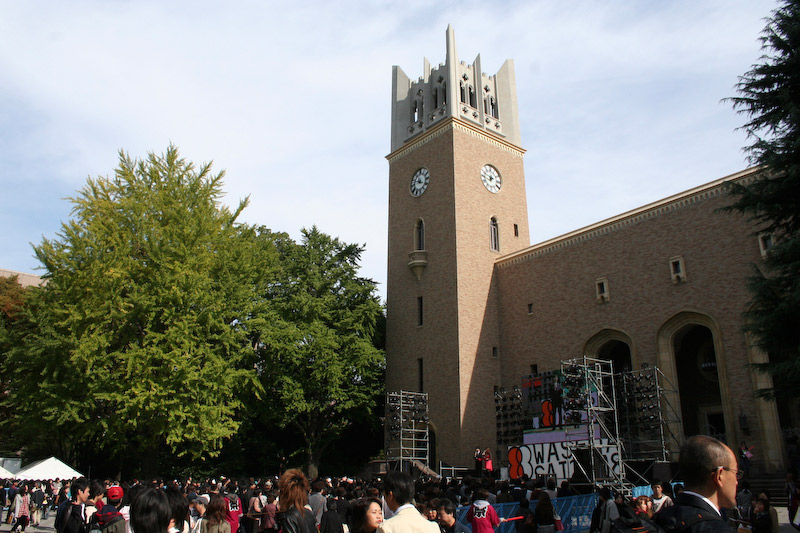
okuma-waseda-university

Image by Elena Gurzhiy
Okuma Memorial Hall at Waseda University

Perhaps one big reason for why you should come to Japan is that Japan needs you. At the moment the whole of Japan is captivated by this idea of “internationalization” (国際化). In short, having largely not been that accepting of foreign input, many Japanese companies and perhaps Japan’s society as a whole have been coming under intense pressure from foreign competition.

Japan is thus starting to realize that it needs to accept more diversity and allow for a wider range of viewpoints. Due to this, Japan is facing the challenge of bringing in more foreigners as employees, researchers and of course as students.

How effective Japan’s attempts at “internationalization” are is up for debate, but what is also true is that in the universities right now, there are too few international students for there to be any effective “internationalization”.

Obviously the problem is deeper than that – the culture of homogeneity needs to be addressed too – but Japan still needs you here to give it some international stimulation. So, I hope that this article has given you some information to think over – and who knows? Maybe I’ll see you studying around in Japan soon!

Update:
Hey people, I think I’ve been a bit unclear and misleading with the title. Basically, while I do indeed hope that some people will come for the full four years for college, this article also applies to people who are thinking of study-abroad programs. The next article will tackle directly the idea of Japan’s universities being spring breaks of life so I hope to address that too.

  • Yuki

    Thats the total opposite of my college. Japan seems much easier. My college fees are 50,000 euro per year, and its super difficult to pass, that so many people r kicked out in the first two years. Most of my classmates study over 5 hours a day and camp at library near exams. Going to a Japanese college is like a dream:)

  • Travis Dove

    I disagree that going to college in Japan for all four years is a good idea. The American government, American companies, and even foreign ones are going to trust the American degree much more than a Japanese one. Yes, studying abroad for a semester or year is very marketable, but I wouldn’t recommend going to school abroad (Japan or anywhere, honestly, unless it’s Oxbridge).

  • PianoFish

    This is true, though not for students from England, Wales or Northern Ireland. If you’re from Scotland or another EU country then tuition is free but students from other parts of the UK have to pay the £9000 fees. Also if you’re from Wales you get a grant to cover about 2/3 of the fees wherever you’re studying in the UK. I concur that talking about UK student finance is a bit of a misnomer seeing as each bit has different rules.

  • Fangyi ▼ ジュン

    High school student in Singapore here. I’ve been seriously considering going to a university in Japan but from what i’ve seen, all the procedures seem really complicated, and there are matters like part-time work, getting a bank account etc to consider about. Of course, this is really just all part of living in another country for an extended period of time. Money-wise, i’m not too sure because i find it really hard to talk to my parents about finance issues… but i will eventually discuss it with them…
    There’s this Japanese Studies course in a local university, which actually offers a year-long immersion program in Japan, so i’m also considering that.

  • Conrad

    What would you advise for students wanting to do a PhD in Japan, or to study another course after getting a Bachelors or Masters? I go to Cambridge University and I’m really interested in studying in Japan, but I’m not sure how possible it’d be. I’d be aiming to go to somewhere like Waseda or Todai.

  • Bailey

    That’s something I would like to know as well, considering if I were to study in Japan it would be for a second degree while I am in my late 20s early 30s.

  • brianfickley

    Great article. I am planning on going to graduate school in Japan.

  • ihsan ışık

    Woah, great to hear. Can’t wait. You have my very thanks.

  • Austin

    Hey thanks for the comment! Yeah sure but as you can see from the rest of the discussion here beware of the potential pitfalls (like the academics not being as strong as you may want them to be).

  • Austin

    I’m not sure but yeah, the private universities tend to cost more. If you’re from Europe where tuition is free in many countries then I can see why it looks really expensive.

  • Austin

    Yeah the not-learning anything in your classes is a very common complaint. Though this does depend on the course definitely. If you’re a full time student in a Japanese university there probably are some good courses where one can learn – though there are also lots of other courses which are a waste of time.

  • Austin

    Hopefully you’ll get it!

  • Austin

    Hey well I really caution people about thinking that Japan is “perfect” though – it really isn’t and not a single foreign student who I have met in Japan has said it is “perfect”. There are ups and downs and pluses (as per the article) and minuses (which may be addressed in the future).

  • Austin

    Yep article coming up! (albeit at an unknown time in the future …)

  • Austin

    I know of people on the monbusho who quit their degree programs midway to take the scholarship. One suggestion I could offer (and which some people who I know did) is to apply to the monbusho while studying in their home universities and only quit once they receive an acceptance from Japan.

    That being said right, whether you should or should not is really dependent on your own priorities and your own situation.

  • Austin

    Chuo is kinda in the suburban areas of Tokyo so it’s a relatively relaxed place with downtown Tokyo within about 40-50 minutes. Any particular reason for the more rural universities though?

  • Austin

    Yes with a student visa you are only allowed to work 28 hours a week so you won’t be able to get a full time job with that. I’m not sure about the application processes for the individual universities but from what I heard the paperwork is a headache. I don’t recall anything about a deposit though, but that’s just me.

  • Austin

    @402474dceb97d3556e05553f8195c171:disqus Yes, that’s very accurate
    @9f93955a44fc2ee301da21f5bc84f18f:disqus Oh yay I have a fan! In fact the next article by me is about college being the spring break of life

  • Austin

    The dormitory situation really depends on the college as well as the area Tokyo rents are very different from those of the rest of the country for example.

  • Austin

    Unfortunately, not really. There are for example some art universities such as Tokyo gakugei university etc though so you could check them out? Tokyo gakugei university is also under the Monbusho so it’s possible to use the Monbusho to get in there too.

    As for polytechnics, I’m not really sure if Japan actually has what we call “polytechnics” in the first place. There are some specialist / vocational schools but I’m not really sure about them.

  • Austin

    There is actually a lot of truth to that statement. I’ll be writing a related article on that soon though so watch out for it.

  • Austin

    Cheap colleges are usually the public ones but I’m not sure what you mean by “undergraduates learning Japanese”. Do you mean having Japanese as your major?

  • Austin

    Many Japanese universities (especially the top ones) now offer study abroad programs in English so there’s no reason why they would require you to have a level 2 Japanese – that’s probably only if you’re studying *in* Japanese.

  • Austin

    To be frank somebody doing one’s second degree will probably be looked at as a curiosity though there are quite a few people doing so. But then foreigners are looked at as curiosities in the first place so you won’t be treated that different from a typical Japanese student I guess. I can’t speak for whether you’d get discrimination etc. during the application process though.

  • Austin

    5 hours a day is probably a hundred times what a typical Japanese college person does if you ask me. And yeah if you don’t really consider yourself the academic type the freedom can be refreshing though there are obvious drawbacks to it.

  • Austin

    My advice is try the Monbugakusho scholarship which is a scholarship on very favourable terms actually. As for getting another Bachelors or Masters, well depending on your age the Monbugakusho scholarship for the undergraduate studies may be closed off already. A second masters is entirely possible though if I’m not wrong.

  • Austin

    Yes the procedures are apparently quite painful (the Monbusho scholarship cuts a lot of the red tape though). But either for four years or for one year I suggest seeing a bit more of the world – and if so why not Japan?

  • David Mason

    I’ve got one more year left of highschool before I’m off to University and began learning Japanese like four or so months ago. This article was a really nice read because I’m seriously considering studying in Japan when I leave highschool, I’m so curious to whether I’ll like it or not!

    I can’t wait for more articles like this!

  • boomfantasticbaby

    Yeah I heard someone say Japan and America basically have high school and university switched regarding difficulty.

  • Yuki

    What exactly to foreign students study in Japan besides Japanese? Like aren’t courses like science or business taught in Japanese? I was just thinking, im only just a bit above N2 level, but since I’m already a student in my own country, so things like post graduate degrees exist in Japan for foreigners? It all seems complicated to me on how to even apply there.

  • Recca

    for me it’s expensive…although i’ve been wanting to go to japan for college :)

  • サトシ キツネ

    I have a question about Japanese studies. I am in a Visual Arts college and I haven’t learn anything in the 5 months. But one day I want to go in a University about arts in japan. Arts studies in Japan are good or bad? I practise my japanese with principaly manga, I learn a lot but I still a rookie about kanji. I f I go to the Japan that will be easier to learn them or take a book make the same job?
    (Sorry about my English, English is my second language so…)

  • Endar

    There are a lot of good points here. :)

    I’m currently studying in Chiba and have been since last semester. I’m going back next month, but I can definitely say it is a life changing challenge, and one can grow and experience many things they couldn’t otherwise.

  • Austin

    There’s quite a lot of English courses so it’s not necessarily so that the courses will be conducted in Japanese. And yes graduate / post-graduate degrees do exist in Japan for foreigners.

  • Austin

    Hey there, thanks for the comment. Okay full disclosure, I am studying at Todai in the four year Japanese program at the moment so I can’t really speak for the quality of education at the university which you did your exchange with. Plus, the number of sleeping or truant students actually aren’t as low as you may expect from such “top schools”.

    But then again, I do think that saying that it’s throwing money into the wind is a bit of a stretch. Because at least in my case there’s a choice of classes and so it’s possible to avoid the bad ones (which there are plenty of) and go for the good ones. There’s also other scenarios where coming to Japan may be better than otherwise. If for example I was from a relatively small country with no globally ranked universities, or was not able to get into a high ranking university in my home country, coming to a top university in Japan could certainly be an improvement than otherwise. In addition, what is true is that in general the vigor of Japanese education isn’t high – but if you could use the low workload as an opportunity to explore outside your university then it is not necessarily a bad thing.

    Nonetheless, I do agree about the study abroad – I think most people should try living in a foreign country for at least a year because it’s a very eye-opening experience. I will also be directly addressing the vigor of the Japanese universities in the next article too so that I hope will flesh out my view on the standard of college education here.

  • Guest

    For me the main purpose of going to Japan is to explore, to witness things first hand, to experience Japan myself. Studying there is like a tool to open the path up for me. Of course, I don’t mean that I don’t care about the university and education at all. However, if my studies are to prevent me from exloring my “dream” country then I’d rather have them lighter for more free time.

  • muffins

    My tuition is $43,000.

  • Julie Ferguson

    Complicated, eh? :-)

  • Dharma Mauricio

    Thank you for your reply! This is a good idea! I will consider the best options, since I really intend to work in Japan, if everything goes right.

  • Zitterdackel

    Oooh initial d. The anime and manga series my man got also hooked on japan.
    Problem now is we could easily transfer to japan but we are both not fluent enough in japanese and because of working hard there is hardly time to study japanese and the japanese colleagues are trying harder to learn english with ‘westerners’ so this working too well.

    But yeah: i don’t know in which field you are working but especially the machine tool company sector is filled with multiple japanese companies.
    Some evwn offer a one year training in another country before transfering you to japan.

  • Ayla Lunberry

    Thank you very much!
    Great article by the way.

  • Tom

    Nononononononono, one thousand times no. I really hate the idea of this article being taken seriously by hopeful highschool students, and pushing them to apply to Japan without knowledge of hos it really is.

    I did a year abroad at Waseda (the university depicted in this article), and it was great fun. By all means, do a year abroad in Japan. HOWEVER, it is really not a good idea to go for your full time undergrad in Japan.

    Japanese university is not really about the education you receive, but rather all about preparation for the extremely rigid, restrictive Japanese system of 就職活動 (shuushoku katsudou) job-hunting, which is extremely general, non-specialised and oppressively restrictive system for finding employment.

    You will not come out with anywhere near as specialised knowledge as you would having gone to European/American universities, and really, the teaching standard is very low. There is a great emphasis on extra-curricular club activities, and nowhere near the same standard of teaching and examination as European/American universities (I can’t speak for the rest).

    I just realised this article listed “You won’t need to study hard” as a reason you would WANT to go to Japan. This is so misguided. It is true you won’t have to study hard, but that’s because you’re not doing as much work, i.e. not learning as much, as your contemporaries abroad. Less work = no space for developing a good work-ethic, which is a huge part of what university is about, and a huge part of how university prepares you for the real world. Seriously, come on now.

  • Tom

    Having studied for a year in Japan, I agree 100%.
    Really dangerous article.

  • PeacetotheFifth

    Ahh well, depending on your situation, 5300$ could be seen as expensive…
    In fact I had always thought 5$ was a lot. 5300$ can go a long way, especially when you’re broke and can easily acquire a couple grand in financial aid just for living without the support of parents.

  • http://iwillteachyoualanguage.com/ Olly Richards

    What kind of options are there for studying for 6 months, say? Any ideas?

  • http://shanghaironin.wordpress.com/ Shanghai Ronin

    Wow! Why did you choose Yamagata? I have a friend from there and I heard it’s lovely. It’s not exactly the top choice for foreigners to choose though, makes me curious ;)

  • http://shanghaironin.wordpress.com/ Shanghai Ronin

    Wow this is one of the better articles on Tofugu! Very nice post, Austin. I’m very happy that you have the opportunity to study in Japan and try to spread the joy of that experience and encourage others to go as well–may I pry a little and know what area you’re studying in?

    I agree with the majority of commentators on here that doing a 4 year undergrad in Japan might dull the senses (I only did a summer program there and thought the workload was way too easy in comparison to the USA). While US tuition is far more than that of Todai, I still think it has some worth in terms of what you learn during the 4-year interm, and a USA recognized degree also has a ton of merit.

    Since graduate school is more of a research/self-learning type degree anyway, I think doing this in Japan would be far more beneficial than undergrad. Japanese professors are also extremely helpful if you show interest and passion in a topic, and (from my personal experience) they always leave their office door open to help you with whatever research or questions you may have.

    I also think that Japan is a relatively “easy” place to study abroad. The people are nice and helpful, there’s little to no crime, SUPER clean environment, everything is crazy convenient and, due to your foreign factor, everyone and their dog is going to want to talk to you. Even for someone that isn’t interested in Japan, I think it’s the opportune place for a westerner to try something exotic (different world from Europe/USA), but also have the comforts and convenient of a developed country (aka, not China). When I moved from Japan to China, it was a mind warp indeed. I sure missed people going out of their way to help me instead of cheat me, and even now I crave onigiri and oden from the local 7-11 (where I can aklso make copies, buy books, and pay bills). Sigh!

  • SBSdroid

    Monbugakusho
    文部科学省 もんぶかがくしょう monbukagauksho.

  • Bob2004

    http://www.uk.emb-japan.go.jp/en/study/mext_postgrad.html

    Pays for return air fare, tuition fees, plus 148,000 yen/month living expenses. Pretty damn sweet if you can get it. (I think this may be the same as the monbugakushou scholarship Austin mentioned, but I’m not 100% sure).

  • Flora

    I decided a few years ago, just before I graduated HS, that I wanted to attend college in Japan. And not just a study abroad – the whole shabang. Japan is also a great option for someone like me; I wasn’t a student athlete and I’m not a math or science major, so it’s very difficult for me to get scholarships. Not to mention that I’m an artist. America really looks down upon those going into creative fields right now as “future failures” (not many people can make anything of their degrees and it’s seen as unprofitable), so that shrinks my scholarship opportunities even further. Even if I managed to find a few, I’m generationally poor, so the odds of me paying off what’s left is still slim. Because Japan is cheaper than U.S. colleges, I’d be able to afford it quite a bit easier.

    However, please note that I’m an artist who intends to go to a design school. If you want to become something that requires any kind of certification (i.e., lawyer, teacher, any kind of doctor), just study abroad. Different countries have different standards, and a Japanese law license might not meet the ones required in America. This is void, of course, if you were also hoping to work in Japan upon graduation – if not, stay home.