
Why You Should Come to Japan for College

I get the feeling that lots of the readership here at Tofugu may be thinking about college choices, pondering over exchange programs or even thinking about grad school. So, I decided to do a little series about college in Japan, starting from this article. First up: why you should seriously consider coming over to Japan for college.

The Reasons
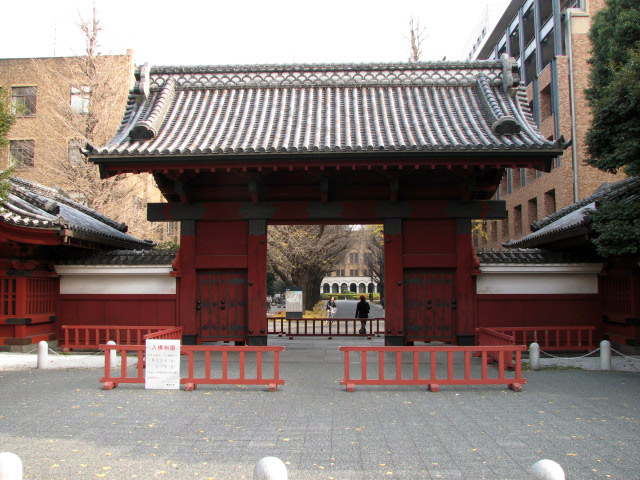
red-gates-tokyo-university

The famous red gates (赤門) of the University of Tokyo

Now, going overseas for college or for an exchange is widely considered to be a good thing – for your resume, for your worldly knowledge, or even for your plain and simple enjoyment.

The question then is: “why Japan?” Obviously if you’re doing a Japanese Studies major or have a very strong interest in Japanese stuff like many of the writers on this blog, the reasons are obvious. But for those who are wavering between Japan or another country, or those still a bit unsure, here are some reasons for your consideration.

1. It really isn’t that expensive

yen

Photo by mshades

Lots of people probably have heard that Japan is ridiculously expensive – pointing out the many “Most Expensive Cities in the World to Live In” in which Tokyo and Osaka often rank near the top.

The first thing to note is that such surveys often measure the cost of a working expat. Thus the cost of renting an apartment and a car is often factored in. Obviously, as a student you probably aren’t aiming to own your own car in Japan and if you’re in a hostel the rent is significantly lowered. Plus, if you’re from North America or Western Europe, you’ll find the typical 500 yen meals fairly cheap. Think about eating out every meal for about 5 US dollars/3 pounds/4 euros. And there’s no tipping too. Nonetheless things (and especially fruits!) may look expensive if you’re not from the above areas though.

If you’re thinking of spending your whole college life in Japan, tuition is also relatively cheap. For example (the information below is from the official websites), the University of Tokyo’s annual tuition fee is ¥585,800 or about 5,400 US dollars. Private universities tend to be a bit more expensive with Waseda’s School of International Liberal Studies’ school fees near ¥1,500,000 or near 15,000 US dollars a year. While this may be expensive for someone who comes from a country with no tuition fees, it certainly does not reach say, US college fees.

In addition (and which will be covered in a later article), scholarships for both exchange students and full time students are quite common in Japan. Many foreign students in Japan under them have a large part (if not all) of their living expenses etc. covered.

2. You will (be forced to) learn a different language

language

Image by kazamatsuri
Yes the two characters are how to write Konnnyaku in Kanji. No they’re not even in the JLPT N1 syllabus.

But can’t you learn the language without going to Japan? Well, yes, somewhat, but there’s a whole new depth to things when you have to live in a different language. For example, very few textbooks are going to teach you what an onion is in Japanese – tamanegi. And certainly none of them are going to tell you what the kanji (玉葱) are. But going to a supermarket in Japan and puzzling over what the things are is in itself a very big opportunity to learn Japanese.

Basically, no one is going to look at you and say “oh this person is at so-and-so level of Japanese and so let’s make the kanji easier for him.” – the level of immersion quite simply is different.

No guarantees though – some people come and don’t put in the effort to learn so it’s no surprise that they go back with a poor grasp of the language, stopping at somewhere between “konnichiwa” and “sayonara.”

3. You (probably) won’t need to study hard

This does depend on the university. But generally, if there’s one thing that Japanese universities are not known for, it is academic vigor. So, if you come to Japan hoping for deep discussions with the Japanese students about Japanese philosophy or some probing into the problems of Japanese society with great academic depth you will most likely be disappointed.

This is because firstly, the Japanese students don’t really take college that seriously. After all – as someone once told me before, in Japan “college is the spring break of life.” (more on this in a later article) In addition, if you’re here on an exchange program or a degree course in English, well, let’s just say that much of the teaching staff doing the courses aren’t really fluent in English.

But on the other hand, generally speaking you’ll have enough time to travel or do whatever you want. So if you’re looking to have a relaxed time or if you subscribe to the mentality that “the real learning happens outside the classroom”, this can be an opportunity in itself.

4. But you will learn nonetheless

brain

Photo by Sean MacEntee

And I don’t mean just the language.

This is because Japan as a society is just really different. Even to other Asians, it is just really different.

It is precisely because it is so different that you may oddly learn more about your home country after coming to Japan – for the simple reason that living in Japan will offer you a basis for comparison by which you can judge your home country.

And of course, you’ll learn about Japan first-hand. No matter how much someone reads this blog or any other website on Japan, the fact is that we can only provide a limited view of Japan colored by our respective biases. Nothing beats, and nothing can beat, experiencing Japan first hand with its ups-and-downs.

You’ll also probably learn more about yourself. If you’ve never lived alone before you’ll have to learn. If you have never lived in another country before you’ll experience the culture shock and learn to question all the assumptions that you had about life. Like, how you would think that ATMs, being machines, do not need rest (they apparently do in Japan).

5. Better to do it while you’re a student

I’ll be honest here. Japan isn’t for everyone. Every year lots of foreigners come to Japan to work not knowing a single thing about Japan and expecting paradise. If they like it – then all’s well, but for a significant proportion of people it ends up being an entirely different experience.

The good thing about coming as a college student is that because it is “the spring break of life”, you have time to observe, listen to stories from people currently working in Japan, and then make a decision on whether or not staying in Japan for the long term is for you.

You certainly wouldn’t want to be in the situation which many foreigners working in Japan find themselves in. More precisely, one where you come to Japan having a distorted view of it, find out that it isn’t what you expected and then are faced with the dilemma of enduring or going home and having to do the job search all over again.

And to end off…
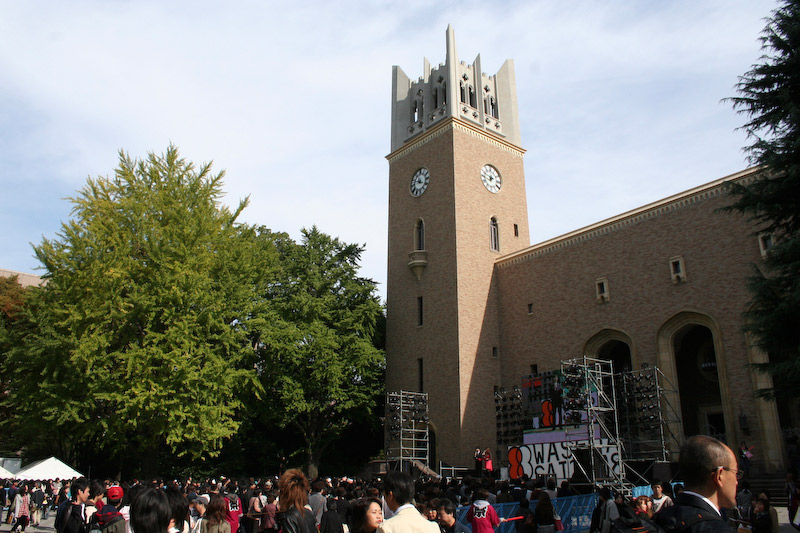
okuma-waseda-university

Image by Elena Gurzhiy
Okuma Memorial Hall at Waseda University

Perhaps one big reason for why you should come to Japan is that Japan needs you. At the moment the whole of Japan is captivated by this idea of “internationalization” (国際化). In short, having largely not been that accepting of foreign input, many Japanese companies and perhaps Japan’s society as a whole have been coming under intense pressure from foreign competition.

Japan is thus starting to realize that it needs to accept more diversity and allow for a wider range of viewpoints. Due to this, Japan is facing the challenge of bringing in more foreigners as employees, researchers and of course as students.

How effective Japan’s attempts at “internationalization” are is up for debate, but what is also true is that in the universities right now, there are too few international students for there to be any effective “internationalization”.

Obviously the problem is deeper than that – the culture of homogeneity needs to be addressed too – but Japan still needs you here to give it some international stimulation. So, I hope that this article has given you some information to think over – and who knows? Maybe I’ll see you studying around in Japan soon!

Update:
Hey people, I think I’ve been a bit unclear and misleading with the title. Basically, while I do indeed hope that some people will come for the full four years for college, this article also applies to people who are thinking of study-abroad programs. The next article will tackle directly the idea of Japan’s universities being spring breaks of life so I hope to address that too.

  • Flora

    Also, while you’re on the subject of education, why doesn’t Tofugu do an article about the Monbukagakusho scholarship?

  • http://www.littlegaijin.net/ アナ

    A long time ago, Koichi made a video on youtube about going to Japan for university, and that it isn’t as hard as we often think it is. I just wanted to say that that video inspired me to work very hard up until this point… and now, I am 4 months away from transferring to Temple University in Tokyo! It is really just as you and Koichi said, and I’m so happy that I made this decision! :)

  • Adriana Prudencio

    I’ve been looking into universities in Japan that i would like to apply to transfer to for next fall & I just looked up TUJ and it seems like a really good University to apply to & now I think i will apply here! Thanks for mentioning this school :]!

  • Adriana Prudencio

    ahh yea >_< i dont necessarily think Japan itself is perfect more of what i meant by perfect is that it seems like a very good viable option for myself because ive currently been studying at a community college for 3 years with a major in Japanese language but i feel like my ability to speak it is lacking… especially because its really hard to find instances to try to use my language skills in the US. And i really think if i was not only studying the language but in the country of Japan i would be sort of forced to learn it & it would really help me gain more skill in speaking the language. But yea thanks for the reply & cant wait to read your upcoming articles!

  • http://ale.incrowd.ws/ Ale

    Hey, this really motivates. I’ve already wanted to go study in Japan, and now I want even more. Though these comments about “dangerousness” of the article are really frightening.

    BTW I’ve added Tofugu to my RSS reader only because of this series.

  • http://www.littlegaijin.net/ アナ

    Of course!! If you have any questions about TUJ, please ask me! Just know that TUJ is a very pricey school… and some people don’t approve of it because they claim that students don’t get a traditional Japanese immersion. You have to take note that it is not a Japanese university. It’s the branch campus of an American university. Only your Japanese language classes will be taught in Japanese, and the majority of your classmates will be gaijin.

  • AkitaALT

    From my research and speaking to Japanese friends, private schools are more expensive (Seijo where I studied abroad) but easier to get into whereas public ones are cheaper but harder to get into (Todai).

  • aegiszx

    5400 doesnt even cover ONE of my semesters here in Canada…

  • Jonathan Harston

    Wow! $5000 fees per year? After decades of the government paying university fees in the UK, a few years ago students had to pay them themselves (or have rich parents pay them), at £9,000 a year (Y1.5m), the UK is hemmoraging students to overseas universities for the combination of lower fees and foreign experience.

  • Jonathan Harston

    Different US states have different fees, scholarships, grants schemes, etc. No difference.

  • Natachan

    I agree with this post being dangerously idealistic. I’m gonna be THAT guy and point out that your experience will differ greatly depending on what race you are. I’m a Caucasian Australian in Fukuoka and I’ve seen my Chinese-descent Asian friends treated like a Japanese person at first glance. Muslims, even from Asia, are often treated with trepidation and they also get the “oh you can use chopsticks” despite being from Asian countries. You gotta think if the life you’ll be living not just the education. Most of the expat friends I have are friends with only expats and consider their japanese friends as just acquaintances. It’s sad but true.
    Saying that you need to study really hard for the language is the damn truth but if you aren’t good at languages, I would reconsider.

    As for education, part of the reason for university being the spring break of life is because you will be picked for a job at the end. Graduate students doing masters have one year where they try. Then they get a job offered to them if you graduate. They then spend the next year not trying very hard, barely passing and walking into a job. If you are going into the sciences you will be appalled at the lack if safety training and safe handling procedures in many many universities in Japan!

    I think going on exchange is great, and I definitely recommend that people holiday in Japan, but unless you are going to work for a Japanese company (and good luck with that and it’s associated frustrations) or be an expert in Japan from the inside, I’d go somewhere that will definitely be beneficial to your career.

  • Natachan

    Hi
    Based on my experience, your acceptance depends on a few factors. What type of person you are, what people you are surrounded by, and what you are doing. As for assistance, there are two extremes of help at universities for foreigners (and get used to being called that): really helpful and on the ball (the minority) and really useless (the majority).

    Workers and academics tend to look down on the English teachers here because they are paid textbooks but actually as the majority of the expat population in Japan they are a very good gauge of a city or prefecture’s foreigner friendliness. Jets especially, being newbies to Japan, are usually wide-eyed and bushy-tailed so can be less jaded and more honest with their concerns. It is very very very easy to fall into the “I hate Japan” club if you have been burned a few times.

    So I would do A LOT of research before making that leap, read up on your desired university, it’s expat support, even look at where you might live and what services are nearby and what is in English. Look up banks and their services (for example daily banking with jp post is in English but intl transfers to send money home is not).

    If you’re going to be there six months, not such a biggie. If you’re committing yourself to a four or five year stint, be prepared (as if you were moving anywhere!!)

    Remember, Japan is still just a country. It’s not fairy land, it’s not the technological future (yes tech is cheaper but it’s not novel), there are nice people and there are a$$hats, and the more things change, the more they stay the same (as is true everywhere). If you’re in it for temples and castles, come for a vacation.

  • Hironohaha

    doing my doctoral in Tokyo now,
    hohohohoohohoho

  • Selena Miranda

    I have this thought in my head that maybe, by being in a more rural area, I will be more forced to use Japanese. But the head of my Japanese department has nominated me for Chuo and after seeing the course they offer, I am happy. Chuo is a definite contrast to my school. My school is small, public and about 2 hrs away from the nearest city. But Chuo, as you noted, is not far from the city, it’s private and they offer more courses than my school offers haha :)

    I am really excited!! But the financial part is a bit worrisome :o Considering I didn’t do so hot my first semester in college ;c

  • Hanna

    Hey, good post. I’ll be moving to Tokyo next year to complete an extra school year before entering university there. I’m planning to enroll in the Japanese four year course.

    I read your reply to a comment mentioning that you’re enrolled at Todai. My question is, what is the acceptance rate for international students at Todai? And, what does it take for an international student to get accepted?

    Would love to hear back from you.

    Thank you.

  • casualgal

    Yeah, but in the UK you get a student loan for the fees and living costs. You don’t have that guarantee in Japan.

  • loremasterfyra

    Hiii! I really love your post :) I am applying to some universities in Japan at them moment for a four year undergrad degree. I was a little upset when you said that you people treat uni as spring break because I do want to learn, however Im sure that the universities prepare you for the job market and do teach you a lot (as my friends have told me).

    Anyway, your post really eased my mind as I was wondering whether I should continue studying as an international student in the States or go to Japan. I can’t wait until September comes, I love Japan!! :D