The Kikokushijo Dilemma: Growing Up Abroad As A Japanese Kid

I am, as my name may suggest, Japanese. I was born to ordinary Japanese parents, and I grew up like any other Japanese girl would in the outskirts of Tokyo. I grew up drinking bottles of Yakult, eating things like natto, watching shows like Doraemon, and attended a local school wearing bright yellow cap and carrying crimson-colored randoseru.
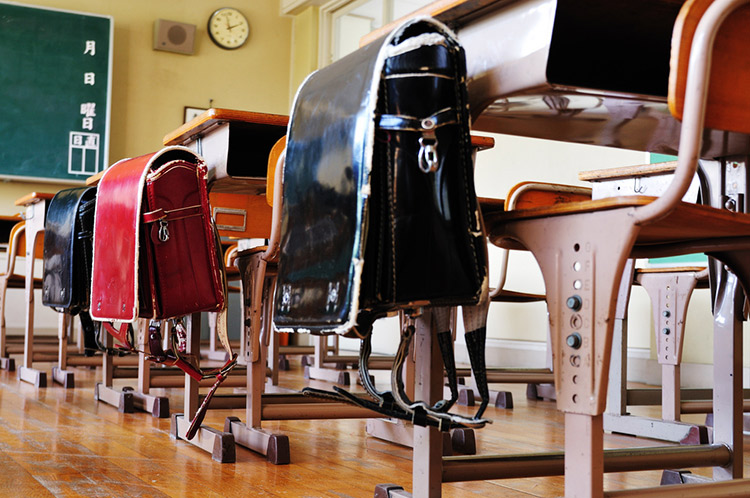
randoseru

Photo by ajari

Until I turned 8, that is.

At age 8 my father, who worked for a  Japanese trading firm, jumped on board the growing number of Japanese expatriates that worked abroad; my family found ourselves in Texas that year.

Within months I switched from drinking Yakult to drinking Capri-Sun and from watching Doraemon to things like “Arthur” and “Hey Arnold!” I attended a public school, picked up English as my second language, and made American friends of all races.

I am, what my motherland labels, a kikokushijo (帰国子女).

The increasingly globalized economy has forced many Japanese companies to send their workers abroad. Countries of destination range from anywhere in the world, such as neighboring Asian countries (like Singapore, where I lived for 2 years), America, and even Africa for some. And when these employees go abroad, what do they do with their families?

Bring them along, of course!

Children of these Japanese expatriate families thus gain the label of kikokushijo, or literally “repatriate children”. These Japanese children experience most or parts of their education abroad in international and local schools; some, if available, choose to attend Japanese schools in their localities. Regardless of what type of education they receive overseas, these kids are plucked out of their motherland and raised in a society completely foreign to them. In the US, a similar term, “third culture kids,” has also come about as a way to distinguish these children who spent significant time out of their parents’ culture.

Because of their unique and globalized upbringing, kikokushijo have gained somewhat of a particular image among the Japanese media and society–but despite few stereotypes that portray these kids as “special elites”, some kikokushijo find their motherland not as welcoming upon their return. That brings us to the question: who are the kikokushijo, really?

Kikokushijo In Media: Super-Children!

The Japanese media — especially in anime and manga alike — often use the kikokushijo label on major protagonists.

Perhaps one of the most famous kikokushijo of all time is the tennis prodigy Ryoma Echizen from Prince of Tennis, Konomi Takeshi’s best-selling manga with a cult following of fans all around the world. In the story, he’s set as a tennis prodigy who grew up in Los Angeles. He then moves back to Japan, tries out for his school’s tennis club, and becomes the number-one freshman rookie of his team, unleashing some mind-blowing tennis moves that are probably scientifically impossible to mankind.
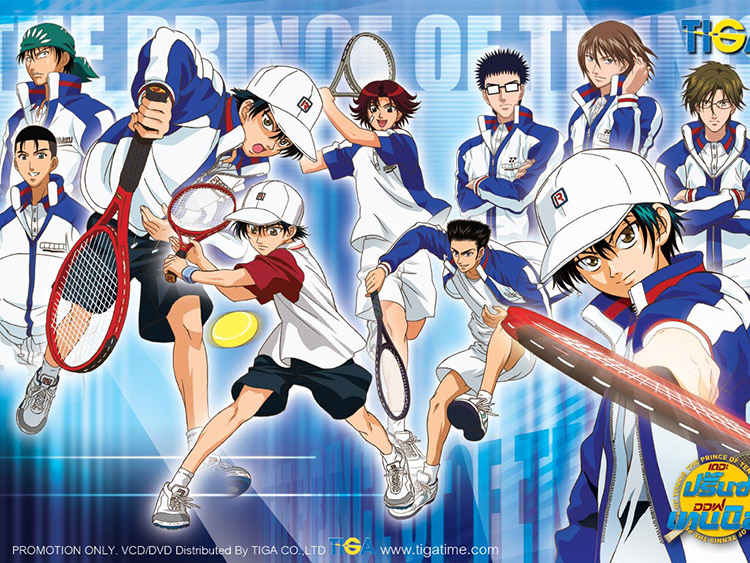
prince-of-tennis

Or perhaps some may recognize Taiga Kagami from recent popular series, Kuroko No Basuke. Like Ryoma, Taiga hails from Los Angeles and moves back to attend high school in Japan. And again like our favorite tennis prodigy, he joins his school’s basketball club as an eager freshman, talented with skills that he’s learned through playing ball in the States.

kuroko-no-basuke

Some of you might recognize this familiar character from one particularly infamous anime — Asuka Langley Soryu from the Evangelion series is also considered a kikokushijo. Oh, and she happens to be part German, which just puts more emphasis on her “foreign” background as well.

Asuka
We’re not crazy maniacs, I swear.

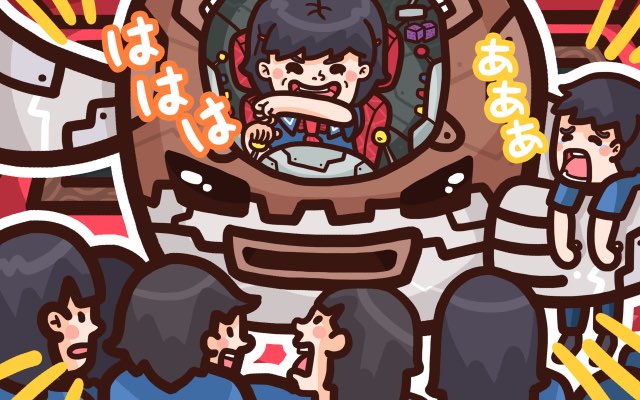
Somehow, the kikokushijo labeling finds itself in popular manga and anime– and it’s tacked onto protagonists who are often unusually talented in one particular activity, whether it is sports or manipulating giant, humanoid robots.

In short, kikokushijo are seen in the media somewhat like super-children with special talents. Of course, not every kikokushijo comes back to Japan with special abilities, though I guess I wouldn’t mind trying my hand at a robot or two.

“Saving” Kikokushijo

But snap back into reality– these kikokushijo are no super-freaks of nature. In fact, the Japanese society saw them in a much more negative light during the 1970s.

Japan, until recently, had a tendency to lean towards homogeneity, with a particular desire to keep their country relatively “Japanese”– and such was the case four decades ago, when returnee children were seen as “too individualistic”, “too different”, and “too Westernized”. In the eyes of the Japanese public, these children needed to be “saved”– they needed to be reintegrated back into Japanese culture. All foreignness had to be stripped away from these returnee children; the languages they’ve learned overseas, the ideas, norms and values they became accustomed to during their time abroad was seen as “unfit” for these kids to have if they were to return back into the Japanese society.

Perhaps this is the reason why the term kikokushijo was invented– in order to categorize the children for easy detection by the public, so that they could be salvaged from their doom of being “un-Japanese”.

Of course, such narrow-scope of views on returnee kids didn’t last very long. As the world became globalized and interaction with the international community increased during the 1980s economic boom, the Japanese society began to see these children as an important asset to the future of their country.

After all, many of these returnees came back with language skills and were comfortable interacting with different cultures– and Japan realized that it needed such assets to uphold the country’s presence in the international society as a global, modern country. Because these children often times came from well-to-do, educated families with high-income earning parents, the Japanese public began to see kikokushijo as belonging to a certain “elite” class. In the eyes of the society, kikokushijo were  children who had access to different opportunities abroad, especially in terms of gaining fluency in a foreign language.

One way Japan began to embrace their kikokushijo more can be seen through their education system. Japanese middle and high schools as well as colleges began to accommodate returnee children by instituting special category in their entrance exam procedure, dubbed as kikokushijo-waku (repatriated student category). Those who apply through the category are given special attention to their background living and studying abroad. The exams also takes into account the difference in educational systems that these returnees have been raised in, since some choose to attend international and local schools, while others stay within the Japanese educational system via Japanese schools in their localities.

Hostilities Still Remain

ijime-gto

Shift in attitude towards these returnee kids doesn’t necessarily mean that the old stereotypes and prejudice went away. In fact, it’s very much still present.

Growing up as a kikokushijo myself, I’ve heard countless of horror stories involving fellow returnee kids being bullies and shunned at school, simply because they’re… well, different.

Blurt out a word of foreign language and you receive intense stares from the whole class. Talk about your experiences living abroad as frankly as possible, and you’re perceived as bragging. Bullies force these returnee kids to speak in a foreign language to “prove” that their life abroad is the honest truth, when a good chunk of kikokushijo do not learn a new language because they attended Japanese schools in their localities overseas.

Some teachers in local schools fail to help their class understand and welcome the returnee into their community. A friend of mine who returned to Japan during middle school once mentioned that her teacher simply shrugged off the situation as shikata ga nai, or “it can’t be helped”– that by living abroad we automatically become subject of bullying, and that it’s no surprise because we’re “different”.

I remember in 5th grade my parents, who predicted that they too will return to Japan sooner or later, discussed placing me in an international school so that I could avoid this grim fate of being yet another victim of bullying in a local school. Sometimes I wonder what would have happened if I did return to Japan for schooling, and find myself shuddering at the ominous thoughts and stories I’ve heard of the negativity kikokushijo face in their own motherland.

Bringing An End To Kikokushijo Dilemma?

Kikokushijo are becoming even more common in Japan, and it’s no surprise. With the ongoing globalization and Japan’s positive attitude towards being more open to the international community- be it cultural exchange, trade, and business- there is bound to be increase in the number of expatriate families being sent abroad.

Nowadays, the Japanese society is more understanding of these returnee kids than the past– there are certainly more schools that understand the needs of these returnee children, accommodate them, and give them a good experience coming back to their motherland. And certainly not all returnee children become bullied just because of their different background. Many of them settle down with no particular issue, make friends, and their life goes on as usual. But certain stereotypes do remain, which can lead to misunderstanding between returnee children and the local Japanese communities.

Preexisting stereotypes and prejudices are not easy to let go– and some will surely continue to see us in a strange manner. Contrary to popular forms of media, kikokushijo are ordinary Japanese children—just because they lived abroad doesn’t automatically make them any better at anything, be it tennis, basketball, or… operating huge robots.

Kikokushijo may be a different batch of kids within the Japanese youth, subject to pros and cons of being “different” in one way or another– but as Japan learns to actively interact globally, perhaps such dilemmas that these kids face when returning back to their motherland will die out.

[hr /]

Bonus Wallpapers!

kikokushijo-700
[1280x800] ∙ [2560x1600]

  • Shoko no Sensei

    I think being kikokushijo might make you more attractive to girls because you got that cool Western edge that many other fellows don’t have plus you are full-blooded Japanese, you will have all the shoujos at your high school (or whatever it’s called in Japan) giving you their ovums. ^^

  • phu

    There’s a repeated insistence in this piece that Japanese “society” has been accepting and embracing kikokushijo since the 80′s, but the only suggestion of proof offered is a variant of a test for high school entrance. It’s more puzzling because I’ve never before heard of these kids being welcomed or valued outside of fictional media.

    Far more prevalent are stories of repatriates facing discrimination, not just in school, but more importantly while searching for work, and then when actually working. By all accounts I’ve seen, Japanese companies and their leadership/HR view having lived or studied abroad as a failure or weakness, and job seekers find themselves having to downplay or even express regret for their time overseas, regardless of their own views on the experience.

    If one slightly-less-standardized test comprises all the evidence available for acceptance of kikokushijo, I have to wonder how “one small part of the educational system” has been conflated with or generalized into “Japanese society.” The latter, based on the author’s own second-hand accounts as well as those of most of us who try to keep up on those things through our friends and the news, is still unimpressed by those who by their own volition or otherwise end up on the Outside for too long.

  • Miku

    Gaijins, Hafus, and even their own kind who just so happened to have lived abroad… I know Japan loves its conformity, but wow.

  • chadias

    I’m a bit confused by the use of the word. With the jo (女) being used in the end, doesn’t it only refer to girls?
    That aside, great articule. I wasn’t exactly surprised because of all the horror stories from Brazillian dekasegui.

  • chadias

    I’ve heard the contrary.
    Gaijin/haafu/etc girl – means they will have easy sex because that’s how foreigners are, with their loose sex (???)
    Gaijin/haafu/etc guy – omg get away from him he will rape you he hasn’t the japanese respect and blablabla
    That’s a quite exagerated view but a lot of people have a little voice on the inside of their minds saying that. Not sure it applies to kikokushijo but it’s a possibility…
    But that’s quite common in other countries too, especially the female one.

  • Shoko

    Thanks for your comment! Despite the “jo” at the end, kikokushijo is used to label anyone who spend time abroad during their youth, not just girls. I do believe there is a movement to call them “kikokusei”, or 帰国生, as a way to make it neutral.

  • Shoko

    Yes, the obsession with conformity is still unfortunately present in parts of Japan. I have several really good friends who are hafu, and they too have their own experience of feeling alienated.

    Here’s a good movie about hafu that explores this topic: http://hafufilm.com/

  • Shoko

    Thanks for your comment! I’m unfortunately still a student so I have yet to experience first-hand how the corporate world discriminates against kikokushijo– but I’ve heard of the leadership/HR having negative images to students who studied abroad. It’s one of the reasons why Japanese students decide to not study abroad during their college years, while students in US really emphasize that as part of their college experience. Thanks for that point.

    But I also think there is some movement towards general understanding of kikokushijo, and embracing them even in corporate world. There are some major companies that are actively recruiting abroad (i.e. here in the States) looking for kikoushijo and other Japanese natives who are studying abroad, because they want to reach out to foreign markets. I’ve seen several recruitment fairs and seminars by Japanese companies on US-university campuses, so I think they’re trying to make the effort, at least.

  • chadias

    Thanks for answering :D
    this is really interesting! it’s really hard to have words in feminine that refer to everyone. It’s the first one I’ve ever saw!

  • Shoko

    Yeah, it’s a kind of a weird word in my opinion. When I was younger I was so confused to why they called us this, and I too was confused if it was just for us girls because it had the 女 at the end. Not sure if there are any other examples of feminine words that refer to everyone… Hmmm.

  • Kendra Dubois

    Great Article! <3 <3 <3 For Asuka too.

  • KaoriCamellia

    It’d be nice for there to be a day when no such special distinction exists. Thanks for sharing your experience. It’s often strange to see the way people put barriers up in order to identify and categorize people (pretty needlessly, in my view). On a less serious note, I’m laughing so hard at the “Robofugu”.-w-

  • Tailan Fernandes Gonçalves

    This is one of the most well-written texts I’ve ever read.

  • Kaito Kageyama

    I looked up 「子女」in an online dictionary and found this:
    「息子と娘。子供の総称。」”Sons and daughters. General term for children.”

    Basically, the term is supposed to refer to both boys and girls, but it seems that even people in Japan misunderstand the original definition. That probably explains why they have words like「帰国生」and「帰国生徒」as well.

  • Shoko

    Thanks for your response! I agree, there is something said about the need for categorization of just about everything. Sometimes I think its in our human nature to want to sort and organize things, which can lead to negative effects. And yes, I love Robofugu as well :)

  • KaoriCamellia

    You’re absolutely right though. Human nature. We like boxes, and putting things neatly in them. Stuff that doesn’t fit in the box, we don’t like. Oh, I forgot to mention, but your name is one of my favorites, always have said that if I ever had a daughter, I’d give her that name. :D Thanks for the great read.

  • http://akira.hana.bi/ Akira Uchimura

    Shoko san, thank you so much for this post. Read it and felt very much identified with it. Brought back some memories.

    I was raised in different countries in Latin America and then came back to Japan in 1996 for highschool. Due to my level of Japanese, and the time that we came “back”, I had to do 2 months of the final trimester on a local chugakko and then took a mega emergency jyuken benkyo class which didn’t help much.

    My parents wanted me to enter a Japanese high school but were losing faith because I would be measured as a full japanese on the entrance exams, and you could say my japanese level was of a shogakusei so entrance to good schools looked impossible. Luckily they found ICUHS or International Christian University Highschool, were most of the students are Kikokushijo.

    They had magic word that sounded like angels in heaven: “Kikokushijo-waku” or special entrance for returnees.
    Thanks to this, I didn’t have the ijime or misunderstandings that ocurred during my 2 months on a local public chugakko, and at the same time found lifetime friends with whom I could relate and share experiences with. :)

  • Shoko

    Aw, that’s so sweet of you! Thanks for all your feedback :)

  • KaoriCamellia

    Everything that can set someone apart is ammunition to people to feed their fears. There are about enough haafu preconceptions to fill a book, probably.

  • Shoko

    Thanks so much for sharing your experience! Funny story- I considered applying to ICUHS as well at a certain point before high school. But I ended up staying in the American education system :P

    I’ve heard of kikokushijo kids who had to apply as a normal Japanese student, especially since there’s a specific time frame when they consider you as kikokushijo-waku after returning from abroad. Past that time frame and they’ll make you take the exam like any other Japanese student living in Japan would. I think they call them kakure-kikokushijo, or hidden kikokushijo (隠れ帰国子女).

  • Shoko

    Thanks so much!

  • http://akira.hana.bi/ Akira Uchimura

    Thanks for the reply. I bet you went to ASIJ right? That was my other option.
    When I entered ICUHS, there was the word 隠れ帰国子女 as you say, and also なんちゃって帰国子女. lol
    Mostly it was the same students describing themselves with those two new slang words.

  • http://akira.hana.bi/ Akira Uchimura

    The most famous one for this is the Boston Career Forum.
    http://www.careerforum.net/event/bos/

  • Shoko

    I actually didn’t go back to Japan at all– my father ended up getting transferred to Southeast Asia, so I went to an American school there and finished high school there. I have a lot of friends who went to ASIJ, though!
    なんちゃって帰国子女, never heard of that one… but that’s funny. x)

  • chadias

    wow, thanks for looking it up!
    I see now that it’s supposed to be like “kids & girls”. Makes sense because the feminine would probably use 女子 instead.

  • katanacutie

    Thank you for writing this post, it really hit home with me ^_^
    I am an American expatriate that has lived in three other countries most of my life, and have spent hardly any time in America. One of those three countries being Japan. I absolutely love it there and will go back someday. My father worked in several countries, but he was not in the military (as many people initially assumed) Though I am not Japanese, and neither is my native culture, I have, and still do experience the exact same prejudices and bullying whenever I return to the States. Actually any country I go, I am always classed “different” and “foreign”, even in my homeland. I am constantly the outsider and am subject to scrutiny and and an extra dose of judgement, even though people don’t understand (or try to) that I am from four different cultures. Not everyone has been this way, but it is definitely a recurring theme, especially throughout school. So I think the “kikokushijo” syndrome isn’t limited to just Japan, in fact it is worldwide, especially in America. At least in my experience. ^_^

  • Shoko

    Thanks for your comment and for sharing your experience!
    I lived in Southeast Asia where I attended an American school, so I have seen not just Japanese kids, but also American (and other foreign nationals) who also face this dilemma as being expat kids. In US they call us Third Culture Kids, or TCKs. I remember my high school counselors having a lot of information for families and students on how to “cope” with returning to your motherland. Thought it was interesting since the only expat kids I knew before moving to Southeast Asia were all Japanese kikokushijo.

  • Arch19

    Great article! In India, people who return from abroad are called ‘NRI”s or non-resident Indians. They’re stereotyped as being snobbish and harbouring a superiority complex over the other kids. (Which is rarely true!!). And God forbid you have an accent! People everywhere will stare and judge everything you say or do! It took a while, but I got rid of the accent, and I never mention the fact that I did some schooling out of the country. I’m proud of the experiences I’ve had in a different culture, but sharing it is seen as bragging, so I rarely bring it up. I’m not sure if what I did is the best way of dealing with this issue, but it’s definitely a lot easier! I don’t know why, but I just assumed this problem was one that happened only in India! Guess India and Japan face a lot of similar issues because of the otherwise homogeneous environment!

  • Shoko

    Thanks so much for your feedback! I didn’t know about the NRIs, but that’s interesting. Seems like every country has a way to label these kids, and there always seems to be a struggle for these kids to reintegrate back into the society.
    I’m beginning to see a trend here and I think it might not be an issue of homogeneity– it might be an issue of people not being so comfortable with those who’s had a much different upbringing.
    My mom too, warned me to not share my experiences when I was younger, since she thought people would perceive it as bragging. She also tried to stop me from publicly speaking English when we visited Japan, since I switch between the two languages often. But she eventually realized it was stupid to restrict me from just being who I am as a bilingual child, so she didn’t say much as I grew older.

  • Mami

    We actually often just call returnees ‘帰国’, too:)

  • Mami

    Great article!!! (^v^)/❤and I like Aya’s work for this article, too! Super Fugu-bot, yay!!!
    Now I’m curious how “third culture kids” would be treated in North America. Are they treated as ‘different’ kids as well??

  • http://www.psychomelody.com/ Psychomelody

    I saw most of this happen right before me. I was teaching at a public Junior High School when we got a transfer student from the States. She was born in Japan but never attended Japanese schools. On top of that, in America she had skipped two grades, so she was a sophomore High School student. But because of the system in Japan (which doesn’t allow skipping grades in public schools), she was stuck being a JHS ninensei. She absolutely hated talking to me and the teachers always paired her up with me because of the odd number in the class. Many of the bully students would try and force her to speak English in front of me too. I could tell she was having a really hard time.

  • KurosakiMaddi

    Wow that’s interesting. In my opinion, It would seem like in America, if we had a kid that had lived in another country and came back, it would be cool. Maybe it’s because I go to a small school and we don’t have a lot of foreigners, but I just don’t see how a kid could bully for that. I would ask tons of questions and love to hear about another culture!

  • Shoko

    Thanks for your comment! I think even in American culture with the Third Culture Kids, we’re told to not blab about our experiences abroad. I had a lot of American expatriate friends who felt a bit awkward after coming back to USA and feeling a little alienated. There’s a lot of cross-overs between countries that I see, and it’s pretty interesting!

  • Shoko

    Wow, thanks so much for sharing your experience. I feel awful that she had to go through that. I never understood why these bullies wanted to force these kids to speak in English. What kind of satisfaction do they get out of it? I also had a friend who told me that once she blurted English out, her friends would just kind of stare down at her. It’s unfortunate these kids can’t share the vibrant experiences they had and be who they are as bilinguals without feeling ashamed. :( Were you able to help her out at all with the bullying?

  • Shoko

    Thanks Mami! :D I do love Aya’s artwork too, I laughed at the Robot-fugu. Imagine if that was in Evangelion instead of some of the crazy things they have in there…

    As far as I can tell, third culture kids or TCKs in America have similar experiences, but may to a lesser degree. I had a lot of American expat friends who went back to US for college, and they seem to fit in fine. Some went back as middle school or high school students and they were still doing alright, granted that they did miss living abroad as well. But at my American school there were various guides in the counseling office about how to cope with repatriation, and what kind of things TCKs should look out for- i.e. don’t brag, do expect to feel a bit of culture shock, etc.

  • Shoko

    No way! I guess I’ve been away from Japan for too long… I don’t catch some of the lingo changes in Japan >_<

  • http://www.psychomelody.com/ Psychomelody

    I did what I could. We’re pretty powerless as far as discipline. I’m pretty sure she could tell that I tied to stay out of her way and not cause any problems. I think it was the best I could do and it’s what my company told me to do. The only time she went out of her way to speak to me was when I was talking to another student about Christmas. She knew nothing about the KFC Chicken tradition and was really weirded out by it.

    But it was weird for me to teach a class with one student who understood everything I said. I can’t imagine what American students would think of Japanese English lessons…

  • Shoko

    Haha, yeah the KFC thing is pretty interesting to me now as well, now that I’ve lived abroad for a while. When I tell some of my American friends they definitely get weirded out, too! xD

  • Daniellynet

    “but I’ve heard of the leadership/HR having negative images to students who studied abroad.”
    That makes absolutely no sense from a business standpoint (unless it’s a local one, and even then it’s still bad).

  • Mami

    It’s still not a correct term though. Instead of ‘あいつ帰国子女だから’, we just shorten the word and say, ‘あいつ帰国だから,’like Japanese people always do. (スケートボード:スケボー、パーソナルコンピューター:パソコン、マクドナルド:マック、マクド、東急ハンズ:ハンズ, etc)
    I don’t catch some of the lingo changes already especially words among young people. haha :P

  • Shoko

    Yeah no, I always got confused why it was bad. I mean you’d think they need people who have things like lingual skills in different languages and stuff, but more and more Japanese students aren’t studying abroad because they think it’ll negatively affect their shuushoku katsudoo(就職活動、or known as 就活), which means looking for a job after college. I think it may have to do with connections or networking that you’re missing out when you’re abroad… but I’m not perfectly sure :/

  • Daniellynet

    Indeed.

    Knowing other/better ways of doing things (new perspective) + another language(s) is a big plus to the company hiring I’d say.
    About the connections, I don’t see any reason for them being better than above mentioned.

    They can give you a job easier, but other than that? (Unless contacts are somehow super important for Japanese businesses)

  • Joe

    I’m an American who lived overseas for all of high school. And let me tell you, Japan isn’t the only country who treats their “kikokushijo” differently. When starting college, people would ask what high school I attended, and when I explained that I lived overseas, they would return with blank stairs, rude comments, or nervousness (like living overseas was a super power …apparently). It wasn’t fun, and even after living in the United States again for 6 years, my friends who I’ve met/known since my return still make fun of me from time to time or patronize me for my experiences. Whenever I do something that is considered “uncool” they tell others that I’m from belgian (which I’m not) to make the situation less hostile. Being “foreign” is their excuse for me.

  • Shoko

    Thanks for sharing your experience! I know what you mean. People I guess look at me differently in Japan because I’m a kikokushijo, people in US also look at me a little differently, too. A lot of times my friends in US call me a “fob” jokingly, since I moved from Southeast Asia to USA, and when I make cultural blunders (like being confused about certain US pop culture, etc) they joke that it’s because I’m a “fob”. I know they don’t mean it, but sometimes I kind of wish they’d cut it out, too.

  • Jessica

    Interesting article! I feel like there’s a similar situation in Hong Kong, because as a British-born Chinese, I’m often viewed as ‘less Chinese’ than the people who live there. I have a very limited grasp of Cantonese though, so perhaps that is part of the reason – my sister’s Cantonese is fluent and so people tend to overlook her more ‘westernised’ personality. It’s funny though, how in tv dramas there, I often see actors and actresses displaying their English abilities for no apparent reason whatsoever. It’s definitely interesting to compare how people raised overseas are portrayed in the local media and how most people there actually see them.

  • Shoko

    Thanks for your feedback! I totally agree. I always wondered why characters in animes, mangas, and dramas were often labeled as kikokushijo and treated like celebrities, when in reality we are kind of viewed differently and sometimes in a negative light. I remember when I first read Prince of Tennis I wanted to yell at Ryoma and tell him to stop being such a cocky jerk and giving us a bad rep, haha. I guess he had the ridiculous skills to back his ego up, though.

  • Meow

    Funny, in my high school the opposite often happens. People from foreign countries are often fawned over and are usually very popular. Especially if they have some sort of European accent. Although there is a little bit of a distance. Lots of “Do they think I’m *insert american stereotype here*. They might. Proceed with caution.” It might just be because I live in a wealthier area. There is a lot of international business.

  • Shoko

    Thank for your feedback! That’s pretty interesting… I wonder if there’s a difference between people returning from different parts of the world, like European region vs. Asia-Pacific Rim region. I mean I know a lot of girls that go nuts over European accents, which makes people fawn over people from those places. But obviously as the”fob” stereotype instigated we think very negatively of Asian accents… Hmm.

  • Lauren.

    omg I saw the strangest way of speaking japanese by this kikoku joshi on japanese tv.

    http://choronghi.wordpress.com/2013/10/14/hilarious-shit/