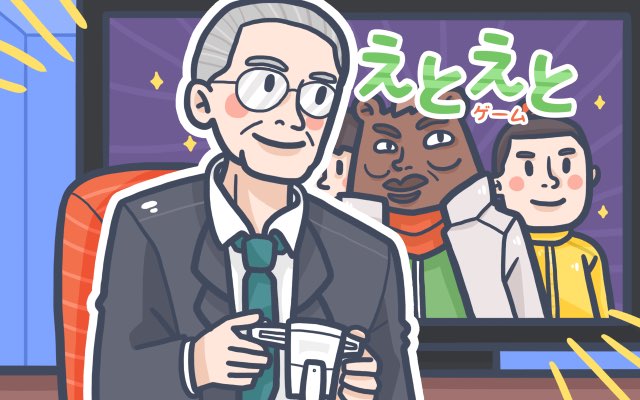
In the west, we like our media kingpins to be creative. And not just creative on a few things in their lives, but visionary geniuses we can laud as people worth worshiping. Walt Disney and Jim Henson are two great examples, both starting from humble origins and working hard to pour their creative brains into pop culture and eventually our collective psyches.
These are the kinds of people we love. When we consume a product or creation that captures our hearts, we imagine (or at least hope) that the head of the company is some kind of Willy Wonka. If we were to enter his office, he would stand immediately displaying his rainbow jumpsuit and say, "Why hello little boy or girl, what is your name? Did you come to tour my fantastic product factory?" And oh, how we would tour! He would sing us and show us all the magic and love that is poured into each product in his product factory. By the end of it all, he would be our lifelong friend and secret santa.
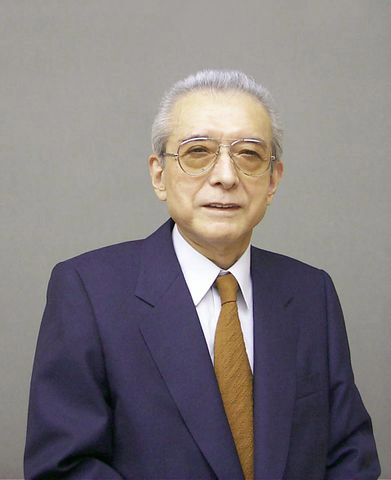
Nintendo is one such magical company of magical products, so we'll be looking today at their founder, Hiroshi Yamauchi, pictured below.
Before you start thinking that this is a tale of another Walt Disney-esque creator, I should stop your expectations right there. Sure, his results with Nintendo prove his genius, but you'll have to leave the ウィリー・ウォンカ fantasies aside… that is, unless you want to imagine Shigeru Miyamoto as an Oompa Loompa, and nobody wants that.
- The Harshness of Hiroshi Yamauchi
- Risky Business
- Whispers of the Art
- Growing Up
- Hiroshi Yamauchi's Retirement And Beyond
The Harshness of Hiroshi Yamauchi
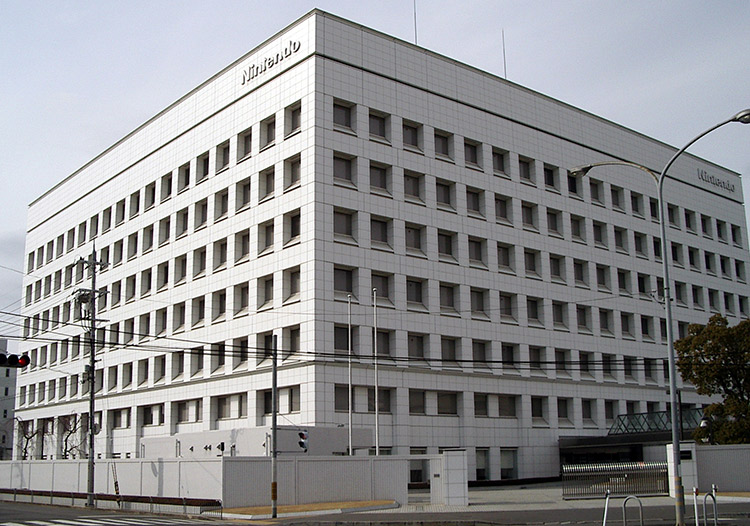
Hiroshi Yamauchi was the president of Nintendo from 1949 to 2002. He led the company not only to financial success in the video game era, but was the reason the company made video games at all. It would be easy enough to say that Yamauchi saw the future and transformed his family's playing card company into one of video games through sheer vision. But it was more of an accidental process than that, and it certainly had nothing to do with whimsy.
Unlike Wonka, who brought prosperity to his company with trippy boat rides and musical numbers, Hiroshi Yamauchi did it with harsh criticism and mass firings. When he was asked to become president in 1949 by his dying grandfather, Hiroshi agreed on one condition: the firing of all other family members at Nintendo. This resulted in only one person, his older cousin, being let go and is also a really roundabout way of telling this cousin, "I hate you." Immediately after becoming president, Yamauchi faced a strike of factory workers who thought he would fold on account of he was only twenty-one years old. Instead, he fired them all on account of he was the president. This led to a clean sweep of the company during which the young prez fired many long-time employees who had dedicated their lives to Nintendo.
During the video game years of the early eighties, Hiroshi Yamauchi hired his son-in-law, Minoru Arakawa, to run Nintendo operations in America and he was smart to do so. Arakawa wasn't hired because of family ties. He was a solid businessman with an MIT education and a reputation for successfully managing a Japanese construction firm in Canada. But when Arakawa had a hard time gaining a foothold in the American market with the Nintendo Famicom (Japanese NES), Yamauchi was not hesitant to remark "a more competent person would have no trouble marketing the Famicom in the United States." Straight to the point, that one is.
Risky Business
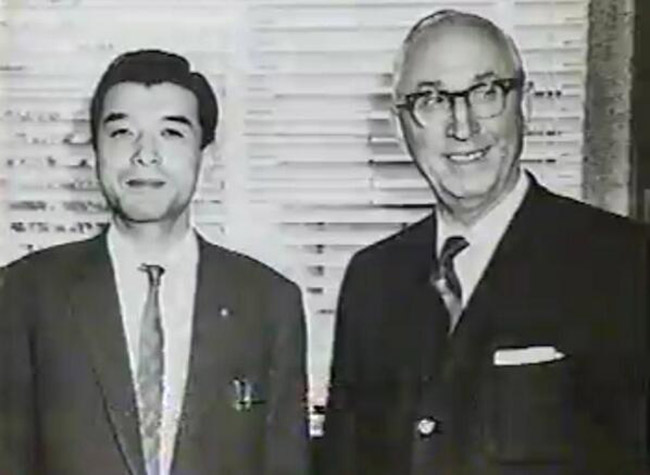
The image most projected of Yamauchi was his severity. But as a businessman, he was also shrewd, very forward-thinking and not all that conservative. Certainly by our modern standards for a "forward-thinking" boss, Hiroshi Yamauchi looks conservative, though. There was no ping-pong table in the break room or "bring your shorts to work day." But when it came to taking a chance on young talent or uncertain ideas, he was certainly not playing it safe.
Yamauchi realized early on that the world of playing cards was only so big. After a recon visit to the world's largest playing card company (in beautiful Cincinnati!) he was disappointed to find it was a fairly small-scale operation. Upon returning to Kyoto, he took his company public and started a series of risky ventures to bring Nintendo greater success than it had ever seen with stupid ol' playing cards. He started with instant rice packets, which immediately flopped. Apparently people like waiting for their rice. The anticipation is what makes it taste good. Then he started a taxi company called Daiya, but he quickly grew tired of negotiating with the unions over ridiculous demands like getting paid. Finally, he started a love hotel (which is exactly what you think it is), but ended up being his own best customer and this venture was also a failure.
Though these examples do not display Yamauchi's business acumen, it certainly shows his bold and non-conservative nature. A conservative businessman would have stuck with playing cards. Actually, at the time he took over, Nintendo was doing so well with its playing card business that there was no reason make a change. But Yamauchi was ambitious and willing to try something different even if it made no sense. Really, if you think about it, it's the same as if I became president of a greeting card company and said, "Hey guys! I know we're really successful making greeting cards, but I'd like to take our money resources and start producing cat sweaters." I would immediately be thrown out the window. But no one dared to throw Yamauchi out the window because he would've fired them before hitting the ground.
Whispers of the Art
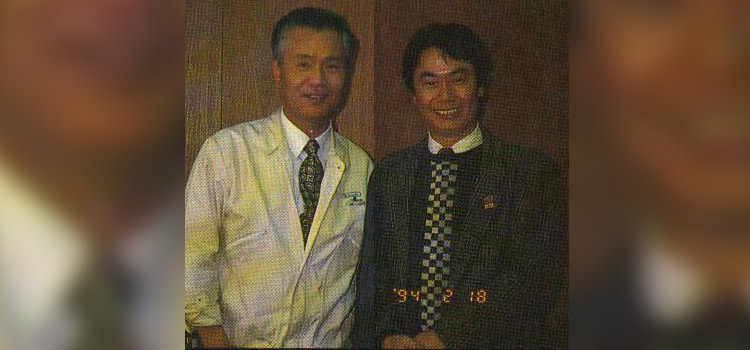
Yamauchi had brought Nintendo to the brink of bankruptcy with his ideas and it was only the 1960s. He was going to have keep the company going until at least 1982 when they could start making the big money. Thankfully, almost every decision Yamauchi made from 1966 onward was successful. As Nintendo transformed into a toy company, he began to display what was arguably his most visionary aspect: his ability to take chances on young talent.
Contrary to the Mr. Burns stereotype we are wont to place him in, Hiroshi Yamauchi recognized brilliant people who had talents he did not, and gave them opportunities to create. He handpicked Gunpei Yokoi, creator of the Game Boy, from his factory floor and gave a job to Shigeru Miyamoto, creator of Mario and Zelda, despite Miyamoto's dreamy and incredibly non-businesslike persona. A real stuffy businessman would have turned these two daydreaming ne'er-do-wells away, along with the countless other Nintendo innovators over the years. The book Game Over by David Sheff has the best insight on this:
"Nintendo would, Yamauchi decided, become a haven for video-game artists, for it was artists, not technicians,who made great games."
Growing Up
So Hiroshi Yamauchi was smart at business and a little harsh. Actually, most sources I've read describe him as "notoriously harsh" or "imperialistic." He was quick to dish out criticism and made his employees compete for his approval. In my research on Nintendo over the years, I have mostly focused on the creators and innovators at Nintendo and only read about Yamauchi as it related to them. This had cemented a picture in my mind of Yamauchi as the uncreative business-oni that sucked money from his hard working, jovial video game creators. Certainly there is a lot of truth to this oni image, but it wasn't until after his recent death that I discovered a different side of him.
Hiroshi Yamauchi's father, Shikanojo, abandoned his family when Hiroshi was five years old. Hiroshi's mother then threw him into the care of his grandparents, who raised him with the same strictness that they used on their employees. During the War, Hiroshi was still too young to fight, so his studies were put on hold for an assignment in a military factory. When he finally returned to his studies, he gained entrance to the prestigious Waseda University to study law, but was forced to drop out yet again, this time to take over the family business.
Shortly after Hiroshi became Nintendo's president, his father, Shikanojo, returned to see his son. Whether by anger or pride, Hiroshi refused to see his father and turned him away. When Hiroshi was close to thirty, he got word that his father had passed away and immediately regretted missing the chance for reconciliation. He grieved openly for days and regularly visited his father's grave for the rest of his life. This made Shikanojo the second father figure with whom Hiroshi lost his chance for acceptance. Hiroshi's grandfather had died regarding his grandson as impudent and foolish, never seeing his years of success. Though Hiroshi's mother was around, she became more like an aunt than a mother and his grandmother was no different.
I'm not trying to simplify Yamauchi the man down to "he had it rough, therefore he was strict." But I think, taking into a account his history, you get a wider view of a human being who had his share of pain, something you don't get with the "blood-sucking oni" accusations.
Hiroshi Yamauchi's Retirement And Beyond
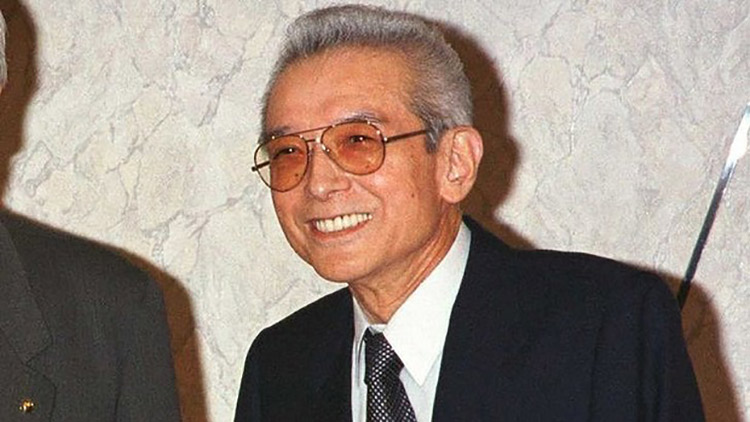
Upon his retirement, Yamauchi refused his pension of close to $14 million, stating that he felt Nintendo could put it to better use. It's not that he was without avarice. You don't become the 12th richest man in Japan without liking money just a little. But unlike the bloated CEOs who get fired and take a hefty severance at the expense of the company, Hiroshi Yamauchi looked out for his company's and employees' well-being, albeit firing them / squashing their pride from time to time.
So was he Wonka, Mr. Burns or Scrooge? Really, none of the above. We like it when people in high positions are easy to define. This guy's bad, this guy's good, this guy was bad but is now good because some ghosts scared him, etc. I read some comments about Yamauchi shortly before he died and they were all about how he was a vampire and evil and crazy (he did say some nutty stuff over the years). But after his death, articles all over the web were touting him as a visionary genius. The truth is that Hiroshi Yamauchi was a human man. He treated a lot of people badly, got hurt a lot in his early life, made good and bad decisions, donated a lot of money to charity, and gave opportunities to artists that made a lot of us really happy. He was complex and the story of his life is incredibly interesting. And that is perhaps the best and truest way to remember his personal legacy.