“Oh, So You Mean You’re Not Japanese?”

Being an ethnic Chinese person living in Japan, I don’t exactly stand out from the typical Japanese person. Sometimes, I get comments from some of my other gaijin friends that it should be easier for me – after all, in a culture that values conformity it’s not impossible for me to blend in. On the other hand though, some people also point out that sometimes standing out is not just good, but often very necessary to live in Japan.

My own experience has been between the two. Search the internet (and even this blog!) and you’d probably get tons of articles written by foreigners in Japan. But very few of them come from people who actually can blend in, and this in itself brings an entirely new and different set of issues.

The Good Stuff
gaijin-standsout

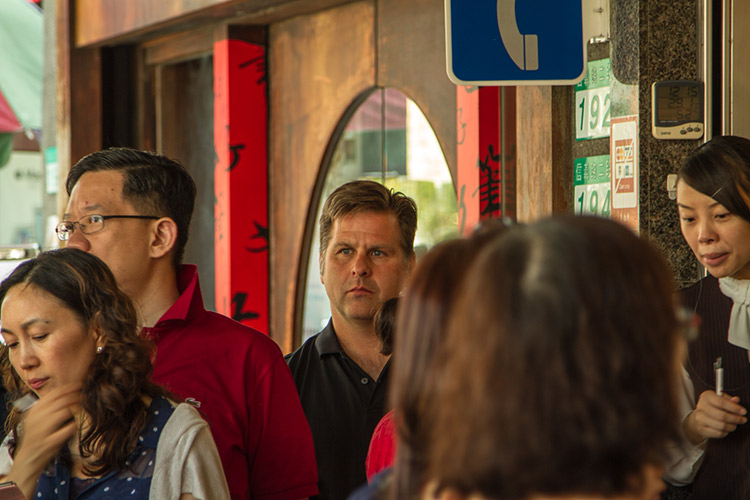
Not standing out can be a very good thing sometimes. Many foreigners complain about the constant staring that they receive – if they speak English in public they get stared at. If they speak Japanese in public they get stared at. In the toilet doing their own business they get stared at. Some people embrace the attention – some do not.

In addition to this, seemingly harmless and often well-meaning Japanese remarks such as “oh you are so good at using chopsticks!” or “oh you can write kanji!” are perfectly fine – at first. After a few months in Japan however, these start grating on many people because it just signals to them how “foreign” they are in Japanese society.

For us however, we never do receive that kind of attention unless perhaps we open our mouths and speak a different language. And while I do get “do you use chopsticks where you come from?” or “oh you can write Kanji” (my race invented it dammit!), I most certainly do not get it as much as the majority of the other foreigners in Japan.

Another very true thing is that many Japanese get very self-conscious around foreigners because, quite simply, they simply do not know how to act around someone from a different cultural background. This is partly because the Japanese are very keen to avoid offending other people – however, when placed in a situation with someone visibly different and probably from a different country,  their offense-avoiding radar goes into overdrive. As East-Asians we don’t naturally put the Japanese “on guard” by default, sometimes because they think you’re Japanese, but also perhaps because you don’t look that different from them. Therefore, perhaps on a subconscious level I am not recognized as being that “different” too.

Furthermore, if you register yourself as a resident of Japan, you are even allowed to create a Japanese common name (tsuumei), or basically a Japanese alias for yourself. Nothing stops you from using it to apply for jobs, use at school or printing it on your name-card. Basically, if you make a tsuumei for yourself and can speak an at least near-native level of Japanese, there is nothing stopping you (except for the “nationality” box on forms… and grammar mistakes) from passing off as and living life as a typical Japanese person. This is in fact what many ethnic Koreans, especially those descended from families who came to Japan before the end of World War II, do in real life. Japan’s original peoples, the Ainu, had to do it too.

The Not-So-Good Stuff
fitting-in

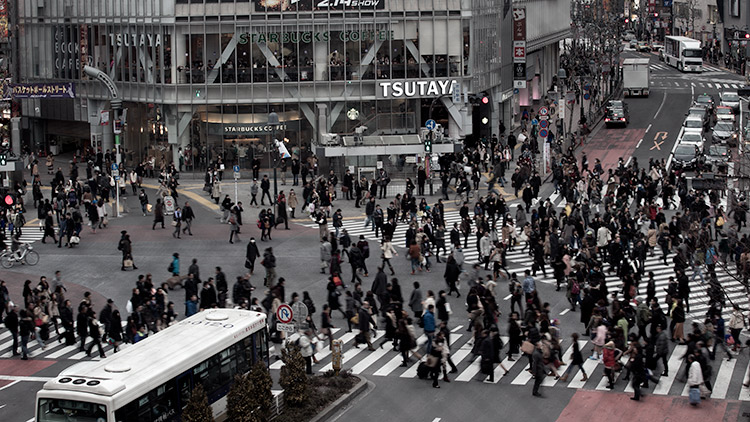
Unfortunately, not standing out has its drawbacks too.

Take for example something which is utterly obvious to most foreigners in Japan – being a foreigner you get to take many liberties that the Japanese cannot themselves take. For example, you will be allowed to be much more direct, honest and critical about issues in a way that would invite bullying if you were Japanese. Can’t really understand how to divide the rubbish? It’s okay, after all you’re a gaijin. Some people do take this to an extreme though – there are some who, for example, buy the cheapest train ticket available and pretend to be lost when they get to the station they wanted to go to. The station staff often apparently just let them exit – after all, they are just a bunch of lost gaijin.

To give an extreme example, can you imagine three East Asians doing the same thing (not that they should)? It is clear that they would have much less success doing so than if they were visibly foreign. Similarly, in terms of being able to speak freely and other things, we don’t get that many “gaijin liberties” living in Japan.

There are many different reasons to this. As said earlier, because you look the same, people will subconsciously assume that you are the same. Secondly, one strand of logic, which isn’t actually wrong, goes: Hey you’re Asian. Shouldn’t you know how Asia works with all the rules and politeness?

Exoticism

gaijin-anpanman

Photo by troykelly

There’s a subtler dimension to this though. This appeared on one of my friend’s Facebook wall one day.

“Was with a group of white friends last night. Japanese guy approaches, introduces himself, talks to all the white guys, looks at me, ignores, walks away. Maybe it’s time I put on makeup to make my eyes bigger and nose taller…”

Perhaps said Japanese guy mistook him for another Japanese person but the point is clear: There are actually lots of Japanese people who want to make friends with foreigners. Often, this is because they really do want to know more about the outside world or really just because they want to be friends. However, sometimes it’s just because foreigners are “exotic.” Thus, it’s no surprise then that they gravitate towards the more “exotic” looking ones over the Asian ones.

This is also expressed in other ways. For example, many of my friends who are looking to teach English say that private English schools and people looking for private English tutors prefer to hire non-Asians over visibly Asian people – even if said Asian person is a native speaker of English.

How To Deal With It
egyptian-japanese

Photo by ami_harikoshi

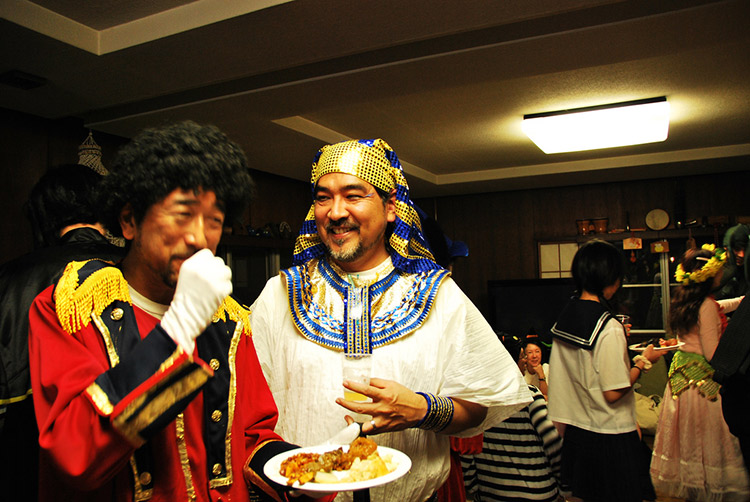
The above does not mean that Asians cannot make themselves stand out though. As said earlier, get a weird haircut or a tattoo or speak loudly in a different language (especially English) and voila – you’ve announced to anyone that you’re different. Likewise, be extremely extroverted, frank and/or rude in a stereotypically gaijin way and you’d be treated like a full-fledged gaijin at least by the people who have known you for a while.

The extremely odd thing, and the counter to the point said above about how being Asian allows you to lower the guard of the Japanese that you first meet, is that sometimes, you have to go through this “gaijin coming out” process. If you can’t speak fluent Japanese, this is often after the Japanese person realizes that your Japanese is a bit off and asks you where you are from. If you can speak fluent Japanese, this is often after the Japanese person has had a perfectly normal conversation with you and asks where in Japan you are from, your name or about your high school.

You then tell them that you’re from this-and-this country and the conversation usually simply continues, after the customary 日本語上手ですね (Your Japanese is so good!). Occasionally there is this sense of awkwardness – then you know that the offense-avoidance radar is getting scrambled. And very occasionally, as described by a friend of a friend: “you feel that a wall comes up and that the conversation stops.”

As you can see, very coming out-ish.

It’s Not About Which Is Easier

hiding

Photo by Jordi Marsol

It really is not. Neither is it about who has the advantage or who has the disadvantage – because we all have our different advantages and disadvantages. Some people would much rather have the freedom that comes with being obviously different but then to some people being stared at by nearly everyone wherever one goes is extremely stressful.

What is true is that each situation has its different challenges and they often require different approaches to handle them. Some use the opportunity to lie low and under the radar; others make the extra effort to stand out.

But then again, everything has its own challenges. Being Japanese in Japan definitely has its challenges too. So, all else being said, all there is to do is to recognize your own situation, and choose your method of life.

  • http://zoomingjapan.com/ zoomingjapan

    Hi, I’m Gemran, too, but I live in Japan (born and raised in Germany).
    I don’t think German people generally are afraid to talk to foreigners. First of all, in Germany it’s absolutely impossible to tell who’s German and who’s not. We have so many migrants living there and it’s hard to tell Europeans apart that … without actually talking to somebody you wouldn’t know if they’re German or not.

    Maybe it depends on where in Germany you live, but I was never surprised when an African-American looking person spoke German fluently and didn’t find the idea strange that they were born and raised in Germany.
    I never really thought about these things too much until I moved to Japan …. possibly the most homogeneous population in the world.

  • http://zoomingjapan.com/ zoomingjapan

    Some people don’t mind the staring, but it’s generally considered to be rude to stare at other people.

    And if you live in a country where people keep staring at you every single day, then it can hurt your confidence.

    The staring lets you feel like an outsider who doesn’t belong there: http://zoomingjapan.com/life-in-japan/staring/

  • http://zoomingjapan.com/ zoomingjapan

    I totally understand why some people WOULD stare, but it is not an excuse.
    Staring is rude and parents need to teach their kids that they shouldn’t stare.
    I can understand that it’s maybe just a reflex to stare at something that stand out (or at somebody), but the right thing to do is – as soon as you notice – STOP staring.

    The problem with Japanese people – especially with Japanese kids is – they don’t stop staring. A lot of them don’t.
    I had a little girl sitting next to me … only 1m away on a chair from me in Starbucks and she kept staring at me like WOAH.
    I asked her in Japanese if there is something in my face and I was hoping that she would feel ashamed and turn away immediately, but she just kept staring. Her face was almost in my face!!

    The mother was sitting right next to her daughter and there’s no way she didn’t notice it.
    The right thing to do is to drag the daughter away, tell her to stop staring immediately and then apologize to me.

    And that’s just one out of 2040394284 situations I’ve experienced in my many years here in Japan.

    Of course, not all Japanese people stare … and many do look away the minute they notice you’ve caught them staring at you.
    But I just wish they knew what they do to us with their staring. For them, it might be the first time to see and stare at a foreigner, but for us it’s the 10th time this day and the 567593th time in our life.

  • http://zoomingjapan.com/ zoomingjapan

    See, and you experienced all that in such a short time.
    Now, imagine living in Japan for many years and going through that treatment every single day!
    Hearing how great your Japanese is after a mere “Thank you” – EVERY SINGLE DAY.
    Maybe you can understand why some foreigners get frustrated easily.

    And I don’t think a camera would mark you as a tourist. Have you ever seen how many Japanese people run around with a camera although they’re not tourists, but just went for a walk to take some photos?
    When I go out of my apartment with my camera and just take a walk … everybody might think I’m a tourist (probably even without the camera) – ALTHOUGH I live in the countryside in a location that doesn’t have any sightseeing spots tourists would want to see. *g*

  • http://zoomingjapan.com/ zoomingjapan

    How to react if you were born and raised in Japan? Of course, your Japanese is good as you basically ARE Japanese. One of my former co-workers was like that.
    Both her parents were American. She has blonde hair and blue eyes and is quite big. But she’s been raised in Japan.
    How many times do you think she got the: “Oh, your Japanese is so good!”-thing … or the “Where are you from?”-thing?

    Luckily she is a funny and humorous person – and she’s gotten used to it, but it can be very frustrating.

  • http://zoomingjapan.com/ zoomingjapan

    Gawd, that’s horrible! T_T

  • Wit S.

    As a South-East Asian (with Chinese-ish features), my experiences were similar. Though I’ve never lived in Japan, I go to Japan a lot every year for business and leisure. I’m pretty good with my pronunciations and it took Japanese people a while before they realise that I’m not Japanese. So if I don’t speak to anyone I can go under the radar. I’m always approached as Japanese. Though they were always sort of disappointed that I’m not “more Japanese”. It came off like they prefer foreigners to be really foreign.

    Interestingly my experiences as a foreigner was more profound in Western countries. In the States, I’m the “cool foreigner”… with things like “Ooooh… you’re from England” and such. Americans seem to be fixated on all things European. But when I’m actually in England I’m practically ignored anyways. Even in official forms you are either an “Asian of Indian Origin” or “Chinese”… I’m awfully offended. People don’t make a fuss about it in Western Europe. However, things get really different in Eastern Europe with Asian features being “exotic” and then I’m the cool foreigner again. Basically, I cannot get anymore different.

    BTW I’m not actually English just lived in England for a couple of years and acquired their accents.

  • http://rochelda.wordpress.com/ Rochelle B.

    Same experiences, and I’ve gotten frustrated by it before – it’s not far removed from the feelings of being creeped on. Julie, I hope my explanation helped. I believe prolonged eye contact is considered rude, but it’s at odds with the expectation that non-normative appearances will be stared at because they stand out, and no one made them come here, so why would they complain? maybe (polite or not, I think this is how the staring problem people will see it). Not to mention, parenting strategies seem to be a bit more lax in Japan (or rather, differently strict), though a few Mamas have told their kids to stop staring and then apologized profusely to me.

  • SyncroPC

    I totally see your point.

    I remember this one day, talking with a japanese friend and explaining him that I will be in Japan for 5 years long he answered me like “Oh, so you will become a Japanese!” (He has studied in Canada, I think that is why he thinks like that).
    What I answered that no, since I’m western-looking no matter how long I live here, how much japanese I speak and how I adapt and understand Japan, I will always stand out as a gaijin.
    And then we entered some sort of suppositions conversation where he ended asking me if it was possible getting plastic surgery or such and looking like an asian what I would do and I answered in a really direct way that “No. Never. I think looking like a gaijin is actually a good thing. Living in Japan is a lot harsher for asian-looking foreigners in my opinion.”

  • Anonymous

    If they don’t accept Korean Japanese, “white Japanese” probably don’t stand a chance (no citizenship, go to “Korean schools” because they get bullied and aren’t as accepted in regular schools. At least that happened several years ago. Not sure about now

  • http://www.mangakania.de/ Mangakania

    I think it’s really sad that foreigners have no chance to get into japan without getting stared at o(╥﹏╥)o
    you kinda have the chance because of your looks, but i’m a tall-grown 100% german girl with red-dyed hair (normally blond) – with blue eyes *right in the stereotype*
    no matter how fluent i’ll speak japanese and learn the culture and behave exactly like japanese people, i’ll be outcasted. really sad, because I want to move to japan in some years.

  • Yuki

    When i was in Japan over the summer, there were two Singaporeans who were native English speakers and Chinese origin, and they were often mistaken as Japanese until the other person realized they knew no Japanese. But they found it impossible to get an English teaching job, even with their law degrees. I helped with CV’s and stuff, but after applying to over 100 places, not even a call. While the tall blonde Australian guy and a of the US people in my dorm got a job in no time flat with no qualifications.

    I didn’t notice anyone really stare at me, maybe cuz it was Osaka and they are used to foreigners. Also, I’ve black hair and of South east Asian race, so maybe not as noticeable?

    But I found Koreans were easier to spot and distinguish from Japanese. I don;t know if this is true, but my Japanese friend said that Korean girls have super white skin, long straight legs and really pretty and fashionable. But I learned to kinda distinguish, especially since my own home city has gotten so multicultural over the past 3 years that there’s people from all over the world (and a hoards of students here to earn English!)

  • Austin

    Yeah. They get embarrassed when I remind them that I am Chinese and can speak Chinese too

  • Austin

    Haha thank you sir for your comment too. Anyway, the thing is that while it is indeed easier to “fit in” into Japanese society, whether someone wants to in the first place is an entirely different question – there are benefits for not doing so after all. Plus, while it is certainly easier, whether it is therefore *easy* is an entirely different question. If you get the tsuumei and all I can see how it may be so, but once you tell other people that you’re not actually Japanese by descent …

  • Austin

    I think it’s also a matter of location as well? No one is really going to be staring at the tourists at Shibuya or Shinjuku – there are just simply too many of them and it’s not common. It’s just my guess but if for example a blond European suddenly appears at the neighborhood convenience store I’d think you’d get a fair bit of curiosity.

  • Austin

    Haha thanks! Yeah onsens should be fine if you know the basic rules beforehand.

  • Austin

    I’m not surprised at the inability of your friends to get jobs – the fact is that both the English schools as well as the people going to the schools would rather have a visibly foreign teacher because it somehow adds cred to them.

    The Korean image that your friend has … I’m not sure. If anything that seems like more a stereotype created by K-pop in Japan than the actual image of Koreans itself if you ask me.

  • Austin

    Yeah I see your point and thanks for the comment! Well if you consider not being able to be treated as a full-blooded Japanese “outcasting” then yes you are right. That being said right (and especially if you plan to work in Japan), the “gaijin privileges” can be very useful so there are two sides to the equation.

  • Austin

    Yes and no to that I guess? But my view – as per in the article – is that we all have our advantages.

  • Austin

    “It came off like they prefer foreigners to be really foreign.” Oh my god yes! This phrases the situation here so well.

  • Austin

    I actually know an Australian who was born in Japan and does that actually. He (for convenience’s sake) uses a tsuumei and when he passes his name-card around they get entirely befuddled but after a while (and probably because they want to minimize offence), they accept the name card and just continue the conversation.

  • Austin

    Thanks for the comment – yeah it’s only been a year so far and maybe my perspectives on it will change. We’ll just have to see how it goes though.

  • Austin

    Hey thanks for the comment! I’m not too sure about finding other jobs because well I’m a student so I haven’t heard that much about it.

  • Austin

    You mean like my friend who wanted to start the makeup? Haha sure I’ll add more stuff and quotes from other people when it’s relevant!

  • Austin

    I’ve actually cautioned people to not use “Nihongo Jozu desu ne” to any foreigner who’s been living in Japan for more than six months. Why it may cause offense just bewilders the Japanese but well most of them understand why after I explain it to them.

  • DAVIDPD

    Interesting! This sounds a lot like how I am treated in Korea. Double suspect!

  • Austin

    Agreed. In that sense it’s true because we at least have the choice to act according to the situation instead of having “gaijin” tacked on our heads by default.

  • Susanne Karnowka

    1. I like how you write, it resembles so much the way you talk… 2. It is really nice to hear the point of view of an asian foreigner, even more so when you seem to be able to evulate it properly even from a non-asian point of view (a hurray to you ;))

    but what I wanted to add is – though it is implied, but never mentioned on its own – the nagging unknowingness, that you’ll probably never know if they would treat you the way they do also if you would be japanese, though you trust and know them enough to believe (hope?) that. For the ones who might think, “why is she rehashing this?” – “we already know that!” -> We already pointed out that you find all the various kinds of people everywhere, even in Japan. So I believe that there are also people who would treat you like everyone, in this case every other Japanese, but how can we be sure and trust we found someone like this, can we ever – or better can we handle this?…for me, I caught myself many times that I often treat *them* nicer (especially if I know they are knew in my country or still scared/ overwhelmed by there expierience) but sometimes would treat the same peolple (or more often the ones who are already *here* for al long time) just the way I would treat everyone else. What is the cause of it? Is it because that is the person I am or is it because I am used to foreigners/ foreign looking people in *my* country…or is it even because I myself was always treated like an foreigner because of my, for germans (that is what I ‘am’), foreign sounding name, though I am more german than the other…

    what do you people think?

    by the way I often got the “お箸上手だし” or ”お箸上手ですね” from japanese but the ”漢字が書けますか?” not that much..
    just once in a really rude manner (not by a japanese..) like “you know this kanji *showing them to me*,…have you seen them……oh, so you know them, than can you read this (*showing me a book with really easy-peasy kanji on it*.. being about to help me little, stupid european girl, because I must be so helpless…)…so does that mean you can also write them…?
    and that despite of knowing how “good” I am in japanese

  • SyncroPC

    I know your meant, hahaha
    Of course each one has it’s own advantages and disadvantages. It’s just that, as you’ve said, probably each role would suit better for different people. And although I feel the hard points about looking western, for me I think it totally suits better than looking asian. What may not be true for other people, surely.

    (Btw, the hashi thing is really anoying. I’m saying all the time “Yes, thank you. I could you use it even before coming Japan and also could my brazilian parents ^^”)

  • daniel

    - “oh you can write Kanji” (my race invented it dammit!)
    Chinese is a nationality not a race

  • Austin

    I’ve heard complaints from vegetarian friends about how many times restaurants do not understand what the term “vegetarian” means and end up serving fish so uhh… that may be another reason.

  • Austin

    Thanks for the comment! I hope that the article provided some food for thought!

  • Austin

    Well, when you come you’ll experience the whole motley really.

    About the “Nihongo ga jouzu desu ne!” Well, as Zooming Japan pointed out – it gets annoying quite easily but at least you won’t have to deal with that annoyance when ahem you go to eat at Yoshinoya everyday or something.

  • Yuki

    Well, the school I went to in Japan was mainly full of Korean students and a lot of the girls did fit the description of having very white and perfect looking skin. Of course, not everyone but a majority did. Dont know about the legs part tho, maybe my Japanese friend was referring to the fact that some Japanese girls have kinda curved legs or walk pigeon toed. I did notice that quite often anyway.

    About the english teacher part, thats true. Even in my country, if you don’t look Western there’s almost no hope of getting an English teaching job even if your Asian brought up in the West. Its probably possible but I’ve never heard of it

  • missingno15

    Ah yeah I guess thats true. Well I do want to stay in japan for a long term so being accepted concerns me

  • lordblazer

    Being black and namely a black american and having lived in Japan for two yrs for university as a student. I still look back on those days and realize what an amazing experience. And I got to see most of East Asia and Southeast Asia too. So I always enjoy comparing my experiences in Japan to well everywhere else I have lived. I felt that the stares never stopped, also I always seemed to get a lot of attention back then. they loved my dreadlocs, my afro, any hairstyle I did really. Always asked if it was my real hair. These things do get on a black person’s nerve and if they don’t set boundaries with their japanese friends they will pretty much lose their minds and go ghetto on the next japanese person who makes such comments. <— in America we tend to not want to do this around white people. Sooooo definitely do not want to do this around a people that don't interact with you on a daily basis. This doubles the pressure because you know that not many people of African descent get to be as mobile as you are, and live in a place like Japan even if for a short while. The pressure to represent the best of your culture is pretty strong, and other black people in Japan will place it strongly on each other. Also there was positives to this, the freedom to not be called "the black guy"in your group of friends, to not really deal with racism dished out to you (often I did experience racism in japan, but not from Japanese but more often than not from White Americans).. I found that Japan really gave me a break from the conditions of racism and discrimination I dealt with in America. And ever since I had that break, I have rightfully become less tolerant of those conditons of racism and a more critical component and advocate against such behaviors and systems.. I plan to go back for my university's reunion that is being planned for the olympics in Tokyo at 2020.. cannot wait for it. Overall, I enjoyed this piece and I have studied with chinese students in Japan that have made similar comments on this. I also found that even if you become a pushy Gaijin, this behavior will not be tolerated as much as foreigners think it will. Some level of adaption has to happen and some form of acceptance that things are done different in Japan needs to happen. Once it does happen, your life in Japan becomes easier, and you avoid being that bitter gaijin complaining about how Japanese people culturally isolate you. When in fact it might be that your japanese peers got tired of your exoticism and saw the douchebag within. That last part isn't directed towards anyone else, but the foreigners I know who go to Japan and make fools of themselves.

  • Jojo

    THANK YOU FOR THIS ARTICLE!

    I am Chinese and look obviously eastern Asian. Every time I see posts related to being a foreigner in Japan, they are almost always from a white/black/other person’s view, so I have never really seen many perspectives from other Asian people.

    I have visited Japan before and you’re quite right about physically blending in. My (Korean) friend and I were speaking in English on the train, albeit very quietly, when we noticed a group of elderly people across from us were murmuring to each other. I didn’t catch what they said but my friend said they were saying stuff like “Why are these Japanese-looking people speaking in English?”, “This is what’s wrong with the younger generation, they have to appreciate Japan more”, etc.

    “oh you can write Kanji” (my race invented it dammit!)” = favourite quote from this article. I’m Chinese dammit, I know how to write these Chinese characters!

  • LivinginNagano

    One thing I always read it that, Caucasian person get stared at or get talk to in English. (If they speak Japanese) But in the two trips I had to Japan, first 10 days around Tokyo, and then Next 3 months, In Nagano. I never felt I was treated that! different. In Tokyo or small City Mastsumoto or the smaller town in Nagano where I was living. (Not Ski-resort)

    I remember one time a Japanese Lady ask me if I would like the English or Japanese Map. As me and my girlfriend were talking English in the line, yet I spoke in Japanese when we got the Tickets.

    I found more of the time, Japanese people spoke to me in Japanese, like I was able to understand everything. (But I didn’t.. ^^; – Not a bad thing.. ) I would order or ask a question in a camera shop in Japanese, and was answered to in Japanese. I never felt out-of-place in Japan. I went to the local Library nearly ever week, and it felt normal.

    The only time I felt left out would be because of my poor Japanese speaking, (I only speak basic conversational Japanese) or lack of knowledge of the culture when friends, girlfriend’s family members were talking.

    One thing my girlfriend said to me, was her family really didn’t think me about Not-Japanese, as to treating me any different, If anyone I was the person who though they might because I’m not Japanese. I felt that was true.

  • http://zoomingjapan.com/ zoomingjapan

    It’s so sad, but there have been hate speeches and other things against Koreans recently. Unfortunately there are a lot of Japanese who seem to hate Koreans and Chinese people.
    I think for “white foreigners” it’s a different story. It’s not like they’re hated, but as they’re white they just CAN’T be Japanese, they can’t be a Japanese citizen. Not in the heads of most Japanese at least.

  • http://zoomingjapan.com/ zoomingjapan

    I understand that they just want to be polite, but they don’t understand that some of us actually live here and get that every single day. At some point it’s either annoying or insulting.

    On the phone they never notice I’m a foreigner until I have to tell them my name. I know that my Japanes eis not too bad, but I feel offended if somebody tells me how great my Japanese is after a mere greeting.

    At least it’s nice that you try to explain it to them! ;)

  • Tokyo

    Though Maybe its to be expected a little bit, not being able to get a English Job if you look Asian, as imagine you didn’t look Asian and were looking for a Job at a Japanese/Chinese Restaurant( Just an Example) It would be really hard to get. As the Owner is looking only to hire Japanese.Asian people. Just for the sake of the “image” of the restaurant because if you don’t “look” Asian then customers would feel its not as Japanese.

  • Yuna E. Vuong

    Yes! Anecdotes from your aquaintances and such. It’s fun to read as well (:

  • Yuna E. Vuong

    Haha maybe I shouldn’t have said “rare sight” but I meant that it’s just kind of a natural reaction to for our eyes to be pulled toward something we aren’t familiar with or know very well.

  • ASDFGHJKL

    Sick after eating meat? lol, no.

  • Anonymous

    It’s ironic that the Japanese Government’s claim that the reason they invaded Korea and China was to “allow” them to be “integrated” as Japanese (thus taking away their language, pledge their loyalty to the emperor, etc). Fast forward to now and the Korean and Chinese population born in Japan that are looking to be Japanese are being shunned. Can you say convenient excuse of a reason? Even those who’ve lived there several generations can’t be citizens. It’s not just “white Japanese.” This is particularly odd considering there’re a lot of mixed Korean/Chinese blood amongst the people anyway (older generation that knew of it kept it hush hush such that the younger generation couldn’t find out/confirm even though they have suspicious thoughts they may be). They’re so unaware of the situation that they don’t seem to distinguish between North and South Koreans. Also convenient fodder for hate speech towards Koreans… Everything seems to have a design and purpose.

  • Anonymous

    As for “white Japanese”, I wonder if it’s the government’s way to elevate Japanese people since one of the older generation’s criticism was that they’ve elevated the status of American people since they defeated them in WWII (not sure if it’s true but just a thought). It’s not that surprising when the Japanese government doesn’t seem to take care of their own people (radiation safety facts slowly trickling out if any…). They even had a program where they invited and gave temporary special visas to Brazillian Japanese (Japanese by blood who’ve lived in Brazil for generations) to come work in Japanese factories cause they were short on workers (advertised as sort of an integration program). After working and having integrated their family there for about 10 years looking for a brighter future, they’ve had a rude awakening. The contract was for the Brazilian Japanese to lose their right to come back to Japan (no more visitor visas to come to Japan. I think that included their future generations as well), their ancestor’s homeland… They were also forced to leave. Obviously going back to Brazil after not having been there for 10 years meant they’ve lost 10 years and would’ve had to start from scratch (it was tough to begin with when they were 10 years younger – the reason why they went to Japan in the first place). Somebody somewhere are pulling strings to conveniently get what they want. I feel the whole “KY” concept allows them to integrate things easily (rude to bring things up so ends up with very few extensive discussions). It may be that I’m talking out of my “butt” but just seems too convenient. Media plays a big role in this and keeps them happy at the same time. My rambling nonsense is now over. =)

  • LivinginNagano

    I do agree it happens in any society that has the same ratio. I know I do it even in Australia at times, which is pretty well mixed except we don’t have a lot of Africans. And even I! could stare a little!! not much. But with Children you could hardly expect it, if they haven’t been exposed yet.

    Even if you live in your own country there can be ‘strange’ people or even ‘kids’ who stare at you, (I’m white! and white kid’s stare at me! oh No!) so unless you feel it everyday. I hardly seems like a big deal. I don’t know.. maybe some people have a point. But everyone should realize that in any society that there are groups who stand out because there are so little of them.

    I think its partly due to human nature, so I think some people should stop being so bitter a times and accept that they are in a country, with 98% or around who look Japanese and 96% who are Japanese.

    Surely the first time most people came to Japan they looking at people?? Staring?? Might not be the right word but its different right? So I’m sure most people would be looking at that cute girl, that office lady riding a Bike to work and so on.

  • Wit S.

    Us; Asian foreigners seem to put the Japanese in an uncomfortable situation where they are not sure if they should treat us as Japanese or Baka-gaijin. There are many cultural features that are shared all over Asia but there are also unique differences as well.

    I can’t wait until some Japanese asked me if I’ve ever tried curry. I’ll reply with “My people have been eating this for a thousand years!” :)

  • Wit S.

    Yes! The majority of Japanese people have curved legs. I heard it’s from Japanese mothers using those on-the-body infant carrier front backpack thing.

    Caucasians seem to have the advantage with getting an English teaching job in most of Asia. I believe it’s because the schools would like to show that they have “native-speaking foreign staff” and being Asian doesn’t seem to cut it.

  • Hikari

    I also look Asian, because my mother is from Vietnam. When I spent a year studying at a japanese university, I experienced the same things. When I joined a club, the first-years would approach me and ask what I’m studying or which faculty I belong to, assuming that I’m Japanese. They were quite surprised when we had to write our nameplates. After that, they started getting all shy, which I couldn’t understand at all.
    Moreover my friends, who actually look like foreigners, received all kinds of special treatment, even presents at a Matsuri for example. At parties for international students, people would just ignore me. ^^”
    But the good thing is, that people will start to talk to you in Japanese, so you get many chances to actually use your Japanese. :P