“Oh, So You Mean You’re Not Japanese?”

Being an ethnic Chinese person living in Japan, I don’t exactly stand out from the typical Japanese person. Sometimes, I get comments from some of my other gaijin friends that it should be easier for me – after all, in a culture that values conformity it’s not impossible for me to blend in. On the other hand though, some people also point out that sometimes standing out is not just good, but often very necessary to live in Japan.

My own experience has been between the two. Search the internet (and even this blog!) and you’d probably get tons of articles written by foreigners in Japan. But very few of them come from people who actually can blend in, and this in itself brings an entirely new and different set of issues.

The Good Stuff
gaijin-standsout

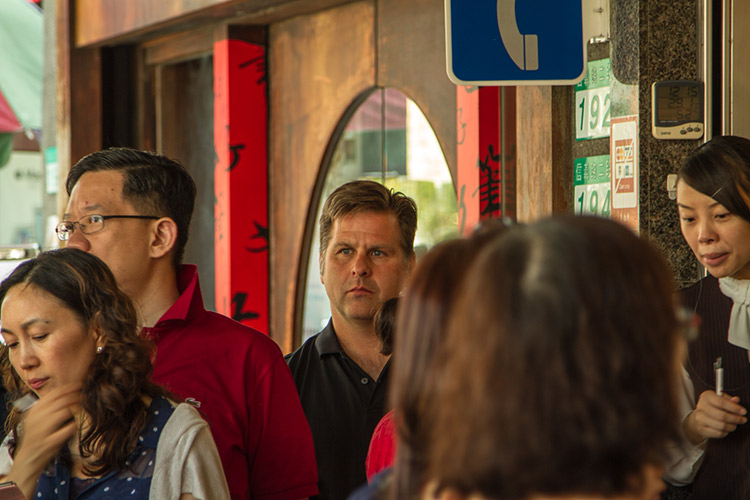
Not standing out can be a very good thing sometimes. Many foreigners complain about the constant staring that they receive – if they speak English in public they get stared at. If they speak Japanese in public they get stared at. In the toilet doing their own business they get stared at. Some people embrace the attention – some do not.

In addition to this, seemingly harmless and often well-meaning Japanese remarks such as “oh you are so good at using chopsticks!” or “oh you can write kanji!” are perfectly fine – at first. After a few months in Japan however, these start grating on many people because it just signals to them how “foreign” they are in Japanese society.

For us however, we never do receive that kind of attention unless perhaps we open our mouths and speak a different language. And while I do get “do you use chopsticks where you come from?” or “oh you can write Kanji” (my race invented it dammit!), I most certainly do not get it as much as the majority of the other foreigners in Japan.

Another very true thing is that many Japanese get very self-conscious around foreigners because, quite simply, they simply do not know how to act around someone from a different cultural background. This is partly because the Japanese are very keen to avoid offending other people – however, when placed in a situation with someone visibly different and probably from a different country,  their offense-avoiding radar goes into overdrive. As East-Asians we don’t naturally put the Japanese “on guard” by default, sometimes because they think you’re Japanese, but also perhaps because you don’t look that different from them. Therefore, perhaps on a subconscious level I am not recognized as being that “different” too.

Furthermore, if you register yourself as a resident of Japan, you are even allowed to create a Japanese common name (tsuumei), or basically a Japanese alias for yourself. Nothing stops you from using it to apply for jobs, use at school or printing it on your name-card. Basically, if you make a tsuumei for yourself and can speak an at least near-native level of Japanese, there is nothing stopping you (except for the “nationality” box on forms… and grammar mistakes) from passing off as and living life as a typical Japanese person. This is in fact what many ethnic Koreans, especially those descended from families who came to Japan before the end of World War II, do in real life. Japan’s original peoples, the Ainu, had to do it too.

The Not-So-Good Stuff
fitting-in

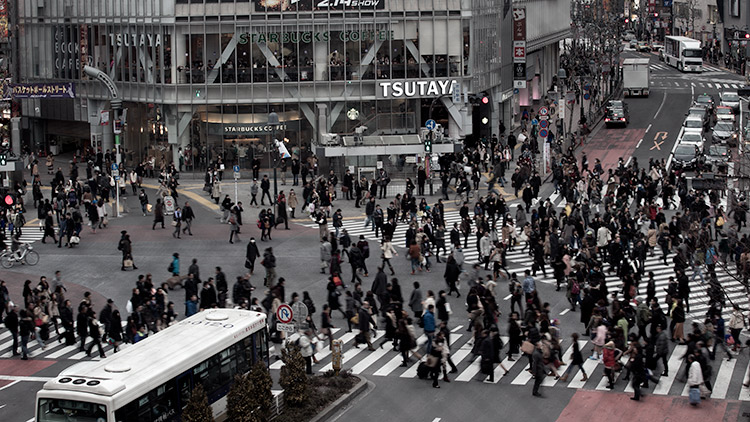
Unfortunately, not standing out has its drawbacks too.

Take for example something which is utterly obvious to most foreigners in Japan – being a foreigner you get to take many liberties that the Japanese cannot themselves take. For example, you will be allowed to be much more direct, honest and critical about issues in a way that would invite bullying if you were Japanese. Can’t really understand how to divide the rubbish? It’s okay, after all you’re a gaijin. Some people do take this to an extreme though – there are some who, for example, buy the cheapest train ticket available and pretend to be lost when they get to the station they wanted to go to. The station staff often apparently just let them exit – after all, they are just a bunch of lost gaijin.

To give an extreme example, can you imagine three East Asians doing the same thing (not that they should)? It is clear that they would have much less success doing so than if they were visibly foreign. Similarly, in terms of being able to speak freely and other things, we don’t get that many “gaijin liberties” living in Japan.

There are many different reasons to this. As said earlier, because you look the same, people will subconsciously assume that you are the same. Secondly, one strand of logic, which isn’t actually wrong, goes: Hey you’re Asian. Shouldn’t you know how Asia works with all the rules and politeness?

Exoticism

gaijin-anpanman

Photo by troykelly

There’s a subtler dimension to this though. This appeared on one of my friend’s Facebook wall one day.

“Was with a group of white friends last night. Japanese guy approaches, introduces himself, talks to all the white guys, looks at me, ignores, walks away. Maybe it’s time I put on makeup to make my eyes bigger and nose taller…”

Perhaps said Japanese guy mistook him for another Japanese person but the point is clear: There are actually lots of Japanese people who want to make friends with foreigners. Often, this is because they really do want to know more about the outside world or really just because they want to be friends. However, sometimes it’s just because foreigners are “exotic.” Thus, it’s no surprise then that they gravitate towards the more “exotic” looking ones over the Asian ones.

This is also expressed in other ways. For example, many of my friends who are looking to teach English say that private English schools and people looking for private English tutors prefer to hire non-Asians over visibly Asian people – even if said Asian person is a native speaker of English.

How To Deal With It
egyptian-japanese

Photo by ami_harikoshi

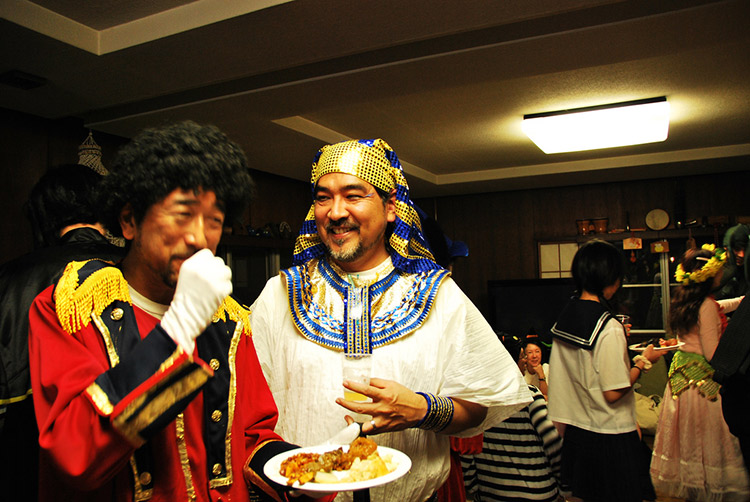
The above does not mean that Asians cannot make themselves stand out though. As said earlier, get a weird haircut or a tattoo or speak loudly in a different language (especially English) and voila – you’ve announced to anyone that you’re different. Likewise, be extremely extroverted, frank and/or rude in a stereotypically gaijin way and you’d be treated like a full-fledged gaijin at least by the people who have known you for a while.

The extremely odd thing, and the counter to the point said above about how being Asian allows you to lower the guard of the Japanese that you first meet, is that sometimes, you have to go through this “gaijin coming out” process. If you can’t speak fluent Japanese, this is often after the Japanese person realizes that your Japanese is a bit off and asks you where you are from. If you can speak fluent Japanese, this is often after the Japanese person has had a perfectly normal conversation with you and asks where in Japan you are from, your name or about your high school.

You then tell them that you’re from this-and-this country and the conversation usually simply continues, after the customary 日本語上手ですね (Your Japanese is so good!). Occasionally there is this sense of awkwardness – then you know that the offense-avoidance radar is getting scrambled. And very occasionally, as described by a friend of a friend: “you feel that a wall comes up and that the conversation stops.”

As you can see, very coming out-ish.

It’s Not About Which Is Easier

hiding

Photo by Jordi Marsol

It really is not. Neither is it about who has the advantage or who has the disadvantage – because we all have our different advantages and disadvantages. Some people would much rather have the freedom that comes with being obviously different but then to some people being stared at by nearly everyone wherever one goes is extremely stressful.

What is true is that each situation has its different challenges and they often require different approaches to handle them. Some use the opportunity to lie low and under the radar; others make the extra effort to stand out.

But then again, everything has its own challenges. Being Japanese in Japan definitely has its challenges too. So, all else being said, all there is to do is to recognize your own situation, and choose your method of life.

  • cal

    “Was with a group of white friends last night. Japanese guy approaches, introduces himself, talks to all the white guys, looks at me, ignores, walks away. Maybe it’s time I put on makeup to make my eyes bigger and nose taller…”

    i’m confused. guy talked to guys but ignored a girl? or you’re a guy who wants to use makeup?

    humor me. =D

  • Luke

    I liked this article. It was funny (especially the getting complimented on your kanji part) and interesting. I really liked how you showed it from the perspective of a foreigner who doesn’t really look like a foreigner, I had never seen that before.

  • http://akira.hana.bi/ Akira Uchimura

    As half Japanese, half Chilean, I kind of look Japanese and I kind of don’t so when I want to stand out as “gaijin”, I grow a mustache and voila! Gaijin treatment. (takes about 2 weeks to grow).

  • Jordan

    This article reminded me of a story about an American friend from my studied abroad program who was ethnically Japanese. She was walking around in Shinjuku and a white couple stopped her and asked her for directions in Japanese. Her Japanese wasn’t the best, so just replied in her nasally West Coast accent, “Actually, I’m American”. I would have given anything to see how the rest of that situation played out.

  • Austin

    Haha it wasn’t me who posted that comment on Facebook. But anyway the guy who wrote it is an Asian person. Whether he wants to use makeup I don’t know :).

  • Austin

    Hey thanks for the comment! Yeah well the situation is similar but different I guess.

  • Austin

    It takes me a week to grow stubble so unfortunately I think that’s out of the question for me.

  • Buggie

    This was very interesting to me!! Thank you for sharing! :) When I went I stuck out, being a total white girl and most of my friends did too. even we got confused when an Asian wasnt Japanese! I met a very friendly Australian who’s family is Chinese, he threw me off guard. haha

  • http://rochelda.wordpress.com/ Rochelle B.

    Great perspective!

    I studied abroad with a pretty diverse group, including a Japanese-American and a Chinese national.

    The Japanese-American friend said that her difficulty was the “Shouldn’t you know all the politeness rules of Asian/Japanese society?” thing and that because her conversation level was good her reading was also expected to be normal/polite/good.

    The Chinese friend- she was once in a group with non-Asian exchanges and a Japanese person kept speaking to her and asking her questions. He ignored the rest of us, believing her to be Japanese, even when our Chinese friend had no idea what he was saying in really fast Japanese and we tried to help.

    I wish you the happiest patience!

  • Momo

    Being ethnically Chinese myself, this is something I was waiting for someone to touch on. Though I would say I already figured out all the points you’ve mentioned. Still, your article served to double-confirm how I would probably be treated if I were to ever visit Japan.

    Lastly, *Ethnic Chinese High-Five*.

  • Austin

    Haha well, to be honest it sometimes throws me off as well. Especially when I’ve been speaking with someone in Japanese only to find out somewhere in the conversation that the person isn’t Japanese as well.

  • Austin

    *High-Five*. But well other people have their own perspectives and I don’t think all of them would agree with me on this honestly – this article is just simply stuff which I (and a lot of my other Asian friends in Japan) have observed.

  • http://akira.hana.bi/ Akira Uchimura

    Another one I tend to have is:
    1. Surrounder by “gaijin friends = I am “gaijin”
    2. Surrounder by “japanese friends = I am Nihonjin
    My friends become props for my japaneseness.

  • Austin

    The thing that your Chinese friend has experienced has happened to me more than once actually so I know what you and your friend are talking about. And thanks for your wish!

  • Momo

    I would say though, we are rather versatile in that sense. We can adjust accordingly to the situation when we meet up with Japanese strangers. Want to hit it off with a stranger? Speak and act really Japanese. Broke a social rule in front of a Japanese? Act all baka-gaijin and speak flawless English. Instant recovery.

  • MrsSpooky

    That’s funny about the stares – I’m a middle-aged blond caucasian who was just in Tokyo a couple weeks ago. I was pretty much universally ignored (unless people were staring behind my back). One young man who I stopped and asked for directions tell me 日本語上手です (no, not yet), but I tripped on a curb and fell pretty hard on my hands and knees outside Yokohama station and heads turned to look, then quickly away. Nobody so much as slowed down to stop except one young man in a suit on a cell phone asked me in Japanese if I was all right. I said I was and thank you. Then went about my business. That would have been SO much more embarrassing if everyone had stared, like they do here in the US. It was like nothing happened, so I felt much better about it. I left for home that night and the ice the flight attendant gave me for my knee helped some more. Ha ha ha. xD Most of the people I ran into there didn’t speak any English or very little. I loved the look of surprise on their face when I asked questions in Japanese and understood their responses. I love it there and can’t wait to go back.

  • http://www.tofugu.com koichi

    would be easier if he used this:

  • Sa

    Everything you have listed here is something my East Asian friends have complained about while in Japan. We used to have evenings where we’d let out all of the frustration we have about being ‘foreign’ in Japan. One of my friends is fluent in both English and Japanese, but he never ever even got a chance to teach English, because of his obviously ‘asian’ face. We were all quite pissed off about that as he’s really good at teaching and often helped us out with Japanese.
    And as you’ve said before, quite a few of them felt that finding friends or just Japanese people to practice their Japanese with was quite hard. However, this problem applied to all of us, mainly because the ‘you’re not asian, therefore you speak English’ attitude.
    There have also been times when teachers had quite a negative view towards my Chinese peers in class, just because of their nationality.

    As for my side of the story, I’m European and one thing that mostly annoyed me was the fact that every time I went into a shop or a restaurant I’d be approached in English. Also, there have been times when I would go to a cafe with my Chinese friends and be the only one who gets an English menu, despite the fact that I’ve been talking in Japanese the whole time. And whose times when I order something in Japanese and get a reply in English….As well as seeing the shop attendants shaking in fear every time I talk to them… (I’m not making this up)
    We’ve actually had a few teachers who quite frankly said that white people will never ever master the Japanese language. Such behavious really made it difficult to use the ‘opportunity’ I had to improve my Japanese. It is a lot harder for non-asian language speakers to learn Japanese so a bit of encouragement wouldn’t hurt.

    Anyway, it’s nice to see this article. I always felt that most ‘being foreign in Japan’ stories were predominantly written by non-Asian people. Even though some things are different, it is equally hard for both sides and I believe that sharing these stories is a good way to understand and support each other in this struggle.

  • Mami no Gakusei

    “oh you can write Kanji” (my race invented it dammit!).

    Epic FuguQuote!

  • Eddie

    Finally! I’ve been waiting for someone to write from a Chinese (or any asian for that matter) gaijin’s point of view!
    Especially since I will be going to further my studies next April, this has been something that’s on my mind for awhile now. But I guess like you said, there are both ups and downs to being a foreigner that doesn’t stand out as much.

    Personally, I’ve been to Japan only once for a trip last April on my own and most of the Japanese people I spoke with never even guessed I was a foreigner until I whipped out my gigantic “I-am-a-tourist” camera or whenever I asked them to speak slower. It seemed pretty good to me, but I guess a two week trip is still too short to get a feel of it. Was a great relief however, when I didn’t have to face the same ‘staring’ treatment at the onsen as most foreigners seem to mention receiving on various blogs!

    I also like that you addressed the ‘日本語が上手ですね!’ issue haha! Its like every time I meet a Japanese and they hear me say just ‘よろしくお願いします’, the whole ‘ritual’ begins and I never semm to get used to it or know how to react. :P

    Anyway, it was a good read, so thanks! :D

  • Julie Moncada

    I really don’t understand the staring thing. Will someone explain it to me?

    If the Japanese way (generally) is not to offend, then is staring such as it is not seen as offensive in their culture? It’s described so obnoxiously in most mentions of it, that I’m having trouble understanding.

  • Shampie

    I found it interesting, how people of other countries are so interested in foreigners and want to befriend them. Here in Germany I heard from an Asian Canadian girl that in Germany the most of the people are too scared to talk to foreigners – and I think this really fits to us. My Vietnamese room mate (who grew up in Germany though) was the first one to talk to her (and others said that, too).
    I gotta say, yes, it is kinda strange for us, but I befriended a Russian girl :) mainly because she has the same interests and I wanted to talk English (well, she is so good in German now, that we talk German) but still! :D

  • 范謙謹ジョサイア

    I am chinese and I got mistaken as japanese when I went to japanese church service in loma linda, CA. Of course church people were nicer hehe. So they were happy to translate for me in the background. I wondered how it would be like in Japan and thanks to your article I have an idea. I guess I will have no problem going to the onsen. Btw Great first post to Tofugu, Austin :D

  • Miki

    Died at “my race invented it dammit!” XD

  • missingno15

    Thank you sir for writing this article. I am also East Asian (Filipino/Chinese) and I have been waiting for someone to talk about this for a long time from someone is also Asian. There are such huge discussions, documentaries at great lengths about foreigners who “don’t fit in” with Japanese society, but usually these discussions are generated from people who aren’t Asian. I think that Asians do have an easier time fitting in with Japanese society than a Caucasian might because if you think of Japanese ability as an equalizer between everyone who is a foreigner (an Asian person who is good at Japanese vs a Caucasian person who is good at Japanese), Asians have less barriers to entry in blending with Japanese society while someone who is non-Asian, more likely than not, will get the “gaijin treatment”. So as long as the Asian can speak Japanese well, you’re basically Japanese to everyone else.

    On the flip side, I can also agree with what you said about non-Japanese Asians having to go through a “coming out” phase because when you make a mistake, its kinda like “Damn the jig is up” lol. Then you might have to go through the “you’re kind of a foreigner but then again you look Asian so I’m gonna assume you know how things work” sort of thing.

  • Lord Kuz

    “shop attendants shaking in fear” – ha ha. Oh, I can recall one woman in a noodle bar whole literally froze and could not speak, no matter how many times I tried to get my order in. She had to be “wheeled away” by the manager and replaced by someone else! :D

  • megaraptor

    Um, then she apologized for not being familiar with the area and the white couple politely thanked her and tried to ask someone else?

  • http://rochelda.wordpress.com/ Rochelle B.

    Have you read the “Loco in Yokohama: What It’s Like To Be A “Half” Kid In Japanese School” post?

    Japanese people who have been going to school, work, the store, the station, for however many years of their life, have run into mostly people who have similar ethnic features – black hair, brown eyes, light-to-tan skin, etc. Put yourself in their shoes, seeing only a few foreigners every once in a while, mostly when you’re in the city. Imagine growing up with a grand-dad whose older brother got sick with radiation and tells stories about the Americans who bombed and occupied your country. Imagine that most of the Americans and Europeans who rise to international prominence and show up on your TV or on album and DVD covers are caucasian or black. They don’t look like you (even if you know, in your head, there are Asian-heritage folks in America or wherever).

    Imagining those things and having read the Loco in Yokohama post, you might grasp how easy and knee-jerk it is to stare at someone who doesn’t look like what so many other (as in, 90+ percent maybe??) Japanese look like. Even Loco stared at someone who stood out, even if his reason was just as much because the guy was more visually similar to himself. It’s disconcerting, but it isn’t necessarily (er, inherently) rude. It might have something to do with how commenting on physically obvious things also isn’t a big deal (“Which friend of mine do you mean?” could easily be met with “The fat, blonde one.”).

    Politeness and taking non-offensive measures in interactions is part of every culture, not just Japan’s. There are just different things that become offensive in different groups.

  • shiro

    Once I stopped to eat at a cafe in Nagoya with my friends. When the waitress came out, she took one look at us and turned right back ground… and was promptly replaced by a bouncy, bubbling young man wearing a name tag that said “HELLO, My Name Is Koki* I LOVE ENGLISH” (*not his real name)

    Still better than the ramen shop where despite the fact that we were reading a Japanese menu and asking the obasan waitress questions *in Japanese,* all she could answer was “ENGLISH NO” while making X hands. -_- Vegetarian friend ended up accidentally eating meat and getting sick because of that.

  • shiro

    If your teacher is saying their own students will never master a language, perhaps they should quit teaching. :O

  • exoticismornot?

    In terms of the “exoticism” is this any different than how Americans react to Mexicans versus people from Spain? It’s not a perfect comparison I know, but I think that this is something that people do everywhere and it’s not a “Japanese” xenophobia thing, it’s a geography thing. Geographically, Japan is closer to China and Korea which means Japanese are (arguably) more likely to have had plenty of opportunities to interact with Chinese and Koreans. The same goes for Mexicans in the US versus people from Spain, or Canadians versus British people. Hell, talk to most Americans and they hardly recognize Canada as its own country separate from the US. Talk to people in the states that border Mexico and you’re liable to hear the same thing. It’s a little bit different because the borders in Asia are drawn more clearly, but ultimately, I think the situation is a bit similar.

    Ultimately, what I guess I am saying is that if you came to the US or went to Europe or Africa as a Chinese person, you’d be liable to get more of that “WOW FOREIGNER” factor I think, and it would be due to the geographic distance more than the Asian race factor. But, I don’t know. Interesting to think about.

  • Yuna E. Vuong

    It’s just that Japan is, of course, almost all Japanese or asian in general, right? so seeing foreigners are some what of a rare sight to them. It’s just a bit hard NOT noticing the really tall Caucasian foreigner in the middle of an asian crowd kind of thing really. Not only that, but people tend to think that foreigners are just more interesting since they don’t know much about them so they tend to stare and see what they do differently, etc.

    I don’t really think it’s out of rudeness but more out of curiosity.

  • Frank the Thumb

    It’s hard to stress how unbelievably xenophobic Japanese people are. In fact other races are seen as so ‘other’ it’s almost not racism anymore, its just shear an total dumb ignorance. For them seeing a gaijin is like seeing an elephant walk down the street, of course you’d stare.

  • Yuna E. Vuong

    You have no idea how long I’ve been waiting for a post about being a foreigner in Japan but not standing out as a foreigner. I’m also ethnically Chinese but I often get mistaken for Japanese even in America (where I was born and raised, currently living)! So you can imagine how hard it is when I actually went to Japan for a trip lol. I hope to see more articles from you soon, I’m really looking forward to them. I, personally, like it when you add in more examples from your other friends that have experienced difficulties being a non Japanese asian in Japan. I think it helps to give others a broader grasp and shows different situations that can happen.

    Thanks again for the post! I enjoyed it quite a bit.

  • shiro

    yes, I imagine Tokyoites are pretty used to middle-aged blond caucasian tourists :) My blonde, middle-aged caucasian mother visited the rural part of Japan where I live and was pretty much the center of attention wherever we went. Two similar people, two very different experiences!

    I’m glad you had a good time and I hope you can visit again soon.

  • shiro

    afaik they are never really taught not to stare. It’s not a big issue because there are so few (relatively) visible minorities in Japan that it doesn’t come up in the same way that it might in an American school, where diversity is a thing that is taught about.

    I’ve noticed people are much more polite about not staring at people with visible disabilities. I think they are probably taught about that, at least.

  • Anony mouse

    The worst is when people treat you like you are the “Gaijin groupie” when you are socialising with other foreign friends.

  • shiro

    How to react: “iya, madamada desu ne. :)” or “soudemonai desu!”

    My favorite is when they bust out their “nihongo ha jyouzu desu ne!!!”s after I’ve said so much as konnichiwa, and as the conversation gets more advanced and they realize how long I’ve been in Japan, they actually acknowledge how awkward is was for them to have said that. We can usually share a laugh about it, at that point. :) I hope you have a good time when you come back to study!

  • Mami no Gakusei

    Viet liked my comment! :0

  • 古戸ヱリカ

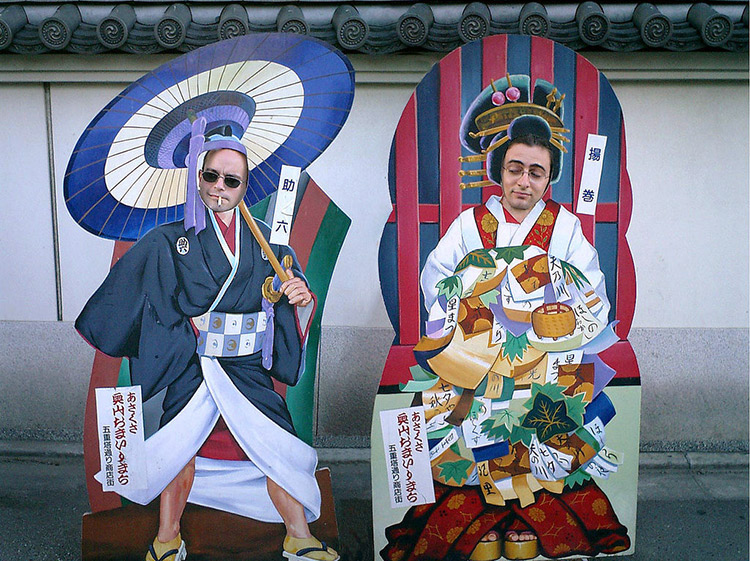
    I am offended by the one on the left. The one on the right uses 外国人, so it isn’t racist anymore.

  • 古戸ヱリカ

    I’d like to get my hands on the movies rights to that story. BOOM, instant comedy gold.

  • Fil (not Phil)

    You left out the the part where you tell them multiple times that you were born and raised there, yet they still stare at you like you’re a lunatic. ;-)

    Also the part about having a hard time finding English teaching jobs also applies to other jobs as well.

  • iamoyashiro

    what if you dont “look” east asian, but you still get a tsuumei, and apply for a job interview? will they look at you all weird, or will they understand you have tsuumei. I can just imagine… YOU’RE Tanaka Yamamoto o.o ????”

  • Elle

    having lived in Japan myself as a foreigner, I always wondered how other forigners who looked ethnically similar would fit in. I completely read this article and really enjoyed it. Thank you.

  • MrsSpooky

    I’m going back next year. My nephew wants to go, and that would be awesome! I’d love to visit rural Japan, but for the time being, I need to finish Tokyo. But yeah, I was told everyone would want to practice their English on a westerner, but that was not my experience. I stayed at a Japanese hotel chain and there was one person at the hotel who spoke English. Which was fine. I plan on staying there again next year. Good for your mom! :)

  • MrsSpooky

    The only time I saw other westerners in Tokyo was in Shibuya, and there were several. When I was there a couple weeks ago I saw 3 in Asakusa, then almost a dozen in Shibuya. But even in Oota near Haneda airport, I was the only one there, even in the hotel. I didn’t feel like too much of a freak, because nobody looked at me while I could see.

  • http://zoomingjapan.com/ zoomingjapan

    You’ve been in Japan since last year. I know that my sight of Japan has changed a lot throughout the years.
    I’d love to hear back from you once you’ve lived several years in Japan because I’m sure the way you see and experience things will change as well! :)

    That being said, I’ve had some Asian friends and co-workers here in Japan. Two were Japanese. However, one was born in Hawaii, the other one was born on the “mainland” in America. His grandparents used to live in Japan, but his parents were born in America. Although both his parents are Japanese, he didn’t speak Japanese at all.
    He came to Japan to discover his roots, but didn’t know much about the country.

    When Japanese people approached us, they always talked to him only – as they assumed a white female foreigner like me wouldn’t understand them. In fact, he couldn’t understand what they were saying and thus he couldn’t reply, so I did.
    Most Japanese people couldn’t handle the situation even after I explained it to them.
    A foreigner who speaks Japanese next to a seemingly Japanese person who can’t speak Japanese??!!

    The Hawaiian person I mentioned also couldn’t speak Japanese well. She said it’s hard for her because everybody expects her to act Japanese and to be able to speak Japanese when she can’t. Some treated her as if she was retarded.

    It’s surely not easy for Asian people in Japan, but like you said the issues are different from those “white foreigners” face.
    I agree that it’s not about “which is easier”.

    As for English schools preferably hiring non-Asian people … or “Western-looking people”. I heard of that, too. But both schools I’ve worked with thus far were not like that LUCKILY! We had a super international bunch of teachers, not all of them native speakers of English (including me). And like I said earlier some of them WERE Asian.
    I just want to give hope to Asian people who are looking for English teaching gigs in Japan as well as to non-native speakers of English.

    Thanks for this well-written piece. I truly enjoyed it and kept nodding throughout the whole article. :D

  • http://zoomingjapan.com/ zoomingjapan

    Hi!

    You’re not the only one facing these issues. I think it happens to all of us. I’m German myself. I’ve been here in Japan for 6 years – and counting. I don’t get why I should communicate in a language that is neither their (the Japanese people’s) nor my native language. It is annoying and frustrating – especially when the response in English is incomprehensible.

    It does happen more often in the bigger cities, though, not that much in the countryside.

  • http://zoomingjapan.com/ zoomingjapan

    I don’t think the foreigners were so surprised. I think most of us are used to the fact that somebody can look … let’s say Asian, but legally be American. WE’VE grown up with it … it’s the Japanese who can’t seem to get used to that idea.

    That’s why, for example, “White Japanese”, have still such a hard time in Japan. Although they were born in Japan, grew up in Japan and speak Japanese fluently, they’ll never be fully accepted as “Japanese citizens” … socially.

    http://zoomingjapan.com/life-in-japan/foreigners-born-in-japan/

  • http://zoomingjapan.com/ zoomingjapan

    What you describe is very typical.
    First of all, it’s Tokyo we’re talking about and then you were only a short-term visitor.
    When I only visited Japan for a short time, I was almost disappointed that people were not staring as much as I thought they would.

    Trust me, it’s a whole different story when you actually live your everyday life here.