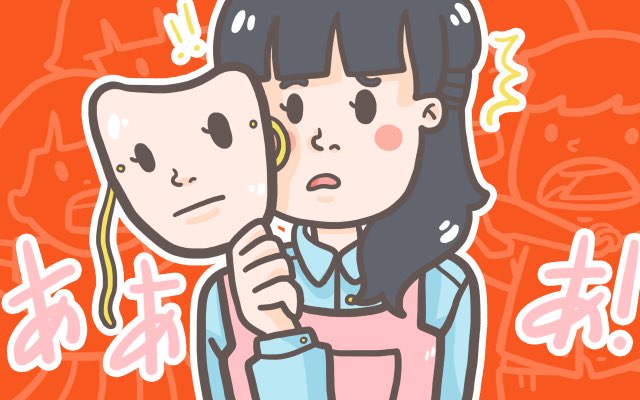
Being an ethnic Chinese person living in Japan, I don't exactly stand out from the typical Japanese person. Sometimes, I get comments from some of my other gaijin 1 friends that it should be easier for me – after all, in a culture that values conformity it's not impossible for me to blend in. On the other hand though, some people also point out that sometimes standing out is not just good, but often very necessary to live in Japan.
My own experience has been between the two. Search the internet (and even this blog!) and you'd probably get tons of articles written by foreigners in Japan. But very few of them come from people who actually can blend in, and this in itself brings an entirely new and different set of issues.
The Good Stuff
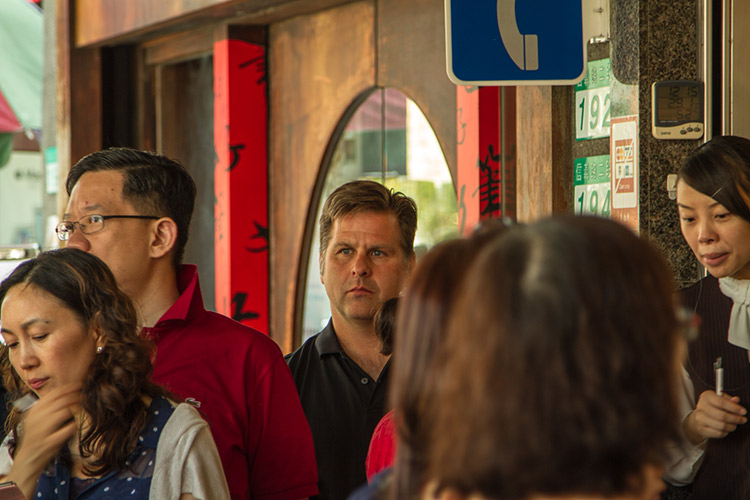
Not standing out can be a very good thing sometimes. Many foreigners complain about the constant staring that they receive – if they speak English in public they get stared at. If they speak Japanese in public they get stared at. In the toilet doing their own business they get stared at. Some people embrace the attention – some do not.
In addition to this, seemingly harmless and often well-meaning Japanese remarks such as "oh you are so good at using chopsticks!" or "oh you can write kanji!" are perfectly fine – at first. After a few months in Japan however, these start grating on many people because it just signals to them how "foreign" they are in Japanese society.
For us however, we never do receive that kind of attention unless perhaps we open our mouths and speak a different language. And while I do get "do you use chopsticks where you come from?" or "oh you can write Kanji" (my race invented it dammit!), I most certainly do not get it as much as the majority of the other foreigners in Japan.
Another very true thing is that many Japanese get very self-conscious around foreigners because, quite simply, they simply do not know how to act around someone from a different cultural background. This is partly because the Japanese are very keen to avoid offending other people – however, when placed in a situation with someone visibly different and probably from a different country, their offense-avoiding radar goes into overdrive. As East-Asians we don't naturally put the Japanese "on guard" by default, sometimes because they think you're Japanese, but also perhaps because you don't look that different from them. Therefore, perhaps on a subconscious level I am not recognized as being that "different" too.
Furthermore, if you register yourself as a resident of Japan, you are even allowed to create a tsuumei 2, or basically a Japanese alias for yourself. Nothing stops you from using it to apply for jobs, use at school or printing it on your name-card. Basically, if you make a tsuumei for yourself and can speak an at least near-native level of Japanese, there is nothing stopping you (except for the "nationality" box on forms… and grammar mistakes) from passing off as and living life as a typical Japanese person. This is in fact what many ethnic Koreans, especially those descended from families who came to Japan before the end of World War II, do in real life. Japan's original peoples, the Ainu, had to do it too.
The Not-So-Good Stuff
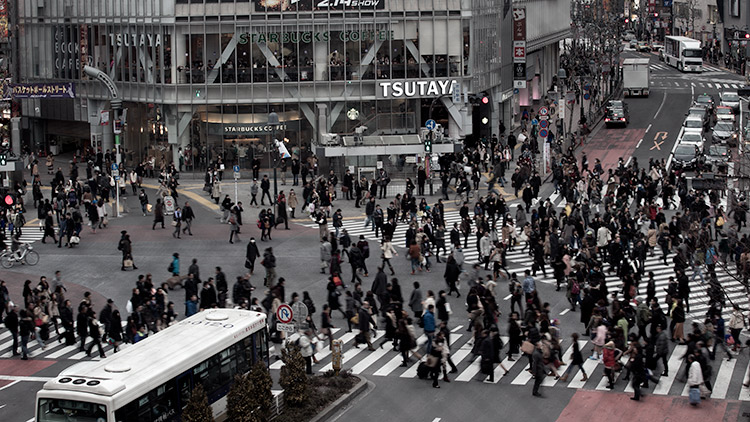
Unfortunately, not standing out has its drawbacks too.
Take for example something which is utterly obvious to most foreigners in Japan – being a foreigner you get to take many liberties that the Japanese cannot themselves take. For example, you will be allowed to be much more direct, honest and critical about issues in a way that would invite bullying if you were Japanese. Can't really understand how to divide the rubbish? It's okay, after all you're a gaijin. Some people do take this to an extreme though – there are some who, for example, buy the cheapest train ticket available and pretend to be lost when they get to the station they wanted to go to. The station staff often apparently just let them exit – after all, they are just a bunch of lost gaijin.
To give an extreme example, can you imagine three East Asians doing the same thing (not that they should)? It is clear that they would have much less success doing so than if they were visibly foreign. Similarly, in terms of being able to speak freely and other things, we don't get that many "gaijin liberties" living in Japan.
There are many different reasons to this. As said earlier, because you look the same, people will subconsciously assume that you are the same. Secondly, one strand of logic, which isn't actually wrong, goes: Hey you're Asian. Shouldn't you know how Asia works with all the rules and politeness?
Exoticism

There's a subtler dimension to this though. This appeared on one of my friend's Facebook wall one day.
"Was with a group of white friends last night. Japanese guy approaches, introduces himself, talks to all the white guys, looks at me, ignores, walks away. Maybe it's time I put on makeup to make my eyes bigger and nose taller…"
Perhaps said Japanese guy mistook him for another Japanese person but the point is clear: There are actually lots of Japanese people who want to make friends with foreigners. Often, this is because they really do want to know more about the outside world or really just because they want to be friends. However, sometimes it's just because foreigners are "exotic." Thus, it's no surprise then that they gravitate towards the more "exotic" looking ones over the Asian ones.
This is also expressed in other ways. For example, many of my friends who are looking to teach English say that private English schools and people looking for private English tutors prefer to hire non-Asians over visibly Asian people – even if said Asian person is a native speaker of English.
How To Deal With It

The above does not mean that Asians cannot make themselves stand out though. As said earlier, get a weird haircut or a tattoo or speak loudly in a different language (especially English) and voila – you've announced to anyone that you're different. Likewise, be extremely extroverted, frank and/or rude in a stereotypically gaijin way and you'd be treated like a full-fledged gaijin at least by the people who have known you for a while.
The extremely odd thing, and the counter to the point said above about how being Asian allows you to lower the guard of the Japanese that you first meet, is that sometimes, you have to go through this "gaijin coming out" process. If you can't speak fluent Japanese, this is often after the Japanese person realizes that your Japanese is a bit off and asks you where you are from. If you can speak fluent Japanese, this is often after the Japanese person has had a perfectly normal conversation with you and asks where in Japan you are from, your name or about your high school.
You then tell them that you're from this-and-this country and the conversation usually simply continues, after the customary nihongo jyouzu desune 日本語上手ですね (Your Japanese is so good!). Occasionally there is this sense of awkwardness – then you know that the offense-avoidance radar is getting scrambled. And very occasionally, as described by a friend of a friend: "You feel that a wall comes up and that the conversation stops."
As you can see, very coming out-ish.
It's Not About Which Is Easier
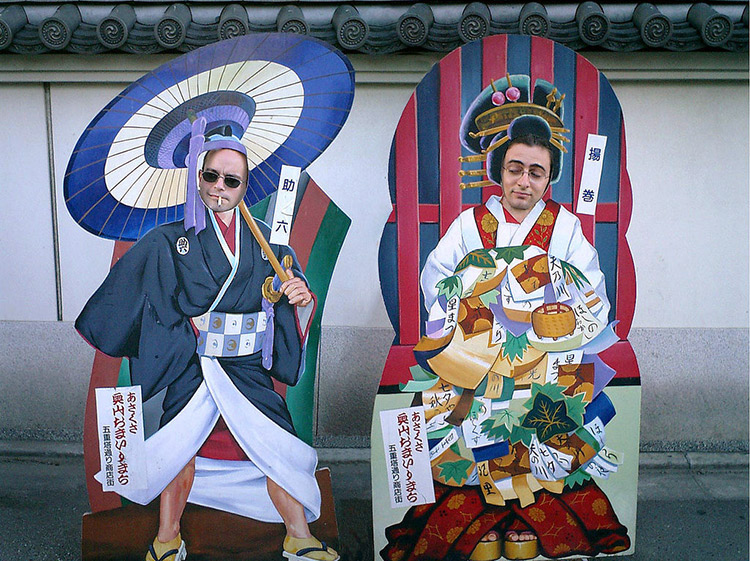
It really is not. Neither is it about who has the advantage or who has the disadvantage – because we all have our different advantages and disadvantages. Some people would much rather have the freedom that comes with being obviously different but then to some people being stared at by nearly everyone wherever one goes is extremely stressful.
What is true is that each situation has its different challenges and they often require different approaches to handle them. Some use the opportunity to lie low and under the radar; others make the extra effort to stand out.
But then again, everything has its own challenges. Being Japanese in Japan definitely has its challenges too. So, all else being said, all there is to do is to recognize your own situation, and choose your method of life.