How To Be Perapera- Tips On Speaking Conversational Japanese More Fluently

Okay, so you’ve been through a couple of years of Japanese classes. You know how to ask questions. You know how to answer those questions that you can understand. You can describe things and say that you like the color purple. But you want to be able to talk to *gasp*, REAL Japanese people? That’s a lot harder than it seems.

japanese-people

It’s definitely possible though. Personally, I went from having no Japanese experience at all to being fluent in less than five years. It’s mostly due to the extended time that I spent as an exchange student, but even if you spend time in Japan, that doesn’t necessarily guarantee that you’ll become fluent. I also know people who have learned to speak Japanese very very well who have had nothing but their computer and their motivation.

However, there are various things that you can do to help you learn how to speak conversational Japanese. Mind you, these take some hard work and dedication as well as commitment and motivation

What is Fluency?

There is no real agreed on definition of fluency, but people seem to mix it up with mastery. In my eyes, there is no real such thing as one hundred percent language mastery- as one changes setting or subject, there are a million words that one must learn in order to be able to understand or express the ideas being discussed.

I consider fluency the ability to converse about any everyday subject without stumbling over words or thinking about what is being said. Fluency is a state when you are comfortable enough with the language that it is hardwired into your brain as if it had always been there. Fluency means being able to express yourself in a comfortable way. This doesn’t mean that you know every word about every subject, but instead that you are able to converse comfortably about everyday subjects without problems.

Immersion
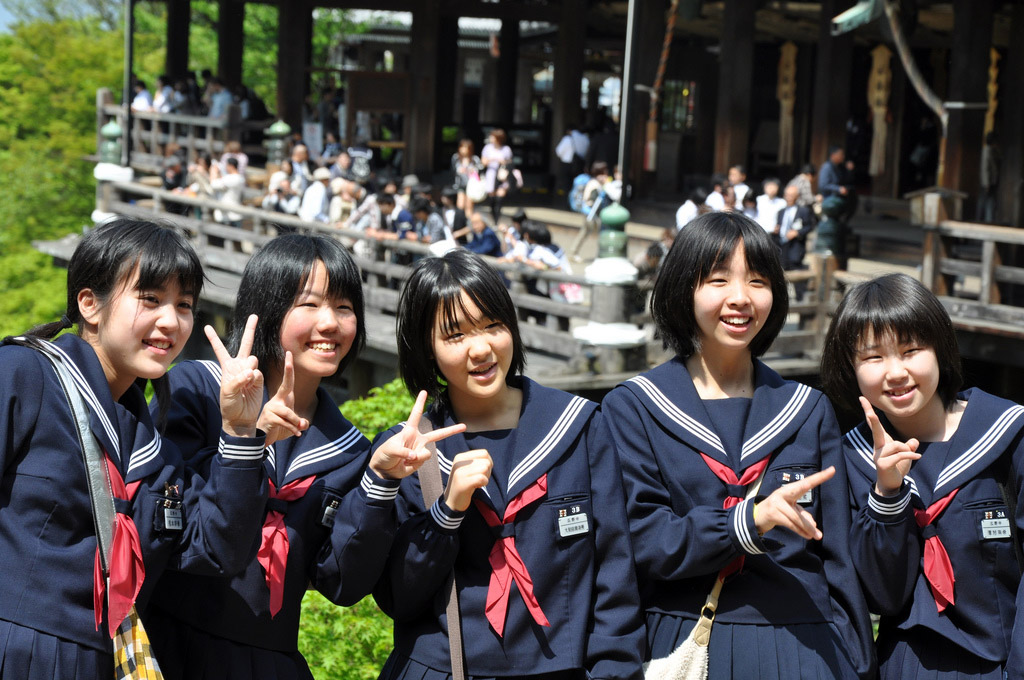
I know it’s not possible for everyone, but if you have a will or a way, immersion is the best possible way to learn how to speak fluently in conversational Japanese. Being surrounded by people who only speak Japanese will do wonders. To get to Japan for immersion, you could go as an exchange student, through a study abroad program, through JET, or just go with a friend or friend of a friend.

culturalimmersion

If you can’t do a physical immersion, organizing your own small immersions can be good. Decide to only listen to Japanese music and watch Japanese TV shows for a day, a week, or a year. Have a Japanese-speaking friend only speak Japanese to you. Get together with some friends studying Japanese and cook and eat a meal together using no English. Any little bit helps, as long as you’re all committed to the goal of practicing the language.

Warning- Embarrassment Goes Out the Window

in-the-wind copy

No shame is allowed. None. Are you embarrassed that people will laugh at you? Too bad, laugh at yourself first. Are you worried that you sound stupid? Well, you probably will until you get more practice. How badly to you want to be able to speak well? If you want it at all, you have to take all of those inhibitions and put them through a grinder, pressing them into a fine powder before letting them flow through the wind, to a place far, far away.

Talk To Native Speakers

In order to get better at riding a bike, you’d ride a bike. To get better at baking a sponge cake, you would bake a lot of sponge cakes. So, to get better at speaking Japanese, you should speak more Japanese.

Actually Talk To People

121126love-stylist

Image by lifehacker.jp

Again, you have to really try yourself to actually go and talk to people in Japanese. Again, if you don’t practice, you won’t get better. No matter what level you are at, as long as you actively practice, you’ll improve.

Also avoid getting stuck in the English rut. That’s the undesirable comfort zone of when you’re so used to speaking English with a native Japanese speaker that speaking English on both ends is awkward.

Listen actively, Speak Bravely

Look again at your inhibitions? Are they flying in the wind with the rainbow pinwheel? If they are, your mouth is now free be brave. Go forth and make many a mistakes while remembering these following tips:

What’s that?

It-何 copy

If you don’t know what a word means, you can always just ask.

I know that in the beginning phases, there are too many unknown words to really ask for one. Also a lot of the time you can get the basic meaning of a sentence from context, but if there’s something that you don’t know that is critical, ask. If someone starts looking it up in a dictionary, tell them that you want an explanation, or “説明して”

However, using a dictionary can be very helpful as well. Although phones and electronic dictionaries are fast, sometimes a paper dictionary is useful in that you can highlight and bookmark pages. Sometimes starring or virtual bookmarking just isn’t enough.

The Sincerest Form Of Flattery

lizzie-mcguire-matching-outfits1

In order to pick up pronunciation or an accent, directly imitating the speech of a native speaker you know can be helpful.

I know that when I spend too much time with any of my friends, I pick up their speech habits. When it’s with my Japanese friends, I pick them up even more quickly. Just remember to pick up the speech habits of someone who is the same gender and around the same ages as you- I know that it’s your life and you make your own choices, but Japanese society is less likely to take you seriously if you speak Japanese like a girl as a 30 year old man.

Repetition, Repetition, Repetition
bart-simpson-generator

When you make a speech mistake, repeat yourself with the correct way to say your mistake.

For example, one day I was with my friend and I gave her a cute acorn that I had picked up on the ground. When I gave it to her, I wanted to tell her to try not to lose it, (なくさないようにね)but instead told her “なかないように”, which means “Try not to cry.” I realized my silly mistake, and started to try to find the right words. With my friend’s help, I managed to get it right, and then repeated it a few times. I don’t think I’ll make that mistake ever again.

Is This Normal?

normal-sigma

When you’re unsure if a phrase or word is used properly, ask if it is.

A lot of the time when someone is learning a new language conversationally, they will have something specific that they will want to say in the other language that they will look up in a dictionary or translate word by word. Sometimes direct translation works, but a lot of the time it sounds robotic or forced. However, if it makes sense, the person who you’re talking is not very likely to correct you. You know how awkward it would be to point out weird speech habits of a non-native speaker of your own language. So just casually ask if the wording is odd or technical before you store it into your daily vocabulary cave along with all the other lions, tigers, and bears.

The best go to phrase that I use is  ”Xっていうのが普通?” or ” X使う?”

The Guessing Game

easy-to-guess

If you don’t know exactly what the word is, but kind of know the sounds, just go at it. You’ll probably have the real word repeated to you.

For a long time, I’d heard the word the phrase “置いとく” which means “to set down for now.” But I never really got it right at first. I’m sure that I said a mixture of different variations of oitoitoku, okitoku, oitoitete, and anything else under the sun. But every time, the meaning was understood and I was one step closer to saying it right.

Aizuchi

Learn how to actually be an active listener through Sarah’s article about aizuchi, or Japanese interjections. Even if you don’t speak fluently, you can trick people into thinking that your nihongo is super jouzu with your “a, sou?’”s and your “haihaihai”‘s.

No Native Speakers?

800px-Primary_Human_Language_Families_Map

It’s virtually impossible to become fluent in a spoken language if you’re not speaking it with people. But, if you happen to be in an area or situation where there is no one to speak Japanese with, you can absorb a lot to prepare yourself for a time when you can use the language on your own. If learning how to speak Japanese is you goal, I would recommend dramas and real-person TV shows over anime.

With language exchanges, although skype exists, sometimes it can get creepy if you’re just exchanging addresses with strangers who will undoubtedly be as awkward as you on camera. Be careful, kids!


I hope this will help those who are on their way to Japanese fluency! You can do it! Just don’t give up!

If you have anything you’d like to add, experiences to share, or questions for me, leave them in the comments!


  • Tora.Silver

    This is crazy. I just had a conversation earlier today about how I can never speak to my Japanese friend in Japanese.
    HOW DO I MADE SELF-CONFIDENCE

  • ヘレン ちゃん

    Good tips! Thanks! :) I was just talking about this with someone too! Besides listening to music and watching YouTube vids of Japanese musicians/bands with the Japanese subtitles added (sometimes they do add the actual Japanese. I don’t know why really, but it helps me with reading so, i’m happy about it. :)), I was just on iTunes, and was just trying out a bunch of different podcasts (all free). If you have a smartphone, or are near a computer a lot, you can be constantly listening to Japanese all day long. You can also probably download a podcast and put it onto a CD for the car if you don’t have an mp3 hookup, but i haven’t tried doing that yet.
    Just log into iTunes, or download iTunes on your computer (NHK is also in the GooglePlay store on android devices) and search NHK,
    then, directly below the search box, you can click on Japanese TV, Music, radio, podcasts, whatever.
    There are some language lessons from NHK, as well as the daily news, which i like listening to.
    In Podcasts, there is just tons of stuff, so you can try out different things depending on what you like, or want to hear.
    If you find something you like, below it on that page is “Listeners also subscribed to” which will give you a list of similar podcasts. :)

  • ヘレン ちゃん

    Good tips! Thanks! :) I was just talking about this with someone too! Besides listening to music and watching YouTube vids of Japanese musicians/bands with the Japanese subtitles added (sometimes they do add the actual Japanese. I don’t know why really, but it helps me with reading so, i’m happy about it. :)), I was just on iTunes, and was just trying out a bunch of different podcasts (all free). If you have a smartphone, or are near a computer a lot, you can be constantly listening to Japanese all day long. You can also probably download a podcast and put it onto a CD for the car if you don’t have an mp3 hookup, but i haven’t tried doing that yet.
    Just log into iTunes, or download iTunes on your computer (NHK is also in the GooglePlay store on android devices) and search NHK,
    then, directly below the search box, you can click on Japanese TV, Music, radio, podcasts, whatever.
    There are some language lessons from NHK, as well as the daily news, which i like listening to.
    In Podcasts, there is just tons of stuff, so you can try out different things depending on what you like, or want to hear.
    If you find something you like, below it on that page is “Listeners also subscribed to” which will give you a list of similar podcasts. :)

  • Allyson Larimer

    In linguistic terms, fluency is the ability to communicate readily and effortlessly, ie without pausing or having to look things up. Fluency is considered to be just one facet of how you evaluate someone’s language skills. But you are right, people use it to mean “mastery” or “perfect”. I hate the question, “Are you fluent?”

  • MandaMac

    I will say for me, language exchange has helped ENORMOUSLY. My partner and I started out with email, then progressed through text chat with skype, then voice chat without video, then into full video chat. Doing it in stages like that helped alleviate some of the “creep” factor, lol. After a few months, we get on skype several times a week and chat like talking is going out of style. And hilarity ensues.
    But I agree that one just HAS to throw any feelings of shame or embarassment out the window. I was pea-turkey terrified to actually speak my awful Japanese at first, and the first few times we actually talked, almost the entire conversation ended up being in English, which was great for her, but wasn’t doing me any good. Just start talking, and you’ll get over it. Hahaha, now I have said some of the worst, stupidest, stuff, but so what? Usually I don’t mangle THAT word or phrase again, and gee, I feel like a regular comedienne for all the laughs it produces.

  • MandaMac

    I would agree that fluency is a hard thing to judge. I mean, years ago I used to date a guy from Belarus. He spoke beautiful English, and probably would have technically been considered “fluent”. However, his ability to read and write English wasn’t that great, and he struggled with expressing ideas that we would consider simple and everyday.
    To me, “fluency” covers a lot of different concepts. I think that part of fluency is not just the ability to verbalize adequately, but also the ability to express yourself with written language, and to read and comprehend the ideas that others have similarly expressed. I also thing that to be truly “fluent” for lack of a better word, one has to be able to develop one’s cultural mindset, in short, to be able to THINK, to an extent, Japanese(or German, French, Greek, or whatever). Language is such a reflection of cultural thought and identity and vice versa, I just don’t feel like I could truly even begin to master a language without some understanding of culture, history, society, etc. Foe example, I can read a computer manual, learn all the language and terms and maybe I could even have a conversation with you about motherboards and processors and whatnot. But if I’ve never even turned a computer on, do I REALLY, truly understand computers?

  • Brad

    Great article. Great read. I am currently terrified of the notion of speaking to others at my level, but I am equally terrified of the notion that I am wasting precious time not doing so. Nervous dilemma…

  • legendofleo

    Very good advice here. I studied Japanese at uni for years but it wasn’t until I started immersing myself (through friends I made through my local Japan society and Japanese media) that I truly became ‘fluent’. The key really is trying to rid yourself of any inhibitions when speaking Japanese, as a student you will make mistakes – this is the best way to learn. You will also pick up a whole heap of cultural references and vocab from speaking to Japanese people which you wouldn’t otherwise.

  • http://zoomingjapan.com/ zoomingjapan

    Just being in Japan won’t guarantee that you’ll become fluent.
    I’ve met so many (mainly) guys who’ve been in Japan for 10+ years and still couldn’t speak a proper sentence. Of course, those people didn’t care about studying Japanese at all.

    It is, however, EXTREMELY helpful, if you care about studying. Just don’t make the mistake and only hang out in the “English bubble” with other foreigners.

    I wouldn’t consider myself as 100% fluent as there are terms (especially medical terms) that I still don’t understand .. and there are kanji that I still can’t read (helps that my Japanese co-workers also can’t read them, though).
    However, I speak Japanese every single day with my co-workers. It’s the language I use the most.

    After 6 years of being in Japan I speak fast, without thinking and even speak the local dialect.

    Immersion is a great “tool”, but immersion alone is NOT enough.
    If anybody was thinking that by simply coming to Japan, you’ll magically become fluent, FORGET IT!

    When I first came to Japan I sat down before and after work every single day for about 2 years to learn 2000+ kanji and grammar rules. You need to work hard either way!

  • Laura

    I’ve got a few Japanese friends I always sit with at school. You get to learn things like dialect too :) Dialects are lots of fun and everyone appreciates when you try to talk to them in dialect. I guess knowing these sorts of little things makes you more conversationally fluent :D 関西弁 熊本弁 are the best imo :) (not biased at all lol)

  • Aya

    DON’T BELIEVE IN YOURSELF

  • Lava Yuki

    Ive been learning Japanese in my home country with a private teacher for 3 years, and went as a language student to Japan twice for 2 months in my summer holidays. I’m not ‘fluent’, as in there were things i wanted to express but couldnt, but I could have a normal conversation with Japanese friends. But there’s no way I could survive the Japanese business world or anything with all that keigo. Unfortunately, I’m one of those people who’s better and writing than speaking. I can read lots of Japanese books, but the same can’t be said for movies without Japanese subs, or drama CDs. I guess that’s just my lack of listening to purely spoken and casual Japanese. I noticed that Japanese has a large number of words than sound the same but have different meanings and kanji respectively, which makes it harder.

  • Miamiron

    >I noticed that Japanese has a large number of words than sound the same but have different meanings and kanji respectively, which makes it harder.

    Just be sure to look for context. I havent had any instances living in Japan where I wasnt sure about the word they were using. 斬る切る着る…hmmm, either I they like the clothes im wearing, or they are going to behead me like its Benghazi and Im an infidel waging an illegal war.

  • Mami

    めっちゃおもしろかった〜:Dあと、レイチェルの新しい髪型好きだよ〜〜めっちゃかわいい〜〜❤

  • Lava Yuki

    Not really verbs, more like kanji compounds. Like 確率and 確立, or 全身, 前進 and 善心. I also find it hard when there are many words where the meaning is so close that the dictionary gives the same definition, but their different in some way. That always happens when I try to look up a word in English and then get tons of translations, and i dont know which one to use:( oh well.

  • http://www.twitter.com/christaran Chris Taran

    Ahh, one day I hope to move out of this horrific place in Pennsylvania and find one where there is even a single person that speaks Japanese… 絶望した!

  • Yuume

    I am lucky because I live only a couple hours away from Dallas, TX, and they have a big Asian population, and one of my favorite suburbs to go to is mainly Korean and Japanese. I always make a point to go to the events held by the Dallas Japan Association and the other Japanese associations there, and I always am excited to go because I get to talk to people in Japanese! I might not be the greatest (and I’ve been studying for YEARS), but they are always kind and understanding, and I think they are just more lenient because, holy crap, someone is actually TRYING to speak their native language, not just assuming that they speak English and it’s all cool. Last year, I really went out of my comfort zone and attended a large book/garage sale held by one of the schools, but it was COMPLETELY Japanese. Going in, almost everyone there (I mean like…98% of the people) were speaking only in Japanese, and I knew it would be that way. I was really shy at first and just picked through the books and magazines looking for stuff I could study with/ actually read, and listened. After a little bit though I started talking to people. When I checked out, I spoke Japanese to the two ladies ringing my stuff up, and they were speaking English at first, but I asked them if we could speak in Japanese. The one lady bagging my books looked really surprised but they both were very excited that I asked. We talked for a few minutes. One of them made an off the side comment that it was nice that I tried and that I did very well and my speed was good when speaking. When I walked away they were laughing/giggling at me, but I didn’t mind. I realized it was because of my plushie Totoro backpack ^^;

    I also love going to Epcot at Disney World because everyone that works in a specific country is from that country. My mom knows that I love visiting Japan when we go, and I literally have to fight the urge not to take off running across the park right away. Gotta give the other countries some love too, plus the restraint makes it all the more exciting once we actually get to that side of the park. But when I get there, back off guys, no more English until we leave! XD The workers there are always really excited to talk to someone who knows Japanese, as is the same for people in the other countries (I know a bit of German and French so I try to speak those as well), so if you go to Epcot everyone, practice your skills there! The workers love talking in their native language to someone they don’t see everyday at work, and most of the time they will help you out if you don’t know the correct word or phrasing. They might chuckle at your mistake, but that’s not the worst case scenario, plus it might become a humorous situation which will help you remember the correct phrasing later!