The Reason I Don’t Want to Dye My Hair Black Again

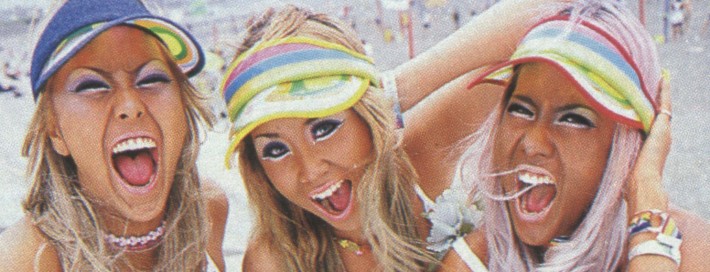
黒髪 (kurokami), or black hair, is globally the most common of all human hair colors. Ordinarily, Japanese people have naturally black hair and so do I. Although many of you guys may still have an image of Japanese women with black hair, there are actually very few women these days who haven’t dyed their hair before.

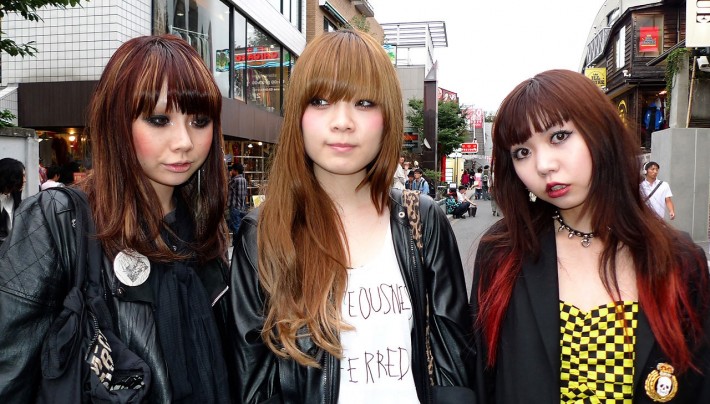
According to research done by a Manafusa-survey team in June, 2010, 92% of a 36 woman sample group (21-49 years old, average age: 36.5) have dyed their hair on at least one occasion. So if you come to Japan expecting to see girls with black hair, you may be surprised and/or disappointed by the large number of non-black haired women, albeit the color usually isn’t pink, red, or blue like anime characters’ but mostly some shade of brown.

To Dye or Not to Dye

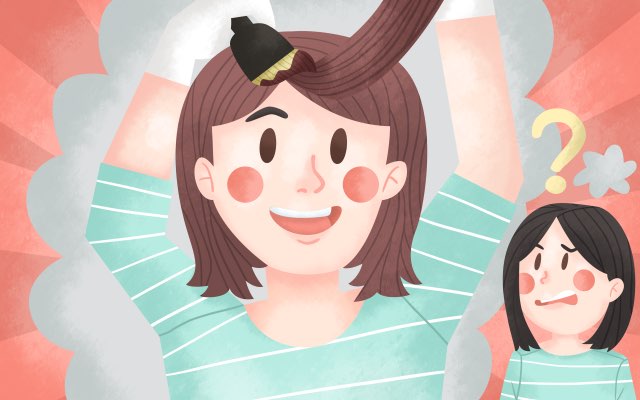
fidol-120713114752-pv2I haven’t dyed my hair for years now, but I used to dye it brown. One reason why I haven’t dyed it for a while is just because I’m too lazy to keep dying it. When my black roots grow back, I always get called プリン頭 (purin-atama), which literally means pudding head.

Purin-atama is a hair color condition that happens a few weeks after dying your hair. When the roots begin to grow back, it gives your head the appearance of a Japanese custard pudding. It’s like ombre-hairstyle, which is where the hair is darker at the top, but fades to a lighter color at the tips. Another reason is because my husband, who is Canadian, really wants me to keep my hair black. Whenever I tell him that I’m thinking about dying my hair, he says, “Please don’t change it, onegai (please)!”

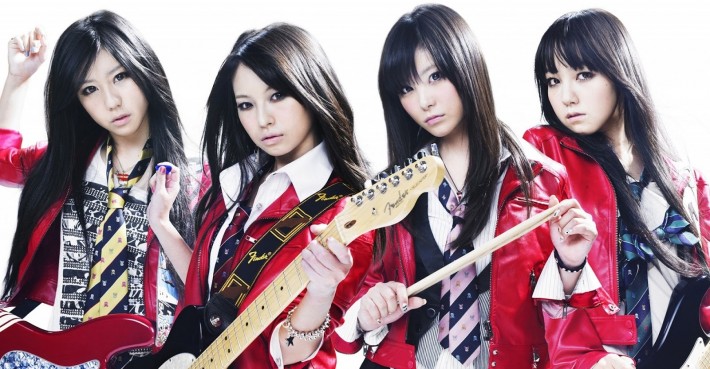
SCANDAL-Wallpaper-HD-Desktop-2

Well, maybe he’s just modish and just following the trend. The current trend in the Japanese beauty industry is good old-fashioned natural black hair. This sounds a bit weird, doesn’t it? You may be wondering how something naturally occurring can become a trend. I’d say that this explains why so many of the Japanese women who had dyed their hair brown in the past are now dyeing it back to black.

Actually, this black hair trend is seemingly neither a fad nor a craze. It seems that the word ‘kurokami’ (meaning black hair) started being a buzzword in Japanese fashion magazines and blogs in the mid 2000s. Meanwhile, a few shampoos were introduced that focused on the beauty of Asian hair, such as Asience, Tsubaki, and Ichikami, and their sales show how popular they’ve become.

Japanese Guys’ Preference

chart01A January, 2013 survey was conducted where the participants were asked which color of women’s hair is considered to be more attractive to men. 63.7% of the 358 women that partook in the survey said that men would be most attracted to light brown hair. Of the 353 men who participated, 49.7% said that they preferred black hair. Please note, more than two hair colors were presented as options.

A rather large discrepancy in opinion, as you can see. Only 27.7% of the women answered that they thought black hair would be preferred by the men. This result was found by Times Current’s research about the correlation between Japanese women’s hair and their モテ度 (mote-do). If you wondered what ‘mote-do’ means, I apologize. Sometimes it is so much easier to use a Japanese word than to explain in English.
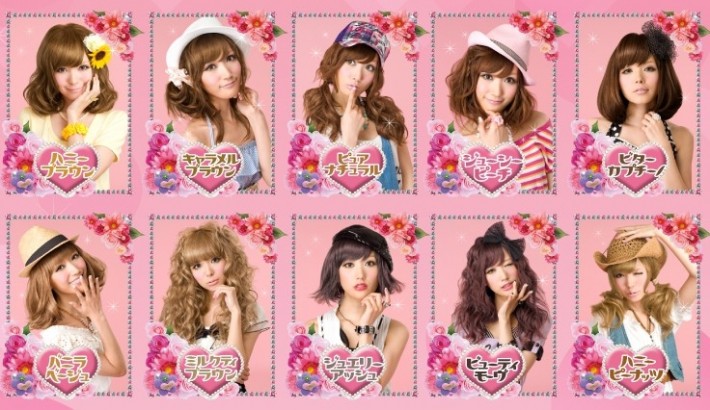
Japanese-Girls-Hair-Makeup-09-2009-002

Mote-do is a slang and is a combination of the verb モテる (moteru) and the counter 度 (do). The verb モテる (moteru) means ‘to be popular with’ and is used relatively often when talking about the opposite sex. The counter 度 (do) is usually used for occurrences, number of times, degree of temperatures or angles, or percentage of alcohol. In this case, is used as a comparative scale.

So, モテ度 (mote-do) means one’s level of popularity among the opposite sex in relation to either physical attractiveness, personality, wealth, fame, or any number of other possible attributes – essentially, how one stacks up against others. What this research indicated was that hair is incredibly important, actually a very highly considered factor for Japanese men and how they view females.
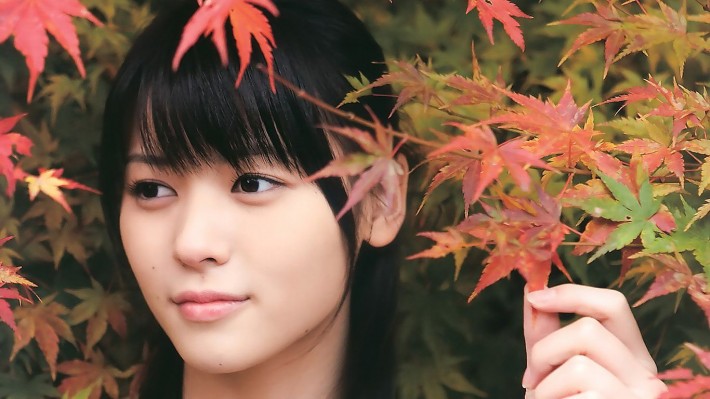
51a2853e4f93252542

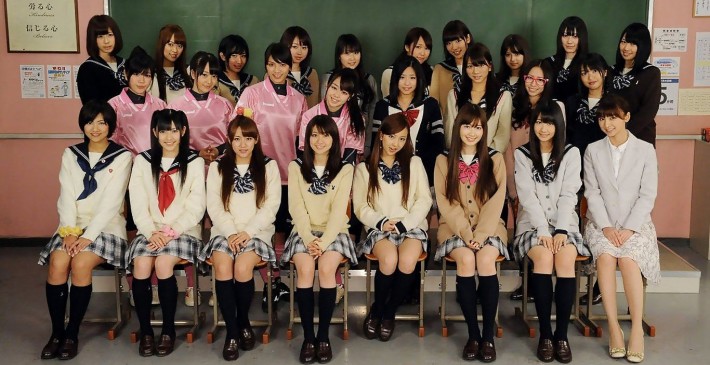
Now, do you think Asian girls look better with their naturally black, soft, silky, hair – or do you prefer their hair to be dyed? It is clear that Japanese men prefer women to have black hair. So how is that if so many women believe that Japanese men prefer light brown hair, that the trend is turning back to black? Only slightly over one quarter of the women in this survey accurately guessed the preference of men, but it is clear that some Japanese women are fully aware of this fact.

The Reason I Don’t Want to Dye My Hair Black Again

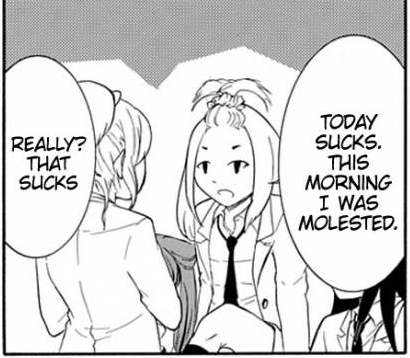
Average+day+in+Japan.+Oh+boy+getting+molested+sure+does_773f97_4344074There is a woman named Airi who keeps her hair brown even though she is aware of guys’ preferences. Actually, knowing that men prefer women to have black hair is the exact reason why she doesn’t want to dye her hair back to black, according to a tweet she made on August 19, 2013. Here is what she tweeted:

私が黒髪に戻したくない(清楚系にしたくない)理由は黒髪清楚系だと、
・男にとにかくなめられる
・痴漢によくあう
・大人しい、従順だと思われる
・大和撫子をイメージされやすい
などの理由がある。髪を染めてばっちり化粧してからは痴漢が激減した。変なおじさんに話しかけられないし、快適。
by Anri @Irispeach

“The reason why I don’t want to dye my hair black again (or don’t want to look tidy and clean) is because a woman who has black hair and looks tidy and clean can tend to have following problems;

-They tend to be looked down on by guys.
-They tend to be molested more often than women with different hair color.
-Black hair tends to give men the impression that they are gentle, quiet, and obedient.
-They tend to give an impression of yamato-nadeshiko*

Ever since I dyed my hair and stopped putting in so much time and effort applying makeup to my face, the number of times I’ve been molested has dramatically decreased. I’m no longer approached by strange men, either. I’m much more at ease now.”

*Note: Yamato-nadeshiko (大和撫子) is a term for the ‘ideal traditional Japanese woman’, who is considered to be feminine while being chaste and devoted to her husband. This is now a somewhat antiquated notion, but is still used as the model for the ideal Japanese women.

img_579845_16919092_8

Sure enough, this tweet echoed around the Twittersphere. Maybe it’s just me, but upon reading these comments you may have thought they strayed a little from popular opinion. I imagined this tweet would have received a lot of contradictory comments, but I was surprised to see that the comments were resoundingly in agreement with hers.  Now, let’s have a look at some responses.

茶髪の方が安全なんですね。私も茶髪にしたい。ただ、悪いのは、下衆な男なんだけどね。生まれつきの黒髪の女の子で変えたくない人は困りますし。
by れい @kids1977

“Brown hair is actually more safe? Now, I wanna dye my hair brown, too. Those low-life men are the root of all evil. Girls who have naturally black hair and don’t want to dye it can’t help it.”

私が「ノーメイク+Tシャツジーンズ」を嫌な理由とまったく同じでございます<黒髪に戻したくない理由 私の地元だけかも知れないけどモサい女は男にめっちゃナメられるしセクハラや暴力も受けやすかったのです。
by NaGiSa_FuJiKI @NaGiSa_FJ

“Your reason why you don’t want to dye your hair black again is exactly the same as the reason why I don’t like ‘T-shirt and jeans style + no make-up’. This might only be said in my area, but unfashionable women tend to be looked down on by guys. They are also more likely to be sexual harassed and/or abused.”

ちょっと前にネットで騒がれた「小学生と××するには」の漫画にも「服装がテキトーな子を狙え、そういう子は親に構われてないからお菓子やゲームですぐ言いなりだ」的な事がバッチリ書かれてて寒気がしました。
by NaGiSa_FuJiKI @NaGiSa_FJ

“I found a manga which became infamous online a little while ago called ‘How to F&#k an Elementary School Girl’, in which it actually gave instructions like, ‘Find one who doesn’t seem to take care of her appearance. Those are the ones who aren’t taken care of very well by their parents, so they tend to be more obedient and easily coerced if you give them candies or a game.’ I was disgusted.”

一時期はやったヤマンバメイクにも予防線の意味があったとか
by omiyamairi @ginbreara

“I heard that yamanba make-up*, which was quite popular for a while, was actually done as a preventative method against those acts.”

miller_fig1

*Note: Yamanba make-up

ヤマンバメイクって不思議でしたが、予防線的意味を聞いてからはすべて合点がいったのを覚えてます。女性が直面している生活世界がいかに男性のそれとかけ離れているのかも同時に。男女差に限らず、立場によって直面する世界が全然違う。
by モン=モジモジ @mojimoji_x

“For a long time I wondered why the yamanba girls wore make-up that way, but I remember finally understanding why they do after learning that it’s used as a prevention from harassment. I also became aware that the difficulties women can encounter in lives can be so much different than those of men. Actually, gender difference is not the only thing that dictates the occurrence of these events because the situations we could face are all very different depending on who we are and what we do.”

似た理由から私は体重も増やしました
by Mrs rinnn @erabliman

“I even gained weight on purpose because of similar reasons.”

綺麗でいて良いことは少ないと感じた人ほど早くから美の追求の速度が緩まると思いますよ、あとは環境もありますよね、たぶん。
by Mrs rinnn @erabliman

“I think that those who feel it’s not good to be beautiful tend to lose interest in maintaining their beauty. It could be different depending on their circumstances, as well, though. Maybe.”

I was actually surprised that there were so many supportive responses. Fortunately, maybe just because I’m not attractive enough, I’ve never been molested before. So, I personally don’t understand feeling the need to dye my hair to prevent myself from being molested. Yet, I can imagine how scared they must have been, and likely still are, by being victims, if they believed they needed to dye their hair.

airi-x-chissa

So whether you have black, brown, blonde, red, or green hair, I’m sure this article will pass through your mind the next time you consider dyeing it a new color. It’s sad that this is a reality that Japanese women need to think about. I’d really like to hear what you think on this topic though. Are there similar issues in your country? What did you think of the sensational tweet about black hair? What’s your favorite hair color and how does it affect appearance? Please share your opinions in the comments below.

  • Mami

    Not for everyone but at least for those who commute everyday by crowded trains.

  • Mami

    Thank you for your comment Kiley and sorry if the sentence I wrote made you displeased.

    I totally agree with your opinion. And yes, this crime could happens no matter how girls look like, but as long as they are gils, especially when the molester is drunk or so. Actually, many women in Japan thought the same way as you did: “Why is it women who have to cover up, change their looks, lower their eyes when it’s men who commit these crimes?” Therefore, they started a train car for only women during the commuting time. I should have mentioned this in the article, too.

  • Mami

    Thank you for sharing your preference :D

  • Mami

    Sorry for the sentence. It seems that sentence made many people displeased. ;P gomennasai
    I’m the same way about the hair color. Once I had a purin-atama and got too many unpleasant words from my friends, so I got sick of it and quit dyeing my hair:P

  • Mami

    When I get a permanent, it’s like the same as your situation. It’s wasting time and money because my hair goes back to straight very quickly. Yeah, we need a change sometimes, but not all the time. true.

  • Mami

    Oh…I see. Yeah, there are a lot of bad jokes about girls with blond hair:(
    I personally like natural blond hair though. I think that it’s beautiful.

  • Mami

    I have just watched the movie ‘Patriot’ today. It’s totally different situation, but your sentence ‘Take a stand instead of moulding to something to suit a belief or you just won’t break it’ somewhat reminded me the movie. To make a change, you need to take an action.

  • Mami

    Wow. It maybe a smart choice. ;)

  • Mami

    Arigatou:D

  • Mami

    Oh, I’m glad that nothing happened with you in that situation. Yeah, who knows. Anything could happen. We should be careful especially late night time.

  • Mami

    Yeah, it’s very different I think. it’s depends on their occupation. In general, regular guys who work for regular companies are not allowed dye their hair except for from silver to black. You could get fired if you dye your hair. So, if regular men dyed their hair, it could give an impression of delinquent, as well.

  • Mami

    Oh…I hope you won’t get chikan-ed. Just avoid to take those crazily packed trains.

  • Mami

    maybe when I find a good fresh news related to it:)

  • Mami

    Oh…it’s scary.:(

  • Mami

    Ah, right. Thanks.

  • Mami

    I see:) My husband used to get a buzz cut, too. But in return that I don’t dye or cut very short my hair, now he has to grow his hair for metoo. haha:P

  • Mami

    :D

  • Thank you

    haha yeah, I agree! XD

  • Galceava Sofia Diana Maria

    Why? What happens on crowded trains? Why not empty streets?

  • Sholum

    Yeah, because us men can stop the men that aren’t ourselves from being pieces of trash from any location on Earth.
    Yes, that was sarcasm, and here’s why:

    - You suggest that all men (or the majority at least) are sexual predators through your use of ‘men’ as the group responsible. That’s quite sexist, which makes you a hypocrite (please don’t be a hypocrite).

    - You suggest that women should have no say in what happens to them whether it’s good or bad (surprising, considering you present yourself as a woman (this is the internet after all, how am I to know who you are without going out of my way to research you?)). In what way is it not an individual’s (woman or not) responsibility to protect themselves? It’s almost as if you are saying that women can’t protect themselves if something happens, so it’s up to the men to prevent it entirely (refer to my sarcastic statement up top). I’ve met plenty of strong women in my life that could gut someone if they tried to molest them, bare handed. There is no reason a woman (or anyone for that matter) shouldn’t learn to defend herself from attackers.

    - You suggest that sexual violence can be removed from society. That’s… Just… I don’t even have words for it. Humans are humans. Human brains are unstable in the best of times and simply can’t be relied upon to prevent this kind of behavior in all humans. Unless we start killing off the children whose brains didn’t form ‘properly’ around puberty, there is no way to lessen the number of sexual predators (note that I say ‘lessen’ even using brain development as an indication of violence isn’t particularly accurate. It’s the same as saying that all psychopaths will become criminals or that non-psychopaths won’t. One of the very people studying psychopathic brains is a psychopath). Especially given the amount of stress citizens of developed countries are (stress being a major trigger for violent crime).

    So yeah, while I can agree that we need to act against sexual crimes, that’s about as far as it goes. Also, note that I don’t link ‘sexual predator’ to ‘men’. Quite simply, your comment is sexist and misguided. I’d almost go as far to say it’s misandric, however, a lack of content prevents me from making that leap. Perhaps if you try to attack me for saying anything negative about your comment, I’ll be able to tell for sure.

  • Mami

    Molesting usually happens on crowded trains where girls even can’t turn around to gazed at the molester with anger because of so many people. Of course you should be careful empty streets at night, but I’d say empty streets are pretty safe in Japan.

  • Wittlich

    Well, they couldn’t be Caucasian, they don’t have giant noses! :p

  • http://zoomingjapan.com/ zoomingjapan

    I’m Western and female, so I guess what I have to say doesn’t count, bit I prefer the natural hair color.
    I don’t mind when Japanese dye their hair as long as it looks good on them. Blonde or brown hair doesn’t suit everybody!
    At my previous job all my female Japanese co-workers had LIGHTER hair colors than me! I just never dye my darkbrown hair. Why should I?

    Oh, just one thing: The photo of the “high school class” is irritating. High school kids in Japan aren’t allowed to dye their hair.
    At least not in any of the regions I’ve lived in thus far.

  • lychalis

    Can I correct it? It is everybody’s responsibility to stop rape. No exceptions. Or a better keyword ‘prevent’. I doubt we’ll ever be able to actually stop it, or make it so it’s not a problem anymore (people don’t rape/get raped)

  • Jennifer Richardson

    Completely anecdotally (and my experience is in the US, not Japan), I definitely notice a correlation between street harassment/groping/etc. and my appearance, but not necessarily in the expected ways. If I’m dressed sexily, I definitely get more of it, then it tends to taper off if I’m dressed shapelessly/nondescriptly, but then (weirdly) it upticks pretty strongly when I look actively bad/poor/unfeminine/really sloppily dressed. It’s like it makes dudes angry that I’m not trying to be pretty or something, IDK.

    My gut feeling (from being a woman, and queer, and working with rape survivors and domestic violence shelters) is that physical attractiveness does play a part in initial victim selection (and I’m using attractiveness really broadly here–someone can be attracted to, say, children, without necessarily really caring what they look like, whereas someone else might have more specific preferences and be uninterested in raping or molesting, say, obese women or white women or whatever). But perceived vulnerability really narrows things down; most rapists/molesters are not going to go after someone they believe will turn them in or pose a serious risk to them, even if they are super hot. And some criminals will go after people who are extremely vulnerable (children, elderly people in nursing homes, disabled people, etc.) regardless of relative attractiveness, just because they are easy pickings and lack the resources to resist (and be believed).

    And I do recall a study (I cannot find it now, may try to hunt it down later) that found that date rapists tended to rape repeatedly (not just a couple of times, but many) and that they test intended victims to see how receptive and vulnerable they are, and tend to use tools like alcohol very deliberately. I don’t recall the methodology, but I believe it involved both statistical analysis (how many rapes by how many rapists, etc.) and anonymous surveys of both survivors and rapists (self-reported? convicted? cannot remember), but I could be off. So it seems that date rapists, at least, are quite methodical and deliberately predatory, and that they refine their approach over time.

    I believe there is quite a difference between the “lesser” forms of harassment/molestation such as groping/street harassment and rape/abuse, with the former being more closely related to spontaneous physical attraction and the latter focusing more on vulnerable and manipulable individuals and less on sheer physical attraction, due to the potential criminal consequences and the relatively large time commitment it requires from the perpetrator to select and groom the victim. And it is quite clear that perceived attractiveness is often a factor in stalking, if you want to throw that in the mix.

  • Jennifer Richardson

    I love black hair, but I can’t pull it off at all (super pale white girl here). My natural hair color is blondish-brown, and I often dye it a dark chocolate brown. I recently went really blonde for the summer, and I thought I would get approached by guys more, since blondes are seen as fun and sexy, but no! Apparently guys like the dark brown or my natural hair better, at least judging by how much I get hit on. I don’t mind, though; I like the blonde, though I will probably go darker for winter.

    Mami, I think you will look cute no matter what hair color you have, even pudding-head!

  • felix

    Long and silky black hair is still the best.

  • Galceava Sofia Diana Maria

    This goes counter to any logic. Scream an hit him with your best elbow. There are witnesses all around. “gaze at the molester with anger”?!? This is definitely a scream-only situation.

  • Mami

    I see. But you may not be able to find the correct or move your elbow one on account of so many people in the train. Scream is a good idea though. Actually, my dad was pointed out by mistake one day. He was holding bags with one hand and one hand was holding a strap and someone witnessed it, so thank got that he was saved. Guys have to prevent themselves by holding something to prevent them from being arrested by mistake, too.

  • Mami
  • Mami

    :)

  • Mami

    Oh…my friends gave me so many unpleasant words when I have the pudding-head though:P haha
    They even still make fun of me sometimes once I had such a bad pudding-head. :P

  • Mami

    We weren’t allowed in my high school either, but some definitely did. On the check-up day, they just sprayed their hair with temporary dyeing spray.

  • Galceava Sofia Diana Maria

    It’s crazy. I don’t think there would be a train crowded enough to stop me from making a fuss. If not arresting, it scares the molester, makes him think twice next time.

  • Mami

    But I know that people in shingeki no kyojin are mostly supposed t to be German.

  • Mami

    You are very brave! I’m proud of you:)

  • http://zoomingjapan.com/ zoomingjapan

    It certainly depends on the school. I heard from one father that they are extremely strict at his daughter’s high school. They even control the length of the skirts very strictly.

    I find that quite horrible. I think everybody should be allowed to do with their own body what they want. It should NOT be the school or the teachers who tell you what you are allowed to do and what not. If you’re underaged it’s good if your parents / your family has a say in that, but NOT THE SCHOOL! That’s your private life and it’s YOUR body.

    School uniforms are one thing, but not being allowed to have piercings or tatoos, wear make-up, dye your hair etc. is a different story. It should be up to the individual.

  • Necha

    I love that you use Hello Project or idol’s photos for the examples.

  • Megan

    Sorry for this; but yay for using C-ute members as reference images for black hair! I love C-ute :3

  • Mami

    Nice:) John found those pictures for me:D

  • Mami

    :D

  • Mami

    Yeah, it should be up to the individual, but many Japanese people (especially old ones) believe that those things lead them to be ‘delinquent’. boo :(

  • Jon

    Ooh! Ooh! How about a rainbow mohawk?

  • Mami

    CoOL(´・ω・`)

  • http://drakonofthemists.tumblr.com/ Dyke by choice

    Well I don’t mind everything not being sugar sweet it never is anywhere so the fans of this site ought to see a more realistic view.

  • http://drakonofthemists.tumblr.com/ Dyke by choice

    We need to take a large step back in time for a moment, to the early part of Freud’s era, when modern psychology was born. In the late 1890s, when Freud was in the dawn of his career, he was struck by how many of his female patients were revealing childhood incest victimization to him. Freud concluded that child sexual abuse was one of the major causes of emotional disturbances in adult women and wrote a brilliant and humane paper called “The Aetiology of Hysteria.” However, rather than receiving acclaim from his colleagues for his ground-breaking insights, Freud met with scorn. He was ridiculed for believing that men of excellent reputation (most of his patients came from upstanding homes) could be perpetrators of incest.

    Within a few years, Freud buckled under this heavy pressure and recanted his conclusions. In their place he proposed the “Oedipus complex,” which became the foundation of modern psychology. According to this theory any young girl actually DESIRES sexual contact with her father, because she wants to compete with her mother to be the most special person in his life. Freud used this construct to conclude that the episodes of incestuous abuse his clients had revealed to him HAD NEVER TAKEN PLACE; they were simply fantasies of events that women had WISHED FOR when they were children and that the women had come to believe they were real. This construct started a hundred-year history in the mental health field of blaming victims for the abuse perpetrated on them and outright discrediting of women’s and children’s reports of mistreatment by men.

    Once the abuse was denied in this way, the stage was set for some psychologists to take the view that any violent or sexually exploitative behaviors that couldn’t be denied- because they were simply to obvious- should be considered MUTUALLY caused. Psychological literature is thus full of descriptions of young children who “seduce” adults into sexual encounters and of women whose “provocative” behavior causes men to become violent or sexually assaultive toward them.

    — Why Does He Do That – Lundy Bancroft

  • http://drakonofthemists.tumblr.com/ Dyke by choice

    (So, you think women don’t need feminism anymore? Continue reading then).

    In the 1970s, Simone de Beauvoir (1984) noted ironically that in
    France the media love to declare that feminism is dead and buried, useless because now women have got it all. Thirty years later, in the US, Robin Morgan makes the same observation: from 1969 to date, the Time magazine alone has declared the death of feminism at least 119 times (Morgan, 2003). According to this line of thought, violence occurs only in extreme or residual situations, and its existence did not bring into question the conviction that discrimination had been overcome. Leaving aside the right to live without violence, have women really got it all?

    Let us start with political rights.

    Today women have the right to vote everywhere, even in Kuwait (in 2006). Still, even where they have had this right for some time, political representation of women is poor. In 2004, throughout the world, men solidly occupied 84% of the seats in national Parliaments, with limited differences between more or less developed countries (80% and 86% respectively). Sweden stands out with only 55% of Members of Parliament who are men; in the UK 82% are men, in Italy 88%. In the first few years of 2000, 89% of ministers or deputy ministers in the world are men: 86% in more developed countries and 91% in less developed countries (Ashford and Clifton, 2005).

    Unlike the vote, women have not gained reproductive rights at all. In 2004, abortion was illegal or difficult to obtain in most countries in the world. In Latin America and Africa it is illegal almost everywhere and subject to severe restrictions. In Europe it is illegal in Ireland and Malta, and subject to severe restrictions in Poland. Even where abortion is legal, the possibility of having an abortion without risk may be severely limited by the cost of the operation (as in the US) or the conscientious objection made by health staff for religious reasons or pretexts (as in Italy). In the US, in the last five years, various states have issued more than 300 measures restricting abortion. From the Reagan administration onwards, including the Clinton administration, the funds of agencies making contraception and abortion possible in developing countries have been progressively cut (Wattleton, 2003). Every year in the world about 20 million women are forced to have an abortion illegally, often under precarious health conditions with dreadful suffering. At least half a million women, almost all in less developed countries, die every year for reasons connected with
    reproduction, partly in an attempt to have an abortion via illegal or unsafe means. For every woman who dies, at least 30 suffer permanent damage to their health (Seager, 2003). In general, almost everywhere the situation regarding abortion has got worse in the last few years. On the other hand, millions of non-voluntary sterilisations have been carried out on poor women and women from black and minority ethnic communities. This happened in various countries, including Canada, Australia, Sweden and the US, until the 1960s, and in Peru, was still happening between 1996 and 2000 (Brady et al, 2001; Warin, 2005).

    Let us consider access to education and paid work. In developed
    countries, young women now tend to have a higher level of education than men, but in less developed countries, among adults, 24% of men and 38% of women are illiterate. In Central Africa less than half the girls go to primary school. In most of the world, the percentage of people unemployed is higher among women than among men; the great majority of those who work part time, on low salaries without the possibility of a career, are also women. In the 1990s, women continued to earn less than men, even with the same education and type of work: in industry, the salary of women represents 79% of that of men in France, 71% in Mexico and 54% in Brazil. In a sample of 32 developed countries, the percentage of women managers reaches its maximum at around 40% (Canada, Latvia, Russia and the Ukraine) (Seager, 2003).

    Even in the US, perhaps the country where the feminist movement has struggled most and with greatest success for equality, official statistics for the 1990s show how the situation of women and men remains profoundly unequal. Men are more than 95% of managers in industry, 90% of newspaper editors, 90% of television executives and 80% of members of Congress. Men are 80% of the richest people in the country, and women are more than two thirds of the poor. Women earn 75% of what a man earns, even with the same level of education, professional experience and hours worked. ‘Typical women’s’ work is still lower paid than men’s: those looking after children in a nursery earn less than those looking after cars in a car park (Rhode, 1997). In Italy also, women are more often unemployed: three years after their degree, in any discipline, there are many more unemployed women than men. They are also heavily underrepresented in management jobs. At university, women are 40% of researchers (the lowest level), 26% of associate professors, 11% of full professors, 7% of deans and 3% of rectors. In the national health system women are 70% of employees, but only 7% of full-time health executives (Ingrao and Scoppa, 2001).

    In the meantime, women continue to take on the overwhelming
    majority of unpaid work, domestic work and care. In Sweden, the
    US and Japan, women do approximately 30 hours of domestic work per week, men do 24, 16 and 4 hours respectively. In Italy, women workers dedicate twice as much time as men to unpaid family work (20 hours a week as opposed to 12). Adding together the time for paid work, the time for transport and for unpaid work, the total time for women exceeds that for men by about 11 hours (65 hours per week as opposed to 56). In conclusion, Italian women work two months a year more than men, earning less and accruing fewer pension rights (Saraceno, 2004).

    Faced with this data, there is the temptation to interpret it in a
    psychological and individualistic sense: it is women who, for various reasons, prefer to avoid professions that are too demanding and competitive or roles of responsibility. This is a partial interpretation that enables us to avoid confronting the brutal reality of discrimination.

    Many studies show how sexual harassment at work serves to exclude women from prestigious jobs or even simply jobs that are better paid than typical women’s work (Faludi, 1991). In Italy, a study (La Mendola, 1995) of the criteria for employment and career paths of new graduates in large companies shows that men are almost six times more likely than women to become managers. In spite of being aware that there is a law on equality, about 40% of selectors acknowledge that they take the sex of the candidate into account during selection, and 25% explicitly state that they favour men (1% favour women). Selection in the scientific world seems to work according to similar criteria, even in more advanced countries when it comes to equality between men and women. In Sweden, a candidate of the female sex must have 2.5 times more scientific merits and publications to receive the same score as a man (Wenneras and Wold, 1997).

    Romito, Patricia. “A Deafening Silence: Hidden Violence Against Women.” The Policy Press; University of Bristol, 2008. (p. 28 – 31)

  • http://drakonofthemists.tumblr.com/ Dyke by choice

    Victim blaming is where the victim of sexual harassment or assault is said to be partially responsible for the assault. This can come in a variety of forms from believing that the style of clothes, demeanour, or other action by the victim somehow meant that the victim was partially responsible for the actions of the perpetrator.

  • FlyHigh

    Women don’t usually understand what men find attractive. Just ask any man to pick an attractive woman from a lineup, and ask any woman to pick what she thinks the man will have picked. They’ll never pick the same. It’s weird really. Advice? Just be yourself is the best bet.

  • Red Villanueva

    actually im not worried about how he would feel if i dye my hair or do whatever i want… im much worried about you… and yah fyi he loves me… its just about give and take he follows me so i follow him… and your the ones who makes a super big deal about this~ i think your response is too much and kinda one sided~ good day to you feminist… but im not so into girl power stuff… i much prefer the give and take kind of relationship… coz thats what me and my boyfriend believes~~~