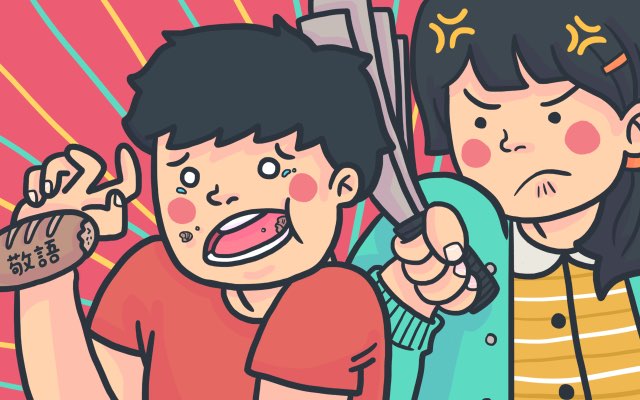
The Japanese language is a great language to learn, especially for those who love anime. But it can be particularly difficult for native English speakers. I have taught Japanese in Canada for a while now, and I often see they struggle with three things: word order, particles and keigo 敬語! (literally respectful language)
Although learning these three things might make the task easier, "formality" is difficult even for Japanese people. In fact, it may be even more difficult for Japanese people, because some leeway is usually given to those who aren't Japanese.
So does this mean Japanese people hate keigo? Should we do away with keigo all together? Let's explore what all this formality fuss is about and decide if it should stay or go?
- Keigo and Formality
- "Good Morning" – A Keigo Illustration
- Keigo Mistakes by Non-Native Speakers
- Keigo Mistakes by Native Speakers
- Is Keigo Even Necessary?
Keigo and Formality

It is generally considered positive in Western countries to be friendly to someone. Although there are certain situations where more formality is required, friendly personalities are usually well received. In Japan however, the situation is quite different, since the Japanese language has a "formality" system.
It is often considered rude to sound too friendly to a person who is older than you, has higher social standing, or is someone you have just met. I mean, Japanese people like people who have friendly personalities and the same is true for people of other countries. However, it is generally preferable to be formal and polite when talking to acquaintances until you have developed a closer relationship that allows for more friendliness. Does this make sense?

In English, it is just fine to speak the same way to everyone, within reason, right? For example, you would say the phrase "Good morning," to your spouse, your boss, your friends, and to a complete stranger. Some people might omit "good" and just say "morning" but it doesn't matter who you are talking to. Things are quite different in Japan.
Did you think, "Seriously? Even good morning is different in Japan?" Unfortunately, the answer is yes. There, you must speak differently to different people based on their age and their relationship to you, even when saying something as simple as 'good morning'.
"Good Morning" – A Keigo Illustration
Okay, let me illustrate how the morning greeting can be different, to save you from embarrassment in Japan. The formal Japanese morning greeting is "Ohayou gozaimasu お早うございます", the informal one is "Ohayou おはよう" and a very casual one is "Ohha~ おっは〜." This doesn't mean that good morning in Japanese can mean various things like Gandalf wondered when Bilbo said 'Good morning' in 'The Hobbit': 'Do you wish me a good morning, or mean that it is a good morning whether I want it or not; or that you feel good this morning; or that it is a morning to be good on?'
It's merely a greeting with formal and informal ways to say it. It is important to remember not only how to speak formally and informally, but to know when to do so.
When you get up and see your family such as your kids/spouse/parents/siblings, you would say, "Ohayou." Some parents who are very strict about seniority, or even the order of family members, may force their kids to say "Ohayou gozaimasu" to them.
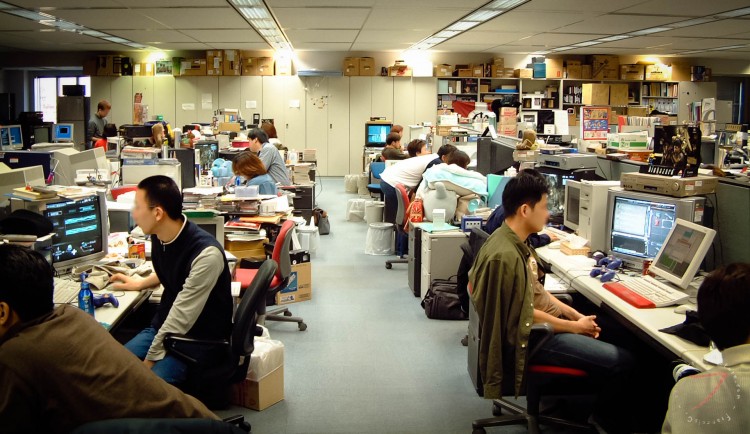
When you arrive at your office and see your boss, you must use, "Ohayou gozaimasu." I'm scared to imagine what would happen if you use "Ohayou" or "Ohha~" to your boss… your neck may fly right after you say it. Did any of you just tilt your head to the side in confusion wondering what that meant? kubi ga tobu 首が飛ぶ, which literally means my neck flies, is a Japanese phrase meaning to be fired.
Then, what about your colleagues? They won't be able to exert their authority to let your neck fly like your boss can, but you would speak formally to most of them, especially if they are older than you and/or they had started working there before you did. Many Japanese people think that colleagues who started working before you are all your superiors unless newer ones have the higher title.
Newer ones are called kouhai 後輩 and older ones are called senpai 先輩. For a thorough explanation, check out our guide here. It's "first come higher status" like "first come first serve". To the ones you have developed close relationships with, you could drop the formalities and say "Ohayou", but it may only be outside of office hours because some companies require you to be polite to any colleagues while working. The office is not the place to chat with your friends, but to work.
Now it's getting more complicated, isn't it? To simplify things, just keep in mind that newer members usually speak formally to older members, unless the newcomer has higher position in the company (I will say however, even though you may have a better title, it is good practice to speak formally to co-workers that were there before you just out of respect). When speaking to strangers, it is always a safe bet to use the more formal version.
When speaking to friends at school, you use "Ohayou" to all of your classmates but not "Ohha~". It could sound too casual to someone who is not your close friend. Of course to teachers and to higher grade kids, you would use the formal "Ohayou Gozaimasu". In school, lower grade kids are called kouhai 後輩 and higher grade kids are called senpai 先輩.
Keigo Mistakes by Non-Native Speakers

Now, imagine that a teenage daughter brings her boyfriend home for dinner. This boy comes into her home for the first time, approaches her father, and says, "Hey gramps, what's up?" What would you think of his manners? It's just as rude as when Anthony Weiner called Republican mayoral candidate George McDonald "grandpa", isn't it? If you were her father, and even though you may be be too nice of a person to throw him out of your house right away, you probably wouldn't invite him back anymore, would you?
However, language mistakes made by non-native speakers usually aren't as important as mistakes made my native speakers. I remember the day when my Canadian boyfriend at the time, who is now my husband, met my mother for the first time at a Japanese restaurant. At that time, she was working at an elementary school taking care of a kid who was suspected of having severe ADHD (though his parents never agreed).
He was such a brat.
Whenever she said 'good morning' to him, he answered back with 'f**k you', 'shut the f**k up, Grandma' or something else in his long list of shocking replies. He also punched and kicked her whenever he was in a particularly bad mood. Needless to say, my mother became so exhausted working there. So while we were at dinner, my husband tried to use Japanese to speak to my mother. His intention was to ask her about that little boy.
He began his sentence like this – "Anata no (your) mukatsuku (annoying/troublesome) kodomo (child)…". He didn't know how to say 'made you upset' in a polite way so used the word 'mukatsuku' instead, which among Japanese people is considered to be a somewhat rude word that is mostly used among friends. The other problem with his attempt was that he never said 'school' or 'student', so it seemed as though he was referring to me. I was the annoying/troublesome child.
My mother's face was classic and my husband quickly realized that he should ask for my help. After everything was explained, it was laughed off by everyone because he was Canadian. If he was Japanese, it would have been a disaster. Now it is simply a funny story that we still bring up from time to time, though my husband still cringes when he thinks back on his first meeting with my mother. He wishes that he knew how to speak formal Japanese back then. He was very happy to get invited back.
Keigo Mistakes by Native Speakers

Being a native speaker, I get a special thrill every time I encounter a situation when I have to use formal Japanese. As you can see, it's ridiculously complex even when you just say good morning. The Japanese language has many formal word forms and their use is mandatory in many social situations.
In keigo, there are three main categories: respectful language (sonkeigo 尊敬語), humble/modest language (kenjougo 謙譲語) and polite language (teineigo 丁寧語). Sometimes two more categories are also used, too: courteous language (teichougo 丁重語) and word beautification (bikago 美化語).
It's very difficult to use them properly in a perfect situation, even for Japanese people. So, when we start working after graduation, companies usually offer training sessions on the proper use of formal Japanese, giving keigo examples and other business manners.

However, lacking some proper formalities is not a big problem as long as you are talking to someone in person. You can show your politeness with your face, the way you talk, or your behavior. So, I'd say the most difficult situation is chatting online or emailing when you can't see their face or hear their voice.
Actually, I just encountered this problem recently when I sent a business message. It was a mass email so everyone read the exact same thing. Many of the recipients were just fine, but there were two people that got upset: one thought it was so vague because of the keigo and the other one thought it was unfriendly because it had too much keigo.

Later on, I did a little investigating which involved my correspondence and I found out that many of them liked its politeness. Honestly, I got bit confused and felt a little regret that my native language is one that requires these formalities. I do understand its purpose, but it can be tough to please everyone. On a more positive note, I was given a great lesson on how difficult it can be to walk the thin line of using formal Japanese.
Is Keigo Even Necessary?

As you see, using keigo is very difficult, so if you're someone who would like to not learn Japanese keigo because you find it unnecessary, you wouldn't be the only one. On 2-Channel, I came across a thread discussing the controversy over whether keigo is necessary, or not. Please let me introduce you to some opinions out of it.
- 1他人と人間関係を築くという事は大変煩わしい事だと思いますが、「敬語」を上手く駆使しなければ円滑な社会生活を送れないという日本の文化によって、より一層人間関係が大変なものになっていると思うのです。俺は敬語を多用する日本の言語文化が嫌いです。皆さんはどう思われますか?
- It’s difficult as it is already getting along with someone and trying to make friends, but what makes things even more complicated is that we aren’t able to speak freely to each other because we need to stick to the cultural formalities. I hate the Japanese culture, which forces us to use keigo. What do you guys think about this?
- 7敬語がある事によって人とのコミュニケーションおいてに求められる能力のハードルが すごく高くなっていると思うんです。コミュ障と言われている方達が沢山いますが、もしも日本に今ほど敬語が存在しないのであれば彼らはコミュ障ではなかったもしれません。
- I think keigo makes communication more difficult. There are a lot of people called コミュ障 (comyu-shou), which is an abbriveation of コミュニケーション障害 (communication shougai) meaning communication disabilities. If there weren’t as many forms of keigo in the language that there are, those people might not have been coined comyu-shou.
- 8下級生にタメ口使われてる
- I’ve been spoken to by lower grade students with informal Japanese.
- 13距離を置けるからむしろハードル下がってる
- It’s easier to communicate (for comyu-shou) because you can create more personal space by using keigo.
- 15敬語は楽でいいよね。上でも下でも同格でもとりあえず敬語喋っとけば問題ない!
- I like keigo because it’s easier. It wouldn’t cause problems when using keigo, regardless of whether you are talking to higher, or lower standing people.
- 25以前床屋でこんな事がありました。新人の店員が俺にタメ口で話しかけてきたんです。俺はこう思いました。(俺の事なめてんのかこいつ)俺は腹が立ちその店員の態度に不快感を感じたまま店を後にしました。その店員は、親しみを込めてタメ口を使ったのかもしれません。しかし、店では敬語を使われるという事に慣れている俺は、それをフレンドリーさの表現とは受け取る事ができませんでした。これは敬語が多用され浸透している国ならではの問題ではないでしょうか。
- The following occurred in a hair salon just the other day. A freshman started talking to me with casual Japanese. I thought, “Is he looking down at me?” I got upset and left the place with an unpleasant feeling. He might have used casual Japanese trying to be friendly. However, I’ve got used to hearing formal Japanese as a customer, so it really didn’t seem to be a friendly expression to me. This problem only occurs in countries that use a lot of formalities, doesn’t it?
- 30 年上年下を気にする必要が無いのでいいと思います。
- It’s good with me as long as I use keigo not only to older people but also to younger people.
- 35そうですね。私もそう思います。私はこう思うんです。完全に敬語、もしくは、完全にタメ口、どちらかに完全に統一すればいいと思うんです。そうすれば言葉を使い分ける労力が無くなりますし、敬語を使われなかったから腹が立つ、といった事も無くなります。
- Yeah, I agree. I’d say, we should standardize our language and use strictly, either casual Japanese, or formal Japanese. If we could, we wouldn’t need to waste our energy choosing words and we wouldn’t be upset by being spoken to without keigo.
- 45敬語で話すの会議とタメ口で話すの会議はタメ口の方が意見バンバンでるんだとさ
- Did you know that more ideas come up in a meeting when people speak with casual Japanese in comparison to speaking with formal Japanese?
- 5敬語は現代には必要ない
- Keigo is unnecessary these days.
These opinions are from 2-channelers who are known to have comyu-shou, so they might be slightly biased. Personally, I agree that it would be much easier to communicate with people if the Japanese language was standardized in either the formal or casual form, but it doesn't seem like it will happen any time in the near future. So, for now, mastering the Japanese language must include mastering formal Japanese.

It's very likely that the way the language is today is the very way that it should be and couldn't work any other way. Perhaps there are unseen disadvantages to having a language without keigo, or solely with keigo. One thing is certain however, I really do like the following quote, but I'm sure this won't mean the end to this discussion for many of you.
Moving parts in rubbing contact require lubrication to avoid excessive wear. Honorifics and formal politeness provide lubrication where people rub together. Often the very young, the untravelled, the naive, the unsophisticated deplore these formalities as "empty," "meaningless," or "dishonest," and scorn to use them. No matter how "pure" their motives, they thereby throw sand into machinery that does not work too well at best.