How To Take Part In Japan’s Year-Round Gift Giving Culture

If you go to Japan, you’ll probably end up receiving a lot of things as gifts, especially if you go as an exchange student. That’s what I did as sixteen year old me, fresh to explore the world and take my share of souvenirs from a plethora of people. I would receive gifts everywhere, from the little old lady who worked at the stationary store, to my home economics teacher after she came back from visiting family in a nearby prefecture. But how do you react when you get a gift from someone?  What do you say when you give a gift yourself? When and why do you give gifts? Gift-giving culture in Japan is a bit more complicated than you might think.

Why Am I Getting All This Stuff?

So why do people tend to give all this free stuff away? In Japan, reciprocity through gift-giving is much more prevalent than other cultures and people give gifts for many occasions. However, it’s not all just from the goodness of their hearts. When one gets a gift, one is usually expected to give a gift of equal or greater value back (unless what you receive is an orei, or a gift of appreciation for a favor).

If you study abroad in Japan as an foreigner, you are often received as a special guest and are thus showered with gifts. A lot of the time, local places will give out freebies to travelers in order to promote their town or business. These kinds of gifts are fine to just accept with gratitude. Be showered with gifts!

rain copy

So when are occasions that you would receive gifts? There are a couple of major gift-giving seasons, as well as some situational times when you are expected to give things to people.

The New Year 御歳暮 (Oseibo)

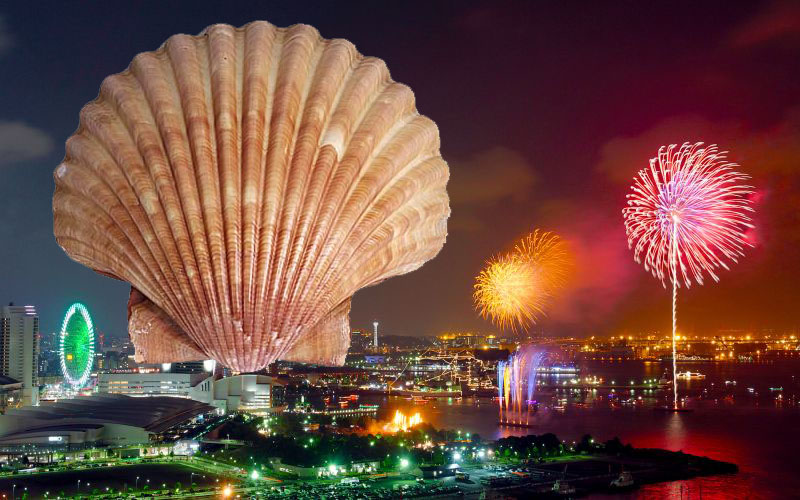
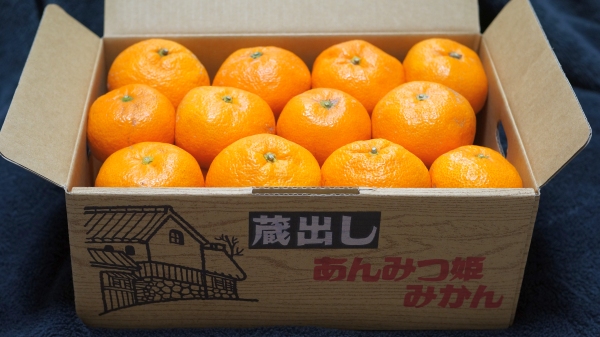
Oseibo is what you call the time when you give customary gifts to all of your friends. Oseibo happens in mid to late December. When I was an exchange student living with a host family, I thought oseibo was the coolest thing. My host family had a deliveryman or a family friend at the door at least a few times a day, and we got all kinds of things, from boxes of apples and oranges (I ate so many mikan that month) to azuki and wagashi sweets, to soaps. The most interesting thing that my host family received was a box full of ice and hotate, otherwise known in English as scallops.
±‚kp0*jmOseibo are a great way to let the people you know just how much you care about them. Remember though- to some, the extravagance of the Oseibo is equal to your love/respect of the person you’re giving it to.

The Mid-Year 御中元 (Ochuugen)

Ochuugen is the mid-year version of Oseibo. Ochuugen is given in usually July or August. It’s kind of the same deal as Oseibo. Give some, get some.

UPTOWN_bright_gifts

With Oseibo and Ochuugen, one can deliver the gifts directly to the house if they want to. I think it’s a little more personable, and it gives you an excuse to see your relatives. But can get so troublesome, sometimes even impossible because of distance. More convenient is the system of going to a department store or the internet, picking a package, and having it delivered directly to the house of the person you’re giving the gift to. It’s kind of like flower delivery.

Delivery-Man

Oseibo and Ochuugen seem to be a fading tradition. Most people under 50 are unlikely to regularly give or get either unless it’s from direct family. Companies will give Oseibo and Ochuugen to other companies, but most tend to not give Oseibo or Ochuugen directly to other people or families in recent years. The reason that my host family received so many was probably due to the fact that my host father was an entrepreneur and an owner of multiple businesses, so I was lucky to have those boxes upon boxes of mikan to snack on all winter break, as well as the scallops to adorn my miso soup.
2012_03_05

Apart from the traditional gift-giving seasons, there are a couple of modern holidays as well as some year-round traditions to bring a smile to one’s face with material goods.

Valentine’s Day

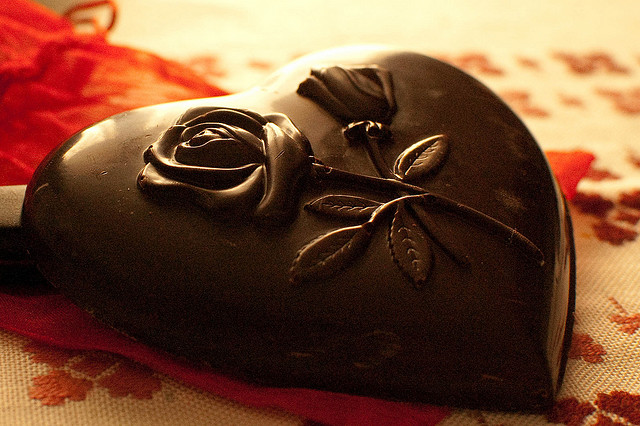
In my last article about chocolate, I touched on Valentine’s day and how people give chocolate to their friends and significant others.
chocolate_heart_1la

The pressure to give chocolate to people during Valentine’s day has skyrocketed in the last few decades. What started out as a simple tradition brought from the west by chocolate companies has now turned into a stressful night-before of baking or buying chocolate. A young woman nowadays is obligated to give chocolate to all of her male co-workers and higher-ups. But hey, chocolate is worth it, right?

Temiyage 手土産

When going to someone’s house, never arrive empty-handed! In Japan, it’s considered very rude to not to bring a gift when making a house call (usually food of some sort will suffice). During my exchange student days, my host mother would send me to my friends houses with cakes, donuts, cookies, or candies. Usually whatever you bring will be eaten at some point during your visit and shared with you, so don’t bring things you hate and just want to get rid of.
83840faab8ba2923deb997c91b546c97

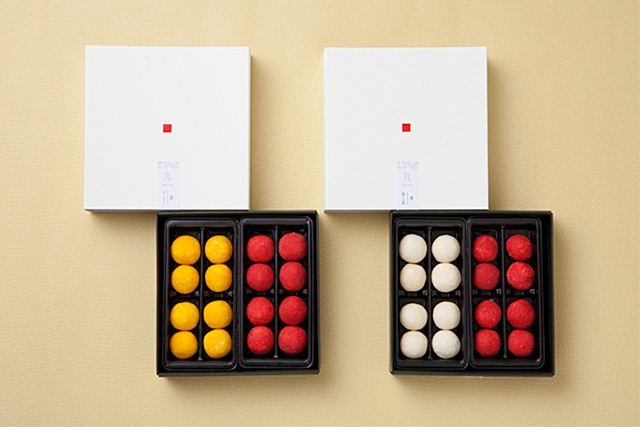
Traditional Japanese sweets are also very nice to bring, such as dorayaki or daifuku. This ranking of most popular temiyage shows a variety of both Japanese and western sweets.

Omiyage お土産

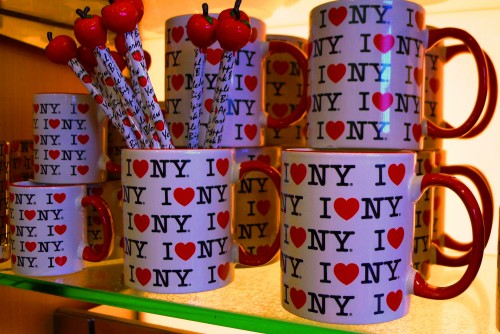
When going on vacation, have you ever felt the urge to bring a slice of your experience back for your friends and family back home? In Japan, that urge is followed by the social obligation to actually go through the motions and be very tourist-y as you buy mountains of local products.
P1020433-500x334

Hosting Japanese exchange students over the years, I have always noticed that they all go through the same patterns. They have their lists of people to buy omiyage for, and search the local tourist store with scrutiny, looking for something unique to give to their friends or family.

I’ve also been in the opposite position where I’ve had to give omiyage to host families and friends in Japan. I’ve found that from the US, things like T-shirts, books, and candies are fairly standard, but it’s the local products which are bound to impress.

How to Give and Receive Let’s Nihongo!

In Japanese, there are some particular set phrases that are used when giving and receiving gifts. Here you go!

The Giver’s Words

200px-The_Giver_Cover

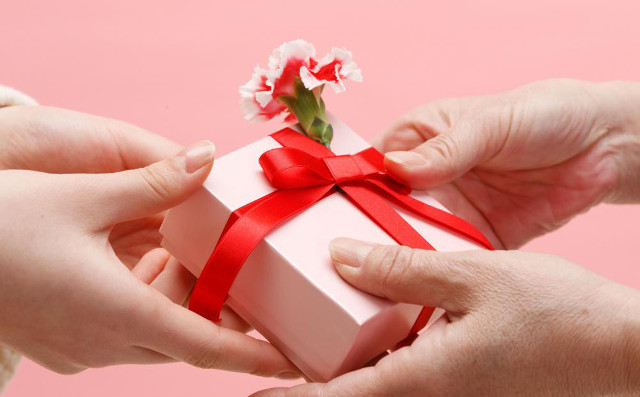
First off, let’s learn some body language. When giving a gift, how do you give it? Do you just hold out one hand, look away, and silently push the goods into the person’s face? Well, I guess you could. But in Japan, there are certain set ways that one gives their precious gifts. Make sure that you give the present with both hands. The receiver should also accept the gift with both hands. But before you take it out and start to push it into the hands of the person you are giving to, say one of these phrases:

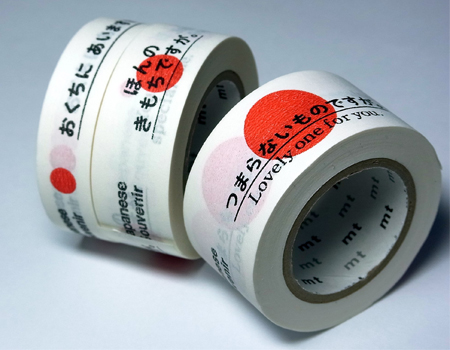
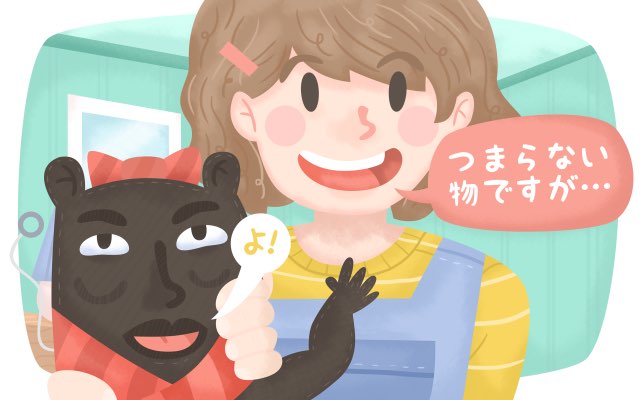
つまらない物ですが… (Tsumaranai mono desu ga…)

img_02

This is the most formal of the expressions of giving, literally translating to “It’s a boring thing, but.” Normally, when you buy a present for someone, you put a lot of thought into what would make them happy. Tanaka-san has always been saying that he loves fruit, so you buy him the most expensive, fine quality peaches at their ripest point. But still, if Tanaka-san is a super-superior to you and to whom you must show respect, this well-chosen gift becomes a “boring item.”

大したものじゃないんですが…(Taishita mono janain desu ga..)

A little more informal, this phrase translates to “It’s not much, but…”. This phrase is good for plain politeness.

これ、どうぞ (Kore, douzo.)

Kore, douzo would probably translate to “This is for you.” You probably wouldn’t use this for an expensive gift like oseibo or ochuugen.

これ、あげるよ (Kore, ageru yo.)

Friends allowed only! Translating to “I’m giving this to you,” kore ageru yo is good to use among people who you are really friendly with. Mika sees that Moe really likes the cat plushie in her room, and Moe feels like she just has too many plushies. She picks up her neko-chan and hands it to Mika, brightly saying “Ageru yo!”

The Receiver’s Words

Whoa. Someone is giving you something. In Japan, it’s customary to first off refuse it a couple of times. The person will usually keep on insisting, even if they have to force it into your unwilling hands. The degree of refusal someone uses depends on person to person, and also seems to be changing as the nation’s youth is becoming more brazen. But you should still be modest, at least in polite company, and refuse at least once.

遠慮なくいただきます (Enryo naku itadakimasu.)

white-elephant-gift-exchange

Once someone has thrown that out at you enough, you can finally “Receive gratefully without hesitation”.

開けてもいい(ですか)?(Akete mo ii [desu ka]?)

In Japan, you should ask to open something if you want to open the present in their presence. Sometimes it can be embarrassing for the giver for many reasons, including that they might think the receiver will fake happiness or gratitude.

Now that you know these, you should be able to get along in the gift ridden Japanese society. Remember, when in doubt, bring something. When receiving something, be grateful and think of how to return the favor if possible.


What’s your experience with gifts in Japan? What’s the most interesting thing you’ve received? Or your favorite omiyage? Share in the comments!


Bonus Wallpapers!

giftgiving-animated-700

[2560x1600] ∙ [1280x800] ∙ [1280x800 Animated] ∙ [700x438 Animated]

  • Christopher Stilson

    I’m torn between admiration at this level of consideration in a culture and repulsion at the commerciality of it. It’s a bit difficult to reconcile.

  • linguarum

    For me, generosity should spring from the heart. When giving is required, the value of the gift is predetermined and what to say when giving and receiving is all scripted, it kind of takes all the warm and fuzzy out of it.

  • Aya

    On a scale of 1 to crazy, would you ever want to receive an EtoEto bear that talks like George Takei –And if we did make one would you ever give one to your friends

  • Sandra Lavigne

    ahh this is something I’ve been pondering. When we go to Japan next year (hopefully) I want to bring some souvenirs and gifts from Canada but I’m not sure what value to aim for. Like dollar store souvenirs might be insulting, but I don’t want to make anyone feel bad by gifting them something too valuable if they don’t have something of equal value to give in return. I know sweets are popular for this so I’ll probably just aim for some maple candy of some kind ^_^

  • Christopher Stilson

    “Ohhh myyyyy…”

    (I hear that about twenty times every morning… my wife has his ringtone and uses it as her alarm clock)

  • http://www.melissadreamsofsushi.com/ Melissa

    I’m also from Canada and while I was recently in Japan, I usually gave out mini bottles of maple syrup, other maple goods, and often Canadian wine. (There’s actually a Canadian wine store in Tokyo!)

  • Beetle BANE

    Yes. Yes. Yes. Yes. Dear kiln-gods more than 1000 times yes. Please. Yes.
    Shower me with endless EtoEto Takei-voiced dolls. I’ll trade you 100 doodles for that doll, if it was made.

    Also, I’m gonna vote “cray-cray” on that scale.

  • Joel Alexander

    In my class at uni, we have interaction tests as part of the assessment – there’s one coming up in two weeks where the situation is that one of us is visiting the other’s house, and we need to go through all the rituals of bringing a gift, offering tea, and beating a hasty retreat, all in four minutes. =P

  • Sugoida

    Crazy.
    And I wouldn’t give any to friends, the more for me, the merrier.

  • Sarah

    I’m like a nicki manaj level of cray on this one.

  • shiro

    Many Japanese feel the same way. Young people usually think this sort of required gift-exchange is a huge pain in the neck and they *hate* getting gifts.

  • Ana

    I was a little curious, how far do you think a good price range goes for お土産 from the United States?
    Over here in California, living here for so long I don’t think I can easily choose items that are nice and of value!
    How much I should pay if I was bringing a present from here to Japan? Any recommendations?
    (^ O ^)/ Thank you!

  • Guest

    In Korea they give SPAM gift boxes for Chuseok (Korean Thanksgiving). They are everywhere right now.

  • DAVIDPD

    Korea also has a huge gift giving culture. Chuseok, Korean Thanksgiving, is a week away so all the grocery stores are selling loads of different kinds of gift boxes. The SPAM set is especially nice.

  • DAVIDPD

    +1 on Maple Syrup. Super lux gift right there.

  • http://zoomingjapan.com/ zoomingjapan

    At first I thought it’s a nice custom, but after 6 years now it’s really annoying!
    Why do I have to give presents to people I don’t care about? Especially annyoing is Valentine’s Day with its “giri choco”! :( ….

  • Henro9

    Depends on whom you’re giving the gifts to and why. You kind of have to understand that almost ALL Japanese products are designed around being handed out – take a bag of cookies, like some Chips Ahoy. In Japan, each and every cookie is individually wrapped.

    So, the gift-giving culture permeates all price points, all products, all ranges. So don’t think that some cheap stuff is inappropriate – depending on the situation, it is precisely what you want. Unless you’re visiting the president of a major multinational, I wouldn’t worry about handing out dollar store trinkets.

    I’d suggest something like a Halloween-style bag of fun-sized candies – that’s pretty much the same as what most omiyage are (it’s typical to arrive at work and find a single, tiny, individually wrapped cookie on your desk because someone visited Hokkaido), and people will absolutely LOVE getting foreign candy. Candy really is very different across cultures.

    Oh, and cut back on the worrying about being insulting. It’s really not that big a deal. Don’t fall into the trap of believing in the myth of “honorable, noble Japan.”

  • Henro9

    Yeah, it’s weird, because when someone travels, they bring back a box of tiny candies and you get, like, one mouthful of cake out of it. And then you go to Kyoto and you think, “Oh, I have to get the office a box of candy. Oh, and then the other office. Oh, and my friends.” And you’re looking at, like, four 20-dollar boxes of candy. I honestly have no idea how Japanese people manage to do that constantly without losing their minds.

  • Henro9

    Cheap candy is EXTREMELY common for travel omiyage – if you’re thinking of bringing a gift for your entire office, you don’t need anything more than some regular, plain old candy from your country. A bag of fun-sized candy bars would do the trick. The thing is that the novelty of your gift will far outweigh its cheapness.

    The main thing is to find something that’s individually wrapped and can be passed out easily.

    Just to give an anecdote, when I first came to Japan, I bought a bottle of American liquor. I was a college student, so a nice bottle of Johnny Walker seemed reasonable to me – not too expensive, but it looked real flashy. I took it to the welcome party they threw for me, pulled it out of its bag – someone handed it to the principal, he thanked me, took it home and I never saw or heard from that bottle of liquor again. I assume he drank it in one sitting.

    On the flip side, when my wife visited America with me, know what she bought for her friend? A few packages of (English-language packaging) Sapporo instant ramen and some Betty Crocker instant noodle packages. Her friends LOVED them because it was so novel for them.

    So, advice? Don’t get your underwear in a bunch. Find something that you personally like and can sell. “This is my favorite candy, here have a pack.” People will flip their shit over your Sweet Tarts.

  • Henro9

    I just told my wife about this article, and her advice is: “50 bucks for super important people, 20 for important people, for everyone else, no more than 10 bucks. But if you have someone foreign and interesting, a dollar per person is fine.”

    She’s seriously sitting here telling me the benefits of giving people cans of soup – she swears people will flip their lids if you bring them Campbell’s soup. “Japanese people like interesting packages. Anything with an interesting package. Unless it’s Budweiser.” So, there ya go.

    Honestly…I love my wife and all, but I absolutely cannot vouch for the validity of a single thing she’s saying. Oh, man, guys: marry a Japanese woman, ok? Your life will never be boring again.

  • Sandra Lavigne

    good to know, thanks. that was going to be my fallback, some candy they might not have there. We’ll be going for my brother in law’s wedding so we’ll be meeting his fiancee’s family. I’m not sure that we’ll be setting foot in their house at all, but the ceremony is in their hometown. Her parents are apparently very old fashioned, otherwise I wouldn’t worry about it too much. I think I remember her saying her dad has a sweet tooth so I bet candy will go over well. But I thought some maple candy might be a little nicer and more local. But my inlaws probably plan to bring some maple products so it might be overkill.
    It’s funny, but we didn’t really clue into the gift giving etiquette at the time.. when his fiancee first came and visited us she actually brought a big bag of wrapped candies, and a couple bags of different crackers and cookies and things like that, as well as a gift set of sake. And I think every time after that she showed up with a little something, last time she brought everybody a set of chopsticks that her parents bought to send for us. ^_^ I think we all assumed she just wanted to share part of her culture with us, and didn’t consider that she was more or less obligated lol
    Of course, here we don’t really have a problem taking gifts with enthusiasm especially something exciting from another culture… I hope her first impression wasn’t that we were rude because we immediately accepted them happily haha

  • Sandra Lavigne

    I can see that, it’s the same for us isn’t it? We get something really bizarre like a box of “Crunky Nude Balls” and we’re showing everyone the box, taking pictures of it to post on instagram and facebook etc..
    you never know what boring north american product might seem hilarious and bizarre to someone from another country

  • Ana

    Really good advice! Thanks a bunch!
    I think you’re right how something packed individually is probably the best to pass around.
    The only thing was when first asking the question, in mind I was specifically asking about host families and what time of price range to offer as a gift. Your point does come across to all boundaries though, so it was really helpful. This question just came to me as a little bit of curiosity, but I think in the end it’s got to be the thought that counts when finding someone a present.
    (´∇ノ`*)ノ

  • henro9

    Oh, ok, a wedding. I know less about wedding traditions, so maybe my advice isn’t enough here. There’s no real such thing as “overkill” here with cliched stereotypes – if everyone brings different maple-flavored products, people will be so, so happy to have the “meibutsu” of your home town. Don’t worry about that.

    Since it’s a wedding, there ARE some manners and traditions that can be more difficult, but since you’re talking about a family gathering? Bring some liquor, more liquor, a case of beer, and a huge-ass pile of candy. In my part of Japan, that’s family.

    Good luck!

  • Henro9

    Oh, ok, if it’s a host family, go with a nice bottle of liquor – somewhere over 20 dollars. They’ll be pretty happy with that, especially if it is a local specialty from your home town or region.

  • AnadyLi

    China has the same type of thing going on. I’ve done it before at a summer camp before I was even in high school for all of my family/friends in China and and the US! Plus, you’re supposed to refuse not once, not twice, but generally three times or more. Also, don’t open gifts in front of others! And thank them a lot! Also, keep the price tag on: The more expensive the gift, the better. The proof will be that price tag.

  • Henro9

    You’re applying American cultural values to a non-American cultural practice – sometimes this is ok, but this is something that is fundamentally different. In Asia in general – not just Japan – money is treated very, very differently than it is treated in Euro-American cultures. For example, in most of Asia, giving money to a bride and groom is not just appropriate, it is necessary. In some cultures, parts of Micronesia, for example, it is the main event – people literally pin money to the bride’s dress during a dance often referred to as a money dance. At my own university graduation, my parents went out to a street vendor and picked up a lei made of dollar bills. White people don’t like that kind of crass handling of money, but it is traditional throughout Asia.

    So this isn’t really commercialized in any way shape or form. It’s an extension of a near-universal tradition of using money and items of monetary value to express interpersonal relationships. It’s part of a much, much larger tradition – a tradition far, far, far older than our Western concept of “commercialization.”

    As for “admiring” their “consideration,” again, you misunderstand a huge point here: Japanese gift-giving is not based on consideration. It is a physical manifestation of the social and interpersonal relationships people share. It has almost nothing whatsoever to do with feelings, emotion, care, friendship. It is entirely built on formalized, structured rituals. People can and do give gifts based on feelings (Valentine’s Day is an example), but the majority of gift-giving is built on formal relationships. You buy presents for people at work because you HAVE to, not because you want to.

    Now, does that mean that people haven’t profited from this tradition? Obviously not. Does it mean gifts are never given from the goodness of one’s heart? No. But it saddens me that your comment here is the top-voted comment, because it is based on such a gross misunderstanding of the culture in question.

  • Christopher Stilson

    Consider me duly corrected.