Joshi-Mane: Female Manager Sensation in Japan

What do you imagine when you hear the word ‘manager’? I’d guess that most of you would probably think of your bosses at work. Does hearing the word coincide with a negative image or feeling? Well, when Japanese people hear the word ‘manager’, things are quite different. In fact, there is nothing negative about it, especially from a guy’s point of view.

Female Managers for Engineers

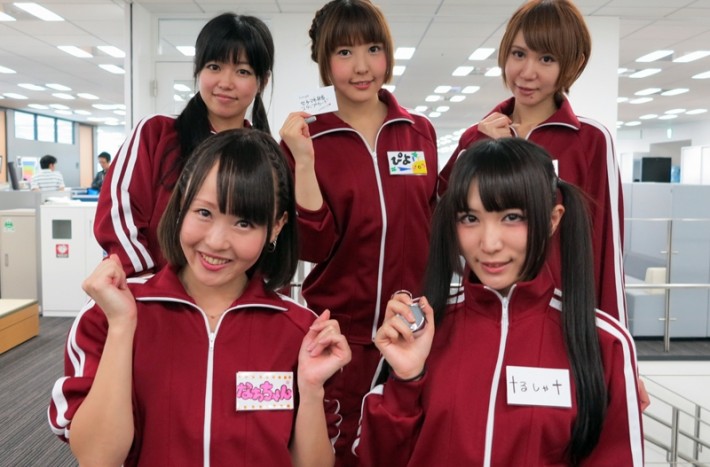
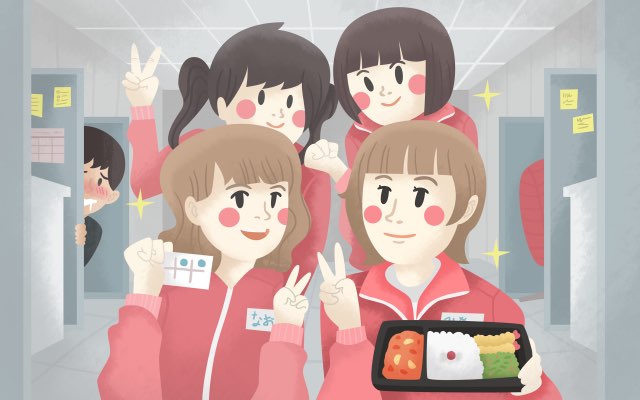
08On September 2nd, a Japanese company called DWANGO Co., Ltd. implemented a new project called ‘女子マネ弁当 (Joshi-Mane Bento)’, which involved placing many female ‘managers’ in the office to motivate the company’s late-arriving male engineers, who tend to show up to work in the afternoon, to come in earlier. 女子マネ (joshi-mane) is an abbreviation of 女子マネージャー (joshi-manager) meaning female managers. 弁当 (bento), as you probably already know, is a single-portion takeout or home-packed meal common in Japanese cuisine.

So, DWANGO hired 15 female managers to come in and motivate its workers. Surprising? Sad? Do you think it would be an effective form of motivation? It’s a difficult assessment to make. I know that if I heard there were going to be 15 more managers at my workplace, ‘motivated’ would not be the operative word. However, it seems that the new system worked out very well there. Keep in mind that they are managers, not bosses. They’re there to help manage you, not boss you around.

What are Joshi-Managers?

If you say ‘manager’ in Japan, it often indicates a ‘towel boy’ (aka waterboy) rather than an ‘office manager’. Towel boys are the kids who hang out at the sidelines with bottles of water and hand towels to the athletes at sports games. So if you say ‘joshi-mane/joshi-manager’, it is generally referring to a female manager who takes care of sports players like towel boys do.

They also take care of equipment, sports team records, and more. Now, you can imagine that a lot of boys develop crushes on their joshi-mane, possibly because they are so helpful and supportive of all the players on the team during the school year.

Joshi-mane has taken an especially important role in Japanese school culture. In fact, you find them in a lot of Japanese manga comics, novels, movies, and dramas. My favorite one is Minami Asakura, who is the heroine of a Japanese high school baseball manga called “Touch”. She’s a Meisei baseball team manager.

There is also another famous baseball team manager named Minami in a best-selling book by the title of “Moshi Dora” that is an abbreviationn of the title: もし高校野球の女子マネージャーがドラッカーのマネージメントを読んだら (Moshi Kokoyakyuno Jyoshi Manejyaga Drucker no Management wo Yondara / If the Girl Manager of a High School Baseball Team Read Drucker’s ‘The Practice of Management’). The novel follows Minami as she uses Peter Drucker’s famous tome on management to guide the team to success.

DWANGO and Joshi-Mane Sensation

dwango

The Dial-up Wide-Area Network Game Operation, better known by the acronym DWANGO was an early online American game service. It launched in 1994, but its operation and all its services stopped in October 1998. There is one remaining division still in operation in Japan which continues to do well today. Its subsidiaries include Niwango, which runs the popular video sharing website in Japan called ニコニコ動画 (Nico Nico Douga).

It’s a telecommunications and media company, so there are a lot of engineers working there. Historically, men have been known to vastly outnumber women in the field of engineering. Thus, it won’t surprise you that the large majority of this company’s engineers were male, which is why it’s easy to see how the resolution to the following issue was reached. Engineers tend to work late into the night and it often causes them to be late for work in the morning.
09

Nobuo Kawakami, the chairman of DWANGO, who’s also a Studio Ghibli producer, was contemplating how he could resolve this issue. One day, he got an idea: If the engineers were given the option of having cute girls in maid costumes hand out bento boxes to them, they might come into work on time. This experiment was more successful than Kawakami thought it would be. He then set out to improve his system and decided to hire cute female managers (joshi-mane) next. Surely, he believed, the engineers would come to work on time and work even harder.

How the ‘Joshi-Mane Bento’ System Works

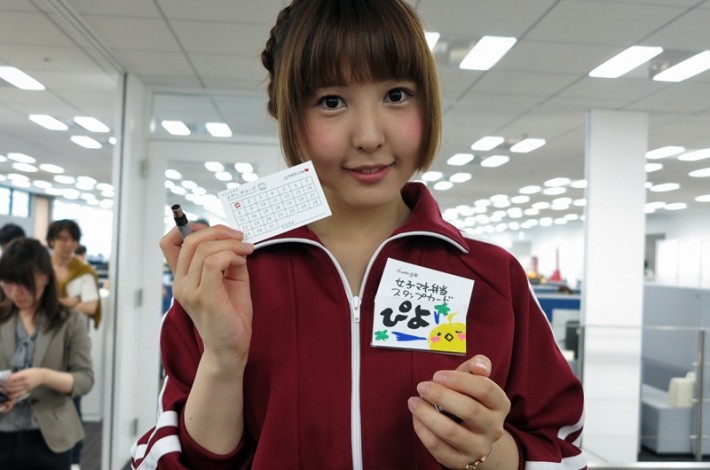
01Kawakami also decided that his joshi-mane girls had to wear crimson gym uniforms to make them look more like real team managers in hopes that it would be more effective in helping the engineers. Kawakami said that reason he chose that color was simply because he liked it. Their job is not strictly being in the office to encourage the workers.

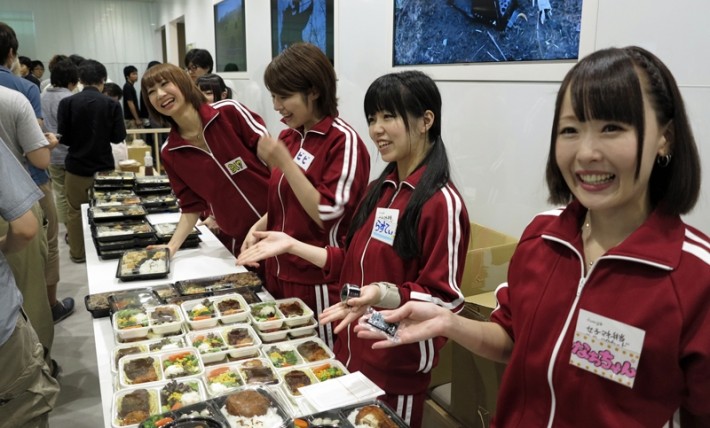
Remember, the name of the project is ‘Joshi-Mane Bento’, so joshi-mane girls hand out nutritious bento lunch boxes to the engineers to help keep their tummies full and their minds sharp. Unfortunately, the bento boxes are not homemade by the joshi-mane girls, but there are 6 to 7 different kinds and all of them are supplied by DWANGO free of charge. Pretty cool, eh?
06

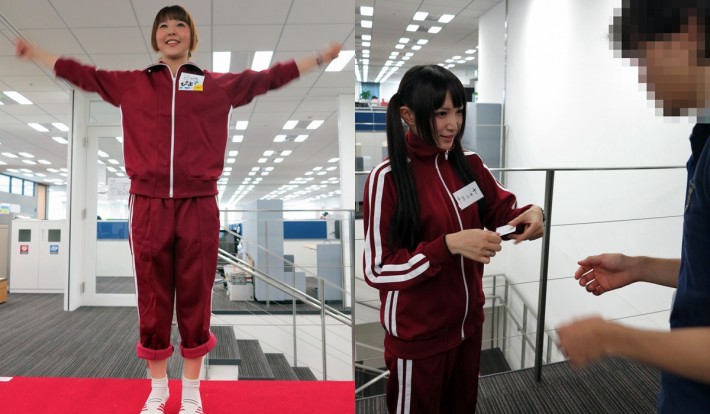
Sounds like a good deal, doesn’t it? Well, here’s the rub – in order to be allowed to receive a bento-box, you must arrive to work on time. Joshi-mane girls are also responsible for light, traditional Japanese exercises called ‘ラジオ体操 (radio-taisou)’ at 10:30 every morning. It seems that those who join the radio-taisou get a stamp on a personalized card. The stamp on your card is thing that gets you the bento-box.

This stamp is the thing that proves you showed up to work on time. So, this project not only leads engineers to come to the office on time but it also helps them get in, or stay in, shape by encouraging daily exercise and providing nutritious lunches. The atmosphere created by all the cute girls is an additional encouraging bonus for the workers. How genius is that? If you were a male engineer, you would want to join the company right away, wouldn’t you?

Of Course, There are Objections

objection-Haruhi-SuzumiyaHowever, this program obviously made some people displeased. Some call it a great innovative idea, whereas others call it old fashioned sexism or sexual harassment. The latter insists that Japanese women have also made some gains since the implementation of the Equal Employment Opportunity Law in 1986, but in light of the recent DWANGO sensation, it is being questioned again.

Although joshi-mane culture is widely accepted in Japanese sports and schools, controversy has even arisen over the voluntary work of team managers at schools because the girls’ duties are seemingly the same as the chores of housewives. In regards to the roles joshi-mane play on sport teams, I wouldn’t call it sexim because I actually know a few girls who became joshi-mane because they simply liked sports and wanted a proactive way to support the teams of their favorite sport.
02

If you think that these types of roles discriminate against women, why isn’t the same standard applied to towel boys? There are actually male managers, however few, in Japan, as well. Yet, I agree with and can understand where a lot of the opinions surrounding DWANGO are coming from, though I do also find some of them a little severe. Morning sucks! Tell me about it. But I personally think that it’s little pathetic that these workers can’t even show up to work on time unless a bunch of cute girls are going to put on smiles for them.


So what do you think of the joshi-mane culture or adapting it as a company system? Is there a similar culture in your country? Do you think that it’s a good idea? Let us know your opinion and/or about your particular country in the comments below!

  • Senjougahara

    Yeah I agree that’s bad. Hard to express exactly why, but sexual arousal probably doesn’t belong in the workplace.

  • Meecheroo

    why do they look so artificial

  • My lovely, lovely bed

    Nice and cute as they may be, I won’t be getting up early in the morning for them.
    I’m not doing it for my friends (unless important), so why for a bunch of strangers?!

  • Henro99

    Mami, it’s an incredibly common one and has to do with the way Japanese and English adjectives work. We all knew exactly what you meant. This is a fine article (yours tend to be better than the usual fare here, in fact!).

  • Christopher Stilson

    Dunno… compared with booth babes, this is a positively enlightened practice.

  • Henro99

    Wow, that is a LOT of text devoted to rationalizing and normalizing sexism. Based on some of your other comments, it’s obvious you know absolutely nothing about Japan, yet here you are giving long, long lectures on what is and isn’t sexism in Japan.

    You ask “What’s so wrong with stereotypes?” Well, see, that’s the thing that you obviously don’t understand. Japan is a “high context” culture. This is an idea from Hall’s anthropology work – it basically means that Japanese communication is based on shared ideas – that is to say, Japanese people often rely on stereotypes to convey information as quickly as possible.

    In a vacuum, that’s a fine system. Except, in reality, the world isn’t divided up into neat little stereotypes. As Japan has come to integrate more and more with the global community over the past century, you can see how Japanese culture is often unable to keep up with the complexities of reality – the overuse of stereotypes is Japan’s Achilles Heel. While any and all cultures engage in stereotyping, it is essential to Japan, and it is their special weakness.

    Because, see, you talk about “adding information,” but stereotypes don’t add information. They actively REMOVE it so that things are easier to understand. You’re jamming square pegs into round holes to make sure they fit the stereotypes. You see it relatively often in Japanese culture where two dissimilar things are lumped together because they share one or two stereotypical criteria.

    In other words, what this means is that stereotypes are often WRONG and a culture, a communication system BUILT on stereotypes (e.g., any high context culture, e.g., Japan) will be constantly communicating, sharing and believing WRONG information. Stereotypes are signal decay, they are data corruption, they are a LOSS of information as time goes on.

    Again, though, anyone who had actually spent time in Japan and knew the first thing about life here would instinctively understand this.

    Oh, and as for all your other nonsense rationalizing sexism – that’s all you’re doing. Rationalizing sexism. There’s no real reason to respond to that, because you obviously have no interest in honestly engaging and just want to make excuses.

  • Henro99

    Japan is not a poor, oppressed nation that had people come and force their ideals on them. This isn’t India, or Korea, or Guam, or the PI, or Hawai’i, or New Zealand, or an Aboriginal Australian community, or a US Native American reservation where the culture faced massive destruction from outside forces, and vast social problems were cause by colonial policies. Japan is not a nation recovering from genocide as many of these nations are.

    Japan was never colonized, and in fact, Japan was once an imperial, colonizing power. THEY colonized people, and destroyed culture, and outlawed languages, and tried to force people to be like them, not the other way around. There is no issue here of whether or not it is “fair” to criticize them. They are the third largest economy in the world, and they are constantly trying to improve their relationships with other countries. In fact, if you look through history, Japan has spent centuries actively trying to change its culture to match other nations – Kyoto’s design was based on Chinese cities; their national sport is baseball. There is no reason whatsoever NOT to criticize them. Growth and adaptation is what they do.

    As for it not being my country, it actually kinda is, since I live here. “Oh, but you’re not Japanese, you don’t-” No, but Japan is a first world, international, global nation. They are not some isolated, backwater tribe living in the mountains somewhere. Sorry to break it to you, but Japan is not and never has been a “homogenous” society. It is a diverse melting pot of ideas. It’s 2013, not 1813. There’s no reason for us not to add our voice to our communities.

    This whole idea that criticizing Japan is off-limits is idiotic. Yes, it’s true, when dealing with post-colonial nations, nations that have faced genocide, nations that have been conquered and pushed around, yes, we have to stand back and give some air for those cultures to breathe, grow, recover and move on from the past on their own terms, without external influence. Japan has no such problems. In fact, minorities here face a whole slew of legal issues that often get quietly brushed under the rug – the Japanese enjoy and wield plenty of power and privilege within their borders.

    I’m not saying Japan is some kind of horrible place to live – but if you’re going to rank Japan among nations in terms of its colonial history, it goes with England, America, France and Spain – not Mexico, Viet Nam, Hawai’i and India. Japan was an empire. Try to understand what that means.

  • Henro99

    Yes, but where I come from that is absolutely illegal. It’s hard to prosecute because it is hard to prove, but it is on the books.

  • Henro99

    “It’s Japan” is something that SO MANY people in the foreigner community, here and abroad, are always so willing and ready to say. “Oh, it’s Japan, so it’s ok.” Even when it’s blatant racism or sexism. The thing is, the myth of “homogenous Japan” is enticing, and there are more than a few white nationalists out there who point to the myth of “homogenous” Japan to support their ideas. It really isn’t surprising, then, that so many people are so ready to forgive Japan’s racial missteps when they crop up.

  • Senjougahara

    >Wow, that is a LOT of text devoted to rationalizing and normalizing sexism.

    That’s neither what rationalizing nor what normalizing means–no, more accurately, you haven’t explained how I am illogically justifying these actions. Also saying that I’m “normalizing sexism” in this sentence is a straw man, as I am arguing that this isn’t sexism in the first place. In reality I am simply arguing that these actions aren’t sexism.

    >Based on some of your other comments, it’s obvious you know absolutely nothing about Japan, yet here you are giving long, long lectures on what is and isn’t sexism in Japan.

    Nice ad hominem. Not only is my knowledge of Japan irrelevant to much of what I was saying, but that statement is patently false. Also it’s not a lecture, it called an argument, and not all of it was in disagreement, and very little was specific to Japan.

    >You ask “What’s so wrong with stereotypes?” Well, see, that’s the thing that you obviously don’t understand. Japan is a “high context” culture. This is an idea from Hall’s anthropology work – it basically means that Japanese communication is based on shared ideas – everyone has heard about this. What a lot of people DON’T realize is that Japanese high context communication often relies on stereotypes to convey information as quickly as possible.

    You don’t need a Ph.D to understand that _any_ population uses stereotypes to convey information. Also you seem to have completely missed the point to my rhetorical question, which I proceeded to explain why they aren’t that bad, in general. Stereotypes come from a task we perform every day called bayesian estimation. It’s fundamental to how learning works. Unfortunately, the world is not a game of perfect information, so often times inaccurate predictors are made. All I’m saying is, it’s the responsibility of the user, to not believe these things. It’s also absurd to think oversimplifications aren’t a useful analytic tool, because one could easily use them in conjunction with more reliable sources to make accurate predictions.

    >In a vacuum, that’s a fine system. Except, in reality, the world isn’t divided up into neat little stereotypes. The overuse of stereotypes is Japan’s Achilles Heel. While any and all cultures engage in stereotyping, it is essential to Japan, and it is their special weakness.

    And stereotypes aren’t a problem in America? This is a pretty global problem, therefore you wouldn’t need a lot of Japanese specific knowledge to understand the issue, as you have so implied.

    >Because, see, you talk about “adding information,” but stereotypes don’t add information. They actively REMOVE it so that things are easier to understand. You’re jamming square pegs into round holes to make sure they fit the stereotypes. You see it relatively often in Japanese culture where two dissimilar things are lumped together because they share one or two stereotypical criteria.

    That’s not how logarithms work, there’s no such thing as negative information, so spreading information based on a stereotype however inaccurate, cannot remove information. You don’t suddenly forget your accurate personal experiences with things, because someone tells you a stereotype.

    >In other words, what this means is that stereotypes are often WRONG and a culture, a communication system BUILT on stereotypes (e.g., any high context culture, e.g., Japan) will be constantly communicating, sharing and believing WRONG information. Stereotypes are signal decay, they are data corruption, they are a LOSS of information as time goes on.

    Stereotypes are information, they can’t be a “LOSS of information”. The phenomena of replacing accurate information with stereotypes is data corruption, or absorbing less knowledge upon hearing a stereotype is the loss of information. There is no reason why a rational person should engage in either of these practices.

    >Again, though, anyone who had actually spent time in Japan and knew the first thing about life here would instinctively understand this. We’ve ALL had that conversation with the ossan at the bar about how “Japanese people” are just so different from foreigners because of a bunch of stereotyped nonsense about rice and four season.

    You could replace Japan with *, and much of the stuff preceding this would be true, so already your argument is flawed. Also you’re implying that everyone who has spent time in Japan would agree with you, which is dubious at best, and therefore is an appeal to authority. Your bar conversations are almost entirely irrelevant to most of my argument. Also who is “we ALL”?

    >That reveals one of the major flaws of stereotypes – within a high context culture, they work well for communicating. But the SECOND someone from that culture tries to communicate with an outsider, all his stereotypes are revealed to be the nonsense they are.

    Not sure of the counterpoint you’re making here. The inaccuracy of stereotypes being revealed when expressed to a non-believer is true for any culture.

    >Oh, and as for all your other nonsense rationalizing sexism – that’s all you’re doing. Rationalizing sexism. There’s no real reason to respond to that, because you obviously have no interest in honestly engaging and just want to make excuses.

    Well that was fun. You went on a tangent, responded to none of my points, and stated a lot of irrelevant information. A fine post, but a bad reply. You failed to explain how I was rationalizing joshi-mane. That last bit is patently false, and I don’t see how you came to that conclusion. Whether you agree with me or not, I responded to the points of the poster, so obviously I wanted to engage in discussion. Your analysis is based on a straw man on tautology: you think I am trying to wrongly justify bad behavior, but the goodness of said behavior is what’s being argued in the first place. One might say that you’ve made an oversimplification of my reply.

  • Senjougahara

    I’m not defending sexism, I’m claiming it isn’t. There’s a difference, and it’s non-trivial. Saying that I’m defending sexism is a straw man and an oversimplification.

    “you aren’t wrong, but you aren’t right at all.”
    So my stance’s correctness is undecidable? That’s not what you meant, but it is probably true, and why these arguments always go nowhere.

  • Henro99

    You got me. I talked a lot and didn’t make much a point. So I deleted my comment.

    “Also saying that I’m “normalizing sexism” in this sentence is a straw man, as I am arguing that this isn’t sexism in the first place.”

    Actually, that’s begging the question. I assumed something was true without proving it true first. But it’s not a straw man, either – you ARE arguing to normalize sexism – that I didn’t define sexism was a logical problem, I admit The discussion of stereotypes = bad information was meant to explain to you that sexism, as a system of stereotypes, is bad – and Japanese culture often relies on stereotypes in a way that other cultures don’t. That you didn’t connect my ideas is the fault of my bad writing, but you, being the logical genius you are, should have seen my syllogism: sexism = stereotypes; stereotypes = bad; sexism = bad. Sorry that I was a bit too obtuse for your clever little noggin to decipher.

    “Also you’re implying that everyone who has spent time in Japan would agree with you, which is dubious at best, and therefore is an appeal to authority.”

    No, that would be an “ad populum.”

    “Your analysis is based on a straw man on tautology”

    A tautology is when the definition is the same as the thing being defined. I didn’t use a tautology. Again, though, I suppose I begged the question.

    I explained why stereotypes are bad in a Japanese context. I never once said that it was unique to Japan. This is a logical error that MANY people make when talking about Japan. (That’s called a “tu quoque”). Did I ever say that America was free from this problem? And I like how you argue that wrong information is still information – but it’s wrong. Do I need to write out a syllogism that proves “wrong information = bad,” or…?

    As for my “bar conversations” being irrelevant, it’s called “experience.” In academia, anecdotal evidence is not usually accepted – guess what: Tofugu is not an academic journal.

    But, ok, let’s start here:

    “That’s not what sexism means. Nobody is being unjustly discriminated against.”
    You don’t understand what sexism is. It’s more than “discrimination.” This is what I meant by “your argument is nonsense.” You are starting from a flawed premise – that sexism = discrimination. From the beginning you are wrong.

    “Discrimination is when you treat people differently based on preconceived notions, not when you hire a girl you think people will think is cute.”
    Technically, both are discrimination.

    ” And once they have their job, having them do things based on that property is still not sexism. It’s justified because that’s there job. It would be sexism if they hired these women under the guise of being HR, and then made them hand out bento.”
    In other words, you’re saying something like, “These are the social roles that they are assigned and they accept, therefore it is ok.” THIS is an argument to authority. You’re saying “That’s the way society works, so it’s ok.”

    Oh, it’s their JOB to hand out bentos! It’s the RULES. And they signed up for it! Oh, well, then it’s not sexism AT ALL, then.

  • Senjougahara

    When you say “rationalizing sexism” I saw the emphasis on rationalizing. As in “The man rationalized sexism by saying it was okay to be sexist for reasons A, B, C”. But my stance wasn’t sexism, hence strawman. If this wasn’t your intent by the statement, than that’s my mistake. Also your ad hominems are pointless. Can’t we stick on topic?

    >No, that would be an “ad populum.”
    It’s an appeal to authority, because you’re created yourself/bar goers authorities on Japanese sexism, and then implied that since the authority believes X, X is true. But I’m saying other authorities would disagree. It also is an ad populum, but the authority part is relevant to your point.

    >”Your analysis is based on a straw man on tautology”
    typo, should be an “or” there.

    It’s a tautology, because you were assuming that the conclusion is true. Otherwise, you wouldn’t have named the behavior we’re talking about sexism.

    >I explained why stereotypes are bad in a Japanese context. I never once said that it was unique to Japan. This is a logical error that MANY people make when talking about Japan. (That’s called a “tu quoque”). Did I ever say that America was free from this problem?

    I brought up America, because you were implying that my lack of knowledge about Japan prevented me from making an accurate judgement on the situation. You didn’t say it was only Japan, but if America has the same problem, then obviously the implication referred to in the previous statement is false.

    >And I like how you argue that wrong information is still information – but it’s wrong. Do I need to write out a syllogism that proves “wrong information = bad,” or…?
    But I wasn’t claiming in that argument that wrong information is good, just that it is still information. The main point was that stereotypes in general are useful analytic tools.

    >As for my “bar conversations” being irrelevant, it’s called “experience.” In academia, anecdotal evidence is not usually accepted – guess what: Tofugu is not an academic journal.
    But you gave evidence for something not relevant to any of the points I had made.

    >”That’s not what sexism means. Nobody is being unjustly discriminated against.”You don’t understand what sexism is. It’s more than “discrimination.” This is what I meant by “your argument is nonsense.” You are starting from a flawed premise – that sexism = discrimination. From the beginning you are wrong.
    It’s called a reduction. I stripped the argument down to a single point, because the other definitions tie in:

    Sexism, “prejudice, stereotyping, or discrimination, typically against women, on the basis of sex.”

    As for prejudice, discrimination is “the unjust or prejudicial treatment of different categories of people or things”
    So much of my talk about discrimination will apply to this.

    And stereotyping is is to make a stereotype from, which is:
    “a widely held but fixed and oversimplified image or idea of a particular type of person or thing.”

    Groups of people stereotype, or a person/people stereotype(s) a large group of people. Another possible usage of stereotyping is when you display people as a stereotype, like how Hollywood a while ago showed Blacks as being dumb and/or poor. But that’s racist because they didn’t hire black actors for positive roles. DWANGO is stereotyping iff they don’t hire qualified female engineering applicants.

    That leaves discrimination, and so I stuck with that.

    Hiring cute girls to make guys happy could be deemed as shallow, but how is that discrimination? Do you think Hooters is discrimination? It’s an exchange of money to fulfill a certain task in a specific manner, therefore the “cute and female” qualification is justifiable. I’m not sure what you’re using as a definition for discrimination, but I am using it to mean “unjustified treatment”.

    >”These are the social roles that they are assigned and they accept, therefore it is ok.”

    No, these are the contractual rules. It would be sexist to say “it’s natural for girls to be subservient, therefore screw the contract of HR women, let’s make ‘em hand out bento”, because you are using discriminatory social rules to dictate their actions. But that’s not what’s going on here, presumably, they’re being hired for this position to fulfill that role. Also, presumably the girls that got hired were deemed to be qualified for this role. Again, it’s not sexism if there is not discrimination, prejudice, or stereotyping.

    >”Oh, it’s their JOB to hand out bentos! It’s the RULES. And they signed up for it! Oh, well, then it’s not sexism AT ALL, then.”
    Yes, that’s correct.

  • Richard Robertson

    Very good point, since they’re not doing anything wrong by coming in late, firing would not be allowed, so motivation is the only way. There is no doubt about it, girls are one of man’s biggest carrots. (carrot vs stick) And I am sure there are other forms of motivation but how well they would work is questionable. Pay-rise for early birds?

  • Raymond Chuang

    I think we’re trying to judge this whole practice from an _Western_ point of view, based on the comments here. Let’s try judging this from a _Japanese_ cultural point of view and see if it makes more sense….

  • Aya

    Uwaa, Mami I didn’t know you took up kendo too! Yay, kendo buddies~ /high-five

  • Henro99

    “You didn’t say it was only Japan, but if America has the same problem, then obviously the implication referred to in the previous statement is false.”
    America doesn’t have the same problem. We have stereotypes, but our problems with them are different. Again, the fact that you haven’t been to Japan isn’t irrelevant here – you’re arguing without any real first-hand experience. You’re telling me that you think you can reason out Japan’s problems a priori by considering American culture? Come on.

    “A bunch of nonsense about how sexism reduces to discrimination.”
    Yes, that’s all well and good, but you again show no real-world understanding of the concepts you’re talking about. This is YOUR PERSONAL, PRIVATE definition of sexism. Few people will share it with you, and it is a gross misunderstanding of sexism as people generally understand it. EVEN IF you were correct that sexism = discrimination, discrimination isn’t as simple as saying out loud, “I won’t hire you because you’re black.” Discrimination can be covert, implied and silent.

    “>”Oh, it’s their JOB to hand out bentos! It’s the RULES. And they signed up for it! Oh, well, then it’s not sexism AT ALL, then.”Yes, that’s correct.”

    Again, sexism is systemic – that’s why I brought up stereotypes. The stereotypes persist throughout the culture, and pigeonhole women at all levels of the culture. The contract is honest and the woman signs it willingly – that doesn’t make it not-sexist. The fact that this job exists IN ITSELF is what’s sexist here. The job plays to established stereotypes. I’m not sure if there is a formal name for it, but the colloquial phrase is: “can’t see the forest for the trees.” It doesn’t matter if the women sign the contract willingly. Sexism is bigger than that. You say it’s not sexist because “It’s the RULES.” Did you even stop to consider that the rules are themselves sexist?

    All you’re doing here is showing that you don’t understand that. You seem to think that if this contract is signed willingly, then no sexism is present, when you fail to even consider the vast tentacles of power and authority, stereotype, prejudice, and culture that creep into every issue here. Do you know anything about authority and power in Japan? Do you know how stereotypes work here? Do you know how social and gender roles are handled? No? Then how on earth can you know if these women truly entered these jobs willingly? How can you know what motivated the bosses to make the jobs in the first place?

    Your lack of experience in Japan, again, is not irrelevant here. It is not an ad hominem, because culture is not math. You can’t reason your way through culture a priori. You need first-hand experience – or, short of that, VAST reading.

    On top of that, you’re playing with dictionary definitions, which I hate to break it to you is the children’s playroom of argument and logic.

    But, look, it’s obvious that you’re young. Probably male. I bet you read PUA or MRA websites a lot. If you do, stop it. That shit is poison. You’re clever. That’s good. Keep it up.

  • Henro99

    “As long as there’s no unwritten rule…”
    …are you serious? Japan is a high context culture, with strong business culture traditions. MOST of the rules ARE unwritten. There are a slew of unwritten rules that are understood by most/all Japanese people, and workplace customs are strict. There is also a cultural (i.e., noncontractual) power structure that permeates society that will come into play in any workplace. They even have a word for it: pawahara.

    “And there’s nothing stopping women from picking engineering as a career…”
    Do you have the first idea of how college and college admissions work in Japan? Are you 100% sure there’s “nothing stopping women” from becoming engineers? Are you absolutely sure of that? Because you might need to check your privilege on that one.

    “Even Ayn Rand…”
    Oh, so you ARE in high school.

  • Henro99

    Which also points to the fact that the odds that these women WON’T be sexually harassed is pretty low – they’re literally there just to entice the workers. Someone in this system, at some point will either A) hit on these women or B) a man who never grew out of his kancho phase will straight-up grope one of the women. Either way, it’s just good odds that at least one guy will be KY enough to pull something.

  • Henro99

    1. Probably not, no.
    2. Short answer: no. Longer answer is: are we talking a hypothetical world where the gender roles are reversed, or are we talking real life? Because, what makes this sexist is the underlying power structure in which it exists.

    In other words, “women serving men in an office with a male-dominated culture wherein men have power over women” is sexist. “Men serving women in an office with a male-dominated culture wherein men have power over women” would not be sexist. Why? Because in a male-dominated culture, the men still hold the power and authority, even when they are serving women.

    This is something that people tend to miss about sexism – it’s not a simple “man vs. woman” thing. It’s about pervasive and systemic power structures.

    3. Systemic and pervasive power structures, powerful gender role stereotypes, lack of other opportunities, you name it, there is a long list. This is another argument people tend to make – “If it’s so sexist, why do women volunteer for it?” Tons of reasons.

  • Henro99

    Hey, you wanna take a wild guess at WHAT ELSE can add feminine energy to a workplace? ACTUALLY HIRE FEMALE ENGINEERS AND TREAT THEM AS EQUALS IN THE OFFICE. Weird how that works.

    And, no, perfect equality doesn’t exist, but that doesn’t mean we need to actively strive for inequality.

  • Mami

    Um…true…pay-rise for early birds may work….

  • Mami

    Yeah, i think it’s partly true. I said ‘partly’ because engineers are required high skill, so maybe they don’t simply want those, who have speciality, leave the company either.

  • Mami

    Oh…i c:P

  • Mami

    Oh, I see. Thank you guys. I just fixed it!

  • Mami

    oh were you taking hiragana lessons? from textfugu??:D

  • Mami

    high-five~~!:D

  • Hinoema

    Of course, they could just accept the fact that some people function better from noon to 8 than 7 to 3 and get over it.

    I will only see this as not being sexist when they have an equivalent number of female engineers and think it’s ok to have cute guys serve them bento.

    (I’m being facetious, btw. I thought I’d better clarify that. Hiring young women as HR props is sexist, and still would be if it were men being objectified.)

  • Hinoema

    However, since men aren’t institutionally excluded and unfairly overlooked in hiring for such positions as engineer, your equivalence is inaccurate. It wouldn’t give the impression that the only place for women in an engineering company is sering lunches and being paid mommies. Is hiring men or women for that kind of thing shady? Probably. Is it equivalent? Absolutely not.

  • James O’Neill

    Hmm. I’m pretty sure this is actually a simpler option.

    If you were going down the punitive route you’d first have to keep track of who comes in late and when. That would actually take somebody’s time to achieve and divert them from what might otherwise be revenue generating activity. For your effort you might get an decrease in tardiness but you’d also get a massive decrease in morale, potentially damage recruitment and for every engineer you actually fire you’d have to go to the trouble of hiring a new one and getting them up to speed with the company.

    This incentive approach possibly saves the company money compared to firing people and may have other beneficial effects like increasing morale, ensuring that employees eat a healthy meal and do some exercise, integrating them further into the corporate culture and generating publicity that may aid future recruitment.

  • rapchee

    of course :)

  • rapchee

    where do you come from, if I may ask?

  • rapchee

    people should use the downvote button more

  • rapchee

    it sounds to me like exactly the same thing, they get a costume and they’re nice to guys

  • rapchee

    what difference does japanese cultural pov make?

  • Henro9

    The States. I didn’t like living in America, and the culture there does nasty things to my brain, my emotional stability. So I’m not even going to begin to pretend like my own country is somehow “better” at this on a day-to-day basis.

    For whatever flaws America has, we have put massive, conscious, collective effort into facing our prejudices and striving for equality. I know Japan can’t walk the same path we did, but I don’t see why they can’t try. I don’t know if crap like this is technically illegal in Japan, but I know for damn sure this is highly illegal in America.

  • Henro9

    Mami’s article is written from a Japanese person’s point of view, and she has pointed out that many Japanese people agree that this is feminism. You DO know that sakoku ended over a hundred years ago? Japan is a modern, industrialized nation – the third largest economy in the world.

    Feminism isn’t some new, exotic idea here. A feminist perspective IS a Japanese perspective – there are feminists here. It’s 2013.

  • Raymond Chuang

    I know that, but there can be considerable differences in the way the different sexes treat each other based on cultural norms. What might be unacceptable in Western societies may not be so in Eastern societies.

    However, with the passage of the Equal Opportunity Employment Law in 1986, we now have a schism of Japanese adults over this very culture. Older Japanese people may accept this, but younger Japanese will probably not accept it. As such, that’s why this has generated a lot of debate here on Tofugu (and definitely in Japan).

  • 水音しゃひーろ

    Really?

  • 水音しゃひーろ

    I think I wanna be a 男子マネ rather than a host

  • Guest

    I hope good looks by the way. :P

  • 水音しゃひーろ

    I have good looks by the way :P

  • keine

    While this is quite weird, I don’t think that by itself it’s such a bad thing? If I really wanted an easy job, I’d go for it. I wouldn’t consider it degrading towards me, it’s degrading towards the people who actually get motivated by something like this.

    The problem starts when people try to collect some “extra services” from workers such as these. There are always problems like that with maid cafes so I wouldn’t be shocked if that was also the possibility here. :(

    So while I think it’s an overall harmless exercise, I can see how it can go wrong very very quickly.

  • http://www.tadaimatte.com/ Ashley Haley

    One of the reasons for the flex-time system is to lessen the crush on the public transit system. If everyone arrives at the same time, even those white-gloved Metro employees won’t be able to pack all the commuters onto the train.

    Personally I really appreciate the ability to be able to come half an hour late and avoid the worst of the busy time at my home station (and not stand for the 40 minute commute) and stay 30 minutes late to avoid the rush hour on the other side as well.

  • Guest

    Sexism aside, is DWANGO just trying to get their engineers to work more? Do the engineers get to go home early if they arrive early? Maybe the problem here is not workers showing up late but incredibly long working hours? Maybe these engineers have to stay up for overnight deployments on a regular basis and come in late just so they can get some sleep? Considering Japan’s famously arduous working hours, it’s hard to image that these guys are just slacking off.

    As far as the sexism part of this, I imagine it’s pretty unpleasant to work for DWANGO as a woman engineer…if they have any.

  • Caitlin

    Great Japan. One step forward, two steps back toward the equality of women.

    If you want to argue that this isn’t a sexist practice (I would have to disagree), then go ahead. But remember, this country still is in the practice of making the women serve tea to other coworkers in their office, *just because she is a woman*. And she will continue to do that even when someone younger than her joins the workforce.

    Anyway, this gives the message to Japanese girls once again that their mind isn’t important, it’s the fact that they are pretty girls that’s important. And the cycle continues.

    No wonder women leave the workforce as soon as they get married. There really isn’t anything for them in the workplace.

    I mean, hey, I love Japan as much as the next girl, but… I feel sad when girls are treated as eye candy for the “real worders” instead of part of the workplace.

  • Henro9

    One note to your point: I was the lowest subordinate in my office once, and I served the tea and coffee. When female staffed joined, we all served tea and coffee as the situation demanded it.

    I found this important because, as the lowest kohai, the expectation was that I would get the coffee. My boss’s scowl when I didn’t was not gender based.

    That said: if a woman is the lowest kohai in the office, then that is a problem. Coffee isn’t gender-based, though, I don’t think. I’m not sure. It wasn’t in my office.

  • erly

    Interesting take on getting them in on time. I find it annoying that dangling a carrot on a stick (a woman) is the method used to motivate the male engineers, while simultaneously overlooking the female engineers that may be there, but I’m convinced that the men in the situation are (mostly) totally oblivious and haven’t really thought of the impact on female employees. I work at a male-dominated company in a male dominated industry, and while it is by far the best I have worked for, you still see boys club behavior and feel unwelcome/afraid to interject, because you don’t want to be *that girl*.

    I think it mostly can’t be helped right away, there is lots of societal re-wiring that needs to take place in order for the atmosphere to be more welcoming to women. That said, the company I work for is incredibly awesome, and I think it has been doing a great job to motivate workers of all genders to enjoy their workday as much as possible.

    They hire a barista twice a week to hang out and make drinks all day, they cater breakfast occasionally, team meetings are all catered and have a keynote speech atmosphere, dinner is provided with OT, and they give us random swag and gifts on a regular basis. It’s mostly nice to just feel appreciated and valued as a worker, and I think that that is very key to making the employees want to continue to return the favor and do their best.

  • Peter Kinnaird

    I’m pretty sure I heard this is to do with cre

  • Mami

    In that meaning, this system is very smart. I agree:)