Unearthing the Mysteries of Japanese Chopsticks

Chopsticks. You’ve probably used them at some point in your life. But do you know where they came from? Whether you’re a chopstick master or completely inept with the things, you may find it interesting to learn the history of these tricky sticks that can now be found pretty much all over the world. Let’s see where it all started.

Chinese Origins
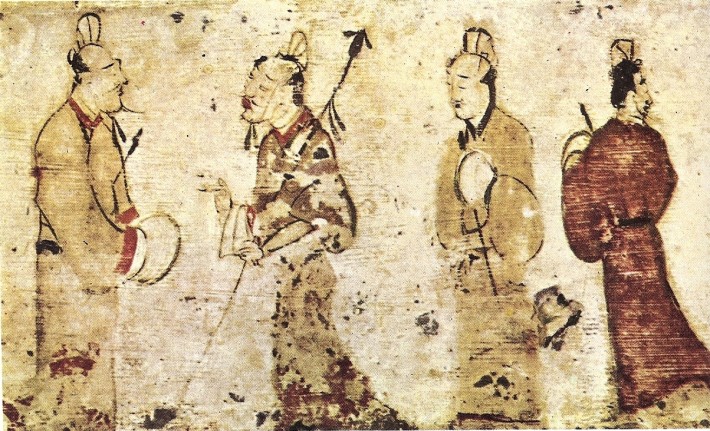
ancient-chinaChina has been using chopsticks since 1200 BC, maybe even earlier. The first known sets were made of bronze and were mainly used for cooking as they were handy for reaching into boiling pots of oil or water. It wasn’t until 400 AD that people started eating with the things and then by 500 AD or so, chopsticks had spread all over Asia.

China also experienced a population boom around this time which forced folks to start pinching pennies (or yuan, if you prefer). Chinese people started using chopsticks because with more people there was less fuel, and with less fuel there was less fire. In order to cook things more quickly, people would cut their food up into smaller pieces to cook them faster. Can you guess what was just perfect for picking up smaller pieces of food? That’s right – the chopstick.

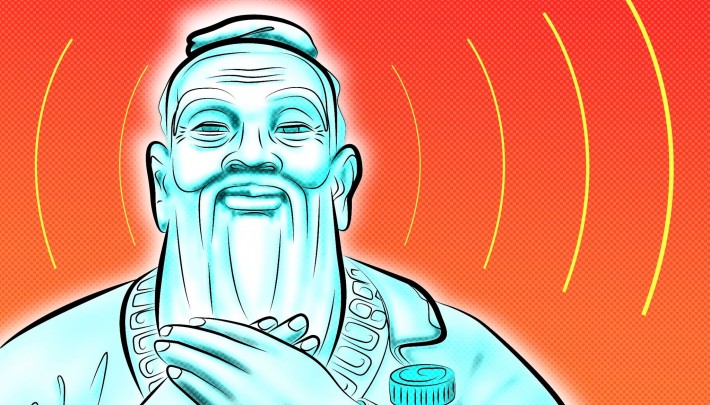
confucius

Since food was more or less already bite sized at this point, knives started to serve much less of a purpose at the dinner table. Confucius also played a part in the popularization of chopsticks as an eating utensil in China. Confucius believed that sharp utensils like knives had no place at the dinner table. He thought that knives represented things like violence and warfare which did not go along with the feeling of joy and contentment he believed should be present at every meal.

Chopsticks In Japan
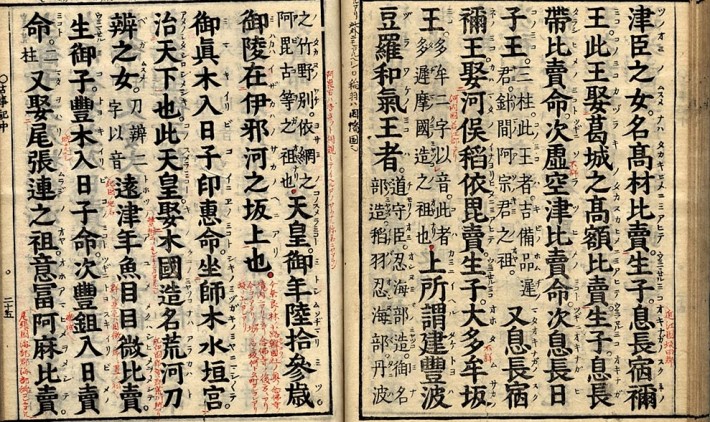
kojikiSo chopsticks in China really got popular around 500 AD. How long did the chopstick craze take to get to Japan? Well, the oldest official records of chopsticks being used in Japan is from the Kojiki, written in 712AD, but they probably made it over there even sooner than that. Chinese culture made its way over to Japan through Korea earlier than that, and the chopsticks were sure to have been one of the things that made it over.

In the beginning, chopsticks were only used in Japanese ceremonies. These early Japanese chopsticks were made from bamboo and were joined at the top, kind of like those “trainer” chopsticks you see today.

Gradually these chopsticks made their way into the home and became used for eating on a regular basis. The first recorded instances of separated chopsticks being used for normal eating don’t show up until 10th century Japan, but like before, people were probably doing this for a long time in some areas before someone thought it was a good idea to actually write down “Hey guys, we’re using chopsticks to eat with now, k?”

Japanese Chopsticks Vs. The World’s

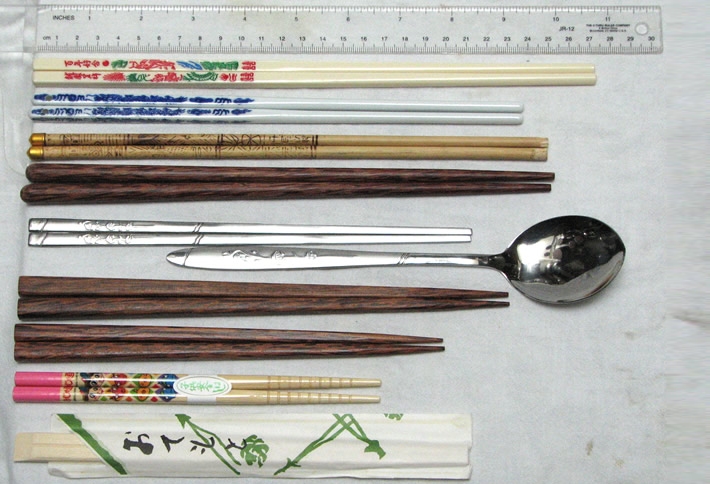
all-chopsticksFrom top to bottom: Plastic chopsticks from Taiwan, porcelain chopsticks from mainland China, bamboo chopsticks from Tibet, Vietnamese style palmwood chopsticks from Indonesia, stainless flat chopsticks from Korea with spoon, a Japanese couple’s set, Japanese child’s chopsticks, and disposables

Did you know that not all chopsticks are alike? There are distinct differences between Japanese, Korean, Chinese, and Vietnamese chopsticks.

Japanese chopsticks are usually shorter than other chopsticks and taper to a fine point. They are traditionally made of bamboo or wood and are often lacquered. Japanese chopsticks also come in kid sizes and woman sizes which are even shorter than standard sizes. Bento sized chopsticks, which fit inside of bento boxes, can also be quite short and sometimes made of colorful plastic.

In Korea, chopsticks are a medium length with a flat rectangular shape. They are traditionally made from brass or silver and are used simultaneously with a spoon.

Chinese chopsticks are longer and thicker than both Japanese and Korean chopsticks. They have squared or rounded sides and end in blunt, flat tips. They can be made from many materials but are most commonly made from melamine plastic or lacquered bamboo.

Vietnamese chopsticks are usually longer than most. These chopsticks taper to a blunt point like Chinese ones and are traditionally made from lacquered wood or bamboo.
golden-chopsticks

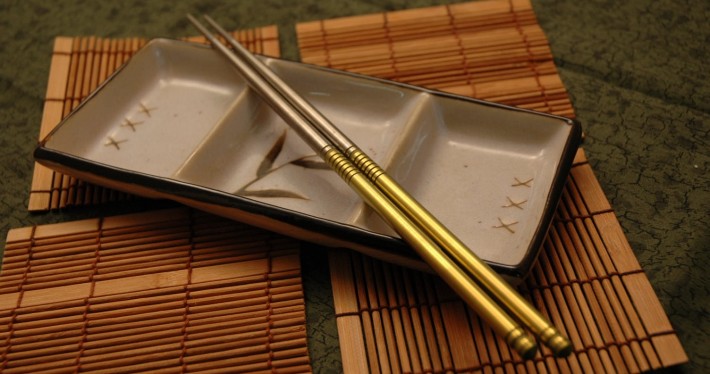
In Japan, the lacquered wood tradition started in the 17th century. The extravagant had their chopsticks made from jade, gold, ivory, or silver. Speaking of fancy, if you want a nice set of chopsticks to go with your fine tableware, Kyoto is considered the center of chopstick design. In terms of production, 85% of the country’s chopsticks are made in nearby Obama, Fukui Prefecture.

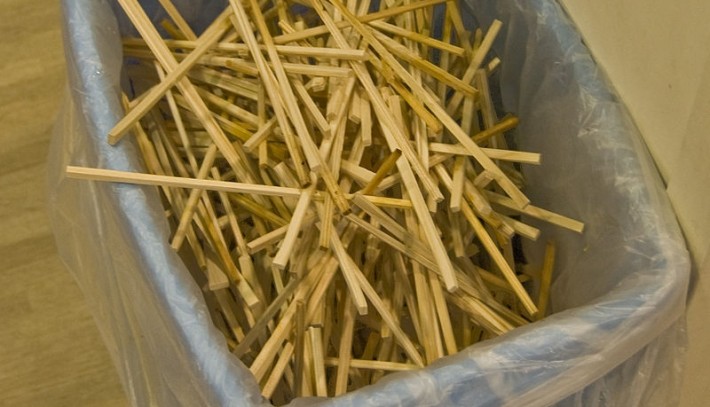
But it’s not all fancy pants chopsticks in Japan. In 1878, Japan produced the world’s first disposable chopsticks, and today China and Japan use the majority of them. China is responsible for using 45 billion disposable chopsticks a year. Japan is about half of that at 24 billion.
chopstick-trash

A lot of deforestation has been linked to disposable chopsticks, so hopefully something here changes soon. You do see a lot more “bring your own chopsticks” holders on sale in Japan these days. They’re kind of like travel toothbrush holders, but instead of a toothbrush, you have chopsticks. Still, that might not be enough so I hope people become more aware. Tell all your friends!

How to Use Chopsticks in Japan
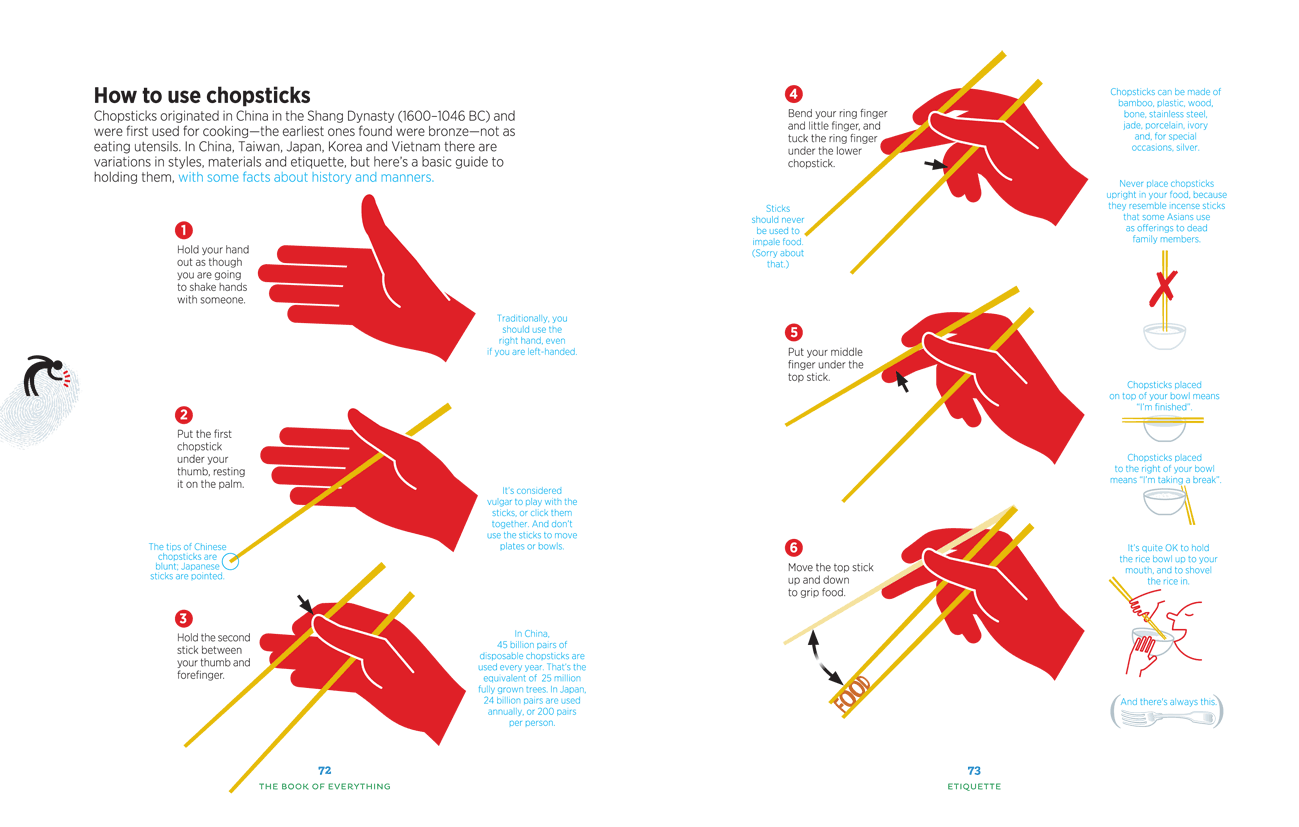
using_chopsticksDifferent countries have different rules for chopstick etiquette, so if you want to impress people with your chopstick skills and knowledge in Japan, here’s what you need to know.

  • You should hold your chopsticks towards their back end, not in the middle or the front third. “Choking up” on your chopsticks is a surefire way to look like a noob.
  • You also shouldn’t spear food with your chopsticks, point or wave them around, or move bowls around with them. I feel like lots of people do this anyway though, even native Japanese people.
  • To separate a larger piece of food, you’d exert controlled pressure on the chopsticks while moving them apart from each other. Controlled pressure is the important part. You don’t want to end up flicking your food halfway across the room.
  • Food should not be directly transferred from your chopsticks to someone else’s. Transferring directly with chopsticks is how bones are passed as part of Japanese funeral rites, so it’s not viewed as good practice at the dinner table. Unless you’re a cannibal, then maybe it’s okay. Maybe.
  • Chopsticks also shouldn’t be crossed on a table, as this symbolizes death, or vertically stuck in the rice, which is another funeral practice. See how these manners relate back to chopsticks that were originally only used in Japanese ceremonies?
  • The pointed ends of the chopsticks should be placed on a chopstick rest when they’re not being used. If a chopstick rest is not available and you’re using disposable chopsticks, you can make a chopstick rest by folding the paper sleeve they came in. You could also rest it on a plate or lay it on top of a bowl. Just don’t stab it into anything!
  • Chopsticks should be placed horizontally with the tips on the left. Any other orientation would make you look like a hooligan.

If you’ve been to Japan before, I’m sure you will have noticed that not everyone commonly adheres to all of these chopstick rules (I’ve seen it happen plenty of times), but I think they’re good to be aware of just in case you find yourself in a super formal chopstick using situation. Wouldn’t want to embarrass yourself!

Speaking of embarrassing yourself, for some good tips on how not to do this, I’d recommend checking out our guide on How to Save Yourself from Embarrassment in Japan and How to be a Baka Gaijin while Eating. You’ll learn a lot, I promise.

Modern Iterations

Chopsticks have had quite the journey. But it’s not over yet! Chopsticks are always evolving and changing even though the basic purpose remains the same. Check out some of these modern iterations.
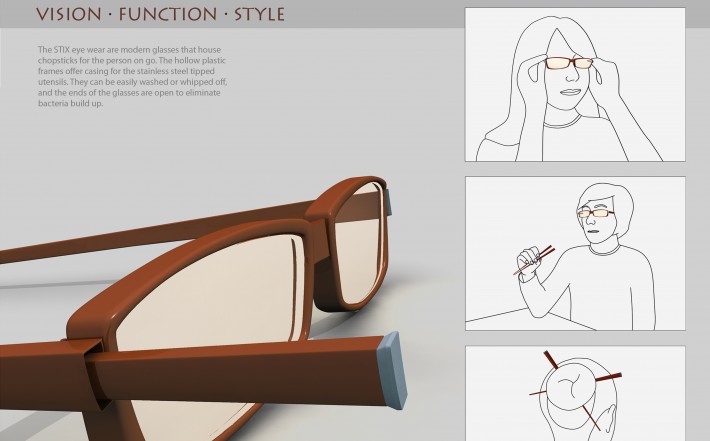
chopstick-glassesAlways find yourself needing chopsticks when there are none to be found? Store some in your glasses! Problem solved!
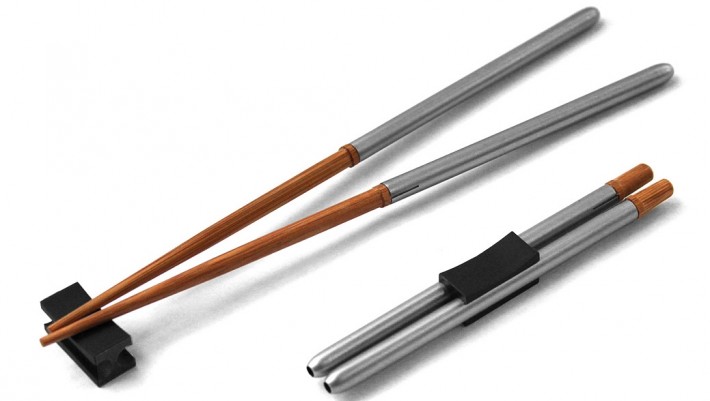
zoom-chopsticksDon’t wear glasses? No problem! Store these collapsible chopsticks in your bag or pocket!
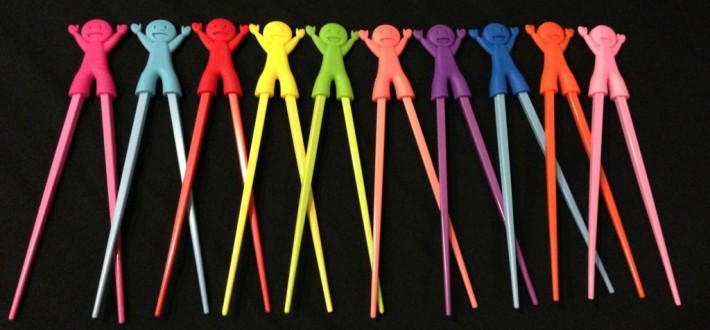
trainer-chopsticksRemember those “trainer” chopsticks that were mentioned before? Well here’s an example of what some of those look like. Cute, huh?


So, are you a chopstick master? Do you remember what it was like the first time you used chopsticks? When I was growing up I used to always eat rice and pasta dishes with chopsticks because I thought it was cool. Luckily this helped me not embarrass myself while at Asian restaurants and while studying abroad in Japan. I was prepared.

Have any interesting chopstick related stories? Share them in the comments!


Bonus Wallpapers!

chopsticks-700-animated
[2560x1600] • [1280x800] • [1280x800 Animated] • [700x438 Animated]


Sites Referenced:
Wikipedia.com
History.com

  • Ben

    Great post, John. As informative as ever. I absolutely need some of those glasses.

  • Aya

    This was a great article, John. I learned so much about chopsticks. I’m hoping I could use that knowledge to stop embarrassing myself in front of my friends whenever we eat at a Japanese restaurant. ;___;

  • Beetle BANE

    This is very neat! I had no idea there were differences among the sticks among cultures.
    Those child chopsticks are also so adorbs, yo. They are so happy about helping you eat your food!~ But I guess when you are a freak and have legs that long, you’d be happy too when people are treating you as being useful.

  • Beetle BANE

    Have you tried using them to pretend being a vampire? Maybe you can use that trick to scare them so they don’t care how you use them! :D

  • Mami

    Very great article, John. Now I’m thinking of getting my own chopsticks to save our Earth, and the best set I’ve found so far are these ones: http://www.amazon.com/Kotobukiya-Star-Wars-Lightsaber-Chopsticks/dp/B002VD2Y4O

    Now the only true question left is; ‘Dark side or not’.

  • Time

    If I’m left-handed I still use my right hand?

  • John

    Hahaha, those are awesome.

  • John

    You can use either hand! No need to worry if you’re a lefty.

  • orangedude

    I’ve been taught that when using a pair of disposable wooden chopsticks it’s a good idea to rub them together after breaking them apart in order to get rid of splinters that are sticking out. I’ve heard recently that this is technically improper. Is it improper to rub chopsticks together to get rid of splinters? If so, how can I properly protect myself from splintered fingers and tongue when using (often cheap) disposable chopsticks?

  • John

    Yeah, it is considered “rude” to rub them together like this. I’ve always just discretely picked off splinters that I see on any disposables I use. I’m not sure how “proper” this method is but at least it’s less obvious than rubbing them together, haha.

  • Ma’alee Holmes

    i haven’t thought that these thin sticks have an immense historical background.
    very informative artical , thanx

  • Joel Alexander

    You’ve still gotta lay them down with the tips to the left, though. Ya hooligan.

  • Joel Alexander

    It’s considered rude because you’re basically telling the host/waitress “I think the chopsticks you use here are of poor quality”. Not sure if that’s still rude if they actually ARE poor quality…

  • Ryan Bounedara

    I had no idea that the chopsticks I’ve been using a majority of my life were from Taiwan.

  • Ryan Bounedara

    I’m surprised Darth Maul’s chopsticks isn’t just a skewer with a handle in the middle. :P

  • http://www.myjapanesegreentea.com/ Ricardo Caicedo

    I find that Japanese chopsticks easier to use, followed by Korean ones. Maybe because the tips are smaller?
    I probably need more practice with the Chinese ones.

  • randomcode

    They done have them on there but I’ve seen a Count Douku version, I like that ones hilt.
    I have a pair that look like the Samurai sword of Yukimura Sanada, the crimson demon. I’m thinking I’m going to get this set here though. Big Giger fan =D

  • Luke

    I’m pretty average at using chopsticks, but it takes me forever to actually finish the meal. By the time I’m done everyone else has cleared the plates haha
    Those pocket chopsticks look really cool, I would totally buy a pair.

  • Musouka

    Haha, the chopsticks in glasses are ingenious. I want a pair! The hairpins one are… umm.

    My first few times with chopsticks were messy affairs. I only started to handle them in an acceptable manner after a Japanese friends taught me how to hold them correctly by extending both the thumb and index fingers, placing the first stick so it lays next to the index finger and then placing the other stick above it. The middle finger will then hold the lower stick in place while the thumb stabilizes the upper one and the index finger moves it up and down. It’s similar to the way you hold a pencil, she said. I practiced by picking up Maltesers choco pieces and eating them (conventional M&M’s were too small). Despite many years of sporadic experiences, I still find it hard to use chopsticks as cutting utensils to split a piece of meat or a food item in two or more pieces so I usually consume it whole which means the meal won’t last as long :/

    The Japanese Tradition video series has an entry on chopsticks ;)

    http://youtu.be/k3vBqX1NTBc

  • Jaegernjos

    They actually have magnets at the ends of the hilts so that you can stick them together to form the double-bladed ‘saber. I’m trying to work on a pen-spinning trick that goes from the double-bladed attachment and ends holding the two chopsticks in “proper” eating position… no such luck yet; gotta keep practicing!

  • DAVIDPD

    Korean chopsticks are easily the most difficult to use. The flat design really takes a bit of time to get used to using properly. In Korea, it is true that the use of a spoon is widely practiced along with chopsticks. They have realized eating rice with chopsticks is an exercise in futility. So using a spoon is preferred.

  • John

    Yeah I’ve never used the Korean ones before but they seem like they’d be a bit tricky to get the hang of.

  • Scott Lavigne

    I disagree a bit, they have a higher learning curve, but after you get the hang of it, it gets way easier. Also the pairing with the spoon makes things a little easier. Also when you need to cut food like Tonkatsu or big pieces of kimchi, the metal with the flat tip is a big help!

    Also a interesting thing I learned from some of my Japanese friends when I was in Korea was that Japanese don’t just plop their rice in the soup and eat it with a spoon, Koreans love to do this and I think this is one of the main reasons that Koreans always have the spoon, because they like to mix the rice and soup.

    Lastly I don’t think they use bronze or silver anymore, I only saw the stainless steel ones when I was there.

  • DAVIDPD

    Yeah Scott. I can see your point. I am living in Gangneung right now actually, so my day-today using flat chopsticks has gone up ten fold. I think they are good for cutting things, but ultimately I would take round ‘sticks any day over flat ones.

    Koreans also, I have noticed, have no qualms over skewering their food with chopsticks. I went to dinner with the boss and he was spearing his food like Poseidon himself.

    Ditto the stainless steel. Only fancy places will have bronze or silver chopsticks. Families may have them, but they are treated like Bone China. Which means very rarely ever used.

  • Scott Lavigne

    Yeah, Koreans are definitely not shy about spearing when it’s easier, like fried chicken? Sooo much easier to spear. :P I do like both but to me the hard part of them isn’t the flatness, it’s the metal. You can see this with all non-wooden ones, there’s no friction to keep stuff sticking. Noodle with Metal/Plastic/Ceramic chopsticks? Have fun trying! :P

    However after Korean chopsticks, because they take more skill and are heavier, when you go to wooden ones, you’re a master suddenly.

  • http://www.hokkaidokuma.com/ HokkaidoKuma

    If Confucius didn’t like knives at the dinner table, I wonder what he would say if he saw someone trying to eat their food with a gun. Just a random thought.

  • http://www.hokkaidokuma.com/ HokkaidoKuma

    Noobs, you’re suppose to hold them at the hilt otherwise you’ll chop your hand off if you hold them from the saber-y part. These people need to read John’s article.

  • John

    lol

  • Lionrence

    I’ve been eating with chopsticks for at least 10 years now, since I started liking Japanese culture. The funny thing is when I eat with Asians they never ever use chopsticks, so I’m always the weird one no matter who I eat with.

  • Jay Sanders

    Cool, I knew most of the rules and what I didn’t know I was doing anyways. Always just seemed right to fold up the paper wrapper and rest them on it. Now if I could just remember which dipping sauce goes with meat, chicken, and veggies.

  • http://zoomingjapan.com/ zoomingjapan

    As I’ve been in Japan for 6 years now, I’ve been eating with chopsticks for a very long time. I use them every single day – for cooking and eating. I didn’t know about their history and also not that there are differences among the Asian chopsticks.

    Very interesting article!

    I think most people know about the rules, but like you said even a lot of Japanese don’t always obey them! ;)

  • x_stei

    I really enjoyed reading this! Concise, to the point and very informative. Thanks John!

    I was born in China, but until the age of 13 I was using chopsticks incorrectly. My dad got fed up and I was forced to learn how to use it correctly by picking up marbles with them. It did the trick. … But I wouldn’t want that to happen to anyone else unless you really wanna learn… hah.

  • Hinoema

    Oh. My. God. I am cackling like a fool at work, thank you. That shrimp!

  • dolly

    I’ve been using chopsticks for as long as I can remember. I almost always eat meals with chopsticks or sometimes a fork. I have difficulty eating with spoons though =w=”
    Once I was eating lunch with a friend, he got so frustrated watching me struggle using a spoon that he had to teach me how to use it properly..

  • Apolita

    I have that luke skywalker chopsticks from japan. Btw, I’m from Philippines! Nice article :)

  • Sugoida

    That’s not how they came about!

    According to the ancient tale, Jiang Ziya lived a humble life in his early life with all his ambitions achieved. One day, a god bird flew over to him an pecked at his hands three times when he was taking food. Therefore, jiang took the two pieces of bamboo the bird was resting upon while it ate the meat, which resulted in smoking from the twigs (the earliest chopsticks), so the food was identified toxic. Jiang used chopsticks at daily mealtime since then. The chopsticks not only saved his life, but also brought a turn of fortune life to him. Soon after the event, he was recognized by the king Wen of the Zhou dynasty and appointed a prime minister and become a right-hand man to the king Wen for great achievement obtained in Zhou dynasty. The later generations commented that the chopsticks were the start of good luck to Jiang, upon which all his strategies were implemented and he won thousands of years of glorifications.

    So, does that sound like reaching into oil with bronze chopsticks? Nope.

  • GuahanBomb

    It’s common in some Asian areas, such as Guam, to rub the chopsticks without any remorse.

  • http://aamukherjee.tumblr.com/ Abhishek M.

    I find it interesting how there is such a large variety of chopsticks across South East Asia whilst spoon and fork designs in the West are almost identical. That probably shows the limitations of chopsticks more than the rigidity of spoon/forks though.

  • Raymond Chuang

    I have the plastic chopsticks from Taiwan, the bamboo chopsticks from Tibet, and a set of real Japanese chopsticks. Interestingly, I find the Japanese chopsticks very good for eating Cantonese dim sum, mostly because being not so unwieldy to hold they great for picking up dim sum pieces from a plate.

  • Musouka
  • msmo

    Having learned on Korean ones, all others seem clumsy and awkward to me. But yes, there is almost always soup at a Korean meal so a spoon is a must.

  • Kanrei

    I always use children chopstick, somehow I can eat better with them.