Everybody Makes (Embarrassing) Mistakes

Everyone makes mistakes in life. You, me, and everybody. We all do. From everyday English/Japanese grammar mistakes to the big historical ones that cause wars (looking at you, Vl’hurgs), making mistakes is something we would like to prevent. Still, sometimes you just can’t.

I think that I might make mistakes more than most people, but I bet that anyone who is learning a new language will make a lot of mistakes too. Yet, we can always learn from our mistakes, and once we make one, we will try not to make the same mistake twice. That being said, some mistakes are too much fun to make only once.

Japanese People and English
japanese classroom

Photo by Emran Kassim

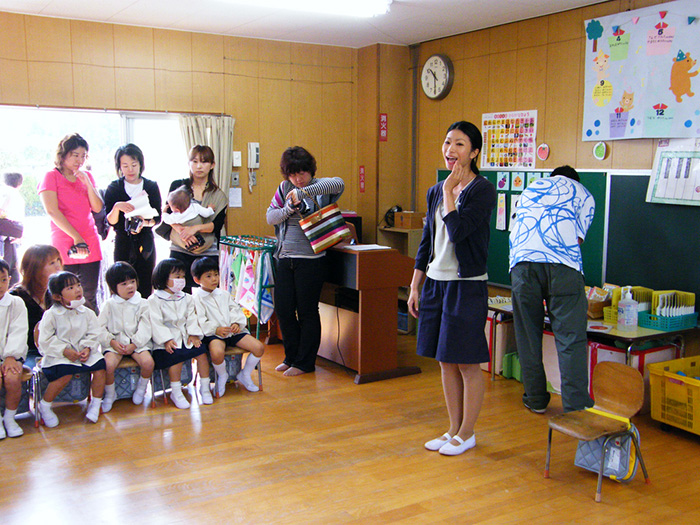
Although many older Japanese people have never had training in English, most of the younger generations have studied English for three years in junior high school and another three years in high school. In most Japanese universities, English is an obligatory subject as well, so many of the university graduates have studied English for a total of ten years or more.

However, Japanese teachers mainly focus on English grammar and reading, so they do not teach listening, speaking and pronunciation as effectively as they should. This is true and has been used as an excuse to explain Japanese people’s poor English ability in listening, speaking and pronunciation. But if you have ever seen funny Japanese peoples’ EngRish, you know that we aren’t necessarily excellent in grammar and reading either. For myself, I used to say ‘a sox’ and ‘soxes’ instead of a sock and socks. I finally realized that it was wrong two years graduating from university. Last night I learned that I was saying ‘teethbrush’ instead of ‘toothbrush’, too, so I guess it never stops.

Mixing up English words.

engrish

One particular time that I mixed up some English words was particularly funny / embarrassing. One summer day, while studying English in Canada on my working holiday program, I was planning to go to a farewell party for my Russian classmate. After ESL school that day, I went back home to drop off my textbooks. I walked through the back door and my homestay dad asked, “Do you wanna have a beer with us?” Usually, I’d immediately burst out with a “Yeeesss!”, but I had the farewell party to go to that day, so I ‘mournfully’ said, “Sorry, I have to go to a funeral party for my Russian friend today”. Yep, I mixed up the word ‘funeral’ and ‘farewell’.

I saw my homestay dad’s face turn really sad and kind of surprised. I didn’t understand why he looked so upset at the time and just thought he really wanted me to drink beer with him. When I went to the party, I heard my friends say ‘farewell’ party and at that moment I remembered what the word I used with my homestay dad actually meant. “Oh, no”. I thought. I was so embarrassed.

mami-embarassed
My “Embarassed” face

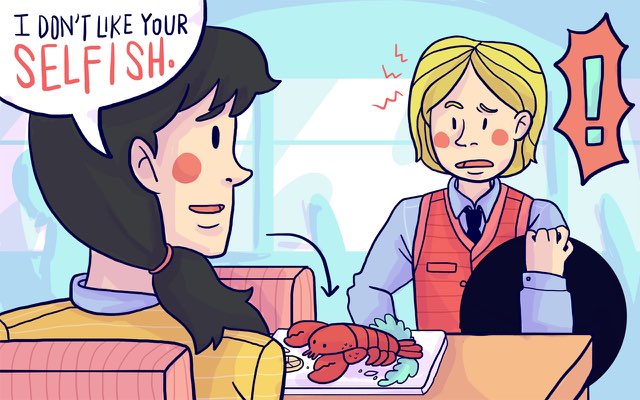
I think that mixing up words while speaking is a problem that many other people encounter, too. One of my friends was invited to a party at a restaurant. She got a seafood dish, but her shellfish hadn’t been cooked enough. When a waitress came over and asked them how everything was, she intended to say, “I don’t like your shellfish at all”, however, she told the waitress, “I don’t like your selfish at all.” The waitress was shocked for a moment and just said sorry to her and left. Not surprisingly, she got upset because it seemed as if the waitress didn’t care that her food wasn’t good and did not replace her dish for her. Her friends finally pointed out that she had said ‘selfish’ instead of ‘shellfish’.

Another friend of mine was talking about his niece and nephew and how they are so cute and how he lives for them and tries to spoil them whenever he gets the chance because he was never spoiled when he was a child. While telling us this, he surprised us by saying, “I try to live ‘bi-curiously’ through them.” As you probably have already guessed by now, what he meant to say was, “I try to live vicariously through them”. Although he is a slightly perverse person, ‘bi-curious-ly’ did not quite fit, even for him. Everyone made fun of him for a long time after that mistake – It’s been going on for three years now.

Mixing up Japanese words.

chickenmolester

Photo by yoppy

As you probably already know, a typical Japanese sentence is formed by using 3 sets of characters: hiragana, katakana and kanji. Although hiragana is normally used for the grammar, the connection between words, the particles, etc, beginners probably write the whole sentence in hiragana or prefer a sentence written in hiragana. However, it will become lengthy and actually more difficult to comprehend than a sentence that also includes katakana and/or kanji.

Although it’s still possible to understand the sentence after reading it or its context carefully, you will find it difficult to figure out which of the hiragana formed a word without reading a few times. Moreover, you may mix up particles and other Japanese words and it could turn into a really silly sentence.

For example, the following sentences are written totally in hiragana, but could mean two or more things depending on the katakana and/or kanji.

ぱんつくったことある。(pantsukuttakotoaru)
パン作ったことある?(Have you ever made bread?)
パンツ食ったことある?(Have you ever eaten underwear?)

にくかった。(nikukatta)
肉買った。(I bought some meat.)
憎かった。(I hated him/her/it.)

きのうえきにいった。(kinouekiniitta)
昨日駅に行った。(Yesterday, I went to the station.)
木の上気に入った。(I like the place on the tree.)

きょうとしよりきたよ。(kyoutoshiyorikitayo)
今日年寄り来たよ。(Today elderly people came over.)
京都市より北よ。(It’s North out of Kyoto city.)

ねえちゃんとふろはいった?(neechantohurohaitta?)
ねえ、ちゃんと風呂入った?(Hey, have you taken a bath properly?)
姉ちゃんと風呂入った? (Did you take a bath with your sister?)

はしのはしをみてください。(hashinohashiomitekudasai)
橋の端を見てください。(Look at the edge of the bridge.)
箸の端を見てください。(Look at the edge of the chopsticks.)
端の端を見てください。(Look at the very edge.)
ハシの箸を見てください。(Look at Hashi’s chopsticks.)

If you make use of katakana and kanji, the whole sentence become shorter and easier for you to understand. However, during a conversation, you can’t read the katakana or kanji. Therefore, I believe that many people who study Japanese mix up Japanese words too.

I’m going to introduce some examples out of the ‘Gaijin Pot forums.’

I would sometimes go into KFC and order a Chicken Burger, however, I was pronouncing it wrongly, “Chikanbaagaa” until one day I actually pronounced it correctly, “Chikin baagaa”. However, the arubaito guy who had served me a few times before said “Chikin baagaa desu ne? Chikan baagaa ja nai desu yo ne?”, which made another arubaito girl standing near by burst out in laughter. -Since1990

Chikin: chicken
Chikan: a molester

I got the words 人参 (にんじん) and 妊娠 (にんしん) mixed up one day. The woman became a carrot rather than pregnant! -Scrum Doctor

Ninjin: carrots
Ninshin: pregnant

I once heard of someone getting angry at people on the train when he realized that they were staring at him. Apparently he meant to say, “I’m not an animal, I’m a human being!” (私は動物じゃない、人間(にんげん)です!), but it came out as, “I’m not an animal, I’m a carrot!” (私は動物じゃない、ニンジンです!). -Since1990

Ninjin: carrots
Ningen: person, human

The two words I confuse the most though are vacuum cleaner (sojiki) and funeral (soshiki), with often embarrassing results. -renkachan71

Sojiki: vacuum cleaner
Soshiki: Funeral

After being in Japan for just a few months, and having only mastered the really essential expressions, I went up to one of my older students at a bar to ask if she had had a lot to drink: “おっぱい飲む?” I asked. She retorted with one of the few other words I had picked up:バカ!-Dennis

ippai: a lot
oppai: boobs, breast milk

As you can see, other people make these mistakes too! If these people can make embarrassing mistakes like this and move on, you have nothing to worry about. A mistake is just a mistake, after all!

Failure Teaches Success

jordan

Photo by Cliff

See? There are so many mistakes already. I’d like to say “失敗は成功のもと(しっぱいはせいこうのもと / shippai wa seikou no moto)” meaning “failure teaches success” to everyone learning Japanese here! Even Michael Jordan said, “I’ve failed over and over and over again in my life and that is why I succeed.” It’s not a 冗談 (“joudan” is pronounced the same like “Jordan” and means “a joke”). Sorry, that was a little bit of a 寒い (samui:lame) pun. Anyway, don’t hesitate to speak incorrect Japanese to get better at Japanese. It will only help you to get better!

  • Mami

    I’d say that 病院 and 美容院 is pretty tough one to Japanese people too. You need context to figure out which one.
    Yeah, sadly teachers teach “Katakana English”…however, indian people use Indian English for example. Now they are everywhere in the world. I know that it’s better to learn actual pronunciation and I’ve been trying to, but Japanese people shouldn’t hesitate to speak in English because of their Katakana-English-pronunciation.

  • Mami

    Ah! Arigatou(^^)/

  • Wulfe

    前のオヤジギャグ、通じなくて悔しい(;≧皿≦)。゜°

    ごめん、僕だと英語で言うとしたら、イカ 「yucky」だ。

  • http://zoomingjapan.com/ zoomingjapan

    I agree with you.
    I think the problem for most Japanese is not their pronunciation, but the fact that they cannot express themselves well.
    It’s no wonder if you see how they learn English at school!
    I was so shocked that even high school students cannot write an essay in English easily.

    You only learn a language by USING it, but in Japan they just learn grammar rules and vocabulary.
    When they’re asked to have a conversation or to write a diary or an essay to express their opinion about something, most of them can’t.

    That kind of learning might work for all other school subjects, but not for learning a foreign language.

    I’ve studied English, Latin, French and Spanish in school. Once I was out of school I studied Japanese on my own. From experience I know that you CANNOT learn a language by just sitting down and going through textbooks, you have to actually use the language and immerse yourself in any way possible.

    You will agree that it’s difficult in Japan to immerse yourself in English unless you try really hard.

  • Laura

    I just loved the part about eating underwear. Although the molester burger wasn’t bad either. Way to get rid of your society’s molesters.

  • Laura

    On another note: Why don’t I have the sexy female Otaku version of Koichi as my avatar like everyone else? It’s so lovely!

  • kungfudiscomonkey

    Instead of 島国 I once wrote 鳥国 but I suppose that’s more of a mix up in writing. One I did in speaking was mix up 夫 and 弟.

  • Mariana

    SEI SEI SEI

  • linguarum

    Sometimes it seems like Japanese is a language specifically engineered for foreigners to make really embarrassing mistakes. “Chichi” means breast or father. “Haku” means to vomit, or to wear. “Hana” means flower or nose. “Koumon” means school gate or anus. “Kyosei” means castration or braces. “Seiko” means success or sexual intercourse. “Seiri” means menses or organizing. And those are the words that are pronounced exactly alike. There’s a whole lot more homophones if you count words that are pronouned almost alike, like “houshi” and “hoshi.” I know there are a lot of these things in English too, and maybe it’s my confirmation bias, but it seems like there are a lot more homophones in Japanese than in English.

  • Carthegian

    I’ll try to my Japanese sensei next time..

    ..though she might banish me after.. hahaha

  • justin

    during class, my Japanese teacher asked me what I did over the weekend. I intended to say that I “cleaned my kitchen” (台所 – だいどころ), but I mistakenly said I “cleaned the president” (大統領 – だいとうりょう). doh!

  • Carthegian

    I love his works, but don’t you think his writing is just too difficult for those who just started learning Japanese? Maybe intermediate level learners will have trouble as well. Haruki Murakami tends to use writing style that is very surreal even when translated in English. I even have to read the English version very slowly sometimes to get what he means. I can imagine your translation techniques will improve hugely if you can pull it off though!

  • bacon22

    I’m having flashbacks to the Gaijin Smash blog and all his attempts to avoid being kancho’ed by his students :)

  • Senjougahara

    Does the art remind anyone of Ritsuko from Sakamichi no Apollon?

  • Christine Gris

    Well most of them do have phonetic differences, since the Japanese language has a mad case of high-and-low pronunciation. Let’s take “Hashi”, for example. It has three common meanings, 箸(chopsticks), 橋(bridge) and 端(edge, tip), but all of the is pronounced differently.
    http://en.wiktionary.org/wiki/%E3%81%AF%E3%81%97 :)
    But yeah, it’s a pain in the ass remember all the different pronunciations, but I think it’s a lot of fun too!

  • Christine Gris

    My old class mate was supposed to say that her mother was a しゅふ (housewife), but ended up saying “my mum is a prostitute” (しょうふ)…

  • Laura

    Years ago, we had organised a group for an Izakaya while in Okayama-shi, but the person who had made the booking was running late, and they were the only person who knew where it was. So we rung up the bar to tell them that we were running late due to our friend. I had wanted to use ‘jijou’ to say ‘due to circumstances our friend is late’, but said ‘jiko’ instead, so the person on the phone thought I had said that our friend had been in an accident! Quickly reassured her that our friend was fine ^^;

  • Bob Storey

    I’m studying hiragana first. Once I’m confident with that I’ll move on to Katakana. I really look forward to the day when I can understand and write Kanji, but I think that is a long time off at the moment!

  • Mami

    ごめんごめん!通じてたよ〜!☜(:♛ฺ;益;♛ฺ;)☞
    イカしてるって意味のつもりだった!ww<二:彡

  • Mami

    Ho Ho HO!

  • Mami

    Doh! Hahaha, that’s hilarious!

  • Mami

    Wow…Just remember, that could be a disaster, if you are a dude…

  • Mami

    and it’s always a bad idea to do kanchou to a teacher…haha
    You should chose your friend! lol

  • Mami

    It’ll come soon!!! Keep going!!!!:D Gambarooooou

  • Mami

    Oh, no, but it was good for you to reassure her quickly. At least that mistake probably made you remember both words at the same time!

  • Mami

    ガ━━ヾ(;゚;Д;゚;)ノ゙━━ン!!

  • Mami

    Is this Ritsuko chan??

  • Mami

    There are more homophones in Japanese than in English because we use kanji. They have the same/similar sounds but different kanjis. Another reason why there are so many homophones in Japanese is because we only have five vowels. That causes less combinations of sounds than English.

  • Mami

    Yeah, that’s true! Most of them have phonetic differences. However, those differences are ‘different’ depends on where you are. (ex: Tokyo-Osaka) So it’s sometimes a pain for Japanese people too. :P

  • Mami

    Nice one. I often mix up niece and nephew.

  • Mami

    Maybe you will suggest that to McDonald?? :D yay

  • Mami

    Hmmm…I don’t know why but I will ask Koichi!!!

  • Mami

    Yes, I agree that it’s difficult in Japan especially for high school students. It became a bit easier for adults in a big city, who like drinking alcohol, because foreigners are in a lot of bars:P If you don’t hesitate to talk to them, at least you get a chance to improve/practice your English. That’s how I made foreign friends and started using English. I found it so hard to speak English at first. It took time for me to understand what they are talking about. I mixed up even she and he, though I totally knew grammatically which to use in my head. Just my brain didn’t work well as I tried to explain something in English, since I didn’t used to it at all. It’s been 3 yeas since I started using English now and I made a progress. So, yeah. You definitely need to use the language to get used to it.
    While your studying English, Latin, French and Spanish in school, did you have chances to use all of them??

  • Mami

    Yeah, it will be difficult for those who just started learning Japanese. In that case, Tofugu’s new Japanese learning course might be fit for you:D Check out “Etoeto”: http://etoeto.com/
    Not that difficult Japanese and you can learn how to translate Japanese words into English words. There is also audios recorded by native Japanese speaker too. I’m one of writers, too:P

  • Julia Cramer

    I just love your articles, Ms. Mami! This one had me laughing the whole way through.

  • http://zoomingjapan.com/ zoomingjapan

    You need to “live” the language. You need to be immersed. You need to listen to it (music, movies, people), read it and you need to output what you’ve learned, because outputting needs to be practiced as well. That’s also how you made such a great progress! ^^

    Yes and no. I couldn’t use Latin at all. It’s a dead language, only spoken in the Vatican of Rome.
    I don’t like French, so I only studied it for one year. I love languages, but not all of them. Instead I chose Spanish which is still one of my favorite languages, after Japanese, of course.
    I travelled to Spain a few times, so I could use it there.
    And I visited Italy often and when the people there couldn’t speak English, I used Spanish and we could understand each other somehow! ^___^ (Italian and Spanish are not soooooo different from each other).

    I think in Europe it’s different, because there are so many countries and it’s so easy to travel from one to another, so usually we learn our neighbors’ native language. ^^

  • Melissa Yeow

    Once when I was half-asleep in Japanese class, my teacher asked me to construct a sentence containing yama o noboru, and I said uma ni noru instead. @_@

  • Carthegian

    Of course I’m only joking here.. God knows what will happen if me, as a dude and at this age pull off something like this to my teacher.. hahaha

    More reasons to regret not doing it as a child! You can get away easily with a sly smile =D

  • Carthegian

    I shall give it a try whenever I got free time! Frankly speaking, my level is still hovering around intermediate though..

    The reason I said Haruki Murakami’s works are hard is because I’ve tried reading it once in Japanese when I just started learning the language.. I didn’t even last two pages without checking out the words in dictionary every single time hahaha..

  • linguarum

    Except the high-and-low thing only works for a handful of words. And like Mami mentioned, those intonation differences vary by dialect. Plus, there are hundreds of words that are pronounced *exactly* alike, but have have five different meanings or more. For example, 強制 (coercion), 共生 (symbiosis), 矯正 (remedy), 強請 (blackmail), 共成 (Kyousei region), and 嬌声 (lovely voice). All six are pronounced “kyousei.” With only two morae and six different meanings, intonation cannot possibly distinguish between them all. Craziness.

  • linguarum

    Oops. I should have said two syllables.

  • http://www.tofugu.com koichi

    kancho I know, all too well…

  • Mami

    HEY! HEY! HEY!

  • Mami

    So you must know “Secret Art of the Kancho” too…

    http://curbeh.blogspot.ca/2012/03/secret-art-of-kancho.html

  • Mami

    lol

  • Mami

    浣腸!! (  ̄  ̄)ノ0=|⊃―; ☆ ブスッ!!

  • Mami

    That’s not bad though. That sentence makes sense too:)

  • Mami

    Arigatou Julia san!!! (^v^)

  • Vincenza Vicky Maione

    hahahahaha yes, the waiters at the baito place were always playing such jokes, mixing up each other’s name’s moras! And they told me it’s fun .-.

  • Mami

    Oh, I see. I love Europe! I’m always so impressed how European people can speak other languages well. It’s definitely いいな that there are so many countries there and it’s so easy to travel from one to another.