Everybody Makes (Embarrassing) Mistakes

Everyone makes mistakes in life. You, me, and everybody. We all do. From everyday English/Japanese grammar mistakes to the big historical ones that cause wars (looking at you, Vl’hurgs), making mistakes is something we would like to prevent. Still, sometimes you just can’t.

I think that I might make mistakes more than most people, but I bet that anyone who is learning a new language will make a lot of mistakes too. Yet, we can always learn from our mistakes, and once we make one, we will try not to make the same mistake twice. That being said, some mistakes are too much fun to make only once.

Japanese People and English
japanese classroom

Photo by Emran Kassim

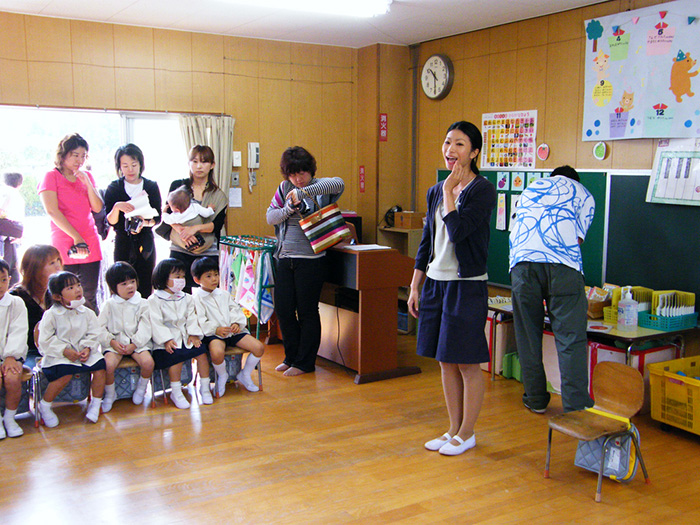
Although many older Japanese people have never had training in English, most of the younger generations have studied English for three years in junior high school and another three years in high school. In most Japanese universities, English is an obligatory subject as well, so many of the university graduates have studied English for a total of ten years or more.

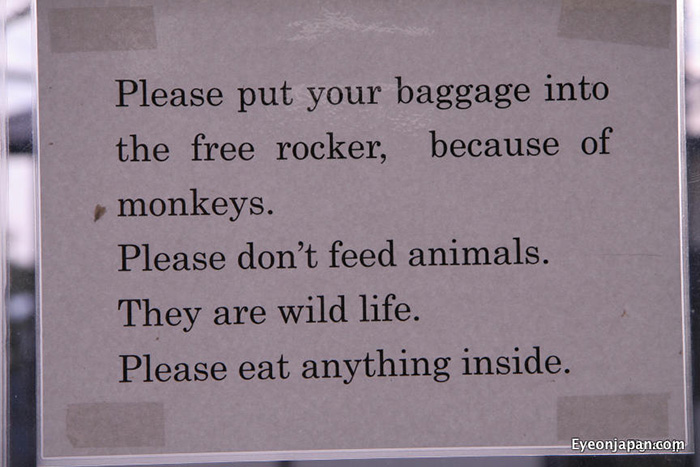
However, Japanese teachers mainly focus on English grammar and reading, so they do not teach listening, speaking and pronunciation as effectively as they should. This is true and has been used as an excuse to explain Japanese people’s poor English ability in listening, speaking and pronunciation. But if you have ever seen funny Japanese peoples’ EngRish, you know that we aren’t necessarily excellent in grammar and reading either. For myself, I used to say ‘a sox’ and ‘soxes’ instead of a sock and socks. I finally realized that it was wrong two years graduating from university. Last night I learned that I was saying ‘teethbrush’ instead of ‘toothbrush’, too, so I guess it never stops.

Mixing up English words.
engrish

One particular time that I mixed up some English words was particularly funny / embarrassing. One summer day, while studying English in Canada on my working holiday program, I was planning to go to a farewell party for my Russian classmate. After ESL school that day, I went back home to drop off my textbooks. I walked through the back door and my homestay dad asked, “Do you wanna have a beer with us?” Usually, I’d immediately burst out with a “Yeeesss!”, but I had the farewell party to go to that day, so I ‘mournfully’ said, “Sorry, I have to go to a funeral party for my Russian friend today”. Yep, I mixed up the word ‘funeral’ and ‘farewell’.

I saw my homestay dad’s face turn really sad and kind of surprised. I didn’t understand why he looked so upset at the time and just thought he really wanted me to drink beer with him. When I went to the party, I heard my friends say ‘farewell’ party and at that moment I remembered what the word I used with my homestay dad actually meant. “Oh, no”. I thought. I was so embarrassed.

mami-embarassed
My “Embarassed” face

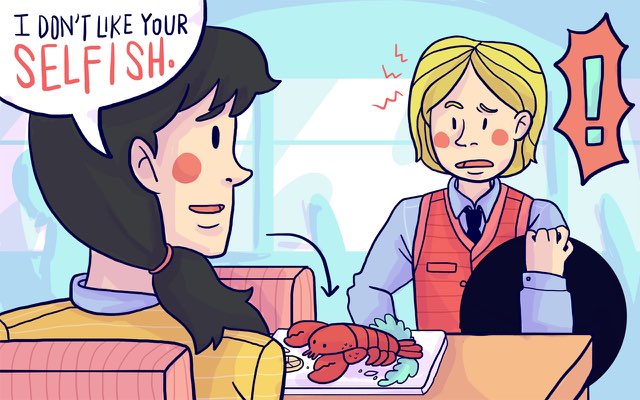
I think that mixing up words while speaking is a problem that many other people encounter, too. One of my friends was invited to a party at a restaurant. She got a seafood dish, but her shellfish hadn’t been cooked enough. When a waitress came over and asked them how everything was, she intended to say, “I don’t like your shellfish at all”, however, she told the waitress, “I don’t like your selfish at all.” The waitress was shocked for a moment and just said sorry to her and left. Not surprisingly, she got upset because it seemed as if the waitress didn’t care that her food wasn’t good and did not replace her dish for her. Her friends finally pointed out that she had said ‘selfish’ instead of ‘shellfish’.

Another friend of mine was talking about his niece and nephew and how they are so cute and how he lives for them and tries to spoil them whenever he gets the chance because he was never spoiled when he was a child. While telling us this, he surprised us by saying, “I try to live ‘bi-curiously’ through them.” As you probably have already guessed by now, what he meant to say was, “I try to live vicariously through them”. Although he is a slightly perverse person, ‘bi-curious-ly’ did not quite fit, even for him. Everyone made fun of him for a long time after that mistake – It’s been going on for three years now.

Mixing up Japanese words.

chickenmolester

Photo by yoppy

As you probably already know, a typical Japanese sentence is formed by using 3 sets of characters: hiragana, katakana and kanji. Although hiragana is normally used for the grammar, the connection between words, the particles, etc, beginners probably write the whole sentence in hiragana or prefer a sentence written in hiragana. However, it will become lengthy and actually more difficult to comprehend than a sentence that also includes katakana and/or kanji.

Although it’s still possible to understand the sentence after reading it or its context carefully, you will find it difficult to figure out which of the hiragana formed a word without reading a few times. Moreover, you may mix up particles and other Japanese words and it could turn into a really silly sentence.

For example, the following sentences are written totally in hiragana, but could mean two or more things depending on the katakana and/or kanji.

ぱんつくったことある。(pantsukuttakotoaru)
パン作ったことある?(Have you ever made bread?)
パンツ食ったことある?(Have you ever eaten underwear?)

にくかった。(nikukatta)
肉買った。(I bought some meat.)
憎かった。(I hated him/her/it.)

きのうえきにいった。(kinouekiniitta)
昨日駅に行った。(Yesterday, I went to the station.)
木の上気に入った。(I like the place on the tree.)

きょうとしよりきたよ。(kyoutoshiyorikitayo)
今日年寄り来たよ。(Today elderly people came over.)
京都市より北よ。(It’s North out of Kyoto city.)

ねえちゃんとふろはいった?(neechantohurohaitta?)
ねえ、ちゃんと風呂入った?(Hey, have you taken a bath properly?)
姉ちゃんと風呂入った? (Did you take a bath with your sister?)

はしのはしをみてください。(hashinohashiomitekudasai)
橋の端を見てください。(Look at the edge of the bridge.)
箸の端を見てください。(Look at the edge of the chopsticks.)
端の端を見てください。(Look at the very edge.)
ハシの箸を見てください。(Look at Hashi’s chopsticks.)

If you make use of katakana and kanji, the whole sentence become shorter and easier for you to understand. However, during a conversation, you can’t read the katakana or kanji. Therefore, I believe that many people who study Japanese mix up Japanese words too.

I’m going to introduce some examples out of the ‘Gaijin Pot forums.’

I would sometimes go into KFC and order a Chicken Burger, however, I was pronouncing it wrongly, “Chikanbaagaa” until one day I actually pronounced it correctly, “Chikin baagaa”. However, the arubaito guy who had served me a few times before said “Chikin baagaa desu ne? Chikan baagaa ja nai desu yo ne?”, which made another arubaito girl standing near by burst out in laughter. -Since1990

Chikin: chicken
Chikan: a molester

I got the words 人参 (にんじん) and 妊娠 (にんしん) mixed up one day. The woman became a carrot rather than pregnant! -Scrum Doctor

Ninjin: carrots
Ninshin: pregnant

I once heard of someone getting angry at people on the train when he realized that they were staring at him. Apparently he meant to say, “I’m not an animal, I’m a human being!” (私は動物じゃない、人間(にんげん)です!), but it came out as, “I’m not an animal, I’m a carrot!” (私は動物じゃない、ニンジンです!). -Since1990

Ninjin: carrots
Ningen: person, human

The two words I confuse the most though are vacuum cleaner (sojiki) and funeral (soshiki), with often embarrassing results. -renkachan71

Sojiki: vacuum cleaner
Soshiki: Funeral

After being in Japan for just a few months, and having only mastered the really essential expressions, I went up to one of my older students at a bar to ask if she had had a lot to drink: “おっぱい飲む?” I asked. She retorted with one of the few other words I had picked up:バカ!-Dennis

ippai: a lot
oppai: boobs, breast milk

As you can see, other people make these mistakes too! If these people can make embarrassing mistakes like this and move on, you have nothing to worry about. A mistake is just a mistake, after all!

Failure Teaches Success

jordan

Photo by Cliff

See? There are so many mistakes already. I’d like to say “失敗は成功のもと(しっぱいはせいこうのもと / shippai wa seikou no moto)” meaning “failure teaches success” to everyone learning Japanese here! Even Michael Jordan said, “I’ve failed over and over and over again in my life and that is why I succeed.” It’s not a 冗談 (“joudan” is pronounced the same like “Jordan” and means “a joke”). Sorry, that was a little bit of a 寒い (samui:lame) pun. Anyway, don’t hesitate to speak incorrect Japanese to get better at Japanese. It will only help you to get better!

  • Fed Ang

    LOL, it’s only been 3 months since I studied Japanese here in Japan and a month ago I told a Japanese friend that I needed to prepare but said 便秘 instead of 準備. They we’re like all concerned until I explained myself then they bursted out laughing. I know they’re quite far from each other but it was just bad mnemonics. I know better now to train my vocab recall.

  • イギ

    I can relate to the にんじん/にんげん one, I remember a specific embarrassing instance with my Japanese teacher when I said carrot instead of human being…hahaha

  • Don

    The “bi-curiosly” thing made me laugh out loud here at my desk. I can only imagine all the ridiculous mistakes I am going to make as I learn…

  • DAVIDPD

    By far the best message from BATMAN BEGINS:

  • Vincenza Vicky Maione

    Hi!
    don’t know why but hey, am I the only one messing up the order of moras (or kanji, in words made up of more than one) while talking, and taking the wrong word for granted? o.o (I even mess up the order in writing, like 計時 instead of 時計)
    Once I said じぼさけ instead of じさぼけ(時差ぼけ, ‘jet lag’);
    then, I always mix 筋肉(きんにく, ‘muscles’)ニンニク(’garlic’): once I said “I like garlic” (talking about guys, I guess)! lol
    or I kept saying ひびき(’echo sound’)instead of にきび (‘pimple’) until I was corrected.
    or…. I had learned the word 好運, and since I knew it meant “good luck”, I thought it would be a better word to say rather than ラッキー(from the English ‘lucky’). So, during a public speech, I said something like 「ここで勉強できていいウンでした」… and, it apparently sounded like I pooped well in Japan!!
    And, last but not least: once an Italian guy typed a whattsapp message (kind of a Line service) to a Japanese friend in romaji, having –> ima nioi no kanji o oboeteimasu.
    We freaked out, thinking he meant 今(あなたの)臭いの感じを覚えています, instead he meant to say 今臭いの漢字を覚えています!!
    Well, never abruptly talk about kanji without warning you are about to change subject! hahahaha

  • http://weheartit.com/bohi Bohi

    Lovely post~ I like how you wrote about both english and japanese aspect of this. We all make mistakes, but perhaps an embarrassing mistake will prevent us from making it again ;)

    The funniest mix up I heard of happened last year, when a fellow exchange student excitedly told me how nice and polite are japanese clerks in the store and that they always wish her happiness! Confused about it, we later figured out she heard “shiawase douzo” instead od “irasshaimase douzo” :D

  • noisyninja

    Fun tip….in English we call things like your friend saying “bi-curiously” when he means “vicariously” a “Freudian slip,” due to Freud’s assertions that people think about sex all the time. (by the way, this particular interpretation of Freud is very generalized.) English-speaking people do this all the time, so don’t worry too much about it! We often catch ourselves doing it, and respond with a smack on the forehead and an apologetic “sorry! Freudian slip!”

  • lucy

    Do you know this haiku: ひるからはちとかげもあリくものみね

    1. 昼からは / ちと影も在り / 雲の峰 / hiru kara wa / chito kage mo ari / kumo no mine
    From noon on / There’s a bit more shade / A cloudy sky

    2. ヒル蚊ら蜂 / とかげも蟻 / 蜘蛛蚤ね / hiru ka-ra hachi / tokage mo ari / kumo nomi ne
    Leeches, mosquitos, bees / Lizards, also ants / Spiders and flees, isn’t it?

    Dunno, translation of a translation, someone’s probably better than me :) http://de.wikipedia.org/wiki/Haiku#Offenheit_f.C3.BCr_verschiedene_Lesarten

    Also, great article!

  • Mescale

    I fully support the use of パンツ in language examples.

  • Christopher Stilson

    All of a sudden I am very glad that the only person I actually speak Japanese to is only fifteen months old… 8(

    Although interestingly, I’m finding myself currently in the position of not being able to make ENOUGH embarrassing malapropisms. I’ve switched from flashcards to translating light novels as my primary learning method, but the novel I’m working on (Hyakka Ryouran Samurai Girls v1) is full of racy puns, and I’m pretty sure that all of them are intentional. My problem is that I simply do not know enough English equivalents to translate them into, because the surface and alternate meanings in Japanese are vastly different, whereas most English innuendo tends to be fairly direct and closely related by simile (which can be a problem if the subject in question is automatic washing machines – it requires a mind like Jason Mews to find something dirty in the words ‘spin cycle’, and yes, the subject DID actually come up in the book).

  • sigh

    I think it’s great that you’re giving us the opposite perspective of an English speaker trying to learn Japanese.

  • DAVIDPD

    The bit about sex is probably not true, but I am a firm believer in Freudian Slips revealing small truths about ourselves. There is only so much cognitive dissonance our minds can hold up, before stuff begins to “slip” though the cracks.

  • http://www.tofugu.com koichi

    or, possibly even more applicable…

  • http://www.tofugu.com koichi

    慎重 and 緊張 are my worst enemies… 3/4 times are correct… but that 25% … grr.

  • DAVIDPD

    Hey Hey HEY!!!

  • Derek

    I can just see everybody laughing on the train. “Im a carrot you hear me, a CARROT! Why cant you people see that”

  • André

    I went to Canada as an exchange student last year, and I remember at my first day at school, on the way back home, I missed the place where I should get out of the bus, so I ended up a bit far from where I was supposed to stop. I went home and said to my host brother that I “passed away”. I didn’t realize what I said until some days after that, and when it happened I thought to myself: “omg, did I really say that I died?” Lol

  • bacon22

    I was buying a video game at Yodobashi Camera in Yokohama. The clerk asked me if I had a point card. I wanted to say “いいえ、観光客うです。” (Iie, kankoukyaku desu. – No, I’m a tourist.). Instead I said ”いいえ、韓国人です。(Iie, kankokujin desu.-No, I’m Korean). As I’m a white dude, the clerk gave me a puzzled look for a second, and then proceeded on with the transaction. I didn’t realize what I had said until the second I stepped away from the register.

  • Rachel

    I have a Japanese friend who always tries her best to speak English, but makes the funniest mistakes. My favorite of hers is when she was trying to remember “practice makes perfect”, but she said “practice makes me hard”. It’s a huge inside joke with us now.

  • Hikarino

    I once was trying to tell someone I was taught something at school and instead of saying 学校で教わった (I was taught (it) at school) I said 学校で襲われた (I was attacked at school). Thankfully they worked out what I meant to say pretty quickly.

  • Mami

    Oh, you said ‘carrot’ instead of ‘human’, too?:P You must have made a memorable moment and word for everyone though! Good job!

  • Mami

    hahaha! so funny;)
    As for messing up the order of moras, those who work for TV companies used to mess up the order on purpose. For example, they said ‘しーすー’ instead of ‘すし’. So I wonder if you are one of them.

  • Wulfe

    I have an entire book full of these. One of the funniest I’ve read is
    起こす “okosu” versus 犯す “okasu”. The former means to wake up, the latter
    means rape – leading to some interesting scenarios involving “wake”-up
    calls.

    Also, another common error is one you shouldn’t make when
    talking about your family; 家族 “kazoku” means family, while one extra
    syllable – “kaizoku” 海賊 – means pirates. Unless you happen to be related
    to Johnny Depp – it’s a mistake easily made.

  • Mami

    Oh, I see. That’s a cute and happy mistake! :D

  • Mami

    “Freudian slip! ” Thank you for teaching me a new phrase! :D

  • Mami

    I see. なるほど!!!

  • Mami

    Reading Haruki Murakami in both English and Japanese might be a good start to learn those translation techniques, because there are a lot of research for it, too. That is a topic on NHK radio recently too. (The difference between Japanese ver and English ver of Haruki Murakami novels.)

  • Mami

    It was fun for me to research both perspectives, too.

  • Mami

    No doubt! hahaha

  • kreeb

    everyone thinks i get paid in dinosaurs
    恐竜日

  • Mami

    lol. I still take a while to pick up which ‘passed out’ or ‘passed away’ to use as I passed away because of alcohol, too.

  • Mami

    Oh, I’m glad that it worked out, cuz they could’ve called police:0

  • Mami

    I’m happy to hear that it made you laugh out loud:D

  • Mami

    Thank you! Whoa, I’ve never heard of that haiku before. That’s cool!

  • Mami

    I will confuse you more with 浣腸(kanchou)!

  • Mami

    Ah, yeah I would be puzzled if a white guy told me ‘kankoku jin desu’, too. It would be real but just so rare, I believe.

  • Mami

    HAHAHA! That’s a good one:P

  • Mami

    便秘 and 準備!!! nice. Your story reminded me that my husband said ‘もらし’ (pee or pooh on your pants) instead of ‘もやし’(bean sprout) a week ago.

  • Mami

    HEY HEY Hey!!!

  • Mami

    (・_・)ノ▽”←パンツ

  • Mami

    Whoa! I want that day on my calendar!

  • Mami

    Wow, that seems to be an interesting book! is that your note book or an actual book?? If it’s the latter, can I have the title of the book, please? :D

  • http://zoomingjapan.com/ zoomingjapan

    Haha, the one with the carrot and pregnant happened to me as well. *g*

    When I first came to Japan I really struggled with similar sounding words. To me they were exactly the same!
    For example:

    kumo (雲 – cloud / 蜘蛛 – spider)
    byouin (病院, hospital) vs. biyouin (美容院, hair saloon)

    I’ve been an English teacher in Japan for almost 6 years now.
    As my native language is not English (I’m German) I was REALLY shocked to see how bad the English of most students was!

    I’ve gotten used to it now.
    I try to teach my students to get away from the “Katakana English” and I want them to understand how important it is to pronounce the words correctly.
    I found it shocking that Japanese English teachers don’t have to study abroad at all! No wonder they English skills are so bad.
    The English teachers at school use “Katakana English”, so of course the students repeat it and will only ever learn “bad English”.

  • http://zoomingjapan.com/ zoomingjapan

    Oh, I like that one! *g*

  • http://zoomingjapan.com/ zoomingjapan

    Oh, I also keep mixing up these two: 人形 (ningyou, doll) vs. 人魚 (ningyo, mermaid)

    Of course, all of these are only a problem in conversations! ;)

  • Wulfe

    It’s bilingual, you can find it under “Japanese made Funny” by Tom Dillon, or under 「神様の次に大切なものは海賊デス」by the same 作者.

  • Wulfe

    手にパン、ついてるよ

  • Carthegian

    For some reason, I really want to try this.. I had no chance when I was a kid..

  • Mami

    ( ´∀`)つ―<二:彡- イカヤキ

  • Mami

    It’s not late yet!