Hello! My name is Mami. I am from Japan, but recently moved to Canada. Having experience with foreign people in Japan, as well as being in a foreign place (♬ Ohhh Canada ♪), one thing I have noticed is the difficulty that there is with people's names. I wanted to share my experiences with you on this topic, because I think it's important for everyone to think about (or at least humorous, in some cases, eh!?).
The Importance Of Names
A name is a very important element of how people identify with a person. Many celebrities' names become a kind of symbol for that person. What do you think about when you hear the name Brad Pitt? Just think about it for a moment… Now, what would you think if I told you that Brad Pitt's real name is Carol Christmas?

I'm sure you'd be surprised, because that's not his real name (did I get you?). His actual real name is William Bradley Pitt, but he wouldn't be nearly as cool with a name like Carol Christmas. Now compare this to Brad Pitt. Obviously, the coolest of them all is this one. This is how important a name is for someone's image.
Let's look at a couple more examples. Do any of you know who "Margaret Mary Emily Anne Hyra" or "Thomas Cruise Mapother IV" are? Maybe you can figure out the latter? The first person, Margaret Mary Emily Anne is actually Meg Ryan. Thomas Cruise Mapother IV is, and you probably guessed, Tom Cruise. Mapother is spelt M-A-P-O-T-H-E-R but it is pronounced "May bother," with a "B." That's strike one in the action movie star new-name handbook right there, so he removed that part. He also shortened Thomas to Tom, just like Ryan shortened Margaret to Meg. With these shorter versions of their names it became easier for people to remember who they were.
Some people's names don't originate from English and can, sometimes, sound strange to English speakers. Though the pronunciation doesn't change, what a name means in one country is not what the same name could mean in another country. For example, Lea Michele, who became famous with her role in the TV show Glee, changed her name from Lea Michele Sarfati to the shorter version: Lea Michele. It is a Jewish name that, oddly enough, means "French," but Lea was made fun of as a child because her classmates called her "So-fatty" or "So-farty."
Anyways, my point is: names are very important, both to the people who have the name and to the people who have to remember the name. This is especially so for Japanese, I think.
The Difficulty Non-Japanese People Have With Japanese Names
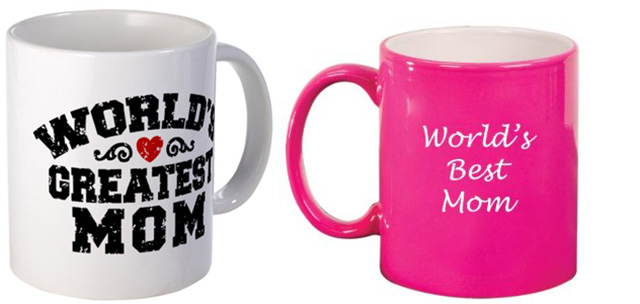
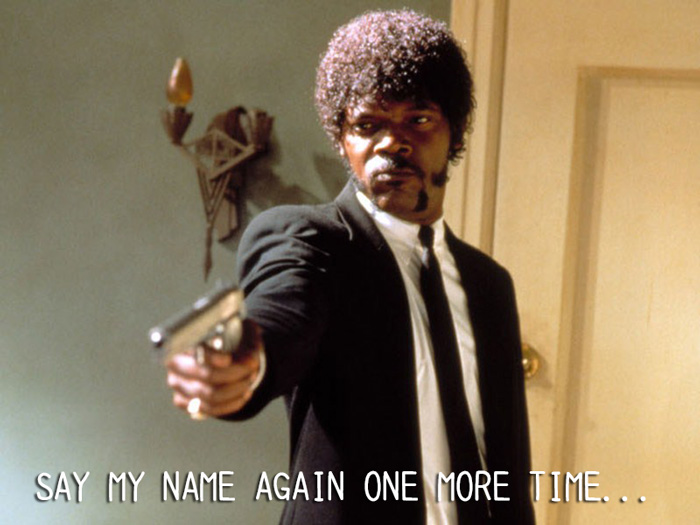
My name "Mami" (pronounced mommy) is a good example of this. Mami is quite a common name in Japan and mostly means "true beauty" or "true", but in English, it just sounds like mother. Therefore, I always feel embarrassed when I introduce myself, because I have to say, "Hi, nice to meet you. I'm Mami." It's pretty strange, isn't it? "Hi, nice to meet you. I'm Mother. Say my name." Even my teachers and my bosses have to call me Mommy!
There was a famous Japanese actor, whose name was, Yuusaku Matsuda (pronounced like "You suck" Matsuda). The name Yuusaku means "superb job" in Japan, but in English speaking places it means something very different. So sometimes, celebrities have to change their names if they want to perform in countries with other languages.

Once you remember the Japanese five basic vowel pronunciations, it's not really hard for non-Japanese people to catch or pronounce Japanese people's names. Yet, like above, they just sometimes sound so silly or very confusing. There are other problems, though, that don't even arise from incorrect pronunciation.
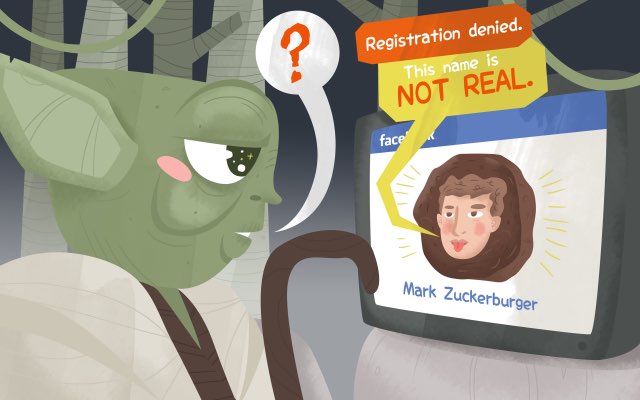
One such case was back in 2008 when author/translator Hiroko Yoda tried to register for Facebook. Turns out, she wasn't allowed to join, because her last name (a fairly common Japanese last name, btw) was Yoda, the popular Star Wars character. They were blocking her because of her name! Of course, no American has the name Yoda (well, I'm sure there were a few poor kids, actually).
Confusion with Japanese names doesn't only happen with non-Japanese people. Japanese people will get confused by Japanese names as well! So, you can feel a little bit better. In Japan, we don't really use anata あなた meaning 'you' in conversations. Instead, you have to use their names like "abc-san", "def-kun", "ghi-chan", etc. Therefore, remembering people's names is the first thing you get used to when you speak Japanese.
However, it's a little tricky when you have to guess Japanese people's name from kanji because there are different readings for even just one kanji, and names often have their own weird readings. I assume that many of you guys are probably wondering how Japanese people know how a name kanji's kanji reads if he/she doesn't know who the person is yet. Don't worry! It's actually difficult for even Japanese people, unless the kanji are usually read in a particular way in a name. That's why Japanese names in official document usually have "furigana", which is a Japanese reading aid.
Difficulty For Japanese People With Non-Japanese Names
I also have difficulty catching people's names because they are not familiar to me at all. So during introductions, if it was the first time I heard that name in English, I usually can't catch it, even if it's simple.
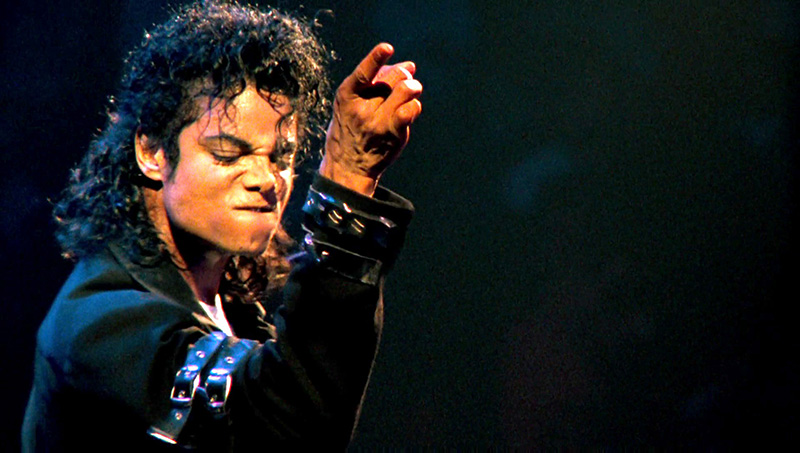
For example, even with the common name Michael, which I knew because of Michael Jackson, Michael Jordan, and other famous people, I had trouble here in Canada when a guy introduced himself to me for the first time.
"Hi, I'm Michael."
But, I couldn't catch it well, because Michael is pronounced マイケル (ma-i-ke-ru) in Japanese. Also, he said it so quickly, like "Hi'm'Michael," so it sounded like one word to me. Because of the difference in pronunciation between the Japanese version and the English version, and also because of the speed at which he said it, I was unable to understand. Perhaps if he said it slowly, "Hi, I'm M~i~ch~ae~l" I'd have gotten it. But, because it's such a common name in North America, people named Michael don't usually introduce themselves that slowly.
However, it seems that this is not only my problem but others' as well. I searched "外国人の名前" (foreigners' names) 聞き取りにくい (hard to catch)" in Google, and approximately 275,000 results came up. In the results, I found a blog called "ハーフを考えよう" which literally means "let's think about a half." You might have known already, but "a half" is used to describe a "mixed race child" in Japan. Instead of saying, for example, "I'm half Japanese and half American," Japanese people tend to say "I am half." Anyways, this blog was written by "a half" person (half Japanese and half German) named サンドラ・へフェリン (Sandra Heafelin), and she said that her name was always misunderstood by Japanese people who heard 田村 (Tamura) instead of Sandra and フェミニン (Feminine) instead of "Heafelin." Tamura is a very common name in Japan, by the way.
She also had a friend named Müller(ミュラー)and they went out ot dinner one day. Müller had made a reservation, but when they arrived at the restaurant, a server told them that they didn't have a reservation for them. However, just a moment later, they found a reservation card saying "reserved Miura-sama 三浦様, 6 people." The server mixed up Müller and 三浦, which is a very common family name in japan as well.
Of course, it doesn't stop there. Since the Japanese language is limited to fewer sounds than many Western language countries, the version of the name in Japanese is quite different from the one that's from somewhere else. Even names as simple as John can be confusing. For example, in English, John is just John, right? But, pronounced in Japanese, John sounds more like "Joan" because it is written as jyon ジョン, but in English you pronounce it like the Japanese "jan" or じゃん sound. So Joan is John and there are probably a lot of ladies named "John" out there, at least when it comes to the pronunciation in Japanese.

Outside of common names, which do have set Japanese versions, there are also less common names that don't have any really decided way to say them. Due to how Japanese works, this could mean that there is multiple ways to pronounce a foreign name. This can get confusing for both the person with the foreign name and for the people trying to say it. Miller isn't "Miller," it's mi-raa ミラー. Smith isn't "Smith," it's su-mi-su スミス. Bluth isn't "Bluth," it's bu-ru-su ブルス. To say the least, it isn't always easy to make that jump.
What's Your Name?
There is so much to be said about names. I think if you've spent some time in Japan and you have a non-Japanese name, you'll have a story or two to tell (go ahead and tell us on Twitter).
For me, I have an interesting story about my name too. When I came to Canada for the first time, I had difficulty getting a job or even an interview. Then, I encountered an article about foreign names, which could possibly prevent someone from getting hired! I got a hint from the article and decided to put an English name on my resumé. I'd taken a while to decide my name, but ended up choosing "Anna." I thought it was a cute name and easy to remember, because of the famous Japanese Airline ANA (which is pronounced the same way). It actually seemed to work, too, as I got a phone call right after handing out the "Anna" resumés. However, when I went to do the interview, I totally forgot what my made up name was! The interviewer said, "Hi, I'm ABC, and you are…?" I was like "Hi, I'm… well… uhmmmm… (made a really nice smile?)." Other than the horrible introduction I thought the interview went well. That being said, I didn't get a callback, sadly.
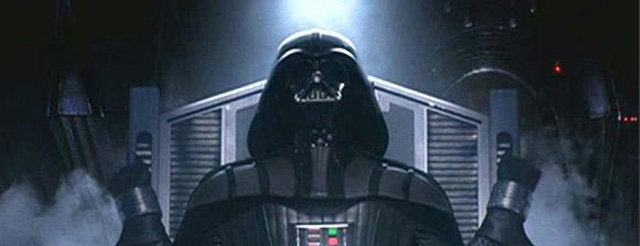
This probably happened because I hadn't gotten used to English names (and maybe I was a little too nervous). I figured that it's also difficult to memorize foreign names, even though they sound similar to some random words in your native languages.
I hope you finish this article understanding the difficulty (and humor!) of names between languages, especially Japanese. Since names are so often made up of strange sounds (even for your own language!) you can get fun results, but sometimes it can create difficult or embarrassing situations, too!