The Difficulty Of Names

Hello! My name is Mami. I am from Japan, but recently moved to Canada. Having experience with foreign people in Japan, as well as being in a foreign place (♬ Ohhh Canada ♪), one thing I have noticed is the difficulty that there is with people’s names. I wanted to share my experiences with you on this topic, because I think it’s important for everyone to think about (or at least humorous, in some cases, eh!?).

The Importance Of Names

A name is a very important element of how people identify with a person. Many celebrities’ names become a kind of symbol for that person. What do you think about when you hear the name Brad Pitt? Just think about it for a moment… Now, what would you think if I told you that Brad Pitt’s real name is Carol Christmas?

brad pitt christmas sweater
Merry Christmas, Carol

I’m sure you’d be surprised, because that’s not his real name (did I get you?). His actual real name is William Bradley Pitt, but he wouldn’t be nearly as cool with a name like Carol Christmas. Now compare this to Brad Pitt. Obviously, the coolest of them all is this one. This is how important a name is for someone’s image.

Let’s look at a couple more examples. Do any of you know who “Margaret Mary Emily Anne Hyra” or “Thomas Cruise Mapother IV” are? Maybe you can figure out the latter? The first person, Margaret Mary Emily Anne is actually Meg Ryan. Thomas Cruise Mapother IV is, and you probably guessed, Tom Cruise. Mapother is spelt M-A-P-O-T-H-E-R but it is pronounced “May bother,” with a “B.” That’s strike one in the action movie star new-name handbook right there, so he removed that part. He also shortened Thomas to Tom, just like Ryan shortened Margaret to Meg. With these shorter versions of their names it became easier for people to remember who they were.

Some people’s names don’t originate from English and can, sometimes, sound strange to English speakers. Though the pronunciation doesn’t change, what a name means in one country is not what the same name could mean in another country. For example, Lea Michele, who became famous with her role in the TV show Glee, changed her name from Lea Michele Sarfati to the shorter version: Lea Michele. It is a Jewish name that, oddly enough, means “French,” but Lea was made fun of as a child because her classmates called her “So-fatty” or “So-farty.”

Anyways, my point is: names are very important, both to the people who have the name and to the people who have to remember the name. This is especially so for Japanese, I think.

The Difficulty Non-Japanese People Have With Japanese Names

greatestmom

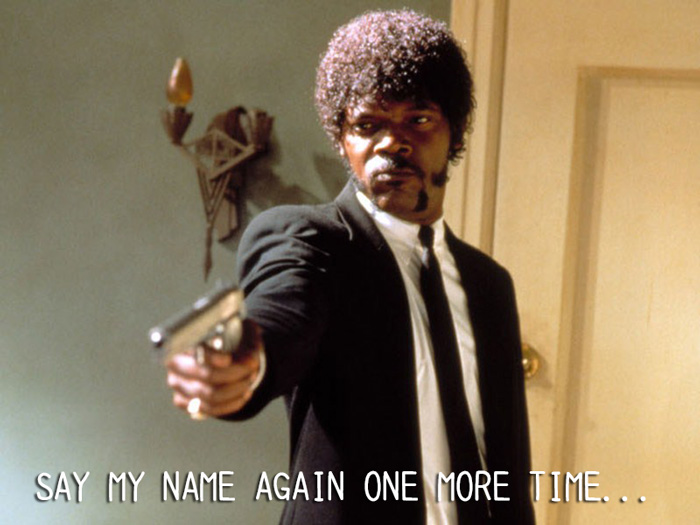
My name “Mami” (pronounced mommy) is a good example of this. Mami is quite a common name in Japan and mostly means “true beauty” or “true”, but in English, it just sounds like mother. Therefore, I always feel embarrassed when I introduce myself, because I have to say, “Hi, nice to meet you. I’m Mami.” It’s pretty strange, isn’t it? “Hi, nice to meet you. I’m Mother. Say my name.” Even my teachers and my bosses have to call me Mommy!

There was a famous Japanese actor, whose name was, Yuusaku Matsuda (pronounced like “You suck” Matsuda). The name Yuusaku means “superb job” in Japan, but in English speaking places it means something very different. So sometimes, celebrities have to change their names if they want to perform in countries with other languages.

yousuckyuusaku

Once you remember the Japanese five basic vowel pronunciations, it’s not really hard for non-Japanese people to catch or pronounce Japanese people’s names. Yet, like above, they just sometimes sound so silly or very confusing. There are other problems, though, that don’t even arise from incorrect pronunciation.

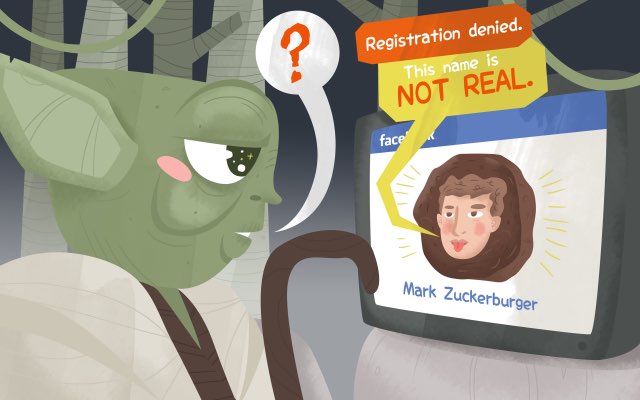
One such case was back in 2008 when author/translator Hiroko Yoda tried to register for Facebook. Turns out, she wasn’t allowed to join, because her last name (a fairly common Japanese last name, btw) was Yoda, the popular Star Wars character. They were blocking her because of her name! Of course, no American has the name Yoda (well, I’m sure there were a few poor kids, actually).

Confusion with Japanese names doesn’t only happen with non-Japanese people. Japanese people will get confused by Japanese names as well! So, you can feel a little bit better. In Japan, we don’t really use “あなた (anata)” meaning ‘you’ in conversations. Instead, you have to use their names like “abc-san”, “def-kun”, “ghi-chan”, etc. Therefore, remembering people’s names is the first thing you get used to when you speak Japanese.

However, it’s a little tricky when you have to guess Japanese people’s name from kanji because there are different readings for even just one kanji, and names often have their own weird readings. I assume that many of you guys are probably wondering how Japanese people know how a name kanji’s kanji reads if he/she doesn’t know who the person is yet. Don’t worry! It’s actually difficult for even Japanese people, unless the kanji are usually read in a particular way in a name. That’s why Japanese names in official document usually have “furigana”, which is a Japanese reading aid.

Difficulty For Japanese People With Non-Japanese Names
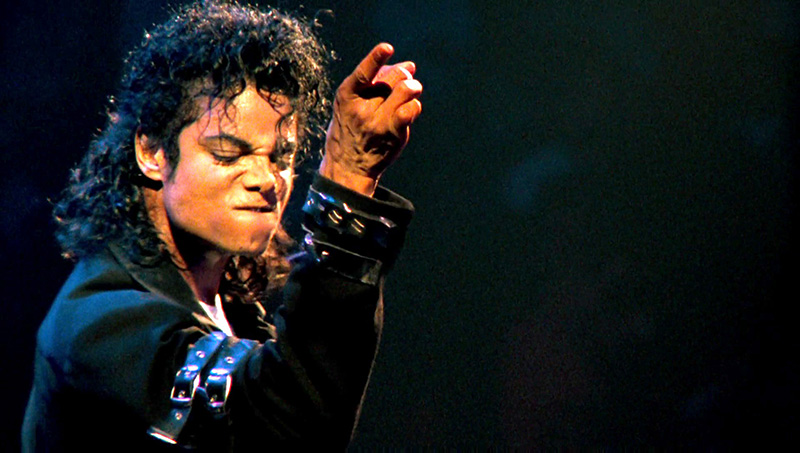
michael-jackson

I also have difficulty catching people’s names because they are not familiar to me at all. So during introductions, if it was the first time I heard that name in English, I usually can’t catch it, even if it’s simple.

For example, even with the common name Michael, which I knew because of Michael Jackson, Michael Jordan, and other famous people, I had trouble here in Canada when a guy introduced himself to me for the first time.

“Hi, I’m Michael.”

But, I couldn’t catch it well, because Michael is pronounced マイケル (ma-i-ke-ru) in Japanese. Also, he said it so quickly, like “Hi’m’Michael,” so it sounded like one word to me. Because of the difference in pronunciation between the Japanese version and the English version, and also because of the speed at which he said it, I was unable to understand. Perhaps if he said it slowly, “Hi, I’m M~i~ch~ae~l” I’d have gotten it. But, because it’s such a common name in North America, people named Michael don’t usually introduce themselves that slowly.


Hey, Michael

However, it seems that this is not only my problem but others’ as well. I searched “外国人の名前” (foreigners’ names) 聞き取りにくい (hard to catch)” in Google, and approximately 275,000 results came up. In the results, I found a blog called “ハーフを考えよう” which literally means “let’s think about a half.” You might have known already, but “a half” is used to describe a “mixed race child” in Japan. Instead of saying, for example, “I’m half Japanese and half American,” Japanese people tend to say “I am half.” Anyways, this blog was written by “a half” person (half Japanese and half German) named サンドラ・へフェリン (Sandra Heafelin), and she said that her name was always misunderstood by Japanese people who heard 田村 (Tamura) instead of Sandra and フェミニン (Feminine) instead of “Heafelin.” Tamura is a very common name in Japan, by the way.

She also had a friend named Müller(ミュラー)and they went out ot dinner one day. Müller had made a reservation, but when they arrived at the restaurant, a server told them that they didn’t have a reservation for them. However, just a moment later, they found a reservation card saying “reserved 三浦様 (Miura-sama), 6 people.” The server mixed up Müller and 三浦, which is a very common family name in japan as well.

Of course, it doesn’t stop there. Since the Japanese language is limited to fewer sounds than many Western language countries, the version of the name in Japanese is quite different from the one that’s from somewhere else. Even names as simple as John can be confusing. For example, in English, John is just John, right? But, pronounced in Japanese, John sounds more like “Joan” because it is written as ジョン (jyon), but in English you pronounce it like the Japanese “jan” or じゃん sound. So Joan is John and there are probably a lot of ladies named “John” out there, at least when it comes to the pronunciation in Japanese.

johnrivers

Outside of common names, which do have set Japanese versions, there are also less common names that don’t have any really decided way to say them. Due to how Japanese works, this could mean that there is multiple ways to pronounce a foreign name. This can get confusing for both the person with the foreign name and for the people trying to say it. Miller isn’t “Miller,” it’s ミラー (mi-raa). Smith isn’t “Smith,” it’s スミス (su-mi-su). Bluth isn’t “Bluth,” it’s ブルス (bu-ru-su). To say the least, it isn’t always easy to make that jump.

What’s Your Name?

say-my-name

There is so much to be said about names. I think if you’ve spent some time in Japan and you have a non-Japanese name, you’ll have a story or two to tell (go ahead and tell us in the comments!).

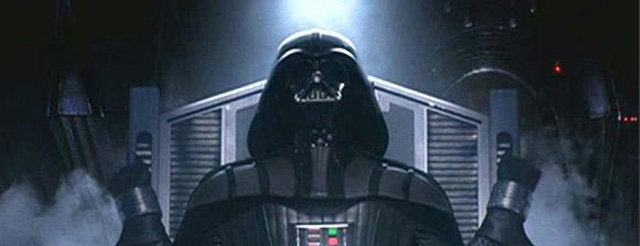
For me, I have an interesting story about my name too. When I came to Canada for the first time, I had difficulty getting a job or even an interview. Then, I encountered an article about foreign names, which could possibly prevent someone from getting hired! I got a hint from the article and decided to put an English name on my resumé. I’d taken a while to decide my name, but ended up choosing “Anna.” I thought it was a cute name and easy to remember, because of the famous Japanese Airline ANA (which is pronounced the same way). It actually seemed to work, too, as I got a phone call right after handing out the “Anna” resumés. However, when I went to do the interview, I totally forgot what my made up name was! The interviewer said, “Hi, I’m ABC, and you are…?” I was like “Hi, I’m… well… uhmmmm… (made a really nice smile?).” Other than the horrible introduction I thought the interview went well. That being said, I didn’t get a callback, sadly.

darth-vader-no
ANNNNNAAAAAAAAAA!

This probably happened because I hadn’t gotten used to English names (and maybe I was a little too nervous). I figured that it’s also difficult to memorize foreign names, even though they sound similar to some random words in your native languages.

I hope you finish this article understanding the difficulty (and humor!) of names between languages, especially Japanese. Since names are so often made up of strange sounds (even for your own language!) you can get fun results, but sometimes it can create difficult or embarrassing situations, too!

  • Mami

    That’s a nice nickname! イカちゃん。イカしてるぜぃ!!

  • Mami

    I didn’t even know until I read his(I supposed his, but correct me if I’m wrong) comment!

  • Dharma Mauricio

    My name is Dharma, so in Japanese I become a daruma doll. Is that too weird?

  • sora_1326

    Well, I think that if I ever go to Japan, my name will sound funny… My last name can actually be used as a male name! I guess people will ask me if my last name is my name or… Wah, it sounds confusing XXXXDD

    Mami-san, I guess “onakasuita” sounds like “una casita” (“a little house”) in Spanish, right?? XD

  • Mami

    Your comment just made me determine to learn how to pronounce my neighbor’s son’s name. His name is マーリー and their dogs names are マーリー and モーリー. They all spell differently, but I can only tell the difference between モーリー and マーリー…I tried to learn the difference between マーリー and マーリー and gave up because I couldn’t get it. I will try again!

  • Mami

    Yay!

  • MisterM2402

    In Britain, John is pronounced pretty much like ジョン; it’s one of the names that transliterates quite well to Japanese. You can’t say it should be close to the “original, native pronunciation” because your “native pronunciation” is different to my “native pronunciation”, and I’m sure some people would think ジャオン should be the correct pronunciation. And there’s nothing wrong with them pronouncing it differently to you – if you came to Britain, you wouldn’t expect me to put on a faux American accent and call you “Jan” because that’s not how I (or anyone else here) say it.

  • Anthony Chaulklin

    I really liked the article I never thought about how Japanese names sounded in English while I lived in Japan. I’m interested on how they would say my name since it is a odd one. I always was super informal and introduced my self as ト二.

  • Dy!

    I just realized the japanese pronunciation of my last name would sound similar to Khaleesi. . . it appears I am destined to sit upon an the iron throne of a mad king

  • Esperanza

    I’m from Spain, and my name means “Hope”, so I’ve always introduced myself as “望” (“のぞみ”). I’ve been studying Japanese for… Forever! So when I introduce myself with a name that is also used in Japan people ask me if I am half Japanese (since my pronunciation/speaking level is advanced and I have black, straight hair and dark brown eyes, and I’m fairly petite in size). I <3 Japan and can't wait to move!!

  • Mami

    Wow! Yeah, it sounds a bit odd to me. I wouldn’t say too weird though! It’s still a cool name.

  • Mami

    I’ve heard that other people confused it before too, but デブ actually means fat.

  • happyme

    Very interesting article! My first name is the same as a famous singer. I looked up how her name was written in Japanese and it’s ホイットニー.

  • Michelle Montaño

    My last name is pronounced “Montanyo” because of the Spanish “ñ”. Before I began learning Japanese, I joined a fan club based in Japan. Instead of “モンタニョ” (mon-ta-nyo), my name on my fan club ID card was “モンタロ” (mon-ta-ro). I didn’t notice until I began learning Japanese many years later.

  • legendofleo

    When I first started Japanese class at uni I picked the closest sounding transliteration of Leo, リオ. But all characters and famous people with my name seem to have it written as レオ so I changed to that.

  • Matt Bird

    Interesting article, recently I’ve been toying with the idea of introducing my self with my name in my accent, Matt rather then マット which sounds like mutt to me. I wonder how well this would go down. That or if resigned to Japanese pronunciation I could be tricky about it and use the kanji 神贈 for my name is it is direct to the name meaning, Gods gift, and just be prepared for people to assume my name is しんぞう.

  • zachary T

    wow, very interesting article. thank you for the insight! ^_^

  • Kyah

    My name is Kyah which can be written カヤ or カイヤ. I chose the first since its quicker to write, also a name in Japanese (華弥), and when said quickly they sound more or less the same. Sometimes when meeting Japanese people, it still takes them a moment to figure out my name, probably because they expect it to be more like a western name and think they are hearing it incorrectly. Then when it’s written, sometimes people will use the second spelling. It doesn’t bother me unless it’s for something important though. People misspell and mispronounce my name in English all the time too lol

  • NateFren

    I’ve not had much difficulty with Japanese names. It just takes a little bit of time to learn how to pronounce them somewhat competently. My first name, “Nathan”, can’t properly be pronounced in Japanese though, so it becomes “Nesan” (ネサン), which is unfortunately close to “姉さん”.

    I’ve had trouble with speakers of other languages too. For some reason, many Europeans have had trouble pronouncing “Nate”, which is the name I normally go by. In Thailand, many people have had trouble pronouncing Nate as well, despite the fact that all those sounds required to pronounce it correctly already exist in Thai (Nate = เนม, which would end up being “Neito” (ネート) in Japanese). I’ve also noticed that the Thai people transliterate the “th” sound differently than in Japan. If it were pronounced that same way as in Japanese, it would be “Nesan” (which I think is written เนสน) but instead it’s “Naa-thaan” with the “th” pronounced the same way as in the word “Thailand” (with the h being “silent”). That’s written as นาธาน (ナーターン).

  • naoko

    I had a friend whose name was “Mami Aso”. Whoa! Another friend’s name was “Saiko” and wonder how people would react when she introduces herself, “Hi, I’m Saiko (psycho).”

  • Paulo

    I
    understand how difficult it is to know names, especially if it’s not in your
    native language. I guess it’s like studying the language as well.

  • Vincenza Vicky Maione

    Hi!

    first of all, your English is soo good! it doesn’t really sound like you’re a foreigner (I mean, a non-native English speaker).
    When I was 16 I went to my aunt’s place in Las Vegas, travelling alone with my little brother. Before even landing to the Us, we met this really nice girl in the airplane – she was sitting just close to us – and, once she introduced herself, we took a while to understand her name: it was Jennifer. A name quite heard by Italians – we watch like 95% of American movies, tv series etc. – but since in Italy we only watch dubbed things, we were used to the sound of the name like an Italian would say it: similarly to Japanese (we have the same vowels, that’s why the transcription system is called ローマ字), the sound is nice and clear: ジェンニフェル [accent on Je, "f" like an English f, and strong "r" sound more or less like Spanish r]. But she was saying it in a way I totally couldn’t figure out!
    Moreover, when I was at my aunt’s, my cousins were talking about their dad’s best friend, called Donato (quite an uncommon name for an Italian too). it took so long to catch the word, since what my bro and I could hear was “Donado”. That’s because USA English [t] and [d] are not dental sounds, like Italian and Japanese (which means, we make the sounds hitting the rear of our front teeth with our tongue), but are alveolar (it means, Americans lightly heat the rear part of their gums, just up the front teeth: the so-called alveoli or “sockets”).
    Again, my American cousin’s name is Angelo. Quite a common name for an Italian native speaker. It’s pronounced [Un-gel-o] (“E” really clearly said, like “gem”; “o” is short; accent on “A”). But in his family we heard two pronunciations: his parents called him as an Italian would; but his sister – who is an English native speaker too – called him [An-g(e)-low] (the “a” sound was like the Eng word “cat”; the “e” sound was almost deaf; and the final vowel was lenghtened, getting me to hear “o” at first and then the sound for “boot”).
    And, my name (Vincenza, it’s more or less like [veen-chan-tsuh]) was pronounced roughly [vee-chan-zuh] lol

    in Japan, I had big trouble in remembering people’s names. Since I had studied Japanese for years – and since Italian sound system is very similar to Japanese one – I had few problems in understanding names once people introduced themselves (the only thing is, Japanese tend to say the last mora as deaf sound: so, if they want to say Takagi, you’ll hear Taka[gi]-desu). But, I came into a bunch of misunderstandings or unpolite attitudes. For example, let’s take this Takagi-san. He is a guy I was working with when I was in Japan, and at first I felt comfortable with him since I knew he was slightly older than me. He introduced himself as Takagi, but unfortunately I had immediately forgotten his name and felt ashamed to ask him again. So, one day he looked really tired and I decided to make him some ice tea to cheer him up. When I gave him the glass, he tought it was for someone else having asked for it. Because he didn’t get it was for him, I yelled “オマエのためだよ!” I realized it was not the best thing to say, but still, I didn’t know how to say “you”… in Kyoto I called an old man with “anata”, and he scolded me for saying that word. But, I didn’t know I could use words like oniisan, ojiisan and so on lol

    In Japan I rarely used my native name. Since Vincenzo is translated into English also as Vincent (but it’s only a masculine name), I often use the nickname Vicky (which normally stands for “Victoria” /Vittoria in Italian/). It was the best option since I was at TUFS and lots of students either were native English speakers or could speak English really well;
    but it was not for the Japanese, who took some effort to catch my name. Eventually, my name changed from ヴィッキー [vikkii] into ビッキー [bikkii], and I sometimes sign myself with the kanji 美貴, so that people often end up calling me “Miki”.
    The weird thing is, they sometimes call me “miki” even if I say “bikkii”, without showing them the kanji!
    So, from Vincenza to Veechanzuh, from Vicky to Bikkii to Miki!

    Last thing: since Italians have the same character [z] for the sounds [ts] and [z], it can happen that names are badly spelt so that Japanese don’t get the right reading: As a beginner, I used to write ヴィンチェンザ instead of ヴィンチェンツァ!!

    It was long, but I hope you enjoyed my experience with names abroad!

  • Carthegian

    I’m pretty lucky that my name is quite easy to pronounce in Japanese. It’s Reza, and always written as レザ easily.

    The only downside is that if my name is written (and pronounced) as レーザ, I’ll be a laser beam.. hahaha

  • Vincenza Vicky Maione

    I agree with you. My bachelor thesis was about loanwords into Japanese, and it actually depends on when the foreign word was borrowed and on who brought it to Japan.
    Take the Portuguese, they were the very first Westeners to come to Japan in 1549. They brought the main vocabulary concerning christianity, since their aim was to christianize the Country: that’s why we have イエズス会 ([Iezusu kai, "Company of Jesus"])、キリスト (“Kirisuto”, Christ)、マリア様 (“Maria-sama”, the holy Mary、デウス(“deusu”, one of the words for God). But it doesn’t stop to that: the word パン is as old as the late 1500s in Japan, since it came with the portuguese and their corresponding “pao”. That’s why it doesn’t sound like “bureddo” from bread.

    In short, Yohane came with the Potuguese > John comes from the Latin Ioannes, Iohannes; in Portugues it’s João. The reason for the “i” sound can be due either to their pronunciation of the Portuguese word (which I don’t know), or to the fact the monks stuck to the Latin version while preaching in Japan.
    But when the Americans came in 1854 (Am I right?), the majority of loanwords shifted from portuguese-dutch (in Japan since 1600) to English, and now the largest majority of loanwords comes from English: modern names included.

    Actually there are some rules to determine the realization of the loanword in Japanese. Many of them concern the way Japanese perceive sounds. it’s not a thing of Japanese language alone, but of almost all students learning a second language. Each language has its own “phonetic inventory”, which is, among the many phones in the world, each language picks just some of them. The native speakers are not used to phones that are not included in their phonetic inventory, so the brain tries to “fix” the unknown sound into a sound from the native language. Ex: Germans can’t say “j” or “d” sounds, and they eventually end up saying “ch” or “t”; Italians can’t say “th” or “dh” or “flap r”, and they substitute those sounds with “t”, “d”, “italian r”. As for Japanese:
    - Sounds like “er” are perceived as the long vowel “aa” in Japanese: japanese don’t have this kind of r – which is very light – so if you say “player” they’d hear “pureeyaa”.
    - in Japanese there are NO consonants alone. there is no way a consonant is pronunced without a vowel. That’s why japanese try to stick a vowel to each consonant, like this –> they put [o] to sounds like t/d (trainer becomes “toreenaa”); they put [u] to sounds like k/g (credit becomes “kurejitto”); they put [i] to sounds like chi/ji (frange becomes “furenji”, challenge “charenji”)
    - The sound w is perceived as “u” –> switch turns into “suicchi”
    - the sound “f” doesn’t exist in japanese, it is replaced with the sound フ [fu] where the f is a bilabial (different symbol in IPA): so, as for the other consonants, it has the vowel “u” if there are no other vowels –> flat is pronounced “furatto”
    - the sounds [th] and [dh] are perceived as [s] and [z]: “Ruth” can easily become [Ruusu]. “The” is often written as [za] (deaf sound “e” doesn’t exist in Japanese, so they try to replace it with “a”). “Brother” becomes [buraazaa] (since the IPA sound is /ˈbrʌðər/, you’ll soon understand that “o” [ʌ] is pronunced as an open Japanese “a”)
    look at this link and try and click the [ʌ] and [ɑ] –> http://en.wikipedia.org/wiki/IPA_vowel_chart_with_audio
    We Italians don’t have [ʌ] sound either: same problem! But I guess we like to say things the way we read them, so you could hear “Br-o-de-R” from an Italian, because we read there is a “o” in the word lol

    It is useful to look up the dictionary either in English and in Japanese to get an idea of how the mind of the Japanese works when hearing unknown sounds. English speakers get puzzled because they probably look at the spelling (which also Italians do), but actually one should compare the IPA transcription of an English word with its Japanese resultant.

    Then there are rules about shortening (Japanese words can hardly be longer as 4 moras, so words are shortened): te-re-bi-jo-n becomes terebi (television, 3 moras); air conditioner becomes e-a-ko-n (4 moras).
    In italian, accented syllabe gets lenghtening into Japanese: /a.’mo.re/ (love) becomes “amoore”.

    Lastly, there are some cases of distinction between words: the word “pizza” is the same either for English speakers and Italians (btw, WE invented pizza! u.u). But, in Italian is pronounced as [pitts-uh], in English as [pee-zuh]. The Japanese which way should adopt?
    The first to introduce pizza into Japan were the Americans, not the Italians. So Japanese adopted the English pronunciation (ピザ). But, since the 80′s, Japanese people discovered the different taste of Neapolitan pizza, and to distinguish it from the American type, they call it pittsa –> ピッツァ! So, we have Domino Piza (ドミノピザ)and Napori pittsa (ナポリピッツァ).

    Linguarum, you can’t control the way others will phonetically perceive your own language. Even if an Italian said your name, you’d feel something’s wrong. Because we just don’t have your phones in our language system, so sorry! :)

  • Jonathan Harston

    “Mommy” in American and British English is pronounced “moh me”, “モミ”, ike “money” but with an “m”.

    “Mammy” in American and British English is pronounced “mah me”, “マミ”, like “marry” but with an “m”.

  • Afoofoo

    Murdaz?

  • Shan

    I wonder how my name, “Shannon” would be pronounced in Japan?

  • Lưu Vĩnh Phúc

    In fact there’s no restriction on the pronunciation of a Kanji, so you can give your child a name such as 地球 and apply your own preferable pronunciation like アース Āsu which also means Earth
    https://en.wikipedia.org/wiki/Kanji#When_to_use_which_reading

    Even Japanese don’t know which is the most correct way for pronouncing a name. For example a very common name 田中 can have many other pronunciations such as 【でんちゅう】 Denchuu (s,g) 【たなた】 Tanata (s) 【たんか】 Tanka (s) 【だなか】 Danaka (s) 【なたか】 Nataka (s) 【ぬなか】 Nunaka (s) 【のなか】 Nonaka (s) 【ひろか】 Hiroka (s) 【やなか】 Yanaka (s) beside 【たなか】 Tanaka (p,s,f). You can check this with a name dictionary (I suggest wwwjdic).

    In my company as well as partner companies there’s many Chinese and Koreans and most of them use their original names transliterated to Japanese. For example a colleague of mine whose name is 虹逸 gives a furigana as ほんい on her credit card which is most close to the romanized name “Hongyi”. Another Korean I know whose name in Kanji is 在訓 reads his name as ジェフン. Some of them still use the Japanese onyomi for their name. It’s all depends on your preference

  • Applesauce 21

    My name has, like, 8 possible katakana combinations XD

  • Lưu Vĩnh Phúc

    FYI: Shannon would be transliterated as シャノン (Shanon)

  • Lưu Vĩnh Phúc

    Japanese have many Romanization systems too. The one you’re most familiar with is called Hepburn romanization. This system is most widely used abroad as well as at Japan stations because it can help a person with no Japanese language knowledge can read as close to the original sound as possible

    But Japanese people usually use the Kunrei-shiki system because it reflects exactly the Japanese alphabet and grammar. You may seem strange with words such as Huzi but in fact it’s another way to transliterate Fuji. Likewise, Japanese people often type tuuti, tyuugoku, zinzya, zyuusyo… instead of tsuuchi, chuugoku, jinja, juusho. This often makes me confused too.

    https://en.wikipedia.org/wiki/Romanization_of_Japanese

    And with the name problem above, you can always use the furigana solution. One of my friend whose name in Kanji is 在訓 (maybe Jae Hoon or something like that) writes the furigana as ジェフン

  • Mami

    Wooooooow! Thank you for very fascinating post!!! I’ll take time to read your post soon, but now will quickly answer your question: ‘ when the Americans came in 1854 (Am I right?)’. The first American who arrived in Japan was John Manjiro and it was in 1841. Not many people know, but actually 3 Japanese people (started at 14 people) already landed America in 1834. The arrival of the black ship from America was 1853.

  • Mami

    Saiko, raelly? I’ve never heard of that name, though I know some girls named Saeko…it’s close enough to psycho pronunciation…how did you actually react when you hear her name ‘Saiko’?? :D

  • Mami

    8!?!? That’s quite a lot…

  • Mami

    I agree.

  • Mami

    A laser beam is cool though!

  • Mami

    Arigatou Vincenza san. Koichi actually fixed my English mistakes:P hehe
    Your post is always very interesting.

  • Mami

    Oh no! It’s tricky if you don’t know how to pronounce the letters, is it?

  • Mami

    arigatou

  • Mami

    soudesu una casita!! :D isn’t sora your last name, is it?

  • Mami

    arigatou! Though Japanese people have difficulty pronouncing th sounds, アンソニー isn’t difficult name in Japan, I suppose. :)

  • Mami

    Game of Thrones!

  • Mami

    Wow, you must be a very serious learner! Sugooooooi, nozomi-chan.

  • Mami

    Right! We sometimes katakanized from ‘what’ to ホワっと or from ‘when’ to ‘ホエン’ too.

  • sora_1326

    I had to repeat “onakasuita” quickly to get it XDDD

    Oh, no no, I pick Sora as my nickname~ I’ll be risky and say that my last name is a God in Greek mythology~ And no, it’s not Zeus ww

  • Mami

    Ah, that’s a cool name. レオ indicates a white lion because of an anime called ジャングル大帝レオ. Does that your name Leo actually mean? Lion.

  • Mami

    Sounds like a plan!

  • Mami

    Ah, I think カヤ was a better choice, actually. We have a little bad impression for the name カイヤ because of 恐妻家カイヤ. ((http://www.japantimes.co.jp/news/2001/09/02/national/they-say-breaking-up-in-public-is-hard-to-do/))

  • Mami

    It’s a little strange to me that many Europeans and Thailand people have had trouble pronouncing “Nate”. It’s pretty quick and simple pronunciation….

  • Mami

    Yeah, for sure!!!