The Difficulty Of Names

Hello! My name is Mami. I am from Japan, but recently moved to Canada. Having experience with foreign people in Japan, as well as being in a foreign place (♬ Ohhh Canada ♪), one thing I have noticed is the difficulty that there is with people’s names. I wanted to share my experiences with you on this topic, because I think it’s important for everyone to think about (or at least humorous, in some cases, eh!?).

The Importance Of Names

A name is a very important element of how people identify with a person. Many celebrities’ names become a kind of symbol for that person. What do you think about when you hear the name Brad Pitt? Just think about it for a moment… Now, what would you think if I told you that Brad Pitt’s real name is Carol Christmas?

brad pitt christmas sweater
Merry Christmas, Carol

I’m sure you’d be surprised, because that’s not his real name (did I get you?). His actual real name is William Bradley Pitt, but he wouldn’t be nearly as cool with a name like Carol Christmas. Now compare this to Brad Pitt. Obviously, the coolest of them all is this one. This is how important a name is for someone’s image.

Let’s look at a couple more examples. Do any of you know who “Margaret Mary Emily Anne Hyra” or “Thomas Cruise Mapother IV” are? Maybe you can figure out the latter? The first person, Margaret Mary Emily Anne is actually Meg Ryan. Thomas Cruise Mapother IV is, and you probably guessed, Tom Cruise. Mapother is spelt M-A-P-O-T-H-E-R but it is pronounced “May bother,” with a “B.” That’s strike one in the action movie star new-name handbook right there, so he removed that part. He also shortened Thomas to Tom, just like Ryan shortened Margaret to Meg. With these shorter versions of their names it became easier for people to remember who they were.

Some people’s names don’t originate from English and can, sometimes, sound strange to English speakers. Though the pronunciation doesn’t change, what a name means in one country is not what the same name could mean in another country. For example, Lea Michele, who became famous with her role in the TV show Glee, changed her name from Lea Michele Sarfati to the shorter version: Lea Michele. It is a Jewish name that, oddly enough, means “French,” but Lea was made fun of as a child because her classmates called her “So-fatty” or “So-farty.”

Anyways, my point is: names are very important, both to the people who have the name and to the people who have to remember the name. This is especially so for Japanese, I think.

The Difficulty Non-Japanese People Have With Japanese Names
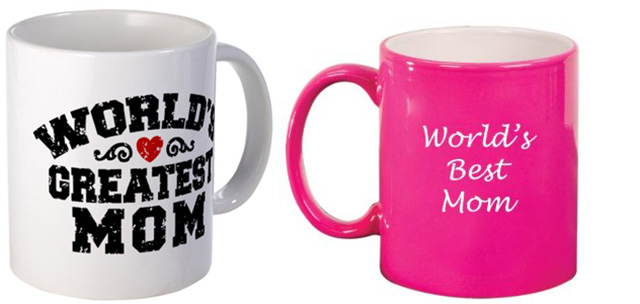
greatestmom

My name “Mami” (pronounced mommy) is a good example of this. Mami is quite a common name in Japan and mostly means “true beauty” or “true”, but in English, it just sounds like mother. Therefore, I always feel embarrassed when I introduce myself, because I have to say, “Hi, nice to meet you. I’m Mami.” It’s pretty strange, isn’t it? “Hi, nice to meet you. I’m Mother. Say my name.” Even my teachers and my bosses have to call me Mommy!

There was a famous Japanese actor, whose name was, Yuusaku Matsuda (pronounced like “You suck” Matsuda). The name Yuusaku means “superb job” in Japan, but in English speaking places it means something very different. So sometimes, celebrities have to change their names if they want to perform in countries with other languages.

yousuckyuusaku

Once you remember the Japanese five basic vowel pronunciations, it’s not really hard for non-Japanese people to catch or pronounce Japanese people’s names. Yet, like above, they just sometimes sound so silly or very confusing. There are other problems, though, that don’t even arise from incorrect pronunciation.

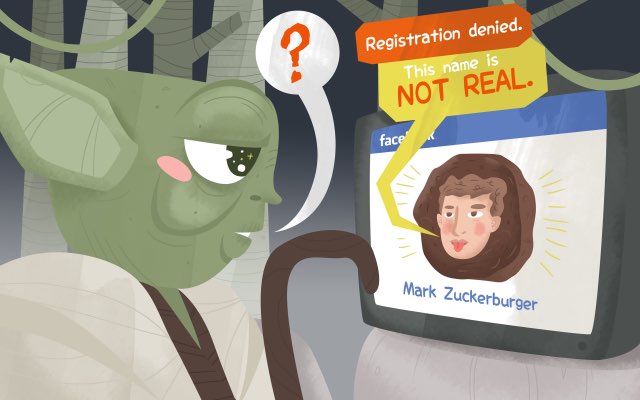
One such case was back in 2008 when author/translator Hiroko Yoda tried to register for Facebook. Turns out, she wasn’t allowed to join, because her last name (a fairly common Japanese last name, btw) was Yoda, the popular Star Wars character. They were blocking her because of her name! Of course, no American has the name Yoda (well, I’m sure there were a few poor kids, actually).

Confusion with Japanese names doesn’t only happen with non-Japanese people. Japanese people will get confused by Japanese names as well! So, you can feel a little bit better. In Japan, we don’t really use “あなた (anata)” meaning ‘you’ in conversations. Instead, you have to use their names like “abc-san”, “def-kun”, “ghi-chan”, etc. Therefore, remembering people’s names is the first thing you get used to when you speak Japanese.

However, it’s a little tricky when you have to guess Japanese people’s name from kanji because there are different readings for even just one kanji, and names often have their own weird readings. I assume that many of you guys are probably wondering how Japanese people know how a name kanji’s kanji reads if he/she doesn’t know who the person is yet. Don’t worry! It’s actually difficult for even Japanese people, unless the kanji are usually read in a particular way in a name. That’s why Japanese names in official document usually have “furigana”, which is a Japanese reading aid.

Difficulty For Japanese People With Non-Japanese Names
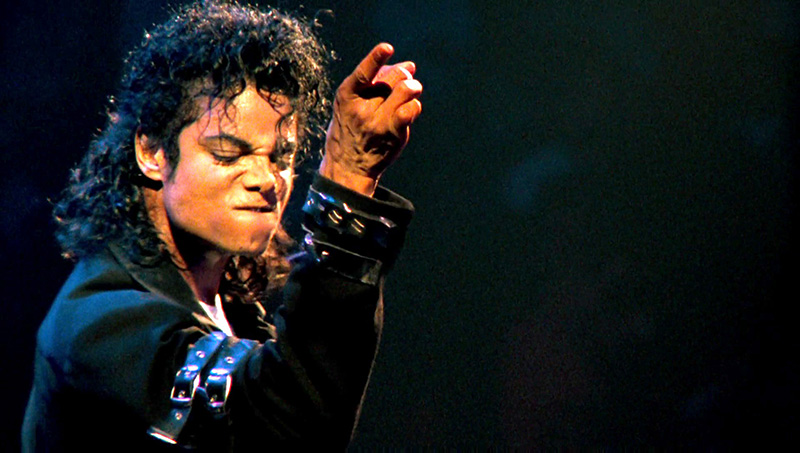
michael-jackson

I also have difficulty catching people’s names because they are not familiar to me at all. So during introductions, if it was the first time I heard that name in English, I usually can’t catch it, even if it’s simple.

For example, even with the common name Michael, which I knew because of Michael Jackson, Michael Jordan, and other famous people, I had trouble here in Canada when a guy introduced himself to me for the first time.

“Hi, I’m Michael.”

But, I couldn’t catch it well, because Michael is pronounced マイケル (ma-i-ke-ru) in Japanese. Also, he said it so quickly, like “Hi’m’Michael,” so it sounded like one word to me. Because of the difference in pronunciation between the Japanese version and the English version, and also because of the speed at which he said it, I was unable to understand. Perhaps if he said it slowly, “Hi, I’m M~i~ch~ae~l” I’d have gotten it. But, because it’s such a common name in North America, people named Michael don’t usually introduce themselves that slowly.


Hey, Michael

However, it seems that this is not only my problem but others’ as well. I searched “外国人の名前” (foreigners’ names) 聞き取りにくい (hard to catch)” in Google, and approximately 275,000 results came up. In the results, I found a blog called “ハーフを考えよう” which literally means “let’s think about a half.” You might have known already, but “a half” is used to describe a “mixed race child” in Japan. Instead of saying, for example, “I’m half Japanese and half American,” Japanese people tend to say “I am half.” Anyways, this blog was written by “a half” person (half Japanese and half German) named サンドラ・へフェリン (Sandra Heafelin), and she said that her name was always misunderstood by Japanese people who heard 田村 (Tamura) instead of Sandra and フェミニン (Feminine) instead of “Heafelin.” Tamura is a very common name in Japan, by the way.

She also had a friend named Müller(ミュラー)and they went out ot dinner one day. Müller had made a reservation, but when they arrived at the restaurant, a server told them that they didn’t have a reservation for them. However, just a moment later, they found a reservation card saying “reserved 三浦様 (Miura-sama), 6 people.” The server mixed up Müller and 三浦, which is a very common family name in japan as well.

Of course, it doesn’t stop there. Since the Japanese language is limited to fewer sounds than many Western language countries, the version of the name in Japanese is quite different from the one that’s from somewhere else. Even names as simple as John can be confusing. For example, in English, John is just John, right? But, pronounced in Japanese, John sounds more like “Joan” because it is written as ジョン (jyon), but in English you pronounce it like the Japanese “jan” or じゃん sound. So Joan is John and there are probably a lot of ladies named “John” out there, at least when it comes to the pronunciation in Japanese.

johnrivers

Outside of common names, which do have set Japanese versions, there are also less common names that don’t have any really decided way to say them. Due to how Japanese works, this could mean that there is multiple ways to pronounce a foreign name. This can get confusing for both the person with the foreign name and for the people trying to say it. Miller isn’t “Miller,” it’s ミラー (mi-raa). Smith isn’t “Smith,” it’s スミス (su-mi-su). Bluth isn’t “Bluth,” it’s ブルス (bu-ru-su). To say the least, it isn’t always easy to make that jump.

What’s Your Name?

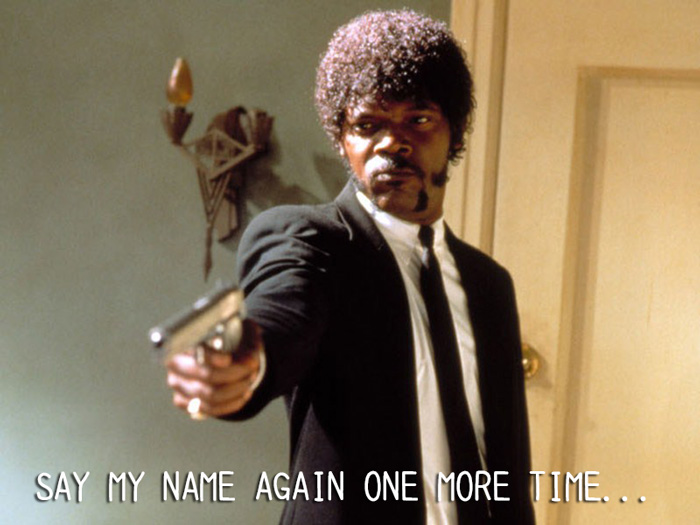
say-my-name

There is so much to be said about names. I think if you’ve spent some time in Japan and you have a non-Japanese name, you’ll have a story or two to tell (go ahead and tell us in the comments!).

For me, I have an interesting story about my name too. When I came to Canada for the first time, I had difficulty getting a job or even an interview. Then, I encountered an article about foreign names, which could possibly prevent someone from getting hired! I got a hint from the article and decided to put an English name on my resumé. I’d taken a while to decide my name, but ended up choosing “Anna.” I thought it was a cute name and easy to remember, because of the famous Japanese Airline ANA (which is pronounced the same way). It actually seemed to work, too, as I got a phone call right after handing out the “Anna” resumés. However, when I went to do the interview, I totally forgot what my made up name was! The interviewer said, “Hi, I’m ABC, and you are…?” I was like “Hi, I’m… well… uhmmmm… (made a really nice smile?).” Other than the horrible introduction I thought the interview went well. That being said, I didn’t get a callback, sadly.

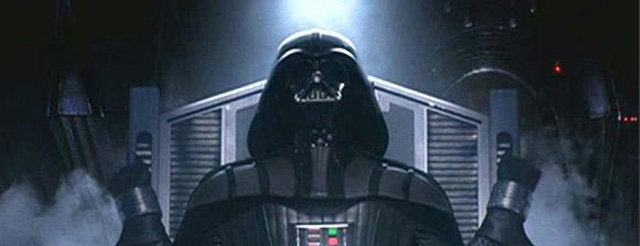
darth-vader-no
ANNNNNAAAAAAAAAA!

This probably happened because I hadn’t gotten used to English names (and maybe I was a little too nervous). I figured that it’s also difficult to memorize foreign names, even though they sound similar to some random words in your native languages.

I hope you finish this article understanding the difficulty (and humor!) of names between languages, especially Japanese. Since names are so often made up of strange sounds (even for your own language!) you can get fun results, but sometimes it can create difficult or embarrassing situations, too!

  • Mami

    Ohayou! Moshikashite, konaida ‘Oyasumi’ tte wanikani de itte kureta?? :P

  • Ankotaro

    Nope, you got it. 四世です。

    Actually, no one knew how to write all of it when I asked my grandma a few months ago (though she did keep saying that the 家紋 looked like a bunch of mochi) so we went digging around my grandma’s house until we found the wood block that she’d had our name painted on a long time ago.

  • Steve

    Technically, I can pronounce my wife’s name, Anna – but it is really, really hard for me to do so with my American pronunciation. I very rarely say it correctly – and even when I know for a fact I am saying it correctly, my wife insists I’m not (I totally am).

    On the flip side, my wife absolutely cannot pronounce my name at all – Steven. Intellectually, she knows how it should sound – she even knows exactly what she’s doing wrong in pronouncing it. But it is beyond her. She doesn’t speak much English beyond “I need this” and “It’s cancer.”

    Has anyone in the comments mentioned the name “Yudai” yet? I mean, “Mami” is an obviously difficult name to have in the English-speaking world, but “Yudai”? A “Yudai” registered at my school, and my boss took one look at his name and said, “Steve, find this boy a new name.”

    Something else I don’t know if you mentioned is that Japanese people (in Shikoku, at least) ALWAYS mumble their names. It’s weird, because almost everyone I talk to will speak slowly and clearly and then tear through their names. Like, “Hi…my…name…is…Ydaitkahshi” And I’m like, “What?”

    And of course, they panic, and are like, “Mai neimu izu…” And I’m just like, “No, show me your name in kanji. That will be easier.”

  • Steve

    I recently had a student named “政平” who explained that her name is rare and no one can read it. I still don’t know what it is, because her given name was “Sachi” and even in kanji was easy to read, and she told me to just call her that.

    The thing with names is you really just have to learn as many readings for as many kanji as you can, but one day you’ll kind of have a breaking point where you start to understand the names you see. There really are patterns,and it is easier than people make it out to be.

  • Steve

    Japanese names aren’t as hard as they seem. There are patterns to them, and you start to recognize them. With given names, though, people start to use alternate readings that go well into the realm of unreadable, even for Japanese people. There’s no shame in asking for furigana for someone’s given name. There’s a reason all forms – post office, government, electronics store – require furigana for names.

  • Steve

    Nozomi should not be confusing for Americans, and if it is, the people your friend associates with are straight-up stupid. Japanese names are not that hard once you put them in Latin script.

    Seriously. You have to be a complete moron to be unable to read a Japanese name in English.

  • Mami

    I see. That’s pretty cool that you found how to write your family name! Now I want to see your 家紋 looking like a bunch of mochi. haha

  • duncan

    I’ve always been taught to write and say my surname as マリー. I haven’t had any problems with it before, but I often wonder if Japanese people will mistake it for “Marie” – maybe a bit confusing since I’m a guy!

  • Yuuichi

    I actually decided to change my name when speaking to my JP friends and switch back with my UHMurican friends :u

    So one day, i ran into some of my meerrican friends with my JP buddies and things got wierd when i introduced them to eachother.

    Murrican Friend 1: Hey Lyon, whats up

    Me: Hey whats up, this is TOMODACHI 9001, TOMODACHI 9002, TOMODACHI 9999999999.

    JP Frendo 1: Hi, my name is Kento, how are you?

    Murrican Friend 2: IM DOING GREEAT! These your friends Lyon?

    JP Frendo 3: Lyon? I thought his name was Yuuichi?

    The end result

    Both my JP friends and my american friends call my Yuuichi xD

  • Yuuichi

    What is this monstrocity of an avatar! ಠ_ಠ
    KOICHI-KUUUUUUUUUN!

  • Leliel

    I’m really lucky with my name, it’s just アダム, so I’m sure that’s easy enough! And my last name doesn’t appear to mean anything in Japanese either. It’s Nelan, an uncommon last name. I tend to write it as ニーラン in katakana.

  • Leliel

    Although, I have had a few problems in English where some people have thought my last name is “Melon”, which would make me A. Melon :P

  • Ankotaro

    Haha well, I was totally nonplussed by that at first but then my mom chimed in that she just remembered it looking like the 鏡餅. For some reason this computed, and I pulled up the 紋 for the 毛利 clan (which I totally did not learn from a video game >.>) and asked if it looked something like that. Both of them were all like, “Meh, close but not quite. Think the bar thingy was on the bottom.”

    So I figure it probably looks like #54 on this picture here: http://www.catseye.co.jp/koinobori/mise/img/kamo.jpg

  • レオン ˘( O ¸o)/˘

    I’ll start by memorizing readings, though I’m looking forward to that breakthrough. XD

  • Tanya

    My name Tanya ends in ニャ. Does it sound like I’m trying to be cute?

  • 古戸ヱリカ

    No, I just swiped it from the Internets. I also didn’t make Def Leppard, but I guess that goes without saying.

  • Stealth

    My name is unusual, it’s Stealth it is super awesome but the constant “no, it is my real name” and “no not Steph, Stealth” is annoying. When speaking to Japanese people however I’ve never had a problem. Facebook refused to accept my name too…

  • Amélie

    Really interesting article Mami!
    I guess that in my case, it’s going to be pretty easy with my name… アメリ
    When I took a japanese class, my teacher told me that it was well known know because of the movie Amélie Poulin!

  • Fun Side of the Left

    Prob has to do with the fact that John the Apostle was introduced by the Portuguese, and well, pretty much every other instance of the name John, or Jesus, or any name of that group that begins with a J (that I know of, at least) is either pronounce either as a ‘y’ sound, or a transition between vowel i, and say e, a ‘y’ sound occurring in the transition between the sounds. Remember how in Indiana Jones: Last Crusade, how Jesus is spelled with an ‘i’ (fun fact for you: the letter ‘j’ is derived from the Latin ‘i’, which used to pull double duty pre medieval Latin as a noun and a consonant, ‘j’ just took over consonant duty), well its actually closer to the actual Hebrew, which was probably something like Yeshua (there was actually a recent History Channel special recently that referred to Jesus as Yeshua, unfortunately, I don’t remember the name of the special).

    Actually, English is weird because, my understanding that is, these names were originally like the German equivalents, like Jan (pronounced Yan), but were reintroduced in a new form when the French took up holdings in Britain. Now how it went from Y to J (English J), I don’t quite know. My speculation was that in French, at least modern French, so it could’ve been different, especially since the time of the French conquest, French was very much less standardized (indeed, the conquerers of Britian were Norman French, descendants of Norsemen who settled in northern France, and they themselves might have had already been using pronunciations more akin to modern English) so I could be very wrong. So, on with the theory: The (modern) French pronunciation of John is with J more like the sound represented by ‘s’ in treasure. But see, what the modern English J represents is actually a composite sound: the letter ‘d’ + the sound of s in treasure (lets call this ‘zh’). In fact, the sound byte of French I looked up to confirm this French pronunciation seems to have a bit of a weak initial ‘d’ itself. Now, I don’t know of any words that start with ‘zh’ in modern English, so operating under the assumption that in whatever time the French rendition of John was taken into English, that the sound was very rarely used to begin words, so tacking on that initial d to make ‘zh’ into the modern English ‘j’ would’ve probably been a very natural choice for importing the French rendition of the name. Now, where the bloody hell the French ‘j’ came from will have to be saved for tomorrow. Class Dismissed.

  • Christopher Stilson

    I have five or six Japanese names that I would like to give to my second child if it’s a girl (just because I like the sound of them, as any possible Asian ancestry on either side of our family goes back at least as far as the Bering land bridge), but am hesitant to actually put any of them into practice not because it would be odd for a white Canadian girl to have a name like ‘Sakura’ or ‘Kaede’ (this is a country in which people can get away with naming their daughters ‘January’ when they’re born in April and nobody tells them that’s a terrible idea), but because all her peers and teachers would either put the emphasis on the wrong syllable (sa-KOO-ra) or assume that it was a weird spelling of whatever common name it most resembles (Katy). Which isn’t exactly fair to the kid. Even a simple one like ‘Rei’ would be problematic enough that my wife insists that we can only use it as a middle name, and only if it’s spelled ‘Raye’ (and while I have no particular difficulty in naming a child after Sailor Mars, I’d rather not use that version).

    Then again, it always seems odd to me that most Americans and Canadians wouldn’t look askance at a mostly-British child named Lola, Dorota, Yasmine or Rani, but would balk at a Megumi, Jinghua, Anh or Yoona, as if all non-Indian Asian names were somehow off limits (I know it’s a different language tree, but still…). Especially since these days Western names are less reflective of cultural or family heritage and more indicative of what the parents like the sound of, that sort of hang-up seems completely arbitrary.

  • Mami

    I see:)

  • ミシェル

    Very nice article, Mami! I always go by Michelle ミシェルwhen studying Japanese. My first name is Divine but I’m not sure how to write it in katakana nor do I know how Japanese people would pronounce it.

  • K :)

    So cool! I’m Korean American (yet I’m learning Japanese). Personally, making a name is a good idea if a language can’t make certain sounds easily, or something similar.
    Romanization also makes things weird.

    For Japanese learners, you have Romaji, but Korean has three official ways of Romanization (and many other unofficial ones).

    My name is Park Sung Chul, Baek Sung Jool, or maybe even Pak Sung Chuol.

    It’s very complicated.

    Most people go with the Romanization they are born with (Korea constantly changes them through the years).

    For me, that is Park Sung Chul.

    Unfortunately, I don’t know hangul or Sino Korean.

    How would I say my Korean name, or should I use my Western one?

    Thanks.

  • linguarum

    That’s true – but I think it was Jehovah in the Last Crusade, not Jesus. http://www.youtube.com/watch?v=kN3qAoSzwis

    But your point about /ie/ >> /i/ >> /j/ remains the same with Jehovah – another “J” word. You can kind of understand how a “y” sound can become “j” – if you make a “y” sound but close your mouth a little too far, your tongue touches the roof of your mouth, producing a “j.” You can actually see this consonant pronunciation in the process of transition in modern Spanish. Some Spanish speakers will pronounce the word “ya” as “ya,” others pronounce it “ja.” Some interchange the sounds freely without even realizing it.

    But we digress. Point is, you should be able to say how your own name should be pronounced in a foreign language, especially since the rules are far from standardized. It’s so funny when other people tell me how my name is pronounced. “Excuse me? It’s my name. I think that makes me the expert.”

  • linguarum

    Worst names for foreigners in Japan: Gary. (下痢 = diarrhea). Deb. (デブ = ugly). If you have one of those names, I’d definitely plan on changing it before visiting Japan.

  • Mami

    Yea. I understand that most Americans and Canadians balk at those Asian names though. The same things happen to us too. If parents named their kids Western name in Japan, their kids could be said ‘poor kids’. To Japanese, those Western names are count as a sort of ‘Kirakira name/DQN name’, I believe. (http://kotaku.com/5963198/parents-please-dont-name-your-kid-pikachu)
    You can call your daughter Rachel and call her Rei-chan, maybe? When I think about names for my future kids, I found some names that you can use in both English and Japanese. ref: Hanna, Anna, Rei(Rachel), Meg, Maria, Sarah, Marie, Amy, Emily, Mary, Naomi, Erika, Joe, Gorge, Shown, Ricky, Ken, Kent, or blah blah blah…tons of girls name but not many guys names…:(

  • Mami

    Yeah! Actually my home-stay family’s daughter’s name was Amélie, too. Such a cute name!

  • Mami

    So I can call you Yuuichi-kun, too? Do you have kanji for it??:D

  • Mami

    Such a beautiful avatar eh?

  • Mami

    YEEEEEES WE DOOOOOOO! I have trouble with your name, for sure. My neighbors son has the same name as yours. Then their dog’s names are Marie and Molly. I can distinguish Molly but mix up Marie and your name all the time. Could you actually spell your name for me?? Marley like Bob Marley???

  • Mami

    Yudai! No, nobody hadn’t yet. That’s such an example, which I should’ve mentioned in the article, for sure.
    As for your wife’s name’s pronunciation in Japanese, I’d say An is like un for anglais: ‘Parlez-vous anglais?’, then ‘na’ really quickly. I hope it works!

  • Mami

    Awww…my father in law is Gary and when he learned that fact, he got upset…(:;) And my neighbor is actually Dave…

  • Mami

    Do you mean that you have a Western name too??
    Am I right to say (family name) Park (middle name)Sung (first name)Chul? If I do, I didn’t know that Korean people also have middle name(>o<) iina

  • Mami

    maybe ディヴァイン, but Michelle is definitely easier for Japanese, I suppose.

  • Mami

    Really? Did facebook refuse your name too? That’s too bad and it must have been annoying for you…:( I’m sorry…
    However, for me, who is not used to Western names yet, your name seems to be a common name.

  • Mami

    ♥no but yes♥

  • Mami

    Hahaha nice! A.Melon, I like it. :P

  • Mami

    CoOL! I tried to find the other 家紋 like that, but couldn’t find anything like 鏡餅. Now at least you know what kind of look it is and it’s 三角形! We made a progress.

    http://livedoor.blogimg.jp/nakinishimoarazu2012/imgs/c/0/c0d66c84.jpg

    http://www.h3.dion.ne.jp/~diy/LOVELOG_IMG/kamon.2.jpg

  • Mami

    Whoa! You must be a linguist! Thank you for your interesting comment here.

  • Mami

    Tottemo benkyou ni narimasihta. arigatou.
    Thanks, I’ve learned a lot from you guys’ comments.

  • Mami

    政平 is her family name, right? It could be a boy’s first name in Japan. 政平 is usually pronounced まさひら masahira, but if she said it’s rare, I’m not sure if it’s right.

  • Christopher Stilson

    I suppose that part of the problem is that people assume foreign names are supposed to be pronounced oddly, which leads them either to make their best guess (which is almost always based on their own system of pronunciation) or they try to avoid the issue.

    I work with a Chinese man whose surname is romanized as ‘Uong,’ and I notice that people try to avoid being put into a position where they have to use it, presumably because they know that Chinese is fiddly about tones and they don’t want to get it wrong. But because I went to school with a Vietnamese boy who had to constantly explain how ‘Nguyen’ is pronounced, I know that most people would rather you do it wrong and get corrected than to dance around the issue indefinitely and never learn the right way to say it.

    I suspect that if a person’s first exposure to a new name is through writing rather than hearing it, the problem would be exacerbated. It’s a problem for schoolkids because teachers call roll and almost invariably get someone’s name wrong (and if they’re over 40, they’ll get it wrong 3-4 times before they remember it), but once past that stage it (theoretically) ought to be easier.

  • http://www.tofugu.com koichi

    It sounds just like “Mommy” actually.

  • Jonathan Harston

    Are you sure? Is it “モミ” which to me sounds like “mommy”, or is it “マミ” which to me sounds like “mammy”.

  • http://www.tofugu.com koichi

    It’s マミ, which sounds just like “mommy” in American English.

    “Mah-Me”

    Then again, there are accents that would make it different from the standard pronunciation above (British especially, I think).

  • Ankotaro

    I totally wasn’t expecting you to go looking along with me xD Thanks! Progress indeed.

  • ica flanagan

    Woah, the fact that Korean has three ways of Romanization just blew my mind – they’re super different! (Especially the first and second ones). Japanese has a couple systems too, but the differences don’t seem to be that big.

  • TangSooPap

    Mine’s simple. リー for Lee. Last name not so much.

  • ica flanagan

    My first name is Jessica and I’ve always found the translation a little awkward – since the “je” sound isn’t really naturally found in Japanese. Though, I remember in my first year of Japanese, my instructor found out I go by ica as a nickname and got really excited and started calling me イカちゃん.

    As in squid.

    I’d already had a friend who knew Japanese calling me that, so I wasn’t surprised when the instructor started doing it.

  • Mami

    That’s good! :)リーちゃん。。