The Difficulty Of Names

Hello! My name is Mami. I am from Japan, but recently moved to Canada. Having experience with foreign people in Japan, as well as being in a foreign place (♬ Ohhh Canada ♪), one thing I have noticed is the difficulty that there is with people’s names. I wanted to share my experiences with you on this topic, because I think it’s important for everyone to think about (or at least humorous, in some cases, eh!?).

The Importance Of Names

A name is a very important element of how people identify with a person. Many celebrities’ names become a kind of symbol for that person. What do you think about when you hear the name Brad Pitt? Just think about it for a moment… Now, what would you think if I told you that Brad Pitt’s real name is Carol Christmas?

brad pitt christmas sweater
Merry Christmas, Carol

I’m sure you’d be surprised, because that’s not his real name (did I get you?). His actual real name is William Bradley Pitt, but he wouldn’t be nearly as cool with a name like Carol Christmas. Now compare this to Brad Pitt. Obviously, the coolest of them all is this one. This is how important a name is for someone’s image.

Let’s look at a couple more examples. Do any of you know who “Margaret Mary Emily Anne Hyra” or “Thomas Cruise Mapother IV” are? Maybe you can figure out the latter? The first person, Margaret Mary Emily Anne is actually Meg Ryan. Thomas Cruise Mapother IV is, and you probably guessed, Tom Cruise. Mapother is spelt M-A-P-O-T-H-E-R but it is pronounced “May bother,” with a “B.” That’s strike one in the action movie star new-name handbook right there, so he removed that part. He also shortened Thomas to Tom, just like Ryan shortened Margaret to Meg. With these shorter versions of their names it became easier for people to remember who they were.

Some people’s names don’t originate from English and can, sometimes, sound strange to English speakers. Though the pronunciation doesn’t change, what a name means in one country is not what the same name could mean in another country. For example, Lea Michele, who became famous with her role in the TV show Glee, changed her name from Lea Michele Sarfati to the shorter version: Lea Michele. It is a Jewish name that, oddly enough, means “French,” but Lea was made fun of as a child because her classmates called her “So-fatty” or “So-farty.”

Anyways, my point is: names are very important, both to the people who have the name and to the people who have to remember the name. This is especially so for Japanese, I think.

The Difficulty Non-Japanese People Have With Japanese Names
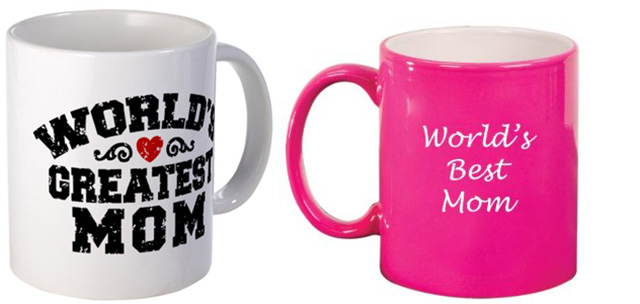
greatestmom

My name “Mami” (pronounced mommy) is a good example of this. Mami is quite a common name in Japan and mostly means “true beauty” or “true”, but in English, it just sounds like mother. Therefore, I always feel embarrassed when I introduce myself, because I have to say, “Hi, nice to meet you. I’m Mami.” It’s pretty strange, isn’t it? “Hi, nice to meet you. I’m Mother. Say my name.” Even my teachers and my bosses have to call me Mommy!

There was a famous Japanese actor, whose name was, Yuusaku Matsuda (pronounced like “You suck” Matsuda). The name Yuusaku means “superb job” in Japan, but in English speaking places it means something very different. So sometimes, celebrities have to change their names if they want to perform in countries with other languages.

yousuckyuusaku

Once you remember the Japanese five basic vowel pronunciations, it’s not really hard for non-Japanese people to catch or pronounce Japanese people’s names. Yet, like above, they just sometimes sound so silly or very confusing. There are other problems, though, that don’t even arise from incorrect pronunciation.

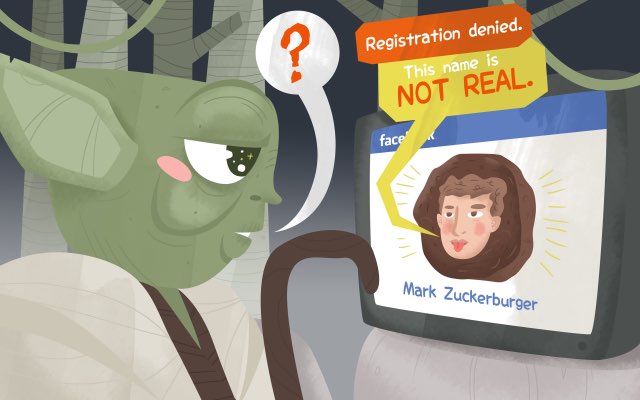
One such case was back in 2008 when author/translator Hiroko Yoda tried to register for Facebook. Turns out, she wasn’t allowed to join, because her last name (a fairly common Japanese last name, btw) was Yoda, the popular Star Wars character. They were blocking her because of her name! Of course, no American has the name Yoda (well, I’m sure there were a few poor kids, actually).

Confusion with Japanese names doesn’t only happen with non-Japanese people. Japanese people will get confused by Japanese names as well! So, you can feel a little bit better. In Japan, we don’t really use “あなた (anata)” meaning ‘you’ in conversations. Instead, you have to use their names like “abc-san”, “def-kun”, “ghi-chan”, etc. Therefore, remembering people’s names is the first thing you get used to when you speak Japanese.

However, it’s a little tricky when you have to guess Japanese people’s name from kanji because there are different readings for even just one kanji, and names often have their own weird readings. I assume that many of you guys are probably wondering how Japanese people know how a name kanji’s kanji reads if he/she doesn’t know who the person is yet. Don’t worry! It’s actually difficult for even Japanese people, unless the kanji are usually read in a particular way in a name. That’s why Japanese names in official document usually have “furigana”, which is a Japanese reading aid.

Difficulty For Japanese People With Non-Japanese Names
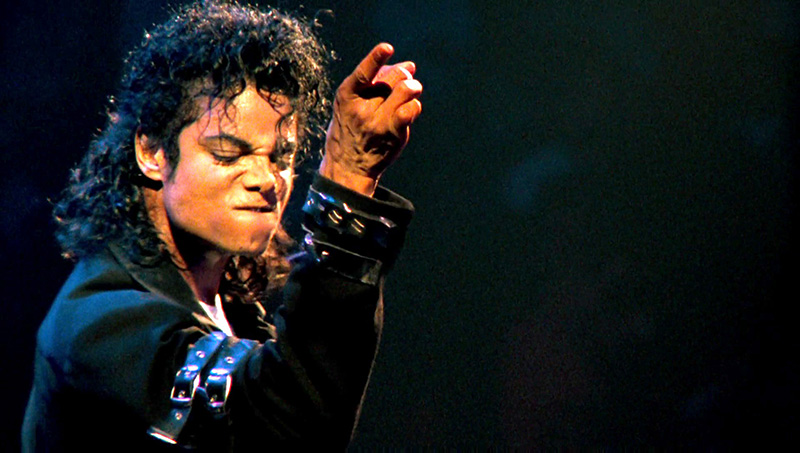
michael-jackson

I also have difficulty catching people’s names because they are not familiar to me at all. So during introductions, if it was the first time I heard that name in English, I usually can’t catch it, even if it’s simple.

For example, even with the common name Michael, which I knew because of Michael Jackson, Michael Jordan, and other famous people, I had trouble here in Canada when a guy introduced himself to me for the first time.

“Hi, I’m Michael.”

But, I couldn’t catch it well, because Michael is pronounced マイケル (ma-i-ke-ru) in Japanese. Also, he said it so quickly, like “Hi’m’Michael,” so it sounded like one word to me. Because of the difference in pronunciation between the Japanese version and the English version, and also because of the speed at which he said it, I was unable to understand. Perhaps if he said it slowly, “Hi, I’m M~i~ch~ae~l” I’d have gotten it. But, because it’s such a common name in North America, people named Michael don’t usually introduce themselves that slowly.


Hey, Michael

However, it seems that this is not only my problem but others’ as well. I searched “外国人の名前” (foreigners’ names) 聞き取りにくい (hard to catch)” in Google, and approximately 275,000 results came up. In the results, I found a blog called “ハーフを考えよう” which literally means “let’s think about a half.” You might have known already, but “a half” is used to describe a “mixed race child” in Japan. Instead of saying, for example, “I’m half Japanese and half American,” Japanese people tend to say “I am half.” Anyways, this blog was written by “a half” person (half Japanese and half German) named サンドラ・へフェリン (Sandra Heafelin), and she said that her name was always misunderstood by Japanese people who heard 田村 (Tamura) instead of Sandra and フェミニン (Feminine) instead of “Heafelin.” Tamura is a very common name in Japan, by the way.

She also had a friend named Müller(ミュラー)and they went out ot dinner one day. Müller had made a reservation, but when they arrived at the restaurant, a server told them that they didn’t have a reservation for them. However, just a moment later, they found a reservation card saying “reserved 三浦様 (Miura-sama), 6 people.” The server mixed up Müller and 三浦, which is a very common family name in japan as well.

Of course, it doesn’t stop there. Since the Japanese language is limited to fewer sounds than many Western language countries, the version of the name in Japanese is quite different from the one that’s from somewhere else. Even names as simple as John can be confusing. For example, in English, John is just John, right? But, pronounced in Japanese, John sounds more like “Joan” because it is written as ジョン (jyon), but in English you pronounce it like the Japanese “jan” or じゃん sound. So Joan is John and there are probably a lot of ladies named “John” out there, at least when it comes to the pronunciation in Japanese.

johnrivers

Outside of common names, which do have set Japanese versions, there are also less common names that don’t have any really decided way to say them. Due to how Japanese works, this could mean that there is multiple ways to pronounce a foreign name. This can get confusing for both the person with the foreign name and for the people trying to say it. Miller isn’t “Miller,” it’s ミラー (mi-raa). Smith isn’t “Smith,” it’s スミス (su-mi-su). Bluth isn’t “Bluth,” it’s ブルス (bu-ru-su). To say the least, it isn’t always easy to make that jump.

What’s Your Name?

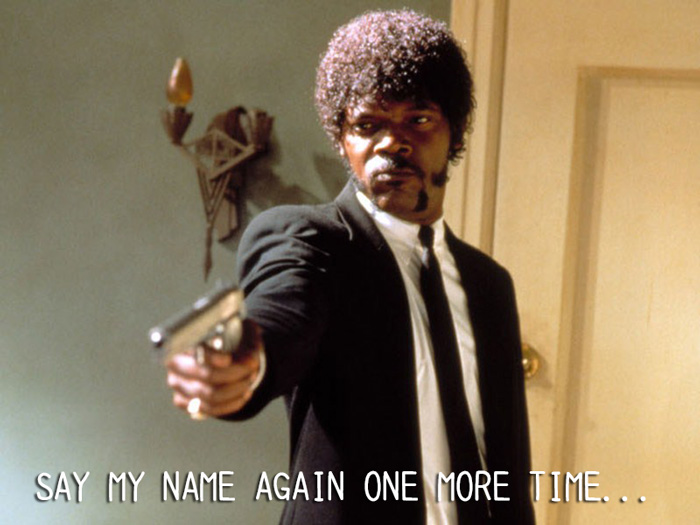
say-my-name

There is so much to be said about names. I think if you’ve spent some time in Japan and you have a non-Japanese name, you’ll have a story or two to tell (go ahead and tell us in the comments!).

For me, I have an interesting story about my name too. When I came to Canada for the first time, I had difficulty getting a job or even an interview. Then, I encountered an article about foreign names, which could possibly prevent someone from getting hired! I got a hint from the article and decided to put an English name on my resumé. I’d taken a while to decide my name, but ended up choosing “Anna.” I thought it was a cute name and easy to remember, because of the famous Japanese Airline ANA (which is pronounced the same way). It actually seemed to work, too, as I got a phone call right after handing out the “Anna” resumés. However, when I went to do the interview, I totally forgot what my made up name was! The interviewer said, “Hi, I’m ABC, and you are…?” I was like “Hi, I’m… well… uhmmmm… (made a really nice smile?).” Other than the horrible introduction I thought the interview went well. That being said, I didn’t get a callback, sadly.

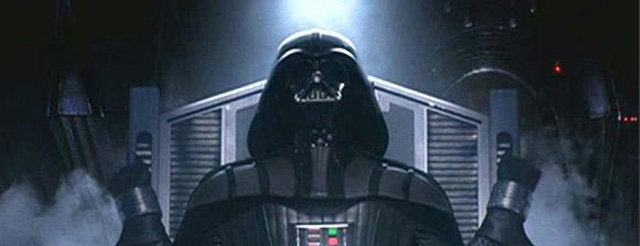
darth-vader-no
ANNNNNAAAAAAAAAA!

This probably happened because I hadn’t gotten used to English names (and maybe I was a little too nervous). I figured that it’s also difficult to memorize foreign names, even though they sound similar to some random words in your native languages.

I hope you finish this article understanding the difficulty (and humor!) of names between languages, especially Japanese. Since names are so often made up of strange sounds (even for your own language!) you can get fun results, but sometimes it can create difficult or embarrassing situations, too!

  • Mami

    You don’t seem like れいちゃん?! lol Alright haha.

  • Mami

    haha Arigatou. Ask me if you still remember the word precedence someday, plz! ;P

  • レオン ˘( O ¸o)/˘

    If the opportunity arises, sure will. XD

  • Mami

    > it depends on where in the world you come from, i guess. (^_-)-☆
    I agree.

    >a sort of backwards anagram-type thing
    ZA다ルﻣ…レノトコaz??

  • Mami

    Ohm that’s too bad…I think we use to ニコラス・ケイジ too much…:( I’ve never heard of ニコロス though.

  • Mami

    頑張りましょう!

  • Jonathan Harston

    Oh, Mammy
    How I love ya, how I love ya,
    Dear old Mammy!

    I’d give the world if I could be
    sitting on my Mammy’s knee
    With the folks down in Alabamee
    With my dear old Mammy

  • Hannah Whittingham

    I think I’m very fortunate to have the name “Hannah”. ハナ

    Since it’s one of those names that many countries all over the world already have and use.

    So no matter where I go, I shouldn’t run into many misunderstandings with my name. :]

    But unfortunately I have a really long last name that is often misspelled and mispronounced. xD Argh!

    Haha, I actually didn’t fully learn how to spell my last name till I was 10 years old! T-T;

    It also took me a while to figure out how to best pronounce it in Japanese.

    Whittingham (wit-ting-ham) = ウィティンハム

  • Mami

    Thank you for writing the lyric for me!
    I’m glad that you didn’t say Mami sounds more like mummy.

  • Mami

    yoroshikuonegaishimasu!

  • Mami

    Hannah is a nice name♪
    Wow your last name is quite long, isn’t it? I’d probably spell your name ‘ウィッティンハム’ with small ツ. :D

  • Brigette

    I have a long name in English but its quite common, although not common enough that many japanese people would come across, Brigette. In katakana however, it becomes so long (ブリジェット), that japanese people that I meet almost automatically shorten it to ブリ. My host sister said it’s because my name is too lon and hard other wise but her name is shizuka spelt with this kanji 靜

  • ZA다ルﻣ

    good try…but you forgot about the letter meem! (( ﻣ ))
    aaaand that’s カタカナの「 ル 」と韓国語の「 다 」。
    okay, now i’ve said too much! i don’t think i actually want anyone to guess correctly…

  • Mariana

    Miho sounds like mi hijo, which means my son. x)

  • Vague

    Very nice article, Mami. :) Makes me think about how horrible it’d be, if a Japanese person had to pronounce my name. My name contains a sort of “dl” sound, followed immediately by an “ur” sound, so it’s pretty much impossible to…katakana-ize (?).

  • Mariana

    I’m from Portugal, and even people from here have trouble understanding my last name (Sendim).

    Everytime someone asks me, I have to repeat it like five times, and spell it out.

    I recently spoke to my Japanese teacher to ask for help with how I should write my whole name in Japanese. It is:

    マリアナ・グリジョ・センヂム

  • linguarum

    Further adding to the confusion, Jordan (as in Michael Jordan) is ジョーダン, although Jordan (as in the river or the country) is ヨルダン.

    It’s funny how some people will insist that there’s a Right Way and a Wrong Way to convert English names to Japanese, as if the rules were predetermined in heaven and delivered to the Buddha on golden plates. Take “John.” Some people will insist that it’s to be written ジョン in Japanese. But since there is a “jah” sound in Japanese, I would say that ジャン actually comes closer to the original, native pronunciation. Still, some people will insist that anything other than ジョン is wrong. Even when it’s your own name, your opinion about how it should be written or pronounced doesn’t seem to matter.

    But then the Apostle John is ヨハネ. Go figure. Fact is, everyone is just making up the rules as they go.

  • http://zoomingjapan.com/ zoomingjapan

    I’ve never ever had any problem with Japanese names at all.
    I have a lot of students every day and I’ve come across a lot of names, not just the “usual” ones.
    I noticed that my English native speaker co-workers all pronounced the kids’ names in a weird name.
    I guess for English native speakers it’s hard to pronounce Japanese correctly in general.
    I’m German and our sound system is similar to the Japanese one.

    However, I notice that my students struggle a lot with foreign names. Most of the time they don’t even know if it’s a name for a woman or a man.

  • Jinan

    Whenever I introduce myself to anyone I’m pretty much prepared for them to pronounce my name wrong… It’s Jinan, which is an uncommon Arabic name, and I live in America, so most people who I meet say it incorrectly even after I’ve already told them. I don’t think Japanese people would have much of a problem with my name, however, because it’s easy to write in katakana as ジナン and that’s how I’d introduce myself in Japanese. I don’t mind if my name is said that way, though it’s still not correct… I guess I’m stuck like this haha.

  • S

    I haven’t gone to Japan yet, but in my Japanese language class, we have to write our name in katakana (which is natural I guess). Anyway my name is quite long, and when I write it in Katakana it becomes even longer! My four-syllable surname is 7 1/2 katakana, and my one-syllable nickname is three.

    Speaking of my nickname (Sabs/サブス), I plan not to use it when I do go to Japan. People might end up calling me busu, and I don’t want that haha. But it’s going to be an adjustment because no one ever calls me Isabel. Or I can just go by サブ.

  • 古戸ヱリカ

    “def-kun”, you say…

  • Lord Fawful

    its going to be interesting to try to pronounce my last name when I go to Japan… (long time)

  • Quazza

    My last name is “Pero” in English or ペロ in japanese, which as you probably know sounds like ペロキャン(lollipop) or the onomatopoeia for licking. I’m just worried when i go over there, people will laugh and call me ぺろぺろさん or something like that

  • Francis A.

    What a fun read! Names are definitely hard for both parties to pronounce as both every language has their own limitations. Its quite humorous as names both (Japanese and non-Japanese) gets butchered but I’m sure its part of the fun of enjoying other people’s language.

  • Mami

    I c! Onaka suita (I’m hungry in Japanese) sounds like a tiny little thing in Spanish I heard before.

  • Mami

    Okay, then I will stop reading into your name:P

  • Mami

    I don’t think that your name is that long, but we sometimes call Britney Spears herブリちゃん too.
    Yet, “Bridget Jones’s Diary! ” is ブリジット・ジョーンズの日記 in Japanese.

  • Mami

    Hi Vague-san! Thank you for your comment! Oh ‘dl’ and ‘ur’ sounds….Uhg! (>o<)

  • Mami

    Do you think that the katakana sound is pretty close to your real name pronunciation? (^v^)

  • Mami

    Yeah, it takes a while to get used to foreign names. I’d say not only peoples’ names but also names on map. Once I worked at a restaurant and had to pick up phone calls for delivery. I had so much difficulty catching right name…almost always had to ask the spelling of the place. :(

  • Mami

    ジナン…so this katakanized name doesn’t sound correct???

    The word 次男(jinan) means the second brother in Japanese too.

  • Mami no Gakusei

    Hai, wanikani de anata no gakusei desuyo. Ohayou, Mami-sensei! ^^

  • Tracey

    Interesting article Mami! I don’t have much of a problem getting Japanese names anymore (probably because I’m so used to them now), but I wonder how people with Chinese names go about introducing themselves in Japanese. I generally don’t go by my Chinese name, so I introduce myself using my English name, トレーシー. But, just as an example, my name in Chinese is 何玉婷, where 何 is a perfectly normal last name in Chinese, but it would be quite an odd one in Japanese! Also, I’m quite sure my third character 婷, is not used very often at all in modern Japanese either.

    I wonder if I would force a reading of my name on my meishi? That is, would I give 何玉婷 the furigana へ・ユティン? (Even though there is no sound in Japanese that can approximate how my last name is pronounced in Chinese very well, and it can’t take into account the tones of the language…!)

    Does anyone have any experience with this problem?

    Oh, I guess I have one more comment… With my name “Tracey”, I prefer to write it in katakana as トレーシー as I did above, but I noticed that some Japanese people have a tendency to write it as トレイシー. Is there a reason for this? Perhaps to say that the レand イ should be pronounced separately? I can’t really hear much of a difference myself :P

  • Mariana

    Yes. :)
    But, maybe, I should change the ム to ン

  • K~

    My name is Katja and I still don’t know how to correctly write it in Japanese. It isn’t even a common name in English speaking countries, that’s why I’m pretty sure a lot of people don’t know how to pronounce it. :)

  • André

    I’m ハーフ and my japanese family name is 三好 (Miyoshi). Here in Brazil, noodles are usually called “Miojo”. It has been happening since forever, I introduce myself and people say: “what? your last name is noodles (miojo)?” wtf people. Also, I always have to spell my last name since they can’t write it properly. I’ve seen “mioxe”, “myoshe”, “mioxi”, “meoxi” and so on.

  • Ankotaro

    Oh wow, I’d never thought about names being mistranscribed/misheard in Japan like that. For some reason, I’d only ever thought of names being mispronounced. Totally makes sense though, and I probably should have made the connection before now given that telemarketers call me in Spanish all the time because they think my last name “Sera” (世羅) is really just an odd spelling of “Serra” xD

  • Jasmin Rodriguez

    Nice article Mami! :D I hope to see you write more! My name is Jasmin and in Japanese it is pronounced as ジャスミン and it actually sounds closer to the way my family says it than the way it is normally said in the United States (Jazz-min)! But I don’t think my last name (Rodriguez) would be easy to pronounce in Japanese :/ Also would it be easier for Japanese people to remember Jasmin (my middle name) or Nora (my first name)?

    And in Spanish, mommy is spelled as Mami!

  • Mami

    Yeah, サブ is a common name in Japan…but guys. Yet, if you don’t mind, you can go with サブ or サブさん…I think サブさん sounds similar to サブス.

  • Mami

    Oh yeah? How do they pronounce your last name usually?

  • Mami

    Arigatou Francis. Yes, it’s part of the fun:D I agree!

  • Mami

    It seems that we write your name ‘カーチャ ka-a-cha’ in Japanese.

  • Mami

    I really understand your situation:( I hope you like your name though. :)
    When I introduce myself in English, now I spell for them from the first. ‘I’m Mami. M-A-M-I.’

  • Mami

    Oh, your real last name is “Sera” (世羅)?? And you have kanjis for it??:) Sorry if I misunderstood.

  • Mami

    Wow, it’s spelled perfectly Mami? jajajajaja
    Rodriguez would be difficult, for sure…ロドリゲス??

  • Mami

    Good point. Now there are breaking-name-rules in Japan called キラキラネーム(kirakira-name) and most people don’t like that, though there shouldn’t be any rule for giving names either.

  • Mami

    Did you make this manga??:)

  • Mami

    Ah, it’s a cute name though, I’m afraid that some people might call you ‘ぺろぺろさん’ or something like that…:( Yet, my advice is do not be upset. I like how my name can make people laugh, because they remember me right away. Stay positive!

  • Mami

    謝々, 玉婷!
    I don’t think that there is any specific reason, but トレーシー is technically pronounced to-re-e-shi-i and トレイシー is to-re-i-shi-i. I assume that the latter is closer to English sound, but it’s just preference.

    and Yeah, I bet that Japanese people would appreciate the furigana for your name!

  • Mami

    I see. (^^)