
“Gaijin”

I’m constantly being reminded that the comments section of Tofugu (or any site, for that matter) can really take on a life of its own. My post a few weeks ago about weird ramen took an unexpected turn in the comments as people began to discuss my usage of the word “gaijin.”

Gaijin (外人, short for 外国人), or “foreigner” in Japanese, is a complicated word that means a lot of different things to a lot of different people.

Some people take the word lightly; when the Tofugu team was in Japan and a roller coaster we were riding unexpectedly malfunctioned, we joked that it was because the ride wasn’t designed to hold the weight of our giant gaijin bodies.

But for some people in Japan, “gaijin” can be a hurtful and alienating word. It can mean refusal of service at businesses, a barrier to entry for housing, or even threats of harassment or violence.
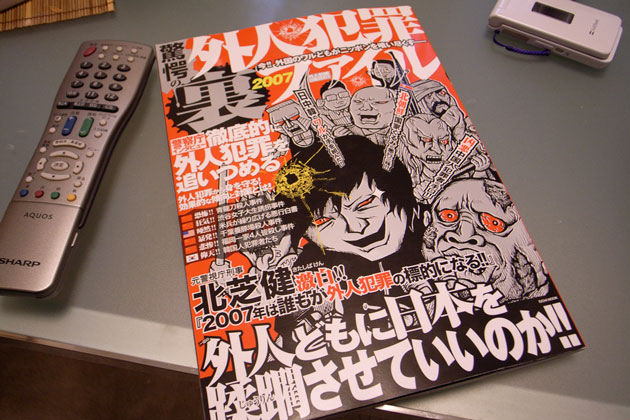
gaijin-crime-file

Photo by w00kie

I thought that I’d reach out to some bloggers living in Japan to see what their thoughts on the word “gaijin” were. I got a lot of great, varied, and nuanced responses.

Many people take no issue with the word and even embrace it to some extent. Lots of websites aimed at expatriates in Japan, like GaijinPot and countless other community sites and blogs, have absolutely no problem with using the word “gaijin.”

Hikosaemon, a man who’s lived and worked in Japan for over a decade, sometimes sees “gaijin” used in inappropriate contexts, but doesn’t believe that there’s necessarily anything wrong with the word itself:

To me, the word “gaijin” is slang for someone who looks like a non-Japanese. Because it is slang, it is not appropriate for formal contexts, but as slang, the appropriateness of its casual use is contextual—99% of the time, I think the way it is used is fine. It is the 1% of used with malice that causes most of the controversy. I do not subscribe to the view that its limited malicious use means the term should be made taboo. The term gets a lot of focus by people new to Japanese culture who become aware of the exclusivity of Japanese social circles and struggle with the feeling of isolation the culture can give new arrivals (just as it gives migrant Japanese within Japan).

The composition of the term as “outsider” and the feeling that this reinforces exclusion heightens sensitivity about the psychology behind the term and its use to many foreigners, as indeed it did myself in my early years in Japan. However, reactions to the term I think tend to show more about the person reacting than any psychology on the part of the speaker. Those with the greatest sensitivity to the term often seem to be bringing their own complexes to the table about perception of race in their home countries, and their own level of adjustment and language ability in Japan. It’s a convenient slang term that I use myself, and generally have no issue with others using unless the usage is in an inappropriate context—which is a problem you can’t fix by changing the word. We will just go from “Bloody gaijin” to “Bloody Gaikoku No Kata”, the term here is not the issue. It reminds me to periodic adjustments of politically correct terms for intellectually disabled people.

Hikosaemon touches on an the important issue of formality; for some, the informal 外人 is inappropriate in certain situations, but the more formal 外国人 or even the honorific 外国の方 are perfectly acceptable.

And while Hikosaemon wasn’t necessarily offended or alienated by the term, he and everybody I talked to recognized that “gaijin” is a word that can have a powerful effect on people.

I was lucky to talk with the Gakuranman who actually did a lengthy write-up about the word a few years back. He also thinks that the formality of the word makes a difference:

The word ‘gaijin’ (literally ‘foreigner’ or ‘outsider’) evokes a multitude of differing responses depending on who you ask. Although for most Japanese people the term is akin to saying ‘gaisha’ (foreign car) or ‘gaika’ (foreign currency) and no harm is meant, the word itself has picked up a lot of baggage over the years through repeated misinterpretation and reinforcement among foreigners who have visited Japan. Expats in Japan are often surprised and offended at being labelled as outsiders, especially if the term is used towards them despite their repeated efforts to assimilate. Some will even go as far as to think it a racist term because of the way it appears to ignore cultural diversity.

Those who have spent the better part of their life living in Japan generally come to accept the word and learn to distinguish between the negative, neutral and positive uses it can have in different contexts. Personally, I think it to be a clumsy expression to use within increasingly multicultural communities and feel it is better off avoided where possible because of the tendency to unwittingly alienate and offend people. If you absolutely must make the distinction between non-Japanese and Japanese when describing somebody in Japanese, use the word in full—‘gaikokujin.’ Otherwise I suggest sticking to personalized information about the individual.

Some people might not get personally get offended at “gaijin,” but are sympathetic to those that are. Eryk from This Japanese Life seems more or less indifferent to the word, but is understanding to those who attach negative connotation to “gaijin.”

Before I talk about the word “gaijin” I should mention that I am white. As a white American guy, my race has never been a liability. When Japanese natives on a train mutter “gaijin” to each other, I’m not offended.

White people have this superpower where we don’t think we’re actually a race, so we can laugh it off when we’re attacked for being white. But our Kryptonite is our corresponding need for victimization. When white, highly educated Americans from wealthy families spend a year abroad and get outraged by some overheard “gaijin” remark, I feel like it’s just the daily opportunity for outrage. I don’t care.

I have never been threatened by the kids with shaved eyebrows and pink tracksuits who call me “gaijin” just loud enough for their friends to hear it. There is no long, complicated history of shame that comes from being a white dude. The word “gaijin” does not register, for me, as a synonym for disgust and contempt.

“Gaijin,” though, is not like the words cast at minorities in English. Some expats seem to think that if they aren’t offended by it, they’re entitled to say mean, dumb things about other people. But there are words that are implicitly attached to threats of violence, words that carry the real resonance of hatred, words that tell a person, deliberately, that you think of them as nothing more than their race, or gender, or sexuality.

Someone reading this might have been traumatized by violence, or threats of violence, tied to being “gaijin.” If that’s happened to you, you have every right to hate that word. For foreigners who come to Japan with a history of oppression, “gaijin” on the lips of the nationalist parades marching through Osaka might be an ugly reminder of that kind of logic. But the word, perhaps stupidly, is nothing I’ve ever been afraid of.

I was happy that Ashley of Surviving in Japan had a bit of a unique perspective on the matter.

In our discussion, Ashley mentioned that her husband is a white American who was born and raised in Japan. It seemed clear to me that his situation influenced her opinion on the split between feeling Japanese and being considered as Japanese.

When I first arrived in Japan, I frequently heard that “gaijin” was a derogatory term—this is how some expats described it, anyway. But they also often referred to themselves as “gaijin” instead of “gaikokujin”. In my experience it’s often used this way in jest, as those of us who are unfamiliar with Japan repeatedly commit faux pas. There’s a steep learning curve to understanding Japan, its people and culture, and it’s difficult to ever truly fit into society. Even some Japanese who don’t meet social expectations are at risk of being ostracized.

I don’t believe “gaijin” in and of itself is derogatory, but it can be used that way. I didn’t experience this much other than kids stopping in their tracks, pointing at me and saying “gaijin!” I suppose one could say it would be equivalent to an American child who points at someone they “think” isn’t American and yelling “foreigner!” It’s rude.

That brings us to the point that anyone who doesn’t “look” Japanese in Japan is typically considered an outsider, which shows an underlying preference that being Japanese means that they have to “look it.” But what if you’re of another Asian ethnicity? What if you’re Japanese-American? Or what if you’re not Japanese at all, but were born and grew up in Japan? Depending on how you were raised, you might grow up feeling like you are “Japanese”, but then are constantly reminded that you won’t ever truly fit in because you don’t “look” the part. Bi-racial children (half-Japanese in particular) may, and often do, face similar obstacles.

So I don’t believe “gaijin” is always an issue, although it is attached to a set of stereotypes (which also vary, depending on your skin color and nationality). The main issue is this pervasive attitude of who can and can’t be truly accepted into society; and in many cases, gaijin can’t.

I would like to note that I’ve met many Japanese people who don’t have or agree with this attitude.

Other people I talked with had a staunchly negative view of the word. Jasmine of Zooming Japan is understanding of some of the contextual uses of “gaijin,” but on the whole feels that the word is very alienating, a constant reminder that complete assimiliation is next to impossible.

For the word “gaijin” it depends on who says it and in what context, but in general I consider it as rather negative.

Even though I know that most Japanese people don’t mean any harm, by using the word “gaijin” they make me feel like an outsider, like someone who doesn’t and will never belong here.

Based on my daily experience here in Japan the word “gaijin” is not equal to “foreigner”, but to “you ≠ we”. I often see that when Japanese people travel abroad and say: “Look! So many gaijin everywhere!”

They don’t even realize that they have become the gaijin for the time being.

That’s why the strongest association I have with the word “gaijin” is “outsider” or “somebody who is different.”

Being different can be something good or bad in the eyes of a Japanese person. For some, foreigners are beautiful, passionate and exotic, others think all foreigners are criminals. Based on that, the word “gaijin” can mean something good or bad.

Most of the time I hear people say “gaijin” and not “gaikokujin” or “gaikoku no kata” which I would prefer because it sounds more polite and doesn’t have such a strong connotation of “outsider”.

In the end it’s not the word itself, but the whole mindset that stands behind it:

If you live in Japan and people stare at you on a daily basis or kids point at you and scream “Gaijin!!!!”, then you will feel awkward.

You are not only different, but you also do not belong there. You are not Japanese. You are only a visitor, a tourist or a short-term resident. You will leave and go back to your own country. The idea that you might have been born in Japan and could be part of the “we” doesn’t even exist. And that’s very sad.

One of the most fascinating things I learned during this discussion was that Japanese use the word “gaijin” even in contexts where they’re the foreigner. And I thought it was especially interesting that not on did Jasmine point this out, but also Leah from The Lobster Dance.
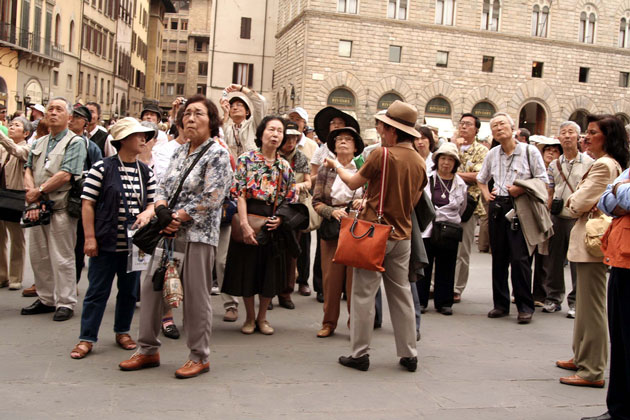
japanese-tourists

Photo by JD Lasica

Like Jasmine, Leah also has quite a strong opinion against “gaijin,” feeling that it’s a limiting, alienating word.

I used to be of the mindset that gaijin could only be used BY foreigners. I even wrote a cooking section of my blog that used to be called “The Gaijin Chef.” Yet in the past few years, I’ve begun to understand betters the social implications of linguistics.

Why does this word make me so uncomfortable now? Part of it is the lack of respect, especially toward people in my generation who were born and raised in Japan but are not ethnically Japanese. They are not foreigners. If your Japanese parents immigrated to the US and raised you there, you would probably consider yourself American or Japanese American, depending on your view of the terminology as it relates to your personal experience. However, a child born to two non-Japanese parents in Japan and who has lived their whole life in Japan will not be considered Japanese. There’s a very strong link between race and nationality in Japan, and one of the ways it is supported is linguistically. Gaijin lumps tourists, immigrants, permanent residents, and citizens all together that appear to be a very limited concept of “foreign,” both in terms of appearance (white, sometimes black) and of experience.

Likewise, part of the reason I hate that word is the cavalier manner it induces when used. For instance, when Japanese people go abroad, they continue to use gaijin to refer to the native population. “There are so many gaijin in America!” No, you are the foreigner in this situation, but the attitude is that “Japanese people can’t be gaijin/foreigners.” I feel that the term just encourages a xenophobic and rude mindset, and getting people to understand why it is linguistically problematic will be a step in the right direction.

As for those who use it to refer to themselves, I think a lot of people go through a phase where they think, “Well, I am an outsider and it doesn’t bother me.” I’m reminded of several incidents in which some acquaintances who did not speak Japanese well claimed that to have never experienced racism in Japan over the course of the 3-6 months they had lived here. In a short period of time, that might be true, and without listening skills, it’s quite easy to miss. But as with sexism, everyday racism is not usually blatant or violent; microaggressions are easier to ignore or excuse, especially by the perpetrators. When you are not The Other, it requires imagination and often experience to even understand a fraction of what it is like to live as The Other. I understand the line of thinking “I’m foreign, so I will use gaijin,” but there’s a lot of cultural baggage associated with the term, and I don’t think we can reclaim it.

I was surprised at the diversity of opinions on “gaijin,” and am grateful to everybody who shared their views on this sometimes divisive and controversial topic. It’s clear from the variety of responses I got that there’s a lot of thoughtful dialogue about this word, and that there’s no one clear position on it from the expat community living in Japan.

What do you think of the word “gaijin?” Please share your story about your experiences in the comments.

  • DAVIDPD

    Fascinating. It really comes down to whether or not you will allow others opinions to affect your being. Many Americans grew up with the adage, “Sticks and stones may brake my bones, but words will never hurt me.” Along the way it seems many of us, forgot that and began to internalize other’s views of us in a more drastic fashion. Should you allow a complete stranger’s opinion of you to affect your life? Maybe, maybe not. Rationally, it seems no, you should not. But most humans are not rational creatures. We are emotional. For many, it is feelings that guide us through life. And for those who are sensitive to others’ opinions, it is a much harder struggle to relearn that school yard rhyme.

  • Brad Garrett

    Excellent article!

  • Brad Garrett

    Ah, I have always believed “Sticks and stones may break my bones, but words will never hurt me.” is a terrible way to think. Words hurt the most, much more than sticks and stones, because words have meaning.

  • DAVIDPD

    And that is exactly the point I was making in my comment. Humans are emotional creatures. Like the article said, most Japanese do not mean to offend with using “gaijin” it’s the people that hear it the assign it as an insult or pejorative.

  • Sheena

    This article sounds like the problem is more the attitude of Japanese culture towards people who look different than the word itself. Gaijin may translate to outsider, but there are probably other words that if you look closely are very rude. (in any language) But they’re used in a neutral way and nobody minds, because it’s become normal and the negative attitude behind them has vanished over time.
    Plus, with this word you have a very special problem: People don’t like to be categorized. They don’t want to be reduced to one factor of themselves may it be their skincolour, citizenship, religion, sexuality etc. Even if they chose that part of themselves (i.e. religion) and are fine to talk about themselves as Muslim/Christian/Jew/Bhuddist/… they feel reduced to that one component if others use it to describe them. Because it’s not the only “thing” that makes them, they want to be seen as a diverse individual, not one in a group. And they may fear, that reducing them to this one thing may create wrong conclusions about them. For example you know someone is Christian so you may think he is opposed to gay marriage, but in fact he is fine with it.

  • Jen

    I have lived in Japan for about 5 years now, but I’ve never really had the word used towards me in a negative way (or if I have, I’ve blocked it out of my memory! Or chosen to give people the benefit of the doubt after half hearing something they were saying.) The thing that bothers me about the use of it is is not when people talk to me, but when people use it to talk about non-Japanese in general. For example, I saw a thing on twitter which one of the Japanese people I was following retweeted which was comparing the way that Japanese, Chinese and “Gaijin” reacted to different things (apparently Chinese and “Gaijin” are scared of earthquakes which Japanese are fine with, Japanese and “Gaijin” are scared of smog which Chinese are fine with, and Japanese and Chinese are scared of guns which “Gaijin” are fine with – There are soooo many problems with this, haha.), when it was clear that the use of gaijin didn’t refer to all non-Japanese (because otherwise why would Chinese be a different option?!) but a very small group of people. It’s annoying and stupid when you hear people talk about “Gaijin” and they basically mean white Americans. It would be much less problematic if people didn’t just lump everyone under the same heading. I also find it weird that people seem to seperate out “Gaijin” Chinese and Korean people – we’re either all in the same group, or everyone should be referred to by their country of origin or something (although again, this could be problematic. There probably isn’t really an ideal solution, but it would help if people stopped being so ignorant).

    I’ve only really seen ignorance when people use the word “gaijin”, but I have seen a LOT of casual/not so casual racism towards Chinese people in Japan – I used to live in an area with a large Chinese population and people would regularly ask me if it was scary living there, which is ridiculous. I’ve heard some pretty nasty stuff aimed at Korean people as well.

  • Scott Lavigne

    This picture seems relevant. Took it around shin-okubo station in 2010.

  • Yuki

    Nice article. I’m personally indifferent to the word gaijin, since i don’t even look like the people of where i was born and raised (Asian race but born and raised in Ireland my whole life). But I’m totally westernized from my clothes, accent, behavior etc, which makes me somewhat “gaijin-like” in Asia, especially since i can only speak English (and a bit of Japanese). But I guess calling someone in english a “foreigner” or an “outsider” sounds a bit derogatory, so I think people who take offense to the word gaijin place it in the same category as these words. It’s different from calling someone “British” or “Irish”, which I think is the better way to refer to people instead of foreigner or gaijin.

  • YP

    It’s a great article. It’s very clear to see that there are a lot of different opinions on the exact feelings the word ‘gaijin’ invokes. The only thing I would like to add to it, is that the problem with the word gaijin lies more with the people who get offended by it than with the people who use it (Japanese or foreign). Of course some people do use it to offend and if you are offended by this then that is completely normal. To me though, it seems that a lot of the people who get offended by the usage of this word, is simple because it reminds them that they are outsiders and they’ve never had to deal with that before. Especially not in the sometimes blatant way the Japanese remind them, e.g. when you’re walking down the street and someone says ‘oh, gaijin!’. Obviously that’s not something you want to hear and it can seem very rude, especially because the Japanese will use gaijin over the more polite gaikokujin in such situations. However, the fact that you feel offended in this situation seems ridiculous to me. It is not meant to offend and it is definitely not the same as when you are in America or another country that has a very multicultural society and someone says ‘hey, a foreigner’. The thing you have to remember when you look at Japan is that, the number of foreigners is still very low in Japan. There are still many people who have never seen a foreigner in their entire life. So you can’t possibly compare America and Japan in this situation. It is rude in America to say that someone is a foreigner, because you don’t know that. They could be, but he/she could also be an American. In Japan however it is very easy to see who is on the ‘inside’ and who is on the ‘outside’. Now I understand that this can be seen as rude and that you might be hurt by the fact that they will always identify you as different no matter how good you’re Japanese is and how well you are assimilated, but that’s the way it is now. Over twenty years, it might be an entirely different situation, who knows. Also there are the exeptions, people who are non-Japanese, but have been born and raised in Japan. Yes, you may feel especially hurt by this word and the way that you are still seen as an outsider, but this goes for everyone who is a minority in any country. If you are in the minority people might treat you different, some people don’t and some people do, that’s just how it goes. I personally, feel really annoyed when people complain about the word, because they feel that they don’t want to be reminded that they are foreign or think it’s meant in a malicious way when it’s not. Yes, you can be offended by the word, but by doing that you only prove that you’re not willing to put yourself in their shoes and see the intent behind the words. Now, if it has been used in a negative way towards you, then I’m sorry and this is not meant for you.

  • linguarum

    Same thing with the English “foreign,” too. As many of the commenters mentioned, in today’s world, it’s all so mixed up that it’s difficult to say who’s a foreigner, and where. For that reason, Ted Turner mandated that CNN begin using the word “international” instead of “foreign,” with a $100 fine for any staffer caught using the term “foreign.”

    http://books.google.com/books?id=O8bQBgj2znwC&pg=PT144&lpg=PT144&dq=foreign+international+pejorative+turner&source=bl&ots=wVDdjIQMgC&sig=7dGXZmI-P9rp_w2qM8MVe2WVt_8&hl=en&sa=X&ei=Lz6mUcCuIcaWqAG9-oDQAg&ved=0CDQQ6AEwAg#v=onepage&q=foreign%20pejorative&f=false

  • rei

    Personally, I’m still quite unsure as to how I view the word ‘gaijin’. When I was first exposed to the word and Japanese culture, I took to the word negatively because, as mentioned, I felt that it isolated non-Japanese and eliminated any possibility of assimilation. But now, while I still have that feeling to some extent (in specific cases), I understand that this is not usually the case. Generally, the Japanese do not use this word negatively to discriminate, but to make the distinction between ‘us’ (the Japanese and those who are assimilated in Japan/Japanese culture) and ‘them’ (those who look different, are not of Japanese descent and are not familiar).

    Rather than people having problems with Blacks, Whites, Hispanics, or people who physically look different to the Japanese, the more prominent racial problems and ignorance seems to be directed at the differing Asian races residing in Japan; the Koreans, the Chinese, the half-Japanese people, etc. Generally, most Japanese, while wary of foreigners, mostly due to a lack of exposure, are kind, interested and curious about others, especially those in the younger generations! And it drastically helps if you are able to communicate in Japanese! Rather than viewing you as just an outsider who is not from Japan, they begin to view you as one of them.

    That’s not to say that there isn’t discrimination against foreigners in Japan (in most reported cases it tends to be within companies, housing, etc…), of course there is, but the usage of the word ‘gaijin’ doesn’t usually stem from wanting to make people feel alienated, it’s because to them that’s what you are. The problem from using this word comes with lumping every single person who looks different as a foreigner, because in the cases of a permanent resident or someone who is a Zainichi (a word which means Japanese of foreign descent that ALSO carries some negative connotations), this is not the case.

    In a rebuttal to the last opinion, my experience of Japanese people abroad has never been that they’ve called the native people ‘gaijin’ but themselves. They recognise that they are the minority in another country and thus call themselves ‘foreigners’ using the term as such. Of course, just as everything varies from person to person, that does not mean that my experiences will be the same for others.

    Lastly, I think what Gakuranman and Eryk from This Japanese Life stated rings true; ‘gaijin’ is a clumsy word and is way too vague in a place that is becoming increasingly multicultural, and the meaning that you bring to the word (unless it’s pretty clear that it’s being used with negative connotations) is what you will take from it. I believe that they should come up with a better term to distinguish those who are permanent residents, Zainichi and so on, because it doesn’t apply to them so lumping them in that category makes no sense. I also believe that if the word is not being with bad intentions then the need for offence taken to it should be nil. But that’s just me.

    Sorry for the essay ;)

  • http://www.survivingnjapan.com/ Ashley

    I want to clarify that I’m not offended when kids do or say things like that — I’ve worked with kids for many years and that is just how they are. However, their actions are sometimes indicative of the deeper feelings and attitudes held by their parents and society in general. My main point was that we can’t assume that someone is a foreigner simply by looking at them. In Japan there is a belief that to be Japanese is also to “look” Japanese, but what does that mean exactly? Especially when you consider other ethnic groups that are Japanese and have been on Japan’s islands for a long time. Or like I said, what about someone who is half-Japanese, for example, but what if people consistently look at them and think “gaijin”, because they don’t know any better? It’s not usually malicious intent, but I think it can, and often does, fall under “subliminal” racism. Biases towards stereotypes we’ve been raised to know/believe. That’s what I think is the problem, not just saying “a foreigner”.

    “If you are in the minority people might treat you different, some people don’t and some people do, that’s just how it goes” — this is what I mean by these types of biases and beliefs. It may be how the world is, but that doesn’t make it right.

  • YP

    No, it’s not and I never said it was okay. But like you said that’s how the world is. Now of course it can be very painful or hard to deal with when this has never happened to you before, but if you want to live in Japan, this is just something you will have to deal with. You said that your main point was that ” we can’t assume that someone is a foreigner simply by looking at them.” I agree and disagree with you on that. In America you really can’t, because all kinds of ethinicities can and do make up the ‘American people’. In Japan however, only 1,5% is not ethincally Japanese. Most of these are Chinese and Korean. If we take them out we are left with a very small number of people who are put in the catergory ‘gaijin’. Yes, it is unfair of the Japanese to lump these people together, and make them (Chinese and Koreans included) feel like an outsider and non-Japanese even if they have completely assimilated themselves within the culture, speak perfect Japanese or perhaps are even born there or have are half-Japanese. Yes, these are “biases towards stereotypes we’ve been raised to know/believe”, but I find it unfair for anyone to complain about the word gaijin in this context, because this happens to minorities all over the world. I get annoyed, because people who go to Japan and experience this, always complain about how Japan is racist in some way or another, while completely ignoring the fact that this type of racism can be found anywhere even their own home-country. Is is worse in Japan? Maybe, but then it is only fair that you take into acount the fact that their exposure to people who look different is far less than you or I. So, for them the concept of looking like the people who have the same background as you, speak the same language as you and who are ‘like’ you is very real. The concept that all Japanese are the same in everything (including looks) and that, that is what makes you a ‘real Japanese person’ is very real. You and I, however, know and realise that someone who doesn’t look the same way as you can still be American, Spanish etc, because we have had much more exposure. I personally believe (and I am not forcing anyone to agree with me) that it is unfair to say that the word gaijin should not be used on the basis that it makes people feel like an outsider. Yes, I do think the use of the word should change and I think it will, but it will take time and more exposure in Japan to other types of ‘real Japanese’, like half-Japanese or people who have made Japan their permanent home. I don’t mean to say that you can’t be offended by the word, that is your own opinion and you should stick to it, if that is how you really feel :) I just wanted to let people know that there is also another side to the story, that is sometimes left out.

  • http://www.survivingnjapan.com/ Ashley

    Yes, it is something to deal with if you live in Japan, but how does that make something acceptable? It sounds as if you’re saying, “it’s ok to be racist, because you were just raised that way and that’s all you know.” I think most of us are racist (sexist/ageist/etc.) in some way or another, often subconsciously, simply because of our backgrounds, but does that make it ok? Yes, it’s reality, but is it right? I don’t really think it is. That’s why I said the issue is more of the attitude–an accepted societal attitude, that is the problem. And I don’t think I, or those who think this, are ignoring what happens in our country. I’m well-aware of issues in the United States and I don’t look it at us vs. them. I also don’t think anyone is complaining–I’m not. Some people do complain, but they tend to complain about everything they hate about Japan and how things don’t work out in their favor, etc. There are populations in Okinawa and Hokkaido that are different ethnically. And then, is it possible to tell who is Japanese, or Korean, or Chinese? Or another Asian ethnicity? We don’t know that based on appearance alone. We might not even know based on the language they’re speaking, if they are fluent in a language other than their native language.

    I don’t know, I’ve just seen this attitude in the US as well, where there are a variety of ethnic groups, but you still often see those populations grouped together in separation. I was raised in a primarily white community, and I saw an attitude of hostility, even if not outright, but of suspicion, or just stupid ignorant comments from within (usually towards Hispanics, who were a minority in that area then but not so much now). And in a global world with our technology today, there aren’t really excuses to “not be exposed” in your words.

    Again, I never said that most people are being intentionally this way, as I feel it is the same even in the States–some people are, of course, but it is usually buried in our subconscious and can come out in our actions. I do think most people mean well, and even in Japan, I felt that the majority were like that, and some even knew and noticed when their fellow citizens were acting like this. Most people I knew in Japan were kind and open, though. But the deeper you go, the more you might notice.

    It’s not the word, basically, which is what I said–it’s the attitude and the beliefs.

  • http://www.tofugu.com/ Hashi

    Wow, I didn’t now that Ted Turner did that. That’s not really what I’d expect from CNN.

  • Mescale

    One thing I think you need to understand clearly is that just because people think a certain way doesn’t mean its because they are bad or racist. Its because they don’t know any different, they’re just different.

    If you decide to judge a person by your own rules, because they don’t act in a way you feel is appropriate to you, because they don’t give you respect you want, or because deep down you’re certain they are the very prime evil, you are essentially doing what you are accusing Japanese people doing when they call someone a gaijin.

    You are thinking they are X because they are different, just as you accuse Japanese people of being racist or xenophobic by thinking you are gaijin because you are different e.g. not Japanese.

    If they are marginalising you as just someone ‘other’ by calling you gaijin, you are marginalising them by considering them a ‘gaijin caller’. So certain that they are using the word to belittle you, you are using their use of the word to belittle them.

    Japanese people use Japanese Ideas, Japanese Language, and Japanese Culture and Japanese Society, have a Japanese World View, and Japanese Values, because they are Japanese. If you have a problem with them acting like that, acting like a Japanese person, its called racism.

    You have your own words, your own language your own culture and your own society, your own world view, your own values because you are you. And so you are applying those when you think Japanese people using the word gaijin are X, just as Japanese people are using theirs when they use the word gaijin.

    Who exactly is right and wrong?

    The answer is both and neither. The fact is that people are just different, they think different and talk different, they have different ideas. But they are all also very similar, so much so that minor differences become magnified, and become big issues to each other. But the great thing is that you both have these same stupid little problems that get blown out of all proportion. You guys are so alike.

    Understanding Japanese people is about understanding more than just their language, its about understanding the culture, the society their view point, their world view, and their values, and respecting them, not necessarily agreeing with them, but respecting that as people they have their rights to be who they want to be and think what they think, and you have no more right to police their thoughts or actions than they have to police your thoughts or actions.

    Japanese people think a certain way, its different to how some people think, its similar to other people. Wrong and right are grey areas, who is to say whats wrong and right?

    Now we have the ancient struggle, who is right and wrong, well the guy who kills the other guy right? The winner is right. So Americans choose who is right and wrong, I mean otherwise they’ll nuke the hell out of Japan again, AMIRITE? AMIRITE? You Japanese bitches better not be calling us no GAIJINS no more, COS THATS RACIST AND WE’LL NUKE THE HELL OUT OF YOU, WE’RE RIGHT, OUR IDEAS ARE BETTER THAN YOURS, OUR IDEAS ARE RIGHTER THAN YOURS BECAUSE WE WILL KILL YOU MORE THAN YOU WILL KILL US.

    That is moral superiority right there, you tell them, how dare they be different to you, how dare they think different, talk different or look different. Their very existence is a mockery of freedom liberty and fruit of the loom. You use that word, that filthy word again, and we’ll smite you HEATHENS, INFIDELS.

    Why is this even a topic?

    This is alio-amphibi-repto-ornithopterology 101 guys, get with the program.

  • Mescale

    Who are you to judge a person, who are you to say your way of thinking is right?

    Japanese people think their way of thinking is right, they think their judgment of a person being a gaijin is right.

    And you’re saying they are wrong.

    So if their way of thinking and judging is wrong, why is your way of thinking and judging people right?

    All you are saying is you don’t like the way Japanese people are, because they don’t fit to your ideas, your requirements.

    Am I the only person who feels that expecting a whole country to meet your requirements is not only wrong but really fool hardy?

    You think Japanese people would be better your way, maybe more like you?

    Then what’s the point of having Japanese people, whats the point of being interested in their culture, their individuality, their differences?

  • http://www.survivingnjapan.com/ Ashley

    I’m surprised you took it that way; I’m honestly not sure where you got all of that… I don’t, and never have, expected Japanese people to be like me, or think like me, or anything. In fact, I constantly change myself. I don’t think I am ever finished changing, or learning or growing. I don’t think beliefs are always black and white. I don’t think my perspectives are the whole story–in fact I try to see ALL sides. You are assuming I don’t without knowing me or clarifying anything with me.
    I feel as though trying to attempt this in such a short blurb was probably a bit ambitious. We are all affected by our backgrounds, upbringing, and experiences. That is how our views are formed.

    This ultimately isn’t about Japan, is what I’ve been trying to say. It is about all people, all over the world. It is about societal attitudes and beliefs and what we, as groups, accept as true or not true. We all are, in some way, as I said, racist, or sexist, or ageist, or whatever. I think most of us are well-intentioned, but we just don’t know about other cultures, peoples, etc. BUT, I don’t that means we get a “free pass” to act ignorant. Nor do I think it means we should walk around being offended by everything.

    I never went to Japan expecting anything except changes within myself, and that’s what happened.

    Honestly, the answers I’ve given over-simplify the issues at hand for the sake of brevity.

    But it does sound like you’ve met or know people who have gone somewhere and expect that places to conform to their ideals. I’ve seen it often myself in Japan, and it is sad, but I don’t think it’s the majority.

  • YP

    First of all, thank you Mescale, I feel the same way. Also Ashley, I never said it was okay for them to treat people differently, it isn’t anywhere in the world, but the fact that they do, can’t be held to the same standards that you are used to at home. Now, what I feel is the biggest problem and it’s these people I really don’t like when they complain about the word gaijin or rasicm in Japan in general, are people who have never experienced rasicm. These people usually complain the hardest when they are being treated differently in Japan, because of their looks etc. It’s unfair, yes. But there are a lot of people all over the world who are being treated unfairly and I don’t see people complaining about how it should change in America etc towards these people, people only complain about how the attitude in Japan should change and that is what is ultimately not fair. You can’t hope to change another country, when your own home-country can’t live up to the same standard you want Japan to have. Also I am not targeting this towards you, but everyone from around the world. Better yourself (and your own country), before you even think about complaining about someone else (another country).

  • Afoofoo

    Well, what do you want them to call you? Japanese? Just chill.

  • http://www.survivingnjapan.com/ Ashley

    All right then, so what would you say to Japanese people who agree with the viewpoints I’ve been mentioning? And why do you assume that some of us (who don’t complain but merely present issues) aren’t already doing things in our home countries and trying to help reduce ignorance, in ourselves and others?

  • YP

    So, are you saying that the Japanese think that they do get this “free pass” to act ignorant?

  • http://www.survivingnjapan.com/ Ashley

    That is not what I said. I put free pass in quotations as that what Mescale seemed to be saying. I don’t think most of us are aware of how we are ignorant unless we are intentional about finding out.

  • YP

    Ashley, you say ” And why do you assume that some of us (who don’t complain but merely present issues) aren’t already doing things in our home countries and trying to help reduce ignorance, in ourselves and others?” And yet I said “Now, what I feel is the biggest problem and it’s these people I really don’t like when they COMPLAIN about the word gaijin or rasicm in Japan in general”. So, I don’t mean people who present issues. People who present issues, should exist, or else we would have never gotten rid of the whole idea that everyone who wasn’t white, was a barbarian and thus a lower lifeform. So, I don’t have a problem with people who present issues. But there is a difference between presenting an issue that is occuring and saying that people who don’t see you as Japanese because you are in fact not Japanese make you specifically feel like an outsider. THAT is a complaint. And I have already said that I agree that things need to change in Japan, but you can’t expect it to happen overnight. So, therefor, to me it does not help to COMPLAIN about the situtation, raising issues however, I have no problem with, as I have said before.

  • YP

    Alright, I was just trying to make sure, please don’t think I meant it in a bad way. I was a bit confused :)

  • http://www.survivingnjapan.com/ Ashley

    I didn’t think mentioning something like that, a valid issue for many people, not myself, was a complaint.

  • Mescale

    I got all of that from what you said and what other people have said, and what people generally think.

    Do you think about how you think?

    Do you think about why you think like you think?

    Do you ever think about whether the way you think is the right way to think?

    No, you don’t.

    Just as many Japanese people don’t think about how they think, about why they think like they think, or whether the way they think is right.

    From your point of view you have decided that Japanese people are thinking wrong.

    Its not a wrong way to think, its the way many people think, but the point is its the same way Japanese people think, because generally they don’t think about what they think, why they think it, or if what they think is right or wrong.

    Because no one does, its weird right.

    But if you want to talk about whats right and wrong, how do you define those things?

    My Way? My Ideas?

    If you think that way, other people do as well. Who is right, Who is wrong?

    This isn’t about Japanese people, or Americans, its really about philosophy, and who the crap cares about that right?

    In the end, people don’t care about that, they don’t care about rational ways to think.

    They care about what they think.

    Japanese people think some people are gaijins, you think thats wrong.

    You want Japanese people to re-think about how they think about things, but you don’t want to think about the way you think about things.

    Maybe you aren’t even aware about the way you think about things, or maybe you aren’t even aware that you think about things, just like there are Japanese people who aren’t aren’t aware about the way they think about things, or that they even think about things.

    Its a ridiculous situation where you are accusing the japanese people of doing exactly what you are accusing them of doing to you to them.

    Its an ouroborian situation that can’t be solved unless someone decides to break the deadlock somehow, violence perhaps, or understanding.

    Otherwise you only have left, just misunderstanding.

  • http://www.survivingnjapan.com/ Ashley

    And do you think you’re not doing what you have said? By assuming what we are all like by what we’ve written in 300 words or a simple reply in the comments?

  • Aoyama

    So for clarification, if a person who is half-Japanese, but looks foreign, is being treated like an “gaijin” even though they never stepped foot outside of Japan says something about how they are being treated, would that be a complaint? Or say the people who are not Japanese but have lived their whole life in Japan, who will only be recognized as a “gaijin” in Japan by the government and the general public. Are they allowed to say anything to try to bring up the issue or would that just be complaining?

  • 古戸ヱリカ

    I take offence to being called a “gaijin caller caller”. We have a long and proud history of calling people who call people things things.

  • YP

    No, of course not. You can raise the issue by stating that it’s not right to treat someone like a foreigner based on their looks. However, if you start looking at your situation in particular it is a complaint. You can say that other people are dealing with the same issue, but what they go through, or feel because of this issue, is personal. Not everyone feel like an outsider, not everyone cares. Thus you are comlaining.

  • Mescale

    I’m not basing it on what people have said here.

    I am basing it on hundreds of years of philosphy from ancient greek through to modern day, on years of my own experience, on my knowledge of other people’s thinking, on logic.

    I don’t have to read anything people have written here to make my comments correct, and I frequently don’t, if I did that i’d probably get emotionally involved in an argument about someone saying I was mean or smelly or something.

    What I am saying is part of philosophy which has been tailored to meet what is being said here.

    I haven’t said you are wrong have I?

    I have asked you whether you are right, whether you have the right to choose what is right and wrong, whether you have the right to judge other people?

    I asked those questions because you were asking those same questions about other people.

    I held up a mirror to yourself and reflected your own words back.

    Your answers are irrelevant because you will think whatever you want to think. Whatever I say you will do what you will do because you are you.

    And whatever you do will not be right or wrong. Its just what you do, and what you do and what you think will be what you do and what you think.

    Maybe I could agree that somethings you think are right, or some things are wrong, maybe I could judge you.

    You think I have judged you, or said you are wrong, because I haven’t said you were right, these things are not the same.

    When I write its to provoke, maybe to provoke thought, or maybe to not provoke thought to provoke thought in others.

    Whether people are right or wrong only matters if you want to have sex with them. In which case they are always right.

    If you don’t want to have sex with them, who cares?

  • Aoyama

    Great Article! While this may be a non-issue for some people, they are foreigners living in Japan to whom this is a big deal, especially when the stereotypes associated with their “foreignness,” leads to discrimination or sometimes outright racism. We don’t know how many “gaijin” in Japan are treated this way, but it is something to be aware of.

    While I might not agree with all of the points made by the people quoted in the article, I do think it offers a broad perspective of how the word “gaijin” is viewed and should hopefully lead to a broader dialogue not only of our own ignorance and stereotypes of Japanese culture and its people, but also about how to have discussions with our Japanese friends about the stereotypes they may have of foreigners whether they be good or bad.

  • Mescale

    Oh you do do you?

    Well I take offense at you taking offense,

    we have a word for you.

    It’s a gaijin caller caller offense taker taker.

    taker taker that gaijin caller caller offense taker taker.

  • 古戸ヱリカ

    Oh, well, I’m fine with that.

  • Haikugirl

    An interesting topic! Personally I have no problem with the word when used in an informal context. Of course, it can have negative connotations, and I’ve certainly heard it used in such a way that it could be considered very rude or derogatory, but never towards myself. it’s a word I would use to refer to myself and my friends when among non-Japanese people who have experience of living in Japan. In fact, I work with people who have lived in Japan and many of us use the word simply to refer to ourselves. I do know of a few people who won’t use it because they find it offensive though – and that’#s their choice of course.

    Ashley made a very interesting point about ‘looking Japanese’ though. If someone doesn’t ‘look Japanese’ but was born and raised in Japan, does that make them a gaijin or not? Hmm…

  • Sheena

    You know what “racist” means? Thinking that the “race” of someone gives further indication on his or her intelligence, character, and other things which actually aren’t related to ones skincolour, eyeshape or whatever at all. Based on his or her believes a racist also believes that certain people are inferior because of their “race”, and they could also be treated as inferior (because, of course, the racist’s “race” is always the supperior one).
    Racism is hate and increased egoism. Thinking someone is simply different is not racism.
    If someone just thinks you’re a foreigner because you look different and maybe thinks that you’re different in terms of cultural habits or language skills, that is not racism. In a country where 99% of the people who look different actually are foreigners this is a logical conclusion. (No idea about the number.)
    If you see someone with green hair and a leather jacket, you probably call him a punk. You might think he likes loud music, beer and maybe has a tatoo. Chances are high, that that is true. But it could be wrong as well, I wouldn’t blame you. I also wouldn’t blame you if we were friends and you’d call me punk, even if you knew better. I would however blame you, if you used “punk” for namecalling.
    (Oh, don’t feel offendet please, I like punks :) Just as an example.)

  • http://twitter.com/21tigermike Michael A. Robson

    Great so if you hear the word used in a dignified way (e.g.. at a trade show, etc, or news bulletin), but if you’re on the subway, and a group of dudes is obviously talking about you, snickering, and using this word, yes, they mean it in a derogatory way, and you are entitled to ‘react’. The word itself is a zero, just in various parts of Japan, that word is attached to signs which read, “Sorry, you’re not allowed in here”. That’s the offensive part.

    By the way, the ‘Japanese exclusive circles’? You can just go ahead and look up Confucianism on Wikipedia, because China and Korea have these exact same phenomena (and on Chinese blogs, they debate whether 老外 is a bad word, etc). The only thing exclusive to Japan are the horrifically outdated and Xenophobic signs which say, ‘If you’re white, don’t bother coming in my store/restaurant/bar/swimming pool’ etc.

  • Wulfe

    Being half-Canto/Japanese myself, I can find a parallel with “gaijin” and the Cantonese slang word for foreigner, “gweilo”. The Canto term, originally slightly racist (lit. “ghost guy”, or translated as “foreign devil”), is now commonly used to refer to anyone who is of Caucasian ethnicity. Of course, similar to “gaijin”, few people find it offensive, but in Hong Kong, a city with a large white population, it’s used frequently – embraced almost – by young people, as an affectionate way to call foreigners. In contrary to Leah, IMO we can still reclaim the word.

    I know that it hurts the feelings of people trying to assimilate into any society, but I think foreigners should learn to embrace it, and not take it so seriously. I understand their feelings, though; Japanese people so rarely see foreigners that they tend to say it much more than, say, Hong Kongese. However, it’s also true that you get more attention as a foreigner, both good and bad, than if you were native, and sometimes extra service from hospitable Japanese. Just think that you’re in a special club because of your ethnicity, and don’t be so offended if someone calls a “gaijin”, because they’re just not used to seeing one in person – though be prepared for it if you commit some faux pas, wwww

  • http://twitter.com/21tigermike Michael A. Robson

    ” It is rude in America to say that someone is a foreigner, because you don’t know that.”

    Actually FYI we haven’t used the word ‘foreigner’ in about a hundred years. The word is obselete. We have immigrants, and we have Chinese/Japanese/Koreans/Asians/French/Europeans, etc etc. But the word, defining someone as being ‘from somewhere else’ is so antiquated and xenophobic it evokes old Western movies from the early 20th century. The word essentially doesn’t exist. If you want to call someone white, call them white. If you want to call them European, call them that. FFS, what is the ‘definition’ of someone who’s non-Japanese? That’s about 6.8 billion people. Get it? We effectively have NOTHING in common, and thus, don’t consider ourselves a group. About the only thing that binds these people is the weird xenophobic treatment they get in Japan.

    PS. Yes. They speak Japanese. Yes, they can hear you. Yes, that’s why they look irritated.

  • http://twitter.com/SactoMan81 Raymond Chuang

    This is not only the only “well-known to foreigners” word from Japanese that is viewed with mixed feelings by the Japanese themselves.

    Remember the word “otaku”? At the time Frederik L. Schodt wrote “Dreamland Japan: Writings on Modern Manga” in the middle 1990′s, the concept of “otaku” was viewed very negatively by the Japanese themselves, mostly due to some nasty incidents documented by Schodt in that book. I think that view started to change right around 1999, when stores that catered specifically to otaku culture started to take over the areas dedicated to selling electrical goods such as Akihabara in Tokyo and Nipponbashi in Osaka. Though not viewed completely favorably in 2013 for reasons that likely has been discussed at length on Tofugu.com in the past, at least there is acceptance of that culture given the success of “Ore no Imōto ga Konna ni Kawaii Wake ga Nai,” arguably the best-known light novel series of recent years that spawned two anime TV series (one completed and one ongoing). After all, the lead female character from the series, Kirino, is pretty much immersed in otaku culture–in her case, “eroge” visual novel video games.

  • mish

    I’m an Australian-born-Malaysian-Chinese – I’m Australian. But, because of this, when I go to Japan I don’t stick out so much (aside from being fatter than the majority of the Japanese population). And I have no problems with the use of the Gaijin in Japan. But I really, really dislike random people yelling bits of Chinese to me in the street – whether it be “nihao” or “chingchongwa”.

    Why I dislike it.
    – I don’t speak any Chinese.
    – Unless you want to start a conversation, why did you say anything.
    – You don’t speak Chinese (how are we suppose to have a conversation in it)
    – Your train of thought is closest to “oh look, Chinese person, let me show off how learned I am by talking to them in their own language that I can’t even speak”

    So I think I can understand the feelings of the people who feel that Gaijin is a strong insult.

  • Jesse Cadd

    I guess I just expect to feel outside, never quite a full part of the culture. It’s how I was raised as an missionary kid in the Philippines and it constitutes “normal” to me, which is why we continue to live overseas, specifically in Japan. Our year in Germany was awful! We were foreigners, but no one knew until we opened our mouths…it was quite frustrating, for all parties involved. And my time in the US for college and 10 years after was miserable…a constant feeling of not belonging in your “own” culture. But this is a common experience for TCK’s (third culture kids). Some adapt to their home culture, others don’t (that would be my camp) and seek out that “comfortable/normal” feeling of being just on the edges of the culture. So no, I don’t mind the word, but I understand how others would have a more difficult time with it.

  • legendofleo

    The question remains, what is Hashi’s view of the word “gaijin” and will Tofugu continue to use it as it has so far?

  • Kintaro

    I suggest care here – Jasmine and Leah’s experiences are, in my experience, NOT the norm. It seems like they’ve had mostly negative experiences.
    In my 10+ years of travelling to-from Japan, being married to a Japanese woman, and interacting not only with the day-to-day folks I run into there, but My ex-pat friends as well, I have found that I hear the word not so often. And never have I heard it used in a derogatory fashion, only as a descriptor. And then only rarely. I usually range from Tokyo to Osaka, but my in-laws live in Ikeda (About halfway between the two and is a small town), and I’ve travelled to Hiroshima and as far south as Hitoyoshi numerous times. In all this time I’ve had one issue – Two fellas who were clearly drunk ranted at me in a convenience store in the middle of the night for being american and not “fixing” my government.
    I think the negative connotation comes from the culture shock aspect. I see this happen all the time with my students – during our homestays there’s always a few who are astounded that the typical Japanese are just normal workaday schlubs like the rest of us, and that all of Japan is not all anime characters covered in Hello Kitty neon and glitter. These are usually the ones I find are shocked or offended by the use of the term “Gaijin”.

    If any of these points were already covered in the talkback here I appologize – it’s an awful lot to have to read through.

  • George on the Go

    I think it was nailed on the head with the us and them mentality. My friend an American Japanese translator was in the park while three women judged the size of his penis, openly and outl oud. He is white and therefore does not understand naturally. My boss and I shared a taxi and the first thing from the taxi driver was “nihongo jouzu desu ne?” well he has lived here 12 years has a Japanese wife and kid so one would hope so, but at the end of the day he is still a 6ft tall white guy. I was being polite but it’s this sense of otherness which is important to stamp out. Personally I’d rather someone said Gaijin to my face than have it their at home secret. I think Japanese feel a pang of guilt when they/we say it, just as I did when my Japanese friend told her mum she was “yellow”.

  • Stella

    Gaijin… Hmm, I can see it being offensive. But I feel like it’s taken on a new meaning in the foreigners-trying-to-learn-Japanese-via-internet community. It’s just slang. I really don’t care either way.

    Here’s a somewhat relevant story: I used to really hate the term “otaku”. I knew that in Japan, otaku was more of an insult, and I felt like people who called themselves otaku weren’t really, because if they were they’d know what it means. I refused to refer to myself as an otaku because it was a derogatory term. Eventually, though, I started to use it as a joke. Now I just use it all the time, because it’s easier to say “otaku” than “fan of anime/manga/Vocaloid/J-Pop/J-Rock/Japanese things”. Even though it is somewhat of an insult, it’s taken on new meaning outside of Japan, and from what I’ve heard it’s starting to become less rude inside Japan as well. I feel like gaijin is sort of the same way. Even if its roots are questionable, so long as you’re not actually using it with harmful intentions there’s nothing wrong with the word itself.

  • Jay Sanders

    I’ve not had the chance to be called a gaijin yet but I do remember being in Mexico and a kid in a park stopping dead in his tracks, said “gringo!” then ran off. I found it funny. I only find it offensive when people use the wrong label on me. I have a small percent of Cherokee in my lineage, but because I “tan well” I must be Iranian or some other middle eastern heritage. This is usually from the same people who think all Asian countries are the same so I guess I might be expecting too much of their cultural IQ.

  • FoxiBiri

    That’s funny because shin-okubo is basically korea town.

  • http://www.locoinyokohama.com Locohama

    Well, as a black man living in japan for almost a decade now, I have a slightly different perspective. Though I do hear gaijin used in reference to me quite a bit, I hear “buracku” “kokujin” and “black gaijin” just as often. From the Japanese perspective I’ve learned that the idea and image of gaijin is white. Kokujin also incorporates the qualities and atributes of that loaded term, but also adds elements that your garden variety usage of gaijin doesn’t connote.
    Personally I think of the usage of the word gaijin by Japanese similar to the usage of the word “bro” by white people when referring to black people and it has about that much emotional impact. It’s not a slur but it is making it clear that you identify me beyond my basic humanity and have seen fit to categorize me thusly based on whatever criteria you have in your head. Something we all do, or would do, if we werent cognizant of the impact it might have on the recipient. a privalege majorities enjoy everywhere.
    Nice post Tofugu! And great choice of contributors