
When I watched Big Bird in Japan as a kid, one scene in particular stuck in my memory, even decades afterwards.
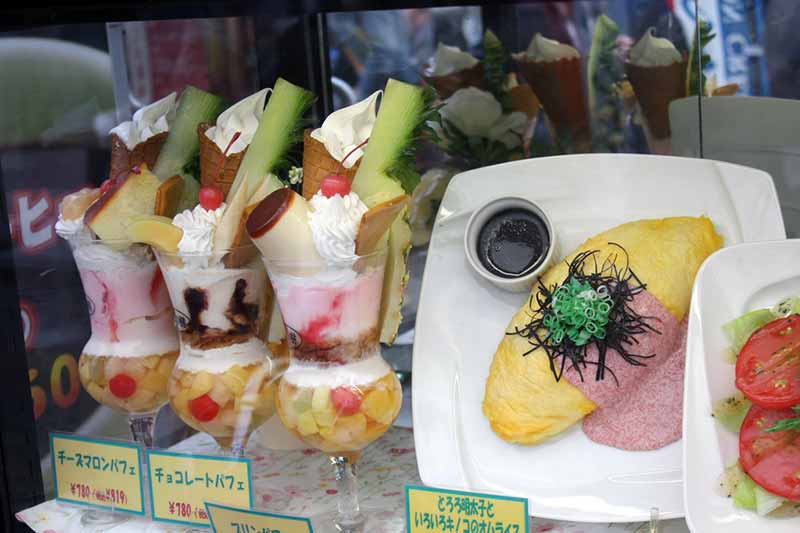
In one scene, Big Bird stops in front of a restaurant and looks at the food displayed in the window. He demands to eat the food that’s in the display and, to his disappointment, discovers that it’s not real food at all, just a plastic replica.
Known in Japan as sampuru サンプル, or “sample,” this waxy, fake food has been around for nearly 100 years and, over time, has evolved beyond restaurant windows.
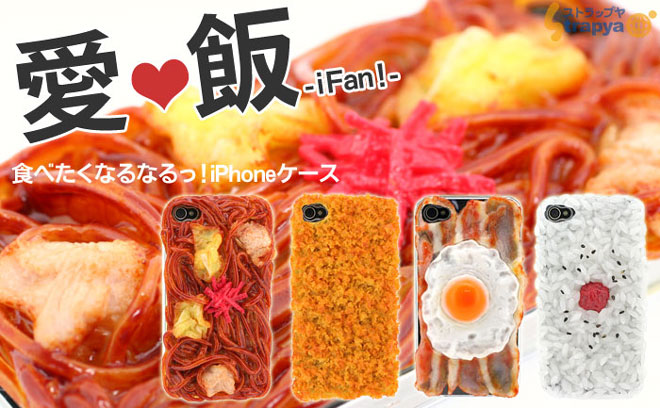
Nowadays, you can get this fake food in any form you want: keychains, flash drives, cell phone charms, and even fake food iPhone cases.
If you’ve ever visited Japan and had to order food without much kanji knowledge, sampuru サンプル are a lifesaver. With their exquisite detail, you know exactly what you’re going to get – what toppings on the ramen, what side dishes with the set meal – and if you really can’t communicate in any other way, all you need to do is point.
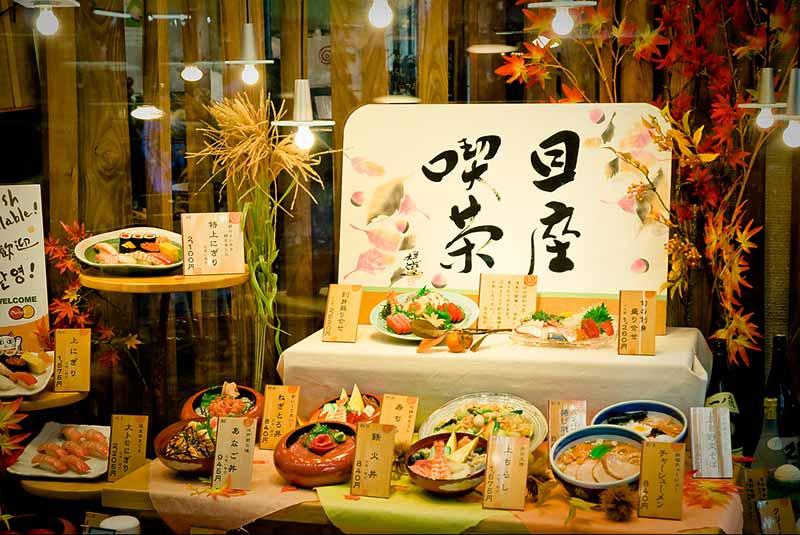
Despite how helpful they are to those of us with minimal Japanese skills, these samples were not created for our benefit – they’ve existed since before mass tourism to Japan was practical. And in fact they’re so unfamiliar to people from most other countries that some are put off by them. One tourist told a reporter:
When I see this it makes me feel like I don’t want to eat it. It is too weird.
Personally I remember that before I was familiar with Japanese food and culture, when I saw food models in a Japanese restaurant in the US, they seemed odd and rather suspicious. Maybe because these days we equate “plastic” with “fake” and “cheap,” they struck me as the opposite of a sign of quality cuisine.
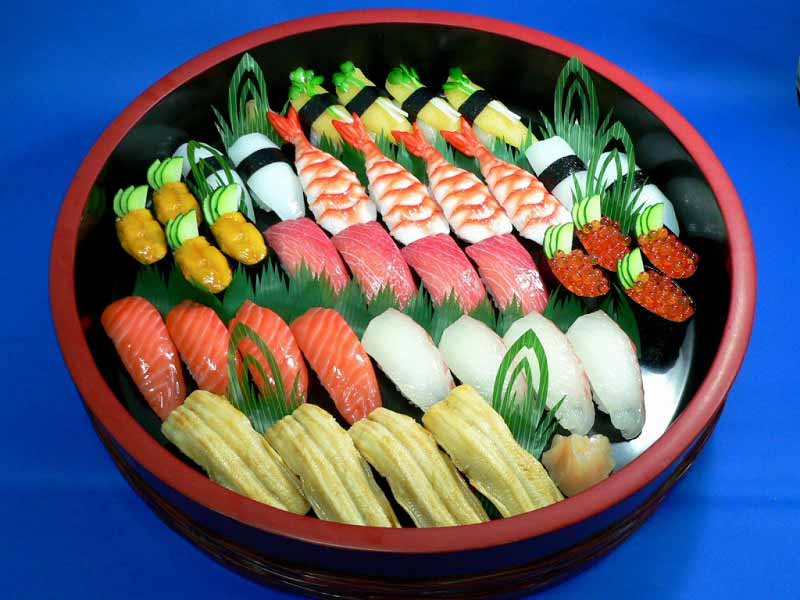
Well I couldn’t have been more wrong about the “cheap” part – in fact those samples cost a LOT of money. An easy place for the English-speaker to peruse the prices is at the website of FakeFoodJapan (which has a handy converter in the right hand-corner to change the price in yen into your native cuisine). A simple cup of green tea is 3,600 yen (about 36 dollars), and a single onigiri rice ball is 7,000 yen. Full main dishes go up into the equivalent of hundreds of dollars, like 52,600 yen for a platter of sushi for four.
Now imagine one of those restaurant display cases with several rows full of a few dozen dishes, many of them set menus with several components, and add up the numbers in your head. You’re talking serious money.
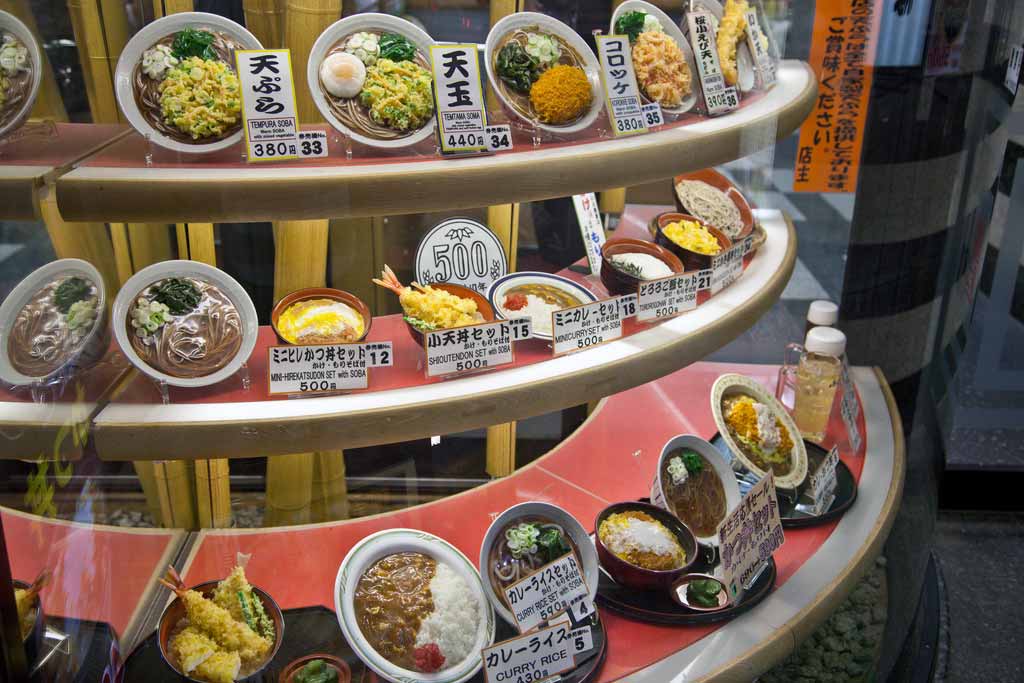
When I first discovered how expensive these models are, I was surprised. Sure, it’s great for customers to know exactly what they’re getting before they order. But other restaurants, both in Japan and in countries that don’t have these food models, do that by printing color photographs in their menus, which is far cheaper. In fact even in Japan many places do both.
So I wondered, how did this business get started?
Who Invented The Food Model? The Pretty Story
It turns out there’s a good reason why the original users of these food models didn’t print photos in their menus instead – it’s because when they were first invented, that wasn’t an alternative. The first model was made in 1917, and the industry really took off in the 1930s, long before color photography – and the reproduction of color photography – was common.
There’s agreement on the general outlines on the start of food models becoming a big business. Takizo Iwasaki is acknowledged as the father of the industry, and his company, Iwasaki-bei, is still in business. His first model was a rice omelet, which is still on display at the company’s factory in Gujo Hachiman.
The story of Iwasaki’s crucial moment of inspiration in 1932 Osaka is often retold, and for something that didn’t happen all that long ago, there’s surprisingly little agreement on the details. But the more I looked into it, the more I realized that actually made sense – the story turns out to be a bit of an origin myth, so the tale has been romanticized to sound better.
One version, on an episode of NHK English TV’s Begin Japanology, relates that his wife was sick, and he couldn’t pay the electric bill, so they had to use candles, which Iwasaki would gaze into late into the night. One evening he picked off a piece of melted wax and saw his fingerprint imprinted. He let wax drip on the tatami and saw how the pattern of the ridges was precisely reproduced. An acquaintance asked if he could make model food samples and despite having no experience, he was sure it could be done with wax.
Or if the leap from wax fingerprints to food doesn’t sound convincing, how about this: On the company’s web page, an introductory video says Iwasaki let wax drip in the water and it formed the shape of a beautiful flower on the surface. Years later, after a lot of testing and trials, he created the first omelet food model.
Who Invented The Food Model? The Not-So-Pretty Story
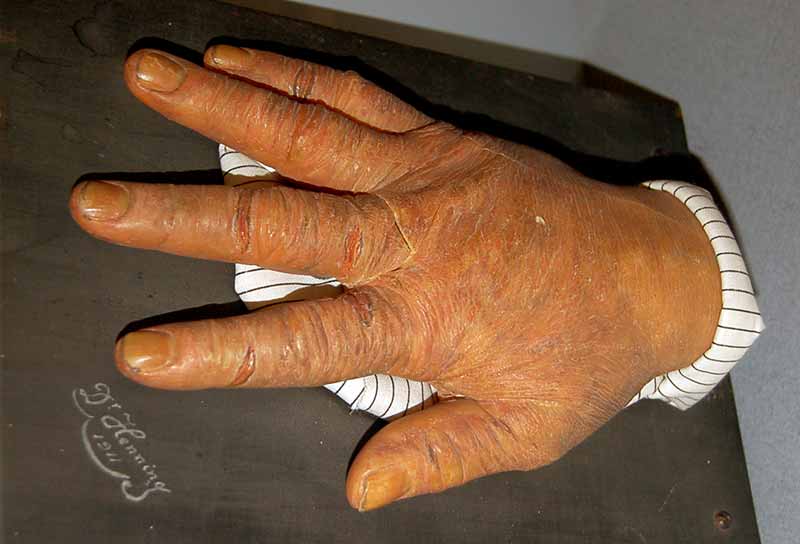
I sort of wish I had believed those romantic stories and left it at that, because when researchers look deeper, it gets a little unappetizing. In fact, there were actually wax food models before 1932. Yasunobu Nose, a journalist who wrote a book about the food sample industry, says the first one was made in 1917 by Soujiro Nishio of Kyoto, who made anatomical models out of wax: “The original craftsman was working for doctors and making models for pathological studies, such as skin diseases and human organs, before he was asked to make food samples for a restaurant.” Yum!
Other writers have added that detail into Iwasaki’s moment of inspiration: “images from anatomical wax models displayed at Japanese apothecaries collided with memories of a wax flower arrangement,” or a combination of “anatomical models, imitation food used in nutrition lessons, and watching wax from a candle drip onto tatami.”
Did a wax flower arrangement really enter into Iwasaki’s inspiration? Had he seen anatomical models of skin disease or was a fingerprint in wax the only body part involved in his inspiration? I don’t know. But I suspect that the stories are all slightly fictional because maybe there wasn’t really a single mythical moment. Although Iwasaki may have been the father of the industry, it seems probable that he didn’t come up with the idea out of the blue. For instance, if he didn’t know of the guy who made them in 1917 in Kyoto, they were also in use in the 1920s in Tokyo. Apparently in that decade there was a huge boom in eating out, and department stores were opening cafeterias to cater to office workers. There were complications trying to satisfy large numbers of people unused to eating out, and perhaps unfamiliar with city cuisine. Letting people see the food in advance was a way to let them know exactly what they were getting. The first department store to try this was Shirokiya in Tokyo, where they had the idea to display a serving of each dish. But real food could attract bugs and get sad-looking in other ways by the end of the day, and making the food and throwing it away every day wasn’t without expense.
So someone had the idea of asking Tsutomo Sudo, a anatomical model maker in Nihonbashi, to make models of food. Made with a mixture of paraffin wax, stearate, and vegetable tallow, his first piece is said to have been tuna sashimi.
Did someone in the department store know about the models made by the anatomical model maker from Kyoto, or did they come up with the idea on their own? Had Iwasaki seen or heard of these prior models, and was the whole wax-dripping-from-candle story an invention? There’s probably no way to know. It wouldn’t be the first great idea that several different people came up with independently. He was definitely the man who made a huge business out of it, though – and his company reportedly still has sixty percent of the market. So that’s enough of an accomplishment that I guess he earned his romanticized origin story.
But whatever the origins, there's one group of foreigners that took plastic food models and made them a restaurant staple: foreigners.
As foreign influences became more and more prevalent in Japan in the early 20th century, more foreigners found themselves in Japan, and the Japanese found more foreign food in Japanese restaurants.
In order to help foreigners unfamiliar with Japanese food and Japanese people unfamiliar with foreign foods, restaurants began placing plastic replicas in the windows so people could have an idea of what they were ordering.
Making Food Models, Old-School
Food models are no longer made of wax – it was replaced by more durable plastic in the 1970s. But you can still see how wax models are made, and in fact try your hand at it at workshops for the public held at various food model stores and factories. The typical demos are of making a head of lettuce and tempura. To make lettuce, they pour layers of white and green wax into a water bath, lift out the resulting sheet, scrunch it up, and cut it in half. It’s pretty remarkable how realistic it looks.
Here’s the lettuce:
And here’s some tempura:
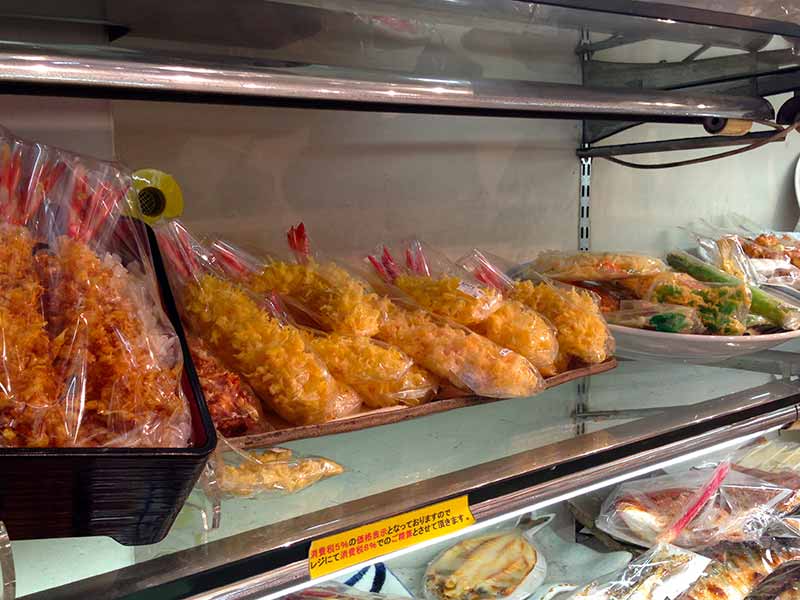
To make tempura, wax is dribbled in to look like tempura coating, then a separately made food model, like a shrimp, is wrapped in it.
Making wax lettuce looks like fun, but it doesn’t seem to be all that representative of how most models are made nowadays. It seems to rely on the natural randomness of squishing the wax layer being a lot like the natural randomness of the lettuce leaf ridges.
Through all of this though, one thing has remained the same: fake food in Japan is still, by and large, handcrafted. While you might think that it’d be easy to mass-produce a bowl of fake ramen, most manufacturers take an artisanal approach, taking great pride in their craft.
Some artists even create their sampuru サンプル using the same methods that might be used to make the actual food. The closer to the real thing, the better. Most of the processes rely more on precise reproduction both of the real foods and sometimes even the actual preparation methods for the real food being duplicated.
Making Food Models Today
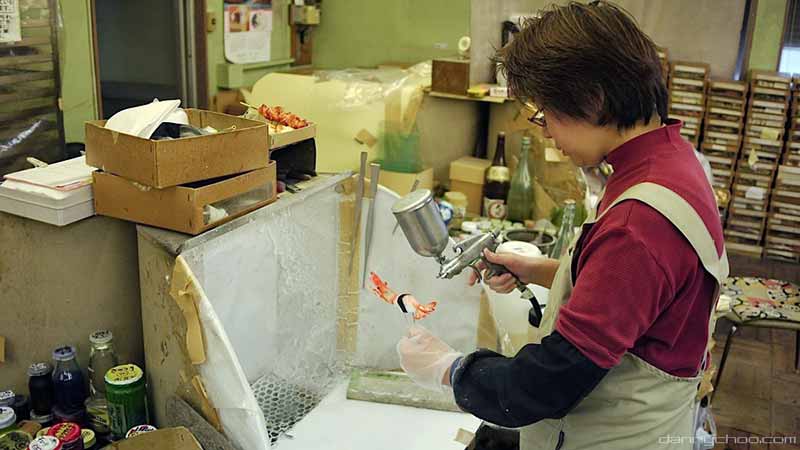
Though the food replica industry started off using wax, this wasn’t ideal. Wax isn’t the most sturdy material.
Nowadays, sampuru サンプル has reached a level of sophistication that early 20th century restauranteurs could have only dreamt about. The materials used now don’t fade or deteriorate as older replicas did, and could probably withstand the apocalypse if it came down to it.
Models are made of plastic, using silicon molds that retain the finest details of the real food. And we are talking real food: a mold for a piece of tuna sashimi, say, is made by pressing an actual piece of tuna into a layer of silicon. The silicon is left for a day to set and then liquid colored plastic is poured in to make many little copies of the original piece of fish.
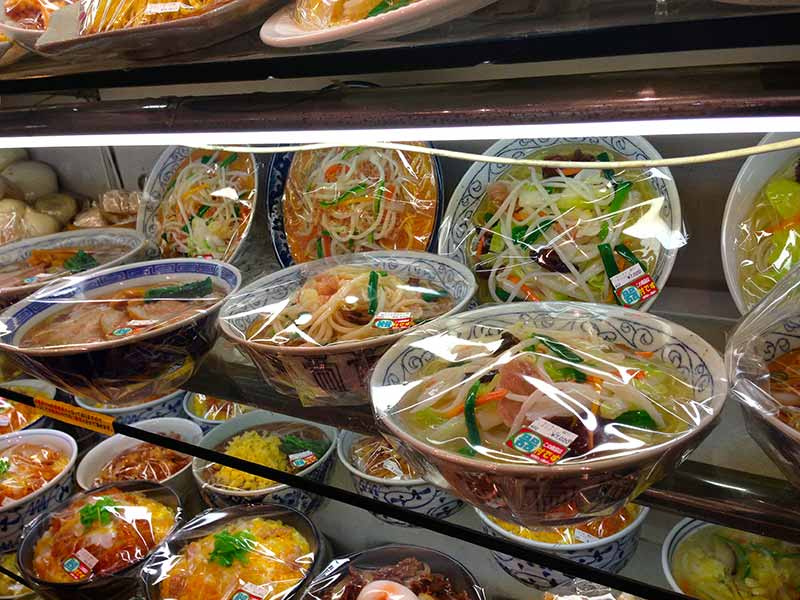
There are still tricks for some individual foods that molds aren’t suitable for, like ramen noodles made by covering string in liquid plastic. Some foods are reproduced using similar techniques used in preparing the real dish. Sushi is made by taking individual mold-cast plastic rice grains, mixing them with an adhesive, and then shaping them by hand. Real chef’s knives are used to chop, and a sandwich is made whole and then cut into pieces just like the real thing.
Although already-made models are sold, companies also do custom orders and pride themselves on precisely replicating the exact dish as made by a particular restaurant. And while saying that molds are used may make the process sound mechanical, there’s clearly a lot of craft involved. Since real food isn’t one solid color like plastic, the molded items needed to be individually colored realistically, using both hand paintbrushes and airbrushes.
And there’s apparently still work to be done on perfecting particular items. Uncooked natural food is said to be the hardest to imitate, and one employee of Iwasaki told a reporter that his greatest achievement was making a realistic Japanese leek, or negi. This is a vegetable that’s sort of like an American scallion or green onion but somehow, subtlely far more awesome. You see it chopped up on top of ramen and many other dishes, so it’s needed for a lot of food models, but apparently past versions were not very convincing. Made of a thin layer of white plastic rolled up, when sliced, they looked like, well, white plastic rolled up and sliced. This man’s achievement was not only to reproduce the yellowish-green shade in the middle of the negi, but to make it act like negi when sliced – the layers come apart, and the fine strips droop naturally.
Fake Food Travels
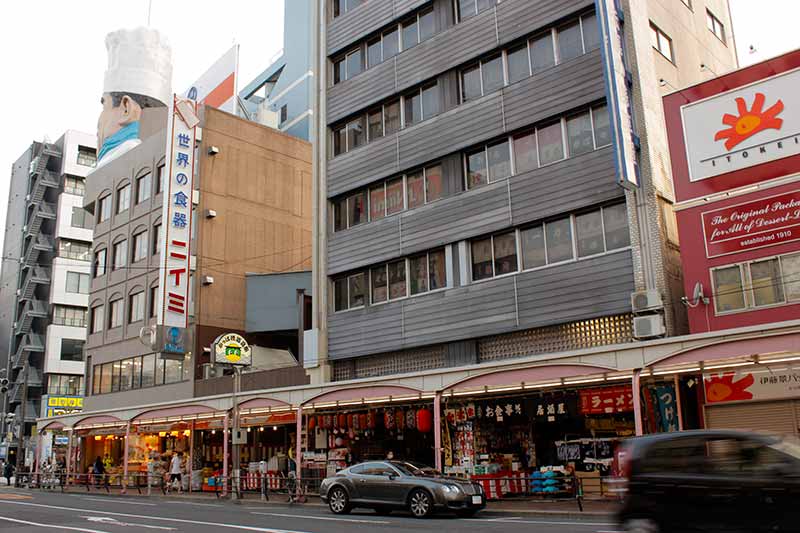
If you’re visiting Tokyo and you’re interested in food models, Kappabashi is the place to go. It's a street in Tokyo that has an incredible concentration of suppliers of restaurant equipment. Some people call it “Kitchen Town.” This place makes and sells more plastic food than possibly anywhere else in the world. They cater to tourists as well as the restaurant trade, because the industry has caught on to the fact that there are ways to make these things into perfect souvenirs like magnets, cell phone charms, stands, and so on.
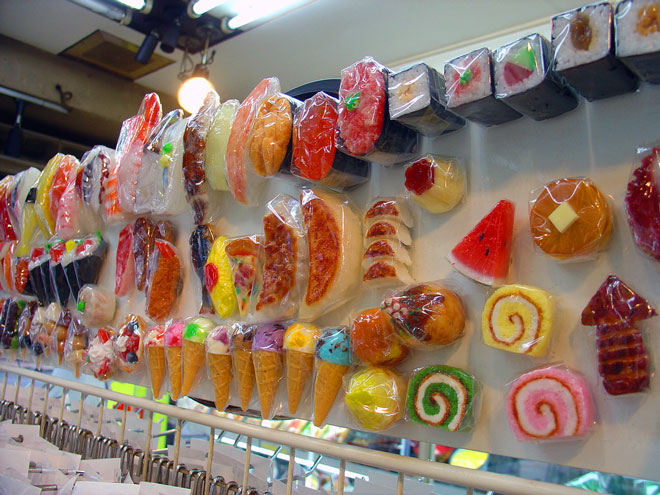
Alongside the shops that sell industrial refrigerators and mixers, there are businesses that specialize in fake food. Shops offer a wide selection of fake food to buy as individual pieces, or wholesale. You can even make your own sampuru サンプル creation.
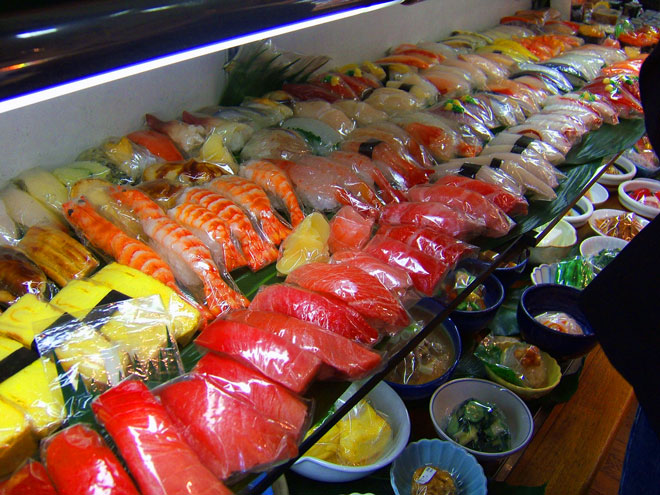
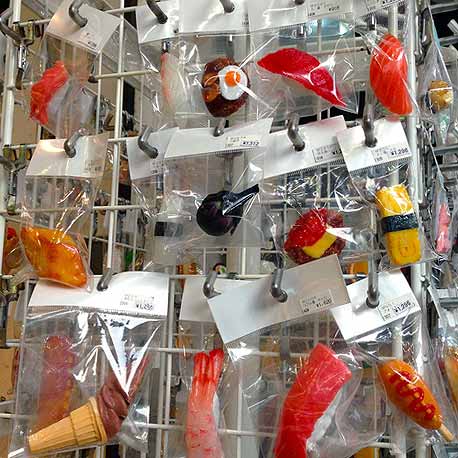
The small stuff is reasonably affordable, and if you’re like me you’ll be sorry when you get home that you only bought one tiny grilled squid fridge magnet, so learn from my mistakes and don’t be stingy.
A couple of the stores have websites, in Japanese:
The latter also has a souvenir shop in Tokyo Skytree if you don’t make it to Kappabashi.
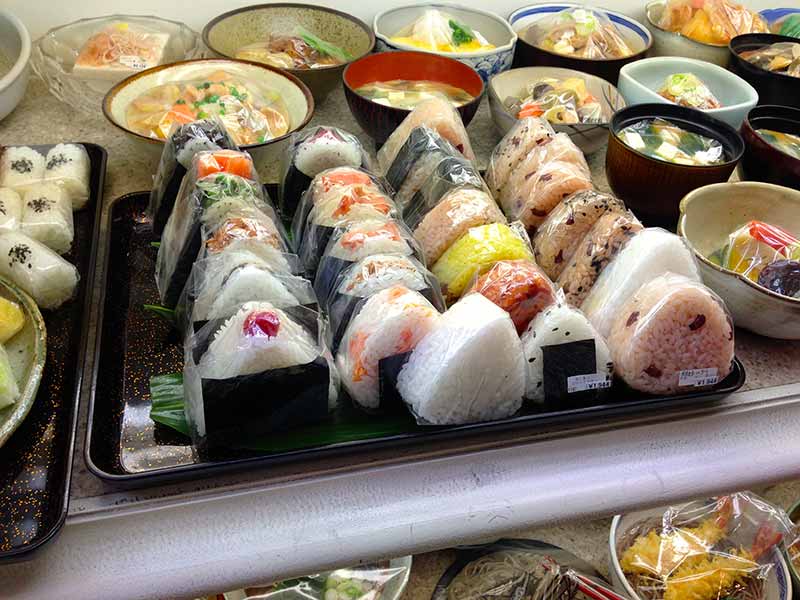
In Osaka, the mythical birthplace of the food sample, there are shops in the Doguya-suji shopping street. For a real pilgrimage, though, you need to head to Gujo Hachiman, Iwaskaki’s home town, where there are ten food model factories. Apparently there’s room for so many because they specialize in certain items – I guess this means that when someone like the guy we met earlier creates the ultimate fake negi, everyone doesn’t steal his idea, which is a nice thought.
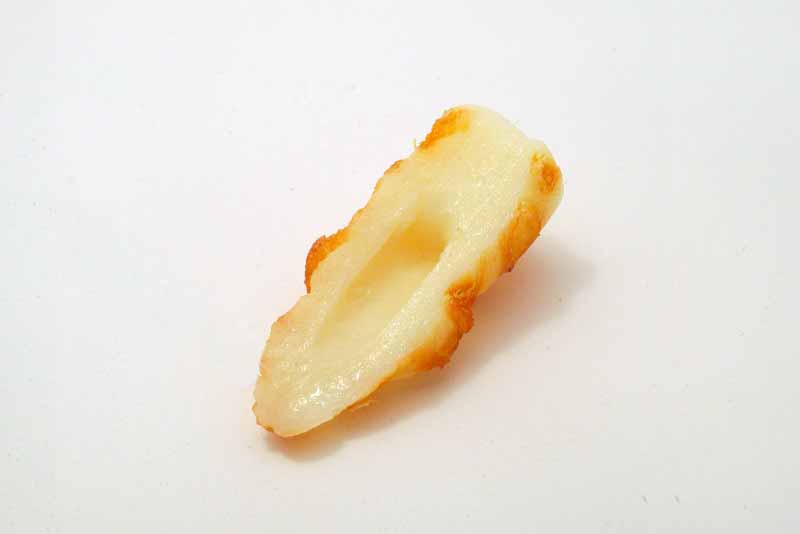
If you just want to sit and home and shop on the Internet, though, I’ve spent a ridiculous amount of time on the website of FakeFoodJapan coveting a USB drive pickled plum ($35.15), a business card case covered with red bean rice ($21.48), and a fridge magnet of boiled fish paste ($8.79). They’re a company whose noble mission is “to give people spanning the globe the opportunity to own and enjoy for themselves this Japanese time-honored craft of producing the most authentic looking fake food known to man.” I’ll drink a foamy-headed, 7,000-yen totally convincing fake mug of beer to that.