
The Great Otaku Pilgrimage

Otaku have long been an economic force to be reckoned with. Their immense spending power has long made them the target of merchants of all types (action figures, DVDs, body pillows), and they even have their own destinations.

Akihabara, a district in Tokyo, has long been a sort of otaku Mecca. You’ll find rare and highly-sought after otaku merchandise in its shops, maid cafes to titillate an otaku’s sense of moe, and other destinations. It’s where Danny Choo cut his teeth as an otaku figurehead slash Star Wars meets Earth Wind & Fire dancer.

What I didn’t realized until recently is that Akihabara isn’t the only holy place for otaku. As a matter of fact, there are a plethora of places that serve as sacred sites for otaku all over the world.
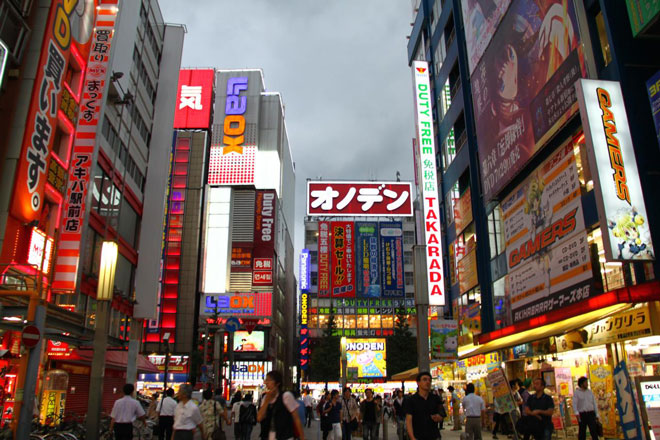
Akihabara

Photo by Isaac Bordas

It helps that a lot of anime takes place in (or are based on) actual, real-life locations. Given these reference points, artists can put in an impressive level of detail to their recreations of these real-world locales.

So where do otaku travel to pay homage to their favorite anime or manga? It depends on what is his or her favorite franchise. Akihabara is fairly unique in that it’s a place that all otaku can enjoy.

The Anime Shrine

If you’re a fan of the manga-turned-anime series Lucky Star, then you’re in luck — there’s literally a holy place for you to show your devotion to your favorite series.

Two of the main characters in Lucky Star are daughters of a priest at a fictional shrine which was modeled after a real-life shrine by the name of Washinomiya.

In the years following the initial airing of Lucky Star, Washinomiya has seen an explosion of otaku tourism. In just two years, the number of tourists visiting Washinomiya quadrupled.
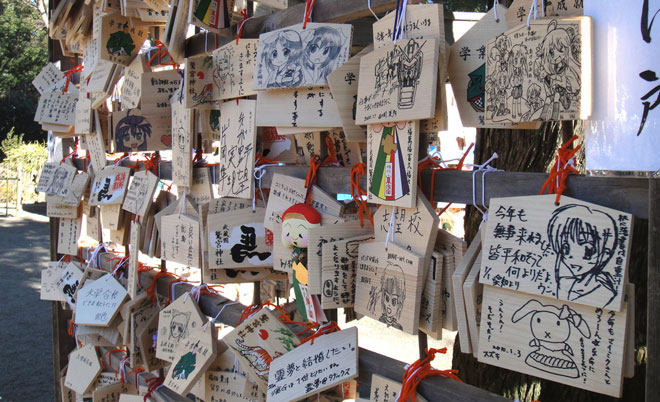
Photo by 11ta54ka97

The locals have embraced the surge in otaku tourists, going so far as to invite the Lucky Star voice actresses to come to the shrine, and issuing residence cards to the fictional characters from the anime.

It’s true that it’s been years since the Lucky Star anime aired on TV (although the manga is still ongoing), so it will be interesting to see how long the otaku faithful will continue to show up at Washinomiya.

If You Build It, They Will Come

If you’re not lucky enough to have an anime or manga that takes place in your town to bring in those juicy, juicy otaku dollars, then why not create interest?

One Japanese town, Ugo, after falling on some hard times, decided to rebrand its rice to attract more attention. It hired an illustrator to adorn its bags of rice with illustrations of women that would make otaku faint with delight.

The newly-branded rice sold three times as much as it normally did and also, stangely enough, attracted flocks of otaku to Ugo.

Otaku Abroad

I can more or less understand otaku who travel to various locales in Japan. After all from an American perspective, Japan is a relatively small country and its transit system is pretty top-notch. Getting from Point B isn’t especially hard.

But there are an elite class of otaku who take their pilgrimages to the next level. How about visiting another continent to fulfill your otaku fantasies?
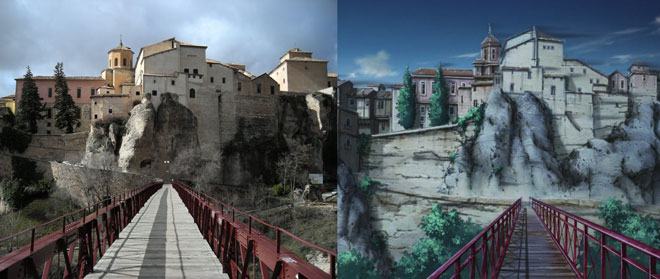
Left, Cuenca; right, Sound of the Sky

The town of Cuenca, Spain, has also been blessed (or cursed, depending on your view) as an otaku vacation destination. The anime series Sound of the Sky used Cuenca as a reference point for many of its settings. It’s not surprising then, that once otaku figured out what the landscapes of Sound of the Sky were based on, they made hajj to Cuenca.

This all just underscores a question I’ve been asking most of my life: how the hell do otaku have so much disposable income? Maybe it’s time to adopt the traditional otaku diet of instant ramen and save up for my own pilgrimage.

Read more: The Nerdiest Shrine in Japan: Anime fans flock to the Washinomiya shrine to celebrate “Lucky Star”, ‘Pretty girls’ come to town’s aid, Otaku tourism saves small town, Sora no Woto Otaku Makes Pilgrimage from Japan to Spain

  • DAVIDPD

    I tried watching LUCKY STAR, but it was just too “moe” for me.

  • Lizladyninja

    Otaku have so much disposable income because 1.) we are the social outcasts, meaning we are the ones that actually go on and get degrees in fields of study that are worth while to society and put us in good jobs. >:3 2.) most of us really really really want to visit Japan at least once in our lives. And when you have that many “really”s behind your reason you figure out a way to get over there. Be it travel agency, school trip, or selling a kidney on the black market. 3.) If you have spent any time at all learning about how to travel around Japan cheap you know that the rail pass is the way to go to get from Hokkaido to Okinawa! :3 Your also probably familiar with hostels. :D So there is no excuse to not go!

  • Mark Weber

    why ota when you can be wota

  • Cat

    I love this comment.

  • http://twitter.com/testyal1 William Sumners

    There’s only one thing I have to say.
    Toyasoto Elementary School.

  • Ben

    I feel awful having such a strong desire to go to this Lucky Star shrine…
    …but it is something I *must* do. *_*

  • Reptic

    Your explanation is good, but it doesn’t explain Japanese Otaku who travel abroad just to see the inspiration of an anime setting, especially so because Japanese Otaku have more of an association with being NEETs than highly paid doctors or scholars, and usually don’t have a lifelong obsession with said foreign locations.

  • missingno15

    For some its a location in Spain. For others, its a location in Shiga-ken.

    For my kind, it is Don Quixote lol.

    Fun-fact: The word to describe this is 聖地巡礼(せいちじゅんれい)

  • Clarissa94

    Nice “Shoeless Joe” reference. I think Taishirojima is my personal mecca.

  • Robert Patrick

    This is a bit wrong : light has been put on NEETs who ARE defintiely otaku, but most otaku aren’t NEET. For instance, you can bet that programmers in video games companies ARE otaku, as well as IT staff in many companies. Some Porn actresses also happen to be otaku and actually many porn staff (trust me on this one). Think about it : if all the otaku were NEETs, they wouldn’t go out to buy stuff, then Akihabara would go out of business.

  • http://zoomingjapan.com/ zoomingjapan

    *LOL* Otaku Pilgrimage!
    I’m more into hunting down Japanese drama or movie locations rather than anime locations, but you’ll run into them ocassionally anyways and if it’s “only” the Tokyo Tower.
    You can find the Princess Mononoke forest in Yakushima or the inspiration for Spirited Away in Nagoya’s Kiyosu Castle etc.

  • Jon

    “This all just underscores a question I’ve been asking most of my life: how the hell do otaku have so much disposable income?”

    That is an excellent question. Now I kind of want to know the answer, too. Maybe I’ll ask some Japanese people that in my next Lang-8 entry.

  • Reptic

    I didn’t actually mean that all otaku were NEETs, I just meant that otaku have more of an association with the lower paid end of the spectrum than the higher paid. If the stereotype of a Japanese otaku was a highly paid social service worker or CEO, then they’d probably get more respect and Hashi wouldn’t have had to pose the question how otaku have so much disposable income. This isn’t the case though. But what you said is true, I’m sure there are plenty of working people who are otaku, just they’re not all incredibly wealthy.

  • FoxiBiri

    ohhh yeahhh I’ve made a few otaku pilgrimages ^^
    I lived in Ikebukuro specifically because of my love for Durarara, and let me tell you, there’s not many places in that anime that are made up.
    And next summer when I visit a few friends in Sweden, we’re planning to visit Gotland to see the city where Ghibli found inspiration for Kiki’s Delivery Service.
    Some Otaku may have disposable income to do these things willy-nilly, but I think I speak on behalf of most broke-ass nerds, it’s a tough life that we work hard at damnit!!

  • きら

    Thats not quite true,hashi may be posing that question because even then
    he or us may not know it all thats why he is posing that question,for
    example a 漫画家 is one because he/she has interest not just in the field
    of work but probably is an otaku him/herself.

    and of course what makes you think highly paid social service worker or CEO would even admit being an otaku?

    last time i checked otaku-ism is shunned in japan but not shunned outside of japan.

    dont forget otaku itself is a misnomer because there are many types of
    otaku too,you could be a 電車 otaku,gun otaku or the like and most
    probably you could be wealthy.

    so its not really per se that otaku in general are not incredibly
    wealthy as this falls into social background,while rich people can be
    otaku’s not all rich people are otaku.

  • François-Xavier Thomas

    I have heard about 空の音 (even if I haven’t seen it) but I didn’t know it was based on a real location. There is very little difference between the two images, so I can see why fans of the show would like to visit the place. I can actually see why anybody would want to visit it, it’s very beautiful.

    Anyway, while I admittedly don’t know much about the real japanese life behind the curtain of the shows I watched, in my country (France), being an “otaku” isn’t nearly as rare as you might think. I’ve been more than once surprised by how many people have heard (or seen) some quite unknown Japanese TV shows, or even told me about some I didn’t know — and I have watched a ton of them, believe me! Even so, I know quite a number of people who, while not especially into anime or weird otaku stuff, would absolutely love to visit places like Akibahara, just for the fun of it!

  • Sholum

    So umm… Why no pictures for that Ugo rice you were mentioning? Are the images really that powerful?

  • HatsuHazama

    Very true, you never know if an otaku lives just round the corner…

  • http://www.tofugu.com/ Hashi

    Otaku are less and less shunned in Japan every year. Otaku is becoming the new normal.

  • http://www.tofugu.com/ Hashi

    Bit of an oversight on my part — just added one.

  • Sholum

    Oh, thanks. I’ll just go check it out.

    *thump*

    Huh? What happened? I think I fainted, but why?

  • http://twitter.com/redmaigo Red Maigo

    When I went to Japan a few years ago, I spent some time in Takayama (Gifu Prefecture). It’s a beautiful place and I highy recommend stopping by there if you’re visiting.

    Anywho, fast forward five years, and I am watching an anime called Hyouka — which is still currently airing. Hyouka takes place in a town called Kamiyama but when I saw the original opening for the show something(s) looked familiar.

    After investigating further, I found out that the studio who made Hyouka based the town of Kamiyama on Takayama. The background shots are so detailed that I can pick out certain streets and shops from my stay there.

    I bet that the town is being invaded with anime otaku right now.

    The production house that created Hyouka (Kyoto Animation) is notorious for using real locales for their anime series. Kyoto Animation also made Lucky Star, K-ON!, and the Haruhi Suzumiya franchise.

  • CelestialSushi

    Spain, huh? I wonder if there are otaku going to Venice because of ARIA the ANIMATION…
    BTW, if you haven’t seen that series, I highly recommend it; it’s very beautiful and relaxing :D RightStuf has the DVDs in the US.

  • http://twitter.com/SactoMan81 Raymond Chuang

    I can almost bet even money right now it’s kind of hard to get a ticket on the “Hida” limited express train from Nagoya to Toyama (one of its major stops is Takayama) because of hordes of otaku visiting the town to find the locations of the Hyouka anime.

    By the way, the current anime series “Tari Tari” is resulting in a LOT of otaku running around the Fujisawa/Enoshima/Kamakura area because the series is based on many locations from this area.

  • http://twitter.com/redmaigo Red Maigo

    What’s really funny is that I went on my own seichi junrei when I was in Takayama and visited Shirakawa-go. It’s the village which is based on the town of Hinamizawa in the anime Higurashi no Naku Koro Ni (When They Cry).

    It’s a few hours by bus to Shirakawa Village but everything was there.

    Yes, the anime, game and live action movie was based on or around the Shirakawa Village. I took lots of pictures.

  • http://twitter.com/etoile Meredith

    Don’t forget Tokiwa-sō in Toshima-ku!

  • anon

    Otaku aren’t all basement dwelling neckbeard hikikomori. A number of us have nice lives and/or travel internationally for work. That’s how I do my pilgrimages this year to Kamogawa (Rinne no Lagrange), Kanazawa (Hanasaku Iroha), and Takayama (Hyouka).

    Anime is just another hobby and it’s a good form of stress relief. There is no reason why anime fans should have less disposable resources than other types of otaku out there.