
A lot of people misunderstand Japan and think that it's this place where everybody acts the same, does the same things, and all speak the language.
While Japan is no India (which has over 20 recognized languages), there's more to the language than just regular ol' Japanese. As I saw on Reddit earlier this week, it turns out that there are at least eight different languages that are completely unique to Japan (and even more that have gone extinct).
Even though Japan is a pretty small country, it has a ton of smaller islands that most people don't even know exist. And sometimes those little islands developed languages of their own. Let's take a look at some of those Japanese languages you might never have heard of before:
Standard Japanese
Standard Japanese or hyoujungo 標準語, the language we all know (or are getting to know) and love. It's the national language, so you can speak this to anybody in Japan and they'd understand what you're saying.
Of course, Japanese changes a bit depending on which part of the country you're in but for the most part, standard Japanese is universally understood.
Japanese Sign Language (JSL)
Ever since I was exposed to American Sign Language, I've had an interest in sign language in general. People tend to think that sign language is just a culture's spoken language translated into hand gestures, but it's so much different than that.
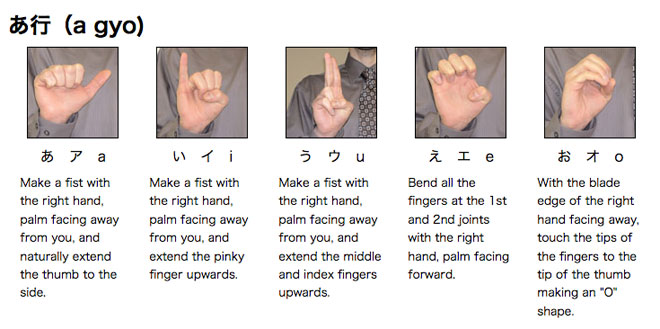
While it does share some elements with spoken Japanese (like the characters shown above), it's fair to say that JSL is an entirely different language altogether. You can read a whole lot more about it here.
Ainu
The Ainu are Japan's native people who mainly live in the north of the country whose culture is different than the ethnic group we now know as ethnic Japanese.
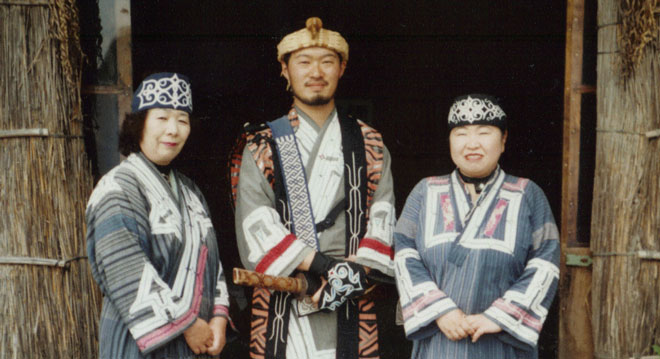
They have their own language too, which is completely unrelated to standard Japanese. Actually, there were a whole bunch of Ainu languages, but most of the variants have become extinct, leaving only Hokkaido Ainu.
Hachijo
Hachijo is spoken is the small set of islands just south of Tokyo, islands which include Hachijo and the beautiful Aogashima.
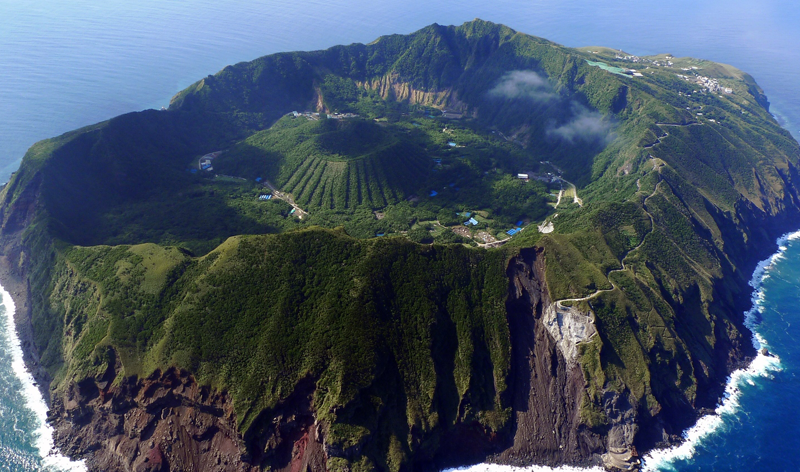
Apparently, the language is related to a much older form of Japanese but, being on such isolated islands, changed and grew differently than standard Japanese.
Amami
A lot of Japan's languages emerge from the smaller island cultures that stretch down from the south of the country and are called Ryukyuan languages. First on that list is Amami, a set of about a dozen island south of Kyushu.
Like a lot of languages on this list, it splits up even more as you move through the islands. Different islands can have drastically different dialects, so learning it on one island doesn't necessarily mean that you'll be able to speak the language.
Miyako
Keep traveling south and you'll bump into the Miyako islands, where you'll find a language that sounds very different than standard Japanese. Just listen to this guy speaking in Miyako language:
If you know or are familiar with standard Japanese, then what he's saying is probably completely indecipherable. But, believe it or not, it's still a Japanese language — just not the one you're used to.
Yaeyama
Keep on truckin' down the Okinawan islands, and you'll find yourself at Japan's southernmost point, in a series of islands called the Yaeyama islands. They've somehow become associated with dietary supplements called "Yaeyama Chlorella."

But more important is the Yaeyama language. The language spoken there is really different — instead of the five vowel sounds there are six short vowels (a, i, ï, u, e, o) and seven long vowels (a:, i:, ï:, u:, e:, ë:, o:), more than Japanese! There are a ton of other differences too, but this one is the most glaring.
Yonaguni
In the Yaeyama islands, within spitting distance of Taiwan is Yonaguni. It's a tiny little island with only about 2,000 people living there, but it's famous for being Japan's westernmost point, and for having underwater alien pyramids (f'reals).
Diver at Yonaguni The spoken language shares a lot in common with the other Ryukyuan languages, but one more thing sets it apart from the others — the written language. Up until the 1930s, people in Yonaguni used a writing system called Kaidaa, characters that looked like pictures, a lot like hieroglyphics. You'll still see them used around the area from time to time, but the written language has mostly fallen in line with the rest of the country.
Language is Always Changing
Sadly, most of these languages are endangered and will probably become extinct within our lifetimes as its last speakers die out. That's not to say that Japan is becoming a place where everybody talks the same way.
Most people think that because we're all so connected through the internet and other media now, that languages would start becoming more and more the same; but in some cases, languages are actually getting more different and distinct.
In the US, linguists are observing what's known as the "Northern cities vowel shift," a fundamental change in the way in how vowels are pronounced. Some say that it's one of the biggest changes to English in 1,000 years.
In the same way, Japanese dialects can be extremely different from one another. Some dialects can be so unlike other dialects that native Japanese speakers might have a hard time understanding it.
While these Japanese dialects can't replace the languages and cultures that are disappearing, it's nice to see that different, unique cultures are still flourishing.
Read More:
Japan: Eight endangered languages in the Japanese archipelago