
25 Ways to Save Money While Traveling in Japan

Japan is expensive.

At least, that’s what they tell us. Travelers. Expats living in Japan. Or these guys.

But is it really as expensive as people say it is? In the four years I’ve been living here, although some things cost more in general, I’ve discovered many ways to save money, both as a resident and as a traveler. Some are fairly standard, but others I learned through trial and error, and now it’s easier to spend less money when traveling in Japan than when I first arrived.

Because who doesn’t want to see and experience all the beauty and charm and craziness Japan holds . . . without maxing out your credit card or going bankrupt.

Some of the tips below will require some Japanese reading ability to take advantage of, but that’s one of the reasons you follow Tofugu, right?

1. Travel during the off seasons. Whatever you do, avoid Golden Week (late April through the first week of May), Obon (mid-August) and New Year’s, unless you love crowds and have money to spare. Accommodation rates are typically highest at these times and rooms fill up fast. The rainy season (June and early July) is one of the cheapest times of the year to travel (and no, it doesn’t actually rain all the time, but when it does, you’ll want to be prepared).

Hotels/Accommodation

2. If you prefer to stay somewhere as cheap, or free, as possible, check out hostels, capsule hotels, internet cafes, camping, Couchsurfing, or even volunteering, to name a few options. Many of you are probably already familiar with most of these, many of which have been mentioned before on Tofugu.

If regular hotels are more your style, rest assured it’s possible to find cheap rooms, even at luxury hotels and in big cities like Tokyo. Here’s how I’ve found hotel deals, anyway:

3. Check for deals early. As in, at least a month but preferably two months or more. I’ve seen early bird deals for luxury or near-luxury hotels in Japanese for only around 5,000 yen (for two people) a night, when standard costs for these places is at least 15,000 yen and up. In Tokyo/Yokohama. Not all hotels will go this low, and it also depends on where in Japan you travel, but the earlier you look, you might just get the worm.

4. During the off-season, if you’re able to risk it, you could wait until the last minute to book, such as a week or two before. I’ve seen special plans pop up in the same month or a week or two beforehand as hotels try to fill up rooms.
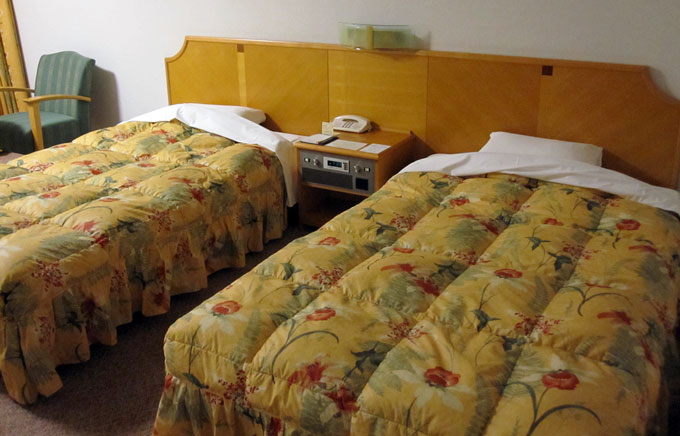
Hotel beds

5. Saturday night rates are typically higher than weekday nights, as to be expected. Fridays are either priced the same as weekdays or similar to Saturdays. Weekends, of course, always fill up quickly. You might be able to find a nice hotel to stay at during the week and a less expensive one on the weekend.

6. Book a hotel via a Japanese travel site or the hotel site. This is key. To save the most yen, I’ve found, you should try booking a hotel via a Japanese site, such as Rakuten Travel (the English version has less hotels than the Japanese version), Jalan (same as Rakuten Travel, less hotels on the English site), Rurubu, or Meitetsu Kankou. This doesn’t mean you shouldn’t search for hotels in English, but in my experience, Japanese sites offer a greater selection and usually have better prices. Search for 国内ホテル予約サイト to find others.

If you find some hotels you like, check their official websites, if they have one, to compare prices. Sometimes the rates on the hotel’s site are lower than on the travel sites. Also try searching for the hotels you like in Japanese and English to see if you can get a steeper discount elsewhere. A couple times I’ve been successful doing this and saved a few thousand yen.

7. Don’t get a hotel plan with meals included, unless you’re looking for a particular experience, such as at a ryokan. The room or per person rates are lower without hotel meals, and you can find more affordable meals elsewhere. However, you’ll want to make sure there are restaurants, supermarkets or convenience stores near the hotel, otherwise you’ll end up paying for expensive hotel food anyway.

Transportation

8. Get a Rail Pass, or not. The Japan Rail Pass is a good deal if you plan to travel to multiple cities and make the money spent worth your while. If you only travel around one city, don’t get it. (And if you live in Japan, you’re out of luck, as the rail pass is only for visitors.) You can use Hyperdia or Jorudan to calculate train fares between cities.

9. Look into other rail passes. Japan Railways (JR) offers a variety of passes and discounted tickets, often referred to as “トクきっぷ” (toku kippu). One well-known pass is the Seishun 18 ticket which is a cheap way to travel by local trains (not shinkansen or express trains) and is valid for up to five days during specified periods of the year.

Another example is the JR Shikoku birthday ticket, which you can get for only 10,000 yen during the month of your birthday. It can be used for three consecutive days on JR Shikoku train lines and some buses. Up to three of your friends can also join you for the same price per person. This ticket is actually cheaper than the Shikoku Free Pass, which costs 15,700 yen and the only difference being it can be bought anytime of the year.

You can find some information about special tickets in English, but most of it is in Japanese. Toretabi is a good Japanese resource to search for JR passes and special tickets around Japan.

10. Take the bus. One of the cheapest options to get around Japan is via a highway or overnight bus, although you’ll probably want to make sure you go with a reputable company, considering the tragedy earlier this year and some potential problems. The night buses allow you to save on accommodation, although it depends on how well you sleep in those kind of situations.

Pirate ship

11. Check out regional “free passes” in English and in Japanese. These might include trains, buses, and/or other forms of transportation. Sometimes these passes are an excellent deal, but sometimes not depending on what you end up doing. For example, the Odakyu Hakone Free Pass, which lets you ride the Hakone Tozan Cablecar, Hakone Ropeway, pirate ship (i.e. the Hakone Sightseeing Boat), and the Odakyu buses, is a pretty good deal if you do all those things. So unless you just can’t bear the thought of not riding a pirate ship — although you can pay for it separately — you could check out the cheaper Izu Hakone Pass and get around by bus and a regular ferry-type sightseeing boat instead. In order to find more options, searching in Japanese will help, a lot.

12. Take local trains instead of the bullet trains. Sure, they’re slower, but they’re faster than the bus, and it gives you a chance to see Japan at a more leisurely pace, rather than having it zip by you in a matter of seconds. Although things to consider: there is usually only one car with a bathroom, which you’ll have to look for; some train lines run infrequently so you might end up waiting over an hour; and you’ll have to watch out for folks who’ve fallen asleep while on the train. The sleepers will often, seriously, rest their heads on you in their sleep. And if you think a gentle shrug will get them to move, you’d be surprised.

13. Drive. This might be a better option for folks living in Japan, as renting a car can be expensive. I’ve found that the amount we pay for expressway tolls, gas and parking often works out to be less expensive than shinkansen tickets (but this does depend on where you are driving, too). If you rent a car, you probably won’t save much, and the time spent driving is going to take twice as long as riding a bullet train, assuming there’s no traffic. There are some places in Japan that are easier and cheaper to travel by car though.

14. Take advantage of all the budget airlines (LCC in Japanese) that keep popping up in Japan, such as Peach, Jetstar, Skymark and AirAsia. I’ve been watching Peach for the past month or so and have seen one-way flights from Nagasaki to Osaka for less than 5000 yen.

Food

People tend to think food in Japan is prohibitively expensive, especially fruit, due to those ridiculous 10,000 yen melons. And I’ve heard some people say vegetables are expensive as well, which isn’t true, unless you’re going for the imported stuff. A lot depends on not only how you shop, but where you shop.

15. Check out department store basements. Most major train stations have at least one or two department stores connected or nearby. I wouldn’t say they are the best place to find the cheapest food most of the time, but you can generally find prepared meals, large salads, onigiri, and bentos for a good deal. There are a variety of other food shops worth checking out as well.

16. Convenience stores or コンビニ. You’ve probably heard about this one. These are great for inexpensive, not-junk-food noodle dishes (soba, ramen), onigiri, bentos and sometimes salads. Beverages, snacks and fruit, if available, tend to be priced higher at コンビニ than at supermarkets, except the store brand 100 yen snacks, which supermarkets also have.

17. Supermarkets usually have the best deals on food. You can find lots of prepared foods (bentos, noodles, salads, onigiri, fried goods, sushi and a variety of other items) for a decent deal. Water, snacks and other beverages are generally cheaper than at convenience stores. You can actually also sometimes find supermarkets in department store basements.

18. Buy fruit or vegetables from a farmer’s market or “morning market”. Unless you’re buying strictly imported fruit in Japan, it’s not all as expensive as the ridiculously priced and carefully packaged melons/peaches/apples/grapes. I’ve found pineapple, which is normally imported, to actually be cheaper than back home (for me), along with some other fruits. Seasonal fruit is often affordable, but particularly so if you buy it from a farmer’s market or morning market. Expensive strawberries at the store might be half-price, or a bag of apples might end up being less than 100 yen a piece.

Many farmer’s markets also sell prepared food. To find one nearby, you could ask at the place you’re staying, or search for “ファーマーズマーケット” or “朝市” in your favorite map app. This is also a great way to talk with the locals and experience another side of non-tourist Japan.
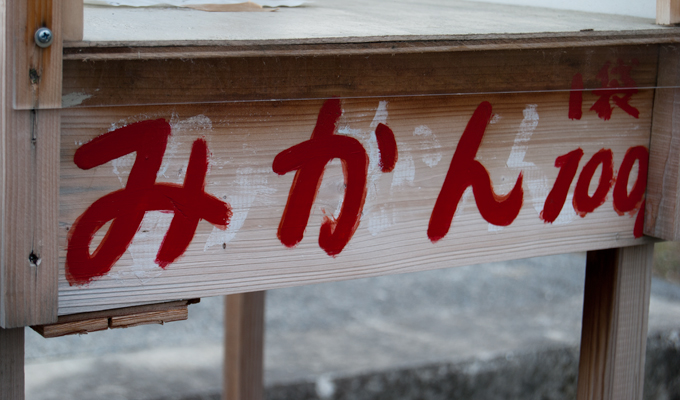
Mikan

19. Eat at affordable places. A lot of these have been covered elsewhere, such as ramen, soba or udon shops, Japanese curry, kaiten sushi (the conveyor belt kind), and chains such as Yoshinoya. You might also want to check out Shakey’s Pizza, which offers an all-you-can-eat buffet, lunch or dinner, for around or under 1000 yen, or an Indian curry place (search for インド料理). Mall food courts offer affordable, mostly-Japanese food options, as do expressway service areas.

Is fast food in Japan actually cheap? McDonald’s, Mos Burger, and all those other cheap joints? They can be if you buy one or two things, but if you buy an entire meal’s worth, it can end up costing just as much as what you’d pay at an affordable restaurant with more and arguably better or healthier food.

21. Search a restaurant site for said affordable places. Tabelog is one of the most popular. You can search by region, train station, cuisine, and price. So if you want to find some cheap places to eat in Tokyo, you can click on “東京” on the map, and then under 予算 (よさん, budget), choose your price range and press the green button that says 検索 (けんさく, search). As Tokyo is ridiculously huge, there are 111,849 results, so you’ll have to narrow your choices on the next page using the options on the left side.

22. Eat a big lunch, small dinner. Lunch meals are typically cheaper than dinner, though the portions might be slightly smaller depending on the restaurant. If you want to splurge on a nice meal, eat a big lunch and spend less money than you would eating out for dinner (unless you go to a cheap place, that is). (Note that this does depend on the restaurant and their lunch/dinner menus).

Other

23. Follow sites such as Groupon Japan, if you’re flexible and can read some Japanese. Groupon has regular deals on hotels, restaurants and recreation options, like onsen, so you never know what you might find. I’ve seen quite a few excellent deals.

24. Search websites for coupons. If it’s offered in both English and Japanese, check both, but most often, if the site has any information about coupons or specials, it’s in Japanese. So if you’re going to an amusement park, a water park, the movies, etc., check the Japanese website for coupons or discounted admission. Keywords to look or search for: クーポン or 割引券 (わりびきけん), or just 割引 (わりびき).

25. Check Daiso for souvenirs. Out of all the 100円ショップ I’ve been to in Japan (not that I’ve been to ALL of them), I’ve found Daiso to have a great selection of Japanese souvenir-type goods. This works especially well if you have a lot of people to get gifts for and can’t afford to spend thousands and thousands of yen at regular souvenir shops. Green tea is also a great gift (especially if it’s from Shizuoka, not that I’m biased or anything), and you can find affordable bags at the supermarket.


These are some of the ways I, and others, have found ways to travel Japan on a budget. I’m sure many of you have additional helpful tips, so let’s hear them! What are some good ways to save money while traveling in Japan?

From how to read food labels to surviving Japan’s rainy season to comprehensive packing guides, Ashley Thompson provides unique how-tos and resources for life (and travel) on Surviving in Japan. She also loves walking among the never-ending green tea fields of Shizuoka prefecture, where she lives.

  • http://zoomingjapan.com/ zoomingjapan

    Wow, hey! I’m surprised to see you here on Tofugu, Ashley!! ^-^
    Great advice indeed!

    Most of the time (!) it’s really cheaper to travel by bus, yes!
    Yet, I mainly travel by train.
    Why? Because for some strange reason I get extremely motion sick in Japanese cars (unless I’m the one driving) and buses. I have no idea why!!!
    Taking a long bus ride can be quite horrible for me, so I just want to warn the people who easily get motion sickness. It’s even worse here in Japan!
    Either take some meds before your trip or see if the train is really THAT expensive! ;)

  • Griffie

    Just went to Kobe, Japan for a month and have to say I can agree with all of your tips. Especially buying souvenirs at Daiso, it really is the best quality for the cheapest money and still you can get good souvenirs for people there. Not to mention you can get some good necessities for living there for cheap too, such as some cosmetic products, q-tips, school supplies, etc. 

  • kuyaChristian

    Thank you for writing this guide! :D
    I am planning to go to Japan around late June-early July next year [which by coincidence on what I just learned, tickets are more cheaper that time]. For maybe 2 weeks or three.
    Fortunately, I have the luxury of a friend offering his place during my stay there, that will cut me on lots of housing costs. 

    How much do you think I’ll have to bring? I think it’s also worth noticing that my friend lives somewhere in Saitama, so I might have to consider train ticket costs if I want to go to Tokyo and certain districts.

    I said that I’ll put at least US $2000 aside but I feel like that’s not enough, even if I go on a budget.

    Thank you.

  • Lily

    Great tips! :D
    Be careful buying souvenirs at Daiso, though, especially if you’re American, you’ve been in Japan for a while, haven’t been back to the US recently, and are just doing some traveling around — Daisos are popping up like mushrooms after rain here, and they have a lot of the same stuff as the Japanese ones. If your friends back home live in major coast metros and are reasonably adventurous, they’ll be onto you. ;) And they might already have the items…

  • http://www.zonjineko.com zonjineko

    I’d suggest http://www.airbnb.com for accommodation. We had great success in the bigger cities using this website and had huge apartments for far less than the cost of one night in a (small) hotel.

  • kitsuki

    i think it the most useful tofugu post to date.

    you are saving my life with hyperdia!!!
    and so many of the other useful website and tips that you’ve posted!
    sincerely thank you!!!!!

  • http://www.survivingnjapan.com/ Ashley

    Wow, thank you so much @f8e866c56b37668b1b74aa55b7f29a73:disqus ! You’re welcome. Glad to hear the sites are useful for you! 

  • http://www.survivingnjapan.com/ Ashley

    Definitely agree. I haven’t used them yet myself, but it’s a good resource. Thanks for sharing. (Not all hotel rooms are super small or expensive, though!) :) 

  • http://www.survivingnjapan.com/ Ashley

    Thanks Lily! 

    Thanks also for the tip. I’ve been to Daiso stores in the Seattle area around (I’m from Washington state), but I feel like though they were somewhat similar, the products were different. At least I didn’t notice a lot of overlap. I’m sure it depends, though. Probably worth checking out your local Daiso before going to Japan to make sure you don’t get anything identical. :D

  • http://www.zonjineko.com zonjineko

    True but I have found if you want modern and large in Tokyo you either pay up or use airbnb.com. Plenty of larger older 80′s style rooms but flower wallpaper and sheets make baby jesus cry ^^

  • http://www.survivingnjapan.com/ Ashley

    Thanks @d34a6fb05bbff5f4fa6818b39e39a1f8:disqus ! 

  • http://www.survivingnjapan.com/ Ashley

    I guess I’ve found the opposite. Not all places are 80s style rooms with flower wallpaper… Actually, I’ve never stayed in a hotel like that.

  • Robert Patrick

    Great post !

  • SusiePlummer

    Does that $2000 include the money for your flight? If you’re in Japan for 2-3weeks, and you have free accommodation and can sometimes cook at your friends house, then that’s enough money, even if you do have to pay for flights out of it. 

    Local trains aren’t expensive (a quick look on hyperdia shows that a single from Saitama area into Tokyo is only about 400yen which is about $6).  

    Things that will quickly bring your spending up: long distance travel (the Shinkansen is really expensive), lots of drinking, eating at western restaurants and entry into a lot of touristy places (look for tips on free/cheap things to do, and only go to more expensive things you’re really interested in).

    Hope that helps, I don’t actually live in Tokyo (I’m in Sendai) but I’ve been there a couple of times and a lot of the stuff is general Japan!! 

  • http://www.survivingnjapan.com/ Ashley

    Thanks @zoomingjapan:disqus ! :)

    lol, I’ve had issues with motion sickness in cars and buses here, too. Highway buses are fine but some of the buses that drive on the narrow, winding mountain roads can make it difficult for even someone who never gets motion sickness not to get sick. 

    And I find a lot of people driving accelerate quickly and brake hard. Even the driving school instructor told me to brake hard 3 times before stopping when I was preparing for the driving test. Very different from in the US!

  • kayne438

    good article BUT I can’t believe you put Skymark in the same LCC category as the others … its a complete rip-off airline if its an LCC

  • http://www.survivingnjapan.com/ Ashley

    Thank you!

    Skymark is classified as an LCC, and I know some people have gotten great deals through them  (although some of the other LCCs might be cheaper). It also depends on where you’re flying from/to.

  • Amagee2100

    This is very helpful for those of us who have never been to Japan.  I’d be interested in seeing a post on ryokan if you have the expertise (or maybe a suggestion to where others have discussed them).  When I eventually get there, I’d love to give one of those a try.

  • http://www.survivingnjapan.com/ Ashley

    I think Susie pretty much covered it. You should be all right if you can primarily cook at your friend’s house and don’t do a lot of costly activities (which isn’t hard), eat out all the time, do a lot of drinking, go crazy shopping, etc. There are plenty of people who live off of that much per month here! You could probably afford one longer trip outside Tokyo assuming you don’t spend a lot of money elsewhere.

    Train/subway travel around Tokyo is pretty cheap but can add up if you do a lot every day, so you’ll want to think about that too (how much train/subway travel you’ll do, etc.) Try to avoid taking taxis as well – they’re incredibly expensive.

  • http://japan-australia.blogspot.com/ Japan Australia

    Some great tips there that most travellers will find very useful. To cut costs we usually stay at Budget style accommodation like the Toyoko Inn hotel chain which cost around Y9000 for a double and includes free breakfast and internet connection in your room. For food, as you mention the budget style restaurants like Coco Ichiban, Yoshinoya and Sukiya are great value at around Y650 a meal. Look for lunch set specials, which are great value. You can also pick up value meal specials at fast food restaurants like McDonalds and Mos Burger for as little as Y350. If you are visiting Japan as a tourist and plan to do a lot of travelling then it is definitely worth getting the Japan Rail Pass, which will save you a lot of money in Japan. If you are in Japan, look at regional passes like the JR Kanto Area Pass to save money. 

  • kuyaChristian

    I forgot to add that the $2000 doesn’t include plane tickets and the stuff I have to pay at the airport. The 2K is all my pocket money. Plane tickets/airport expenses are in a different ‘stash’, I should say.

  • SusiePlummer

    Then you’ve got plenty of money!! As with any trip, prioritise the things you want to do most and make sure you save money for them, but with $2000 for a couple of weeks, you should have enough for lots of treats!! 
    Enjoy your holiday!! 

  • kuyaChristian

    What I forgot to mention was that the $2000 was mainly just my pocket money and will be used during my stay in Japan. Airfare and airport expenses are separate :]. Hahah, I made quite a confusion. Sorrys =[

  • Pepper_the_Sgt

    If anyone is into retro video games, a chain of book stores called “Book-Off” can sometimes have awesome prices. I bought several games when I went to Japan last summer. My most expensive was Super Mario 64 for 500 yen, and it was the box sealed in plastic! My cheapest was Pokemon Yellow for 50 yen. Nuts. A nostalgic video game, like Pokemon or Zelda, can make for a cool souvenir to the right person.

    I also visited several different Book-Offs through my trip and learned that they can vary considerably from one another. One I felt was unusually over priced (for Book-Off), some had smaller selections, and I found one that even sold clothes (bought a touristy shirt for 300 yen). So if you get the chance, I’d encourage you to visit more than one.

    Book-Off also has cheap manga, books, music, and movies, but I was mostly interested in games for this trip. I didn’t look much, but I felt like the video game prices were the biggest bargain compared to America. Apparently it was illegal to rent video games in Japan until recently, so people would buy games and sell them back when they were done, which is would be my guess as to why the used prices on old games are so cheap. Somehow, renting CDs has always been fine, though. Strange.

  • Jon E.

    Hey! You live in Shizuoka! That was where I mostly stayed back in December of 2009; my host family was there. They live on top of a huge mountain in Emerald Town. It was so windy up there, some days! Really an amazing experience in Japan, to visit a more rural area for an extended period of time. Thanks for this useful post and nice to meet you.

  • kuyaChristian

    Thank you very much! I’m a pretty cheap/frugal guy by nature so I can’t resist good deals. But I’ll also still [and go with it more] on your initial response because you thought the 2K included airfare and you thought much better ways to get the most out of my buck, which still works in my favor. I will try my best on prioritizing all my things. I’ll also look around for nice places to go. I’ll also ask my friend which places he’ll recommend once I get there.

    I will try my best. I have one year to plan this out and save up, and though that’s still a lot of time, I want to plan ahead. Thank you :]

  • Kathryn OHalloran

     the solution – don’t buy souvenirs on your holiday and save luggage space.  Then go into Daiso when you get home and buy up :)

  • Kathryn OHalloran

    I used Groupon Japan a bit last year but when I was there recently, it wouldn’t accept my non-Japanese credit card!   Those books at the station (Couponland etc) are good but you have to be able to read kanji… and not just regular kanji, really tiny kanji.

    I’m surprised you didn’t mention couchsurfers – great way to meet locals when travelling. 

    Rakuten is great but I”m now try to work out how to unsubscribe from the 5-10 emails A DAY I get from them.

  • http://www.survivingnjapan.com/ Ashley

    Couchsurfing was mentioned – you can check the other Tofugu post link for more on that.

    Good point about unsubscribing; I’ll have to write a post on how to do that, because I’ve also had to unsubscribe from a lot of lists here after signing up and the first time was difficult to figure out.

    As for the tickets, that’s pretty common in general, I think.

  • http://www.survivingnjapan.com/ Ashley

    Yes, I do! :) And it DEFINITELY gets extremely windy here in winter. Not so bad in Izu and some places but I’ve lived in western and central Shizuoka and the wind is ridiculous. I’ve lost a towel or two that were drying outside lol. 

    Glad you enjoyed Shizuoka! It’s a lovely place. Best in Japan, if you ask me! :D Also glad the post was useful to you – thanks for the kind words!

  • Kathryn OHalloran

     Yeah Japanese companies seem to have no qualms about insane amounts of spam!

  • http://www.survivingnjapan.com/ Ashley

    lol, it sure seems like it. Sometimes I’ll get four or five emails in the same day from some companies. Some of them do have options to reduce the amount of mail you get, but it depends.

  • SEMTSensei

    さくらホテル(ホステル)は全部いいです!スタフは優しくて面白いです。I’ve taken students to Japan since 1988 and have stayed in dozens of hostels from Aomori to Hiroshima; When in Tokyo, Sakura Hotels are the best. Tokyo Int’l has the best location (esp. if you have heavy luggage as it is directly above the Iidabashi Eki) but they have a curfew and are rather strict. IF going to Saitama, consider Kawagoe, also known as KoEdo, where the pre-war neighborhoods and candy lane are incredibly charming, accessible and unique. Kita In (temple & summer home of royalty) is inexpensive and absolutely beautiful, especially in the Spring. The 800 statues of monks is one of my favorite spots in Japan. K’s Backpacker in Kyoto is another outstanding hostel… and if in Kansai, try a visit to Koya San if at all possible. Not easily accessible, but the oldest Buddhist Monastery in Japan and absolutely unforgettable. Always a hit with my students…

  • http://twitter.com/raazgupta Raj Gupta

    Thanks! This is a treasure trove of information.

  • http://espo.in/ Jonas

    I find that as a traveler, or even as a long-term resident, Japan can be very cheap. But actually living in Japan, and by that I mean not just for a few years but for the most part of your life, it’s very expensive. But although it is expensive, you also (sort of) automatically make more money, if you have a job that is. Japan becomes very expensive when you start including things such as medical bills, dentist, car and especially when you get kids, with school tuitions and all that stuff.

    But for me, visiting Japan is both cheap and great, I don’t have to pay for accommodation though^^

  • kitsuki

     yes I’m really surprised about that!
    I remember going on a bus with not enough seats for everyone and half of us were knocked over, really like dominoes!!

  • kitsuki

     mhm!
    Thanks for your reply!
    I’m subscribing via RSS feed to Surviving in Japan-

  • kitsuki

     it was meant as a reply lol sorry ^^;;

  • http://www.survivingnjapan.com/ Ashley

    Hi Jonas, I’ve been living here for four years and I find the costs comparable to living in Seattle. I don’t live in Tokyo, but with the national health insurance, medical and dental bills are cheap (I didn’t have this luxury in the US at all). Cars can be expensive, but it is possible to get by without one, and if you get a used kei car, even cheaper than owning a standard size car.

    I don’t disagree about school costs, though – it certainly can add up. At least there is some financial help from the government for that, though! And the fact that they basically pay you to have babies makes that less expensive too. I think it all depends on how you live, where you live, etc., more than anything else.

  • http://espo.in/ Jonas

    Well, I don’t know much about living in the US, I suppose in my case I’m comparing Tokyo with Sweden. So I guess I’m used to high salaries and apart from rent and various luxuries, low costs for living (very cheap dental bills, completely free education all the way to university, cheap and good public transportation and so on).

    Sweden tends to be slightly more expensive than Tokyo when it comes to the daily stuff, especially for travelers or people who eat out a lot. But for living, especially if you have a family, it’s definitely cheaper. The rent for a 3LDK+ apartment 20~30 minutes from Shinjuku for example (which is where I am now), is probably about half of an educated person’s salary. My girlfriend’s tiny studio apartment is 100,000 yen per month, without including the electrical, water and gas bills.

    But yeah, as you said, it depends on how and where you live. And what’s expensive or cheap is a highly subjective matter.

  • Swedish Otaku

    I’m also going to Tokyo in September! But I’m staying for 2 weeks and going alone! x_x I’m sooooooo nervous!

  • http://www.ymtvacations.com/ Carol

    Great tips. There definitely are ways to save money traveling in Japan. Another way I’ve found is group traveling – always cheaper to buy things in a bundle.

  • http://www.holidaypalace89.com/holiday-palace.html RyanHollmans

    Traveling is a passion for many people and Japan is the great destination for travel.Saving a money when you are traveling is very good.

  • http://www.holidaypalace89.com/ RyanHollmans

    Travelling to Japan is always an exciting for all and also there are many popular destinations at there.Also as a traveller you should save some money while travelling.

  • Ardhi

    Thanks for the tips. I’ve been visiting Japan for 5 times now. If you want cheaper foods, you could find it around the station. The price usually less than 500 yen. And you’re right about Daiso. I’ve been there a couple of times to buy cheap souvenirs. Just be careful, the souvenirs are not all made in Japan LOL.

  • nirmal

    good site

  • PrimaVana

    Hi and thank you for this handy article ~~ I’ve quoted you here https://www.facebook.com/groups/408687855941277/

  • Susan Elizabeth-Marsh Tanabe

    Many hostels have quite nice tatami rooms and bath spaces, and are of course dramatically cheaper than most Ryokan. In Tokyo, a lovely community ofuro (bath) experience can be found at Tokyo International Hostel in Iidabashi. VERY easy to find, convenient, good Carry restaurant on the 1F of the guilding (the hostel is on the 18F and 19F), quite cheap, but they do close from 11pm to 10am so not the place to stay when you want to be out late at night. Sakura and K’s Backpacker all have nice tatami options, but the nicest are in Sparkling Dolphins hostel in Kyoto. Absolutely amazing futon!

  • Susan Elizabeth-Marsh Tanabe

    Saitama is a large prefecture, however if you are near Kawagoe do yourself the favor of visiting. It is about 35min. west of Tokyo’s Ikebukuro station on the Tobu Tojo train line. Kawagoe is also called “Ko Edo”, little Edo (Tokyo’s old name) and have a few glorious temples, an Emporer’s lovely summer home, gardens, etc. which are TREASURES, as well as a “traditional candies street” too narrow for cars (you can relax & enjoy the little shops), Toki no kane (clock tower)…. and much more. Enjoy Saitama as well as Tokyo and, we hope, other locations as well!