
How Romaji Can Ruin Your Day

When you first start learning Japanese, you most likely start out with romaji. Romaji is using an alphabet you already know to write and read Japanese.

And when you get started out, romaji is great! “Pff, I don’t need to learn kanji,” you might think, “This romaji stuff is easy!”

Slow down there, sparky! Romaji might be easy for a while, but it’s just a matter of time before romaji becomes a huge headache for you.

The Downsides Of Romaji

I hate to burst your bubble sport, but there are a lot of problems with romaji that nobody tells you about when you first start learning Japanese. Romaji definitely has its place in learning the language, but it won’t be too long before romaji starts making your life hard.

The most obvious thing is that romaji doesn’t really help you read any Japanese text, and nobody is going to turn it all into romaji for you (no matter how nicely you ask).

Even if that somehow doesn’t doesn’t deter you, it just gets worse from there. Oh, does it get worse.
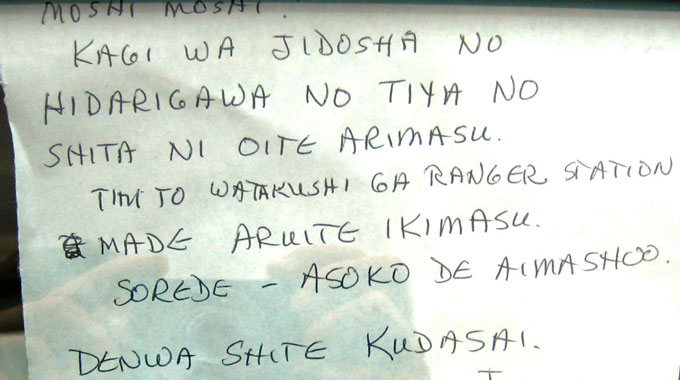
You might have heard of a homonym before, words that spelled the same but mean something completely different. There are a ton of these in Japanese that are usually easy to tell apart because they’re written with different characters; but with romaji, you don’t get that same privilege.

For example, when you see the word “hashi” written out in romaji, you can’t tell what it means on its own. Does it mean bridge? Chopsticks? The stunningly handsome writer and editor extraordinaire from Tofugu? With romaji, you have no way of knowing.

And possibly the worst thing of all is – are you ready for this? – there’s more than one type of romaji.

Different Types of Romaji

As if romaji didn’t have enough problems, there are tons of different types of romanization, and there’s not really a standard way. This can be super confusing, because you’ll see Japanese words romanized in different ways.

Just take the the Japanese word 大きい – how do you write it in romaji? Oki? Ookii? Ôkî? Ōkī? All of these are pretty much equally acceptable.

In fact, there are quite a few systems of romanization: Hepburn, Kunreishiki, Nihonshiki, Waapuro, JSL . . . the list goes on. It gets even worse when people start using variants on the major systems.
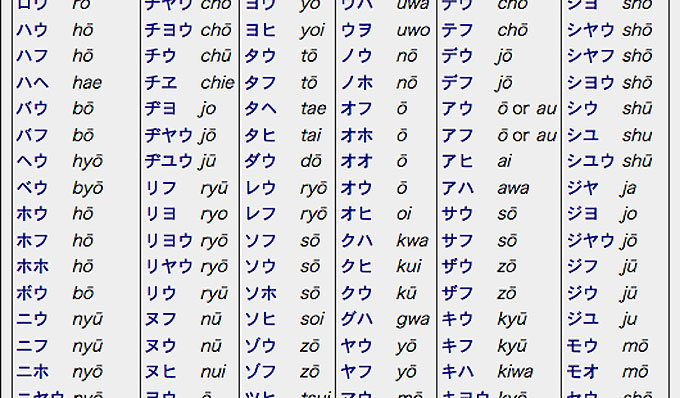
Some romanization systems use little hats (called a circumflex) on top of their vowels (lîkê thîs), but others use the lines (macrons) on top of the letter (līkē thīs). Some systems flat out disagree over what characters sound like. is romanized as “ji” in one system and “zi” in another.

The Japanese government uses on type of romaji (Hepburn), but the major standards organizations (ANSI and ISO) both recommend another type of romaji (Kunreishiki). Textbooks use pretty much whatever they want. It’s all a big mess.

Just Call The Whole Thing Off

In the end, romaji is really just a tool to help you bridge the gap between your native language and Japanese. It’s not perfect, but romaji has its purpose. Sooner or later though, the problems of romaji are going to catch up with you and you’ll have to transition over to entirely Japanese.

Fortunately, it’s easy to shed those training wheels and get on that big kid bike. Learning to read Japanese can be a lot easier than people think. Once you’ve got your basic hiragana and katakana down (which you can learn here), you’ll forget that you ever even needed romaji in the first place.

What can I say? I’m proud of you, kiddo. Just remember to wear your helmet.


Header photo by Bridget Coila

  • 古戸ヱリカ

     グード!

  • http://twitter.com/hikosaemon Hikosaemon

    Romaji isn’t really valid as a written system, but it helped me out a lot for years using romaji lyrics to memorize songs for karaoke, that even today often still contain weird lyrical words and kanji I don’t get. 

    I’m trying to think of other uses… and not coming up with much. But karaoke is a massively important and valid way to get up to speed not just with Japanese pronunciation, but also being able to hang out with Japanese and enjoy Japanese pop culture, and that is one area where Romaji is of enormous help for that.

  • Robert Patrick

    I have to say, the “homonym” argument is pretty weak : if you write it in “pure” Japanese characters, i.e hiragana or katakana, it doesn’t solve anything.
    As for romaji, every student I know who kept on writing the romaji reading of characters (even hiragana, go figure…) gave up Japanese pretty quick. No exception.

  • Robert Patrick

     But when Japanese type on their phone, they ALWAYS use the 10-keys system, i.e hiragana direct input.

  • David Lewis

    You do know that you could learn the songs using Hiragana and achieve the exact same, if not a better, understanding of the pronunciation.

  • Gabe Moist

    アイ シンク アイ ダイド ア リットル インサイド リージング ザット。

  • kuyaChristian

    Yeah, that’s what I meant – hence the uniqueness of Hangul I mentioned earlier that it makes it impossible to romanize. Thanks for making it clearer for me. 

  • linguarum

    Pitch accent helps with a few words, but there are still hundreds of words that are pronounced exactly alike, with no pitch accent to distinguish them.

  • http://espo.in/ Jonas

    When I started learning, I used romaji for in the first 4 or 5 chapters in my book (I used Genki), at university by the way. We studied hiragana and katakana simultaneously though, which is important^^

  • http://twitter.com/shollum Shollum

     Because it’s a phone. No one wants to type on those more than they have to.

  • http://twitter.com/shollum Shollum

     Thus context. No written word helps you with auditory input. Talking about a writing system should tell you that we are discussing the downfalls of said writing system.

    The specific downfall in question is that, in a language full of homophones, using a system where the components mean nothing is hardly going to help you read.

  • guardianofvictory

    シャンク イウ フォル デストロイジング マイ ブレイン トライング ト リード ザット。 イト ワス ホッリブッル。

  • ジョサイア

    Just one of those things you need to learn…I’ve also gotten into that habit…Although some inputs only need one N so it gets confusing sometimes if you use several diffident ones..So now just use Google IME :D 

    I should really just buy a Japanese keyboard…O.O

  • Tora.Silver

    Romaji got in my way learning i-adjectives. Shiroi and midori both seemed to end with “i”, until I was like “SCREW IT” and I learned hirigana.

  • elisabel

    Here’s one that throws me off: when English sounds and Japanese sounds are combined. There’s a chain of malls called (written like this) “youme town.” I thought it was ようめタウン but when I saw a commercial heard that it was ゆめタウン. So I guess we’re supposed to take the “you” as being the same as the English pronoun “you” (something I’ve seen many males named ユウ do as well) but know that the “me” is め not the English pronoun “me.” On the one hand it’s cute because the name has two meanings as “You & Me Town” and “Dream Town,” on the other hand, any further confusion caused by romaji is just annoying.

  • Paul Crowder

    You’re doing a disservice to your readers by even suggesting that romaji is useful while giving a number of examples of how it’s a hindrance. Get behind your message 100% or why bother?

  • narcolepticltd

    the article wasn’t pointing out the weakness in romaji compared to hiragana, but all combined including kanji. The example Hashi used with his name makes that pretty clear, as you have to see the kanji to determine the meaning (especially out of context). ハシ、橋、箸。

  • narcolepticltd

    His Japanese is pretty horrible actually… Everyone just tells him he sounds great because they don’t want to hurt his feelings.

  • Jgh

    I prefer any rigidly one-to-one romaji when I need to use it.

  • http://twitter.com/shollum Shollum

     Why the hate? I’ve looked at his channel before and his Japanese isn’t horrible. Probably better than yours by a long shot.

  • narcolepticltd

    I’m subscribed to hiko’s channel and love his videos. The jab above is just a bit of harmless trolling =) Gotcha!

  • Afoofoo

    Ohh, that’s a very good point!

  • Afoofoo

    Man, I’m so jealous.

  • http://twitter.com/shollum Shollum

     You’re better at trolling than a certain troll I’ve seen (they’re always obvious). Good job successful troll!

  • http://twitter.com/shollum Shollum

     Personally, I preferred the romaji that had one written syllable per kana (おう being ‘ou’ as an example) if I had to use it. That way, it’s more like reading something in kana, just with romaji…

    Doesn’t make sense, but it’s just my opinion of the lesser evil.

  • http://www.japaneseruleof7.com/ Ken Seeroi

    If you don’t like romaji, you may want to reconsider moving to Japan, because it’s everywhere here. 

    It’s actually no big deal.  We use it whenever we need to communicate across languages to people who can’t read Japanese.  Of course, anybody learning Japanese wouldn’t want to use it, but that’s not who it’s designed for.  It’s for visitors who need to know the names of train stations and basic information.  Tokyo and Kyoto, sushi and edamame–those are all romaji, and I doubt seeing them has caused anyone’s brain to explode.  Japanese people don’t worry about it one bit.

    There’s also “Tofugu,” by the way . . .

  • saikoujikan

    I would argue that those words are more English translations of proper nouns rather than romaji in the way it’s being described in this article. Yes you could argue that any form of describing Japanese words with the Roman alphabet constitutes romaji but how many other ways can you really translate proper nouns?

  • http://www.japaneseruleof7.com/ Ken Seeroi

    Well, I see your point, but let me offer a different take . . .

    Translation takes the meaning from one language and makes it understandable in another language.  For example, “sushi” could be translated as “vinegared rice” and “hashi”  as “chopsticks.”  Tofu is spoiled beans and fugu is puffer fish.  That’s translation.

    Romanization is just the rendering of Japanese sounds using Roman characters.  The word 東京 would be translated as “Eastern Capital.”  It’s rendered into Roman letters as “Tokyo.”  枝豆 would be translated as “beans on the stalk,” and rendered into Roman letters as “edamame.”

    To use adjectives, 「可愛い」is translated as “cute.”  It’s romanized as “kawaii.”  「すごい」is translated as “wow.”  It’s romanized as “sugoi.”  We could do verbs as well.

    As an aside, it’s worthwhile to note that katakana serves the same purpose, only in reverse.  There, the sounds of foreign languages are rendered  into a Japanese (-esque) script.  “Love” could be translated as 「愛」but it’s rendered into katakana as 「ラブ」.  Of course, the pronunciations are a bit off, but it’s no big deal, any more than the pronunciations of “Paris” or “Mexico” present problems in English.

    Like romaji, katakana seems frequently demonized by students of Japanese.  Japanese people aren’t bothered by either, however. 

  • Dasding23

     It actually was. Maybe i have the copy somewhere lying around so i could send you the scans if you want..

  • Dasding23

     Ah gomen it isn’t really pre-Meiji since its was published in 1887. It’s called “Wampaku monogatari”  look here–> http://www.wul.waseda.ac.jp/kotenseki/html/he22/he22_07214/index.html

  • http://www.facebook.com/Scottlavigne Scott Lavigne

    Haha yeah, romaji sucks. But the version of it in Korean is even worse. Because in Korean for a couple vowels they different romaji sets but when set is switched it sounds like a different vowel. For example the vowel ㅓ is eo in one set of romaji but u in another set but in the first set u is actually an ㅜ. This happens with many vowels and consonants in Korean romaji in addition to most of the problems mentioned above. :( 

    I think though textbooks shouldn’t even acknowledge the existence of romaji though. Just start out with hiragana and put like an english guide for those characters only, then every word and stuff after that should be written in hiragana. But don’t even mention that romaji exist so the learner doesn’t get any funny ideas like trying to use it.

  • Brandon Stephenson

    I’m still not so sure… I primarily want to learn the spoken language of Japanese (which I find to be beautiful), and romaji gives me something I can pronounce. Isn’t it possible to use romaji to get a good grasp on the spoken language of Japanese before tackling Hirigana, Katakana, and Kanji? That way I would already understand the differences in grammar and sentence structure and could focus on putting a symbol to the sounds. 

  • anonymous

    thank god i am only learning to speak Japanese. (^_^)

  • Samuel

    I’m sorry I think this is all nonsense, just some subcionscous hooha that kind of sounds right so you say it…

    Personally I think French pronounciation is 3 times more difficult and different than Japanese, yet they use the roman alphabet with all their ‘weird rules’. We’ve made ‘weird rules’ for Japanese, but ones that work and can give the right sound. Also I speak fluent Italian, but that shares the same alphabet as ours, so by your logic whenever I read it I’m being reminded of English? Somebody could become fluent in spoken Japanese without ever using the Hiragana and Katakana, they could learn to think it in and have correct pronounciation using their own system of romaji. When they read the romanji they’d be thinking in Japanese, not English. Just like when I read Italian, I’m thinking in Italian.

    Also ‘nose’, big eff’n deal if it makes you think in English subconsciously for a second… Yea good luck not thinking in English while you’re learning Japanese! I’m sure you’d be thinking in Japanese the whole time from the start if it wasn’t for that time where you read ‘nose’. And it’s not even true because I’ve read the word ‘dove’ in Italian a million times and I’ve never even thought of the bird, I read it dohvay. (until now…)

    Also you don’t need the hiragana to work out ‘woah this is something completely new’, the fact that it’s frikkin JAPANESE will do that for you.

    Now of course I’m not going to argue against learning the hiragana and katakana, they’re beautiful and I’m sure are one reason that has enticed us into learning the language. However I think the romaji are a really good way to start learning Japanese. And I don’t think anything you said is true and it’s the kind of stuff that really overcomplicates the language learning proccess and annoys me.

    So don’t listen to this guy, because 6/7 months down the line it isn’t going to matter at all that you were using the romaji. I’d say learning to do everything in Hira at the start actually takes ‘ a lot more time and energy away’ from learning quickly a whole bunch of words and how to use them conversationally. Study the hiragana and kata on the side, but use those romaji to get you going way faster at speaking the language than all the other people who are spending the same months with their head in books, and at the end are still unable to have a 30 second conversation with someone.

  • Saikou

    First thing I’d like to point out is that in French the pronunciation of the vowels is actually shown for you on the page with the accent marks. I would say learning to read Japanese with only romaji would be a kin to learning French without the accent marks for the sake of this comparison. As you’re fluent in Italian, I’m sure you’re no doubt aware that Italian has a very conserved spelling regime which is almost as phonetic as hiragana itself. Tell me, when you first learned French or Italian did you start by going through the grammar and learning phrases or did you also look at the alphabet presented? The idea behind looking at the French alphabet before you start, even though it is similar to the English alphabet, is to give you a feel of the way words are pronounced in French. You are supposed to become aware that this isn’t the same rules as English. Learning the syllabary through hiragana rather than romaji would, in my opinion, be killing to bird with one stone, you’d get an understanding of how to pronounce the language at a fundamental level and you’d also be cementing the phonetic meaning of the symbols in the process.

    Something to keep in mind is that there is no standardisation of romaji, there are many different varieties and each of them have differences which make it effectively essential to learn the nuances of each in order to preserve understanding of pronunciation between systems. Let’s take these two words as an example: 狼(おおかみ)Which can bi written, depending on the system as “Okami” “Ookami” or “Ōkami” and then we have the word: 東北 (とうほく)which can be written “Tohoku” “Touhoku” or ” Tōhoku”. As it isn’t standardised, books are free to use which ever version they like and the version used by books might be very different to the version used by other sources and even the Japanese themselves (東京 should be written とうきょう (Toukyou) but it often romanised as “Tokyo”, completely omitting any reference to the extended vowels). So while yes it is possible to learn the rules of romaji and adapt their rules to how you pronounce, there’s no way to actually be sure that the fine detail is preserved. If you used hiragana, which has been standardised within certain spellings of words by the Japanese administration of education, you’ll know exactly how long to hold a vowel for.

    Then there’s ん which for the following words 万円 (まんえん)変異(はんい)would be romanised as (manen) and (hani) which is A) the same way as the romanisation of (まねん)and (はに)and B) gives no hints as how to properly pronounce the word as you do not pronounce ん like you would an n in this context. Sometimes they are romanised as (mannen) and (hanni) but that would be the same romanisation of 万年(まんねん)and 半に(はんに)which have completely different meanings. These subtleties would completely elude you if you had no understanding of Hiragana.

    Another thing would be the use of loanwords which, in Japanese, would always be written in katakana. For example ドライブ meaning “drive” would be written as “doraibu”, no different to how a word in hiragana might be written and with much less of a visual clue that it could be a word that you’re already familiar with.

    The fact that the Japanese do not use these systems for everyday life is part of the reason as to why there is so much variation and inaccuracies within them. As far as the Japanese are concerned, romaji exists solely because of foreigners. Businesses use Romaji for their companies so foreign countries can read and then research them. Station platforms are written in romaji so that foreigners don’t miss their stops and they may write their name in romaji so that foreigners may be better able to remember them. Most Japanese can read romaji with the same acuity that a beginner of Japanese might be able to read Katakana with only a basic understanding of what each symbol should correspond to. So unless you wish to have an extra barrier between you and the people who’s language you’re trying to learn, it would be best to familiarise yourself with the way they see the language rather than focus on the way you see the language.

    In order to read Japanese, you need at the very least hiragana and that’s only if you wish to be as literate as a child. Once you get past the intermediate stages, literature is one of the best ways to expand your vocabulary, increase your understanding of grammatical nuance and really start seeing Japanese as a language rather than as a foreign language and the longer you put off learning Hiragana, the harder it’s going to be to learn the oh so necessary kanji that is a requirement to understand in order to read anything at an adult, or even middle school level.

    As for how hard it is to learn from the start, I would say the difficulty is blown out of proportion. When I started learning Japanese, the first thing I did before even learning my first word was learn hiragana and it took me a week to memorise and another week to memorise Katakana. I’ve also heard of people who managed to learn them both in a single evening which on an intensive course so it’s completely possible to learn them very quickly early on. However, I think it is more difficult to, once you have learned words and grammar in the context of romaji, to then try to incorporate hiragana into everything you have learned. If you’re so used to seeing “hana” for the word flower, then it will be a bit jarring to have to get used to はな for a while and will slow your reading to a crawl.

    Additionally, as grammar in elementary Japanese are usually no more than a single particle (は の を へ が に で)it can me incredibly helpful in building a relationship between these symbols and the grammatical context which they imbue with the words that come before them.

    Another thing to point out is the difficulty of the symbol は which is read as “wa” as a particle but as “ha” in all other contexts. Most romaji systems will romanise this as “wa” meaning that once you do attempt to switch over, it might be harder to recognise from context when to pronounce は as a particle and when it’s part of a word. For example:
    “My mother ran”
    母は走った
    ははははしった
    haha wa hashitta

    The longer you rely on romaji to understand what sentences mean, the harder it is to stop using it and use Japanese alone, and if you’re unable to use Japanese alone, then you have very little hope of seeing Japanese as a language as the Japanese do instead of as a foreign language that you’re trying to learn and thus every so further away from achieving natural fluency.

  • Samuel

    You know what, I have to agree that actually I did look at the hiragana before the romaji, and this allowed me to get the pronounciation and understand the alphabet. So I completely agree with a lot of your point here, I just disagree with all the stuff you said in the first post about it making you think in English and therefore romaji shouldn’t be used from the start…

    Yes, you do need to know them in order to get the Japanese pronounciation. So I do think they should be the first thing you study, especially since you can learn to read them (very slowly) in one or two days if you are dedicated.
    However learning to read them fluidly takes time. So at the beginning I used romaji and related it to the hiragana pronounciation that I knew, and so I thus emulated the hiragana because it was less of a headache that way. Especially when I all I wanted to do was communicate with people. I kept studying the hiragana on the side, and it kept getting better. Then actually I was able to transition fairly smoothly, and by the time I’d transitioned, I was speaking a fairly decent spoken Japanese also. Probably a lot faster than most people.
    Studying Japanese with hiragana only can be a real headache at the start because firstly you have to translate their sounds, and then you have to remember their meanings, and then translate how to use them in a sentence. It’s like trying to do long division in your head, there’s so much stuff to keep check of and so much to take in… studying grammar and phrases is enough of a headache as it is in our own alphabet.
    And of course I’m not talking about studying only in romaji, I just think using them to get to grips with talking to people and establishing conversational rhythm during the first month or two shouldn’t be demonised. Just make sure you see the hiragana too and are getting to grips with them as well. Then make the switch when you are more comfortable with the language and feel confident and proud of the progress you’ve already made. We’ve spent our whole life using ‘romaji’, I don’t think a month or so extra will be too bad…

  • Saikou

    I do not wish to demonise those who find the use of romaji as an aid to their understanding of the language, but rather I wish to express my view that, in so doing so, the slow down their ability to become more at one with the language than they might otherwise have done so.

    The idea is in layering experiences, in using what you have learned in order to learn something new. Yes it’s possible to learn new vocabulary just as well with romaji as with hiragana, but doing so with hiragana strengthens the association of sound and symbol and makes reading hiragana much easier.

    When we learned to read our native language, we didn’t learn by using a different system of symbols since no other system was available. Instead we were forced to go through the letters that were in front of us in order to make sense of what information was imprinted on the page. In so doing so we strengthened our understanding of our language, the feel of the letters as we used them kinesthetically as well as visually seeing the sounds we on page. As we move on to start to read stories and try to make sense of the grammar and plot, we strengthen our connection with these letters, and then eventually these words until reading becomes so innate that it doesn’t even feel like a skill.

    The same process, I believe, can and should be applied to a foreign language in order to achieve the same level of fluency we feel with our native language. We need to become good enough that it doesn’t feel like a skill and the only way to do that is through repeated exposure and I feel that romaji is an obstacle to this.

    While learning grammar, you could be doing it in hiragana instead of romaji and thus strengthen your familiarity of the symbols while thinking about something completely else (the grammar), similarly, when learning kanji, you reinforce your familiarity of hiragana by using them to memorise readings from.

    What the ultimate goal should be is to completely liberate yourself from English entirely and use Japanese itself to further your understanding of the language. Use text books in Japanese to further your understanding of the grammar, use Japanese-Japanese dictionaries to learn the meaning of new words, etc. In order to achieve fluency, real fluency, I believe you need to stop translating and start understanding. And I feel the only way you can do that is to start, and the sooner started, the sooner the results will arise.

    The longer romaji is used, the longer you will keep yourself in the mindset of translation rather than understanding, and that is why I think that the moment you stop relying on it, the more better off you will become.

  • Sam

    I think we are going to have to agree to disagree.

    It depends what you want to do really… If you’re like me then speaking and understanding people is your primary target, and so you’ll be aiming to be conversational within 2 months.

    Romaji might not be the only solution to this, but it definitely helped a lot.

    The quicker you’re speaking and understanding a language in it’s spoken form, the quicker you are on your way to understanding rather than translation. Speaking is the best way to internalise a language, whichever way brings you here fastest is the best.

    I didn’t think shifting to the hiragana was difficult afterwards either. In fact it was easier than for someone who was new to the language because the sentences made sense to me as I read them.

    Again, I still think you are liberating yourself from English using the romaji, plenty of other foreign languages use the roman alphabet.

  • Saikou

    I can understand where you’re coming from. But I think you’re looking far too short term in your approach simply because you state that the best method towards speaking acuity is the fastest way towards speaking acuity.

    My opinion differs in this regard:

    It is not how fast we can get there, but how long we can stay there.

    To be able to speak a language and to be fluent are very different things, one requires you only understand what to say and how to say it, the other requires a great depth of understanding as well as an expansive breadth of experience, neither of which can be gained quickly.

    If you are truly passionate about learning a language, I think you’ll find that gaining the ability to merely communicate effectively will leave you feeling thirsty for more and it is then that you’ll realise that working slow, steady and comprehensively create a much more rewarding experience than any quick results could possibly provide.

  • Sam

    I think that’s what people who took the slow route tell themselves when they see someone do it faster and be just as good. Maybe you’re right though, we’ll have to see a few years down the line… For now I see no evidence of it. And again to REPEAT, it’s only spending 2 months out of potential years of studying Japanese in romaji, the alphabet you’ve been using for your WHOLE life before hand… I think it’s a pretty bold claim to say the person who didn’t use romaji for these two months is going to have a better internalisation of the language than the guy that did after some years of studying.

    But to your original point… when you type hiragana you will most likely be doing it through a romaji keyboard…. so you can never really get around the process of thinking through it no? Unless you buy a Japanese computer… but not everyone has the luxury of being able to do that.

    Do you ever type through romaji? Or have you ever done it? If so you defied what you talked about earlier, you put the language through our system of writing and you were using our alphabet to write the language. I’m sorry pal, but in this case, the first thing you said (which again to reiterate is the only thing I’m contesting) is just wrong.

  • Saikou

    Counter argument to first paragraph-
    Similarly I can quite easily claim that your statement is the sort of thing that people who can’t be bothered to learn something fully and prefer the fast with results route over the slow but rewarding route. I can also say that, while yes you might say it’s only 2 months, but that’s two months of which you could have used to compound your knowledge and get more used to hiragana, two months of which you could have used to be at the same level you are at now grammatically but with hiragana on your side. It has been known that it is easier to learn something new that it is to relearn something. In this case, it’s easier to start with hiragana than it is to learn the Japanese you learned with romaji over again and then try to incorporate the native script.

    Sure you might have learned to instantly read the phrase “watashi wa hontouni ureshii desuyo” but it would take you a bit of time to get yourself to read “わたし は ほんとうに うれしい ですよ。” and following on from that, even longer to learn to read it as “私は本当に嬉しいですよ。”. As I said earlier, the firs thing I learned was kana, I never used romaji for study, the other thing I did was force kanji upon myself. It’s kind of like DBZ where you train at 10X gravity, it’s difficult at first but once it becomes normal, everything else gets easier. Though to continue the acceleration it is imperative that study should not be too easy or simple. Otherwise you risk falling into a groove of “yeah, I can do this” and just stay at the same level with no real improvement. Kinda the same way your typing speed never improves no matter how much you type unless you actively try to type faster.

    And speaking of typing; Counter argument for paragraph two and three-
    Please bare in mind that my original complaint was a solely visual one, whereas typing is a tactile skill. Unless you have to look at the keys as you type, you need not know what the keys have printed on them in order to type effectively. It’s even possible to type accurately with your eyes closed, and even if you make a mistake in the placement of your fingers to feel it out and put it right. Reading and typing are two completely different skills.

    To emphasize this, while hiragana map keyboards exist, very few people use them, even the Japanese use the qwerty keyboard set up rather than type in hiragana even if the option is there. However, their reading or understanding of English is unaffected by their typing prowess. Just because someone can type using a romaji setting on the keyboard, does not mean they can actually read anything they just wrote had they not had it automatically change to kana and then kanji. Similarly, just because I can type Japanese using the qwerty keyboard setting, doesn’t mean I can read romaji easily.

    In honesty, I find romaji to be very difficult to read and a hindrance to my performance, I find hiragana on it’s own marginally better, but lacking in specificity required to really understand what the sentence is saying properly. My opinion is it is important to get to kanji as soon as possible, and relying to romanji just adds an unnecessary step in getting fluent with the written language.

    Also, as a sub note, you need not buy a Japanese computer, if you can type Japanese on you’re keyboard, just switch the setting and you can type with the Japanese keyboard map without any additional setup needed.

  • Sam

    ok you did it that way and you think it’s the best way, I’m doing it a different way and I think it’s the best. This argument is stupid, we are both idiots.

  • Saikou

    …I don’t think you’re an idiot.
    You wanted to challenge a statement I said, and I was defending the statement. A normal reasonable argument really. No need for sore thoughts.

    Also, I don’t think my way is best because I do acknowledge that using romaji would be initially quicker. I just don’t think the relative speed gain is worth the already mentioned disadvantages.

  • Zlarp

    Correct me if I’m wrong, but don’t you kind of need Roumaji to type? They’ll never really go away

  • hi

    im starting learning japanese now ^-^

  • Emmeaki

    When I first started learning Japanese, we used romaji for the first two weeks until we remembered hiragana and katakana and that was it. I know that many people will disagree with me, but if you want to learn Japanese, then learn to read in freaking Japanese! I’ve seen textbooks in many other languages with different writing systems and only with Japanese do they transliterate whole textbooks.

    You only put yourself at a disadvantage in mastering the language when you use romaji for an extended period of time then have to relearn how to read things in hiragana, katakana, and kanji when you could have been learning them from the beginning. That’s causing extra work for yourself.

  • Emmeaki

    The “intimidating” argument is dumb. People know what Japanese looks before they begin studying it. If they are that brain dead that they can’t learn hiragana and katakana, then there is no reason for them to be studying Japanese in the first place.

  • Sebastian Hall

    I disagree with you on the point regarding the keyboard setup.

    I tried going down the route of learning the position of the keys on a theoretical japanese keyboard but, from my experience at least, it wasn’t worth the hassle at all.

    I like to think I’m fairly quick at typing (in any language) as long as I’m using the English (UK) keyboard setup with the corresponding labels on the keys – a result of many years sitting at the computer and typing, memorising the exact location of the keys and the distance between certain keys.

    Perhaps you are a miraculous genius, with the ability to master a new keyboard layout in a short space of time, but my question to you would be:

    Why bother making all that effort?

    You can just use existing knowledge of your keyboard to input Japanese at pace, freeing up your valuable time for more important things like… actually learning more Japanese.

    Perhaps the reason that I’m posting at all is that I disagree with the idea that using the romaji input hinders your ability to process Japanese in a more “Japanese” way.

    I would imagine neither of us could provide proof either way so it will just have to be a difference of opinions.

  • Saikou

    Perhaps I need to explain my comment better.
    I was saying that the majority of Japanese DON’T use the hiragana map on keyboards but instead use the romaji settings of a qwerty keyboard and presenting that as an example of how there is a dissonance between reading characters and typing characters.

    I don’t think using romaji as an input method hinders progress in Japanese. I think using romaji as your primary method of learning Japanese reading skills hinders your progress.

  • nijimasu

    I have to agree with Saiko. Roomaji ruins pronunciation and does foul up aquisition by jacking with the language aquisition part of your brain. You’re better off using sound files and simply listening and repeating (kida rosetta-stonish) than you are looking at romaji. besides messing up pronunciation- there’s no real way to genuinely understand the workings of japanese grammar in roomaji. you can get a general idea, but never nail it.

    Imagine yourself as a English-language learner trying to do it all via Katakana. that’s what Romaji-learned japanese is.
    http://www.youtube.com/watch?v=S-fkjcAFURM