
How Romaji Can Ruin Your Day

When you first start learning Japanese, you most likely start out with romaji. Romaji is using an alphabet you already know to write and read Japanese.

And when you get started out, romaji is great! “Pff, I don’t need to learn kanji,” you might think, “This romaji stuff is easy!”

Slow down there, sparky! Romaji might be easy for a while, but it’s just a matter of time before romaji becomes a huge headache for you.

The Downsides Of Romaji

I hate to burst your bubble sport, but there are a lot of problems with romaji that nobody tells you about when you first start learning Japanese. Romaji definitely has its place in learning the language, but it won’t be too long before romaji starts making your life hard.

The most obvious thing is that romaji doesn’t really help you read any Japanese text, and nobody is going to turn it all into romaji for you (no matter how nicely you ask).

Even if that somehow doesn’t doesn’t deter you, it just gets worse from there. Oh, does it get worse.
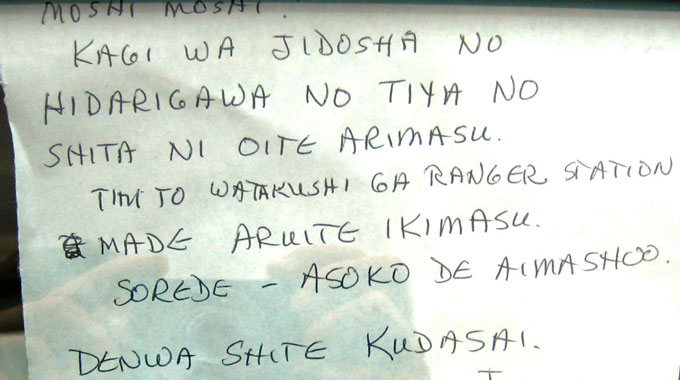
You might have heard of a homonym before, words that spelled the same but mean something completely different. There are a ton of these in Japanese that are usually easy to tell apart because they’re written with different characters; but with romaji, you don’t get that same privilege.

For example, when you see the word “hashi” written out in romaji, you can’t tell what it means on its own. Does it mean bridge? Chopsticks? The stunningly handsome writer and editor extraordinaire from Tofugu? With romaji, you have no way of knowing.

And possibly the worst thing of all is – are you ready for this? – there’s more than one type of romaji.

Different Types of Romaji

As if romaji didn’t have enough problems, there are tons of different types of romanization, and there’s not really a standard way. This can be super confusing, because you’ll see Japanese words romanized in different ways.

Just take the the Japanese word 大きい – how do you write it in romaji? Oki? Ookii? Ôkî? Ōkī? All of these are pretty much equally acceptable.

In fact, there are quite a few systems of romanization: Hepburn, Kunreishiki, Nihonshiki, Waapuro, JSL . . . the list goes on. It gets even worse when people start using variants on the major systems.
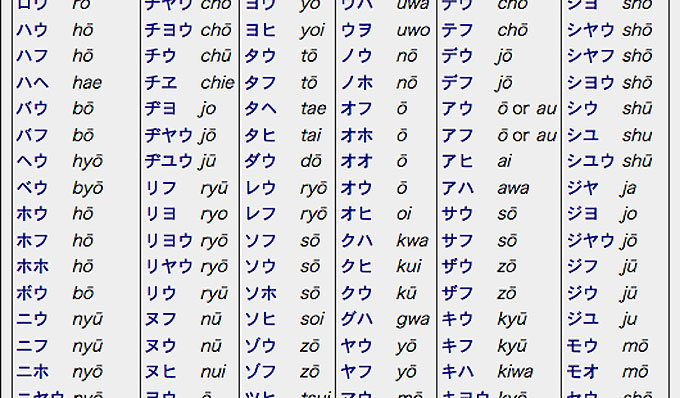
Some romanization systems use little hats (called a circumflex) on top of their vowels (lîkê thîs), but others use the lines (macrons) on top of the letter (līkē thīs). Some systems flat out disagree over what characters sound like. is romanized as “ji” in one system and “zi” in another.

The Japanese government uses on type of romaji (Hepburn), but the major standards organizations (ANSI and ISO) both recommend another type of romaji (Kunreishiki). Textbooks use pretty much whatever they want. It’s all a big mess.

Just Call The Whole Thing Off

In the end, romaji is really just a tool to help you bridge the gap between your native language and Japanese. It’s not perfect, but romaji has its purpose. Sooner or later though, the problems of romaji are going to catch up with you and you’ll have to transition over to entirely Japanese.

Fortunately, it’s easy to shed those training wheels and get on that big kid bike. Learning to read Japanese can be a lot easier than people think. Once you’ve got your basic hiragana and katakana down (which you can learn here), you’ll forget that you ever even needed romaji in the first place.

What can I say? I’m proud of you, kiddo. Just remember to wear your helmet.


Header photo by Bridget Coila

  • akai kitsune

    i’m confused i thought you needed to learn Romaji i learned hiragana and katakana but i don’t know romaji i need to learn it and what it means because i learned jo ju je and all that stuff in hiragana and katakana but i need to learn romaji and write the jo je ke ko mo and all that stuff down with hiragana i need to learn romaji now i’m confused with my writing…

  • Joon Sunn

    Hi. I hope I’m not posting this comment too late after the original post to get a reply, but I’ll try asking a question anyway.

    I am staying very hard away from reading romanji. But when I want to type, there’re two methods the MS IME offers: hiragana and romanji inputs.

    Is it advisable to input in romanji? I’ve been typing in romanji all the while, but am unsure if it will become a bad habit/bite me in the butt down the road.

  • Saikou

    Hey, no it’s never too late. And for future correctness, it’s “romaji”, there is no “n”. I would say it is better to type in romaji input on keyboards as it means you don’t have to learn a whole different keyboard map just to type in japanese. If it makes you feel better, very few Japanese people use the hiragana input, favouring romaji input.

  • Joon Sunn

    Oh that is an interesting factoid. Thanks! I’ve always felt a bit guilty for not learning the hiragana layout because there isn’t such a thing as romaji input in Korean (i learnt a bit of korean as well) AFAIK. Awesome news that the Japanese input in romaji as well ^.^

  • Ryuud

    ローマジ イズ ホーラブル イン ザ オピセト ウェー。

  • alex

    All your arguements are weak.
    Since everybody understands spoken japanese (homonyms and all) and even Japanese people use romaji with IME or something to type, kanji are not needed. Pure japanese Kana are exactly the same deal with romaji since every kana has one (99% of the time) romaji interpretation.

    Should kanji become obsolete? Of course NOT. Kanji are a very important element of the japanese tradition and history. It is a great way to make the written language richer and more interesting. But anyone who whines about romaji being evil and wrong is just looking down on people who don’t read kanji yet.

    Should people learn kanji? Yes they should.Why? Because you should embrace and respect the language you want to learn and because if you don’t you’re gonna have a hard time.

    This article is just an irritating, half-arsed anti-romaji rant, man.

  • Saikou

    The main problem with romaji is that it adds an extra step to the learning process, and therefor extends the time taken to become familiar with the written language. First learn how to pronounce romaji, then learn kana, then learn kanji.
    But if pronunciation and kana are learnt in tandem, there is a synergy at play in which the sound and symbol become inseparable, much how we view the letters of English, thus getting closer to seeing the language the same way the native speaker does, which is, after all, the ultimate goal of language study.

    I believe that kanji should be embraced as early as possible when learning the language, not only so as to quicken the process of becoming familiar, but because kanji can serve as a way to help with vocabulary memorisation by providing a visual mnemonic.

    For these reasons, I see romaji as unnecessary and unimportant in the learning process. That as the learner becomes more proficient, romaji becomes an extra obstacle to circumnavigate, undoing any use it may have had in the early days