
Four Kanji One Idiom

For the longest time I’ve run across all kinds of Japanese idioms that follow the same sort of pattern, not even realizing that they were an actual “thing.” They’d be like this:

  • Four kanji.
  • Meanings of the individual kanji don’t really have much to do with the idiom on a whole.
  • Probably comes from some story – in fact, if you don’t know the story it’s hard or impossible to derive their meaning.

While there are other types of idioms in Japanese, idioms like that follow the above pattern are known as yojijukugo (四字熟語), aka “four-character compounds” or “four-character idioms.” What’s interesting to me here are the constraints. You only have four characters to convey what it is you want to say. In fact, these four characters are usually meant to represent an entire story (presumably filled with morals and lessons and other educational things like that). I’ve always thought that constraints like these breed creativity (kind of like the constraints of boxy kei-cars), and I wouldn’t say yojijukugo disappoints.

The thing is, we do this in English too (though the constraints are much looser). Ever heard the idiom “A wolf in sheep’s clothing”? It comes from multiple stories and fables. It doesn’t literally mean a wolf is wearing sheep’s clothing. That would be a smart wolf. No, it’s an idiom representing a story you’re already supposed to know, which then gives you the context and allows you to understand the meaning of the idiom on a whole.

Yojijukugo’s Chinese Origins
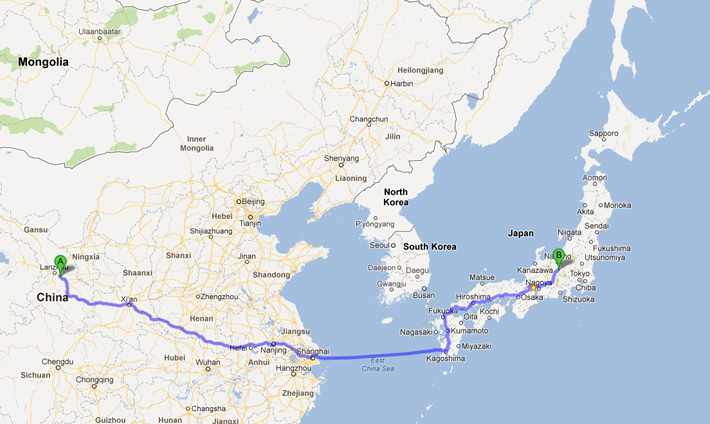
Like many things (especially kanji things), the yojijukugo have Chinese roots and origins. The Japanese yojijukugo can be traced back to the Chinese Chengyu, which are essentially the same thing but Chinese. In fact, many of the Yojijukugo idioms just copypasta straight from the Chinese version. There are some slight modifications in the readings to make them more Japanese.

Also like the Chengyu, the yojijukugo characters (the kanji, not characters in a story) often represent individual ideas and morals that are in the story that they come from. This is why it’s often so hard to derive meaning straight from the idiom without knowing the story first; they are kind of like mnemonics that help you to remember the story (and therefor help you to remember a lesson as well). Ancient mnemonics, anyone?

Now the Japanese yojijukugo idioms aren’t all copycats. While many (probably most) of them do come from a Chinese original, there are many Japanese-only yojijukugo as well. These would be things that come from Buddhist scripture, Japanese proverbs, and old Japanese stories. Just like the chengyu, though, you still need the stories to understand the yojijukugo’s meaning.

Some Common Japanese Idioms
The thing is, there are a ton of these. I’ve found counts ranging from 5,000 to over 20,000. That’s obviously way too many to learn. Here is a database of 3,400 of them (still too many), though if you scroll through you’ll see that the most useful ones are marked with a ##. Still, this only narrows the list down to around 400 “useful” yojijukugo, and that’s too much all in one sitting.

Instead, I found a list of presumably some of the most common and liked ones. This way if you have an itch to learn them you can start with the ones that will get you the most mileage first, then only after that learn the other 19,980 (I’m sure there’s an idiom for how you’d feel if you had to learn all of these… maybe 四面楚歌?).

一期一会いちごいちえ – “Once In A Lifetime Opportunity”

一石二鳥いっせきにちょう – “Killing two birds with one stone”

初志貫徹しょしかんてつ – “Achieving one’s original intention”

以心伝心いしんでんしん – “Without any need for words”

一所懸命いっしょけんめい - “With utmost effort”

温故知新おんこちしん - “Learning from the past”

花鳥風月かちょうふうげつ – “The beauties of nature”

臥薪嘗胆がしんしょうたん - “Going through thick and thin to attain one’s objective”

質実剛健しつじつごうけん – “Unaffected and sincere”

十人十色じゅうにんといろ - “To each his own”

晴耕雨読せいこううどく - “Living in quiet retirement dividing time between work and intellectual pursuits”

清浄潔白せいじょうけっぱく - “Pure in heart and with a clean conscious”

切磋琢磨せっさたくま - “Cultivate one’s mind by studying hard”

天真爛漫てんしんらんまん - “Simple and innocent”

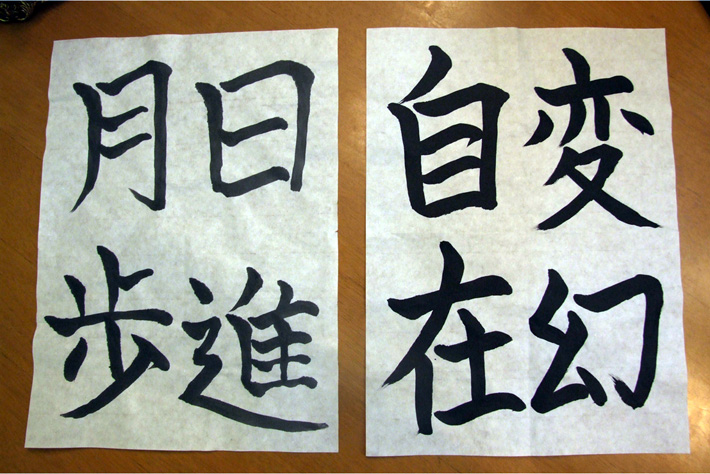
日進月歩にっしんげっぽ - “Steady progress”

不言実行ふげんじっこう - “Actions before words”

粉骨砕身ふんこつさいしん - “Work oneself to the bone”

悠々自適ゆうゆうじてき - “Living a life of leisure with dignity”

臨機応変りんきおうへん - “Playing it by ear”

For some of these you can see where the word came from. For example, 十人十色 literally means “ten people ten colors.” You can see where “to each his own” comes from when you look at that. Others are a lot less obvious and require you to know the story behind it, just because the meanings of the kanji are just jibberish without context.

For your convenience I’ve also whipped together an Anki deck for this list of idioms. You’ll need the “Japanese” plugin on Anki to use this deck, though I imagine most of you using Anki for Japanese already have this.

Download Yojijukugo Deck

Of course, there are a ton more idioms like the ones listed above. You’re only seeing the tip of the iceberg (or should I say 冰山一角?). There are thousands and thousands more idioms out there, but I wouldn’t say they’re worth learning. You have to set your priorities if you want to move quickly… some things are more important than others. While learning some of the most common yojijukugo is going to be very helpful to you, attempting to learn all of them is something that should be done post-fluency. It’s just not something that’s worth your time otherwise, though I could see how learning them might be fun.

All that being said, what do you think I missed? What yojijukugo do you love? I’m pretty partial to 気剣体一 (spirit, sword, body: one) because it gets yelled at us all the time during kendo, but what about you?

[hr]

Sources: Oricon, Wikipedia, Four-Character Idiomatic Compounds

  • http://zoomingjapan.com/ zoomingjapan

    Haha! I used to love and hate those at the same time!
    The first one I learned (and it’s still my favorite) is: 一石二鳥

    I’m quite sure that I still have an extensive Anki deck with those flying around somewhere, but who doesn’t love free stuff? I’m definitely downloading it! Thanks! :)

  • coldcaption

    Cool, I learned 一所懸命 in a Yuzu song!

  • Luqman Fauzi

    Thanks for this post.
    One question: How often would these yojijukugo pop out in TV shows/Newspapers/Novels?

    I’ve been reading Manga and I’ve never found any. (Or maybe it’s because I’m reading shounen manga like One Piece and Dragon Ball =.=”)

  • Luqman Fauzi

    Also, any links to where I can read about the stories behind these yojijukugo? (even if it’s in Japanese)

    Thanks

  • blueshoe

    一期一会 – there may be multiple readings, but I’ve always heard it said 「いちごいちえ」

  • http://twitter.com/enricobianco Enrico Bianco

    Odd bit of trivia: in Keroro Gunsou (localized in the US as Sgt. Frog), one of Angol Mois’ character quirks is that every so often she’ll try and sum up a particular situation with a four-character compound.

    e.g. 「っていうか、自業自得?」 which she says in Keroro’s Picture Drawing Song, one of the ED themes in the second or third season.

  • Anonymous

    I’ve seen Ichi Go Ichi E translated as “The moment never returns”. As I understand it, the phrase comes from the Japanese tea ceremony and is meant to encapsulate the idea that each session of tea is truly unique and therefore special and to be cherished. I think this is a little closer to the direct translation to the four kanji (one time, one meaning). I may be splitting hairs here, but I felt it was a better translation than the one presented in the article. Either way, this was an excellent and informative read!

  • http://www.tofugu.com koichi

    you are right – I brain farted on that one. Fixed on post and fixed in Anki deck, ty!

  • http://www.tofugu.com koichi

    Almost all of these have multiple ways of translating, including that one – I decided to go with the translations that make the most sense for folks who have no background knowledge of any of these things, though, so in some cases information can get lost in translation :(

  • http://www.tofugu.com koichi

    That’s definitely one of the most useful ones up there, I think!

  • http://www.tofugu.com koichi

    agreed re: love/hate relationship with yojijukugo / all idioms, haha.

  • http://twitter.com/MalahkAngel Chris

    Is it just me or is the alternate translation of 臥薪嘗胆 (enduring unspeakable hardships for the sake of vengeance) the premise of every anime DBZ-length anime ever? One idiom = 30-40 increasingly droning series.

  • Anonymous

    No worries, I’m just a kanji snob I guess. :)

  • greyson voigt

    I learned about 風林火山 / fuurinkazan pretty recently. It means “Swift as wind, quiet as the forest, fierce as fire, and immovable as a mountain.” I know Japanese is riddled with inferences, but that’s pretty ridiculous. 

  • linniea

    I think your word processor messed up the furigana for the first one :3 

    edit: Oops post had been open for a while and someone else already commented on this XD

  • http://twitter.com/WackoMcGoose Kimura

    Yeah, the tea ceremony is where I first learned 一期一会. The only other one I knew about was 一石二鳥…

  • http://www.facebook.com/guian.debastos Guian de Bastos

    Great post! Thank you. 

  • annie

    That sounds like a pretty interesting topic! Poetry lover that I am ^^ It would be interesting (and probaly make things way easyier to learn), to have the original japanese meaning of the kanji/yojijukugo… Don’t know, if you did that in the Anki deck, it says, “Unable to read file. File is not encoded in UTF-8.” Anyone else having that problem?

  • Stroopwafel

    Yeah Koichi, that would be a smart wolf indeed…

  • Ai

    I can’t seen to get it downloaded. How did you guys do it?

  • Chored

    I’ve learned a few from the Kanji de Manga Yojijukugo book which is quite fun and has little explanations for each Kanj in the compound. 

  • Kyo

    Me too. No idea how to solve it,

  • Robert Patrick

    My favorite one is 触手凌辱 ;-D

  • Hideki

    Japanese teachers love to remember you about 一生懸命-ness (with a bit of 我慢-ness and a dash of 努力-bility, too). Actually, I think maybe the Japanese learning itself and the effort to understand the culture’s nuances all boils down to that concept. It was the first yojijukugo I ever learnt.

    But my favorite one is 諸行無常: impermanence; all things must pass; a Buddhist concept about life, which I like to interpret it myself as “don’t take life too seriously, everything changes”.

  • ZXNova

    安穏無事 (Annon Fuji) – Peace and Quiet – Is my favorite one.

  • CelestialSushi

    Wait, Kanji de Manga has a book about this?  I might have to look into that…

  • http://www.facebook.com/profile.php?id=19509501 Matthew Olson

    I’ve been told that 一生懸命 is used far more than 一所懸命… And no one’s ever told me much of what makes them so different. What say you, Tofugu team??

  • Foozlesprite

     I think he made it with the beta version, Anki 2.  I was having that problem, and then I got the beta from http://ankisrs.net/download/mirror/beta/

    Be warned though, it overwrites your current Anki, and of course, being a beta product, comes with no guarantees that it won’t ruin your life forever!

  • legendofleo

    How do I get the .apkg file to work in Anki? I’m used to .anki files…

  • nagz

    great article!

  • Anon

    Reminds me of 「俺、天上天下唯我独尊」- a lyric phrase from a song. Nice.

  • Mescale

    三日坊主

  • http://twitter.com/spiegelscythe Craig McLaughlin

    I’ve learned a few yojijukugo in my Japanese classes, but one that always stuck with me was 七転八起 (“ups and downs in life,” or “always rising after a fall”). I usually look at it as “fall seven times, get up eight” though. :P

  • Khcheng

    A chinese idiom that I’ve learnt and kept at heart since I was a kid (I’m Chinese btw) was 學無止境, but I don’t think it’s a 四字熟語. 學無止境 meant “The path to learning is an endless road”, and it’s another way of saying “there’s always something new to study”. 

  • Anki Elite Support

    Import -> File type: Anki package (apkg)

  • Nicholas Meyer

    This looks like an ANKI2 collection.  I’m slumming on non-beta Anki… do I need to be in the beta test group to use this deck, or am I clueless and missing something here?  :-)

  • SukiXrose

    I’ve suddenly just understood something on AJATT! haha

  • http://twitter.com/WackoMcGoose Kimura

    According to Rikaichan, the second kanji changes the context from “trying hard with your whole life” ( 一生懸命, 一生 ==> whole life) to “sticking and living in one place” (一所懸命, 一所 ==> one place). The overall meaning is the same and the pronouncation changes only by a single う, but I guess it depends on whether you’re talking about holding on to an ideal or a place.

  • hikaru1412

     Which one would you download from this link?

  • Foozlesprite

     I’d download the most recent revision number/version; I think right now by the looks of it, that’s the ones with -16 on them.  The version will depend on your operating system…if you use Windows you’ll need the .exe for version 16.

  • nihongo suki desu!!

     ichi go ichi e….cada ocasion es como si fuera la unica, concentrate en ella. Me encanta!!! A mi me lo explicaron como si fuera nuestro “carpe diem” , en cuanto a su significado.

  • hikaru1412

     Download them all or just the .exe?

  • http://twitter.com/WackoMcGoose Kimura

    Holy crap you’re right. I was wondering where I recognized 「みっかぼうず」 from, it was Khatz’s three-day monk thing.

  • Conpanbear

    Is 七転八起 one? This is a phrase most non-Japanese people would recognise, I think :)

  • Yuni Indah Safitri

    I remember i’ve read that the original was一所懸命 (isshokenmei), as it was used by samurai back then, that is to devote one’s life for one land. And i guess since we’re no longer guarding any land literally by now, i think people change it to 一生懸命(isshoukenmei), to devote one’s life for this one life, and i think the original intention still covered here, to give all we have, all the best. I think. Correct me if i’m wrong :D


    “Issho (一所) means “a place”, kenmei (懸命) means “to devote one’s life”. In
    the era of the Samurai, Issho kenmei (一所懸命) was used to refer to an
    individual devoting or risking his life to defend land inherited from
    his ancestors. ”
    From http://glasgowunikendo.webs.com/kendoteachings.htm

  • Kiwi

    一日千秋がすきです。