
Kendo: Striving For Perfection When Perfection Is Impossible

Last week @ayabuns on Twitter bribed me with this picture to write an article about kendo. I am fairly easy to bribe. Therefore, today you are getting an article about kendo. But not just any article! We’ll talk a little bit about the martial art and sport, then delve into the philosophy as well. Fan of samurai, Zen Buddhism, and more? Kendo may be something that connects with you, then.

What Is Kendo?
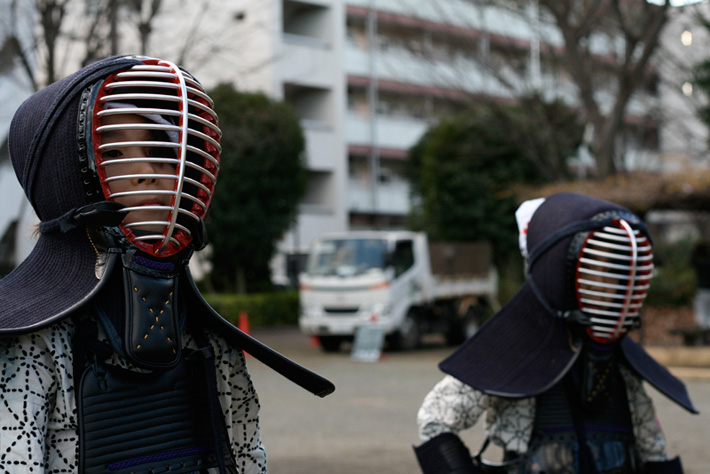
Let’s start by talking about what kendo is. Kendo/剣道 (aka “way of the sword”) is actually a fairly new martial art, in terms of how old martial arts get. It came from what was originally known as kenjutsu, which was developed in the Kamakura period (1185-1333) when samurai started showing up in bigger numbers. Because real swords were too fun to practice with, bogu (armor) and shinai (bamboo swords) were developed by the 1700s (fewer dead people, I guess). From here, we start to see modern kendo emerge.

I don’t want to talk too much about what kendo is since I want to jump into the meat of this article, but watch this documentary for a lot more info. It’s actually pretty interesting, and I think a good introduction for people who have never seen kendo before.

Okay. Got your kendo-learning fix? Let’s find out what makes kendo so interesting to me.

My Experience With Kendo

I’ve only been doing kendo for ~10 years now, and considering all the people in their 70s and 80s who have been doing kendo for their entire lives… my ten years is just a drop in the proverbial bucket. So, you’ll have to take everything I say with an “I’m-a-total-newb” grain of salt here. My thoughts on kendo philosophy ten years from now may be totally different. And it’s just like, my opinion, man.

I also have a little bit of experience in other martial arts as well… another ten years in jujitsu, as well as a few more doing judo, giving me some ability to make some comparisons. Don’t confuse anything I say with “this martial art is better than that martial art,” though. Those conversations are really dumb. I will however talk about why kendo is something that fits really well with me, personally. It’s had a huge effect on how I think about life, the universe, and everything (aka 42).

Simplicity Of Kendo
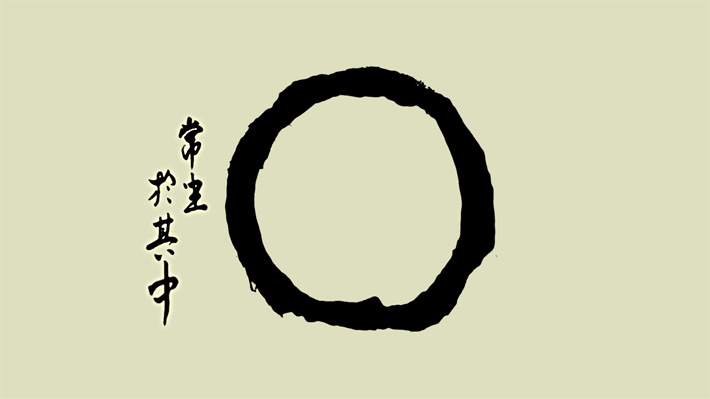
The thing that draws me to kendo the most is the simplicity of it. When kenjutsu was being developed (where kendo came from) Zen Buddhism was the big influencer in town. Kendo seems to draw a lot of influence from this (as kenjutsu did), and I think this is perhaps one of the reasons I’m drawn to it. I think this is why there are so many aspects of kendo that have to do with the simplicity of it. Here’s how I see it:

Very Few Techniques

In my experience with other martial arts, the main focus always seemed to be on learning more and more techniques. Maybe I was just going to the wrong dojos (perhaps this is American style?). I’m not sure. If you learn 100 techniques with a certain skill level, you get this colored belt. If you learn 200 techniques, you get some other belt. In kendo, you essentially get to do four techniques. That’s it, and the last one (tsuki) isn’t even something someone can try for a number of years.

They are: men (head), kote (wrist), dou (body), and tsuki (throat).
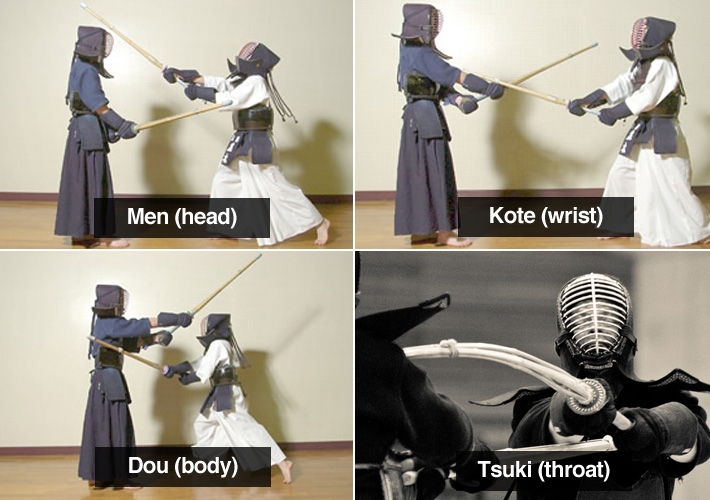
Images from web-japan and Nikopol_TO

There are variations on these techniques, of course. For example, you could hit the other side of the dou… or you hit the kote as they’re hitting your men… things like that. But, when you boil it down, it’s still only four techniques… and this turns out to be plenty. Considering how hard it is to master any one of these, four seems to be enough for me.

Real Life Application: Don’t try to do everything. Just doing a few things well is difficult enough.

No Way To Tell Rank
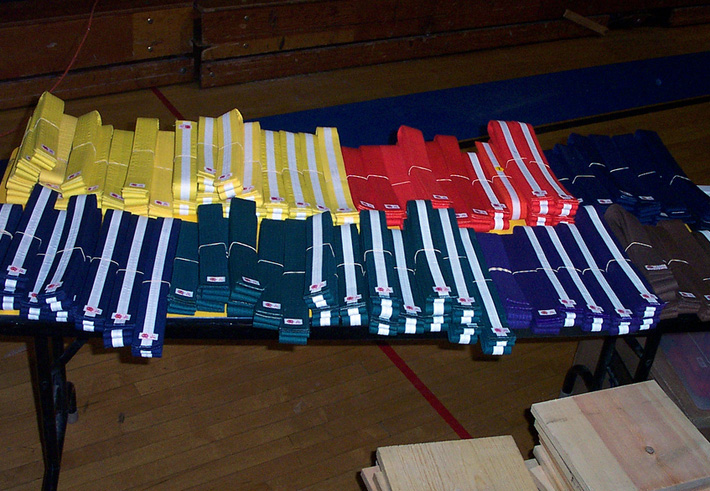
Another thing that I love about kendo is that everyone pretty much looks the same. There is rank, for sure, but if you line a bunch of people up, there’s no way to tell what someone’s rank is without them telling you (or by guessing based on how used their equipment looks, but that doesn’t always mean anything).

I like this because it puts more focus on your actions and behavior. You can tell people apart by how good their kendo is, not by what rank they are.

Real Life Application: Don’t tell the world what your status is. If you’re going to let people know, do it with your actions.

Shaving
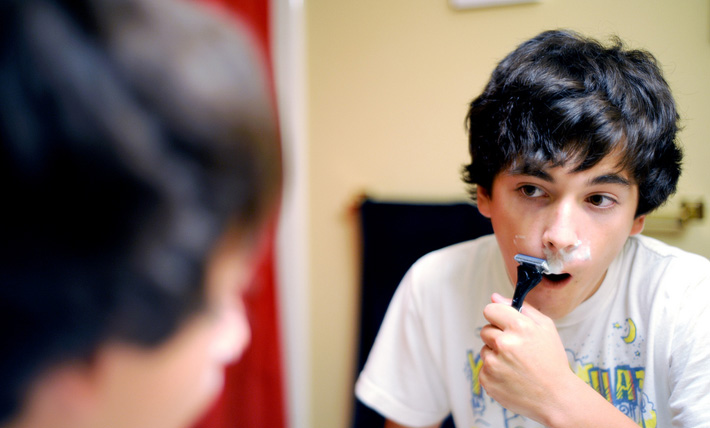
When I think about some other martial arts, all I can think about is how complicated they get. The higher your rank, the more complicated all your techniques get. Purple belt? That means you get to spin twice before kicking the target. It’s all about adding, adding, adding.

It took me a while to realize this, but in kendo I think it’s all about how much you can take away. I want to say that kyuudo and aikido are similar in this regard. When a beginner starts kendo, their swing is very complicated. They use all kinds of different muscles and make a lot of unnecessary movements. As you get better, you actually simplify your swing. You figure out how to turn off certain muscles. You make your movements more consistent. You don’t swing through your targets as much. It’s a lot like golf in terms of the consistency you need. You don’t want to swing your golf club differently every time. You want it to be like clockwork. Same goes for kendo.

The more you simplify in kendo, the better your kendo gets. One way to teach someone how to swing properly is to make them swing so many times that they have almost no strength left. When this happens, their body’s only choice is to do the simplest swing possible. This usually ends up being a correct swing, because the simplest swing is the easiest swing.

Real Life Application: Sometimes complicating things isn’t the way to go. Even though it seems like a flashier, more complicated move would make you better at kendo, it’s really the opposite that makes someone great. Simplicity is harder, sure, but taking the easy path is never the best path, ammirght?

Ridiculous Difficulty

Despite being such a “simple” martial art, simplicity isn’t an easy thing to achieve. In fact, simplicity is one of the hardest things in the world to do right. Because of this, I think, kendo is crazy difficult. Even when you’re “good” at kendo, you still have a long ways to go. Always. People who have been doing kendo for thirty years are still thinking about all the things they need to improve on and change.

Beginner Fo’Life!

The dude in this video is such a boss. And what he says is so true, too. Fifty years learning the basics seems about right, too. It depends on what dojo you end up going to, but a lot of places make you do a lot of work before even letting you touch a shinai (that’s the bamboo sword). Then, you have to swing without a partner for even longer. This is part “can you make it?” and part “get a good basics foundation.”

It’s interesting seeing people who grew up doing kendo in Japan versus doing kendo in America because of the discrepancy in fundamentals practice. The Japanese kenshi (people who do kendo) are almost always way better. Why? It’s because they spent years and years working on basics, whereas us Americans tend to be a bit more impatient. Eventually, this catches up to you and you and you can no longer catch up with everyone else.

Real Life Application: Don’t skimp on your basics. They will carry you through everything in life.

Mind Games
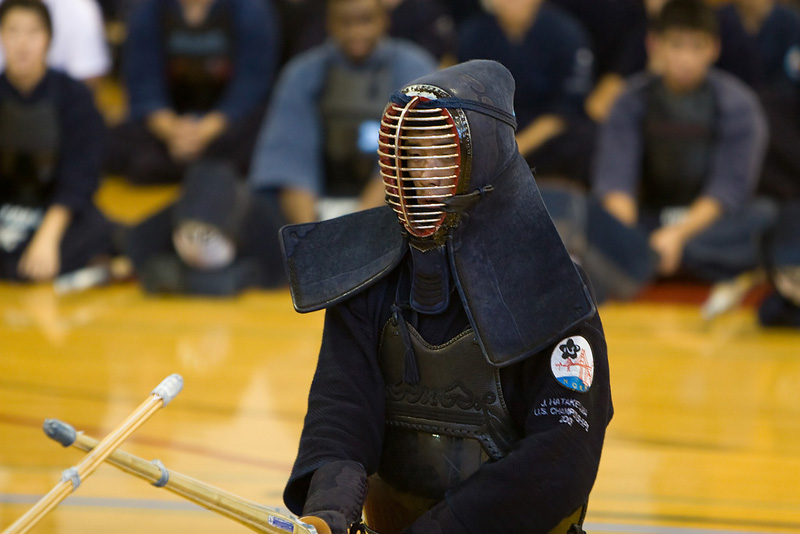
As you practice your basics (your body), you start noticing the mind games that begin developing. If your mind breaks, your body breaks as well and you die. If you can’t predict what your opponent is going to do, you die. If you can’t keep focus, you die. So much of kendo is about your mental abilities. When your body can do the basics of kendo pretty well, this becomes the thing that differentiates people who are “okay” and people who are actually good.

The “mind game” aspect is definitely one of my favorite things about kendo, though. Once you start noticing this, every single drill, match, and exercise begins to rotate around this concept too. Everything is an opportunity to make your mind stronger. In fact, a strong mind means that you’re able to push your body further, which makes your body stronger too. If you don’t have mind, you can never develop body.

Every practice you have to reach the point where you think “I can’t do this anymore.” Once you do, you have to keep doing it. That’s 100% mind, right there. When you push yourself like this, everything gets stronger. If you don’t push yourself, you’ll always stay the same, or at least progress at a much slower rate. Can I last a few more seconds? Can I stay focused longer than my opponent? Can I break my opponent’s will before he/she breaks mine? This is why short Japanese girls beat me up all the time. I have bigger and more manly muscles (maybe), but they’re sharp as tacks. Mind > Body, though both work together quite well.

Real Life Application: You have to train your brain as much as you train your body. Do you have trouble focusing? Push yourself to focus just a little bit more every time. Eventually, you too will have the focus of a short Japanese girl. All it takes is practice. Sure, it’ll be uncomfortable, but that’s the whole point, right?

8th Degree Test

Do you know what the hardest test in Japan is? Is it becoming a lawyer? Pshhhh. That’s EZPZ. No, it’s the kendo 8th dan test, which has a less than 1% pass rate.

The above documentary is one of my favorite videos to watch – it’s about the people who are trying to achieve this rank. But, it’s more than that, too. It’s so inspirational to see all these people trying again and again to pass the test. Why keep taking the test even though they keep failing? Because kendo is life, and failure is a part of that.

Real Life Application: Sometimes you fail. In fact, most times you fail. But, you have to keep trying and trying to achieve those dreams.

Living Kendo

Kendo’s definitely a way of life, I think. That’s why so many people do kendo until they die. Once you go kendo, it’ll never end-oh?

Not About The Money

A lot of martial arts dojos enjoy making lots of moneys (I guess to fill their mats?). In general, practicing kendo is very cheap. There are exceptions, I’m sure, but most of the time you just pay some dues for the facility you’re practicing in (for me, that’s $20/month) and then buy your own equipment (which lasts a long time, usually). The sensei don’t get paid for their time and they teach kendo because they love kendo.

When you go up for promotion, it’s also very cheap. If you’re going for 3rd degree (3dan) or below, which is most people, it’s around $35. If you’re going for a higher rank than that, it’s $50. Compare that to many belt-factory schools which make you pay hundreds if not thousands of dollars for a constant stream of promotions. Purple double stripe rainbow blue power belt? That’ll be $360, please…

I think the whole money issue gives kendo a very different feeling – at least that’s my experience. People are there because they care. Sometimes that means they care about improving their kendo. Other times it’s that they care about improving your kendo. Often times it’s both. Whatever it is, it’s a great environment to practice in because everyone wants to be there.

Real Life Application: You shouldn’t do everything for money. Focus on improving yourself, and surround yourself with like-minded people.

Perfection When Perfection Is Impossible

What is perfection? I have no idea. Will I ever be able to do perfect kendo? Definitely not. So, why do I keep doing kendo? I have no idea. For some reason, though, the thought that my kendo will never be perfect is awesome. It means there’s always something to improve on. Mostly, it means I’ll never be bored. When you finish a video game, you’re done. When you finish eating your dinner, you’re also done. When you finish kendo… you’re probably just dead (or you quit). Probably not the most pleasant sounding thing in the world, but to me that’s a bit comforting. If you don’t make it a part of your life, then what’s the point of doing it, right? That impossible to reach perfection makes that possible.

Real Life Application: If you’re passionate about what you do, you’ll never be able to make it perfect. You can either let that drive you insane, or you can let that drive you for your entire life. This is what people call “purpose.” If you get one, you’ll feel a lot happier.

Is Kendo For You?

Actually, no, probably not. I’ve seen a lot of beginner classes come and go at multiple dojos, and one thing is always consistent… almost everyone quits. If one person sticks it out for more than a year, then you’re lucky. I think a lot of this is because of the reasons stated above. it’s too simple, it’s too mentally draining, and it’s not what people expect. It takes so much focus and time. It just comes down to how much you’re willing to put in. Hey, it’s understandable – time is finite, and you have to use it in the way you think is right.

That being said, you should still try it. If you want to experience Japanese culture, kendo is a great way to do that. If it’s not for you it isn’t for you. I really do hope it is, though – I would love to practice with you sometime :)

So, do you do kendo? If so, what do you think? Do you do another type of martial art? What has that taught you about life?

P.S. Header art custom made by Aya Francisco. Thanks Aya!

  • sushiman

    What do you mean by (aka 42)?

  • http://collegeadam.wordpress.com/ Adam

    This explains so many anime’s that I never fully understood, despite living in Japan and studying the culture and religion in college. I really want to try Kendo after reading this.

  • http://www.tofugu.com/ Hashi
  • kaito

    I always wanted to be a kenshi, but there isn’t a dojo anywhere in my area. Do you think there’s something I can do about it on my own?

  • Paladin341

    For my classes this semester, I did an ethnographic research paper over Judo here in America at my local college.  It is what you said Koichi, it seemed that the focus for people in Judo club were trying to learn as many techniques as possible in order to get that next rank.  Granted, this is from an outside view of 4 months of study on them.  

    I did another report on Japanese Basketball versus American Basketball and the differences between them.  I found that Japanese (as you said) are more patient and keep practicing the basics repeatedly in order to improve themselves. Japanese Basketball players would just practice layups and drills for several hours before even playing a game that lasted much shorter than American Basketball. This confused the American anthropologist for awhile until he connected the Japanese culture and way of life to the sport.

    An example that the article gave was pottery class in Japan;  Japanese students that took the class repeated the basics of pottery while the American students just wanted to rush it and get right to making objects.  I can understand what you mean when you say Japanese culture is reflected in Kendo and other aspects of life from reading those articles and doing research.

  • RadHazG

    Heathen who hath not read the Hitchhikers Guide! Get thee hence and procure it immediately! It’s a small book really. Failing that the movie works as well.

  • Stroopwafel

    It’s a reference to this awesome book called “The Hitchhiker’s Guide to the Galaxy”.
    They also got it adapted to a film by the same name. Both the book(s) and the film are well worth the time you’ll spend watching/reading them.

  • http://www.facebook.com/profile.php?id=19509501 Matthew Olson

    Kendo is something I’ve always wanted to try. I wonder if now is that time.

  • http://www.tofugu.com koichi

    doooo it!

  • http://www.tofugu.com koichi

    It would certainly be very hard to do without a teacher :(

  • http://www.tofugu.com koichi

    doooo it – more kenshi = more fun for the rest of us :D

  • Jen

    I didn’t know you did kendo! How did I not know that?

    I’ve been practicing almost five years–I’ll be going for my nidan in September, probably. Kendo has been a tremendously stabilizing influence in my life, and it makes _everything else_ easier to deal with. Remarkable stuff.

  • Jateku

    Kendo reminds me of wing chun kung fu.
    I’ve been studying wing chun for like five years, It’s also based on simplicity!
    But, I’ve also been very interested in aikido lately.
    I’ve never really tried kendo though…I can’t think of a way it would help you much as far as self defense.
    Also, You don’t really strike me as a bad ass kendo student xD

  • kuyaChristian

    I used to practice taekwondo for two years…but since I’m such a noob and ended my practice abruptly due to personal matters, I walked out with a yellow belt.
    As per every other martial art, TKD taught me discipline and that pain is only on the mind. But that’s all I picked up from it ’cause I can’t kick that strong and I was the punching [kicking?] bag during sparring.

  • kaito

    Expected as much. Maybe I can find someone for private instruction, but that’s rather hard too.

  • http://www.facebook.com/profile.php?id=19509501 Matthew Olson

    Point taken, soon as I can get my act together! :D

  • http://www.tofugu.com koichi

    yeah – kendo isn’t at all about self defense – but, as long as you think of it more as improving yourself on a whole rather than protecting yourself on a whole, everything is a-okay!

  • http://www.tofugu.com koichi

    Totally badass… AHH! Don’t hit my glasses!

  • http://www.tofugu.com koichi

    <3 <3 <3 for kendoooo

  • http://www.facebook.com/jackyl3 Jacky Lee

    I did taekwondo for two years too. It was fun but ended at senior blue belt. It was getting expensive for a high school student so I decided not to continue. I was the punch bag too! haha. I remember sparring with some tall guy who was a black belt and he had long legs and so he was constantly kicking me and all I could do was block. It was hard to get close to him >.<

  • http://www.vietamins.com Viet

    Will participating in Kendo gain me the skills of Rurouni Kenshin?

  • http://www.facebook.com/profile.php?id=100003827293877 Conor Vernon

    A brilliant and inspiring article. Currently I do Ninjutsu from time to time but like
    you said it mostly involves going through loads of different techniques, which
    gets jarring and confusing at times. I’d prefer to be able to keep
    practicing my basic attacks and throws etc. Which I end up doing
    far more at home in my room than I do at the dojo.

    I’ve always loved the idea of trying Kendo though, I like how it focuses so much on progressive willpower and skill. I’ll have to look into it more in the future.

    That Moriji Mochida was one hell of an awesome guy. He had exactly the kind of strength and determination that I both admire and aspire to. Shame he’s not with us anymore.

  • http://www.tofugu.com/ Hashi

    What martial art do I learn to be like Naruto?

  • http://www.tofugu.com koichi

    I think you’ll want to check out Joey’s Ninjitsu school. It’s in the same strip mall as the Safeway.

  • Wenmei

     Do Aikido! I’m a first degree black belt, and I love it! It’s very challenging and there is a lot of subtle work involved. But anyone can do it. Also, if you do take an Aikido class, try to find a teacher that emphasizes the soft, gentleness of Aikido and stay away from teachers who are using brute force to throw students. Check out the California Aikido Association (there’s places all over the country, not just California).

  • Mescale

    I usually cycle every day, and I don’t really look after my cycle, last summer I paid someone a stupid amount of money to fix it, they did a lousy job, so I ended up “fixing” it myself.

    Anyway as time has gone on I got fed up of some of the things, like those derailleurs, they are never quite right and the bike makes an annoying noise in some gears, maintaining them is a pain. So I removed the front derailleur. I still had 8 gears on the back, that’s plenty for getting up hills. Then the rear derailleur started playing up, and the chain started breaking, and I decided ok screw gears I’m just going to have one ratio, and a big strong 1/8th inch chain. I was really worried at the time I wouldn’t be able to get up the hills, some of the hills near me are like 1 in 5 at steepest, but I figured I could just walk up them. I was utterly convinced I would never get up them, as I’d usually go into bottom gear and pedal like crazy.

    Turns out actually I had no problem, I managed to get up the hills fine with just one ratio, in fact over time I found I could cycle up at different paces and accelerate up hill, etc. My ability as a cyclist improved, I built up strength and stamina. I’ve increased my gear ratio now as well, I wasn’t sure I’d be able to handle the hills with that easier but I have.

    It taught me that I really was holding myself back, convincing myself I needed a zillion gears to get up a hill, when the truth is I didn’t. And it is not the first time or first time I’ve done this.

    So I think an important thing to do is realise you need to have the right attitude to do anything. If you convince yourself you can’t do something or you will fail then you will, but in truth your limit is most likely far higher than you expect.

    So I simplified and I persevered, and I succeeded, not through anything complicated or anything hard, but just by not holding myself back.

    It makes you think, what things do I have that are holding me back, they might seem helpful, or important but really they are just a way enable me not to try, to improve or to be better.

  • http://twitter.com/Tany Fred

    Hey Koichi,

    I’m a (very) new Kenshi. Only began 10 months ago but it affected me (in the tremendously good way) soooo much I can’t imagine my life without it now. I only have one regret tho : I started too late I’ll be probably dead before reaching the proper skill to attempt Hachi Dan test ;) Anyway, I’d love to practice with you. Maybe one day who knows…? :)

  • http://www.tofugu.com koichi

    That’d be neat! Hopefully someday it’ll just be you and me left in the world kendo taikai, going for the top spot :p

    Where do you practice?

  • http://www.tofugu.com koichi

    well said

  • ですこ

    You’ll want to check out Reassurancejutsu. BELIEVE IT.

    Naruto’s also a good way to learn Japanese.

  • Jateku

    Please don’t tell me you have a demon fox inside you…O_O

  • Jateku

    The only thing in a 60 mile radius of my house is ATA…Hmm…To bad.
    Good thing I have Naruto to learn from…xD JK…

  • Jateku

    “Aikido and stay away from teachers who are using brute force to throw students”
    What does this remind me of…
    http://www.youtube.com/watch?v=8oP2F5CM30k
    The perfect Sensei! LOL

  • Jateku

    xD

  • Jateku

    Oh really…In reality this would happen…
    Mugger: Give me you money 
    You: *Gets in self defense stance*
    BANG
    You die.
    (My lame quotes) © 2009-2012. All Rights Reserved
    Ha now its copy righted O3O 

  • ですこ

    It…took you three years to write that?

  • ですこ

    Hey, foxes and fox demons and any sort of fox like things are friendly. I’m talking “leave out food and money for them” levels of friendly, here.

  • http://zoomingjapan.com/ zoomingjapan

    Very interesting, thanks for sharing your personal experience!
    The only martial art I ever did was Karate. I did it for many years and had to quit when I became a teenager. I really liked it a lot.
    I always wanted to try Kendo, but when I was younger I couldn’t afford the equipment (at that time it was very expensive, at least in my country). Later I go too busy.

    You’d think that now that I live in Japan I’d go crazy about all the martial art options I have, but I never ever considered joining any club..

    I don’t think Kendo would be for me, esp. after reading your article.
    I always liked learning new techniques, getting a new belt color every now and than.
    Actually I started dancing after I quit Karate. It was similar as you had to learn something new every few weeks and you also went up in rank.
    For me that’s more like the kind of sport I’d prefer, I guess.

  • Jateku

    Baby fox = Cute
    Demon fox = OoO

  • Jateku

    Heck yeah!

  • http://twitter.com/lifeyoutv Jonathan Feltham

    Nice post ;-)
    I did Kendo for some years before coming to Japan, and believe it or not, since I m in Japan I didn’t practice once :-( 
    My bogu is in Europe, and I don’t know where to practice here.. the only Kendo I saw since I m living in Japan is kendo at school.. I don’t know any dojo.. and ( bad excuse I know) I can’t find the time to look for that ^^;
    it s sad because I love kendo…  I saw so aikido dojo tho, and maybe one day I will go check if I can join.. aikido “way of life” is pretty similar of kendo.. simplicity, you always learn,..

  • http://www.facebook.com/takeblade Lance Winters

    More people need to learn about kendo the amount of times I tell people I do Iaido (similar to kendo) and they think its like one of those medieval clubs. Ive lost count 

  • http://twitter.com/shollum Shollum

    I’ve always loved the idea of kendo. There’s just one big problem:

    Along with arcades and good book shops (the only one got put out of business!), there are no kendo dojos to be found in my area.

  • Amari

    Southern Shaolin Hung Gar for me. But kendo is something I would be really interested in trying!

  • http://twitter.com/ayabuns Aya

    You forgot the part about the ridiculously drop-dead gorgeous senpais/senseis (who are supposed to help you out but really, how can you concentrate when they’re so ~HAWT) And the part when you start realising your left arm is bigger than your right arm and you feel like you’re this ugly kohai monstrosity walking around the dojo. Oh, and the smell! THE SMELL.

    But seriously though. this is amazing.

  • Nive

    Perhaps join the kendo at school? 

  • kuyaChristian

    In my case it was at my old school in the Philippines and I joined the TKD club [mandatory to join one club]. Since the club was pretty new, almost all of us started as whitebelts. There’s only one guy who had a red. But anyway, even people who are in the same belt color as me still kicked my butt. I remember doing a demo with all of us and as we were getting ready before performing my partner and I had light sparring…but he roundhouse kicked my jaw and I think he dislocated it.

    …but I didn’t know if it actually was but it hurt so much for about 2 months. 

  • Tany

    Hehehehe that would be grand ;) I practice in a small dojo near
    Paris, France. (yuraijinsei.fr) If you ever come to France let me know!!!

  • http://www.tofugu.com koichi

    I hear yah :( I just don’t ever tell people I do kendo, except for just now, when I told everyone… oh wells…

    iado’s awesome, too!

  • http://www.tofugu.com koichi

    Oh man, i love the smell. It’s so… good. like a drug.

    Good point about the senpai/sensei, too…. very good point… kekeke