
Eating Fried Eel And Melon Together Will Result In DEATH (And Other Japanese Superstitions)

If you have been around Japanese natives for a decent amount of time, you’ll start noticing some of their unique quirks. Quirks, such as their behavioral differences, habits, and body language. There is one other idiosyncrasy that I’ve found to be interesting: superstitions.

Superstitions are strongly integrated in Japanese society. If anything, I would say Japanese superstitions almost share the same borders with religion. A lot of it has been developed from historic events in the past, many is from play on words, and a few are imports from outside cultures. Many are just outright, straight-up superstitions, while others are meant to be given as advice or lessons, somewhat like the fictitious Fable stories of the West. I remember my old high school Japanese language teacher having a few superstitions of her own, some of them quite unique, such as her alien superstitions.

Needless to say, the Japanese are fairly zealous in their superstitions.

So what better way to get to know some Japanese superstitions than to read off a list of some of them!

Enemy numbers 4, 9, and any variations of thereof
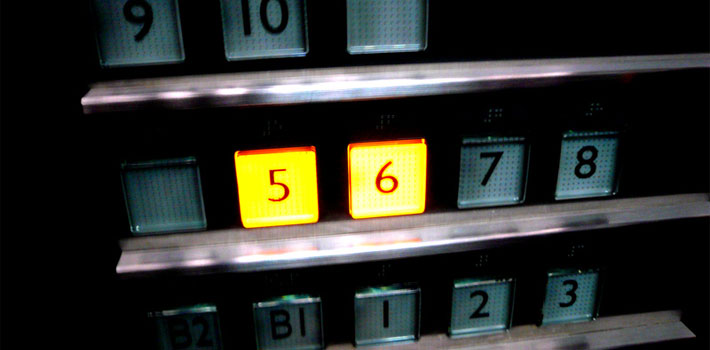
In Western cultures, the number 13 is considered unlucky. In Japan, there are a few numbers that are considered bad luck. Why is that? It’s due to their pronunciation related to other unfavorable words.

The number 4 can be pronounced as shi, which is the same word for death. There are a few variations of the number 4 that are also considered “bad”. Twenty-four can be read as nishi, which translates to double death. Forty-two or shini also translates to death. Forty-three, or shisan sounds similar to shizan or stillbirth. And everyones favorite number, 420, or shinirei sounds similar to shinrei or dead spirit.

The number 9 is also considered bad, since its pronunciation ku can also mean pain and suffering.

Due to the unfortunate associations between the numbers and death words, building floors or rooms with these numbers simply don’t exist. A lot of buildings will simply not have a floor numbered with 4. In hospitals, floors and rooms with the aforementioned numbers do not exist. It is also considered bad form to give sets of gifts in numbers of 4, such as four sets of dining dish ware. Proper etiquette is to give in sets of 3 or 5.

There are also ages that are considered bad luck. For males, it’s the ages 25 and 42, while for females 19 and 33. If you are going to be hitting those ages anytime soon, it’s best you pay some protection money to the temple and shrines, and stock up on some charms!

More death related superstitions

A lot of of Japanese superstitions tend to be concern with death. This isn’t uncommon. In the United States, there is the superstition of walking under the ladder, opening an umbrella indoors, or crossing paths with a black cat.

Here are the Japanese take on death superstitions:

When entering a funeral, toss salt over one’s shoulder

Tossing salt over your shoulder cleanses the death and spirits off of you.

Avoid sleeping with the head facing north

The deceased are buried with their heads facing north. Doing so suggests one will live a short life.

Fried eel and melon

Consuming both foods in the same sitting will cause death. Tried looking for the origins of this, but couldn’t find anything. Anyone know the story behind this?

Never write a living person’s name in red ink

Using red ink suggests the person’s life will be cut short soon. The origin stems from gravestones. When the gravestone is made, both spouses names are engraved even if one is still alive. The main reason for this is to save costs. In order to distinguish that the person is still living, the engraved name is painted in red. Once they are deceased, the red paint is removed.

Sticking chopsticks upright into rice or any food item

Don’t do it. This is only done during funerals at the deceased’s altar.

Food should never be passed between chopstick to chopstick

The same action is done at funeral ceremonies where the deceased is cremated and have their bones transferred to the urn.

Never cut your nails at night

Originally, the superstition was meant to scare away kids from injuring themselves while cutting their nails at night back in the Edo period days. The superstition now refers to death before your parents, or early death, if one cuts their nails at night.

The superstition comes from the play of words from the saying, 「夜に爪を切ると早死にする」 (yoru ni tsume wo kiru to hayaji ni suru), or “cut your nails during the evenings, and premature death happens”. The part, 「夜に爪を」 (yoru ni tsume wo) or the nouns, evening and nails, sounds similar to 「世を詰める」 (yo wo tsumeru), which translates to “to cut one’s life short.”

But what about superstitions you can’t really control? Things that are a part of you whether you like it or not? Let’s take a look at blood types.

Blood types

I won’t be going over blood types, since Hashi has already done a great job covering the subject. But here is some tl;dr information on it.

In the late 1800s, a Japanese doctor did some “research” on how blood types are connected with a person’s personality and character. He published this information, and the Japanese being the gullible people that they are with superstitions and divination, ate it up. Even though there has been no scientific backing on the correlation, a new industry was born. Now you can get your fortune predictions based on your blood type everyday when watching the morning news or reading the daily newspaper.

Other notable superstitions
There are certainly a whole lot more superstitions out there that I have not covered. Here are a few more that I thought were interesting.

Salt and beggars

If a beggar ever comes to your doorstep, it is bad luck to not salt your entry way. Failing to do so will bring financial misfortune to your household.

Lying down after eating

You will turn into a cow if you do so. The saying suggests you will become lazy. But really, whats wrong with living the life of a Wagyu cow? You get to watch TV, have massages, and all the beer you want.

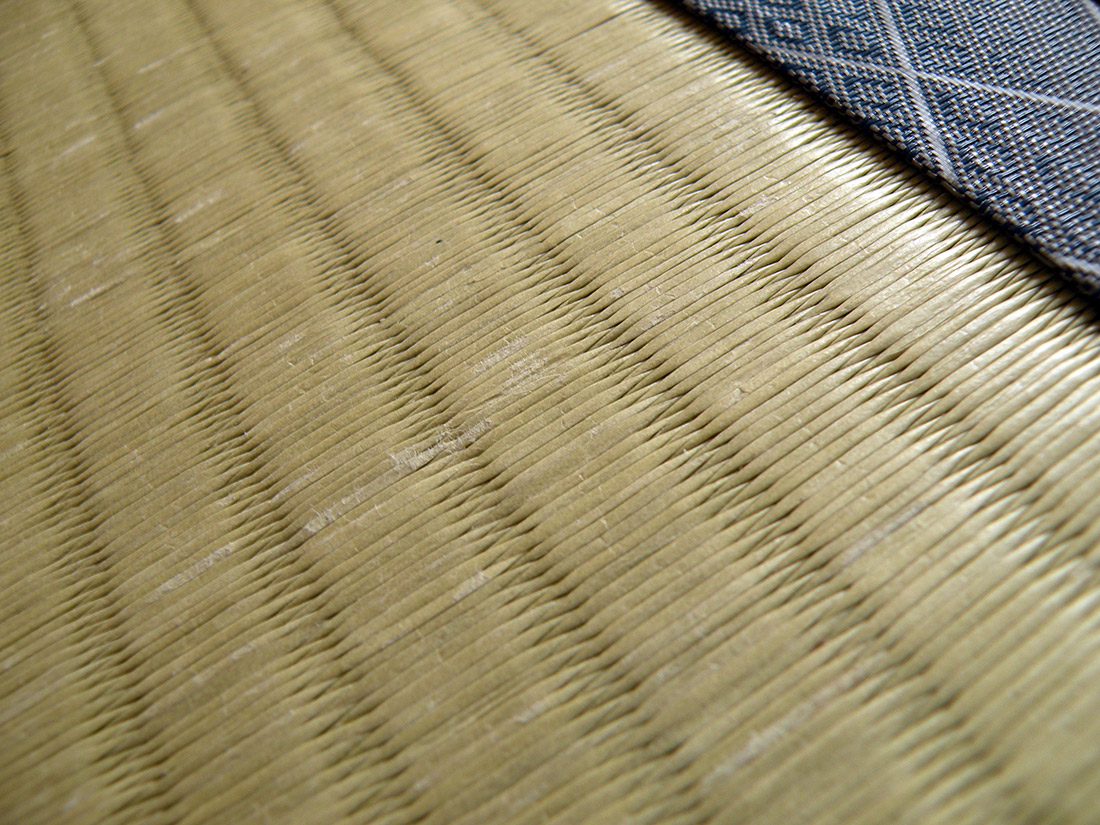
Tatami mats

When you were a little kid, have you ever avoided stepping on the cement between bricks or tile flooring? If so, time to put that skill to use! Stepping on the cloth borders of tatami mats is considered bad luck.

Breaking certain objects

May the FSM help you if you break your comb or sandals.

Just like any culture though (especially Asian ones, I’m just sayin’), there are going to be a lot more than just these here. This should cover most of the main ones, though. What happens if you mess up? What happens if you’ve done one of these things? Answer is, probably nothing, but just in case…

I didn’t follow the list or I’m afraid of bad luck! What can I do to protect myself?
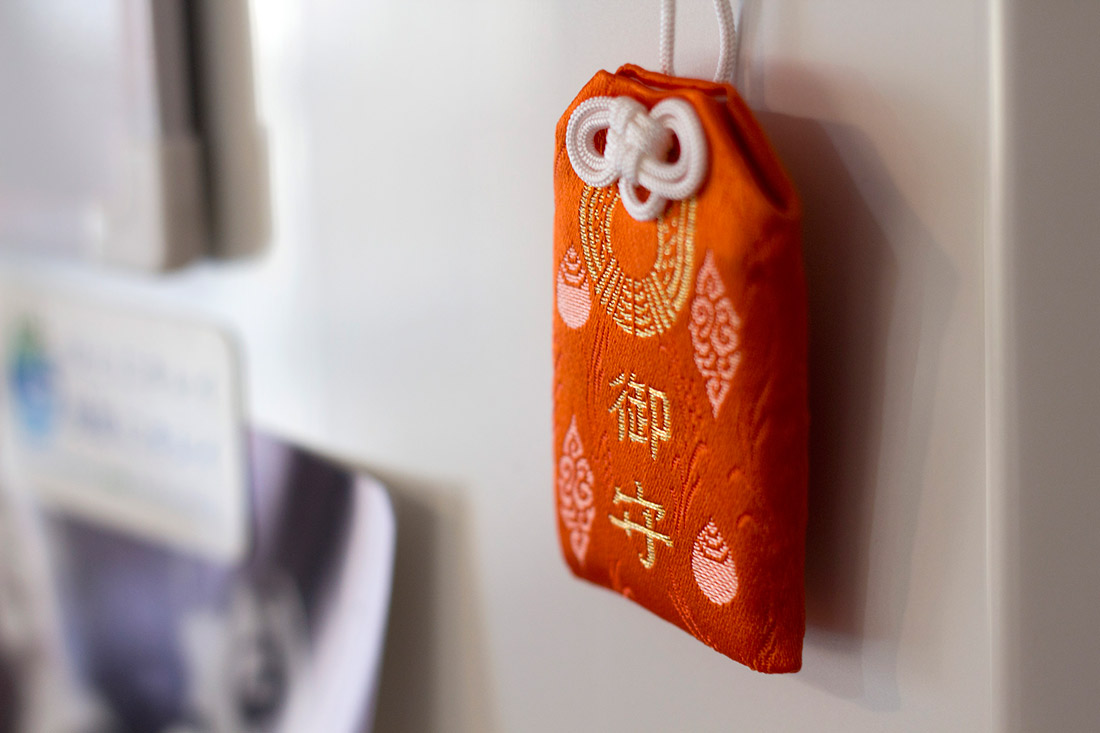
What can you do if you happened to run into some bad luck? Maybe you felt like being a rebel and ate the melon and fried eel together? Now you regret doing so, eh? Like anything Japanese convenient, there is a one-stop shop that may help with your problems. Just like how you can pay the Yakuza for protection, you can also use your yen to buy some protection to ward off bad juju and bring in some good luck.

Temples and shrines carry good luck charms or 御守 (omamori) for any current or future problems. Buying these charms and carrying it around with your will protect you from whatever problems the omamori was designed for.

A few popular forms of omamori:

  • Yaku yoke — Protection from evil
  • Gakugyou Jouju — Passing of examination
  • En-musubi — Finding the ideal mate and marriage
  • Kanai Anzen — Protection from bad health and illnesses

Make sure you stock up whenever you visit Japan! Who knows how many superstitions you will break unknowingly.

  • http://twitter.com/SuperNoonim Ko

    Man, i think the melon/eel thing is just to keep you from eating such a nasty combo. Can you imagine the taste? D:

    You have one small typo (that I noticed, anyway): I think you meant ‘ideal’ mate?

  • http://www.facebook.com/people/Kaylan-Walker/1222956655 Kaylan Walker

    I doubt this is the origin but maybe there is some link?  I copied and pasted a few parts of it;

    “There are some Ozark folk who will not touch eels at all, but most of the old-timers eat blue eels freely enough, while contend- ing that the larger yellow species is poisonous. “Catfish and men, it is said, are the only living creatures known to eat pawpaws. “plumb gluttons for pawpaws,”"…Many Ozark people believe that eels are inordinately fond of human flesh…”"Another odd notion is that if you leave a fried eel alone, the flesh will be ‘”blood raw” in a few hours”

    Here’s a link if you think this has any relevance: 

    http://www.archive.org/stream/ozarksuperstitio032343mbp/ozarksuperstitio032343mbp_djvu.txt

  • http://www.facebook.com/people/Kaylan-Walker/1222956655 Kaylan Walker

    I just noticed that too xD I was like “huh O.o what’s an Idea mate” 

  • http://www.vietamins.com Viet

    Ahh good catch. Fixed and thanks!

  • http://twitter.com/SuperNoonim Ko

    no problemo

  • http://profile.yahoo.com/FZ5FVH74HX3C3OHEMB2BLIH4E4 Kazuya

    It’s bad luck here to use an umbrella when it’s not raining?
    I knew it was bad luck to open one indoors…. I know some older people who will use an umbrella when It’s really hot out to block out the sun like a parasol. But maybe that’s just because I’m from the south. :/

  • Aluminous

    I definitely broke my comb when I was in Japan, didn’t like my crazy western hair…

    …actually it was my hotel’s comb, so maybe I’m safe?

  • http://www.vietamins.com Viet

    You are correct about it being bad luck opening an umbrella indoors. I just didn’t word it correctly. Don’t remember the last time I used an umbrella and I live in the PNW :)

  • Mescale

    I hear its a good time to be selling tomato juice in Japan!

    Many Japanese people follow fad diets, a kind of superstition I suppose, and apparently some research showed tomato juice having some beneficial effect. And so its been in short supply recently.

    It must be hell for Bloody Mary drinkers.

  • http://www.vietamins.com Viet

    Oh? Are they finally moving away from the banana diet fad?

  • Tgdevil

    I just had to comment that in my country it’s the combination of wine + watermelon that kills you :)

  • Mescale
  • Joseph Goforth

    hmm i think i need the en-musubi one…is there a variation for finding a sugar momma?

  • http://www.vietamins.com Viet

    Don’t know… Honestly, the first thing that to my mind when I read the word was Spam Musubi :|

  • http://www.vietamins.com Viet

    Interesting. Doesn’t sound like a good pairing :P What country are you from? Sound like something a Portuguese would say…

  • Tgdevil

    It is Portugal :)

  • Songy

    Really? I’m Portuguese and never heard that :o.

  • Tgdevil

    Weird, most of my friends heard of this myth also :) But I guess it was a bit more common 1 or 2 decades ago.

  • ZXNova

    Wow, these are very interesting. I already knew about some of them. (I actually learned the fried eel/melon combo from an Anime! ^^;) But just like all superstitions, they’re just superstitions. But the blood-type thing does make a lot of sense really. Unlike the Zodiac, people who share similar blood-types are able to donate to each other, since the blood is basically who you are, why not similar blood-types have similar personalities? Makes sense to me really. But it’s not really scientifically proven so…

  • Hokkaido Kuma

    Once I was at an enkai and I stuck my chopsticks in my rice.以上

  • http://twitter.com/NishiLain LC

    Once, a japanese male friend told me not to sigh, because happiness will go away. Does anybody know about this? BTW, great list! :D

  • Guy

    I am a 19 year old Japanese and I’ve never
    even heard of most of these superstitions…

    “Needless to say,the Japanese are fairly zealous in their superstitions.”

    Really? I doubt that.

  • http://www.tofugu.com koichi

    Really? I learned about half of these from Japanese friends and the other half from my Japanese mom / relatives. Might be you’re too young – times are a changin’

    Though, isn’t Japan a country with a lot of fortune telling compared to the rest of the world? That right there I’d say is a pretty good indication that Japanese people tend to be more superstitious than a lot of the world… though of course that’s a broad generalization, none of this has to apply to you in particular, of course.

  • mrquadrant4

    “Avoid sleeping with the head facing north”

    I thought it was don’t sleep with your head facing the setting sun.  At least that’s what my Mom said.  She’s Okinawan so maybe the setting sun variant is unique to Ryuuku.  Never really thought about it until now.

  • http://www.vietamins.com Viet

    Have you never heard of Kazuko Hosoki?

    My experience with Japanese people says otherwise :) Heck, if you watch a decent amount of Japanese television, you can see a lot of the superstitious attitudes.

  • kabuto

    Hope we don’t hear of any hotel owners dying….

  • Mushi

    Great post as usual! I wouldn’t try melon and eel together even if it wasn’t bad luck! Also, I put the name of Tofugu on this website: dailykanji.webs.com Free advertising!

  • kuyaChristian

    *Altar instead of alter :]

  • CelestialSushi

    Interesting.  I wanted to share a bit about what I heard in my Japanese class (or maybe related books?) regarding the “don’t step on the tatami mat edges” superstition.  I’ve heard that there are a couple possible reasons for this, like 1) Tatami mats are fragile, so stepping on the edges may contribute to wear; and 2) Japanese houses were built off the ground, so ninjas could be hiding under the floors ready to send all manner of sharp objects through the cracks in between the tatami mats into the feet of unsuspecting targets.  That’s just what I’ve heard.

  • http://twitter.com/jyuichi jyuichi

     I had a Japanese roommate who was very upset when I sighed (evidently I do so frequently) for this reason

  • http://twitter.com/jyuichi jyuichi

    I believe the salt goes for entering one’s house after a funeral as well. I’ve personally witnessed this one (unfortunately) and was rather surprised it is actively practiced.

  • http://profiles.google.com/jonadab.theunsightlyone Jonadab the Unsightly One

    On the one hand, walking under a standing ladder and opening up your umbrella before you go out (thus, right before you walk through a doorway) are indeed bad ideas, for physical reasons that should be rather obvious if you think about it.  (Opening an umbrella in a sufficiently large room, with no intent to walk through a doorway, is of course safe, but there’s seldom any motivation to do that.)

    On the other hand, Western culture has plenty of superstitions that have no real basis, many of which are still taken seriously by the majority of the population.  Going outside when it’s cold (or, depending on who you ask, in the rain, even in the summer time) means you’ll catch a cold.  Saying the name of a person you’d prefer to avoid can cause them to show up soon when they otherwise wouldn’t.  Don’t wear white after Labor Day. (Or was it Memorial Day? I get those two holidays mixed up.)  Eggs and ketchup need to be refrigerated, even if you only bought enough to last a week.  If frozen food (say, a frozen raw chicken breast) falls on the floor, you have to worry about it picking up bacteria and should wash it off (or some people would even throw it out — in the food service industry you definitely throw it out), even though you’re about to heat it at a high enough temperature and for long enough to cook it.  The list goes on.

    On the gripping hand, I’m pretty sure the wackiest superstition I’ve ever heard of is “fan death”, which is indeed Asian (albeit, not Japanese).

  • http://profiles.google.com/jonadab.theunsightlyone Jonadab the Unsightly One

    > I had a Japanese roommate who was very upset when I sighed

    A lot of Americans don’t like it when you yawn in their presence.  They say it makes them tired, but I think it only works if they were tired already:  it doesn’t *make* them tired; it *reminds* them that they’re tired.  Personally, I find yawning to be very relaxing.

  • http://profiles.google.com/jonadab.theunsightlyone Jonadab the Unsightly One

    > I wouldn’t try melon and eel together even if it wasn’t bad luck!

    Not even on a watermelon, cheddar, and fried eel sandwich?

    (Come to think of it, neither would I.)

  • mixa

    Haha, wait a sec, writing in red shortens one’s life but -engraving- their names on a cemetery doesn’t?
    By the way, mango + milk in Brazil may cause death too.

  • http://www.facebook.com/profile.php?id=100001079326564 Michael Baltazar

    Well, what do you think? Japan is “The Land of the Rising Sun”, pretty straightforward explanation.

    Also of course, in the west, you’re not supposed to have your head turned facing west while your arms are crossed when you are sleeping. It’s an obvious symbol of death. Think of the Skull (facing left) and Crossbones. And in mythology, vampires sleep like that. Though, old movies have mislead people by making their vampires face up.

  • ಠ_ರೃ

    “since the blood is basically who you are”

    …?

  • ಠ_ರೃ

    I yawned immediately after reading this. >_<

  • http://zoomingjapan.com/ zoomingjapan

    Very interesting post! There were some things even I didn’t know yet!
    Thanks so much for sharing! :)

  • http://www.facebook.com/unkolicious Kit-Lam Lieke Cheung

    Found it funny to read about the lying down after eating, because after my exchange year in Japan I was so sure that it’s also a superstition in my home country that I would joke and tell somebody he/he shouldn’t lay down after we ate or he/she will turn into a cow, and they would be like “What are you talking about??”.

    This article just confirmed that I’m seeing Japanese culture as my own, kinda makes me feel I really achieved something, yay :) 
    Interesting post with lots of things I didn’t know yet!

  • Jon E.

    They’re able to donate blood to each other’s bodies because they have the same type of blood. Don’t think of “bloodtype” as one word, a thing. Think about it as what it is really describing…it’s describing different types of blood in the body. Some people were born with this type, some with this other type. That is why they can share. My body’s organs will reject blood that is too different from the original type of blood that they use, and the blood transfusion will fail, and even harm me. I could and likely would die. We can’t just go transferring blood all over the world between individuals because we found that not all blood is the same, and our bodies require whichever type of blood we were given in birth.

    Blood is not “who you are”; actually I don’t know what that sentence means. “Who you are” is a complicated mess and before we even delve into that we would have to clearly define what we’re talking about. I don’t know about you, but I don’t want people to think of me as blood. Blood is not who I am. I am a human being, composed of more than just blood. Just like me saying “bone is who we are” doesn’t make any sense either. Yeah, I’m made of bones. Lots of them. And I have lots of blood, too. But I am way more than those, baby. ;)Trust me, blood type has absolutely nothing to do with personality – it’s one of those things that, when you hear it, you think it makes sense – why wouldn’t it? But then you sit down and you actually think about it – and you embarrassingly laugh at yourself for ever believing such a thing. You will most likely do that someday, too.

  • J.Paul

    Actually, wearing white after Labor Day isn’t bad luck, it’s just a fashion faux pas.

  • Wooper

    My friend INSISTS that if a women gets her feet wet too often it will negatively affect the health of her unborn child. She seemed to believe that even if she weren’t pregnant at the time it would affect any future babies she might have.

    And when I say ‘insists’, I mean she wouldn’t even consider the idea that it was a superstition.

  • Mistress Catgirl

    Growing up my mom always told me that eating cucumbers and milk would poison me somehow and I would die. I tried it and am here to tell the tale. 

  • ZA다ルﻣ

    in pakistan, mango lassi is a popular (and delicious) drink made from mango pulp and a type of yogurt. i guess it’s not exactly milk, but it’s pretty close. and on a hot summer day, it feels more like death if you /don’t/ take it.

  • Pepe

    Also, knots in the clothes of dead people in japan are always vertical. Thus, every time you tie a knot you must do it horizontally.

  • http://www.vietamins.com Viet

    Hmm, this is a new one for me! Never noticed it, but now thinking about it I remember observing such a thing. Thanks for sharing!

  • http://mypandahero.wordpress.com/ Cat

    The number thingy reminds me of the Shinigami’s phone number in Soul Eater: “shi ni shi ni ko ro shi”… >:3

  • http://twitter.com/WackoMcGoose Kimura Okagawa

    I actually found out the reason for the tatami-mat border thing during a tea ceremony in Japanese class. The thing is, during feudal times, everyone was always afraid of getting offed by a ninja. Well apparently, one of their more popular methods was to sneak into the crawlspaces (or whatever it was) below the floor, and wait for their target to come along. If they decided to sit or stand on the border between mats, the ninja could easily stick a blade through and buttstab them.

  • crella

    Umeboshi and eels are another no-no, evidently. Just in Kansai?