When you're sitting there writing something, you may take the little things for granted… little things like periods, commas, and quotation marks. That's cool— they only bind together everything a sentence holds dear. If you didn't have these little things, this "punctuation" if you will, the fabric of sentence time would tear apart, creating some kind of super-black hole. (Ironically, it would just look like a period.)
And, wouldn't you know it, punctuation exists in Japanese as well! It's not that much different from English punctuation, but there are definitely a few things to keep in mind if you want to read Japanese more easily or one day get into Japanese translation. In this article, I'm going to cover pretty much all the Japanese punctuation you'll run into. In order to learn it, it'll only take a quick read. Feel free to use this article as reference!
Let's get started with some backstory.
Japanese Punctuation Before the West
This may be shocking, but before the Meiji era there was no punctuation in Japanese. Their version of the modern-day period ( 。) was introduced from China centuries earlier. But of course, it was ignored. When it was used, it was put just about anywhere to mean just about anything.
Thanks to Emperor Meiji's love for Western literature, punctuation like the period and comma ( 、) eventually made its way into written Japanese. In 1946, some years after the Meiji Restoration, the Ministry of Education passed a bill, letting people know how they were supposed to use them. Luckily for us English speakers, this means that a lot of Japanese punctuation symbols are nice and familiar! Unless of course you're trying to read anything pre-WWII, in which case the punctuation is weird and/or nonexistent.
Full-Width Spacing
One thing that really stands out to me in Japanese writing is the spacing. While it differs between operating systems, handwriting style, and your Japanese IME, Japanese typography tends to be something known as "full-width." English, on the other hand, is "half-width." Can you see the difference?
- なんでだろう?
- nandedarou?
While you can type in half-width spaces in Japanese, it looks crowded compared to text you'll see everywhere else. The Japanese language was made to be nice and spread out. And that carries over to their punctuation, as well. There are technically no spaces between letters or words in Japanese. The only place you will find "extra" space is after punctuation, where they are automatically included. This saves anyone typing in Japanese from having to hit the space bar unnecessarily, especially since it's done so infrequently otherwise.
To sum things up, you don't usually have to worry about adding spaces between sentences. Punctuation has you covered. For example:
皆さんこんにちは、トウフグのコウイチでございます。ハロー!
Find the comma and the period. There's a little half-width (normal width in English) space after them, even though I didn't add them in. All I did was type the comma and period themselves— it all counts as one "letter", even when you try to highlight it (go ahead, try and highlight the above sentence).
Now that you know all about empty space in Japanese writing, what about learning all the (main) Japanese punctuation available to you? Let's do it!
Japanese Punctuation Marks
Because Japanese punctuation is so similar to English punctuation, there is a lot of overlap. As I mentioned earlier, however, there also tend to be a lot of subtle differences, which I'll go over below.
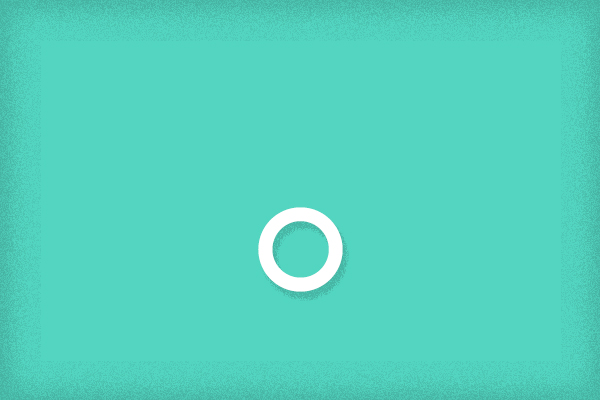
- 。 句点 (くてん) or 丸 (まる)
- 。 Period
The Japanese period is used much the same as the English period. It marks a full-stop, or end to a sentence. In vertical writing, it sits at the bottom right, below the character before it. If the sentence is on its own or has quotes, however, the Japanese period is omitted most of the time. Japanese periods look like this:
ワニは怖いですね。
The period itself is a small circle, and not a dot. This character is used the majority of the time in written Japanese, though, occasionally, you will see Western-style periods when a sentence ends with an English word.

- 、 読点 (とうてん) or 点 (てん)
- 、 Comma
The Japanese comma, like the Japanese period, is used in much the same way as the English one. It's put in the same place as the period (bottom right after the word) in vertical writing, as well.
Comma usage in Japanese is incredibly liberal compared to English. You can stick it pretty much wherever you want a break or pause in your sentence. Just don't abuse the power, please, it, is, irritating.
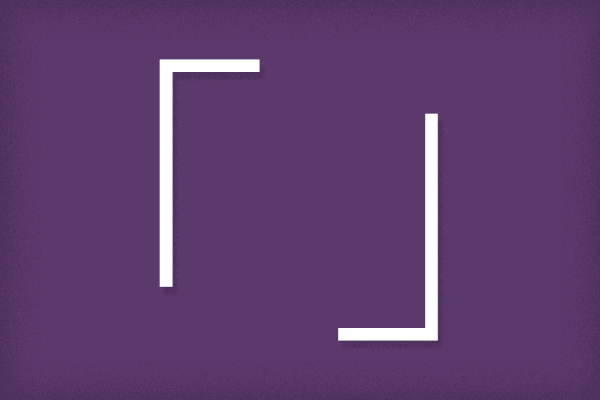
- 「」 鈎括弧 (かぎかっこ)
- 「」 Single Quotation Marks
Instead of things that look like "this" for quotation marks, which would get confusing because of dakuten (more on that later), the Japanese use little half-brackets to indicate quotes. Although these are called "single quotation marks" or "single quotes", which might make you think of 'this', they are the most common style of quote to use in Japanese. Almost any time you need to use a marker for quotes, you'll use single quotes.
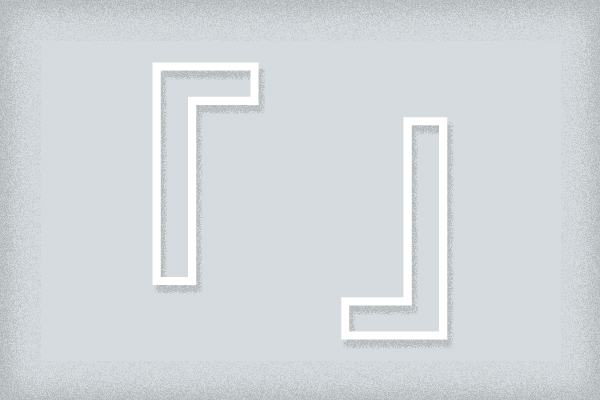
- 『』 二重鉤括弧 (にじゅうかぎかっこ) or 白括弧 (しろかっこ)
- 『』 Double Quotation Marks
Double quotes are a lot less common than single quotes, but they have one good purpose. You know when you have to quote something that's quoting something else? In English, that usually looks like this: "The dog said 'woof' and ran away."
In Japanese punctuation, double quotes go inside single quotes when you're quoting text within text. It's the same rules as in British English punctuation (single first, double second).
Sometimes people will use these double quotes alone as if they are single quotes, but that's a stylistic choice on their part.
- 〜 波線 (なみせん) or 波ダッシュ (なみだっしゅ)
- 〜 Wave Dash
The wave dash isn't really similar to the Western (straight) dash in use. But it's likely the wave dash became popular because straight-line-dashes are already used in katakana to show a long vowel, and not differentiating it here would be confusing.
There are some uses that are like the Western dash, like showing a range of something (4〜5, 9時〜10時, etc), but there are some Japanese-only uses of this punctuation, including drawing out and changing the pitch of a vowel sound (そうだね〜), showing where something is from (アメリカ〜), and marking subtitles (〜こんにちは〜).
- ・ 中黒 (なかぐろ) or 中点 (なかてん) or 中ポツ (なかぽつ) or 黒丸 (くろまる)
- ・ Interpunct
The interpunct is a dot that aligns with the vertical or horizontal center (depending on writing direction) with the words next to it. It's typically used to break up words that go together. You see this most often when you have multiple words written in katakana, like foreign names.
It can be used with Japanese words, as well, though the use is more specialized in those cases. Some Japanese words, when placed side by side, can be ambiguous because combinations of kanji can mean different things. And if you have too many kanji next to each other it can get confusing.
Finally, the interpunct is used to break up lists, act as decimal points when writing numbers in kanji (why would you do that, please don't do that), and separate anything else that needs clarification. For example:
ザー・モンキー
- ? クエスチョンマーク or はてなマーク or 疑問符 (ぎもんふ) or 耳垂れ (みみだれ)
- ? Question Mark
You'd think the Japanese question mark would be self explanatory, but there's a thing or two you ought to know about it. Just like its Western-style counterpart it indicates a question— that's simple enough. Thing is, though that Japanese already has a grammar-based marker (か) to show that you're making an inquiry, rendering any further punctuation redundant most of the time. As such, you won't see question marks in formal writing. Casual writing is a different story, because 1) casual writing has different rules in most languages and 2) Japanese speakers will often drop か in conversation in exchange for a questioning tone of voice, which is hard to convey without a question mark.

- ! 感嘆符 (かんたんふ) or ビックリマーク or 雨垂れ (あまだれ) or エクスクラメーションマーク
- ! Exclamation Point
The Japanese exclamation mark is used just like the Western one. It shows volume or emotion or both. You won't see exclamation marks in formal Japanese, though it's really common everywhere else, especially on Twitter, email, and text.
- () 丸括弧 (まるかっこ)
- () Parentheses
These look like English parentheses, but they have the extra spaces I mentioned when I covered full-width spacing. They're often used to show the kana readings of kanji words— for example:
鰐蟹(わにかに)
They're also used an awful lot online in Japanese dictionaries and other educational resources (like dusty paper books). And, of course, they're used for annotations (like this) within a sentence.
- 【】 隅付き括弧 (すみつきかっこ) or 太亀甲 (ふときっこう) or 黒亀甲 (くろきっこう) or 墨付き括弧 (すみつきかっこ)
- 【】 Thick Brackets
Finally! Some Japanese punctuation we don't have in English! Sure, we have [] brackets, called 角括弧 in Japanese, but look at these dark ones! Brackets like this don't have a singular use, and they can really be used for anything; showing emphasis, listing items, or just making your brackets stand out more.
- {} 波括弧 (なみかっこ)
- {} Brackets
Just like the thick brackets, there is no specific use for these curly braces either. Often, though, you'll see them in inside normal brackets[{}]and in mathematical equations, too. I could have added about ten other bracket variations to this list. Seriously, there are way too many bracket types in Japanese.
- … 三点リーダー (さんてんりーだー)
- … Ellipsis
Unlike the English ellipsis, the Japanese version typically hovers around the vertical middle of the line, instead of sitting at the bottom (though they can be formatted that way, as well). There can be as few as two ‥ or as many as six or more …… . They can symbolize the passing of time, silence, or a pause. They also convey silent emotion, which you'll recognize if you read a lot of anime and manga. Finally, you may also see them in text to symbolize long vowels or an omission or missing content.
Japanese Phonetic Marks
These aren't technically punctuation, but they're important symbols you'll see in Japanese and you should know what they mean, too.

- ゛ 濁点 (だくてん) or 点々 (てんてん)
- ゛ Dakuten or Tenten
These are the little marks you see next certain kana to make them "voiced." What that means, basically, is that your vocal cords vibrate when you say a them. They look like English quotations marks, which is probably why the Japanese version was created and is used way more often. They look like this when they're attached to kana:
| が | ぎ | ぐ | げ | ご |
| ざ | じ | ず | ぜ | ぞ |
| だ | ぢ | づ | で | ど |
| ば | び | ぶ | べ | ぼ |
And, just like the extra space that's added automatically between characters when you type in Japanese, you don't have to add these dakuten manually. Thanks to romaji you just type things how they sound— for example, "ga" for が— and the correct dakuten are added to the hiragana or katakana without any extra effort on your part. Thanks, technology!
- ゜ 半濁音 (はんだくおん) or 丸 (まる)
- ゜ Handakuten or Maru
The handakuten is similar to dakuten, but this little open circle means that the consonant it's attached to is "half" voiced. There are only a few of these in Japanese and they all make the "p" sound.
| ぱ | ぴ | ぷ | ぺ | ぽ |

- っ 促音 (そくおん) or つまる音 (つまるおと)
- っ Small Tsu or Double Consonant
If you see this smaller version of the hiragana つ, it is not pronounced "tsu" (ever!). If you see it in the middle of a word, before a consonant, it means that the consonant after it is a "double" consonant. If you see it at the end of a word (before the particle と in many onomatopoeia) then it's a glottal stop. That means it's kind of like a constricted sound in your throat (that's your glottis in there, thus the name). The katakana version looks like this ッ.
- ー 長音符 (ちょうおんぷ) or 音引き (おんびき) or 棒引き (ぼうびき) or 伸ばし棒 (のばしぼう)
- ー Long Vowel Mark
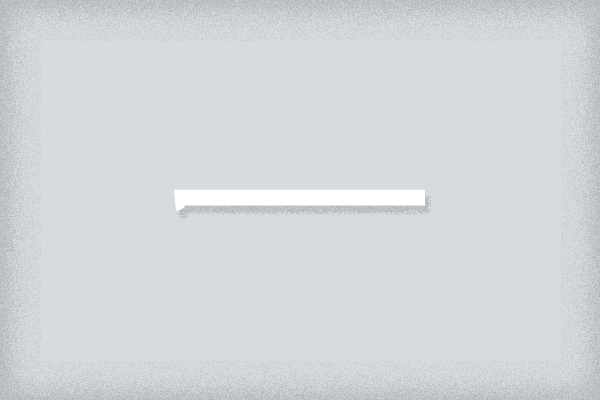
Long vowel marks mark long vowels. So, instead of スウパア, you'd write スーパー. Simple right?
You'll mostly see these in katakana, hardly ever in hiragana. The only time you'll see them with hiragana is at the end of a sentence or after a drawn out particle or interjection. When it's used like that, it's interchangeable with 〜.
Bonus Symbols
While we're at it, let's look at some other symbols you're bound to see in Japanese.
- 々 踊り字 (おどりじ) or 躍り字 (おどりじ)
- 々 Iteration Mark
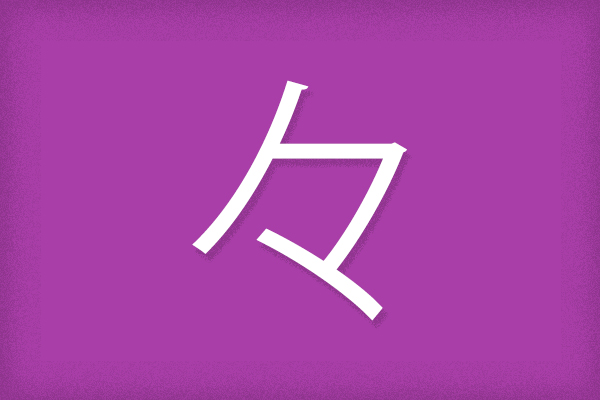
This neat-looking kanji is something called an iteration mark. That's a fancy way of saying it is a "repeater", i.e. any kanji it follows is repeated. You've probably seen it in words like 人々 (people), 時々 (sometimes), and even place names like 代々木 (Yoyogi [Park]). There used to be repeaters for kana too, but they're hardly ever used nowadays. They look like this:
- Hiragana unvoiced: ゝ
- Katakana unvoiced: ヽ
- Hiragana voiced: ゞ
- Katakana voiced: ヾ
ヶ: 箇 & 个 Replacement
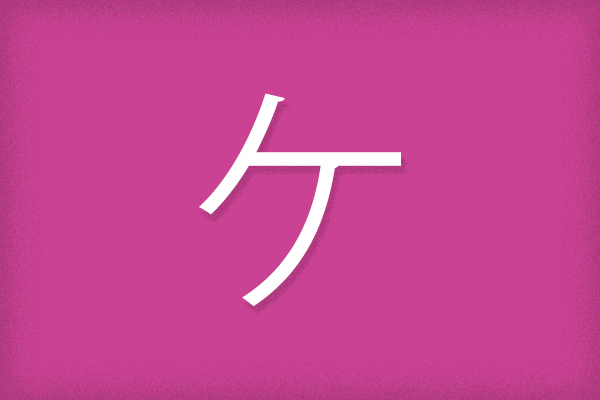
This may look like a small katakana ケ (and it is), but it's also used as a replacement for the counter 箇 (か), especially in months: ヶ月 (かげつ). See how it isn't read け, but か? So when you come across 5ヶ月, you read it as ごかげつ, or five months. You'll also see it pop up in place names like Chigasaki 茅ヶ崎市, and Sekigahara 関ケ原町. But instead of か, it's pronounced が because rendaku. Totally not confusing, right?
- ¥ 円記号 (えんきごう)
- ¥ Yen Symbol
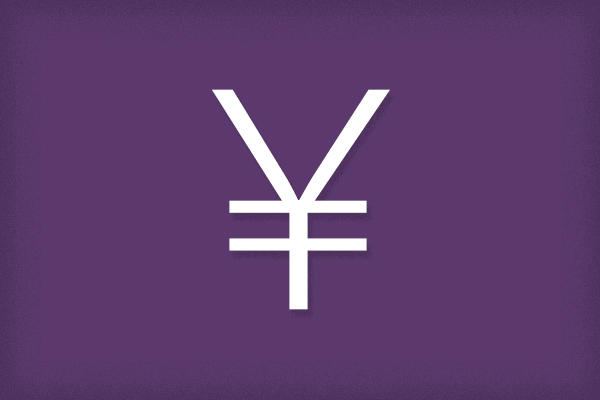
The yen symbol is used just like the dollar sign $ in English. You put it before the numbers it's referencing. You'll see this anywhere money is involved like receipts, price tags, online stores. But make sure you don't accidentally write this: ¥100円. 円 is the kanji for yen. You need to pick! It's either ¥100 or 100円.
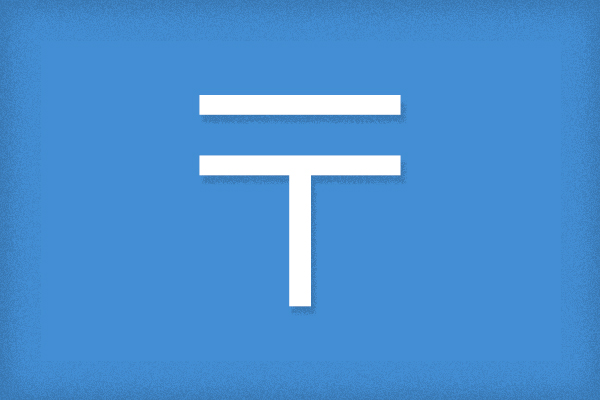
- 〒〶 郵便記号 (ゆうびんきごう) or 郵便マーク (ゆうびんまーく)
- 〒〶 Postal Mark
This postal mark is used on addresses to indicate the postal code. That's pretty important if you have a Japanese pen-pal or if you're going to be mailing things in Japan. The one in the circle is usually on maps for post offices, so if you need to find the post office, look for this symbol. They're on mailboxes too, usually in red and white, unlike the American blue you may be used to.
There are plenty of other punctuation marks in Japanese, but these are the main ones (or the ones that I thought were important to learn). You'll also see a bunch of different brackets, colons, and so on in Japanese. But it should be pretty simple to understand how they're used and what they're doing there, now that you've learned the rules I've laid out here.
That does bring me to one last thing, which I think is pretty interesting, and that is:
Kaomoji As Japanese Punctuation
Kaomoji 顔文字 , which translates to "Face Letters", is using text to draw little faces which show some kind of emotion. They're basically Japanese emoticons. While kaomoji will probably never be officially considered punctuation, I feel like it is a sort of new wave post-modern neo-punctuation.
When put together, they are characters that represent strong emotion, like the exclamation mark. They can also represent confusion or a questioning tone, like a question mark. On top of that, there are probably 20-30 different "feelings" they can represent that add to your sentences or paragraphs or phrases. While they aren't a single character (neither is an ellipsis, so take that punctuation snobs!), they do represent something which adds feeling to the sentence. That's basically what punctuation does, so why not kaomoji too?
If kaomoji can indeed be considered punctuation, there'd be a lot of them— too many to add to this list. Good thing we have a big kaomoji guide.
In terms of using kaomoji in Japanese, they usually go at the end of sentences or phrases. Think of them as periods that also convey emotion. Take that period! Go back to your soulless home in the country of boring-ville ヾ(♛;益;♛)ノ
Anyways, there you have it. I hope you learned something new, and thought about kaomoji a little bit, too. There really isn't a lot to learn when it comes to Japanese punctuation because you have most of the concepts down already (assuming you're not reading this as a tiny baby). It's really the subtleties that are interesting, I think, so enjoy them but don't get too hung up on them.