
A lot of people don't know this, but the Japanese language is actually a big mishmash of several not-Japanese languages put together. At one time though, a long long time ago, the Japanese language was a slightly less mishmashy combination of several languages. This is what's known as "Yamato Kotoba" ー the real Japanese language from a time when there wasn't so much outside language influence. Let's find out where modern Japanese came from.
What Is Yamato?
First we have to take a look at the word "Yamato" if we want to learn what "Yamato Kotoba" is. The word "Yamato" is everywhere in Japan. There's the WWII Yamato Battleship and even the (fictional) Space Battleship Yamato. There's the name surname Yamato. There's like 15 towns, cities, and villages called Yamato. Even the game Starcraft has the Yamato Canon (shoots a big concentration of people out at the enemy, I guess).
Oh, and did I mention there was an entire Yamato period and peoples? That's where all this came from.
No matter where you look, you'll start seeing references to "Yamato." Why is the word "Yamato" so influential? What does it refer to? Let's jump back a bunch-a-hundred years to see.
Yamato Period And The Yamato People
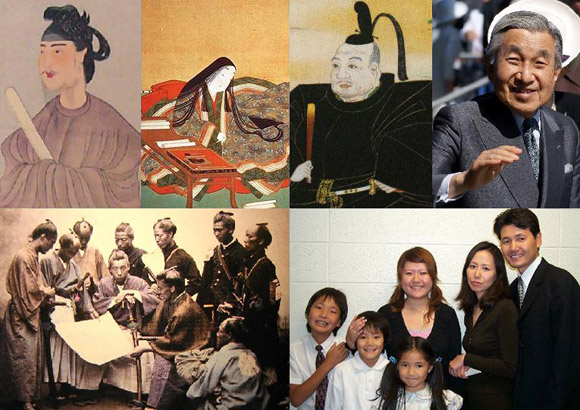
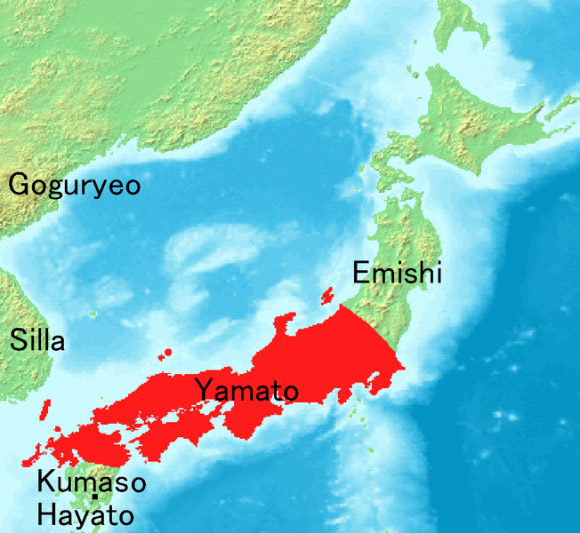
The "Yamato Period" (yamatojidai 大和時代) refers to (approximately) the years 250 AD to 710 AD, though the actual start year isn't totally clear (it was a long time ago, after all). By this time, a decent number of people had crossed over from Korea and China to Japan and started settling, bringing new technology like rice farming (a huge deal for keeping all the nomads in one place), metal, and more. The people who lived in Japan before this were known as the Jomon who lived in Japan from 8,000 BC to around 300BC. The Jomon are technically the "original" Japanese people, but things change and people from China and Korea migrate.
Anyways, the Yamato people were the people who became the dominant ethnic group of Japan at the time (and very dominant they were). While the actual phrase "Yamato People" (or, if you prefer Japanese 大和民族) isn't really used anymore (kinda racist, I think) it was used at the time to differentiate the "Yamato" people from the ethnic minorities in Japan. There would have been a greater percentage of ethnic minorities back in the Yamato Period compared to now, but these groups include the Ainu, the Ryukyuan (though some thing you can combine these folks with the Yamato… I won't get into that), the Koreans, and a few more. Remember, this was right after and around a time when Japan was still a bunch of tribes and kingdoms and it wasn't until the Yamato period that one group became exceptionally powerful and combined together.
In fact, the Yamato "tribe" was only one of many tribes that made its way to Japan to colonize. Somehow, though, they managed to become way more powerful than the other tribes in Japan. It's not totally known how this happened, but perhaps part of it was their government (which was based off the influential Sui and Tang states in China). The nagain, perhaps it was just luck. Either way, they became pretty buff in the Japan tribes circle and ended up eventually ruling a lot of Japan.
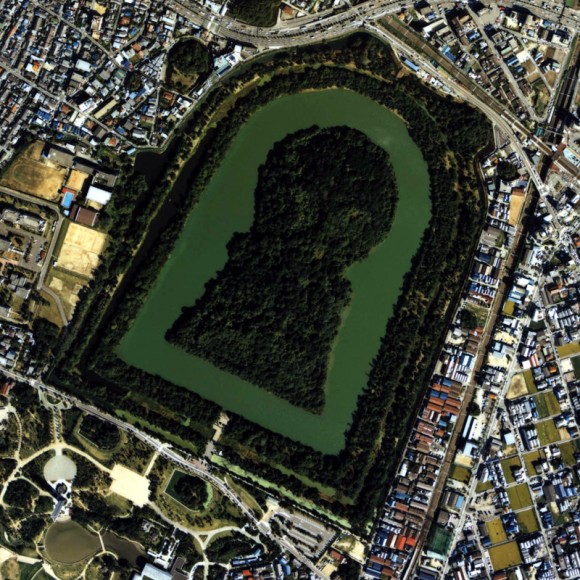
They ruled a long time but really didn't get going until around 300AD (at least according to the Chinese Book of Song). This is when large tombs started appearing for the Yamato emperors of the time.
Around this time the Yamato people were very receptive to Chinese influence. This is where everything starts to change. First, though, let's take a look at the Yamato Language in terms of how it was before this influx of Chinese culture migration.
The Yamato Language (i.e. Yamato Kotoba)
The word kotoba 言葉 in this situation means "language" or "dialect." This is the language that the Yamato people spoke, and it's still being spoken today though it only consists of part of the Japanese language (kind of like how English is a bunch of languages combined together, modern Japanese is a bunch of languages combined together).
The Yamato tribe spoke Yamato Kotoba (duh) – you can think of it as either its own language or as a sort of "Old Japanese" (has some parallels to how "Old English" works compared to regular English, in fact).
The really interesting part is how it is used now. Knowing about this might even help you with your kanji studies (you'll find out more about this in a second). Either way, you can just think of this as the language (which is not entirely unlike regular Japanese) the Yamato people spoke back in the day before it started to change.
The Modern Japanese Language Mishmash
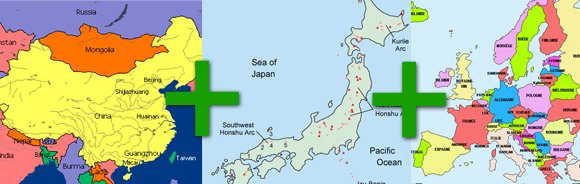
The Japanese language is made up of three main parts, some parts more influential than others. One of these parts, of course, is Yamato Kotoba, the original Japanese language. Let's see how it fits into modern Japanese, then we'll bounce back to how it got this way.
Yamato Kotoba 大和言葉
This is the original / old Japanese language brought over by the Yamato tribe. Another (more modern) term for this is wago 和語. When it comes to kanji, wago is the kun'yomi portion of your kanji learning. Basically, the Japanese took the Chinese characters (kanji) and applied their own (Yamato) language to it. When learning kanji, you'll notice that the kun'yomi often has some hiragana sticking out of it. Part of this is because Chinese characters only consisted of one or two syllables each, and Yamato Kotoba words consisted of (often) more syllables. If you think of an individual kanji as a box that only has enough space for one or two syllables, what would happen when you try to make it hold more? Well, those extra syllables would just stick out of the kanji box. That's why you'll see kun'yomi readings have hiragana sticking out of it (well, that and for grammar purposes, to indicate tenses, politeness levels, and more). Either way, Yamato Kotoba is just the language the Yamato people spoke during the Yamato period, way back starting in ~250BC.
Kango 漢語
Kango, also known as "sino-Japanese," and consist of words and grammatical sentence patterns that have come from China (lots of stuff came from China during this era – so influential!). This is what almost always makes up the on'yomi reading of kanji you're learning (though some exceptions exist where Japan just made up their own on'yomi reading for some of their own made up kanji). On'yomi is the Chinese pronunciation of the kanji (or an approximation, at least) and usually consists of one, maybe two syllables. Kango is everywhere in Japanese. In fact, it is estimated that 60% of all words in modern Japanese consist of kango, so it's no small fry or anything. That being said, kango only consists of 18% of Japanese speech, so that means you'll mostly see kango in writing, though 18% is still quite a bit. This makes sense, though, since kango has always been considered sort of wordy and "intellectual." People who use a ton of kango in speech are like the people who use big fancy words in English, and everyone just hates them (though they feel like they're being really impressive). Gosh I hate those people.
Gairaigo 外来語
Gairaigo are all the words that become Japanese loan words (but aren't Chinese). These are mostly Western words that have come over from Europe and America, though some gairaigo come from other parts of the world. You'll generally see these written in katakana to indicate their foreign-ness. Gairaigo make up a fairly small percentage of the Japanese language, though if you were to compare, say the number of Japanese words in an English dictionary to the number of English words in a Japanese dictionary, the number of English words in a Japanese dictionary would be wayyyy more. Still, compared to the rest of the language, gairaigo is pretty small. If I had to make a guess I'd give it 1%, though that's just a guess.
What Happened With Yamato Kotoba?
Let's jump back into the history lesson. The Yamato peoples became very influential in their time and they spoke Yamato Kotoba. But, as you can see above, Yamato Kotoba isn't necessarily the "dominant" language anymore. It's up there, sure, but Kango does a good job fighting back.
Back when the Yamato Period was taking off, Chinese influence was big. China was the big hooha. They were what everyone strove to be like. If you were smart, you could read kanji (Chinese Characters). If you were cultured you acted like the Chinese. If your government was awesome, you modeled it after Sui and Tang. Basically, China was the bee's knees, and the Yamato rulers wanted to be the bee's knees as well, so a lot of China slipped in and became part of Japan and the Yamato.
While China was the source of Buddhism, literacy, and all kinds of architectural achievements, it is the language that we're writing about at the moment. Basically, here's what happened with that:
- Hey, cool! We're Yamato! We have government. Let's make it super Chinese like Sui and Tang so we can be cool too.
- Oh man, if we want the Chinese to pay attention to us, we'd better not look like idiots. Let's get some Chinese Characters over here and start reading them.
- Oh crap, I guess we have to learn Chinese in order to read these things properly.
- Wait a sec! We have our own language. Let's just take the meanings of these Chinese Characters and plop our own Japanese Yamato words onto them. That'd work, right?
- Oh jeesh. I forgot about this. One Chinese character can only fit like one syllable… let's just stuff what we can into this character and then let the rest sort of hang out… it'll be okay. And then Japanese as we know it was born… or something similar to that. It took a while longer than it took you to read the above passage, I'm sure. It was more complicated than this too, but hopefully you got the gist of things. It was this period where "Japanese" stopped being "Old Japanese" (this isn't a bad thing, it's how all cultures are born, really). Through kanji, the Japanese language became more and more Chinese. Every time you're reading something in Japanese, 60% of it is adopted Chinese (though in conversational Japanese, much more of it is Yamato Kotoba). Chinese language and influence is everywhere in the Japanese language which is kind of awesome. Just thinking about it, I don't know what they would have done without it. The Japanese language would be so tiny (though it would have made it so much easier to learn, yeah?).
That being said, though, Yamato Kotoba still exists and is still pretty strong. It makes up some of the most important parts of the Japanese language from a linguistics standpoint. Knowing about it would help with your Japanese learning as well, I think. A lot of language mysteries are solved, at least partially, just with this knowledge.
Yamato Kotoba In Modern Japanese
Although there's quite the mix going on in modern Japanese, Yamato Kotoba (i.e. wago) still plays a really important role… I'd say the most important role: grammar (oh, and other stuff too).
Names
Japanese names are one of the most frustrating things about learning Japanese. In most cases, when you combine two kanji together (jukugo… i.e. combo kanji) you do the on'yomi (Chinese) reading. With names, however, it seems like there are no rules and the Japanese language Gods just did this so they could laugh at you, probably in ateji just to be ironic (hahahaha 歯歯歯歯). Why is this? Because names tend to use this Yamato Kotoba we've been talking about for so long. 山下, for example, is read "yamashita" which are the kun'yomi readings. Other names get even crazier. 一男 is read as (kazuo)… two kun'yomi you probably never learned. Names are seriously like the bane of every Japanese learner. One of those things that you just sort of learn as you run into them, one at a time. You can thank the Yamato-folk for this.
Particles
Japanese particles also come from Yamato Kotoba. In fact, if you see something written in hiragana (like particles) it's usually safe to assume it's Yamato Kotoba, and particles make up a huge percentage of this. Oh, and speaking of difficult things… Particles, yeah… Seriously Yamato? C'mon… You some kind of language sadist, or sumpthin?
Kun'yomi
The kun'yomi readings of kanji are also from Yamato Kotoba. These are the Japanese pronunciations of words slapped onto Chinese Characters with the same meanings. For example:
食(しょく)→ On'yomi / Chinese reading
食べます(たべます)→ Kun'yomi, Yamato Kotoba reading
As you can see, the Chinese reading doesn't have anything sticking out. The kun'yomi (Japanese Yamato) reading does. That's why the kun'yomi reading is associated with the "Japanese" pronunciation. Though, that being said, not all kun'yomi readings stick out of kanji, just a lot of them (especially adjectives and verbs). Still, most kanji have kun'yomi readings you have to learn.
Okurigana
Okurigana is the hiragana that sticks out of kanji. Obviously, this is going to be the kun'yomi reading of a kanji so it's already part of the Yamato Kotoba family, but it's worth taking a closer look at. Some example words:
高い
食べます
The red kana indicates the okurigana. This okurigana actually indicates sort of the grammar of the word. For example, if you changed taka 高い to taka 高かった, you'd know that the word is "was tall" instead of "is tall." The kanji, however, stays the same. You can do this with a ton of words (especially adjectives and verbs), and this is also all thanks to Yamato Kotoba.
Grammar
This is sort of a combination of okurigana and particles, but it goes beyond just a little. Anything that's grammar based is probably going to be a part of the Yamato Kotoba. Anything that changes tenses, connects words, or does anything that's not a word itself probably comes from Yamato Kotoba. Kango can only come from words themselves. Everything else? Thank Yamato.
Numbers
Numbers are one of those things that confuse a lot of Japanese learners. There's the on'yomi reading (いち、に、さん、し、etc) and there's the kun'yomi readings (ひとつ、ふたつ、etc). Then there's the whole issue of knowing when to use which, as well as needing to know which friggin' counter to use in which situation. It's definitely something that takes practice (and sometimes lots of it). A lot of number woes come from the battle between Chinese and Yamato and knowing which one ot use. Then there's the issue of knowing when to switch. For example, days in a calendar use Yamato Kotoba up to ten (ついたち、ふつか、etc), then it switches over to kango for the rest (じゅういちにち、じゅうににち、etc) and then has the exception of twentieth day (はつか) which goes right back to Yamato Kotoba. It's definitely not easy, but it really shows how the two languages combined into one mega-hard-to-understand modern Japanese language.
Future Japanese?
So, as you can see, Yamato Kotoba is still alive and kicking in the Japanese language – you just have to know where to look. There's been so much Chinese influence (during the Yamato period, especially) and now a lot of European and American influence (I wonder how crazy the Japanese language will be 1300 years from now?).Will it be like 20% English at any point? Do I dare say 50% English or more, with the whole English-becoming-the-global-language sort of thing? I suppose there's only one way to find out, and I am not very good at time travel.
But, that's how languages are. They're always adapting, changing and becoming new things (while keeping the same name). There's no way to fight it with any language, and I think it's pretty interesting when you know it's there.
Speaking of which, what's up with all this LOLSPEAK going on? Is that the future we're heading towards in English? :/ Oh god, I hope not.