Why Do Japanese People Live So Long? (And What You Can Do To Live A Long Time Too)

Japan has the oldest life expectancy in the world. That means people in Japan live a really really long time. Men live to 79 years old. Women live a little over 86 years old. What in the world causes Japanese people to live so long?

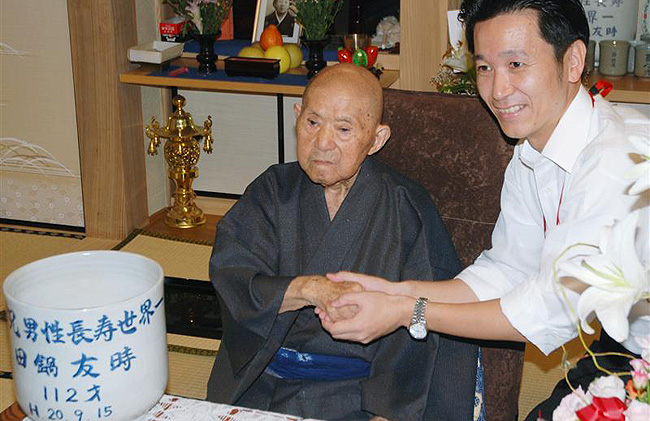
After WWII, Japan had one of the lowest life expectancies in the world, which suggests it’s not genetics that keeps them alive for so long (the guy in the picture above just turned 113). It’s not even that Japanese people visit doctors 12+ times a year. The answer is something else, and it’s something you can do as well to increase your own life expectancy (and get healthier, too)

The Japanese Diet
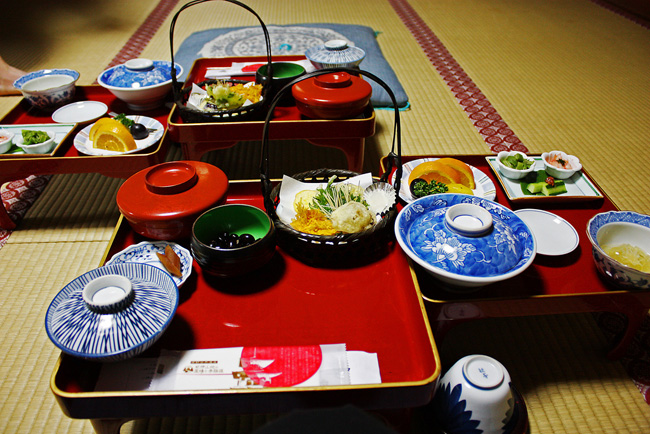
I’m no diet expert, but I can tell you that the things Japanese people eat are a lot healthier than the things Americans tend to eat. It’s not just their diet in general, though. We can break it up into several parts. If you want to live a long time, avoid heart disease, and feel healthy, perhaps a Japanese style diet is for you. Overall, it’s just way healthier. Here’s why:

Fish Vs. Red Meats: Japanese people don’t eat nearly as much red meat. Red meat has a lot more cholesterol than fish, which causes you in your later years to have a much higher chance for heart disease, heart attack, stroke, and other fun things. In Japan, fish is the primary “meat” to eat, which means not only do they keep their cholesterol lower, but they also get healthy fish oils, too. Now, there’s probably something to be said about the nasty stuff that can come with fish (i.e. mercury), but no matter what you eat you’re going to be getting something “fun.”

Less Milk, Butter, Dairy: Most Japanese people are lactose intolerant. In fact, people who can drink milk after becoming an “adult” are mutants anyways. People aren’t really meant to do dairy their whole life. Although non-fat milk is pretty healthy, a lot of people drink 1% and 2% milk. The amount of fat and cholesterol in those is pretty astounding and will kill you slowly. Japanese people don’t really do dairy all that much, lactose intolerant or not, which means they avoid all the extra cholesterol.

Rice: Rice is eaten with almost everything and is high in nutrients (there are special rice strains in Japan that have been created to have more nutrients than normal rice, even). It’s also low in fat and helps fill you up. Now, to make this even better (for yourself), you should try to mix in some brown rice as well. A lot of people don’t like this, but it’ll help you get some more whole grains.

Lots of Soy: Tofu, bean sprouts, and so on are awesome for getting you proteins and help reduce heart disease and high blood pressure, a couple of things that kill a lot of Americans. Soy products are really healthy, and an awesome alternative to meats, milks, and other “unhealthy” things.

Tea: Japanese people drink a ton of tea. Americans drink a ton of coffee. While there’s something to be said in regards to “everything in moderation,” I feel like one cup of tea is going to be better for you than one cup of coffee, especially when we’re talking larger amounts. Green / Oolong Tea is full of antioxidants (good for fighting that cancer thing), and apparently helps break up oils in the digestive system, keeping those bowels happy.

Seaweed: Mmm, seaweed. It’s full of iodine and other nutrients you don’t get as much of anywhere else. So incredibly healthy. Also supposed to help fight against many kinds of cancers, too.

More Vegetables: Vegetables tend to be a big part of every meal, not an afterthought or “oh, I should add a vegetable to this steak dinner” kind of thing. Everyone knows that vegetables are healthy and good for you. What else is there to say?

Smaller Plates: Here’s a trick. If you’re looking to lose weight, get rid of your big plates. Small plates cause people to eat smaller portions, which causes people to eat less. So many studies have been done on plate size and how much one eats, and there’s a surprising correlation between the two. Japanese tend to serve food on smaller plates which means they don’t overeat and get fat, which, of course, reduces chance of heart attack, heart disease, stroke, and other ailments.

Calories: According to Greg O’Neill, director of the US National Academy on an Ageing Society, Japanese people eat a third of the calories Americans eat. Now, Japanese people do tend to be smaller, so this kind of makes sense, but on the other hand Americans tend to eat too many calories. Next time you do fast food, look at the calorie counts. It can get pretty ridiculous, sometimes.

[box type="tick"]What You Can Do: Eating healthier isn’t always easy. We get used to what we eat, and making a shift is hard. One of the best things you can do, though, is decrease the amount of red meats you eat. They lead to all kinds of problems later on, and it’s pretty easy to avoid. You don’t have to stop eating red meat all together, but if you can really decrease the amount your body will thank you. Also, for all you addicted coffee drinkers out there, switch to tea. There’s a reason why older people are being forced (by doctors) to quit drinking so much coffee. Tea also has caffeine (I know, not as much, but you’ll survive) and is generally just a lot healthier. Drink it every day![/box]

Walking Vs. Sitting

Not only do Japanese people eat well, but they stand and walk way more than the average American. In America, most people tend to drive everywhere. Then, after they drive, they sit for long periods.

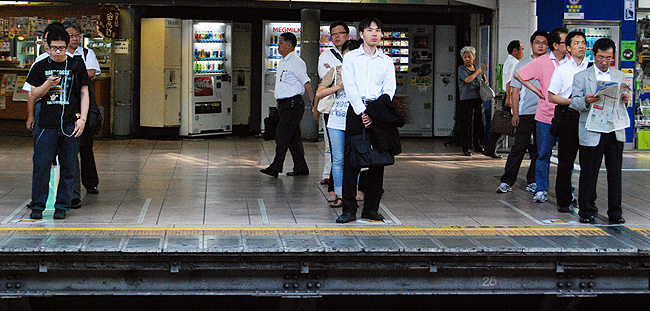
The Commute: A large portion of Japanese people walk, bike, and take the train to work (or wherever they need to go). Cars are kind of a luxury, and it’s almost easier to take a train anyways (train system is awesome). This means Japanese people are standing up for longer periods of the day, whether that means they’re walking / biking to the train station, or standing up in the train because there isn’t room to sit down. There have been plenty of studies done showing the correlation between how long you sit down per day and how likely you are to die early. Basically, if you stand up more every day, you’ll probably end up living longer. In Japan, standing and walking is just a necessity, while in American you have to go out of your way to do it. If you want to live longer, try and stand up for a few hours every day. Maybe the crazy Canon CEO isn’t just being evil, he’s helping his employees live longer!

Squatting While You Poop: Apparently, it’s also healthier to squat when you poop. Although this is becoming less and less the case, many Japanese toilets require you to squat, which has its own health benefits (even if it takes some practice). Apparently (I won’t get into too much detail here), squatting helps with your digestive system and actually help you to avoid hemorrhoids. While hemorrhoids are pretty common in Western countries, they’re nearly nonexistent in Asian, squatting countries. Back in 1978 they even got Jimmy Carter a squat toilet because his hemorrhoids were so bad. I don’t want to talk too much about poop here, so if you want to read more you can.

[box type="tick"]What You Can Do: It’s probably too hard to squat on top of your Western toilet when you poop, but you definitely can stand up and walk around more often. At the very least, try to stand up while you work (instead of sitting down). Just standing will help you stay healthy and live longer, even if you aren’t moving around. We aren’t made to be sitting around all day long[/box]

Cleanliness

Japan is probably one of the cleanest nations in the world. There’s almost an obsession with it in some cases. There’s no doubt that cleanliness leads to healthiness (we learned that in the great plagues back in the day). If you live in a clean house, and wash your hands, you should be okay. It doesn’t always seem like a cultural norm in America to wash your hands and shower every day (especially depending on where you are), but keeping clean and living around clean people will keep you healthy and help you live longer. It’ll help you to avoid disease (especially important when you’re old) and keep you from getting sick.

[box type="tick"]What You Can Do: Just wash your hands, it’s that simple.[/box]

The Family & The Social

Taking care of grandma (and sometimes grandpa): In Japan, the oldest kid is supposed to take care of the parents when they get old. The parent(s) live with the kid and help out around the house (until they get too old to, I suppose). Although this is changing a bit and fewer kids are helping out with their parents, it’s still really common. Having your kid(s) around, and grandkids around has to be a pretty nice psychological boost for the old grandma or grandpa, urging them to live longer and enjoy their time with their family. Plus, since they’re helping out around the house, it means they’re moving around (walking is important, right?), doing things, and staying active. Although I didn’t find any data to support this, I can’t help but see this as being a perk if you’re an old person in Japan. Being old and living in a retirement home would be depressing, and probably helps a lot of old people lose the will to live as long.

Hanging out, drinking, and socializing: I’m not saying that drinking a lot is good for your health (though some studies say it’s not all that bad, showing that drinkers actually live longer than non-drinkers, overall), but the socializing that goes along with it is. When it comes to business in Japan, employees are often required to go out and socialize, drink, and have fun after work. Although this takes away from sleep time (probably not as good for people who want to live long), socializing is really important for your psychological health. The better that is, the more you’ll enjoy life and keep on living. By doing this you make friends, know more people, build a network, and so on. This means you have more friends later on in life, which means you’ll enjoy life more when you’re older too. When you enjoy life, you just want to live longer. It’s as simple as that.

[box type="tick"]What You Can Do: While you probably can’t force your kids into taking you into their home when you get older, you can get out there and make friends. The more you socialize the better you’ll feel about life and the more social support you’ll have later on.[/box]

How To Live Forever

If you want to live for a long time, all you really have to do is change your lifestyle a bit. Most of it comes with eating the right foods, but you shouldn’t forget to stand up a bit too (even if that means standing up at your desk while working, or something). Japanese people don’t live long because they have better genes – it’s all lifestyle, and it’s all a choice (or, for them, a culture, which I guess makes it easier). You can make shifts as well, and increase your life expectancy by 5-10 (good) years. Old Japanese people have so much more energy compared to old people in America (just an observation, not a fact). I think they must be doing something right.

Long live Japan! … Literally.

  • http://www.twitter.com/christaran Chris Taran

    I dunno, I feel MUCH happier being anti-social and staying as far away form human contact as possible than on the few occasions where I do end up in social situations. People are evil and will only hurt you.

  • http://www.tofugu.com koichi

    Until you get old… then being alone is much, much harder! I suppose you can always invest in life-alert! :P

  • http://twitter.com/mikotoneko Mikoto Neko

    I read a book detailing the structure of the standard Japanese diet and they showed lots of research backing up that it is their diet and their lifestyle that lend the hand to living longer.
    As for the milk, over 75% of American adults are lactose intolerant or allergic (like me!). I’ve actually never understood why we drink the crap to begin with anyways, as it doesn’t have any benefit that you can’t find anywhere else.
    Great post!

  • j3ss4ndr4

    Wow, I’m screwed — I don’t like people all that much either, AND I don’t have kids to take care of me when I get old… Oh well, living forever is probably overrated anyway. ^_^

  • http://twitter.com/HolgerHaase Holger Haase

    Last time I checked they don’t live longer, they just hide their dead relatives: http://www.guardian.co.uk/world/2010/sep/10/japenese-centenarians-records :-)

  • http://www.tofugu.com koichi

    haha, indeed :)

  • http://www.tofugu.com koichi

    maybe you and Chris are meant for each other!

  • http://www.tofugu.com koichi

    wow, 75%? I knew people drank milk while they were allergic to it, but didn’t think the number is that high! Genetically… that actually makes sense, though. Mutants shouldn’t be the majority!

  • http://honest-lies.com Catherine

    I admire the Japanese diet a lot. Their attitude to fruit and vegetables, and to sweets seems much healthier. sure they have their junk but it seems much more balanced. I also love how clean Japan is. For large cities it doesn’t feel polluted at all, compared to like London. The toilets were also largely clean. but the squatting toilets…how do they even work?! there was nothing worse than a public toilet with no western style option XD

    ps. why can’t we post a comment as a guest?

  • http://eastpaw.blogspot.com/ eastpaw

    Actually, you probably dismissed genetics a little too quickly. If A leads to C only in the presence of B, then the absence of B can result in the absence of C even with A.

    Next, there is a positive correlation between IQ and life expectancy, and Japan has one of the highest IQs in the world. It’s not yet clear why this covariance exists, however. Perhaps the link has physiological roots, or maybe it’s due to smarter people taking better care of themselves. *shrug*

  • http://www.survivingnjapan.com/ Ashley @ Surviving in Japan

    This is a really extensive write-up – well done. :) Although, part of the reason the life span is so long is because of the Okinawans, who do live the longest out of anyone in the world – and their (traditional) diet is actually somewhat different than the traditional Japanese diet. And, while aspects of the traditional Japanese diet are good, most people don’t really follow that so strictly anymore. White rice actually isn’t healthy for you – it’s empty calories. There are great types of rice you can get in Japan like brown and sprouted brown rice, but those are more “specialty” items. You already mentioned beef, and the consumption of red meat and dairy (and thus saturated fats) is increasing. Bread is almost always white bread, and I saw an article the other day mentioned the sway towards bread in Japan over rice (not a good sign since they don’t really go for whole wheat or multigrain bread). It’s disturbing to watch everyone purchase packaged food for lunch, full of preservatives, and let’s not forget all the fried foods they love in Japan and eat on a regular basis. Of course, I agree with much of what you said, but the fact that they don’t really stick to this so much anymore is causing the health aspect to change, unfortunately. But! in addition to your dairy comment, they love yogurt – and yogurt is a great one. Maybe with a little aloe added, even better. :D

  • Ingrid Strasheim

    I’d like to call BS on the way lactose intolerance was explained and the bit on cleanliness.

  • http://www.tofugu.com koichi

    Please explain!

  • http://www.video-games-for-healthy-living.com Adriana

    I love how the Japanese admire the aged. I’m sure it makes things a lot easier for them–screw the retirement home, I’m moving to Japan!

  • http://profiles.yahoo.com/u/LFR46LQC2E7T6BAUVAJH6MIMJI Sadasjh Kkjh

    welcome to:

    |▌== http://www.tnta.us ==

    Air jordan(1-24)shoes $33

    Nike shox(R4,NZ,OZ,TL1,TL2,TL3) $33

    Handbags(Coach lv fendi d&g) $33

    Tshirts (ed hardy,lacoste) $14

    Jean(True Religion,ed hardy,coogi) $30

    Sunglasses(Oakey,coach,gucci,Armaini) $12

    New era cap $15

    Bikini (Ed hardy) $20

    and so on..

    if you like to order anything you like.
    More details, please just browse our website
    Quality is our Dignity; Service is our Lift.
    enjoy yourself. thank you!!

    YOU MUST NOT MISS IT!!!

    == http://www.tnta.us ==

  • j3ss4ndr4

    Oh my goodness, I lol’ed! Maybe — if he (she?) is young enough to be my kid and take care of me when I’m elderly, haha!

  • Apple
  • Apple
  • Anonymous

    welcome to: http://www.shoesforworld.com The website wholesale for many kinds of fashion shoes, like the nike,jordan,prada, also including the jeans,shirts,bags,hat and the decorations. All the products are free shipping, and the the price is competitive, and also can accept the paypal payment.,after the payment, can ship within short time.free shippingcompetitive priceany size availableaccept the paypal
    90X Extreme Fitness System ONLY ONLY 42$$$$$$$
    jordan shoes $32
    90X Extreme Fitness System ONLY ONLY 42$$$$$$$
    nike shox $32Christan Audigier bikini $23Ed Hardy Bikini $23Smful short_t-shirt_woman $15ed hardy short_tank_woman $16Sandal $32christian louboutin $80Sunglass $15COACH_Necklace $27handbag $33AF tank woman $17puma slipper woman $30
    90X Extreme Fitness System ONLY ONLY 42$$$$$$$
    http://www.shoesforworld.com

  • Anonymous

    Nice article. I think you definitely hit on a big point in regards to diet, although I do question a couple of your points.

    Is white rice really that nutritious? Doesn’t really seem like it. Am I looking at the right variety here? http://nutritiondata.self.com/facts/cereal-grains-and-pasta/5722/2

    Second, where did you learn that most Japanese are lactose intolerant? I’ve never heard or observed that before, so I did a quick search and some sources say that it used to be the case but that trend is on the decline. This source says about 19% of adults: http://www.ncbi.nlm.nih.gov/pubmed/1234085

    And yeah, portion size is a big element, but some Japanese do take in a lot of calories. The daily lunches at the school I work at are usually 900 or 1000 calories…

    But yeah, I especially agree with your points about fish and tea – very healthy.

    Anyway, well-written. Enjoy reading your articles.

  • Pingback: ¿Por qué los japoneses viven tantos años? [ENG]

  • http://www.project-kathryn.com kathryn

    It’s the smoking, dude. Japanese ppl smoke like chimneys and they live longer than anyone else – conclusion: smoking makes you live longer!

  • Daniel Parrey

    The medical health aspect does have the double edged sword. Like Japan’s incredibly high rate of things like hay fever.

  • Mikeybruv

    Now I can be an immortal Japanese Ninja!

  • Mikeybruv

    You can, but you have to zoom out of the webpage a bit (hold ctrl and scroll down) so you can post it.

  • http://roschler.myopenid.com/ Robert Oschler

    I think the genetics evidence may need to be reworked when the author says “After WWII, Japan had one of the lowest life expectancies in the world, which suggests it’s not genetics that keeps them alive for so long”. If a short life expectancy is due to scarcities in decent food leading to malnutrition or there are other drastic economic or environmental forces present, they will overwhelm genetic advantages. For example, I don’t care how good you take care of yourself, getting hit by a bus will override any genetic proclivity towards longevity you may have. A much larger historical comparison over time would be needed to flesh out the truth. They may indeed as a population have superior genetics for long life but after World War II those genes may not have had a chance do the driving. I have not done any research in the field so I’m not contradicting the author’s suggestion, but relying on that one anecdote based on a slice of evidence from WWII is not sufficient. Still, there’s a lot to be learned from this piece.

  • http://chochajin.livejournal.com/ chochajin

    The Japanese diet might have worked for those who just became 100 now, but (younger) people nowadays tend to eat fast food a lot. And Japanese conbini food is not healthy AT ALL! Also, most soft drinks have way too much sugar. The bread here is not healthy, they mainly have white bread (just like in America, I assume). I have no clue about American food, so I can’t really compare, but I suppose that younger generations won’t have the advantage of healthy food anymore.

    About cleanliness:
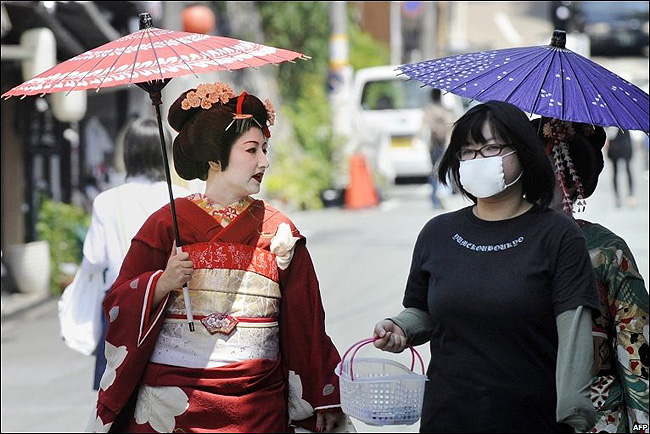
    I’ve never had any food poisoning here in Japan. Thy really try to keep everything clean – especially the food, but sometimes they tend to exaggerate. I don’t really think the masks work all that well (yet I wear them, too, when sick at work).

    About socializing:
    I don’t think that Japan is special. On the contrary, there are a lot more shut-ins here than in other countries. Also, there’s a LOT of bullying going on in schools and work, which I guess is not healthy at all.

    And then there’s “karoushi” (過労死). Japanese working conditions can be quite inhuman – I know what I’m talking about, unfortunately.
    If work doesn’t kill them, then they will jump in front of a train. The suicide rate in Japan is one of the largest worldwide, I think.

  • Ana

    When I was in Japan the things I noticed the most was that there was A LOT of really old people walking around and going places everywhere. Also, there was distinctly less overweight people. I only saw some while I was in Tokyo, maybe a couple in Kyoto and pretty much none in Nara and the more rural areas I was in.

  • Lars Pensjo

    Drinking milk is referred to as something almost unnatural that only mutants can do. But the truth isn’t that simple. All children can be breast fed, but is it natural to continue with cow milk after that?

    This goes back to when man transitioned from living in hunter and gatherer societies, and instead started with farming. At the same time, we started to use cattle for food. I think the mutation is from this time (about 8000 years ago, a little different for different continents). People that have this mutation gave them an advantage with regards to nutrition.

    So it could be the other way around, people without the mutation are remnants of the old. I don’t say what is right or wrong, or what is good and bad, only that there are differences and that being a “mutant” in this case may be the natural state.

    There are also tests that show that bodybuilders using milk had an improved muscle growth and improved weight reduction, at the same time. I have also seen a research that show that children drinking whole fat milk had lower overweight than those drinking milk with reduced fat (not sure about what is the cause and effect here).

  • Tjlopez0946

    Living longer or even forever doesnt sound all that good. But if it means that I get to watch the end of the world and still live, then all I can say is put me on that list.

  • Tjlopez0946

    i feel a match made in heaven

  • Ramon Coutinho

    You forgot, having good sexual life!

  • http://www.facebook.com/people/James-Quick/1224905131 James Quick

    Because I can drink milk without getting sick, I am immediately labeled a “mutant?”

  • Hinoema

    Since milk is a sugar, the kind of milk can make a difference. Cow’s milk is hard to break down and takes hours to digest. Goat’s milk is very similar to human milk and takes about 15- 20 minutes to digest. I don’t like milk at all, but I like cheese, so I try to stick to goat’s milk cheeses.

  • Hinoema

    The ability to digest milk as adults was indeed a latter day (millenia?) ‘mutation’ or adaptation common mostly among European populations.

    http://www.newsdesk.umd.edu/sociss/release.cfm?ArticleID=1376

  • sumi

    I think quality of life is a lot more important than longevity.
    The Japanese don’t look like a happy people. The suicide rate is high ( suicide forest), children are under tremendous pressure at school, there is a word for dying from overwork, men pass out on trains from drinking (there are even buckets in train stations to keep floors clean), people go to love hotels because of lack of privacy in their apartments. There are now stories about the elderly kept hidden at home after their death because their children can’t afford burial or still wants to collect their pension. It also looks like the Japanese diet is now including a lot of fast food and junk food.
    Those who seem to have the best quality of life and live the longest live far from cities, still keep busy with farm work or fishing, eat natural food, and have families taking care of them. This could be true in any country.

  • Budonging

    ======== Website: Http: / / http://www.shoescloth.com =====

    Hello! Let’s dress it! Tell you a good place to shop
    Fashion, avant-garde, personality, sexy, mature and you go from here!

    Jordan shoes
    Brand Jersey
    Clothing and jeans
    Hats and scarves
    Bags and purses
    Brand belt
    Brand glasses
    Brand watches

    ======== Website: Http: / / http://www.shoescloth.com =====

  • Alessa

    didn’t the man in the picture turn 114?
    because it’s heisei 22nen.

  • Pingback: Monday Snax « Little Stories

  • http://twitter.com/AudreyZirakchi Audriana Zirakchi

    Their diet is so much like my family’s diet. Except for the seaweed (although it is yummy!) Persians have a lot of similarities to this. And I just discovered that a lot actually live in Japan too :o

  • http://www.facebook.com/profile.php?id=1202631218 Giovanni Murray

    I refute this argument by saying this: There are many exceptions to ‘evil people’. When you say “people”, that would imply that you yourself are an evil person that will hurt others, but do you believe this to be true? Of course not. Even though I am anti-social, it’s only because I am my own team (which has its limits), but if you haven’t met all the people, you can’t say that Koichi and I (lol) are evil. RID THE WORLD OF GENERALIZATIONS AND STEREOTYPES!!

  • http://www.twitter.com/christaran Chris Taran

    Well, certainly there are degrees of evil. I don’t necessarily mean your classic Hitler-esque evil. I think anyone that would willingly hurt the emotions of another person are pretty evil. I’m sure at one point or another I’ve insulted another individual, even if I later regretted it.

    And generally speaking when I say people are evil, I can only be speaking from my own personal encounters with them. With perhaps the exception of a few (of course, there are exceptions to every rule), every person I ever thought of as a friend or girlfriend has inevitably damaged me in some way as to leave lasting scars that would lead me to such generalizations. You can only touch a fire so many times before you realize it will burn you. :)

  • Jamesmallon

    But there are ads for hemorrhoid clinics everywhere in Japan!

  • Hkkj

    My Celtic wheat, beef and milk-product eating ancestors kicked @$$ on their way into Europe, and none of the natives are left but the Basques. I’ll keep that mutation! But seriously, almost no culture but Anglo N.Americans drink milk as adults – blame that on marketing – but some use milk-products in abundance: cheese, butter, etc.

    Incidentally, on advice I did not believe would work, I cut out milk to cure my acne. Worked within a week, unlike the quacks who had me on tetracycline for a year in my teens, ^%$^&^#@!

  • Anonymous

    Actually, many japanese people simply hid the fact that their elders were dead, and pretended they were still alive so they could fraud and keep their pensions for themselves… thus artificially extending the overall life expectancy.

    We’re not talking about 1 or 2 frauds here… but nearly 230 000 wrongly declared centenerians that were actually dead !

    you will easily find it on google, it’s pretty recent, but here is one link on the economist :

    http://www.economist.com/blogs/freeexchange/2010/09/pensions

    Way more simple. And nothing to do with the food which is only so-so healthy as you know once you lived there (ie: try to get fruits and vegetables – 1 Apple can cost nearly 5 euros).

  • Umbra Solis

    In regards to cleanliness I disagree with you. Even though I agree that cleanliness to some extend will make you more healty it is also true that too much cleanliness will result in more allergies (especially children are more likely to get them if their enviroment is too clean). I doubt that having allergies to living a long life…
    Also recent studies showed that ties between old people and their children have weakend so much that children sometimes don’t even know what their parents are doing. As a result some people die and there’s nobody to register them as dead which means they keep appearing in the statistics. (Some family members keep pretending their parents are still alive to receive their retirement pension.)

  • Anonymous

    Cool article…I’m vegetarian but believe me, not all of us are healthy especially when we eat fries and eclairs and French Toast for most meals but neglect to actually cook a decent meal for ourselves so we don’t have enough spinach, seaweed, blueberries, etc. in our diets. Also, white tea is a delicate, sweet type of tea that isn’t as bitter as green tea (i love green tea, but some people might find it bitter) but still has the antioxidants.

    ….I was reading that paper on drinkers living longer and I bet it’s financed by Kirin hahaha, alcohol kills your brain cells and destroys your liver and you can’t get those back. If you need beer to have a good time with friends, they’re not your friends.Maybe the Japanese invented synthetic brain cells and livers that they implant in people to make them live longer? I love socializing and partying but I’ll pass on drinking ’cause I don’t want to climb on stage and interrupt Taylor Swift and then have to apologize for it on Letterman.

  • Anonymous

    I’ll be recommending that to people I know who have acne…

  • Pingback: Japanese have the secret to long life | Guides To Japan

  • Pingback: Global Voices in English » Japan: Living a long life