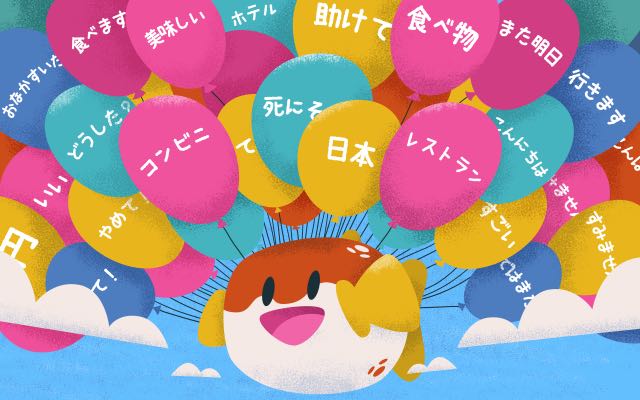
Say you're going to Japan. Then you realize that you don't know any Japanese words.
Or, you're learning Japanese, and you want to make sure you know some of the most important words in the Japanese language.
This is a list for you.
These 100 Japanese words will get you through an untold number of situations, problems, and feelings. I'm not saying that there are not other important words out there, but I do think this list of 100 Japanese words will get you really, really far, if for some reason you are limiting yourself to a mere 100 words. If you want to go beyond that, then perhaps a resource like WaniKani is going to be a better long-term solution.
Also, if you'd like to get the most out of this list (and your trip to Japan), I highly recommend that you learn hiragana and katakana, two of the Japanese "alphabets." We've made a free learn hiragana guide, and a free learn katakana guide just for such an occasion.
Let's get started.
Emergency
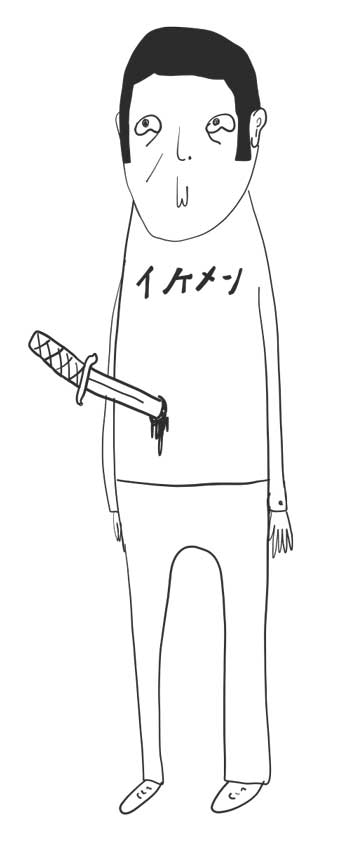
First and foremost, let's learn the Japanese words that have to do with "emergency" situations. You don't want to be caught off guard in a foreign country. If you're in trouble, you need to be able to scream the correct words to ask for help, whether that involves finding a bathroom after you ate some bad tempura (speaking from experience here), or finding someone who can speak English (or whatever your native language is).
- トイレ
- toire
トイレ (toire) = Toilet
Everyone poops, as the saying goes. When you gotta go, you gotta be able to ask where it's at. This word sounds almost like "toilet" without the last "t."
- 手洗い
- tearai
手洗い (tearai) = Bathroom
Just like toilet, but a little more all-inclusive. You can feel free to use either of these in a pinch, though.
- 助けて
- tasukete
助けて! (tasukete!) = Help!
Just yell this out and (maybe) someone will come to your aid…
- わかりません
- wakarimasen
わかりません (wakarimasen) = I don't understand
Someone is speaking to you in Japanese, and they aren't using any of the hundred Japanese words you're learning now. Let them know you don't understand what they're saying with this word. Follow it up with another word on this list: "eigo!" Then they'll know you don't understand and you're asking for English.
- やめて
- yamete
やめて! (yamete!) = Stop it!
Maybe somebody is messing with you and you want them to stop (yakuza?). You could say this.
- 英語
- eigo
英語 (eigo) = English
Sometimes you just need someone who speaks some English. Even though all Japanese people learn English in school, very few Japanese people are any good at speaking it. Still, it doesn't hurt to try.
- 服
- fuku
服 (fuku) = Clothes
Maybe you're at a hot springs and can't find your clothes. Hey, it's possible.
- 死にそう
- shinisou
死にそう (shinisou) = Seems Like I'm Going To Die
When things get really serious, you may need to pull out all the stops.
- 警察
- keisatsu
警察 (keisatsu) = Police
If something really bad happens, these are the people you want to ask for.
- 危ない
- abunai
危ない (abunai) = Dangerous
You'll see this on signs and stuff. If someone says "abunai" to you, you should probably be careful.
- 危険
- kiken
危険 (kiken) = Peril, Hazard
Basically, this is just another abunai. You'll see this on signs as well.
Asking
Asking broad general questions, then using body language to tell people the rest is a really fun way to get by in a country where you don't speak the language.
- どうした
- doushita
どうした? (doushita?) = What Happened?
Then again, you probably won't understand what the person responds with, but it's always nice to ask.
- どうして
- doushite
どうして? (doushite?) = Why?
You never know…
- なに
- nani
なに? (nani) = What?
What!? WHAT!?
- 時間
- jikan
時間 (jikan) = Time
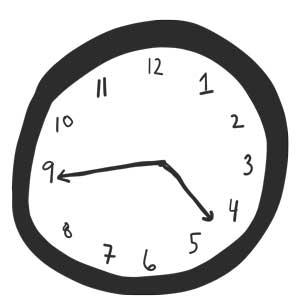
Just ask this with an quizzical tone and people will get the drift. Point to your wrist while you're at it. You might want to learn some numbers (keep reading) to understand the answer.
- 質問
- shitsumon
質問 (shitsumon) = Question
Have a question? Let someone know. Couple this with "eigo! eigo!" and maybe someone who can speak some English will come to answer your shitsumon.
- だれ
- dare
だれ? (dare?) = Who?
Great in case you need to know who someone's talking about.
- いつ
- itsu
いつ? (itsu?) = When?
Pretty important if you're trying to time something. "I know we have to meet, but when are we meeting?"
People
People are a big part of life and vocabulary. Learning Japanese words that have to do with people can be very important.
- 先生
- sensei
先生 (sensei) = Teacher
If you're a student in Japan, this one comes in handy.
- 学生
- gakusei
学生 (gakusei) = Student
Goes with the previous Japanese word.
- 会社員
- kaishain
会社員 (kaishain) = Employee
If you go to Japan to work, this is probably what you'll become.
- 人
- hito
人 (hito) = Person
The general word for "person."
- 私
- watashi
私 (watashi) = I
For when you need to refer to yourself.
- あなた
- anata
あなた (anata) = You
For when you need to refer to someone else.
Locations
Finding your way around can be pretty important. Here are some Japanese words that will help you do that and keep you from getting lost.
- ホテル
- hoteru
ホテル (hoteru) = Hotel
You'll need to be able to find this if you're traveling in Japan.
- どこ
- doko
どこ? (doko?) = Where?
Don't know where something is? Ask where it is with this word. Doko? Doko?
- 空港
- kuukou
空港 (kuukou) = Airport
Combine this with the previous word, doko, and you have kuukou doko? (Where's the airport?)
- 駅
- eki
- 駅
- eki
駅 (eki) = Station
Trains are a huge part of traveling in Japan. Just put the name of the station before eki and you have the train station's name. For example, Tokyo Eki is "Tokyo Station."
- 日本
- nihon
- 日本
- nippon
日本 (nihon/nippon) = Japan
This is the country you are going to, Japan!
- 大学
- daigaku
大学 (daigaku) = College
If you're going to Japan to study in college, this Japanese word is pretty darn important.
- 本屋
- hon'ya
本屋 (hon'ya) = Bookstore
Some bookstores are pretty sketchy, be careful!
- まんが喫茶
- manga kissa
まんが喫茶 (manga kissa) = Manga Cafe
These are places with computers, internet, manga, and most importantly a place to rest. These are much cheaper than hotels, and good places to stay in a pinch… that being said, they are often smoky and uncomfortable. You can usually get free fountain drinks, though!
- タクシー
- takushi
タクシー (takushi) = Taxi
Expensive, but you can find them everywhere.
- 家
- ie
- 家
- uchi
家 (ie/uchi) = Home
There's no place like it.
Food
You can't find much better food than the food you can find in Japan. Even McDonalds somehow tastes better in Japan, not to mention Japanese food.
- おなかすいた
- onaka suita
- はらへった
- hara hetta
おなかすいた (onaka suita) / はらへった (hara hetta) = Hungry
Two ways to say this one. First one is more neutral, second is more casual.
- 食べます
- tabemasu
食べます (tabemasu) = To Eat
Do you eat this? Yes I eat this. Combine it with another word, like sushi. Sushi tabemasu, with the right context, would mean "I eat sushi."
- 食べません
- tabemasen
食べません (tabemasen) = To Not Eat
Do you eat this? No I don't. Like tabemasu, you can combine it with another food word. Sushi tabemasen, in the right context, would mean "I do not eat sushi." Or, combine it with niku to say niku tabemasen ("I don't eat meat"). Be warned, a lot of Japanese people think fish is not meat… and it seems like almost everything has fish.
- 飲みます
- nomimasu
飲みます (nomimasu) = To Drink
Glug Glug.
- 飲みません
- nomimasen
飲みません (nomimasen) = To Not Drink
Beer nomimasen. I don't drink beer.
- 水
- mizu
水 (mizu) = Water
I drink water, instead, because that's how I roll. Mizu nomimasu.
- 飲み物
- nomimono
飲み物 (nomimono) = Drink
Not the verb, but the noun. Please get me a drink.
- 食べ物
- tabemono
食べ物 (tabemono) = Food
Need food? Any food? There's a ton of it in Japan.
- 美味しい
- oishii
美味しい (oishii) = Good Tasting, Tasty
If something tastes nice (or if you want to be nice), you'd say this.
- 不味い
- mazui
不味い (mazui) = Bad Tasting
I wouldn't ever say this to someone's face, though.
- レストラン
- resutoran
レストラン (resutoran) = Restaurant
Now you need to figure out which one. There will be plenty of choices.
- コンビニ
- kombini
コンビニ (kombini) = Convenience Store
Great place to buy small things and food. Convenience Store food in Japan is pretty awesome. You could eat at convenience stores for breakfast, lunch, and dinner for a week and always find something new and delicious.
- スーパー
- suupaa
スーパー (suupaa) = Supermarket
If you need something a convenience store can't give you.
Being Polite
You don't want to piss people off when you're in their country. When in Tokyo, as they say.
- ありがとうございます
- arigatougozaimasu
ありがとうございます (arigatougozaimasu) = Thank You
Say it, a lot.
- すみません
- sumimasen
すみません (sumimasen) = Excuse Me
The streets can be busy, it's nice to say excuse me when you walk through people, bump into them, or need to get by.
- ごめんなさい
- gomennasai
ごめんなさい (gomennasai) = Sorry
If you bump into someone while trying to get by, you can say this.
- いただきます
- itadakimasu
いただきます (itadakimasu) = Bon Apetite
Actually, I don't know if that's the best translation, but it's close enough. You say this before you're about to eat, to kind of give thanks for the food you're about to devour.
- ごちそうさまでした
- gochisousama deshita
ごちそうさまでした (gochisousama deshita) = Thanks for the food
Another bad translation! But, there isn't really a good one. You say this after you eat, to say thanks for the food.
Greetings
Hopefully you meet some nice people in your travels. Say hello (and then goodbye!) to them.
- おはようございます
- ohayougozaimasu
おはようございます (ohayougozaimasu) = Good Morning
A greeting for morning.
- こんにちは
- konnichiwa
こんにちは (konnichiwa) = Good Afternoon
You can use this around noonish on to the early evening.
- こんばんは
- konbanwa
こんばんは (konbanwa) = Good Evening
Like the other ones, but for evenings.
- ではまた
- dewamata
ではまた (dewamata) = See You Later
For when you might see the other person again.
- また明日
- mata ashita
また明日 (mata ashita) = See You Tomorrow
For when you'll almost certainly see them the next day.
- さようなら
- sayounara
さようなら (sayounara) = Goodbye
Probably won't see them for a while :(
- おやすみなさい
- oyasuminasai
おやすみなさい (oyasuminasai) = Good Night
Time for sleepy time. Good night!
Basic Verbs
Verbs will get you a long ways. You don't have to know much else as long as you know verbs, because verbs help you to get things done. Even if you don't know the grammatical particles that go with the verbs, you can still communicate.
- 行きます
- ikimasu
行きます (ikimasu) = To Go
Where are you going? "Tokyo Eki. Ikimasu.," you could say, and people would understand.
- 帰ります
- kaerimasu
帰ります (kaerimasu) = To Return (home)
If you need to someone you're coming back. Will you come back to this hotel to pay your bill? Yes. Kaerimasu.
- 食べます
- tabemasu
食べます (tabemasu) = To Eat
Nom nom nom. (whoops, you already learned this one)
- します
- shimasu
します (shimasu) = To Do
This is the best verb ever. It can be used with anything. Stick it on a noun for all I care, people will understand. "Tennis shimasu," you could say. That means "do tennis" or "I do tennis."
- 見ます
- mimasu
見ます (mimasu) = To See
What is it you want to see?
- 買います
- kaimasu
買います (kaimasu) = To Buy
For all of you who like shopping.
- 待ちます
- machimasu
待ちます (machimasu) = To Wait
"I'd like you to go in there for me. I'll machimasu."
- 書きます
- kakimasu
書きます (kakimasu) = To Write
Have people write the directions down!
- 止まります
- tomarimasu
止まります (tomarimasu) = To Stop
Or, if you're driving, look out for the 止 symbol on a red triangle sign. That's a stop sign.
- 教えます
- oshiemasu
教えます (oshiemasu) = To Teach
If you're a teacher in Japan, this will come in handy. "Eigo. Oshiemasu!"
- 話します
- hanashimasu
話します (hanashimasu) To Speak
Combine this with eigo (English). "Eigo. Hanashimasu?" People will know that you're asking if someone speaks English.
Basic Adjectives
Adjectives, while not as awesome as verbs, are also very useful. They help you describe things.
- 新しい
- atarashii
新しい (atarashii) = New
No, I don't want used clothes. I want atarashii clothes.
- 嬉しい
- ureshii
嬉しい (ureshii) = Happy
For when you eat that awesome meal… ahhh, I am so ureshii.
- 大丈夫
- daijoubu
大丈夫 (daijoubu) = Okay
Say you fall down and hit your knee. You're okay, so you can say "daijoubu!" That way people know that you're okay.
- すごい
- sugoi
すごい (sugoi) = Amazing
For the sight seeing. Listen for it in cool sightseeing spots. All the cool kids are saying it. In fact, everyone is saying it.
- 高い
- takai
高い (takai) = Expensive, Tall
If you're in a store and something costs a lot, you can say takai to mean "expensive." If you're talking about a building (and not planning on buying it) this word will mean "tall." It's all about context.
- 大きい
- ookii
大きい (ookii) = Big, Large
You want the big portion of food? Ookii should work.
- 小さい
- chiisai
小さい (chiisai) = Small
Or, perhaps you're not a big eater, get a chiisai portion instead.
- 近い
- chikai
近い (chikai) = Near
I'm looking for landmark XYZ. Is it chikai?
- 遠い
- tooi
遠い (tooi) = Far
Or, is XYZ landmark tooi?
- 悪い
- warui
悪い (warui) = Bad
How do you feel? Warui. Is he a good person? No, he's warui. This word is a little bit flexible.
- いい
- ii
いい (ii) = Good
There will be a lot of opportunity to use this word. Why? Because there are a lot of good things in Japan.
- 面白い
- omoshiroi
面白い (omoshiroi) = Interesting, Funny
There are a lot of interesting things and funny things in Japan. You'll be able to use this word a lot!
- 楽しい
- tanoshii
楽しい (tanoshii) = Fun
And, a bunch of fun things too. Japanese rollercoasters are really tanoshii, by the way.
- 熱い
- atsui
熱い (atsui) = Hot
In the summer, Japan gets this way. If it's humid, you can say mushi atsui.
- 寒い
- samui
寒い (samui) = Cold
In the winter, especially up north in Hokkaido, things get really samui.
- 上手
- jouzu
上手 (jouzu) = Good At
When you use your 100 Japanese words, people will tell you how jouzu your Japanese is, even though it's probably not that good.
- 下手
- heta
下手 (heta) = Bad At
Nobody will tell you how heta you are at Japanese.
- 赤
- aka
赤 (aka) = Red
Colors are good for landmarks. Doko. Aka hoteru?
- 青
- ao
青 (ao) = Blue
Trees, traffic lights, and many other "green" things are considered ao in Japanese. Just a little tidbit of knowledge that might come in handy.
- 黒
- kuro
黒 (kuro) = Black
The color of Japanese salaryman clothes.
- 緑
- midori
緑 (midori) = Green
For all the green things that aren't blue.
- 黄色
- kiiro
黄色 (kiiro) = Yellow
I'm running out of things to say about Japanese color words.
- 白
- shiro
白 (shiro) = White
Now I'm really running out of things to say about Japanese color words.
- 馬鹿
- baka
馬鹿 (baka) = Stupid!
I bet you already knew this one. Baka!
Numbers
Numbers will be helpful in many situations. There are many different counters in Japanese, which are basically different ways to count different things, but basic numbers like these will work in a pinch.
- 一
- ichi
一 (ichi) = One
One ticket.
- 二
- ni
二 (ni) = Two
Two people.
- 三
- san
三 (san) = Three
Three o'clock.
- 四
- shi
- 四
- yon
四 (shi/yon) = Four
Kind of an unlucky number. Might be missing from building floors. Also, you shouldn't give gifts in sets of four.
- 五
- go
五 (go) = Five
Good way to remember the first five numbers: "Itchy knee! Son, She go!" Imagine that playing out…
- 六
- roku
六 (roku) = Six
Just another number. Think of "six rocks" (roku).
- 七
- nana
- 七
- shichi
七 (nana/shichi) = Seven
Also kinda unlucky, because it also contains "shi." 死, or shi means "death."
- 八
- hachi
八 (hachi) = Eight
The "hatch" (hachi) you have to open has a big number "eight" on it.
- 九
- ku
- 九
- kyuu
九 (ku/kyuu) = Nine
It was said that "Kublai Khan" (Ku) could only count to nine.
- 十
- juu
十 (juu) = Ten
Finally, we reach ten.
- 百
- hyaku
百 (hyaku) = 100
Jumping up an interval, the most useful coin is the 100 yen coin, aka the hyaku en coin.
- 千
- sen
千 (sen) = 1,000
The first paper bill in the Japanese monetary system. These are worth about $10. There are also 2,000 and 5,000 yen bills, too.
- 万
- man
万 (man) = 10,000
Ten thousand yen bills are worth about $100.
- 円
- en
円 (en) = Yen
Not really a number, but goes nicely with the numbers when you're talking amounts of money. ichi en, hyaku en, ichi man en, ni man en, etc.
What other important words do you think should be on this list? Let us know on Twitter.
I hope this list was helpful for you! As I mentioned before, this is just the tip of the iceberg. It's fun to go through and try to learn individual Japanese words, but you're not learning the meaning behind the meaning. You don't understand why a word is what it is, and to do that you need to study and build up a foundation for your Japanese. You also need to study the grammar behind the words, too. Greetings, in particular, are riddled with grammar. Learning the sounds of the greetings without learning the mechanics is like going skydiving without a parachute… doesn't make sense.
I hope you decide to dig a little deeper in your Japanese! The first step is to learn the phonetic-ish alphabets of Japanese, hiragana and katakana. Good luck!