
Japanese Words That Make It Into English Dictionaries

Recently three new Japanese words made their way into the Oxford English Dictionary, officially blessing the English speaking world with concepts such as hikikomori, karoshi, and otaku. But, these aren’t the only words that have done this, just the most recent ones. There are actually a lot of Japanese words that we use as English words now – it’s not only the Japanese who get to turn someone else’s language into their own.
Japanese Words That English Speakers Use Pretty Commonly

I thought it would be fun to list out and define a bunch of the common Japanese words that have made it into the English language. There’s a lot of them, and I don’t think I’ve thought of all of them, so if you come up with any add them in the comments and I’ll try to update the list for future people reading this article (hello, if you’re from the future. How are the flying cars?).

Anime: Japanese cartoons / animation.

Banzai: A cheer. Banzai! Banzai! Banzai!

Bento: A meal served in a box with separations in it.

Bonsai: These are the little trees that are actually really old, but are really small because they’ve been trimmed and stunted by bonsai artists.

Dojo: A place for martial artists to practice.

Futon: A thin mattress of tufted cotton batting or similar material

Haiku: A type of poem that (in English) is typically 5-7-5 syllables.

Hancho: Squad leader. The person in charge… i.e. the “Head Hancho.”

Hara-kiri: Suicide by disembowelment.

Hikikomori: The abnormal avoidance of social contact, especially by adolescent males.*

Jujitsu: A soft-style type of Japanese martial art.

Kamikaze: Literally means “divine wind” but in English it’s known to refer to a suicide attack (usually by airplane).

Karaoke: A machine that plays a song for you and has you sing along, usually with a bunch of people and a bunch of sake.

Karate: A hard-style type of Japanese martial art.

Karoshi: Death from overwork*

Kimono: Traditional Japanese clothing.

Koan: A paradox that Buddhist monks meditate on.

Manga: Japanese comics.

Miso: Made mostly from soybeans, this paste is in all kinds of foods, the most common being “miso soup.”

Ninja: The guys that wear black, sneak around, and assassinate people. These guys are sneaky.

Origami: The art of folding paper into different shapes, figures, etc.

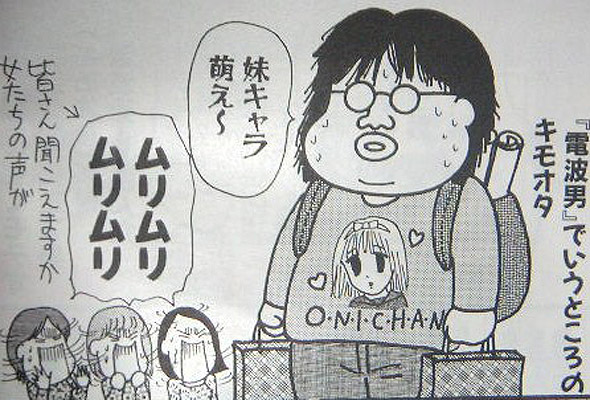
Otaku: Huge fanboy of something, like anime, gundam models, or Tofugu (I know you’re all Tofugu otaku, right?)*

Ramen: Japanese noodle soupy dish.

Sake: Rice wine.

Samurai: A warrior from feudal Japan. If you want to talk like a samurai, that’s different.

Sashimi: Raw fish, sliced into pieces (not to be confused with sushi).

Seppuku: Another word for disemboweling yourself.

Sudoku: The number placement puzzle that’s popular in a lot of newspapers and other places.

Sumo: This is the sport where two big guys try to knock each other down. i.e. “Sumo Wrestling.”

Sushi: a small bit of cold rice with something on top or inside it. C’mon, you know what sushi is.

Tsunami: Huge waves!

Tycoon: Someone who’s a powerful business person (original Japanese word, 大君 (taikun) means liege lord or shogunate, so it’s evolved in its English meaning).

Typhoon: A violent tropical storm or cyclone (probably originally a Chinese word, though).

Wasabi: Similar to horseradish. This is a green paste that’s nice and spicy, and often used with sushi.

Yakuza: Japanese mafia.

Zen: A sect of Buddhism in Japan.

*These three were just added to the official English Dictionary list!

Oh, and if you aren’t bored already (or are bored), here’s a video talking about the three new words that were just added: hikikomori, otaku, and karoshi. Enjoy!

[yframe url='http://www.youtube.com/watch?v=wMkAIvL_Ass']

So what else would you add to this list? Any other Japanese words you hear quite a bit that are used pretty easily in English? My favorite by far is hancho. I thought that was Spanish, or something.

  • Homeschooledchick17

    XD The thumbnail of the video! EPIC

  • http://www.survivingnjapan.com/ Ashley

    what about tempura? That’s used quite often… And tsunami.

  • Guest

    I really hate it when English textbooks talk about rice balls and rice cakes. Seriously? If you invented it just go with what you call it. Onigiri and mochi forever!
    Re Ashley: A Japanese guy recently told us about how tempura originally came from Portuguese, then became Japanese and entered the world as a Japanese word.
    Ah! Tsunami and typhoon.

  • http://www.facebook.com/yasuochan Anthony Kelly

    you missed out three important ones! Important because people don’t usually think they’re Japanese because they’re so popular, but maybe that’s why you missed them.. typhoon台風, tycoon大君(though that word has since fallen out of use in Japan), and Tsunami津波

  • Kaicarver

    futon

    I think typhoon is at least partially a Greek word, and partly Chinese

  • http://www.facebook.com/people/Zhana-Welch/1507834136 Zhana Welch

    God, I don’t know of anyone who knows a bit of Japanese and doesn’t say “kawaii.” But I don’t think that counts…
    Anyway, what about origami, ramen, sudoku, hentai? Lol :]

  • http://www.tofugu.com koichi

    Those are great, thank you!

  • http://www.tofugu.com koichi

    I’m not sure if Tempura is dictionary ready… but maybe it is. Anyways, I added Tsunami, thank you!

  • http://www.tofugu.com koichi

    Great ones, thank you!

  • http://www.tofugu.com koichi

    Wow! Tycoon? I had no idea, but that kind of makes sense. Awesome one!

    I’ve added all three in, thank you!

  • http://www.tofugu.com koichi

    Ooh, futon is great, thanks!

  • http://www.survivingnjapan.com/ Ashley @ Surviving in Japan

    Tempura shows up in the dictionary on my Mac which is New Oxford American…
    I checked before I wrote it in just in case. :)

  • http://twitter.com/WhatJapanThinks 世論 What Japan Thinks

    Isn’t it spelt “honcho”? I used to think it was Spanish too!

    It looks like everyone’s got most of the words I was going to mention, but you’re missing the MutantFrog guys’ favourite, “kabuki”, which has migrated a little from its original Japanese meaning.

    Oh, and let’s not forget rickshaw!

  • http://www.facebook.com/profile.php?id=9221713 Jennifer Rader

    My favorite one is “skosh” like “sukoshi”. Its pronunciation is a little different, but the meaning stayed the same.

  • j3ss4ndr4

    LOL, I thought “hancho” was Spanish too — probably because in English we spell it “honcho.”

  • Matto

    You know, I watched Welcome to the N.H.K.! just two days ago. Story about a hikikomori, his otaku friend, and a girl that tries to help him beat his hikikomori ways. I knew the word existed, but I didn’t know much of what it was about until then. You were just a few days too slow to teach me this word! Work faster!

  • Pingback: Iliyan's Japanese Adventures » Blog Archive » Tofugu shows us some japanese words that are in the english dictionary

  • Grujcyk

    I understand that it’s not the point here, but imho you should change the explanations of Karate and Jujitsu to just “japanese martial art”. Some “less sensitive” martial artists won’t like calling Jujitsu soft-style ;) Imho, Correct definition would be grappling/throwing martial art (Jujitsu) and striking martial art (Karate).
    Again-I know that it’s not the point here, consider it just a friendly advice :)

  • カート

    Traditional Japanese style Jujitsu *is* a soft martial art. The word translates directly as “Gentle Art”, and many of the core principles rely on redirecting your opponents energy and efforts against them. And in traditional Jujitsu, the point is to not get stuck grappling with someone, because it was designed as a practical (and devastating) martial art to be used in actual combat. Nearly all the techniques are about incapacitating your foe as quickly and efficiently as possible, because there is a good chance he’s got buddies that will be kicking your head in while you are rolling around on the ground trying to get a submission hold.

    MMA and Brazilian Ju-Jitsu have diluted what Jujitsu means to most people. Brazilian Ju-Jitsu is a SPORT, regardless of how many douchebags in Tap Out shirts will tell you it’s the best thing ever, and emphasizes one on one fighting and going to ground as quickly as possible (which is where it shines). However, you get in a street fight with a few guys and grab one to take him down, and his friends will stomp you into oblivion. It’s extremely useful in the right situations, where traditional Jujitsu is just about the most practical martial art you can learn.

  • http://www.facebook.com/people/Samantha-Mercado-Saballos/665700105 Samantha Mercado-Saballos

    wow, I’m Hispanic and I also thought that the word ‘Hancho’ had latin roots :/

  • http://www.facebook.com/people/Mark-Bodah/760009773 Mark Bodah

    hey yo, what a bout “skosh”– i sort of assumed it came from “sukoshi” though i don’t know if it’s actually in the dictionary.

    (searches google…)

    oh yeah–here– http://www.merriam-webster.com/dictionary/skosh

  • http://www.facebook.com/people/Mark-Bodah/760009773 Mark Bodah

    yeah, different dictionary–whatev…

  • http://www.facebook.com/people/Mark-Bodah/760009773 Mark Bodah

    woops, shoulda read down first! :)

  • http://twitter.com/earthtojeremiah Jeremy Buhain

    How about hibachi?

  • http://www.facebook.com/people/Jante-Morris/647215666 Jante Morris

    Japan is really taking over :D. I like how these words made it i’ve never seen words from another language (directly) make it into dictionaries!

  • http://www.facebook.com/hunterjl Hunter Jones-Le Duc

    GODZILLA!!!

  • http://www.facebook.com/people/Helen-Gordon/1485996870 Helen Gordon

    Did google send you the Gmail jacket?

  • http://www.facebook.com/profile.php?id=100000660156365 Andrew Warner

    What about issei? Not that many people use it but it’s in the dictionary…. or nisei or sansei.

  • http://www.facebook.com/carsonkk Kyle Carson

    thats a pretty sexy thumbnail for that vid you got there koichi ;)

  • http://pulse.yahoo.com/_RIVQEUHYNDL7KPNZWDUIIQASH4 John D

    Lots of Japanese words in the English language now and they will keep coming!!

  • http://www.facebook.com/people/Becky-Jones/591784785 Becky Jones

    Yeah, I was going to say rickshaw, but I was beaten to it. How’d you miss tofu? I guess it originally came from Chinese, but I’m pretty sure it still counts. How about soy? Are we counting words that Japan borrowed, but that we definitely got from Japanese, or not?

    I’ve never heard the word skosh. Nice, that’s the second obscure new word that I’ve learned today.

  • http://mistersanity.blogspot.com Jonadab

    > it’s not only the Japanese who get to turn someone else’s language into their own.

    Oh, the English have long been masters of that. English vocabulary is, etymologically, mostly made out of Latin, Greek, and French, with a few important words taken from Old German, spiced up with a smattering of words from various other languages. In fact, if an English word *doesn’t* come from a foreign language, we call it a “neologism” and are extra hesitant to consider it a real word until it’s in widespread use.

    Minor spelling correction: it’s definitely honcho (not hancho) in English.

    Also, I’m pretty sure I’ve always seen “hari kari”. Hmmm… Well, my two-volume-condensed hardcover OED lists it alphabetically only under “hara-kiri” but does give “hari kari” as an alternate spelling and cites the first known usage in print in English as “hari kari” in an 1856 issue of Harper’s. Besides the Harper’s article, the OED has citations from 1859 (in the Times no less), 1862, 1871, and two in 1888. The 1871 citation is the first to use the spelling “hara-kiri”, and one of the 1888 ones is the only other, which suggests to me that “hari kari” is the original spelling in English and “hara-kiri” is probably a later attempt to match the Japanese word more closely. Such “corrections” sometimes catch on, and sometimes not. This one seems to be still up for grabs at this point, as Google lists 378 thousand results for hara kiri and 310 thousand for hari kari, which is quite comparable. It’s definitely *pronounced* “hairy kairy”, at least around here. Also, everyone “knows” it’s a Chinese custom. This is probably because the difference between China and Japan didn’t really become firmly cemented in Western minds until WWII, and by then hari kari was already well attested in English-language literature.

    Regarding definitions… “Banzai!” isn’t just a generic cheer, like “ra ra ra”. It’s generally used when something outrageous, dangerous, or unlikely to succeed is about to be undertaken. Compare “Geronimo!”, which is what people say before they jump.

    The word “futon” has evolved very significantly in its meaning from Japanese to English. If you do a Google images search (or go to a furniture store in the US), you’ll see what I mean here: the cushions are just upholstery; a “futon” is a type of couch with a slightly different, more modern style (compared to a traditional stiff upright-back sofa). Some futons also unfold into a flat position to become a bed, but many don’t (especially the cheaper ones). The frame is usually wooden or metal.

    This is the first I’ve heard of hikikomori or karoshi, and the only time I’ve seen bento, otaku, sake, tempura, or sashimi are in writings about Japan (where you also see a lot of other transliterated Japanese words). I’d be interested in seeing examples of sentences from mainstream non-Japan-related English-language works containing these words.

    Sashimi is a special case: we already have a word for that. The English word for raw fish (usually used in the context of people actually _eating_ raw fish, and usually with very negative connotations as regards the apparent implications for their sanity) is “sushi”. Only people who have studied Japanese language and culture (or who read dictionaries recreationally) have any idea that sushi has other ingredients. Well, that’s true here in the Midwestern US anyhow. Not sure how it is out in California, or in the Commonwealth countries.

    Another English word of Japanese origin is “tofu”. Virtually nobody in the English-speaking world *eats* tofu (or any other soybean product — soybeans are for cheap animal feed, don’t you know), but the word gets used quite a bit nonetheless and is more or less universally recognized.

    The word “katana” is also fairly widely recognized, although as far as I can tell it always refers specifically to a sword of Japanese design and make, so it might still be considered a transliterated foreign word. (Contrast “scimitar”, which is used of any flat curved sword irrespective of its national origin.)

  • http://www.facebook.com/people/Claire-Webster/754384761 Claire Webster

    A friend of mine recently used the word sarariman, and everyone seemed to know what he meant. It was the first time I’d heard it in an English conversation but apparently it’s a well-used word now.

  • http://mistersanity.blogspot.com Jonadab

    I thought Hibachi was a trademark. (The generic term is “grill”.)

  • http://mistersanity.blogspot.com Jonadab

    > i’ve never seen words from another language (directly) make it into dictionaries!

    Then you haven’t been paying attention. Most of the words in the English language were at some point directly imported from another language, and new ones are coming in all the time. I think French has six or seven words we haven’t imported yet…

  • http://mistersanity.blogspot.com Jonadab

    Trademarks and proper nouns generally don’t count unless they are substantially genericized.

  • http://www.facebook.com/people/Samuel-sha-wu-Philipson/100000165229760 Samuel 紗武 Philipson

    Ramen is not japanese, it is chinese… i think…. ラーメンと書いてるし、中国の料理だからね^^

  • http://Website(optional) Chris

    As far as I know Ramen is Chinese noudle soup. Japanese noudle soup is called Udon.

  • http://www.facebook.com/people/Fruzsina-Varadi/100000170416936 Fruzsina Váradi

    What about aikido? I thought it would be mentioned… And I know that the word shogun is also in the dictionary.
    I wonder how many foreign words will make it into the English language in the next 100 or so years – actually I wonder what will it evolve into. But I bet there will be no Hungarian words in there:(

  • WOTDsctoo

    wow…somehow I got unsubscribed from tofugu… T.T
    (but now I’m caught up!)

    If anyone is interested in the hikikimori issue, I recommend the anime “Welcome to the NHK” <– very goood!!! :)

  • Anon

    I usually associate Kamikaze in English with like people who act crazily with no regard to their own lives or others. Like “that kamikaze taxi driver almost ran me over”. This is how I usually hear it used too, and I like telling Japanese friends about that usage whenever I hear an English word being used for a totally unconnected meaning in Japanese.
    Never used it with a kind of world war 2 connotation…

  • http://profiles.yahoo.com/u/LFR46LQC2E7T6BAUVAJH6MIMJI Sadasjh Kkjh

    ======= http://www.tnta.us =======
    free shipping
    competitive price
    any size available
    accept the paypal

    Air jordan(1-24)shoes $33

    Nike shox(R4,NZ,OZ,TL1,TL2,TL3) $33

    Handbags(Coach lv fendi d&g) $33

    Tshirts (ed hardy,lacoste) $14

    Jean(True Religion,ed hardy,coogi) $30

    Sunglasses(Oakey,coach,gucci,Armaini) $12

    New era cap $15

    Bikini (Ed hardy) $20

    ======= http://www.tnta.us ========

  • http://pulse.yahoo.com/_TZEPHCSZLOH5P76EP7O2D3S2VU SereneH

    Hmm how about sakura?

  • http://pulse.yahoo.com/_A2UTSNLDCJLQTJZCVNWET2JRTE Leng Qingqiu
  • http://profiles.yahoo.com/u/LFR46LQC2E7T6BAUVAJH6MIMJI Sadasjh Kkjh

    welcome to our website:
    W W W – tnta- us

    50%off ca,ed hardy t-shirt$15 jeans,coach handbag$33,air max90,dunk,polo t-shirt$13,,lacoste t-shirt $13 air jordan for sale,l nba jersy for sale sale,$35,nfl nba jersy for sale
    and so on..
    if you like to order anything you like.
    More details,
    please just browse our website Quality is our Dignity;
    Service is our Lift.
    enjoy yourself.
    thank you!!
    W W W ( tnta ) us

  • http://www.livingroomwarehouse.com/ Modern Sofas

    Nice set of Japanese words which are present in English dictionary.

  • http://profiles.yahoo.com/u/LFR46LQC2E7T6BAUVAJH6MIMJI Sadasjh Kkjh

    Wonderful.

    Share a website with you ,

    http://www.tnta.us

    Believe you will love it.

  • http://www.facebook.com/profile.php?id=1805776174 Emma Hickey

    There’s also umami. :)

  • Pingback: Japanese Words That Make It Into English Dictionaries | Crazy Pig Park

  • j3ss4ndr4

    I just came across this word — 悟り (さとり). I have the Dictionary.com toolbar in my browser, and it came up as the word of the day today. It is a noun that means “sudden enlightenment” in the English language dictionary (“comprehension, understanding,” or Buddhist term for “enlightenment” according to Denshi Jisho). The origin is from Japanese verb meaning “to awaken.” According to Merriam-Webster, the first known usage is 1727, not sure if this means Japanese or English usage. ^_^