The 5 Biggest Mistakes People Make When Learning Kanji

The Japanese learning industry has, for all intents and purposes, failed you. It’s not your fault that learning kanji is like hitting your face on a curb, it’s the industry as a whole. Sure, there are pockets here and there that are pretty smart about it, but they tend to be small and nobody really knows about them. Most likely, you know what your teachers says about kanji, or what Rosetta Stone Japanese (doesn’t) say about kanji, or what your textbook throws at you… But, here’s the problem, though: You’re learning kanji from native Japanese speakers, and they have no idea what it’s like to learn kanji anymore (and even if they do, they just emulate the way Japanese school children learn kanji), which really just doesn’t work.

The Japanese learning industry, on a whole, has failed us when it comes to kanji learning. But, you can learn from their mistakes, and in doing so, learn how to fix the way you learn kanji.

FAILURE #1: You Learn Kanji Stroke By Stroke By Stroke…

Sure, there’s something to be said about learning correct stroke order. I’m all for that, but the problem is that it ends up putting emphasis on learning kanji stroke by stroke by stroke. When kanji is simple, it’s easy to learn this way. Three strokes? Only three things to learn. Huzzah! But, when you start out learning kanji like this (i.e. when you think of kanji as a bunch of strokes), you keep learning kanji like this. That’s why in most Japanese classes, when the kanji homework goes out, people automatically see how many strokes a kanji has. “I know a 20-stroke kanji, I’m impressive!” people think. No. You’re stupid. Thinking of kanji as a bunch of strokes just forces you to try and remember more. A 20-stroke kanji = 20+ different things you have to remember. If you think of a kanji as individual strokes making up the whole, then you’ve already failed. So how should you think of kanji, then?

FAILURE #2: You Don’t Learn Your Kanji Radicals

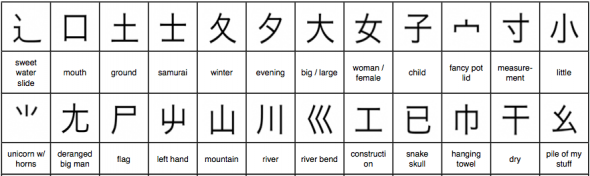
Oh sure, you might learn a few radicals here and there, like the water radical (just a few little strokes next to a kanji). “If you see this,” the kanji resource says, “you’ll know that this kanji probably has something to do with water.” For the most part, though, radicals are a distant afterthought in the kanji-learning world, and this is an absolutely huge mistake. Most people teach radicals (if they teach them at all) as pieces of a kanji that help you figure out the meaning of the kanji if you don’t know it. Although this works sometimes, why not just learn the meaning of the kanji in the first place?

Instead, learning radicals should be treated like building blocks. Remember how I said kanji should not be learned stroke-by-stroke? More complicated kanji should be put together radical-by-radical. If you take the time to learn the 200-250 kanji radicals (it may seem like a lot, but it’s really a pretty quick process), you can put a fairly complicated kanji together in 3, maybe 4 steps. Think of radicals like the ABCs of English. You can’t put together the word FAILURE if you don’t know the letters F-A-I-L-U-R-E, right? By learning radicals first you’re setting yourself up for kanji success. You cut down on the memorization required for every single kanji by 300-800%. Here’s an example:

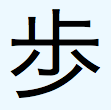
Now, this kanji isn’t particularly difficult, but you get the drift. Learning this kanji stroke-by-stroke would set you back eight steps (because there are eight strokes). Instead, let’s take a look at the radicals that make this kanji up. If you learn all the kanji radicals (or, at least the ones I recommend), putting this particular kanji together can be done in a mere 3 steps, depending on which radicals you would use. That’s a 260% less to learn which means you’re saving valuable time and brain-space.
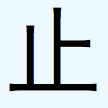
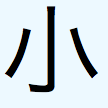
As you can see, these three “radicals” can be put together (like letters in a word) to create the kanji above. The first one (止) makes up the top portion, the second one (小) takes up the bottom, and the third (ノ) rounds it out. The best part is that you associate these radicals with names and concepts, which means you can come up with some kind of mnemonic device to help you remember what goes where (more on mnemonics below).

In summary, everyone should learn their radicals before even thinking about learning kanji. If you don’t, it’s like building a highrise with no foundation.

Failure #3: You Memorize Instead of Learn

Good things can be said about repetition and “memorization.” I think they’re a necessary part of kanji learning, but everything has it’s limits (and you can use all the help you can get when it comes to kanji). One of the problems I have with the “normal” way people have you learn kanji is that they give you 10-20 kanji, sit you down with a kanji worksheet, and have you write the kanji over and over again (and of course, the focus is on the number of strokes, right?). The problem, though, is with our brains. First of all, there’s only so much information (or so many steps) we can fit in our short term memory. That means as soon as you move on to the next kanji, there’s a good chance you’re already forgetting the one before it. Another problem is that with too much repetition, our brains switch to autopilot. At that point you aren’t learning any more, you’re just going through the motions. To solve this, there are a couple of solutions.

SOLUTION A) First of all, don’t think of the kanji as strokes, think of them as particles. This will help you learn more effectively (and get the information in your long term memory more quickly). When you’re practicing, think of the individual radicals that you’re writing, and how they go together to form the whole kanji. The more you do this, the faster you’ll be able to learn kanji.

SOLUTION B) Don’t write a single kanji more than three times in a row. If you have multiple kanji to practice, switch back and forth and go back to previous ones. Come up with some kind of pattern. I would recommend something like this. Each letter represents a kanji, and each time it shows up it should be written for practice: A, A, A, B, B, B, A, B, C, C, C, A, B, C, D, D, D, A, B, C, D, E, E, E… etc. When you run out of space for “A” kanji, you would just start at “B” the next time around. This way you are forcing your brain to actually think and process the information, instead of hitting autopilot the moment you’ve written a kanji for the 4th or 5th time.

SOLUTION C) Apply some kind of mnemonic strategy to your kanji. Mnemonics help you remember things. They basically leave hints in your brain that when seen trigger another memory, which really helps you to remember things more effectively. One way to do this is to come up with “stories” for your kanji. If you’ve learned the kanji radicals, it is pretty easy to do. If you take the example above (歩), we can use the three radicals to come up with a story to help us remember whatever it is we want to remember. The radical examples below are ones I’ve given meaning to. You can come up with your own meanings if you want to, or use a set that someone else has developed.

  • 止 is a radical that means STOP
  • 小 is a radical that means SMALL
  • ノ is a radical that means SLIDE

So, we can use these three concepts / words and put them together in a way that helps us remember that the kanji 歩 means “walk.” Here’s one: “Stop! It’s a small slide. We will walk from here” (you know, because zombies hang around slides). As long as you know the radicals already, the hints to trigger this little “story” will be right in the kanji, every time you see it. Of course, we could get even more in depth with it and start associating emotion as well as our senses. This gets into the concept of creating “flashbulb memories” for yourself (these are memories your brain produces during traumatic or incredible events, that’s why you remember where you were, say, when you learned about 9/11). By imagining the emotion you felt when you saw the small slide, or the smell of the aluminum, or perhaps even the shock you felt when you saw how small it was, you can make this memory a lot stronger by tricking your brain into thinking it was really important. The more senses or emotions you associate with it (you really have to imagine they’re happening, though!), the more likely you are to remember. This may seem like a lot of work at first, but it actually gets quite quick and easy as you practice.

You can even take this a step further and learn the pronunciation of the kanji like this as well. Once you know the meaning of the kanji, you can learn the pronunciation using a similar strategy. For the kanji 歩, the most common on-yomi for this kanji is ほ (ho). When you know this, you can come up with another story that uses “ho” in it. Maybe something like: “When you walk around, be careful about stepping on a hoe (ほ). Since we know the meaning of the kanji from the previous story, we can use that as our hint to figure out what the pronunciation of it is as well. Beyond that, though, I’d recommend also learning the common words that use that kanji, since there are often plenty of different ways to pronounce the same kanji, and learning through example is the best way, I think.

FAILURE #4: You Learn Kanji Like Japanese School Children (i.e. In The Wrong Order)

When Japanese school children learn kanji, they go from simpler kanji meanings to more complicated kanji meanings. Sometimes, a simple kanji will have a simple meaning, but sometimes it won’t. Take a look at these kanji, for example. These are learned in secondary school (i.e. they are “higher level” kanji), but if you look at them, you’ll notice they’re really, really simple to write. Two or three strokes each.

乙 了 丈 勺

Even though these kanji are simple to write, the meanings aren’t as simple, which is why Japanese school children don’t learn them until  later in their education. On the other hand, take a look at these kanji, which have very simple meanings associated with them, yet consist of many, many more strokes. These are learned by second graders in elementary school. We’re talking tiny little kids, with tiny little brains.

曜 線 鳴 算

The problem with a lot of Japanese learning resources is that they emulate this Japanese school children method of learning kanji. The thing they seem to have totally forgotten is that you, as someone who is learning Japanese as a second (or third, or fourth) language, probably are not a child (not to mention a Japanese child, in Japan), which means it really doesn’t matter if you learn kanji with difficult meanings earlier. You already understand the meanings behind the words, because you’ve learned them all in English. The difficult part is the actual kanji itself (and how to write / read them), not the meaning associated with that kanji. Because many resources forget this, you are introduced to more difficult kanji early on just because the meaning of the kanji is easier.

Instead, everyone should learn kanji based on the simplicity of the kanji itself. Who cares about the meaning. Start with 1-stroke kanji and work your way up. There are approximately 2,000 kanji you have to learn no matter what, so you might as well put them in an order that makes a lot more sense. By starting simply and moving your way up, you are able to build one kanji upon another. You’ll find that more complicated kanji are really just made up of less complicated kanji (or radicals). But, if you learn kanji the way Japanese school children learn them, it feels random, overwhelming, and just plain confusing. Learning kanji isn’t the same as learning vocabulary in Spanish, German, or whatever. It’s its own monster, and should be treated that way.

FAILURE #5: You Don’t Use The Best Tools Out There

I’m pretty sure most teachers today don’t say “okay, when you go home, I want you to go through your Smart.fm/Anki deck and practice your kanji.” No, it’s more like “okay, when you get home write this kanji a gazillion times in this kanji sheet until you feel tired and lethargic.” Now, you don’t need fancy tools to do anything. Tiger Woods could pick up a crappy golf club and still beat you every time. But, when it comes to language learning, it certainly doesn’t hurt, especially when the best tools out there are free.

Smart.fm and Anki are “intelligent” flash cards (i.e. they know when to bring back certain cards and know what’s giving you trouble so that it can help you learn more effectively). Even if you like the feeling of paper in your hands, these services will beat your handmade set almost every time (though Rainbowhill has a pretty good method if you do like using physical flash cards). These services will tell you what to study and when to study them (and in general, they’re usually right), which really helps take the pain out of flashcard learning, and will be your best friend when it comes to learning kanji.

P.S. If you just had a kanji epiphany, you should subscribe to the Tofugu Newsletter.

P.S. If you wish this article was a lot shorter, you should follow Tofugu on Twitter.

  • Rebecca K.

    Thank you!! This was just what I needed! I was starting to learn kanji, and feeling really backward about it. My book only includes 20 radicals, only as examples, so far. There are more scattered through the practice sessions, but they aren’t specified as such. Do you know any online resources that help with studying just those?

  • Rebecca K.

    Ah! Nevermind! Just saw your comment further down! 

  • Kento1

    Reads like an advertisement for Heisig’s “Remembering the Kanji” which is a good thing.
    I’m half way through the 2042 kanji in the book after about 3 months of studying. Many people criticize how it only teaches you how to write the kanji and one key meaning (not ON yomi, KUN yomi, vocabulary, usage, context etc.) but I think that is its strenth. I fully realize that even after completing I’ll still need to carry on with all the rest of the learning above but I’ll be much better prepared for it. Trying to learn everything at the same time might work for some people but not me.
    It does take effort and it does take dedication but it really pays off.
    Also check out http://kanji.koohii.com/ for a site with flashcards and other tools for use Heisig.

  • No

    This article is FAILURE on too many levels to describe here.

  • http://www.tofugu.com koichi

    Would love it if you could explain why you think so a bit!

  • Torrential

    Hi Rebecca,
    What do you mean by resources to study “just those”? Do you want to know kanji that predominantly use the 20 radicals you have learned? What sort of learning process were you after? I’m sure I could help…
    Cheers,
    Torrential.

  • Guest

    Elementary and pre-school teachers do that in some English countries.  It brings ideas into reality.  Applying knowledge (any kind at any age) gives it purpose, utility, and a reason to be remembered.

  • lane

    I’ve been doing Heisig with an SRS and I’m sneaking up on #1900 (actually have 1870 active flashcards).  I’ve been at it about a year and it takes like ten minutes a day.  I’m only learning how to write the characters and what they mean.  To get the readings and grammar, I’ve been reading Harry Potter for a little while now and making flashcards out of sentences I like.  I’ve never learned this quickly in my experience studying Japanese.  After all 7 books of HP, it’s on to Lord of The Rings (and hopefully some demonstrable level of proficiency : )

  • http://www.facebook.com/benxx Ben Macaulay

    What’s wrong with learning kanji in a meaning-related order?  Unless you’re going to learn 2,000 kanji before writing your first sentence or you’ve learned fluent Japanese entirely in kana before learning any kanji, 曜 and 線 are going to be infinitely more useful than 乙.  There’s a difference between responsible second language acquisition and learning for a test.

  • http://www.tofugu.com koichi

    In terms of total time you can learn in this order way faster. Useful kanji is great, but learning all kanji much faster is greater, I think!

  • Ffff

    Umm, Heisig anyone?

  • DDK

    ey, uh koichi, u da man

    if we taught english the way my japanese teachers teach kanji, we would give you every damn letter each time instead of assuming that, after 50 times or so, you know what an “a” is.  

  • http://www.tofugu.com koichi

    +1

  • http://www.tofugu.com koichi

    +1

  • http://www.facebook.com/shinpachi Sulaiman Durrani

    I’m not a fan of Heisig – I have myself been through RTK 1 (the whole of it!!!) – and the book offered a great learning experience as far as “making up stories” and “naming radicals” were concerned, you get the hang of this right at the beginning though, after that the whole book really doesn’t have much to offer except for the lessons it has grouped each kanji into. I am currently going through the Basic Kanji book learning the readings along with numerous words for each individual Kanji – I feel the BKB would have been the way to go from the outset – the only thing one needs to keep in mind is the ability to name radicals and think of stories. It is much more encouraging going through the BKB and actually being able to read Japanese instead of plowing through RTK – then not knowing the readings – and being told to go on to RTK 2 which is crap compared to other Kanji Books out there. 

  • http://www.facebook.com/shinpachi Sulaiman Durrani

    You won’t necessarily be able to read a word even if you do recognise the Kanji in it, that’s just how Chinese characters work, sometimes out of the blue you’ll get special readings that don’t conform to the on or kun yomi, there is also no hard and fast rule as to which yomi to use in a compound word – Essentially you will only be able to read a word if you have previous knowledge of it. 

  • http://www.facebook.com/shinpachi Sulaiman Durrani

    I agree Heisig’s first book is great – a bit time consuming – but great for getting to know the radicals and learning to make up stories. The second book is rather silly and in my opinion should be replaced with something else. I also think that Heisig’s first book isn’t really necessary either – if you read the first part – learn how to name radicals and make up stories – you can then forget about the book altogether and use a better Kanji book – along with your new found skills of classification. The problem with following the Heisig method 100% is – it will be at least a year (6 months per book – a decent pace I’d say) before you even read a sentence of Japanese, this will discourage you, and in general your learning will suffer as during this period you will be unable to study Grammar books in Japanese. 

  • Morningmist

    I would both agree and disagree with this post. Learning kanji has nothing to do with starting with easier looking characters or going by grade levels in school, etc. etc.  It’s about word application.  If you just sit and learn characters, where does that get you? The best way to learn is by frequency of your own personal use.  For example:  Learn kanji (along with the words they appear in) according to your daily interactions and experiences. Let’s take a day in your life.  You get up, you wash up, you eat, you go to work/school, you do tasks, you break for lunch…etc…etc.  You should learn words such as “to wake up” “to eat” “to go out” “to come home” …or objects you use such as “toothbrush” “toothpaste” etc. You could keep a journal of your everday life in kanji. if you used a hairbrush today, write it in kanji (: ! Get the idea? Do the same thing with social interactions. If you talk about politics daily, learn the words + kanji for the different aspects of the subject. I repeat, it’s all about frequency of use. You can learn both hard and easy characters that are USEFUL TO YOU in no time.

  • http://twitter.com/RocMegamanX RocMegamanX

    How do you know what word each kanji symbolizes?

  • http://twitter.com/MrScotchpie Andrew

    At last, it took some searching – hence I’m so late in commenting – and a lot of reading useless blogs but at last, at long long last, I’ve found a kanji article that doesn’t mention Heisig. Brilliant!

  • Mike

    Completely agree with your article!  Articulates exactly my own feelings.  As well, HAVE FUN.  Seriously, come up with what works for you – definitely agree with your view on the pure memorization piece.  What worked for me, if you’re fortunate to live in Japan, on your usual pathway from walking home try and pick out one new Kanji a day.  Sit down, look it up and learn some compounds/words with this new kanji of the day.  Your walk the next day will reinforce what you just learned as you walk by that Kanji again.  That’s how I built my knowledge up.  

  • http://www.facebook.com/profile.php?id=807024846 Sammy Herremans

    The math here is asinine. reduce learning by 3-800%? You cannot reduce learning time by more than 100%, unless my own math is wrong.

    Also, kanji learning order should be from most frequently used to less frequently. As a starting learner, I want to see my first 10, 50, 100 kanji help me out in a big way. Less learning for the most effect. Screw complexity/simplicity.

  • Hippo_hugger

    I’ve been learning kanji using almost every method your talking about you are so awesome! My teacher teaches us the “wrong” way and I ended up coming to all the same conclusions you’ve written here… It’s really nice to know I’m not just stupid for not picking up easily on how our teacher has us learn them! (ie. lists of unrelated kanji we just write about 5 times and we’re supposed to know them then) I’m always mumbling stories to myself during kanji quizzes and I might look crazy, but I’m doing much better than those who just practice writing them a lot! :)

  • Shi Nu Xi

    thanks for this post. enlightened me about certain things I need to put into notice while studying Kanji. :)

  • http://www.facebook.com/profile.php?id=100001499680545 Kaizer Ryo Marufuji

    I only learning Kanji by reading jap anime manga and JPOP music lyrics … If there is an unfamiliar kanji outline there, I search it (meaning,reading)

  • http://twitter.com/omochiwokudasai Michele Ferrucci

    This is a wonderful post. Hope you will let me use and translate it in Italian for my blog: omochiwokudasai.com :)

  • SGuitar

    I agree with everything except for #4. The only way I can learn kanji is when I actually use it. And the way I’ve been learning them is by reading manga for kids or by watching anime openings, which usually have the lyrics at the bottom of the screen. Those don’t have simple-looking kanji with complex meanings, they just have words with simple meanings.

    Besides, aren’t you contradicting yourself? The kanji you showed in #4 are made up of radicals learned in first and second grade, so it shouldn’t be hard at all.

  • mala1kat

    Wow. That was so awful I actually thought it’s some kind of parody. Just wow. I hope that not many people listen your “advice”, or their kanji-learning will be screwed for good.

  • http://twitter.com/thestripedone Stewart Baker

    Good stuff.  (Although I tend to agree that learning the simpler meanings is useful if you’re actually involved with the language on a daily basis.  It’s not how many kanji you know that make you proficient–it’s which ones you know that are more likely to come up every time you look at a sign.  Even if the kanji’s more difficult, if it’s more widely-used you need to learn it sooner, not later.)

  • KanjiDecoder

     I also learned Kanji by grades. It took me a month just to learn 80 characters. I was doing 5 characters a day. I would write EACH character 5 times in the morning, 5 times in the afternoon, and 5 times at night. When tomorrow came.. I would write those characters without problems. Of course I wrote it while saying the English meaning which can be a bit of a problem but good at the same time. Everytime I see the Kanji, I would think of the English meaning and its bad because I won’t know the Japanese readings. I haven’t been study for a while, but now I’m writing the same 80 characters over & over again but this time saying the Kun’Yomi with the Japanese names.

  • Lee

    I read maybe half of RTK, and it’s really a roundabout way to learn Japanese Kanji, in my opinion. A better way would be to learn the Japanese readings along with the meaning and the kanji, all at the same time. This is a lot heavier, and I know is against Heisig’s approach, but will get you reading stuff in Japanese a lot faster. It doesn’t do me any good to look at a sentence and get the gist in English. If you are like me and can already carry out simple conversations in Japanese, you can read/write hiragana, and you can somewhat think in Japanese, then you should continue to *think* in Japanese. To spend any time at all thinking in English while looking at Japanese is a mistake. You should read, speak, and *think* in Japanese in order to learn it well. Just my 2 cents.

  • Claire

    This reply is so late but but you’re extremely right with your article. I tried using the baby order but I ended up using my own personal method which was memorizing song titles and that led me to memorizing 94 characters within 3 weeks. Of course, I also took a look at the 1st grade chart but I noticed how much easier it is for me to memorize all of it now since I learned the hard way. And you’re right too with the radicals, lol didn’t know they were called that. I discovered them on my own after studying more characters and eventually my learning skills got faster! Thank you for writing this article, it kind of assured me I’m at a pretty good direction in learning Kanji.

  • brian

    I’m half-Japanese (like the band) and I speak the language fluently. But I’ve never been able to write it for beans. I took Japanese at my high school and had a Japanese school for 15 years and in that time, no one, and I mean no goddamn one, including my teachers, peers, international translators, parents or other people’s parents ever mentioned radicals ever. Like EVER. I’m so mad at them. But you know what. Who cares? Now I know what to do. I’m going to demolish that language. Thank you so much!! THANK YOU!!!! My gratitude is bottomless. I’m so happy, I’m almost willing to give you money. So close. I’m happy. Must sleep. No, c’an’t. Must learn radicals.

  • HelloChampion

    Hmmm, I think I just saw a YouTube video you made. Hello again!

  • Rawan

    どもありがとう!
    I’m a young learner and Yeah i use radicals cause it makes it more easier and knowing the meaning is Important for sure, But it gets easier the more you get used to it, Like writing in with your native language for the first time :P It might take some years to learn 2000 kanji.. I would be 15 – 16 yrs old Haha.. It’s my third language now

    Awesome article :)
    I’ll be sure to share it with my friends.

  • john

    There’s another method of learning Kanji. In my case, hanja. It’s hard to address actually but if you can detect the 300 some odd “sound” radicals in addition to the radicals you already learned, you’ll be able to at guess the sounds of up to 3,000 kanji. (provided you initially learn their Chinese reading first and ignore the Japanese until later.

  • RationalPanda

    I agree with a lot in this post, good work.
    I just posted a post about the different ways to learn and not to learn kanji on my new blog
    ->therationalpanda.wordpress.com

  • Vitor Souza

    No worries good man, I have a magic pill that will resolve all your problems:

    http://drmoviemethod.blogspot.com.br/

    Learning kanjis + onyumi as fast as RTK, isn’t that beautiful?

  • Vitor Souza

    “The only way I can learn kanji is when I actually use it”

    Who says that you don’t use it? Anki was made for this, every time you do a review you are using and memorizing it

    “The kanji you showed in #4 are made up of radicals learned in first and second grade, so it shouldn’t be hard at all.”

    The chaotic kanji order used in schools made most kids (and japanese learners as well) looks to the kanji as a bunch of strokes not as a logical group of radicals, so they still difficult

  • Vitor Souza

    “Also, kanji learning order should be from most frequently used to less frequently. ”

    just 50, 200… kanjis won’t help you significantly in understanding text, you will need to know almost all of the joyo kanji so why not to learn them in a faster way?

    “Screw complexity/simplicity.”

    Ok, have fun learning 5 kanjis a day

  • Vitor Souza

    ” Unless you’re going to learn 2,000 kanji before writing your first”

    That’s exactly what we do, learning all of them doesn’t take too much time just 15~30 days if you have some time to dedicate to them

  • Vitor Souza

    “Letters (and kanji) are nothing alone”

    That’s just true if you look to them as letter, but kanjis ARE NOT letters they are words themselves, every single word in english is made of letters and every single kanji is made of radicals, every single word represents an idea and every single kanji represents a idea. The only difference is that the english learners learn the roman alphabet before start to learn english but the japanese learners don’t learn the radicals before learn japanese, so most of then sees the kanjis like “letters”

  • Vitor Souza

    “flaw – they focus on each kanji individually and don’t emphasize them in context”

    You are trying to take from heisig’s method something the it never had. His method was never made to make your expert in japanese or kanji, it just puts them in your mind, your environment will made you fluent not the RTK.

    “Native Japanese students are constantly being bombarded with kanji in the culture and it is easier for them to start “associating” meanings and sounds with the shapes”

    It’s looks easier because they just learn a few of them (a japanese children takes more than 7 years to complete the joyo kanji). But if the lack of context is a problem just go thorough japanese suff as well as heisig’s method, he didn’t put handcuffs on your hands, fell free to explore whatever you find interesting

  • Jake

    I’m all for learning the radicals before the Kanji, so does anyone have a resource where I can nail down all the radicals before busting out RTK?

  • rickozz

    Radical Method 部首枢軸 to learn Kanji fast!
    You know how Kanji study books are usually sorted by grade. A friend of mine introduced me to a new approach to studying Kanji in which the Kanji are sorted by radicals. A great book is KanjiABC, and a great app that uses a similar approach is called Kanji Pivot.

    I think that multi-radical approach is actually faster than using any other mehod to find a kanji. All of the kanji are presorted by their radicals. And once you choose any kanji and notice another radical within the same character, you can easily PIVOT and the kanji are then sorted by the other radical within that kanji. I find that I no longer confuse similar looking kanji since i use this method. It’s on my girlfriends iPad. I think it’s called Kanji Pivot or KanjiPivot. Anyway, when I get an iPad, it will be the first app that I download.

    Example 働 Hataraku is originally sorted in the ninbin 亻 radical group, however when you pivot it, you can see that it also has a Pivot Radical in common with four other kanji namely that they share the 重 pivot radical. Kanji Pivot just finds it and sorts it either way in seconds, and allows your brain to mind map Kanji make the connections, it’s an effortless learning process :

    働 亻
    任 亻
    件 亻
    作 亻
    候 亻

    働 亻
    重 里
    動 力
    種 禾

  • Rickozz

    Try KanjiPivot app and Kanji ABC book. These are the best tools for learning the kanji via the Radical method

  • DanielB

    That rainbowhill blog link appears to be broken, but I think the referenced article has been moved to http://rainbowhill.blogspot.com.au/2010/03/learn-kanji-with-analogue-spaced.html

  • Ton-chan

    Learning kanji with simpler strokes first? You missed one important element in the process of learning Japanese (including kanji) in Japan. That is FREQUENCY a given kanji is used in their daily life. For example, 勺 is rarely seen.

  • Aviner Hartwick

    Basic Kanji Book is so good it’s ridiculous

  • John

    Lol I read kanker order, kanker means cancer in Dutch.