The 5 Biggest Mistakes People Make When Learning Kanji

The Japanese learning industry has, for all intents and purposes, failed you. It’s not your fault that learning kanji is like hitting your face on a curb, it’s the industry as a whole. Sure, there are pockets here and there that are pretty smart about it, but they tend to be small and nobody really knows about them. Most likely, you know what your teachers says about kanji, or what Rosetta Stone Japanese (doesn’t) say about kanji, or what your textbook throws at you… But, here’s the problem, though: You’re learning kanji from native Japanese speakers, and they have no idea what it’s like to learn kanji anymore (and even if they do, they just emulate the way Japanese school children learn kanji), which really just doesn’t work.

The Japanese learning industry, on a whole, has failed us when it comes to kanji learning. But, you can learn from their mistakes, and in doing so, learn how to fix the way you learn kanji.

FAILURE #1: You Learn Kanji Stroke By Stroke By Stroke…

Sure, there’s something to be said about learning correct stroke order. I’m all for that, but the problem is that it ends up putting emphasis on learning kanji stroke by stroke by stroke. When kanji is simple, it’s easy to learn this way. Three strokes? Only three things to learn. Huzzah! But, when you start out learning kanji like this (i.e. when you think of kanji as a bunch of strokes), you keep learning kanji like this. That’s why in most Japanese classes, when the kanji homework goes out, people automatically see how many strokes a kanji has. “I know a 20-stroke kanji, I’m impressive!” people think. No. You’re stupid. Thinking of kanji as a bunch of strokes just forces you to try and remember more. A 20-stroke kanji = 20+ different things you have to remember. If you think of a kanji as individual strokes making up the whole, then you’ve already failed. So how should you think of kanji, then?

FAILURE #2: You Don’t Learn Your Kanji Radicals

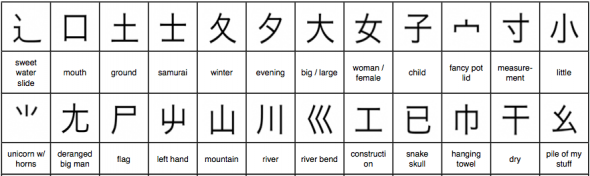
Oh sure, you might learn a few radicals here and there, like the water radical (just a few little strokes next to a kanji). “If you see this,” the kanji resource says, “you’ll know that this kanji probably has something to do with water.” For the most part, though, radicals are a distant afterthought in the kanji-learning world, and this is an absolutely huge mistake. Most people teach radicals (if they teach them at all) as pieces of a kanji that help you figure out the meaning of the kanji if you don’t know it. Although this works sometimes, why not just learn the meaning of the kanji in the first place?

Instead, learning radicals should be treated like building blocks. Remember how I said kanji should not be learned stroke-by-stroke? More complicated kanji should be put together radical-by-radical. If you take the time to learn the 200-250 kanji radicals (it may seem like a lot, but it’s really a pretty quick process), you can put a fairly complicated kanji together in 3, maybe 4 steps. Think of radicals like the ABCs of English. You can’t put together the word FAILURE if you don’t know the letters F-A-I-L-U-R-E, right? By learning radicals first you’re setting yourself up for kanji success. You cut down on the memorization required for every single kanji by 300-800%. Here’s an example:

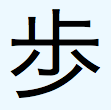
Now, this kanji isn’t particularly difficult, but you get the drift. Learning this kanji stroke-by-stroke would set you back eight steps (because there are eight strokes). Instead, let’s take a look at the radicals that make this kanji up. If you learn all the kanji radicals (or, at least the ones I recommend), putting this particular kanji together can be done in a mere 3 steps, depending on which radicals you would use. That’s a 260% less to learn which means you’re saving valuable time and brain-space.
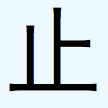
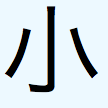
As you can see, these three “radicals” can be put together (like letters in a word) to create the kanji above. The first one (止) makes up the top portion, the second one (小) takes up the bottom, and the third (ノ) rounds it out. The best part is that you associate these radicals with names and concepts, which means you can come up with some kind of mnemonic device to help you remember what goes where (more on mnemonics below).

In summary, everyone should learn their radicals before even thinking about learning kanji. If you don’t, it’s like building a highrise with no foundation.

Failure #3: You Memorize Instead of Learn

Good things can be said about repetition and “memorization.” I think they’re a necessary part of kanji learning, but everything has it’s limits (and you can use all the help you can get when it comes to kanji). One of the problems I have with the “normal” way people have you learn kanji is that they give you 10-20 kanji, sit you down with a kanji worksheet, and have you write the kanji over and over again (and of course, the focus is on the number of strokes, right?). The problem, though, is with our brains. First of all, there’s only so much information (or so many steps) we can fit in our short term memory. That means as soon as you move on to the next kanji, there’s a good chance you’re already forgetting the one before it. Another problem is that with too much repetition, our brains switch to autopilot. At that point you aren’t learning any more, you’re just going through the motions. To solve this, there are a couple of solutions.

SOLUTION A) First of all, don’t think of the kanji as strokes, think of them as particles. This will help you learn more effectively (and get the information in your long term memory more quickly). When you’re practicing, think of the individual radicals that you’re writing, and how they go together to form the whole kanji. The more you do this, the faster you’ll be able to learn kanji.

SOLUTION B) Don’t write a single kanji more than three times in a row. If you have multiple kanji to practice, switch back and forth and go back to previous ones. Come up with some kind of pattern. I would recommend something like this. Each letter represents a kanji, and each time it shows up it should be written for practice: A, A, A, B, B, B, A, B, C, C, C, A, B, C, D, D, D, A, B, C, D, E, E, E… etc. When you run out of space for “A” kanji, you would just start at “B” the next time around. This way you are forcing your brain to actually think and process the information, instead of hitting autopilot the moment you’ve written a kanji for the 4th or 5th time.

SOLUTION C) Apply some kind of mnemonic strategy to your kanji. Mnemonics help you remember things. They basically leave hints in your brain that when seen trigger another memory, which really helps you to remember things more effectively. One way to do this is to come up with “stories” for your kanji. If you’ve learned the kanji radicals, it is pretty easy to do. If you take the example above (歩), we can use the three radicals to come up with a story to help us remember whatever it is we want to remember. The radical examples below are ones I’ve given meaning to. You can come up with your own meanings if you want to, or use a set that someone else has developed.

  • 止 is a radical that means STOP
  • 小 is a radical that means SMALL
  • ノ is a radical that means SLIDE

So, we can use these three concepts / words and put them together in a way that helps us remember that the kanji 歩 means “walk.” Here’s one: “Stop! It’s a small slide. We will walk from here” (you know, because zombies hang around slides). As long as you know the radicals already, the hints to trigger this little “story” will be right in the kanji, every time you see it. Of course, we could get even more in depth with it and start associating emotion as well as our senses. This gets into the concept of creating “flashbulb memories” for yourself (these are memories your brain produces during traumatic or incredible events, that’s why you remember where you were, say, when you learned about 9/11). By imagining the emotion you felt when you saw the small slide, or the smell of the aluminum, or perhaps even the shock you felt when you saw how small it was, you can make this memory a lot stronger by tricking your brain into thinking it was really important. The more senses or emotions you associate with it (you really have to imagine they’re happening, though!), the more likely you are to remember. This may seem like a lot of work at first, but it actually gets quite quick and easy as you practice.

You can even take this a step further and learn the pronunciation of the kanji like this as well. Once you know the meaning of the kanji, you can learn the pronunciation using a similar strategy. For the kanji 歩, the most common on-yomi for this kanji is ほ (ho). When you know this, you can come up with another story that uses “ho” in it. Maybe something like: “When you walk around, be careful about stepping on a hoe (ほ). Since we know the meaning of the kanji from the previous story, we can use that as our hint to figure out what the pronunciation of it is as well. Beyond that, though, I’d recommend also learning the common words that use that kanji, since there are often plenty of different ways to pronounce the same kanji, and learning through example is the best way, I think.

FAILURE #4: You Learn Kanji Like Japanese School Children (i.e. In The Wrong Order)

When Japanese school children learn kanji, they go from simpler kanji meanings to more complicated kanji meanings. Sometimes, a simple kanji will have a simple meaning, but sometimes it won’t. Take a look at these kanji, for example. These are learned in secondary school (i.e. they are “higher level” kanji), but if you look at them, you’ll notice they’re really, really simple to write. Two or three strokes each.

乙 了 丈 勺

Even though these kanji are simple to write, the meanings aren’t as simple, which is why Japanese school children don’t learn them until  later in their education. On the other hand, take a look at these kanji, which have very simple meanings associated with them, yet consist of many, many more strokes. These are learned by second graders in elementary school. We’re talking tiny little kids, with tiny little brains.

曜 線 鳴 算

The problem with a lot of Japanese learning resources is that they emulate this Japanese school children method of learning kanji. The thing they seem to have totally forgotten is that you, as someone who is learning Japanese as a second (or third, or fourth) language, probably are not a child (not to mention a Japanese child, in Japan), which means it really doesn’t matter if you learn kanji with difficult meanings earlier. You already understand the meanings behind the words, because you’ve learned them all in English. The difficult part is the actual kanji itself (and how to write / read them), not the meaning associated with that kanji. Because many resources forget this, you are introduced to more difficult kanji early on just because the meaning of the kanji is easier.

Instead, everyone should learn kanji based on the simplicity of the kanji itself. Who cares about the meaning. Start with 1-stroke kanji and work your way up. There are approximately 2,000 kanji you have to learn no matter what, so you might as well put them in an order that makes a lot more sense. By starting simply and moving your way up, you are able to build one kanji upon another. You’ll find that more complicated kanji are really just made up of less complicated kanji (or radicals). But, if you learn kanji the way Japanese school children learn them, it feels random, overwhelming, and just plain confusing. Learning kanji isn’t the same as learning vocabulary in Spanish, German, or whatever. It’s its own monster, and should be treated that way.

FAILURE #5: You Don’t Use The Best Tools Out There

I’m pretty sure most teachers today don’t say “okay, when you go home, I want you to go through your Smart.fm/Anki deck and practice your kanji.” No, it’s more like “okay, when you get home write this kanji a gazillion times in this kanji sheet until you feel tired and lethargic.” Now, you don’t need fancy tools to do anything. Tiger Woods could pick up a crappy golf club and still beat you every time. But, when it comes to language learning, it certainly doesn’t hurt, especially when the best tools out there are free.

Smart.fm and Anki are “intelligent” flash cards (i.e. they know when to bring back certain cards and know what’s giving you trouble so that it can help you learn more effectively). Even if you like the feeling of paper in your hands, these services will beat your handmade set almost every time (though Rainbowhill has a pretty good method if you do like using physical flash cards). These services will tell you what to study and when to study them (and in general, they’re usually right), which really helps take the pain out of flashcard learning, and will be your best friend when it comes to learning kanji.

P.S. If you just had a kanji epiphany, you should subscribe to the Tofugu Newsletter.

P.S. If you wish this article was a lot shorter, you should follow Tofugu on Twitter.

  • http://blog.rainbowhill.com.au/ Rainbowhill

    You can find a good set of radicals in a kanji learners dictionary, I like Hadamitzky and Spahn. They are used as an index, so you find kanji with the same radical in the same section of the dictionary.

  • jamescopper52

    wow! i never knew that there are failures like that! but this article helps a lot especially to those who want to learn kanji in the future.
    http://www.LearnJapanese.me

  • Pingback: Should You Learn Japanese From a Native Speaker or a “Foreigner”?

  • http://durf.org/ Durf

    All the radicals most certainly have names, and at some point in the learning process it's worth learning those names, if for no other reason than because at some point a Japanese person will explain to you that his name includes “te-hen ni bla bla” or “kusa-kanmuri ni bla bla.”

    I learned the radicals out of the inside of the front cover of my Nelson dictionary, personally, but I know that books aren't sexy enough to make lists like this in the year 2010. :-)

  • http://tomreynoldsphotography.com Tom

    Hi Tofugu, I'm having big trouble finding a webpage with both the radicals and their meanings next to them like you found right below the start of Failure 2. Could you tell me the website where you found that please?

    ありがとうございます。

  • Ulashima

    It's a good article, though there are some shortcomings. First of all, the learning order thing. When people learn kanji, they don't learn it for just the sake of it, but as an important component of the Japanese language as a whole. There are kanji that you learn within a grammar lesson, inside a dialogue or a short story, and the possibility of those kanji to be 曜, 線, 鳴 and 算 is far more than 乙, 了, 丈 and 勺. You just need the simple-meaning kanji in order to write simple sentences used in daily life. There's nothing you can do about it. Perhaps it's good for extra work. And then the last one. I started learning Japanese in 1995 in university. There was no Anki etc whatsoever those days. There was even no internet then, in Turkey. It was only a fancy invention we (that is, the common folk out of the computer industry) read about in the newspapers. The materials were scarce, we relied on the photocopies of the textbooks in the department library. The only way to practice was to write a gazillion times. I made flashcards myself though. Of course I would have been a lot better kanji learner if I used those methods…but how would I, if some did not exist? Though it's still not too late for me to try after from now on (despite me being a grumpy middle-aged man in his 30's). Times do change and some people are just born too early to see or make use of those changes.

  • drayomi

    I am glad I found TextFugu when I decided to start learning Japanese. You really know the most effective way to teach people Japanese. I am glad there is someone who actually wants people to successfully learn Japanese, and makes sure that they do. I may have just started learning Japanese a month ago, but thanks to you I have learned a lot and I know that if I continue using TextFugu I will successfully learn Japanese. Thanks for everything Koichi, and keep doing what you're doing!

  • Parker

    What about the japanese.about.com method. Using the fifty most used kanji, then putting them down on a flash card.

  • sfgdgsdfgdf

    ======= http://www.ccshoper.com ========

    free shipping
    competitive price
    any size available
    accept the paypal

    Air jordan(1-24)shoes $33

    Nike shox(R4,NZ,OZ,TL1,TL2,TL3) $35
    Handbags(Coach lv fendi d&g) $35
    Tshirts (ed hardy,lacoste) $16
    Jean(True Religion,ed hardy,coogi) $30
    Sunglasses(Oakey,coach,gucci,Armaini) $16
    New era cap $15

    Bikini (Ed hardy) $25

    ======= http://www.ccshoper.com ========

  • ddfgdsfg

    ======= http://www.ccshoper.com ========

    free shipping
    competitive price
    any size available
    accept the paypal

    Air jordan(1-24)shoes $33

    Nike shox(R4,NZ,OZ,TL1,TL2,TL3) $35
    Handbags(Coach lv fendi d&g) $35
    Tshirts (ed hardy,lacoste) $16
    Jean(True Religion,ed hardy,coogi) $30
    Sunglasses(Oakey,coach,gucci,Armaini) $16
    New era cap $15

    Bikini (Ed hardy) $25

    ======= http://www.ccshoper.com ========

  • xniaq

    ======= http://www.ccshoper.com =======

    free shipping
    competitive price
    any size available
    accept the paypal

    Air jordan(1-24)shoes $33

    Nike shox(R4,NZ,OZ,TL1,TL2,TL3) $35

    Handbags(Coach lv fendi d&g) $35

    Tshirts (ed hardy,lacoste) $16

    Jean(True Religion,ed hardy,coogi) $30

    Sunglasses(Oakey,coach,gucci,Armaini) $16

    New era cap $15

    Bikini (Ed hardy) $25

    ======= http://www.ccshoper.com ========

  • xniaq

    ======= http://www.ccshoper.com =======

    free shipping
    competitive price
    any size available
    accept the paypal

    Air jordan(1-24)shoes $33

    Nike shox(R4,NZ,OZ,TL1,TL2,TL3) $35

    Handbags(Coach lv fendi d&g) $35

    Tshirts (ed hardy,lacoste) $16

    Jean(True Religion,ed hardy,coogi) $30

    Sunglasses(Oakey,coach,gucci,Armaini) $16

    New era cap $15

    Bikini (Ed hardy) $25

    ======= http://www.ccshoper.com ========

  • Pingback: Learn Japanese By Being Emotional

  • Pingback: Scarier Than Shark Week: It's Kanji Week On Tofugu

  • Angie

    Where can you learn kanji radicals?

  • Katie/Miyuki

    Thanks so much for this! My Kanji courses in college suck because you have to teach it to yourself (the instructor is there only to grade the weekly quizzes) and I end up memorizing it temporarily just to get a good grade. But these tips can help me actually learn kanji for once!

  • http://www.handbags-club.com/ Designerhandbags

    Tofugu, you forgot the biggest mistake of them all: learning shapes, not words.

  • http://www.handbags-club.com/ Designerhandbags

    Tofugu, you forgot the biggest mistake of them all: learning shapes, not words.

  • http://twitter.com/Suzanaonline Suzana

    Well, you have made a mistake at a failure 2, because 歩 has no three radicals. There are just two parts of aruku and those are 止 and 少. It's easier this way.

  • Pingback: Skritter's A Great Way To Practice Kanji, Stroke Order

  • http://www.facebook.com/people/Chris-Harris/699948687 Chris Harris

    this is an interesting article :P

    I think that it's effective to study the radicals definitely, but for myself, I can't study kanji individually. Probably mentioned here before, but I like to study word compounds that contain the kanji I'm interested in. I'm sure that someone can find a million words with “機” in them for example, and then learn those words by writing sentences with them. Or (if you're lazy) use http://www.alc.co.jp/ or http://www.jisho.org to see some user made sentences. Practical use of the words should help you to learn to use kanji and new vocabulary! ^^

  • Christen

    This made me laugh out loud 5 different times. And I learned something! Why haven’t I discovered this website before?

  • Mizzcabbage

    Ah, a Heisig fan, I see. I very much disagree with your analysis, and I think that kanji study methods have only one (and it is major) flaw – they focus on each kanji individually and don’t emphasize them in context. Native Japanese students are constantly being bombarded with kanji in the culture and it is easier for them to start “associating” meanings and sounds with the shapes. If your kanji study is thematic and tied to your existing vocabulary base, then it will be easier to start associating yourself. (For this, I recommend Chieko Kano’s Kanji books by Bonjinsha.) Outside of the classroom, your need to write kanji is minimal. After the advent of computers, most adult Japanese are using their cell phones to look up kanji all the time anyways. Use kanji workbooks and drills to >>practice<>learn<< them. (Unless you're studying for JLPT, where you need to recognize small differences.) For intermediate and advanced learners, I recommend copying the bilingual section of the Japan times every Wednesday. (Check your local colleges and universities, they should have a copy in the reference section) This gives you two sample articles with help for vocab and kanji that you can drill everyday instead.

  • Anonymous

    Today,I am very gald to see this wonderful article.It reminds me of something related.Such as you can find in the following website.

    http://www.yessoso.com Where you can find what you want at best price. Ladies and gentleman,please don’t hesitated to click it.http://www.yessoso.com Thousands of brand handbags shoes and high-heel shoes are waiting for you.

    Free shipping!
    Paypal accept! \

  • DrVoltage

    Damn that was an eye-opener. Thanks so much! I always start with an open mind and try to learn things in a way that suits me best, but recently I have just been doing the repetition process, and that sucks.
    Showing how the radicals formed together to fit that kanji of walk was not how I thought of radicals at all. That really, REALLY helped me out. Now I think I can finally make progress. YATTA!
    Also, I have been trying to force myself to learn the pronunciation(s) at the same time as the charecter. Looks like I should be breaking it down step by step. Thanks again!

  • Anonymous

    YOU MUST NOT MISS IT!!!
    ———–http://www.2kuu.com ———
    The website wholesale for many kinds of fashion shoes, like the nike,jordan,prada, also including the jeans,shirts,bags,hat and the decorations. All thepr oducts are free shipping, and the the price is competitive, and also can accept the pay pal payment.,after the payment, can ship within short time.
    free shipping accept the pay pal
    SOCCER JERSEY 16
    nike sh ox $35
    Christan Audigier bikini $16
    Air jordan(1-24)shoes $36
    Sunglasses Oakey,coach,gucci $12
    Handbags(Coach gucci juicy lv) $31
    Tshirts (,ed hardy,lacoste) $16
    Jean(True Religion,ed hardy,coogi) $30
    Bikini (Ed hardy,) $18
    —–http://www.2kuu.com ——-

  • Belikel

    I kinda disagree on this one. If a six year old school child doesn’t feel “confused” and “overwhelmed” with all the new characters it has to learn for the next years of it’s young life without the aid of previously studied radicals, you sure don’t expect an adult to be intimidated by kanji.

  • http://www.tofugu.com koichi

    The main difference is I want to help people cut down kanji learning to
    around a year (or less) compared to the 8 years spent in Japanese schools
    learning the same kanji. Their method “works,” technically, but takes a lot
    longer than it needs to, at least for adults who already understand the
    ideas and the meanings of all the kanji, even if they don’t know which kanji
    to associate those ideas and meanings to.

  • Belikel

    Your efforts are commendable. Still I learn 3 kanji per day in the order the japanese board of education recommends for school children and never had any kind of problem with that approach. In fact a japanese friend of mine who is a mother of two boys herself noted in a recent chat with me what a nuisance radicals were and how she never had to use them for they where no help in learning kanji at all. The only reason she could think of they might sometimes be needed is when she has to look something up in a dictionary. This does not mean I would favor to abandon this system, since it is part of japanese/chinese culture and I have way to much respect for it to simply cast it away! But as for the “mere” learning of characters radicals are of VERY limited use. At least if I can trust both my teacher and my friends (not to mention my humble self).

  • http://www.tofugu.com koichi

    I can see that being true with “traditional” radicals, for sure. The
    radicals I’m talking about are a bit more radical (harharhar), and actually
    a combination of the Chinese radicals system and a bunch that are made up,
    too. Depending on who you ask, there’s going to be like 200-250 to learn
    (which seems like a lot, because it is). Basically, it’s teaching people
    that kanji are made up of different pieces. It also makes it so *all* kanji,
    even the most complicated, are never made up of more than 3 different parts,
    meaning you never have to remember 18 strokes (or something like that) of a
    kanji, you just learn the three pieces you need to put together to make up
    that kanji instead. So, when Japanese school kids learn kanji, they are
    learning in order of simple meaning to difficult meaning – the kanji itself
    doesn’t play as much of a role (in terms of stroke count, etc), which means
    more complicated kanji are learned earlier than a lot of less complicated
    ones. Because you’re an adult, and you know the *meanings* and concepts
    behind the kanji (just not which kanji is which, and how to pronounce them),
    I’m suggesting people totally switch things around and go from simplest
    kanji (in number of strokes), and then use radicals to put the kanji
    together (and as you learn more kanji and radicals you can use those to put
    together even more complicated kanji and radicals as you move forward).

    Not many Japanese people would ever know about this style of kanji learning
    with radicals- radicals, as you say, are used to look things up in a
    dictionary. The radicals I’m talking about are definitely a lot different,
    and probably wouldn’t necessarily work for Japanese kids, because they have
    to learn the meanings of the kanji as well, meaning they have to start with
    simple meanings (regardless of the number of strokes a kanji has) and move
    up to more complicated meanings. It’s kind of like how you’d learn the word
    “elephant” as a young child, but probably not the word “haut” until quite a
    bit later, even though there are fewer letters (though, it’s tough to do a
    comparison with English, just because certain things don’t quite carry over,
    but I’m sure you get my meaning, anyways).

  • Pingback: My Adventures with Kanji | The New Hokkaidoian on the Block

  • http://twitter.com/robertomaxwell Roberto Maxwell

    Paul, you told exactly what was wanting to say. Forget kanji. Learning words is the way things work. In any language. Letters (and kanji) are nothing alone. They gain meaning when they are inside a context. To learn letters (and kanji) is waste of time. I have been trying to learn Korean letters for a long time. And it never works seems the relation image – sound doesn’t mean anything!

  • Belikel

    That statement makes me curious what “radicals” you had in mind. I was referring to the 214 of the Kōki Jiten ;) You know, there is one video of you on Youtube I actually have to thank you for! It’s the “The Secret to Learning Japanese! Amazing!” one. Whenever I feel like I’ve got no energy left, I remember one little sentence you said there which is so obvious yet just too easy forgotten when you are depleted – “The secret to learn japanese is perseverance”. With that in mind I am able to pull off 6 hours a day of learning kanji. In fact with such success that I raised the amount of characters I learn per day to 4. However, I believe I couldn’t learn those kanji that well in any other order than the one of the japanese school system. It really has a reason why it managed to educate the enormous sum of 99% of the country’s population. It has the perfect alternation of simple and more complex characters, both in meaning and appearance. I guess now is the right time to give you your own advice ;p The higher you aim at a goal, the more you have to endure to reach it. There is no shortcut or easy way to get there. At least not if you don’t want to let your studies suffer in quality. If one wants to learn more characters in less overall time he has to devote more hours per day to his study. On a side note: English is not my mother tongue, hence I frankly haven’t heard of “haut” until now XD

  • http://twitter.com/liebestella19 mc

    hmm, my chinese should come in handy when i learn japanese then.

  • Kamen

    If someone thinks radicals are not useful in learning kanji, I guess it is their own failure to realise how they can be useful and incorporate them in their studies. The fact that a Japanese mother of two said radicals are useless doesn’t mean anything. It is even expected, because learning kanji by rote and drilling is precisely the slow, classical way they teach kanji in Japan.
    Now, different sources may vary as to the number of radicals they list, but they usually include the traditional 214 radicals anyway or an important subset of them. Some sources list more than that – they include additional components and combinations that frequently occur in kanji and assign various names to them (as well as to the traditional radicals). To differentiate, maybe it’s better to think of graphemes or primitives.
    As for me, I totally agree with the article and approach kanji from the same perspective – radicals / graphemes first, then kanji. No matter if one uses the 214 classical radicals, it isn’t less useful, in my opinion.

  • truth

    I just think that depend from what you will have to do with kanji you learn.
    As for me, that I just want to understand the ‘reading’ kanjis (read blogs , books, magazines etc.) and write it kanji simple because I have the necessity to communicate with japanese only throught the voice (verbal dialogues + reading texts) is it sufficent and I’m learning better simply learning a ‘word’. Kanjis should not be treat like many pieces to composes. At the end, we have to learn a word, so just as you learn the word ‘apple’ that mean ‘mela’ in my language, I do the same with kanji. Once I can visually recognize a ‘word’, “林檎” (ringo) o “蝶” (chou) butterfly, I don’t have to remember who know what complicated story associated to that kanji just to remember that word… so I’m bulding my vocabolary…. different instead if I wanted to learn to WRITE manually kanji… in this case, the stories and all the methods you descrived above are indispensable…
    My only salvation it’s that I will forever write japanese just with my computer, and talking…. (to study japanese it’s something that I’m learning for the unique porpuse of reading with my PC things and or playing games with my nintendo DS… (but who know, maybe in future, I’ll start to remember even kanji to write it….) but I don’t think…. I have bad mamory like nobody else, and it would be too much difficult for me, learning to write them…. but your method above, saying to learning first the radicals, really inspired me. Thank you!! ;) Ganbatte , minna san, ne.

  • Corrblimey

    I think you are so right with most of those points. I especially understand the merit of learning the kanji by number of strokes but I still think it should be a balanced with kanji that are more useful. Yes we can understand the really complicated meaning but when learning Japanese we can’t use it and then we forget it so then it seems pointless to have spent the time learning an easy to write kanji when we could learn something a little more complicated and actually be able to use it and then have it go into our long-term memory.

    Any thoughts? (other than I need to learn to use punctuation)

  • Shinmanotenchuu

    Hehe, your idea is good… however for me it’s of no use. I’m going to learn “radicals” sometime when I’m learning more about Kanji.
    Currently, I’ve been learning 4 Kanji&some vocab a day for first 3 weeks of every month.
    Then, learning some grammar for the last week of every month.

    4 x 21 = 84 x 12 = 1008 + “extra stuff” = more knowledge. ;P

    Then, learn secondary school and name Kanji in another 6 months or less. Total time spent should be one and half years. With workbooks, it probably would be faster.

    18months of study without workbooks div. 2 = 9months+workbooks.

    ["extra stuff"] – includes, writing target kanji 12 times. Watch or listen to T.V. and music.
    Bonus: Wasting money on graph paper.
    Tip: First when starting watching shows helped… until I ran out… so I ended up watching shows in another language and then another, etc. Currently, it doesn’t matter what I watch as long as I don’t watch too much in my own language. Instead jump back to the target language when I want a break.

    *follow numerical pattern for writing Kanji twelve times. It works the mind for both modern and traditional writing styles… hehe
    Such as mine below,

    01 02 03 04
    11 09 07 05
    12 10 08 06

    The method of using “radicals”, like you said is an after thought. They help a ton after one has learned and is comfortable with Kanji.

    My proposal is to learn the radicals that associate with the grade levels.
    First learn the kanji, then learn the radicals when learning grammar. Learning radicals and such is too much work while learning kanji. This is of course excluding the ones one learns, such as water, wood, fire, and earth.

    Originally, I was learning 3 kanji per day… and no rest period. The outcome is that I forgot stuff. Now, my rest period is incorporated in the 4th week of the month. Study grammar (10 minutes per day.) and loaf around all day.

    The reason for outweighing grammar with vocabulary is… that grammar is only useful once one has become accustom to the language. The more vocabulary one knows the easier it is to assimilate. Grammar is just a bunch of words put into patterns. Plus, one doesn’t have to spend much time on grammar after listening to music, T.V., “people”, and learning vocabulary.

    However, I do have to say, your idea is pretty neat and convincing. Just that, it’s confusing. I plan on learning towards ~6000 kanji (kentei) and falling back to mastering half that or more.

    Back in grade school we always studied for an “A” and fall back to a “C”. :D

  • Pingback: Textos excelentes que achei por acaso « エデンの片隅

  • http://www.dvd-creator-converter.com/tutorials/convert-itunes-to-dvd.html itunes to dvd

    The Japanese learning industry, on a whole, has failed us when it comes to kanji learning.

  • Pingback: Kanji–Finally Took the Plunge | nihonamor

  • Per Ola

    iKnow is now a money mashin. X-X

  • Per Ola

    iKnow is now a money mashin. X-X

  • Pingback: I Human - Breakdown of a Kanji

  • Juliancastellon

     what you wrote on this article is very true and should help a lot for those who are planing to learn japanese and to me i’ve leaned something useful here and would recommend this page

  • SNAAAAAAKE

    I am no expert, but I think it would be logical to take the most common Kanji, order in simplicity, and mix them in with the simpler ones.

    That being said, I know maybe 22 kanji right now :o lol.

  • Pingback: RTK – Links and Reviews » cerebware.pcriot.com

  • Sgoss79

    Some of this information is solid (like learning radicals and using mnemonics to some extent), but I wonder if the author has ever received any training in or done research on Japanese language acquisition. The reason that Japanese children with “tiny brains” can learn complex kanji fairly easily is that they generally have already learned the spoken word that the kanji represents. Don’t confuse kanji with the spoken Japanese language itself, which is the actual language. Research shows that even when learning Japanese as a foreign language, kanji is more easily learned if you already have a basic set of vocabulary in the spoken language. This is one reason why I react negatively when I hear first/second year students claiming to know hundreds and hundreds of characters. Likewise, learning structurally simple characters with difficult/obscure meanings may be easy as far as learning to write the character, but how useful will these be immediately to the learner? I disagree with your point on the avoidance of complex characters; I would teach the character above “yoo” as in “nichiyoobi” fairly early on because I can assume my students are familiar with the days of the week and will need to recognize and often write this character. Also, they might need “sen” as well; for example, it appears at train stations as in “Yamanote-sen”. You claim that the Japanese learning industry has failed learners, and I agree to some extent, but misinformation won’t help the cause.     

  • Kanjipad

    Hi, do you have a link to this research that shows “even when learning Japanese as a foreign language, kanji is more easily
    learned if you already have a basic set of vocabulary in the spoken
    language”.

    There is a difference between this claim, which seems almost self-evidently true (having an extra cognitive hook into the kanji makes it easier to learn), and the superficially similar suggestion that it is faster for the beginner to learn the Japanese spoken form first, and then the kanji, or concurrently, with the kanji. I would be surprised if there is any research showing that learning the spoken Japanese speeds up kanji acquisition, because you can learn the joyo kanji in about 6 months, or less, if you are just aiming at kanji, and learning the associated spoken forms adds a huge amount of extra work to that task. Of course, if you want to learn the language, not just kanji, then you need to learn the spoken Japanese as well – it is a matter of choosing what to learn first. Spoken then kanji, kanji then spoken, or a mix of the two?

    I would be interested in any research that shows one sequence is clearly superior to another, because I suspect it varies from individual to individual – how visual they are, how easily they can incorporate mnemonis, and so on.

    Also, from what I have read, Japanese students in primary school learn the kanji at an excruciatingly low pace, compared to keen adults learning kanji as a second language.

    I raise all this because I am creating a program for learning kanji (The Kanji SketchPad – http://cerebware.pcriot.com ).

  • Kanjipad

    Hi, do you have a link to this research that shows “even when learning Japanese as a foreign language, kanji is more easily
    learned if you already have a basic set of vocabulary in the spoken
    language”.

    There is a difference between this claim, which seems almost self-evidently true (having an extra cognitive hook into the kanji makes it easier to learn), and the superficially similar suggestion that it is faster for the beginner to learn the Japanese spoken form first, and then the kanji, or concurrently, with the kanji. I would be surprised if there is any research showing that learning the spoken Japanese speeds up kanji acquisition, because you can learn the joyo kanji in about 6 months, or less, if you are just aiming at kanji, and learning the associated spoken forms adds a huge amount of extra work to that task. Of course, if you want to learn the language, not just kanji, then you need to learn the spoken Japanese as well – it is a matter of choosing what to learn first. Spoken then kanji, kanji then spoken, or a mix of the two?

    I would be interested in any research that shows one sequence is clearly superior to another, because I suspect it varies from individual to individual – how visual they are, how easily they can incorporate mnemonis, and so on.

    Also, from what I have read, Japanese students in primary school learn the kanji at an excruciatingly low pace, compared to keen adults learning kanji as a second language.

    I raise all this because I am creating a program for learning kanji (The Kanji SketchPad – http://cerebware.pcriot.com ).