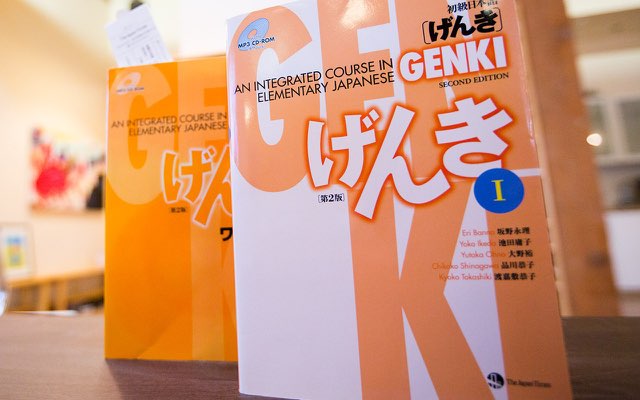
Learning Japanese is an undertaking. Learning as a beginner can feel near impossible. There's so much to the language. Where do you start? If you ask students of Japanese, the answer you'll almost unanimously get is "Genki."
Genki is a two volume Japanese textbook published by The Japan Times in 1999. It was revised and updated into a second edition in 2011. It was written by Eri Banno, Yoko Sakane, Yutaka Ohno, Chikako Shinagawa, and Kyoko Tokashiki. Shortly after its release, the Genki textbook became a popular choice for Japanese university classes across North America. It's gained quite the following and remains a popular choice even for those in the self-learning community. Countless students and teachers swear by it. But is there a real reason for this devotion? Or is the Genki textbook outdated hype? To find out, let's dig into the second edition of Genki I and its accompanying workbook.
Who Is Genki For?
Depending on your situation Genki may or may not be right for you. This chart will give you a quick idea of whether or not it will suit your needs.
Genki is for:
- Absolute beginners
- Classroom learners
- Really motivated self-learners
- Beginners who have started learning Japanese but gotten frustrated
- People who want to take the JLPT level 5 or 4
- People who want efficient learning
- People who are intimidated by language learning
Genki is not for:
- Tourists
- Unmotivated self-learners
- People who want to learn kanji
Genki is meant for people who want a foundation for becoming fluent in Japanese. If you want useful words for your vacation in Japan, Genki won't teach the words you'll need in a short enough study time. It's designed for university classrooms. People using the Genki textbook with the assistance of professors and classmates will get the most out of it. This means self-learners have to be highly motivated. Even then, many exercises are group work, which are difficult to do alone. Self-learners will also need to figure out some way to check their work.
Genki Textbook Contents
Conversation and Grammar Section
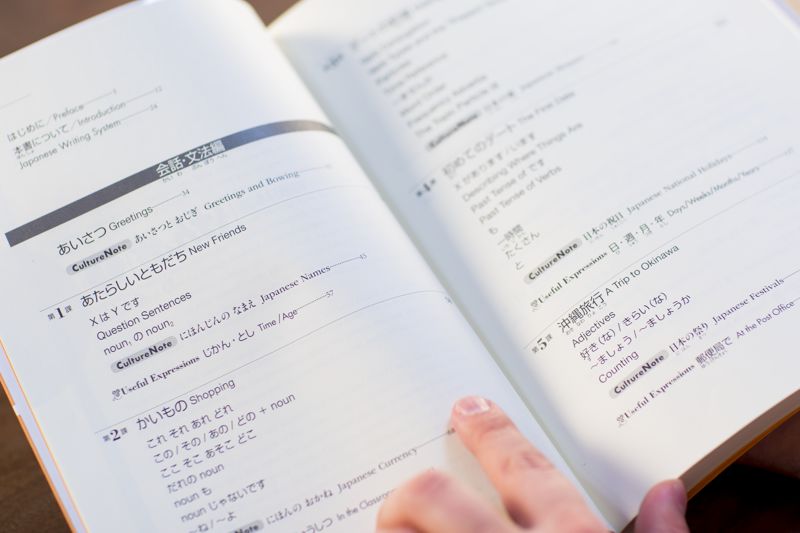
The Conversation and Grammar Section is the bulk of the textbook. It's the primary reason you buy Genki. It's made up of 12 chapters or "lessons" which teach grammar points and offer exercises to reinforce what you learn. Below is a breakdown of every concept Genki I teaches:
Japanese Writing System Introduction
Greetings
1: New Friends
- XはYです
- noun(1)のnoun(2)
2: Shopping
- これ それ あれ どれ
- この / その / あの / どの + noun
- ここ そこ あそこ どこ
- だれの noun
- noun じゃないです
- 〜ね / 〜よ
3: Making a Date
- Verb Conjugation
- Verb Types and "Present Tense"
- Particles
- Time Reference
- 〜ませんか
- Word Order
- Frequency Adverbs
- The Topic Particle は
4: The First Date
- Xがあります / います
- Describing Where Things Are
- Past Tense of です
- Past Tense of Verbs
- も
- 一時間
- たくさん
- と
5: A Trip to Okinawa
- Adjectives
- 好き(な) / きらい(な)
- 〜ましょう / 〜ましょうか
- Counting
6: A Day in Robert's Life
- Te-form
- 〜てください
- 〜てもいいです
- 〜てはいけません
- Describing Two Activities
- 〜から
- 〜ましょうか
7: Family Picture
- 〜ている
- メアリーさんは髪が長いです
- Te-forms for Joining Sentences
- verb stem + に行く
- Counting People
8: Barbecue
- Short Forms
- Informal Speech
- 〜と思います / 〜と言っていました
- 〜ないでください
- verb のが好きです
- が
- 何か and 何も
9: Kabuki
- Past Tense and Short Forms
- Qualifying Nouns and Verbs and Adjectives
- まだ〜ていません
- 〜から
10: Winter Vacation Plans
- Comparison between Two Items
- Comparison among Three or More Items
- adjective/noun + の
- 〜つもりだ
- adjective + なる
- どこかに / どこにも
- で
11: After the Vacation
- 〜たい
- 〜たり〜たります
- 〜ことがある
- noun A や noun B
12: Feeling Ill
- 〜んです
- 〜すぎる
- 〜ほうがいいです
- 〜ので
- 〜なければいけません / 〜なきゃいけません
- 〜でしょう
You may notice chapter names don't indicate what you learn. Rather they explain what is happening to Mary and her friends. This allows the authors to teach grammar points in the order they want, rather than shoehorning them into arbitrary "categories." The categorization should fall on your teacher if you have one. If you don't, it's not a problem. Figuring out the "categories" of grammar concepts is less important than learning how to use them well.
Reading and Writing Section
The section after Conversation and Grammar is Reading and Writing. There is a corresponding Reading and Writing chapter for each Conversation and Grammar chapter. That's twelve chapters in each section, for a total of twenty-four. Each Reading and Writing chapter teaches 14-16 kanji and comes with a wealth of exercises that strengthen your writing skills. We'll talk more about that section later on.
The Genki Textbook Style
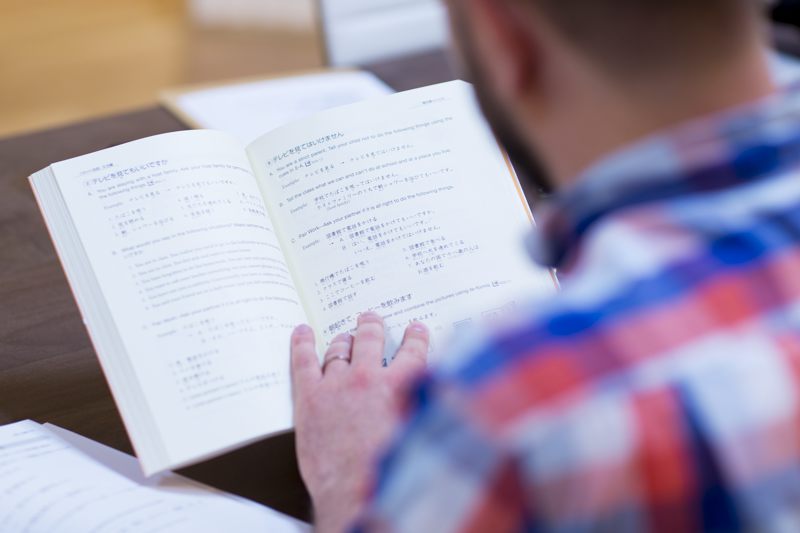
The Genki textbook doesn't exist to entertain. It's a teaching tool. The style keeps you engaged but doesn't detract from its educational purpose.
The lessons and exercises are all in English. Other Japanese textbooks "immerse" with directions in Japanese. But at the elementary stage, this only hinders the learning process. You should learn Japanese in your native language so you understand what's being taught. Otherwise you'll misunderstand instructions and practice poorly.
Genki's writing is wonderfully concise. The information written is the information needed to start understanding the grammar point. No wordy explanations to overwhelm or lull you to sleep. But it's not so vague you can't understand the point at all. Bear in mind Genki is an elementary Japanese textbook. The explanations are intended to get you using grammar concepts quickly. You will need other texts, like the Dictionaries of Japanese Grammar, to dig deeper once you've completed Genki I & II.
The sentence structure and word choice are informal. But there is almost no break in the educational tone. The adherence to facts and instruction ensures you don't waste time reading anything unnecessary. But writing in the casual voice gives the illusion that it's "down to earth." This makes it easier to fight through the dense material.
Genki Art and Illustrations
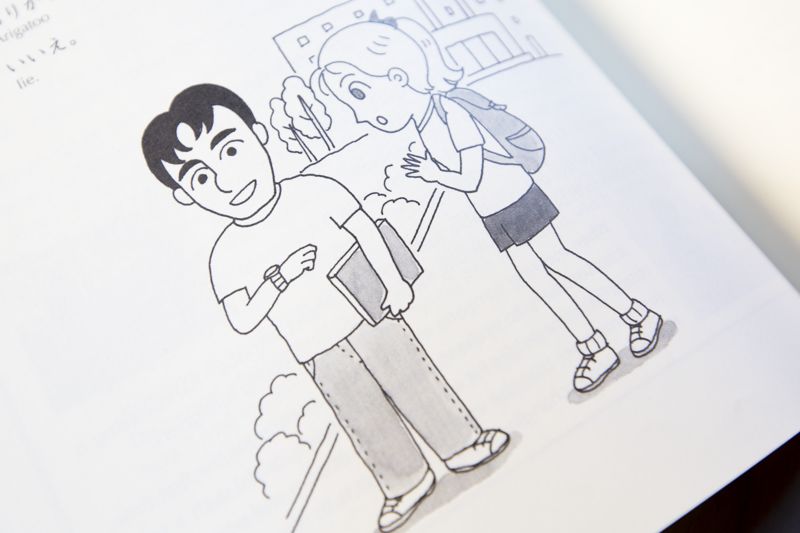
Genki's art is one of its strengths. It perfectly complements the lessons and exercises without becoming the center of attention. Some textbooks try to attract customers with flashy manga-style illustrations. But these books mostly fail because their art is more engaging than the material. Genki knows what it wants to be and its educational focus is reflected in the illustration style.
To be honest, I had mixed feelings about the art at first. Sometimes I'd find myself charmed by the illustrations. Other times, not as much. I couldn't quite put my finger on it until I looked closely at the dialogue illustration on page 209.
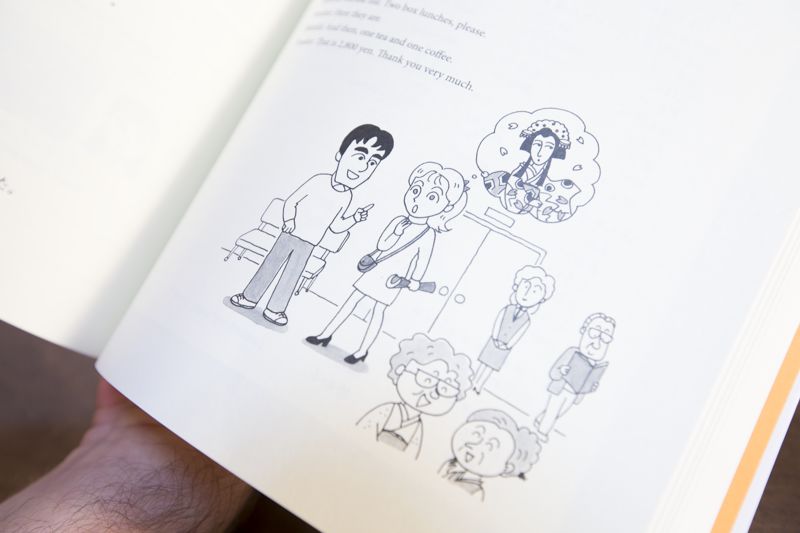
The Genki textbook's main characters (on the left) are more iconic while the nameless "supporting cast" (on the right) has slightly more expressive features. There's a reason for this, though. The main characters are meant to represent the reader. The less definition they have visually, the more easily you can see yourself in their shoes. And that's exactly what happens as you continue to study.
Though you may not find the art particularly interesting at first, you spend a lot of time with it. And because the spirit and function of the art is tied so closely to the material, your time and effort translates to a connection with the art, and by proxy the main characters.
Of course, Genki gives Mary a break from her iconographic role with various activities. In practice exercises, Mary gets to do all sorts of fun things, which round her out as a character. And your connection with her makes you feel rounded out as you learn.
Even if it takes some time for you to connect with Mary and Takeshi, the sub-characters' expressions will give you a giggle and kickstart your connection to the illustrations. Carlos, where have you been all my life?
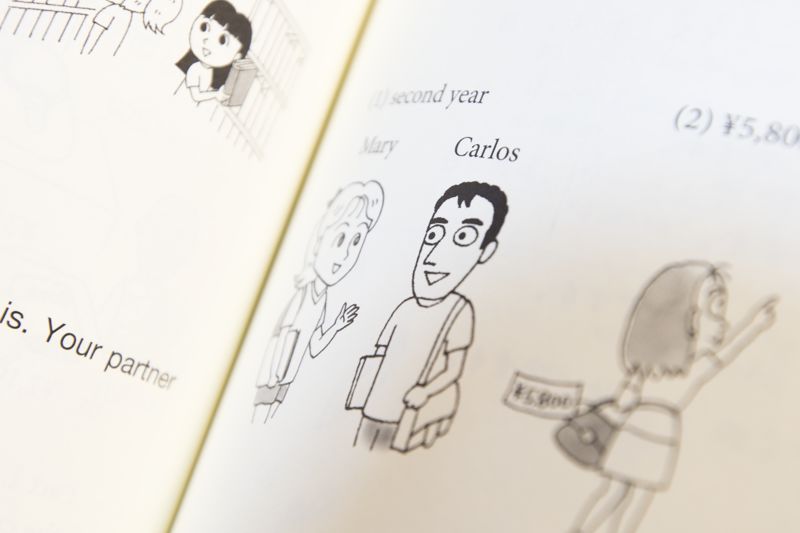
I realize the design differences between main and non-main characters is slight. The overall artistic approach to Genki is uniform and consistent. It's that rare kind of cute illustration that isn't trying too hard to be cute. It is what it is, and it's bound to charm you with its authenticity. The illustrations overall do a great job of connecting you with the material and helping you learn. The Genki textbook wouldn't be the same without them. If you don't like the art at first, those feelings will most likely wash away as you're drawn in by the immersive material.
The Genki Textbook Progression of Teaching
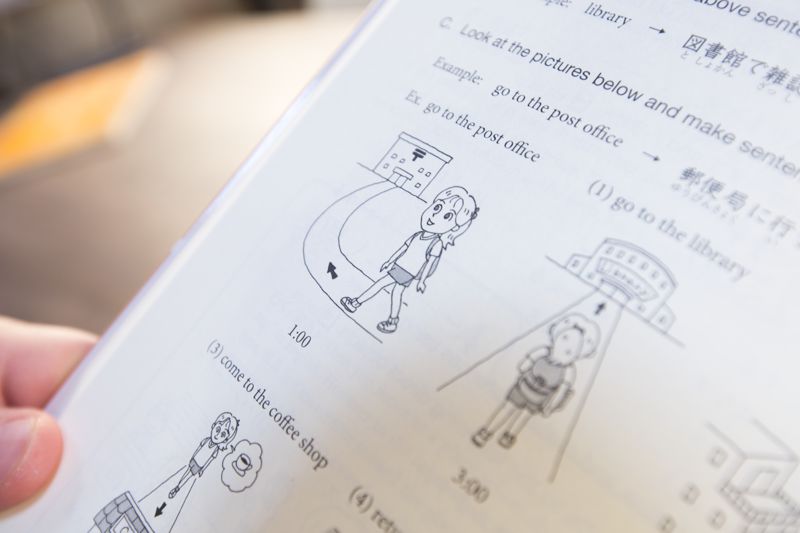
In many ways, Genki perfectly enacts the "+1 principle" Koichi has written about before. You want to work on something that's +1 above your current ability level. +2 or more will take more effort or be out of your grasp.
But studying "what comes next" means always building on what came before. Using enough effort to learn, but not exerting so much you want to quit. It's a tough balance. How do you know what's +1 above your current ability level? How do you know what's too much or too little struggle? Genki solves this problem.
If you follow the Genki textbook, you'll always be on track. It teaches what you need to know and cuts the fat. The best example of this: the near absence of romaji. The first two chapters feature romaji to give students enough time to learn hiragana and katakana (a few hours is all you need). Then romaji is dropped and Genki forces you to move ahead.
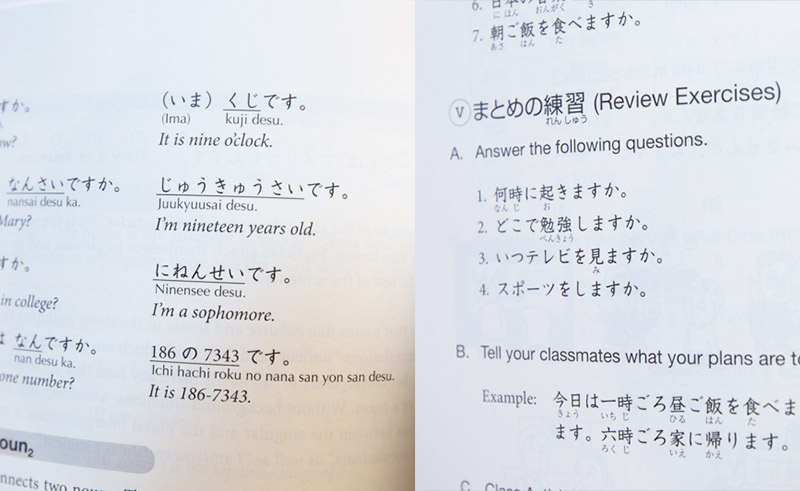
It would have been nice if Genki treated furigana the same as romaji, gradually cutting it. Furigana is present throughout the book for all kanji. This acts as a crutch and disables any potential kanji reinforcement that could accompany reading and grammar exercises. Even a calculated removal of furigana would have been fine, removing what the reader should know by a certain point.
After finishing Genki I and II, you'll need to go back to learn nuances the series skips. But that's a good thing. The Genki textbook doesn't waste your time teaching you every way to conjugate verbs all at once. It teaches you enough to keep you moving forward. You get efficiency rather than completeness.
Genki Textbook Features
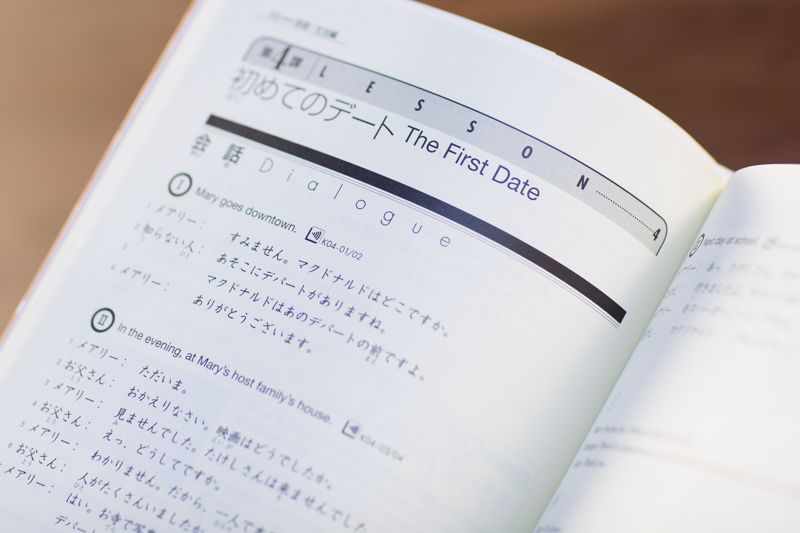
The chapters in the Conversation and Grammar section follow a predictable structure. You'll tackle new information in each chapter, but you'll always know how to tackle it. No surprises except the target information. This is helpful for establishing a study groove.
Here is the order you'll attack each lesson:
- Dialogue
- Vocabulary
- Grammar Explanations
- Practice
Inserted in main sections of each chapter are breakout boxes of information. They are:
- Expression Notes
- Culture Notes
- Useful Expressions
Dialogues
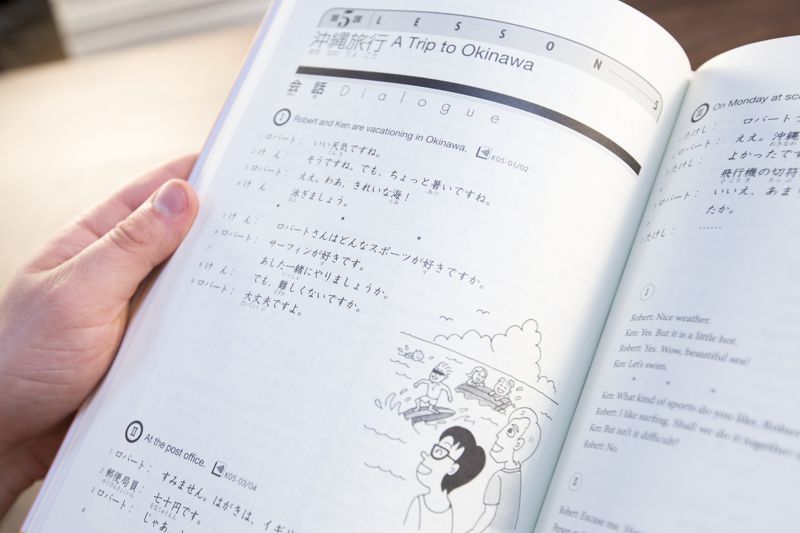
Genki's dialogues are the first point of contact with new material. First you'll see three (or more) dialogues in Japanese. Next the English translations of those dialogues. Like this:
メアリー: すみません。いま なんじですか。
たけし: じゅうにじはんです。
メアリー: ありがとう ございます。
たけし: いいえ。
Mary: Excuse me. What time is it now?
Takeshi: It's half past twelve.
Mary: Thank you.
Takeshi: You're welcome.
It may seem counterintuitive to start reading full sentences of new material before seeing a vocab list or grammar explanation. But there's a reason.
The dialogues are made up of two things:
- Information you've already studied
- Information you're about to study
In reading the dialogues, your mind makes a distinction between the stuff you know and the stuff you don't. Each time you get stuck, it'll most likely be new information. If you don't turn the page to reference the vocab or grammar explanations, you have to look at the corresponding English translation. This lets you fill in knowledge gaps through deduction, rather than being told the answer. A little struggle is a great way to kickstart your brain as you begin a new lesson. Of course, none of this works if you skip ahead and look at the vocab and grammar sections.
The authors did a great job of working with the elementary grammar and vocabulary to create memorable situations. Each dialogue uses only concepts from previous lessons while introducing new concepts. That can't be easy to write. Recurring characters and a continuing story in the dialogues shows creativity. Even though the stories are simplistic, you still find yourself making connections with the characters and situations, which makes the learning more enjoyable.
The dialogues are easy to understand if you study the material well. This gives you that feeling of accomplishment when you understand what you're reading. They are written in standard and polite Japanese, so there are few curveballs.
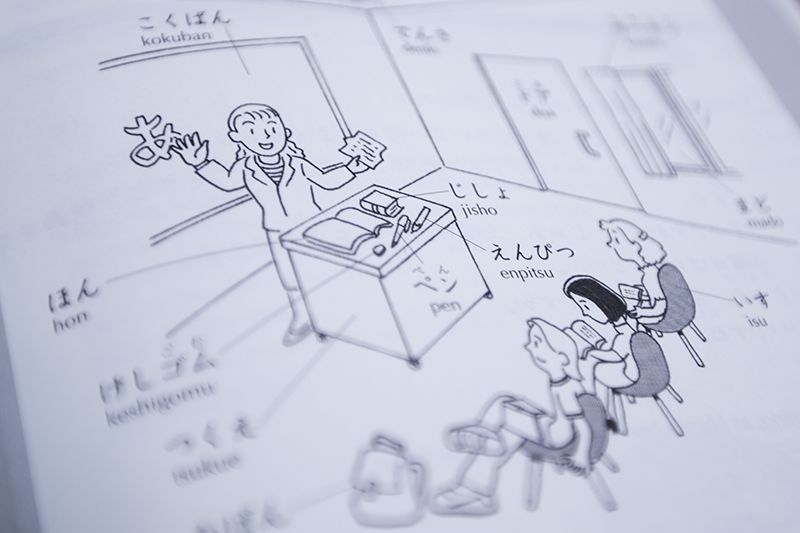
The situations are all collegiate. By which I mean, the characters and scenarios revolve around college life. Over the course of the series, you get to know Mary and Takeshi. Mary is an exchange student studying in Japan. Takeshi is a Japanese college student. The two meet, go on dates, and fall in love. In between their romantic A-story, various B-stories take place. Like Takeshi going on vacation with his friend Robert. Or Robert forgetting his textbook and getting scolded by Mr. Yamashita.
One of the biggest complaints I've seen in Genki textbook Amazon reviews is the series' focus on college life. The dialogue and exercise scenarios center around travel, homework, and dating. But considering the target audience, the decision makes sense. It may annoy you, but it shouldn't be a deal breaker, considering the quality of lessons you get.
Vocab List
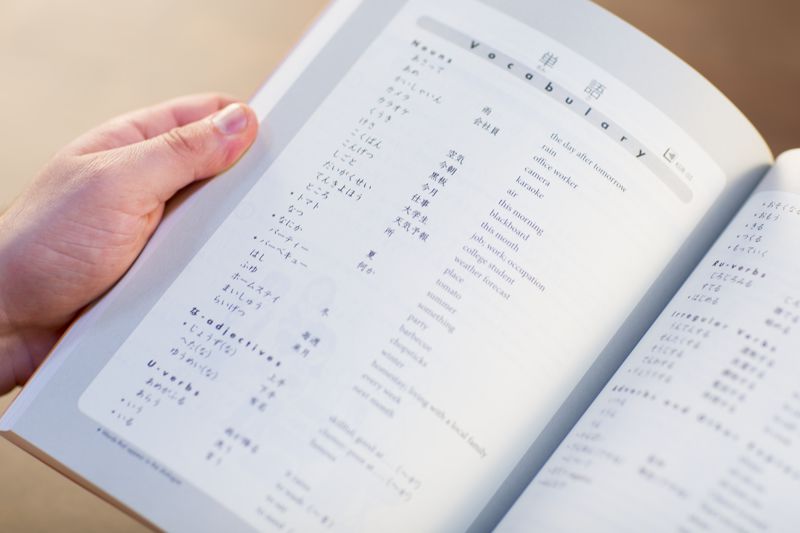
After the dialogue comes the vocabulary list. Each one has a dark gray border so they're easy to find when flipping through the textbook.
Vocabulary is divided into:
- nouns
- い-adjectives
- な-adjectives
- u-verbs
- ru-verbs
- irregular verbs (if applicable)
- adverbs and other expressions
The vocab list columns are divided into hiragana, kanji, and English translation. This is great for good old fashioned column-covering cram sessions (though we recommend SRS).

Bear in mind that some terminology used may differ from other books or resources. If you've learned these concepts from other books or classes, be aware of the multiple names. い-adjectives may be called keiyoushi 形容詞 or simply "adjectives." な-adjectives may be called keiyou doushi 形容動詞 or "adjectival nouns." u-verbs and ru-verbs may be called "ichidan" and "godan" verbs, respectively. Whatever terminology you prefer, The Genki textbook uses the names it uses. It may take some mental switching, but it won't hurt you to learn different names for the same ideas.
A common complaint I've seen in a Genki textbook review or two is that the vocab feels random or disorganized. I'm sure the word choice was purposeful, but I do agree a few odd vocabulary words pop into each list.
It's tough to say exactly which words are "the most basic." But you can quantify which are "most used." And that should give an idea of which words and kinds of words should be taught first. With this in mind, take a look at some of the vocabulary from Genki chapter 1.
- major (as in college major)
- college, university
- international student
- Sweden
- anthropology
- lawyer
Again, this points to Genki's college-centric approach. But it also shows a focus on teaching vocab based around dialogues. Rather than teaching the most used (or useful) words, it teaches vocab which fits into the dialogue situations.
Overall this is a minor gripe. The "odd" words are the minority, and most vocab are basic and useful. So you're not forced to learn lots of specialized words. Just a little.
The total number of vocabulary in both Genki volumes is 1700. A great start, which is the goal of the Genki series. They are a foundation on which you'll build your lifelong Japanese study.
In the end, you're using the Genki textbook for grammar. Vocabulary learning is its own challenge and no set of textbooks is going to fill that role. Learn the Genki vocab words because they'll help you learn the grammar it teaches. But supplement with spreadsheets full of Japanese words to learn the vocab you want to know.
Grammar Explanations
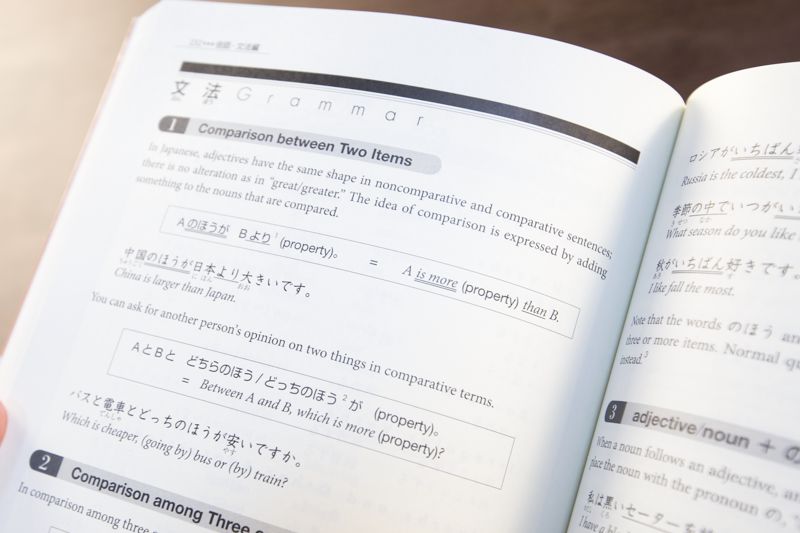
Genki's trademark efficiency is best displayed in the way it teaches grammar. Genki gives you only what you need to know to understand and start using the grammar. There are few, if any, peripheral distractions. Genki assumes you will eventually, throughout your lifetime language learning journey, become an advanced Japanese user. This means whatever details they don't teach now, you will learn some time down the line. Their focus is giving you enough to start using the language without overloading you.
Some complain Genki teaches grammar as "this is just the way it is in Japanese." Though I've never seen these words in the Genki textbook, I understand the complaints. The grammar explanations are concise and complete, but they don't elaborate. They teach the point, how it works, and give an example (maybe two). Those looking for reasons "why" will get the impression "this is just the way it is in Japanese." It's not an overt message. More an inferred attitude, a side effect of the streamlined approach to teaching. This may be frustrating, but it's important to accept at this stage. The "why" of language is linguistics and not Genki's focus. Learn the "how" first. Most people don't understand the "why" of their native tongue, but use it fine. Focus on the task at hand and then ask a linguist about the "why" later on.
Genki does however dissect grammar, but only when necessary. A good example is the breakdown of "〜なければいけません/〜なきゃいけません" on page 273. This grammatical phrase is essentially the Japanese equivalent of "must" in English. Genki could have taught the grammar, explained it means "must," and left it at that. Instead, it digs in and explains the components:
"なければ and なきゃ mean 'if you do not do…' and いけません means 'you cannot go'; なければいけません and なきゃいけません therefore literally mean 'you cannot go not doing…' with the double negatives giving rise to the affirmative sense of the mandate."
Beyond the grammar explanations, it's assumed you'll better understand the grammar through exercises and the workbook. It's also assumed you'll have a teacher to give you extra example sentences and explanation. So there aren't many example sentences in the grammar explanations. All the more reason for self-learners to get the workbook and be proactive with services like HiNative.
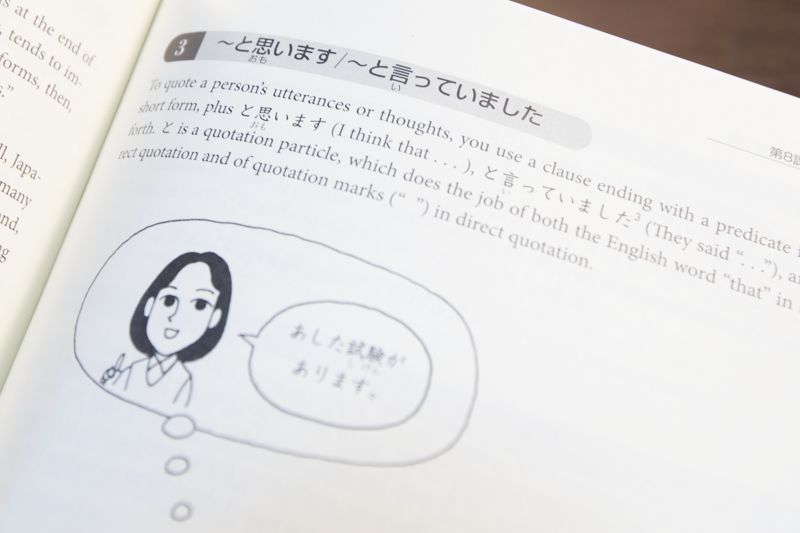
Though Genki's teaching approach is streamlined, it strives to be complete in parts. Case in point, the footnotes. Not all explanations have them, but when the show up, they can be revelatory. An example of this is the explanation of 〜と思います/〜と言っていました on page 193. After the example sentence "(私は)たけしさんはメアリーさんが好きだと思います" (I think Takeshi likes Mary), there is a footnote which explains how to render this idea in the negative. There are two ways, but one is more common in Japanese. For English speakers, it's more natural to say "I don't think Takeshi likes Mary." So the reader may assume rendering "〜とおもいます" (to think) in the negative would accomplish their goal. It would, but it sounds wonky to the Japanese ear. Instead, the Genki textbook advises the sentence "I think Takeshi doesn't like Mary." Clarifications like this are sprinkled throughout the book in footnotes, and make the learning experience more complete.
A minor gripe made against Genki's grammar explanations is it doesn't teach "real Japanese." Meaning it doesn't teach Japanese the way people speak it. This is true, but that's a good thing. It's important to learn language well before you learn it "naturally." Colloquial and informal language is definitely more fun, but it's not a good foundation for a beginner. That being said, if you want to learn some colloquial and "real" Japanese along with Genki, check out Japanese the Manga Way. Keep in mind studying two books at once might slow you down.
Practice Exercises
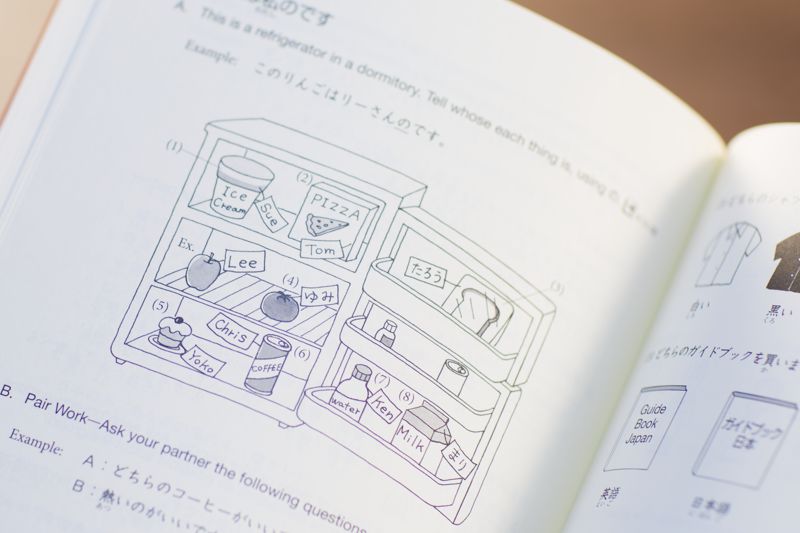
Genki's amazing grammar explanations would be nothing without the exercises to back them up. Exercises are repetitive enough to reinforce key points, but varied enough to keep students engaged. Put in the time and these exercises will go a long way toward packing learned grammar and vocab into your brain.
There are many different types of exercises in the Genki textbook. Some you might see are:
- translate/conjugate the word/sentence
- answer the questions
- read the dialogue with a partner
- ask questions with a group
- look at the chart and make a sentence/describe something/ask questions
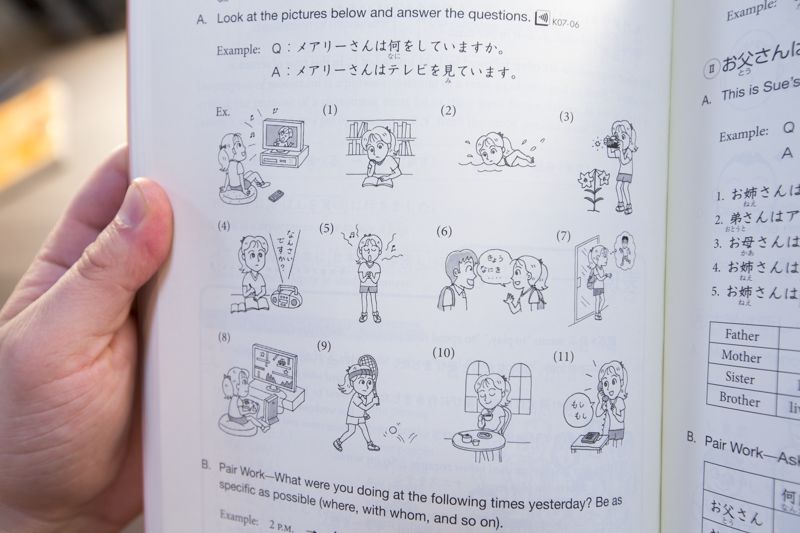
- look at the picture(s) and make a sentence/describe something/ask questions
- fill in the missing information with a partner's corresponding chart
- role play
- talk to the class
- sing a song
- combine parts of speech/grammar points together
Though most exercises follow similar structures, they're not formulaic. And each lesson bends the structure to work uniquely with the target concept. This way you're grappling with new material in a familiar way, giving you some sort of muscle memory in unfamiliar territory.
The illustrations help mix up the practice process. Whatever your opinion of the art, it serves an important purpose in the exercises section. Rather than pages of words, questions, and charts, there are exercises using pictures at least every other page. The illustrations are part of the tasks and make them more engaging and memorable.
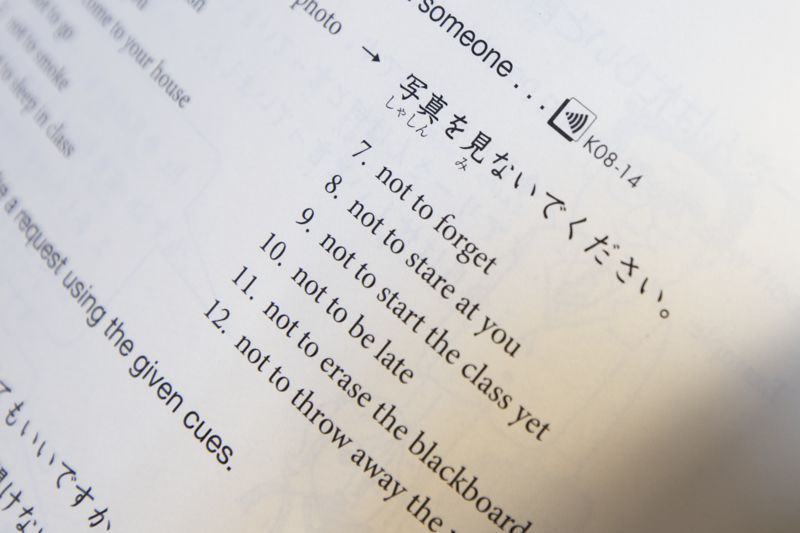
If you're an audial learner, Genki's got you covered. There are audio icons next to select lessons. These have corresponding audio files on the CD provided. The audio components are mostly listen and repeat versions of the exercises, but there are a few songs for childlike learning. Some readers may be tempted to skip these, but they offer necessary listening practice. Especially when first learning Japanese, it's important to hear examples from native speakers. Even better is the chance to listen and repeat. Big kudos to Genki for recognizing this and providing a solution.
As for the content of exercises themselves, they can be concrete or abstract. From "conjugate into this form" or "describe what is happening in the picture." Students build hard language skills, then use them to express themselves.
One of the drawbacks of the exercises for self-learners is the lack of an attached answer key. When you're learning by yourself it's important to check your answers to make sure you're not learning information incorrectly. While sold-separately Genki answer key may be an easy way to accomplish this, there are other ways. Try out Lang-8's Hi-Native service to check answers you're not sure about. Ask questions in Japanese learning communities.
The Genki answer key available as a separate book could be worth buying. If you go the answer key route, be aware that it is written for teachers who read Japanese fluently. So the entire thing is in Japanese and uses kanji you may not know. As an elementary learner, this makes checking answers much slower, but not impossible.
There are enough exercises in each lesson to give you a firm foundation with new grammar (if you do them all and do them well). But for self-learners, the effectiveness of the exercises is cut down by a significant amount. Since the book is aimed at classroom Japanese learning, a big chunk are "pair work" or "group work." Some can be finagled into practice for self-learners, but most will have to be skipped entirely.
Expression Notes
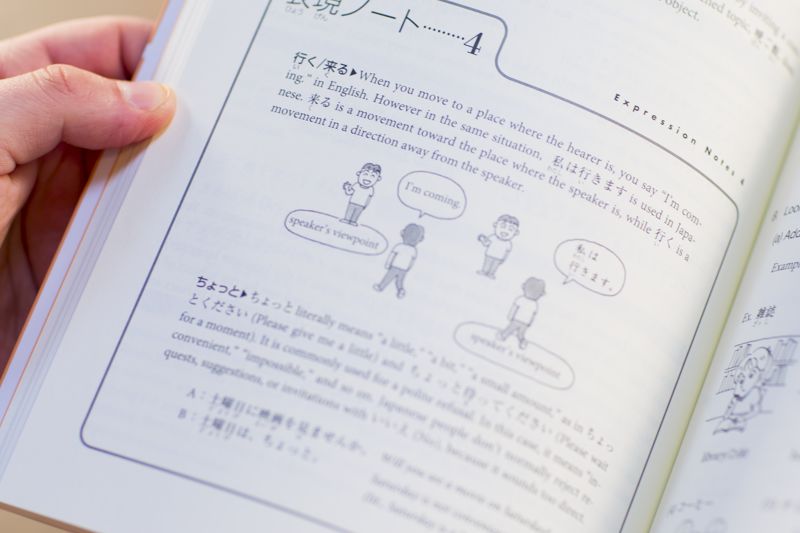
Several types of breakout boxes featuring additional information supplement the lessons. The Expression Notes are the only type of breakout box that isn't listed in the table of contents.
Expression Notes offer clarification on uses and the nuances of Japanese. For example, Expression Note 8 explains the verb 遊ぶ (to play) is used for "spending time pleasantly" but not for instances like "to play tennis" or "to play games." Expression Note 4 explains 行く (to go) is used for movements away from the speaker while 来る (to come) is used for movements toward the speaker.
There are only 11 Expression Notes total.
- Page 36 – おはよう/ありがとう, さようなら, すみません, いいえ, いってらしゃい/いってきます/ただいま/おかえりなさい
- Page 46 – あの, はい/いいえ, そうですか, Pronunciation of は, Numbers, Giving one's telephone number, せんせい, さん, Referring to the person you are talking to
- Page 67 – (〜を)ください, (〜を)どうぞ, On the pronunciation of number words, Big numbers
- Page 94 – 行く/来る, ちょっと
- Page 113 – Xの前, えっ/あっ
- Page 136 – 忙しい/にぎやか(な)
- Page 155 – 遅く/遅い, どうも, お
- Page 175 – 遊ぶ, 知る/わかる
- Page 197 – 〜する
- Page 236 – Using が and けど at the end of a sentence to indicate intention
- Page 257 – は in negative sentences, だけ, に, ドライブ, 夢, には
These are a nice addition. They anticipate new learner assumptions about Japanese and help to flesh out idiosyncrasies.
Culture Notes
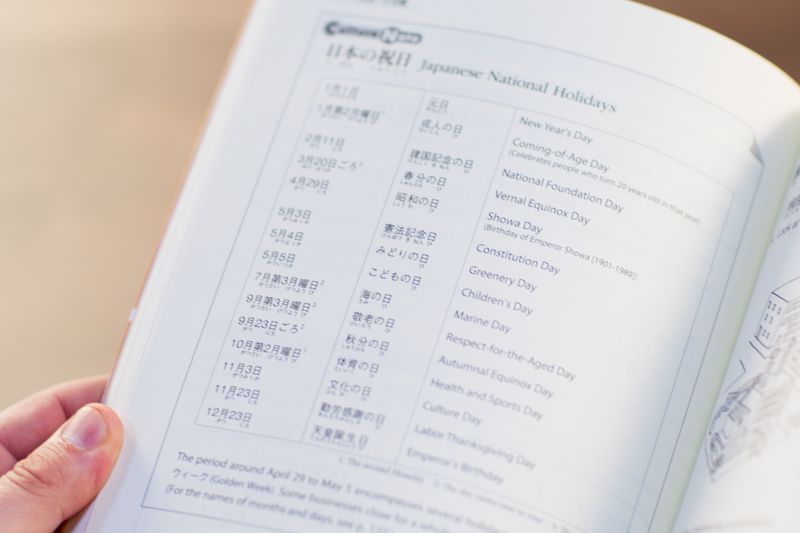
For those interested in the Culture Notes, they are listed in the Table of Contents, unlike the Expression Notes. These breakout boxes attempt to explain some of Japan's culture along with the language. There is one Culture Note per chapter. They include:
- Greetings and Bowing
- Japanese Names
- Japanese Currency
- Japanese Houses
- Japanese National Holidays
- Japanese Festivals
- Japan's Educational System
- Kinship Terms
- Foods in Japan
- Japanese Traditional Culture
- Public Transportation in Japan
- New Year's
- Japanese Climate
It only makes sense to teach culture with language. They go hand in hand. On the whole, the Culture Notes are nice snippets of Japanese life that vary in their usefulness. "Japanese Currency" and "Kinship Terms" are useful, the latter being the most useful of all. The rest are great introductions. Use them to fuel further cultural research as you study the language.
Useful Expressions
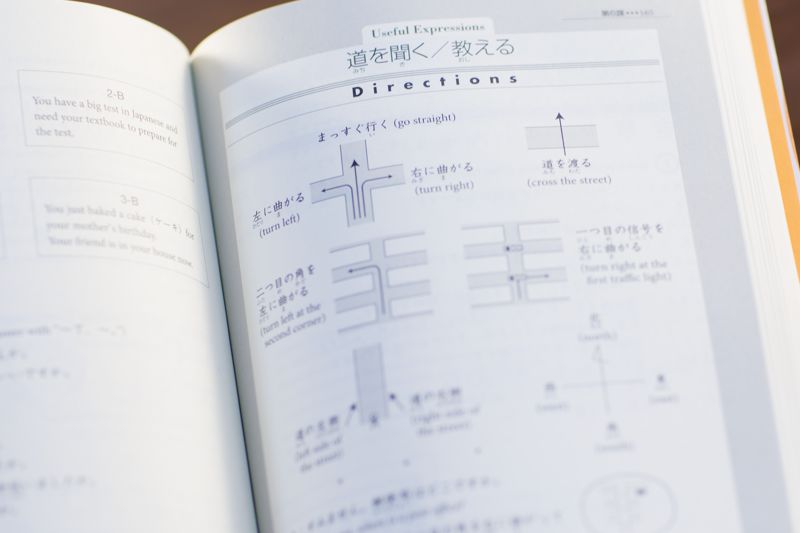
The third type of breakout box is the most practical. Useful Expressions are exactly as the name suggests. They are lists of extra vocabulary and set phrases that will help in daily life. Even the college-centric lists such as "In the Classroom" and "In Japanese Class" contain words everyone should know.
Beyond simply listing words, some boxes contain helpful clarification or organization. For example, the "Colors" breakout box divides the Japanese color words into い-adjectives and nouns. It explains that い-adjective colors become nouns by dropping the い and noun colors need の to connect to other nouns. This is not something immediately apparent to beginners.
Here is a list Useful Expressions sections throughout the book:
- Time/Age
- In the Classroom
- Days/Weeks/Months/Years
- At the Post Office
- Directions
- Parts of the Body
- Colors
- At the Station
- In the Japanese Class
- Health and Illness
Though I did say Genki isn't for tourists, I would recommend vacationers take a look at the Useful Expressions, if they have a copy of the Genki textbook available to them. Memorizing all these would be helpful during a 2–3 week trip to Japan, especially when paired with a list of vital Japanese vocabulary.
My only complaint is there's not more Useful Expressions boxes. They're handy and it wouldn't be too hard to come up with a few more lists. When you consider there is a "Culture Notes" breakout box in every chapter, it's strange that some chapters don't have a Useful Expressions box.
Reading and Writing Section
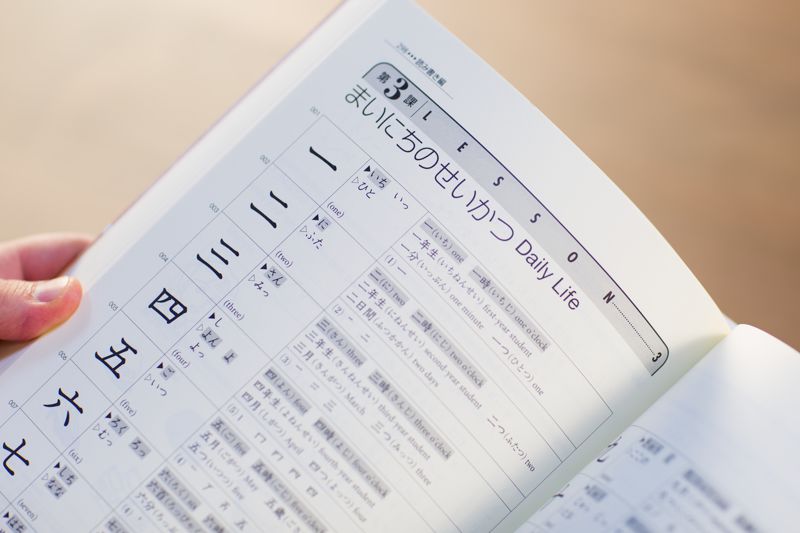
Genki's Reading and Writing section shouldn't be skipped. A mere 60 pages long, it's not much practice. But what you get is an emphasis on play and experimentation which will benefit the most motivated learners.
Each lesson in Reading and Writing corresponds to a chapter of the Conversation and Grammar portion. As you work through each chapter, you should flip to the back and complete the Reading and Writing lesson of the same number.
The first two lessons are kana. Lesson one practices hiragana and lesson two practices katakana. As I mentioned before, it's nice that Genki makes you learn kana so quickly. With mnemonics you can learn both writing systems in mere hours. The exercises in the first two chapters of this section will reinforce what you learn.
Chapters 1 and 2 jump straight into the practice exercises. Again, it's assumed you'll have an instructor to teach you the kana. Self-learners will have to use the kana tables on pages 24–26. There are also kana charts under the front and back covers.
Lessons 3 through 12 are all kanji. A list of kanji is presented in charts across two pages. It's assumed you will memorize them, put them in a flashcard deck, or do whatever. There are 14–16 kanji per lesson. Stroke order is shown but not taught. There is little handholding, so you'll have to make a plan to teach yourself the material before starting the practice exercises. If you want to practice writing kana or kanji, you'll have to purchase the separate workbook or use your own graph paper.
The kanji given to the reader to memorize are cherry-picked. They're useful and common, grouped into categories like "Daily Life," "Travel," and "The Folktale Kasajizo." Some sets are more useful than others. The progression of building on previous concepts seen in the grammar section is absent in the kanji section. You're expected to learn through cramming. Using rote memorization to force kanji into your brain isn't necessarily a bad idea. Just an inefficient and outdated one. Still, cramming these kanji may be worth your while. Assuming you keep up with the grammar lessons and learn the kanji required, the practice exercises in the Reading and Writing section are a powerful tool. Armed with knowledge, you get a chance to play with the language in a more creative way than in the grammar section.
Many exercises are similar to those in the rest of the book. Match this with that. Fill in the blank, etc. But there are a few which shine especially bright.
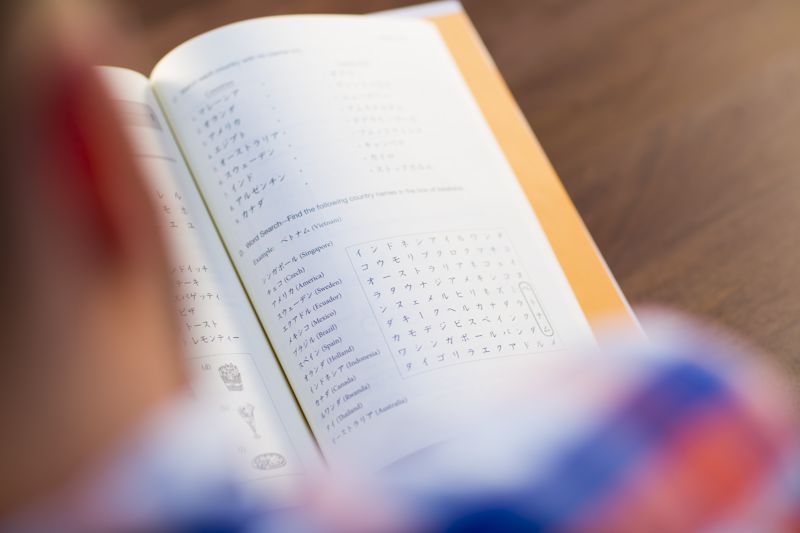
There's a katakana word search on page 295. When you're learning how to read kana, this is a great way to scan for characters and identify them. Going in different directions helps loosen up that brain.
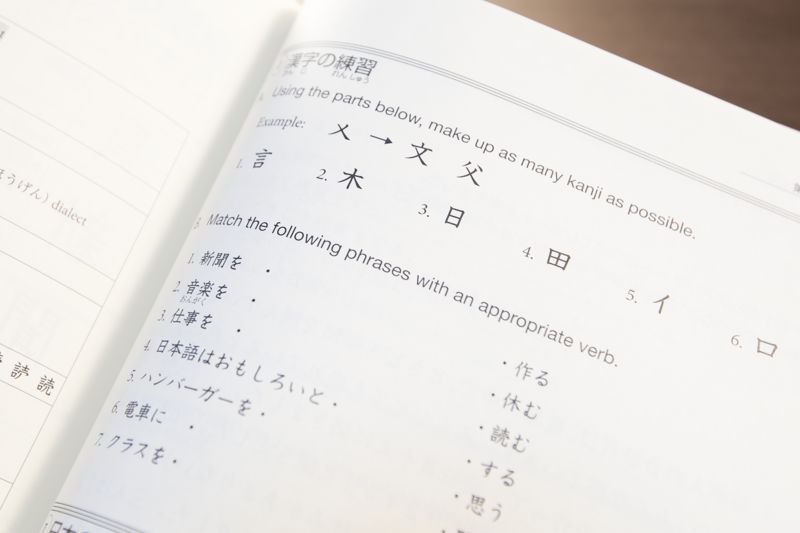
There's no mention of radicals, but the Genki textbook does introduce the concept with a "kanji combination" exercise. You're presented a certain number of kanji and told to combine them to create new ones. This tests your kanji knowledge and encourages you to research and make connections.
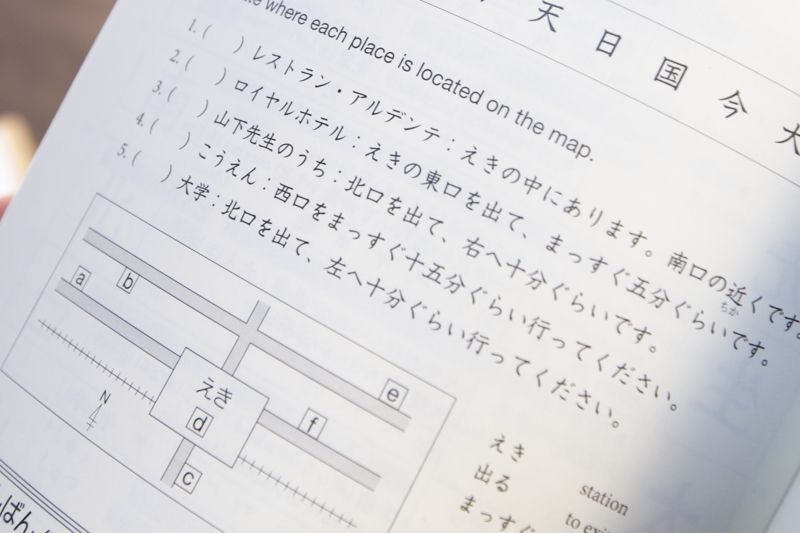
Maps and charts return in this section. But this time you're writing full sentences to describe actions or information in your own words.
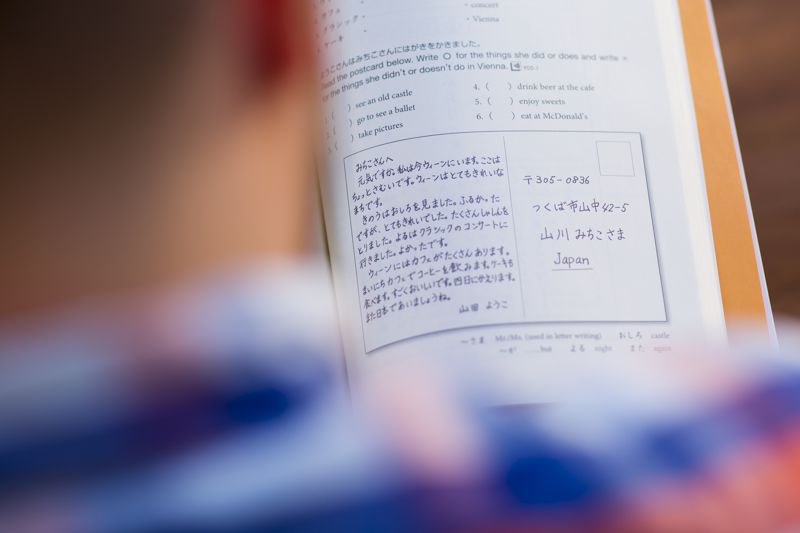
Some of the best exercises are the reading comprehension. When you start learning Japanese, reading is generally a waste of time. You don't know enough kanji and grammar, so you'll be constantly pausing to look up concepts you don't know. But if you've been keeping up with the lessons, the reading practice presented will only use Japanese you know.
Not only is the reading itself wonderful practice. You're asked questions based on the passages. Having to intake, process, and output all in Japanese is great experience and hard to find as a beginner. The CDs add listening and speaking practice to the mix. All the reading comprehension in these sections have corresponding audio files.
Similar to this are open-ended writing assignments that challenge your ability to form sentences and encourage self-expression. Things like:
You are organizing a party. Write a flyer about the party. Be sure to include: what kind of party it is, what time it starts, where it is held, what to bring, how to get there, and so on.
Language learning gets fun when you can express yourself properly. And getting small chances to do this early on is valuable. This is a self-guided section. Self-learners with low motivation will have trouble. But those that push through and do the work will get the most out of it.
Indexes
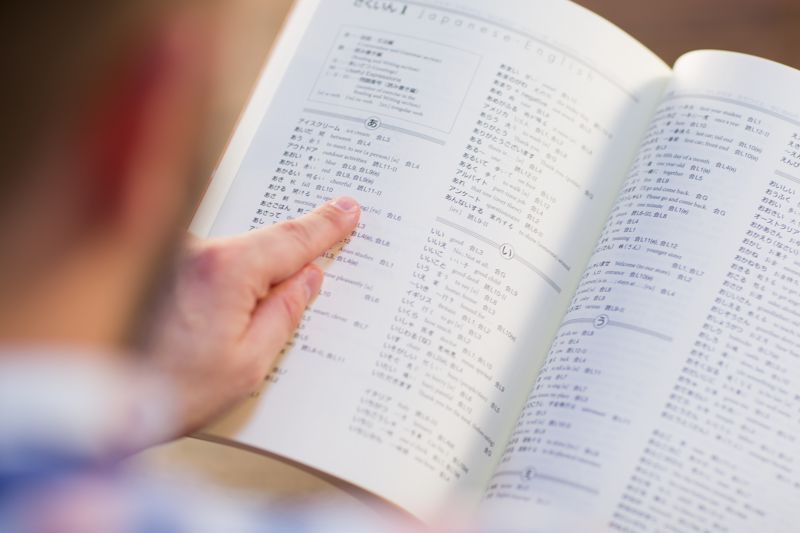
We're finally at the end of the textbook. And the end of a textbook means indexes! Beautiful indexes full of vocabulary. If you're looking for words to put into an SRS flashcard deck, here they are.
There's a Japanese-English (さくいん1) index and an English-Japanese index (さくいん2). A nice feature of both is the way it indicates your position in the index. There's a hiragana syllabary above the Japanese-English index and an alphabet above the English-Japanese index. Both are grayed out except for the particular letter or character covered on the page.
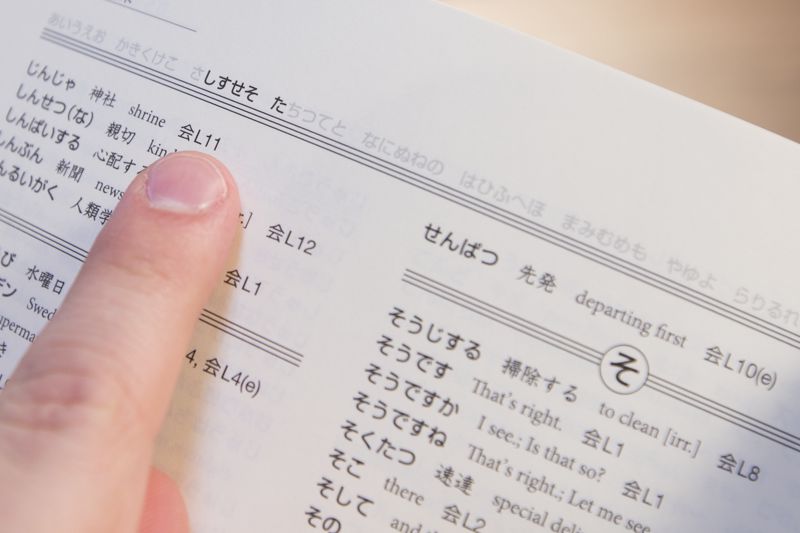
This is a minor feature but one that gives a more modern feel to the analog practice of looking things up in a book.
The entries of the Japanese-English index are kana, kanji, English, and section marker. There's a section legend at the beginning of the index to let you know which symbols represent which section. The English Japanese index is similar, with the major exception being the order of the entries. In this case it's English, kana, kanji, and section marker.
Map of Japan
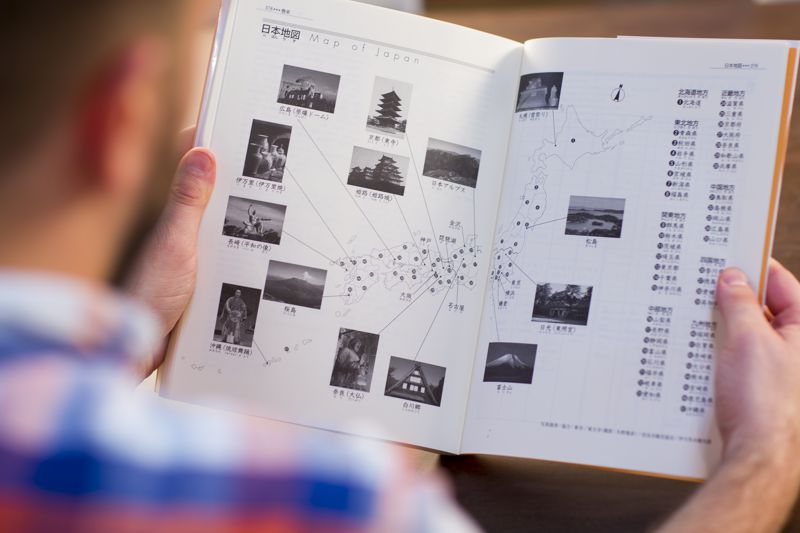
This is exactly as the name describes. A map of Japan with each prefecture listed in kanji. There are some pictures too, which are okay for tiny black and white pictures printed in a textbook. Could be a useful tool if you're stuck on an airplane without internet access or something. Otherwise, check online for better maps with better features.
Numbers
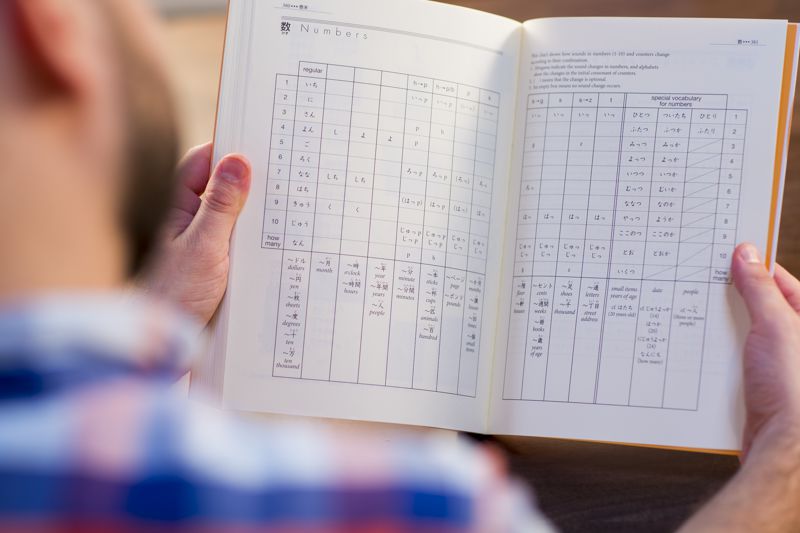
Just when you think this textbook is out of material, it surprises you. The Numbers chart is handy, though incomplete. Japanese has a ton of counters that change the reading of the number depending on what you're counting. いち (1) can change to ひとつ, ひとり, いっかい, いっぽん, and lots of other things. This chart tells you how to render one through ten for 37 different categories of things. For those confused by counters, seeing them all lined up in chart form could help break the concept down into more understandable pieces.
Verb Conjugation Chart
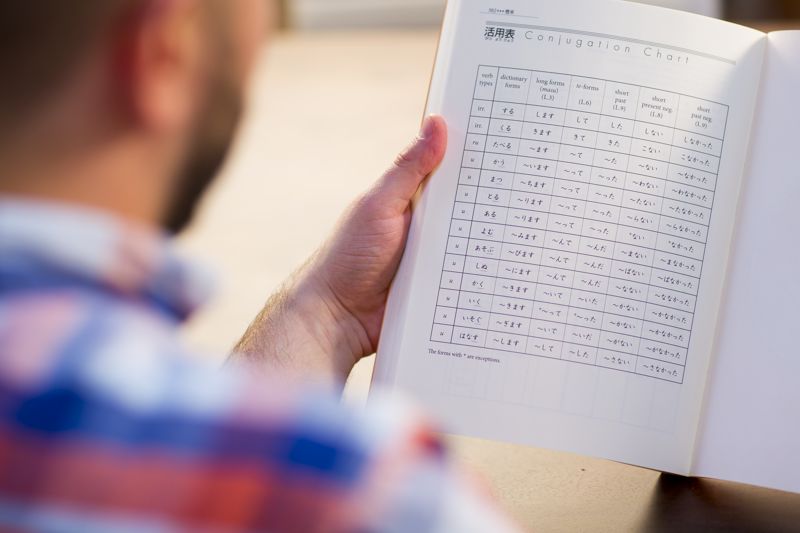
The Genki textbook gives you one final gift before signing off, a verb conjugation chart. Like the numbers chart, this is super helpful but even more useful.
For those struggling with verb conjugation, this chart lines everything up for easy study. It doesn't provide every verb conjugation. Only those introduced in this book. But for a beginner these are great foundational conjugations to practice. Trying to tackle the entirety of conjugations at once is too much. Master these and you'll have an easier time with basic conversation. From there, you'll be more than able to tackle the conjugations in the Genki 2 textbook.
The Genki Textbook Look and Feel
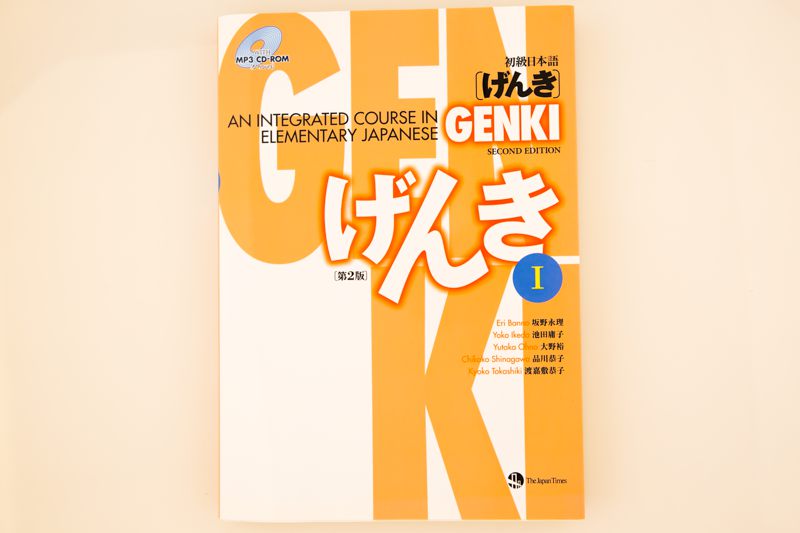
The physical makeup of the Genki textbook may seem trivial, but it's a lot of little things that impact learning in their own way. Your first impression of the textbook will probably be its nice glossy cover. When you pick it up, it feels heavy for a paperback. Considering the density of information inside, the weight is welcome.
The cover design is okay. It's close to clean and modern, but still feels early 2000s. Remove the outlined "げんき" logo, rearrange some of the text elements, and it would feel less dated.
Inside is a nice mix of fonts, serif fonts being the most dominant. It's academic, but other font styles paired with illustrations let you know the learning will be fun. Some pleasure with your pain (and gain).
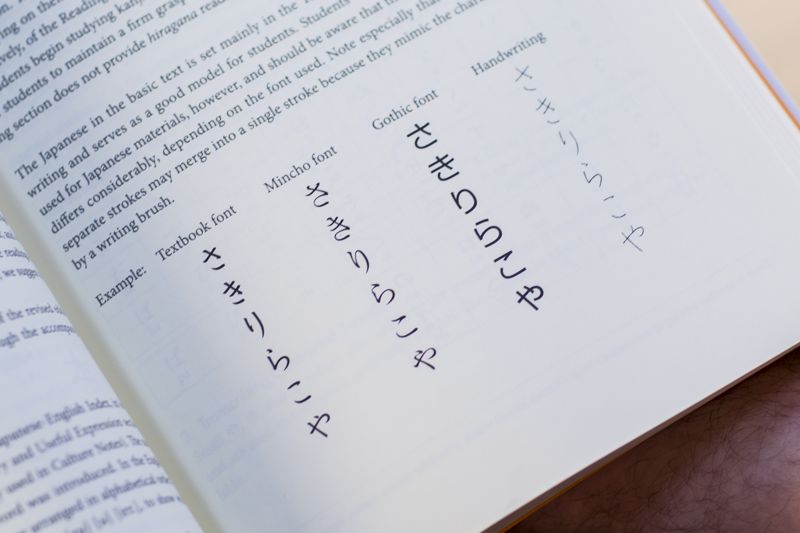
The majority of the Japanese text is set in what Genki calls "textbook" font. It closely resembles handwriting. This is great because you'll be doing so much writing in the exercises.
Everything is black and white. No distracting colors, which is a big plus. It sucks when a language book confuses "engaging" with "colorful."
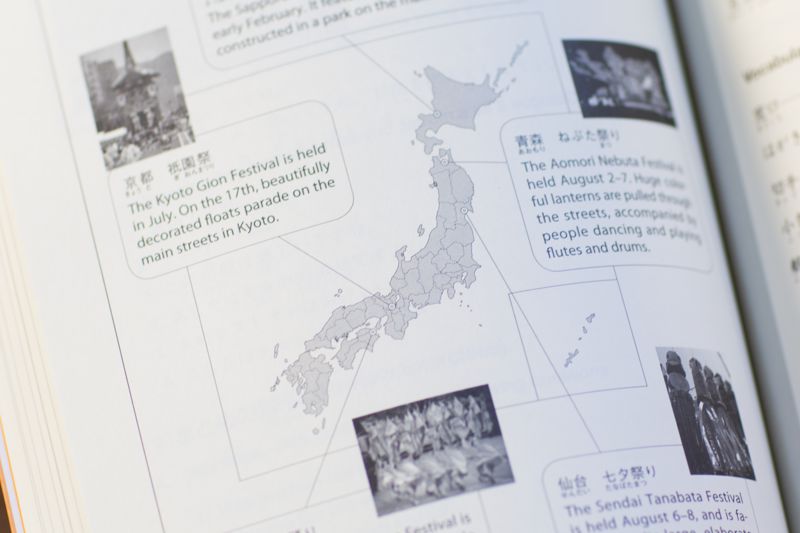
The photos are competent and high enough resolution. Unfortunately, their small size destroys their impact. Photos are mostly used for Culture Notes breakout boxes. Without the pictures, the Culture Notes would feel much hollower. So the photos are necessary, despite their shortcomings.
Genki's information is well organized, especially considering its density. Columns and sections make the knowledge easy to navigate. The margins and alignment offer plenty of white space. Visual appeal aside, Genki's design invites you to write in the pages. And those who take notes, highlight, dog-ear, and doodle will learn the most. Though some have advocated for a Genki textbook pdf, I think it's a bad idea. It might be handy to have on an e-reader, but you won't learn nearly as much without physical space to take notes.
Physically speaking, the paper is mid-grade. It won't tear easily, but it's not super thick. The book itself is hard to keep open on a table. You'll find yourself using a heavy flat object to keep it from snapping shut. Bend that spine back as soon as possible for an easier learning experience. The provided CD is stored in the back flap. This makes it tough to flip through the Genki textbook. Take the CD and store it in a safe place, like a jewel case or CD holder. The dust jacket is similarly annoying, always slipping off or popping up during study sections. Remove and store or trash it.
Genki I Workbook
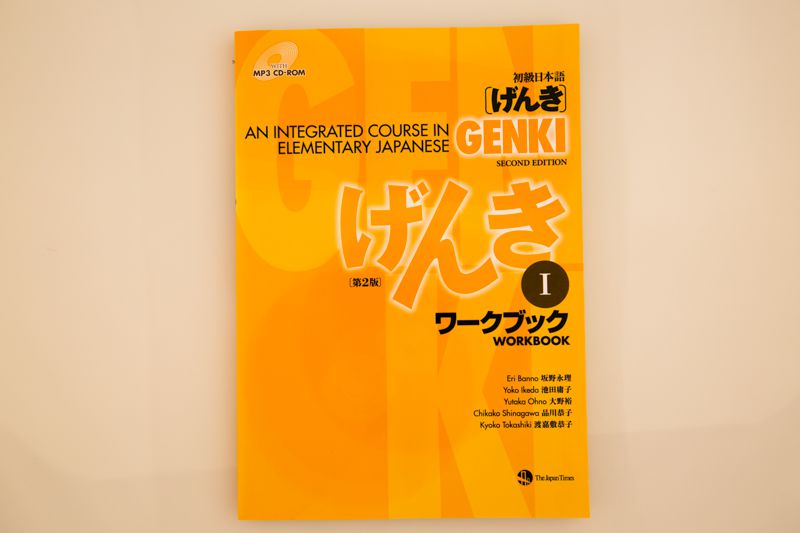
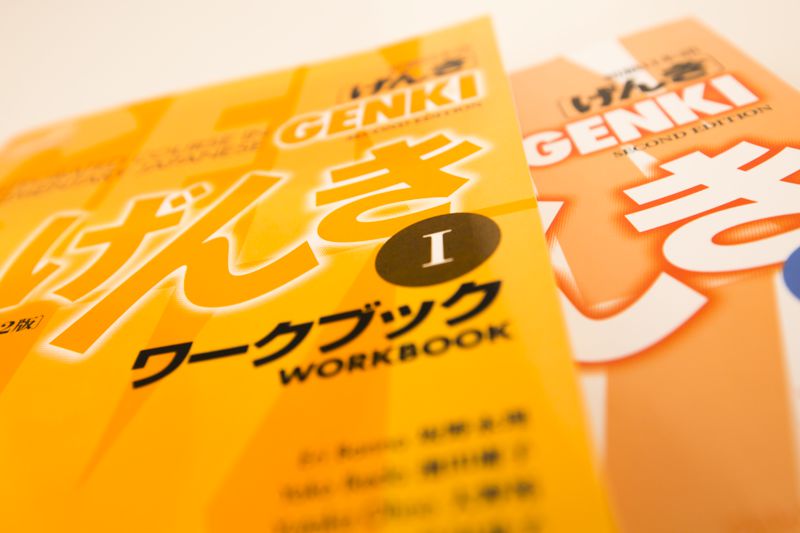
You can (and should) make your own exercises to practice what you're learning. But if you find well-constructed Japanese practice that is perfectly in line with your studies, grab it. The Genki Workbook is exactly that, and worth grabbing.
The Genki Workbook is divided into 2 sections:
- Dialogue and Grammar
- Reading and Writing
The Dialogue and Grammar section is practice for all the grammar in the textbook. Think of it as extra exercises which reinforce the grammar you're learning. The Reading and Writing section of the workbook corresponds with the textbook in the same way. It contains handwriting practice and translation exercises.
At its core, the workbook is a collection of extra practice to help cement the lessons learned in the textbook. And that's wonderful. Doing the workbook in conjunction with the textbook exercises makes your learning concrete. Even better, the exercises in the workbook are different than in the textbook. Mostly because they are open-ended and encourage self-expression.
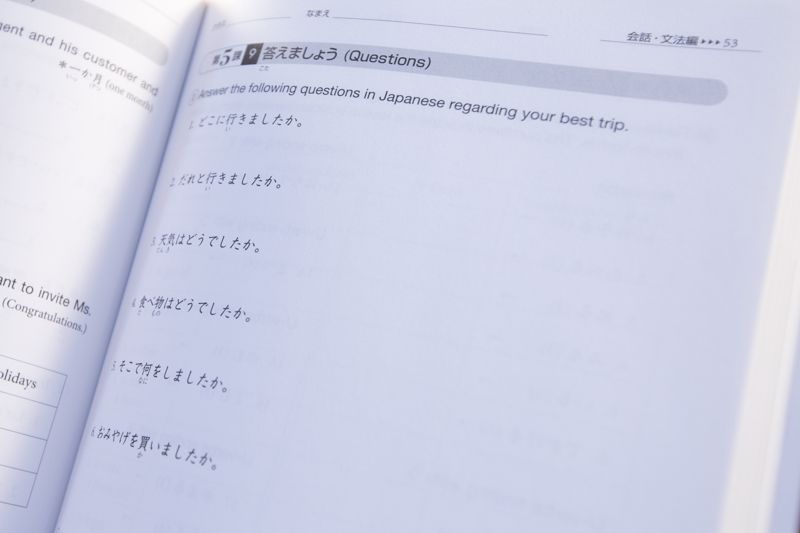
For example, you get sentence translation exercises. This may sound straightforward. But there's rarely only one correct way to translate a sentence from Japanese to English and vice versa. Also there are exercises like on page 53, "Answer the following questions regarding your best trip." You have to read in Japanese, write in Japanese, and draw from your own personal experience. Once you've learned a fair amount of kanji, you get truly open-ended questions like "Report tomorrow's weather of the place you live" and a big blank space.
There is some reading comprehension, but little beyond individual sentences. There are a few short paragraphs to read and answer questions. Thankfully the Reading and Writing section of the textbook has you covered for reading practice. But it would have been nice to have more in the workbook.
What the workbook lacks in reading comp, it makes up for in listening. Many exercises have corresponding audio files on the included CD. This gives vital listening practice for beginners.
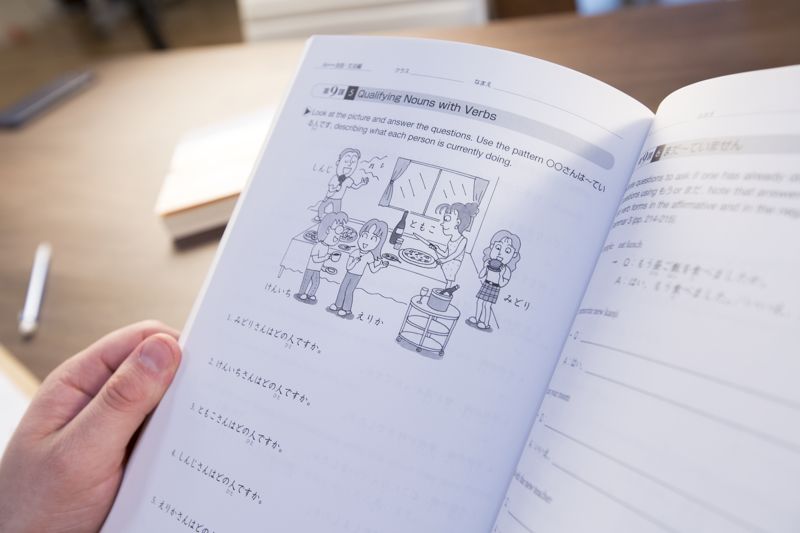
Here's a list of the kinds of exercises you'll encounter in the workbook.
- Translate from Japanese to English
- Translate from English to Japanese
- Conjugate the verbs
- Look at the picture and write about the picture in Japanese
- Answer Japanese questions in Japanese
- Here's the answers, now ask the correct questions
- Write both questions and answers in Japanese
- Listen to the audio clip and choose the correct answer
- Listen to the audio clip and answer questions about it
- Listen to the audio clip and fill in the table
- Read the passage, listen to the questions, and write the answers
- Complete the conjugation table
- Describe what you (did/ate/saw/visited/etc)
- Describe what you think about each thing in the list
- Read the Japanese passage and draw what the passage describes
- Write sentences using the target grammar
- Choose words/grammar from a list and make sentences
- Complete the dialogue
- Describe the person, place, or thing
- Interview a person in Japanese and get their answers in Japanese
- Give advice
The Reading and Writing section of the workbook is small, but worth doing for the writing practice. Each chapter gets two pages, one for kanji/kana practice and one for exercises. The kanji/kana practice pages are meant to be photocopied multiple times for extra practice. So avoid writing in these. The practice exercises for each chapter are the same, one fill-in-the-blank and one translation.
Genki Audio CD-ROMs
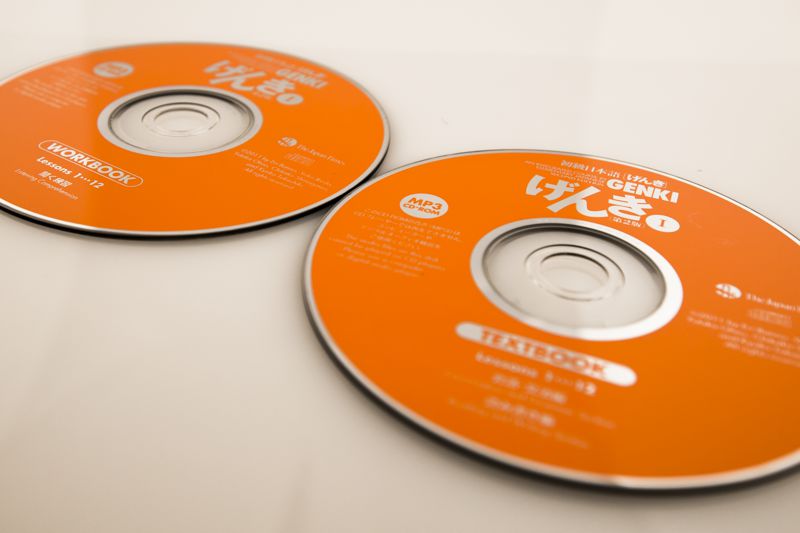
The CDs are indispensable. It's great The Japan Times decided to pack them in with the second edition. They used to cost extra in the first edition, and were in a different file format. The audio clips fill in the listening/speaking gap present with most textbook learning. Though there are many Japanese audio resources available online now, the Genki audio is good quality and the content pairs perfectly with your studies.
The clips are slow and clear for the beginner's ear, but not pandering. They'll challenge elementary listening. Eventually you'll want to find more listening practice. But as a complete beginner, the CDs are perfect.
The audio quality is hit or miss. Sometimes the clips sound like they were recorded in a closet. Sometimes they're perfectly clear. Sometimes they sound like they were exported in low quality and added alongside the high quality clips. I couldn't find a pattern either. Sometimes the English speakers would sound tinny, and sometimes it was the Japanese speakers. In a clip about number pronunciation, one of the numbers was randomly tinny, low quality, and spoken by a different Japanese voice actor than the rest of the numbers in the sequence. Today, podcasters and hobbyists put out high quality audio every day. It makes the Genki CDs seem low quality by comparison.
Quality aside, the voice actors are both male and female, which is great. When you start learning, it's important to hear the differences between masculine and feminine Japanese. And the voice actors vary in age too. The male voice sound anywhere between late twenties to mid-forties. The female voices vary between early twenties to early sixties. Getting such variety from your listening practice make these CDs extra valuable.
Be aware the CDs are not audio CDs. They're CD-ROMs. The first edition CD set was audio CDs. But they were a set of 6 CDs per volume. The Japan Times fit the 6 CDs worth of audio files onto two CD-ROMs, meaning less physical hassle for the consumer. It also means the new CDs won't play in a CD player. They're not made to play files, just store them. So you'll need to put the Genki CDs into a computer, and drag the files into a folder. From there you can do with them as you please. Put them into iTunes. Load them on your phone. Burn them onto an audio CD. Whatever you do, it'll definitely be worth the effort.
People online claim the mp3 files on the CDs are disorganized and hard to sort. Personally, I don't see what the problem is. I popped the textbook CD into my laptop and was presented with 2 folders:
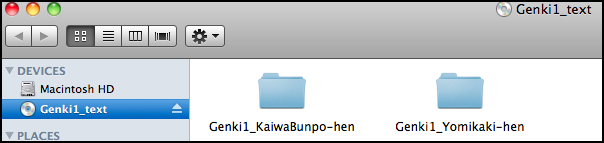
One labeled "Genki1_KaiwaBunpo-hen" for the Conversation and Grammar section and the other labeled "Genki1_Yomikaki-hen" for the Reading and Writing section. Definitely not user friendly, but everything was organized. Inside the folders are the files:
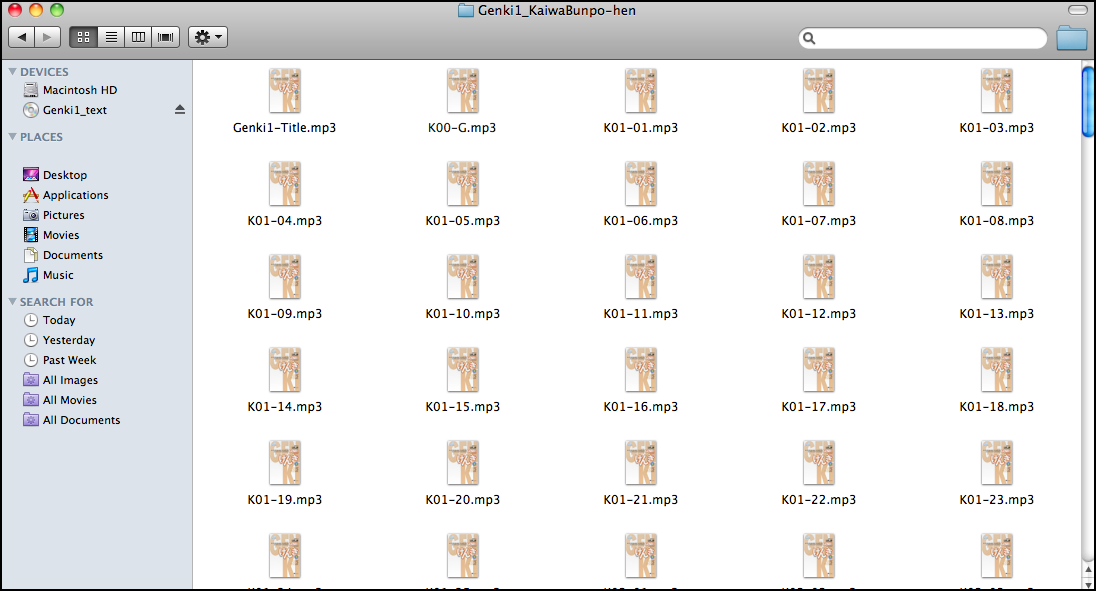
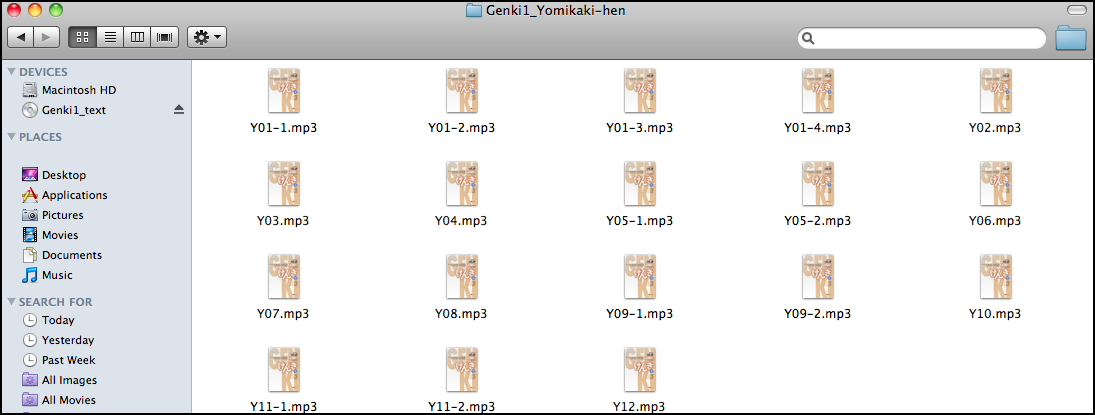
I understand this is confusing at first glance. But the filenames correspond exactly with the audio icons in the textbook. Since the audio was made to be used with textbook, it makes sense. Could they have been organized better? Definitely. But it's not anything that will keep you from finding and using the files.
Full disclosure, I used the Genki CD-ROM on a Mac. I didn't try it on a Windows machine. It's possible accessing the files on Windows is more difficult somehow. If you need help getting the files on iTunes, the Genki website has instructions.
My biggest complaint is that CDs are used at all. Navigating the files and accessing them isn't a problem. It's finding a CD drive that's an issue. Back in 2011 when the second edition was published, CD drives were still a common feature on laptops. But with the advent of tablet computing, access to a CD drive is less and less common. It's nice to have a physical copy of the audio files. But it wouldn't be too difficult include a slip of paper with a key for downloading the files from a cloud. Some kind of access to a member's only Genki textbook download area. Including the CD-ROM was a perk in 2011. Today, not as much. However, it should be noted that most textbooks still come with CDs. So it's not that Genki is "behind" necessarily. It's just that the Japanese textbook world has yet to make a foray into cloud-based computing.
The Genki Textbook Price
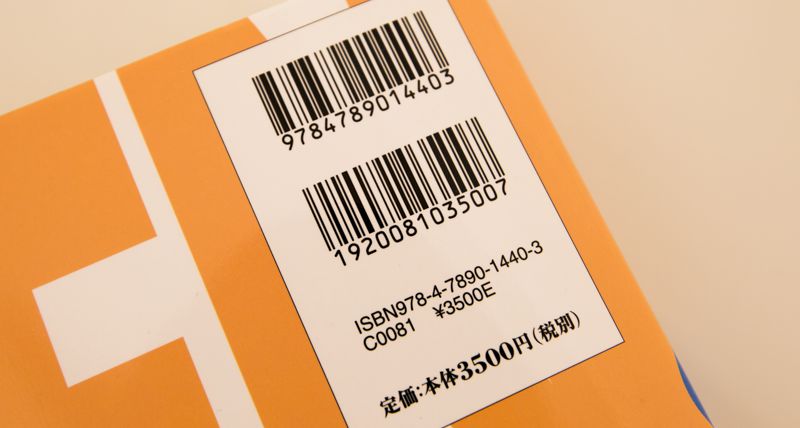
Perhaps the biggest complaint people have with Genki is the price. The retail price in the US is $59.99 for the textbook and $29.99 for the workbook. That's about $90 for the first volume. Add another $90 if you're getting Genki II at the same time.
How does this compare to other Japanese textbooks? Here are the retail prices of the first volumes of some of the most popular:
| Textbook | Price | Workbook | CDs | Total |
|---|---|---|---|---|
| Genki | $60 | $30 | Included | $90 |
| Minna no Nihongo | $25 | $9 | Included | $34 |
| Japanese for Busy People | $27 | $22 | Included | $49 |
| Kakehashi | $40 | $20 | N/A | $60 |
| Adventures in Japanese | $70 | $30 | $60 | $160 |
| Marugoto | $23 | N/A | N/A | $23 |
This makes Genki a little pricier than average. But it's a steal when you consider the quality you're getting. You may pay $49 for Japanese for Busy People, but you'll get less than $49 worth of education from it.
If you really want to get a deal on the Genki books, buy them from a retailer in Japan. On Amazon.co.jp the textbook sells for ¥3500 ($29 USD) and the workbook sells for ¥1600 ($13 USD). That's like getting both half off! Of course, this doesn't include shipping. To calculate Amazon Japan's shipping to your country, check out their international shipping page.
The Real Deal
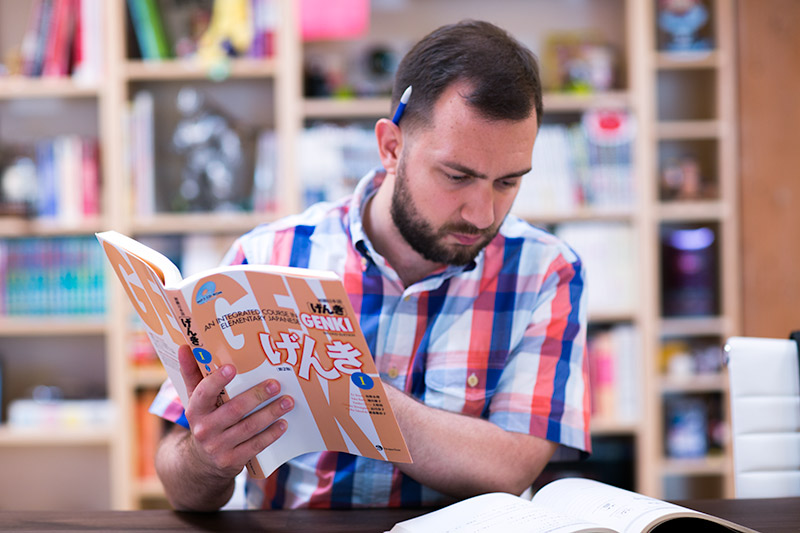
Genki isn't the only Japanese resource you'll ever need. But it can be your primary textbook at the beginning of your Japanese language learning journey. It manages to be simultaneously inclusive and challenging. Its predictable lesson structure and scaffolding progression ensures you're always slowly and surely moving forward. The grammar explanations are such home runs they mostly make up for any shortcomings. Adding the CDs and workbook to your study regimen cements Japanese grammar concepts further than the textbook does alone.
Of course, if you're self-learning, using the Genki textbook will take more effort. It was designed for university classrooms, so you'll need a friend or answer key to check your work. You won't get a ton of example sentences with the grammar explanations, so plan to use other resources to cross reference grammar you have questions about. The vocab lists are fine, but less than you'll need to converse comfortably. Adding massive SRS vocab study will make your conversation more powerful than it would be otherwise.
In the end, it's up to you to decide whether or not Genki is right for you. It's perfect for classroom learning. So if you're thinking of signing up for a Japanese class that uses Genki, jump on it. With some effort, it could be excellent for self-learners too.

Kristen’s Review
The Genki series was my first Japanese textbook, and I loved it. My entire Japanese-language foundation is thanks to Genki! But! I used it in a school setting, so I am definitely biased. But but! As I worked my way through it, I saw how students at other school struggled with their textbooks and I can’t tell you how thankful I am that I happened to go to one that chose these books. Whenever someone asks me what textbook they should start with, I point to Genki.

Koichi’s Review
Genki is probably one of the best beginner Japanese textbooks out there. That said, there aren’t any amazing textbook options out there, so just being pretty decent puts you on the top. Genki is pretty decent, in my opinion. Get the workbook, because it was designed for teachers (who create additional materials for their students to fill in the practice voids).

Michael’s Review
When I think of Genki, “solid” is the first word that comes to mind. It covers what you need to know as a beginner and gives you a great foundation. Other books may exceed Genki in a few areas, but very few can offer the overall quality you get here.