Beginning Japanese I: Where do self-teachers start?

For some reason I’ve been getting a lot of emails regarding this subject lately. There are a lot of people out there learning Japanese on their own who don’t know what to do first. Of course, there isn’t a set way to start learning Japanese. Everyone will have their own opinions and their own ideas on how it should be done. I think mine are pretty standard, and nothing revolutionary, but hopefully it will be a good jumping off point for some beginners out there who don’t know what to do next.

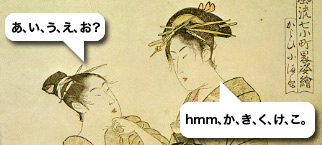
  1. Start with hiragana. Most class settings start you off by learning some basic words, and that’s graavvy, but when learning on your own, I think you need to take a slightly different approach. Since you are learning alone, you won’t get help with your pronunciation from your teacher. You need to start with hiragana in order to learn the basics of how Japanese sounds, and how the structure of the letters works. By learning hiragana first, you will understand how words are put together, and how they are said. If you don’t have a teacher to correct you, learning hiragana will give you the best base that you can get for starting Japanese.
  2. Make sure you check your pronunciation: There are sites out there that will help you pronounce all those crazy Japanese syllables. Practice your hiragana by saying it with the computer. Once you can say all the letters perfectly, you are well on your way to having good pronunciation.
  3. Start putting together words: Now you know hiragana, so start using it! If you’ve managed to get this far, you probably know a few words. Start spelling them out and say them out loud. I remember the first day I could spell sushi. That’ll be one of your first words, like a little baby.
  4. Right about here is where you pick up a beginning Japanese textbook like Genki or Yokoso and do what it tells you. Those aren’t necessarily the best Japanese text books, but they’ll do the job. Remember, learn hiragana first, and then break your text book open. I guarantee you will have stronger basics and it will speed up your learning in the long run. Everyone faito!

That about does it. If you have any more questions, or anything to add, please do! There are so many things that us “classroom Japanese learners” take for granted that can’t be compared to the self-learner. I think there are a lot of people out there trying to learn on their own, so let’s support each other with ideas, mistakes, and success stories…just don’t tell me about how your love for Naruto inspired your Japanese language abilities, or you’ll get some Pepsi-man shafting.

  • josh

    and when am I supposed to use on and kun readings I just dont get it these are the questions that haunt me

  • http://www.tofugu.com Erin

    The difference between です (desu) and います (imasu) is that います refers to “is” or “am” or “are” for animate objects, living things, while です refers to those same things for inanimate objects. That’s the short answer, anyway.

  • http://www.tofugu.com Erin

    Another short answer: use the on reading when the kanji is used in combination with other kanji, and kun reading when the kanji is by itself.

  • Kurisutofa

    Funny this was mentioned… I just got done with a lesson relating to this subject.

  • josh

    well how do you know which to use if theres more than one type of reading.
    ex.getsu gatsu,jin nin,or…well you know

  • Onimusha Nosferatu

    i feel compelled to clarify this even though i don’t think i should. imasu and arimasu mean to exist/be, but only in a location sense. you use desu to mean the verb “to be” in english (even though it’s not a verb it’s a copula- don’t worry about that) when ur not talking about a location of something. the difference btwn imasu and arimasu is that imasu is used for living things (except for plants) and arimasu is used for non-living things.

  • Onimusha Nosferatu

    the best answer to the kun/on reading is to just learn words and you’ll see the kanji so you know how to pronounce it. what erin said is correct. for example 新聞 聞く the 1st one is shinbun (newspaper) the 2nd is kiku(to listen). the ku is just okurigana. it helps if you know the stories behind kanji. it helps you guess the meaning of words you don’t know. 火山 fire + mountain = volcano(kazan). um… the kanji inside 聞 is mimi(ear) so it’s logical to think of kiku to mean to listen.

  • Kurisutofa

    Funny this was mentioned… I just got done with a lesson relating to this subject.

  • Sexy Beam

    You just have to kind of learn the readings from actual words that use them. Don’t try to just put words together from a list of readings.

    So let’s take 人 for example. By itself, it will be “hito”. But you really just need to learn the other readings in the context of real words. Here are some examples:

    韓国人 – kan-koku-jin (Korean person)
    三人 – san-nin (three people)
    旅人 – tabi-bito (traveler)
    二人 – futari (two people, this is irregular)
    大人 – otona (adult, also irregular)

    Remember – if Japanese people can learn it, you can too. No one said it was gonna be easy though.

  • Sexy Beam

    You just have to kind of learn the readings from actual words that use them. Don’t try to just put words together from a list of readings.

    So let’s take 人 for example. By itself, it will be “hito”. But you really just need to learn the other readings in the context of real words. Here are some examples:

    韓国人 – kan-koku-jin (Korean person)
    三人 – san-nin (three people)
    旅人 – tabi-bito (traveler)
    二人 – futari (two people, this is irregular)
    大人 – otona (adult, also irregular)

    Remember – if Japanese people can learn it, you can too. No one said it was gonna be easy though.

  • josh

    domo arigato mina san!!!This is the best site ever

  • josh

    how much yen is 1 us dollar worth

  • http://www.tofugu.com Erin

    Josh, you can figure the dollar to yen thing out via Google. Feel free to ask complicated questions here, but try to figure out the easy ones yourself, if possible, yeah?

  • josh

    domo arigato mina san!!!This is the best site ever

  • josh

    how much yen is 1 us dollar worth

  • http://www.tofugu.com Erin

    Josh, you can figure the dollar to yen thing out via Google. Feel free to ask complicated questions here, but try to figure out the easy ones yourself, if possible, yeah?

  • TofuUnion

    I was impressed so many people outside Japan are learning Japanese. I am a Japanese native and I could give you some advises in some Japanese pronunciations, as I understand the differences from English.

    1. “う or U”
    “う or U” is NOT a sound of Book (or bUc). Japanese “う or U” is a very weak sound. If you know French “e”, it’s almost the same sound.
    So, “く す つ ぬ ふ む ゆ or Ku Su Tsu Nu Fu Mu Yu” is similar very weak sound. As a example, “する or Suru” will be pronounced often like sru or sul.

    2. “お or O” is a short sound NOT long.

    3. “し or Shi”
    “し or Shi” is NOT a sound of SHIt. Often it sounds like just “sh”. So “しま or 島 or Shima” will be pronounced almost like “Shma”. But you have to pronounce like Shima but without strong i sound.

    4. “L” and “R”
    I know in all Japanese text books you read ら り る れ ろ being Ra Ri Ru Re Ro. But I find it better for American to pronounce “L” instead of “R”. I would say “L” sound is more natural to Japanese. (Most Japanese cannot clearly distinguish “L” and “R” sound. )

    I hope it helps you.

  • TofuUnion

    I was impressed so many people outside Japan are learning Japanese. I am a Japanese native and I could give you some advises in some Japanese pronunciations, as I understand the differences from English.

    1. “う or U”
    “う or U” is NOT a sound of Book (or bUc). Japanese “う or U” is a very weak sound. If you know French “e”, it’s almost the same sound.
    So, “く す つ ぬ ふ む ゆ or Ku Su Tsu Nu Fu Mu Yu” is similar very weak sound. As a example, “する or Suru” will be pronounced often like sru or sul.

    2. “お or O” is a short sound NOT long.

    3. “し or Shi”
    “し or Shi” is NOT a sound of SHIt. Often it sounds like just “sh”. So “しま or 島 or Shima” will be pronounced almost like “Shma”. But you have to pronounce like Shima but without strong i sound.

    4. “L” and “R”
    I know in all Japanese text books you read ら り る れ ろ being Ra Ri Ru Re Ro. But I find it better for American to pronounce “L” instead of “R”. I would say “L” sound is more natural to Japanese. (Most Japanese cannot clearly distinguish “L” and “R” sound. )

    I hope it helps you.

  • Sexy Beam

    I saw this ad for an auction on eBay that I found absolutely hilarious:

    http://cgi.ebay.com/ws/eBayISAPI.dll?ViewItem&a

    I think I officially forgive the people who think they can learn Japanese from watching anime now.

  • Sexy Beam

    I saw this ad for an auction on eBay that I found absolutely hilarious:

    http://cgi.ebay.com/ws/eBayISAPI.dll?ViewItem&item=150134557661&ih=005&category=3144&rd=1

    I think I officially forgive the people who think they can learn Japanese from watching anime now.

  • Kurisutofa

    “Repeat after me, ‘I am nobody’s doormat… turn tape over NOW.”

  • Kurisutofa

    “Repeat after me, ‘I am nobody’s doormat… turn tape over NOW.”

  • http://www.myspace.com/chibimaru7 fosta7

    i no im kinda late on this one, this was like a week ago but
    i just wanted to kno…
    when sayin and inanimate object is there do u us imasu?
    or is arimasu used when sayin an animate object is there ?

    inu ga arimasu ?

    hon ga imasu ?
    or do i have them right the way they are?
    i havent got my japanese tutor yet but i dont want to seem so clues when i get there

    teeburu no ue in hon ga arimasu? i kno its different them what i said up there but im cunfused

    reply back erin or koichi
    plz!! u guys are really cool!?!

  • http://www.myspace.com/chibimaru7 fosta7

    also im teaching myself right and when i watch japanese tv i can understand some words they say
    i can aslo order food introduce myself etc.
    but i just wanted to no what u guys think if i learn how to speak it first well would i have a better chance of understanding hiragana and katakana ?
    thats all^_^

  • http://www.myspace.com/chibimaru7 fosta7

    i no im kinda late on this one, this was like a week ago but
    i just wanted to kno…
    when sayin and inanimate object is there do u us imasu?
    or is arimasu used when sayin an animate object is there ?

    inu ga arimasu ?

    hon ga imasu ?
    or do i have them right the way they are?
    i havent got my japanese tutor yet but i dont want to seem so clues when i get there

    teeburu no ue in hon ga arimasu? i kno its different them what i said up there but im cunfused

    reply back erin or koichi
    plz!! u guys are really cool!?!

  • http://www.myspace.com/chibimaru7 fosta7

    also im teaching myself right and when i watch japanese tv i can understand some words they say
    i can aslo order food introduce myself etc.
    but i just wanted to no what u guys think if i learn how to speak it first well would i have a better chance of understanding hiragana and katakana ?
    thats all^_^

  • http://www.tofugu.com Erin

    I think you’ve got it mixed up? For living things you say います and for non-living things you say あります. Haha, us? Cool? No way~!

  • http://www.tofugu.com Erin

    I think you’ve got it mixed up? For living things you say います and for non-living things you say あります. Haha, us? Cool? No way~!

  • waenhir

    Hi there!

    I am just beginning to learn Japanese and found Japanesepod 101 the best tool in learning for me! I just want to tell anyone out there like me who has absolutely no time to take classes to try their website.

  • waenhir

    Hi there!

    I am just beginning to learn Japanese and found Japanesepod 101 the best tool in learning for me! I just want to tell anyone out there like me who has absolutely no time to take classes to try their website.

  • Toto

    Hey.. I know this is real late, but just in case anyone is still checking this! I wanted to offer an explanation of desu/imasu/arimasu, because as far as I know, Sexy Beam’s is wrong, and Onimusha Nosferato’s is correct, but may be hard to understand without examples. So!

    Imasu/arimasu have the same meaning, which is “be”, as in “to be situated somewhere.” The difference is that arimasu is for inanimate objects. For example:
    Watashi wa niwani imasu
    Hana wa niwani arimasu

    Desu, strictly speaking, isn’t a verb, but for simplification purposes, it has two functions. Firstly, it’s used as “to be” – for example, Tanaka san no okusan wa kirei desu. (Mr Tanaka’s wife is pretty). Secondly, it can replace a particle&verb, if these are understood, e.g.:

    “Kono chikaku ni resutoran ga doko ni arimasuka?” (It’s a pretty terrible sentence, but it’s the only one I could think of off the top of my head.. it means “where’s a restaurant around here?”)
    “Chikatetsu no eki no naka desu” (It’s in the subway station)

    As you can see, in the reply, “desu” is used to replace the longer “ni arimasu”.

    As far as I know, this is a pretty complete explanation. Feel free to email me if you have further questions.. Oh, as for self-teaching! For oral japanese, Pimsleur’s programmes are simply fantastic. Though they will teach you little grammar, they’ll let you “feel” the basics of Japanese on an instinctive level and help you set up your pronounciation. If you take out a half-hour every day, you can get through Pimsleur Japanese 1 in a month, and take another half-hour every day to learn Hiragana and Katakana. Once you’re done with that, you should be able to handle a basic textbook..

    I would personally use Genki, because it comes with audio and is thorough; however, it’s also quite long. My university uses Japanese for Busy People; the Romaji version is crap, but the kana isn’t bad, and it’s also very succinct. Since I want to try and go into Japanese 3 next year, I’m trying to do Japanese for Busy People 1&2 this summer (halfway through volume 1 right now, and I have until October). 2 weeks ago, I had no knowledge of Japanese outside of what I learned from Pimsleur, though I could read Kana. I think an absolute beginner could handle Japanese for Busy People 1 in 2-3 months, with ease.

    I also have a question of my own.. I’m pretty good at memorising all the grammatical patterns and crucial words, but there’s a whole lot of less important words that just drop out of my mind once I’m done with a chapter. What’s a good way to boost my vocabulary?

  • Toto

    Hey.. I know this is real late, but just in case anyone is still checking this! I wanted to offer an explanation of desu/imasu/arimasu, because as far as I know, Sexy Beam’s is wrong, and Onimusha Nosferato’s is correct, but may be hard to understand without examples. So!

    Imasu/arimasu have the same meaning, which is “be”, as in “to be situated somewhere.” The difference is that arimasu is for inanimate objects. For example:
    Watashi wa niwani imasu
    Hana wa niwani arimasu

    Desu, strictly speaking, isn’t a verb, but for simplification purposes, it has two functions. Firstly, it’s used as “to be” – for example, Tanaka san no okusan wa kirei desu. (Mr Tanaka’s wife is pretty). Secondly, it can replace a particle&verb, if these are understood, e.g.:

    “Kono chikaku ni resutoran ga doko ni arimasuka?” (It’s a pretty terrible sentence, but it’s the only one I could think of off the top of my head.. it means “where’s a restaurant around here?”)
    “Chikatetsu no eki no naka desu” (It’s in the subway station)

    As you can see, in the reply, “desu” is used to replace the longer “ni arimasu”.

    As far as I know, this is a pretty complete explanation. Feel free to email me if you have further questions.. Oh, as for self-teaching! For oral japanese, Pimsleur’s programmes are simply fantastic. Though they will teach you little grammar, they’ll let you “feel” the basics of Japanese on an instinctive level and help you set up your pronounciation. If you take out a half-hour every day, you can get through Pimsleur Japanese 1 in a month, and take another half-hour every day to learn Hiragana and Katakana. Once you’re done with that, you should be able to handle a basic textbook..

    I would personally use Genki, because it comes with audio and is thorough; however, it’s also quite long. My university uses Japanese for Busy People; the Romaji version is crap, but the kana isn’t bad, and it’s also very succinct. Since I want to try and go into Japanese 3 next year, I’m trying to do Japanese for Busy People 1&2 this summer (halfway through volume 1 right now, and I have until October). 2 weeks ago, I had no knowledge of Japanese outside of what I learned from Pimsleur, though I could read Kana. I think an absolute beginner could handle Japanese for Busy People 1 in 2-3 months, with ease.

    I also have a question of my own.. I’m pretty good at memorising all the grammatical patterns and crucial words, but there’s a whole lot of less important words that just drop out of my mind once I’m done with a chapter. What’s a good way to boost my vocabulary?

  • aLiiiN

    Hi,
    I just wanted to thank you guys for putting this up, as I have wanted to learn Japanese for the longest time but never got a chance to, and never knew how to go about it.

    I just wanted to ask if anyone knows and can explain:
    There is a self-learning book called “Japanese For Busy People”- can anyone tell me what the difference is between the ‘kana version’ and the ‘romanized version’ ?

    Thanks~

  • aLiiiN

    Hi,
    I just wanted to thank you guys for putting this up, as I have wanted to learn Japanese for the longest time but never got a chance to, and never knew how to go about it.

    I just wanted to ask if anyone knows and can explain:
    There is a self-learning book called “Japanese For Busy People”- can anyone tell me what the difference is between the ‘kana version’ and the ‘romanized version’ ?

    Thanks~

  • http://www.tofugu.com Erin

    aLiiN:

    The “kana” version will have Japanese text, and the “romanized” version will have Japanese spelled out more or less phonetically in English. I highly suggest the kana version, because knowing Japanese characters is very important (though I don’t know if they will actually teach you the kana, but kana is easy to look up) in practical situations, and if you get too stuck on “romanji” it’ll be hard to learn.

  • http://www.tofugu.com Erin

    aLiiN:

    The “kana” version will have Japanese text, and the “romanized” version will have Japanese spelled out more or less phonetically in English. I highly suggest the kana version, because knowing Japanese characters is very important (though I don’t know if they will actually teach you the kana, but kana is easy to look up) in practical situations, and if you get too stuck on “romanji” it’ll be hard to learn.

  • http://nihongoninja.blogspot.com Ken

    aLiiN/Erin:

    I took two classes at a local university that used “Japanese for Busy People.” Although the first few chapters are ideal for beginners, once you get further into the book, I wouldn’t recommend it because of the way they “teach” things, such as the te-form.

    I put “teach” in quotes because they just present a table and say “memorize” the table, without even explaining anything. Genki and Yookoso explain the rules behind it and I highly recommend either one.

    Regarding the kana version and romaji version of JBFP. Neither one will teach you how to write kana; you should get a workbook that teaches you, especially one that has grid paper for practice.

    I don’t really recommend either book for beginners because:
    1. The romaji version is ENTIRELY in romaji and if you want to get anywhere in Japanese, it’s highly suggested that you learn hiragana, katakana, and kanji as soon as possible for multiple reasons (pronunciation, reading comprehension, etc.)
    2. The kana version is just that: kana. There is ZERO kanji in the book. So it would be ideal for someone who has already learned kana, which is not the beginner. Again, Genki and Yookoso are ideal in this regard, because they start out w/romaji and add kana and kanji as you progress further in the book.

  • http://nihongoninja.blogspot.com Ken

    aLiiN/Erin:

    I took two classes at a local university that used “Japanese for Busy People.” Although the first few chapters are ideal for beginners, once you get further into the book, I wouldn’t recommend it because of the way they “teach” things, such as the te-form.

    I put “teach” in quotes because they just present a table and say “memorize” the table, without even explaining anything. Genki and Yookoso explain the rules behind it and I highly recommend either one.

    Regarding the kana version and romaji version of JBFP. Neither one will teach you how to write kana; you should get a workbook that teaches you, especially one that has grid paper for practice.

    I don’t really recommend either book for beginners because:
    1. The romaji version is ENTIRELY in romaji and if you want to get anywhere in Japanese, it’s highly suggested that you learn hiragana, katakana, and kanji as soon as possible for multiple reasons (pronunciation, reading comprehension, etc.)
    2. The kana version is just that: kana. There is ZERO kanji in the book. So it would be ideal for someone who has already learned kana, which is not the beginner. Again, Genki and Yookoso are ideal in this regard, because they start out w/romaji and add kana and kanji as you progress further in the book.

  • http://www.tofugu.com Erin

    Ken:

    Yeah, I started with ようこそ, so I really don’t know Japanese For Busy People at all.

  • http://www.tofugu.com Erin

    Ken:

    Yeah, I started with ようこそ, so I really don’t know Japanese For Busy People at all.

  • Tiya

    lol! I actually learned the hiragana AFTER I started using the Genki textbooks.
    I really like the format they use.
    After a while in the beginning of the book they began to remove all of the the romanji from example sentences.
    and somehow I kinda began to remember them ^^
    I can’t really explain it.
    But in a way you are kinda forced to remember it or you can’t move on to the next thing without being clueless..especially for self-taught people like me.

    I guess that could work for some people…but I would most definitely recommend learning the hiragana first. No matter how you do it.

  • Tiya

    lol! I actually learned the hiragana AFTER I started using the Genki textbooks.
    I really like the format they use.
    After a while in the beginning of the book they began to remove all of the the romanji from example sentences.
    and somehow I kinda began to remember them ^^
    I can’t really explain it.
    But in a way you are kinda forced to remember it or you can’t move on to the next thing without being clueless..especially for self-taught people like me.

    I guess that could work for some people…but I would most definitely recommend learning the hiragana first. No matter how you do it.

  • Ryohei Kitamura

    Still learning it! i must say when i speak nihongo people immediatly ask to me: souuuuu, nihongo wakarimasu ka? and i reply back yes, im trying to master the language but i have sometimes also some pronounciation problems. It seems i’m my task isn’t done here yet *looks suspicious like a Asuka ninja*

    -Ryohei

  • Ryohei Kitamura

    Still learning it! i must say when i speak nihongo people immediatly ask to me: souuuuu, nihongo wakarimasu ka? and i reply back yes, im trying to master the language but i have sometimes also some pronounciation problems. It seems i’m my task isn’t done here yet *looks suspicious like a Asuka ninja*

    -Ryohei

  • http://nihongoninja.blogspot.com Ken

    Erin: Cool, I started w/ようこそ as well! However, that was 6-7 years ago (while I was in college), then last yearI went to one school that used JFBP, and finally, my current school uses げんき.

  • http://nihongoninja.blogspot.com Ken

    Erin: Cool, I started w/ようこそ as well! However, that was 6-7 years ago (while I was in college), then last yearI went to one school that used JFBP, and finally, my current school uses げんき.

  • aLiiN

    Erin/Ken:

    Thanks for your help! ^^

  • aLiiN

    Erin/Ken:

    Thanks for your help! ^^

  • Tyler

    I am self-teaching myself Japanese using some YouTube videos and a Japanese-English/English-Japanese dictionary. I was actually(before I read that thing) interested in learning hirigana. Before that(foolish as I was) I was trying to learn Japanese from anime. I self-teaching yourself Japanese easy of hard? I am now quite informed of the Japanese stuff(like hirigana, katakana, and romaji and numbers). Do you have to learn kanji, and are most things in Japanese written in kanji?

  • http://www.koichiben.com koichi

    @tyler
    almost everything is written in/with kanji. Without kanji, everything becomes very hard to read (and gather meaning from). Kanji is definitely “a must”