Beginning Japanese I: Where do self-teachers start?

For some reason I’ve been getting a lot of emails regarding this subject lately. There are a lot of people out there learning Japanese on their own who don’t know what to do first. Of course, there isn’t a set way to start learning Japanese. Everyone will have their own opinions and their own ideas on how it should be done. I think mine are pretty standard, and nothing revolutionary, but hopefully it will be a good jumping off point for some beginners out there who don’t know what to do next.

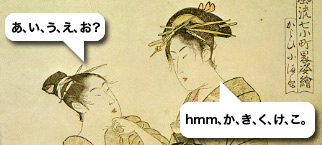
  1. Start with hiragana. Most class settings start you off by learning some basic words, and that’s graavvy, but when learning on your own, I think you need to take a slightly different approach. Since you are learning alone, you won’t get help with your pronunciation from your teacher. You need to start with hiragana in order to learn the basics of how Japanese sounds, and how the structure of the letters works. By learning hiragana first, you will understand how words are put together, and how they are said. If you don’t have a teacher to correct you, learning hiragana will give you the best base that you can get for starting Japanese.
  2. Make sure you check your pronunciation: There are sites out there that will help you pronounce all those crazy Japanese syllables. Practice your hiragana by saying it with the computer. Once you can say all the letters perfectly, you are well on your way to having good pronunciation.
  3. Start putting together words: Now you know hiragana, so start using it! If you’ve managed to get this far, you probably know a few words. Start spelling them out and say them out loud. I remember the first day I could spell sushi. That’ll be one of your first words, like a little baby.
  4. Right about here is where you pick up a beginning Japanese textbook like Genki or Yokoso and do what it tells you. Those aren’t necessarily the best Japanese text books, but they’ll do the job. Remember, learn hiragana first, and then break your text book open. I guarantee you will have stronger basics and it will speed up your learning in the long run. Everyone faito!

That about does it. If you have any more questions, or anything to add, please do! There are so many things that us “classroom Japanese learners” take for granted that can’t be compared to the self-learner. I think there are a lot of people out there trying to learn on their own, so let’s support each other with ideas, mistakes, and success stories…just don’t tell me about how your love for Naruto inspired your Japanese language abilities, or you’ll get some Pepsi-man shafting.

  • http://www.myspace.com/chriscurameng Kurisutofa

    I’m pretty much starting off learning Japanese the way you just explained, except I’m going back and forth between my “Learning Hiragana & Katakana” book and this little workbook called “Japanese in 10 Minutes a Day”. It kind of resembles one of those grade school books for English grammar. I don’t know if I should be mixing that up while I’m still learning Hiragana, but if anyone has any feedback on this, it’s greatly appreciated. As far as pronunciation goes, I think I got that down pat, but I still need to memorize the rest of the letters…

  • Onimusha Nosferatu

    ahhh! my class uses yookoso and i don’t like it. my tip is what my sensei told me. don’t use romaji! the faster u get off using it the faster it is to learn. i hate the phrase books b/c most of the stuff you end up learning anyway as a regular sentence that you can put together yourself. of course there are some exceptions. after learning hiragana and katakana learn kanji, but don’t use the kanji to replace the hiragana. that’s sounds odd, but it’s kinda like u need to know how to spell words esp. w/ informal japanese and words not written in kanji. overall it helps if ur a visual learner since japanese is pictorial. practie pronounciation….kawaii/kowai. ganbatte!

  • Onimusha Nosferatu

    forgot some stuff. this is a beyond what koichi wrote about, but i think it’s good to note now. when u get to verbs don’t complain about know the plain form. it’s very important. learn formal japanese b4 informal even though u probably won’t be using formal japanse. it’ll help later on.

  • http://www.myspace.com/chriscurameng Kurisutofa

    I’m pretty much starting off learning Japanese the way you just explained, except I’m going back and forth between my “Learning Hiragana & Katakana” book and this little workbook called “Japanese in 10 Minutes a Day”. It kind of resembles one of those grade school books for English grammar. I don’t know if I should be mixing that up while I’m still learning Hiragana, but if anyone has any feedback on this, it’s greatly appreciated. As far as pronunciation goes, I think I got that down pat, but I still need to memorize the rest of the letters…

  • Onimusha Nosferatu

    ahhh! my class uses yookoso and i don’t like it. my tip is what my sensei told me. don’t use romaji! the faster u get off using it the faster it is to learn. i hate the phrase books b/c most of the stuff you end up learning anyway as a regular sentence that you can put together yourself. of course there are some exceptions. after learning hiragana and katakana learn kanji, but don’t use the kanji to replace the hiragana. that’s sounds odd, but it’s kinda like u need to know how to spell words esp. w/ informal japanese and words not written in kanji. overall it helps if ur a visual learner since japanese is pictorial. practie pronounciation….kawaii/kowai. ganbatte!

  • Onimusha Nosferatu

    forgot some stuff. this is a beyond what koichi wrote about, but i think it’s good to note now. when u get to verbs don’t complain about know the plain form. it’s very important. learn formal japanese b4 informal even though u probably won’t be using formal japanse. it’ll help later on.

  • Stacia

    Listening to Japanese a hecka lot helps with pronunciation. Before I started taking Japanese at my high school, I had listened to SO much Japanese music and Japanese shows that I could pronounce everything just fine…unless it was written oddly in romanji (like “cyakusei” instead of “chakusei” that was the only one I didn’t get right). So if you don’t wanna go to the websites…you can just listen to your music. Or at least I could. *shrug* Websites are good though! http://japanese.about.com/ has some good random stuff if you can learn that way (I never could). Mostly good culture stuffs.

    ANNNND this is soooo random but I gotta ask.

    “he” and “ni” ….is there a difference (as particles) or are they simply interchangable? Yookoso said that “he” was used for …something else and “ni” was used for…something else but I just read in my Genki book that “he” and “ni” were interchangable in “goal of movement” sentences.

    I only ask this becuase I had the HARDEST time with this and my old teacher (who wasn’t Japanese and couldn’t explain anything) would be like “that sentence is wrong now you fail the problem” when I used “ni” instead of “he” in something like “Tokyo ni ikimashita.” So… yeah?

  • http://www.koichiben.com koichi

    it’s just like Genki says: It’s interchangeable in “goal of movement” sentences. i.e. you can use it when you are using it in an ikimasu sentence.

    tokyo ni ikimasu
    tokyo he ikimasu

    These are the same sentences. When it comes to other uses of ‘he’ though, that’s when everything gets pretty shaky for me. I’m sorry but I can’t think of any example right now of where you can use it when it isn’t in an ikimasu statement…lame.

  • Stacia

    Listening to Japanese a hecka lot helps with pronunciation. Before I started taking Japanese at my high school, I had listened to SO much Japanese music and Japanese shows that I could pronounce everything just fine…unless it was written oddly in romanji (like “cyakusei” instead of “chakusei” that was the only one I didn’t get right). So if you don’t wanna go to the websites…you can just listen to your music. Or at least I could. *shrug* Websites are good though! http://japanese.about.com/ has some good random stuff if you can learn that way (I never could). Mostly good culture stuffs.

    ANNNND this is soooo random but I gotta ask.

    “he” and “ni” ….is there a difference (as particles) or are they simply interchangable? Yookoso said that “he” was used for …something else and “ni” was used for…something else but I just read in my Genki book that “he” and “ni” were interchangable in “goal of movement” sentences.

    I only ask this becuase I had the HARDEST time with this and my old teacher (who wasn’t Japanese and couldn’t explain anything) would be like “that sentence is wrong now you fail the problem” when I used “ni” instead of “he” in something like “Tokyo ni ikimashita.” So… yeah?

  • http://www.koichiben.com koichi

    it’s just like Genki says: It’s interchangeable in “goal of movement” sentences. i.e. you can use it when you are using it in an ikimasu sentence.

    tokyo ni ikimasu
    tokyo he ikimasu

    These are the same sentences. When it comes to other uses of ‘he’ though, that’s when everything gets pretty shaky for me. I’m sorry but I can’t think of any example right now of where you can use it when it isn’t in an ikimasu statement…lame.

  • nick

    i found genki and genki 2 pretty good book especially in terms of grammar and grammar explanations, not so much vocabulary though. I agree about the formal and it is used alot really, but for certain constructions the plain form is essential. It helps if u have a CD if u dont have a japanese person to talk with so u can hear intination and where you can pause a little in a sentence and where it just doesnt sound right. (CD comes with genki).
    The particles ga and ha are the most annoying for me bc there seems to be alot of exceptions and rules. generally it seems ga is for relative sentences, indefinate articles, answering questions. ha is not too bad apart from when it appears in negative comparasons and its slightly different then it seems.

  • Sexy Beam

    From what I understand, へ is kind of more of a fuzzy, non-specific destination – it’s a little more similar to “towards” rather than “to”, but に is more specific. And of course, に can be used in a lot more sentences such as the common __になる, meaning “become” (literally “change to”). I’ve never heard of __へなる before, though, and I’m almost sure it’s incorrect.

    You can kinda learn pronunciation from Japanese music, plus you can learn all kinds of cool grammar if you study, but you really can’t carry on a real conversation with just that, unless you want to be someone who speaks in poetry.

    A sad thing that would be
    Because people, you see
    Wouldn’t understand me

    Yeah…so don’t make that your only source of Japanese. =) At least it’s not trying to learn from 2ch or anime, though, and *that* is a good thing. Unless of course, you’re going to be the Pirate King.

  • xxa.v.bxx

    I’ve pretty much just started my trek of learning Japanese formally.
    I’m taking the steps you suggested because I though that it was pretty much common senese to at least know the basics like hiragana…and I don’t like romaji for the most part b/c I don’t really know where I would use it and if it would really benefit me.
    I’m studying hiragana with the “Japanese Hiragana for Beginners” by the Tuttle Language Library. It’s really helpful and it has these lil’ flashcards with the hiragana, a picture mnemonic, and a quote that helps you remember it.
    I also have “Elementary Japanese: Volume One” by Yoko Hasegawa…I’m really excited about cracking into this textbook.

    *You’re blog and videos are really interesting and I plan on visiting you site often. Thanks!!!

  • xxa.v.bxx

    I’ve pretty much just started my trek of learning Japanese formally.
    I’m taking the steps you suggested because I though that it was pretty much common senese to at least know the basics like hiragana…and I don’t like romaji for the most part b/c I don’t really know where I would use it and if it would really benefit me.
    I’m studying hiragana with the “Japanese Hiragana for Beginners” by the Tuttle Language Library. It’s really helpful and it has these lil’ flashcards with the hiragana, a picture mnemonic, and a quote that helps you remember it.
    I also have “Elementary Japanese: Volume One” by Yoko Hasegawa…I’m really excited about cracking into this textbook.

    *You’re blog and videos are really interesting and I plan on visiting your site often. Thanks!!!

  • Zik

    As I understand it..
    ga is used for emphasizing the subject (watashi ga yomimasu – I am the one reading), instead of wo with certain adjectives/verbs (like ‘ringo ga suki desu’ – i like apples), and with question words (ie- dare) and answering question sentances that use ga.
    wa/ha is used to mark the subject of a sentance.

  • http://www.tofugu.com Viet

    MASU
    MASEN
    MASHITA
    MASENDESHITA

  • http://tofugu.com Erin

    You and Koichi with that ridiculous song D:

  • nick

    i found genki and genki 2 pretty good book especially in terms of grammar and grammar explanations, not so much vocabulary though. I agree about the formal and it is used alot really, but for certain constructions the plain form is essential. It helps if u have a CD if u dont have a japanese person to talk with so u can hear intination and where you can pause a little in a sentence and where it just doesnt sound right. (CD comes with genki).
    The particles ga and ha are the most annoying for me bc there seems to be alot of exceptions and rules. generally it seems ga is for relative sentences, indefinate articles, answering questions. ha is not too bad apart from when it appears in negative comparasons and its slightly different then it seems.

  • Stacia

    Ohhhh like heck I would try to learn Japanese from music. lol I was just talking about pronunciation. I didn’t try to learn Japanese from music or anime at all…and I wouldn’t suggest it. I only starting learning Japanese when I entered high school.

    And thank you! Now I remember the “specific” and non specific parts. But what entails whether something is specific or not? Like…would Tokyo be nonspecific compared to a person’s house…yeah? Thanks again for the help.

  • Onimusha Nosferatu

    i think by default use ni. my sensei told us to use ni even though she uses ni and e. its rather difficult as to exactly why she used he in certain places. i think it’s partly the way she grew up speaking. tokyo would be specific b/c it’s a pinpoint location. i can’t remember the other situation btwn general and specific. it’s kinda like in english btwn something clear and vague. i’ll get back to you after i do some research on particles.

  • Sexy Beam

    From what I understand, へ is kind of more of a fuzzy, non-specific destination – it’s a little more similar to “towards” rather than “to”, but に is more specific. And of course, に can be used in a lot more sentences such as the common __になる, meaning “become” (literally “change to”). I’ve never heard of __へなる before, though, and I’m almost sure it’s incorrect.

    You can kinda learn pronunciation from Japanese music, plus you can learn all kinds of cool grammar if you study, but you really can’t carry on a real conversation with just that, unless you want to be someone who speaks in poetry.

    A sad thing that would be
    Because people, you see
    Wouldn’t understand me

    Yeah…so don’t make that your only source of Japanese. =) At least it’s not trying to learn from 2ch or anime, though, and *that* is a good thing. Unless of course, you’re going to be the Pirate King.

  • Onimusha Nosferatu

    ahh i cant think of what i was talking about. bottom line they’re interchangeable. ignore my tokyo comment. after reading about ni and e i have no proof. o the subjectivity.

    note: can these things have an edit feature? i don’t writing a post.

  • xxa.v.bxx

    I’ve pretty much just started my trek of learning Japanese formally.
    I’m taking the steps you suggested because I though that it was pretty much common senese to at least know the basics like hiragana…and I don’t like romaji for the most part b/c I don’t really know where I would use it and if it would really benefit me.
    I’m studying hiragana with the “Japanese Hiragana for Beginners” by the Tuttle Language Library. It’s really helpful and it has these lil’ flashcards with the hiragana, a picture mnemonic, and a quote that helps you remember it.
    I also have “Elementary Japanese: Volume One” by Yoko Hasegawa…I’m really excited about cracking into this textbook.

    *You’re blog and videos are really interesting and I plan on visiting you site often. Thanks!!!

  • xxa.v.bxx

    I’ve pretty much just started my trek of learning Japanese formally.
    I’m taking the steps you suggested because I though that it was pretty much common senese to at least know the basics like hiragana…and I don’t like romaji for the most part b/c I don’t really know where I would use it and if it would really benefit me.
    I’m studying hiragana with the “Japanese Hiragana for Beginners” by the Tuttle Language Library. It’s really helpful and it has these lil’ flashcards with the hiragana, a picture mnemonic, and a quote that helps you remember it.
    I also have “Elementary Japanese: Volume One” by Yoko Hasegawa…I’m really excited about cracking into this textbook.

    *You’re blog and videos are really interesting and I plan on visiting your site often. Thanks!!!

  • Zik

    As I understand it..
    ga is used for emphasizing the subject (watashi ga yomimasu – I am the one reading), instead of wo with certain adjectives/verbs (like ‘ringo ga suki desu’ – i like apples), and with question words (ie- dare) and answering question sentances that use ga.
    wa/ha is used to mark the subject of a sentance.

  • http://www.tofugu.com Viet

    MASU
    MASEN
    MASHITA
    MASENDESHITA

  • http://tofugu.com Erin

    You and Koichi with that ridiculous song D:

  • Stacia

    Ohhhh like heck I would try to learn Japanese from music. lol I was just talking about pronunciation. I didn’t try to learn Japanese from music or anime at all…and I wouldn’t suggest it. I only starting learning Japanese when I entered high school.

    And thank you! Now I remember the “specific” and non specific parts. But what entails whether something is specific or not? Like…would Tokyo be nonspecific compared to a person’s house…yeah? Thanks again for the help.

  • Onimusha Nosferatu

    i think by default use ni. my sensei told us to use ni even though she uses ni and e. its rather difficult as to exactly why she used he in certain places. i think it’s partly the way she grew up speaking. tokyo would be specific b/c it’s a pinpoint location. i can’t remember the other situation btwn general and specific. it’s kinda like in english btwn something clear and vague. i’ll get back to you after i do some research on particles.

  • Onimusha Nosferatu

    ahh i cant think of what i was talking about. bottom line they’re interchangeable. ignore my tokyo comment. after reading about ni and e i have no proof. o the subjectivity.

    note: can these things have an edit feature? i don’t writing a post.

  • ES

    I’ve tried to learn japanese on/off/on/off/now on again. I think material has a lot to do with how much you can stay absorbed in it (I know thats what it was for me) and the more your in it the better it is since like Koichi has said before, learning a language is a long process. The first book I picked up was called “Japanese for Busy People”. It looked good for a begginer such as myself (since it had the kana versions of the example sentences) but i was wrong. It didn’t have kanji and half way through the book you feel as if you missed a chapter (and also by using it you would never know about vowel dropping (such as you would still believe です to be pronounced ‘dessoo’ and not ‘dess’)), so I started doubting my ability to learn it up and dropped it. I picked it up a second (self study once more) with a friend of mine’s Genki book, but then school crap got in the way (and since it wasn’t taught in my school) I had no choice other than to put it aside. So now once more for go number three I’m a bit wiser about this (and graduated so I have all the time I need), have a pretty solid understanding of the mechanics of japanese (though missing the knowledge to actually say things) and have learned some things I’d like to say/suggest to other self-studiers:

    A)Get good material that doubles as good reference and teaches katakana/hiragana/kanji as you learn the words. It’s always good to be able to go back and look up a very specific thing you need.

    B)Kana flash cards just as previously stated. However, you dont have to buy these, infact the ones that I used I made myself and have both the katakana and hirigana on them. There are plenty of places online where you can find them and by making your own, it helps you learn to write them (believe me, it will take you a few times to get it to look just like you want (as in, almost identical to the actual chartacter)

    C)Youtube. There are also plenty of videos that will teach proper pronounciation… ok, I’m mostly talking about the “Let’s Learn Japanese: Basic 1″. It doesnt really teach(as in they just show you in the latter lessons) the kana, but I found it very very helpful as not having a teacher and to those of you who had classes, I hear that a lot of you have had these used in class. And the way it teaches it is gives you something like a template, a sentence pattern so that you could construct many sentences using the same outline.

    D)Pull from many sources. Pull from a book words and structure, from videos and music get the pronounciation. You could even try to read things even though you wont be able to pick up much, something that will strengthen reading it still a good thing. Is there a page you look at that has a japanese version? Well, check it out, see how much you can read, see whats diffrent about it (other than the obvious)

    E) Not to sound sound crazy, but talk to yourself (well… and other people…depending). Doing something? Say it in japanese (but of course not if its going to look stupid). Somebody ask you a question? Answer in japanese (depends who your with at the time. From time to time I like to do this just to mess with people though my knowledge is very limited). Doing this will help in your ability to come out with sentences in a practical usage that also makes you think in japanese.

    Well, I think thats all. The only other thing I really have to say is that layered learning (like I have) seems to help a bit. It’s like reading up to say chapter five in a book, then going back through all of them again just as in depth as the first time, maybe picking up a few things you didn’t quite get before and applying knowledge you didn’t know at the time to old material. Much like extream review. Well, appologies for the wall of text, but to those of you who it helped, you’re welcome.

  • ES

    I’ve tried to learn japanese on/off/on/off/now on again. I think material has a lot to do with how much you can stay absorbed in it (I know thats what it was for me) and the more your in it the better it is since like Koichi has said before, learning a language is a long process. The first book I picked up was called “Japanese for Busy People”. It looked good for a begginer such as myself (since it had the kana versions of the example sentences) but i was wrong. It didn’t have kanji and half way through the book you feel as if you missed a chapter (and also by using it you would never know about vowel dropping (such as you would still believe です to be pronounced ‘dessoo’ and not ‘dess’)), so I started doubting my ability to learn it up and dropped it. I picked it up a second (self study once more) with a friend of mine’s Genki book, but then school crap got in the way (and since it wasn’t taught in my school) I had no choice other than to put it aside. So now once more for go number three I’m a bit wiser about this (and graduated so I have all the time I need), have a pretty solid understanding of the mechanics of japanese (though missing the knowledge to actually say things) and have learned some things I’d like to say/suggest to other self-studiers:

    A)Get good material that doubles as good reference and teaches katakana/hiragana/kanji as you learn the words. It’s always good to be able to go back and look up a very specific thing you need.

    B)Kana flash cards just as previously stated. However, you dont have to buy these, infact the ones that I used I made myself and have both the katakana and hirigana on them. There are plenty of places online where you can find them and by making your own, it helps you learn to write them (believe me, it will take you a few times to get it to look just like you want (as in, almost identical to the actual chartacter)

    C)Youtube. There are also plenty of videos that will teach proper pronounciation… ok, I’m mostly talking about the “Let’s Learn Japanese: Basic 1″. It doesnt really teach(as in they just show you in the latter lessons) the kana, but I found it very very helpful as not having a teacher and to those of you who had classes, I hear that a lot of you have had these used in class. And the way it teaches it is gives you something like a template, a sentence pattern so that you could construct many sentences using the same outline.

    D)Pull from many sources. Pull from a book words and structure, from videos and music get the pronounciation. You could even try to read things even though you wont be able to pick up much, something that will strengthen reading it still a good thing. Is there a page you look at that has a japanese version? Well, check it out, see how much you can read, see whats diffrent about it (other than the obvious)

    E) Not to sound sound crazy, but talk to yourself (well… and other people…depending). Doing something? Say it in japanese (but of course not if its going to look stupid). Somebody ask you a question? Answer in japanese (depends who your with at the time. From time to time I like to do this just to mess with people though my knowledge is very limited). Doing this will help in your ability to come out with sentences in a practical usage that also makes you think in japanese.

    Well, I think thats all. The only other thing I really have to say is that layered learning (like I have) seems to help a bit. It’s like reading up to say chapter five in a book, then going back through all of them again just as in depth as the first time, maybe picking up a few things you didn’t quite get before and applying knowledge you didn’t know at the time to old material. Much like extream review. Well, appologies for the wall of text, but to those of you who it helped, you’re welcome.

  • Narutofan1

    why do u hate on NARUTO so much he is so awsome!!!!
    so wut if i wanna learn japanese so i can watch anime w/ no subs

    NARUTO could kick your butt!

    noob

  • Sexy Beam

    This doesn’t look like a language learning success story. >_

  • Narutofan1

    why do u hate on NARUTO so much he is so awsome!!!!
    so wut if i wanna learn japanese so i can watch anime w/ no subs

    NARUTO could kick your butt!

    noob

  • Sexy Beam

    This doesn’t look like a language learning success story. >_

  • http://www.myspace.com/fredydb327 Fred

    Haha. This is a good entry, considering I have the rest of summer to learn a full school year of Japanese I. I was supposed to take an online course for Japanese I, but it costs too much money. The Japanese teacher (who is actually Japanese, unlike the Spanish teachers at my school!) says she’ll see how much Japanese I’ve learned to determine if I should go to one or two. She said, “Make sure you know all Hiragana, and some Katakana and Kanji at level I.” So far I’ve been memorizing Hiragana since Monday… I made flash cards, since they work for me. Though, all I’ve memorized were the vowels and ka ke ko ku ki, haha. I’m working on it. I’m glad I got the first step down, or at least I’m starting correctly. Also I found a pdf that has a Japanese 1 curriculum, so I think I’ll looseley follow that. The Japanese teacher and my friends got back from a school Japan trip yesterday. (Man, I wanted to go!) So, before I ask her, I was wondering what other suggestions, websites and books are helpful for learning Japanese. I’ll email her later on and show her some suggestions and I’ll probably put some of her suggestions here.

    PS: I found this website, and it seems pretty good: http://learnjapanese.elanguageschool.net

  • Kurisutofa

    I remember watching it when I was 14 or 15 years old (20 now). I personally don’t think anything is wrong with Naruto, except that now it’s a little lame since I see little kids running around leaf-head protectors saying, “Kage Bushin!”, but anyways, just learning a language to watch your favorite anime without subtitles isn’t so.. *idk* (I can’t think of the word at the moment, feel free to fill it in ^_^), but I would just have to ask… When you’re learning another culture’s language, you should feel some kind of inquisitiveness to learn more about that culture as well, don’t you agree? (This goes for any language).

  • http://www.myspace.com/fredydb327 Fred

    As lame as this sounds, I just looked up Genki on eBay and I was amazed I could read the cover. haha. Hiragana is awesome…

  • josh

    whats the defference from desu and imasu

  • josh

    and when am I supposed to use on and kun readings I just dont get it these are the questions that haunt me

  • http://www.tofugu.com Erin

    The difference between です (desu) and います (imasu) is that います refers to “is” or “am” or “are” for animate objects, living things, while です refers to those same things for inanimate objects. That’s the short answer, anyway.

  • http://www.tofugu.com Erin

    Another short answer: use the on reading when the kanji is used in combination with other kanji, and kun reading when the kanji is by itself.

  • http://www.myspace.com/fredydb327 Fred

    Haha. This is a good entry, considering I have the rest of summer to learn a full school year of Japanese I. I was supposed to take an online course for Japanese I, but it costs too much money. The Japanese teacher (who is actually Japanese, unlike the Spanish teachers at my school!) says she’ll see how much Japanese I’ve learned to determine if I should go to one or two. She said, “Make sure you know all Hiragana, and some Katakana and Kanji at level I.” So far I’ve been memorizing Hiragana since Monday… I made flash cards, since they work for me. Though, all I’ve memorized were the vowels and ka ke ko ku ki, haha. I’m working on it. I’m glad I got the first step down, or at least I’m starting correctly. Also I found a pdf that has a Japanese 1 curriculum, so I think I’ll looseley follow that. The Japanese teacher and my friends got back from a school Japan trip yesterday. (Man, I wanted to go!) So, before I ask her, I was wondering what other suggestions, websites and books are helpful for learning Japanese. I’ll email her later on and show her some suggestions and I’ll probably put some of her suggestions here.

    PS: I found this website, and it seems pretty good: http://learnjapanese.elanguageschool.net

  • Kurisutofa

    I remember watching it when I was 14 or 15 years old (20 now). I personally don’t think anything is wrong with Naruto, except that now it’s a little lame since I see little kids running around leaf-head protectors saying, “Kage Bushin!”, but anyways, just learning a language to watch your favorite anime without subtitles isn’t so.. *idk* (I can’t think of the word at the moment, feel free to fill it in ^_^), but I would just have to ask… When you’re learning another culture’s language, you should feel some kind of inquisitiveness to learn more about that culture as well, don’t you agree? (This goes for any language).

  • http://www.myspace.com/fredydb327 Fred

    As lame as this sounds, I just looked up Genki on eBay and I was amazed I could read the cover. haha. Hiragana is awesome…

  • josh

    well how do you know which to use if theres more than one type of reading.
    ex.getsu gatsu,jin nin,or…well you know

  • Onimusha Nosferatu

    i feel compelled to clarify this even though i don’t think i should. imasu and arimasu mean to exist/be, but only in a location sense. you use desu to mean the verb “to be” in english (even though it’s not a verb it’s a copula- don’t worry about that) when ur not talking about a location of something. the difference btwn imasu and arimasu is that imasu is used for living things (except for plants) and arimasu is used for non-living things.

  • Onimusha Nosferatu

    the best answer to the kun/on reading is to just learn words and you’ll see the kanji so you know how to pronounce it. what erin said is correct. for example 新聞 聞く the 1st one is shinbun (newspaper) the 2nd is kiku(to listen). the ku is just okurigana. it helps if you know the stories behind kanji. it helps you guess the meaning of words you don’t know. 火山 fire + mountain = volcano(kazan). um… the kanji inside 聞 is mimi(ear) so it’s logical to think of kiku to mean to listen.

  • josh

    whats the defference from desu and imasu